“Consciousness and what lies beneath it”: Exhibiting David Lynch (1946-2025)
|Em Mai Chmiel
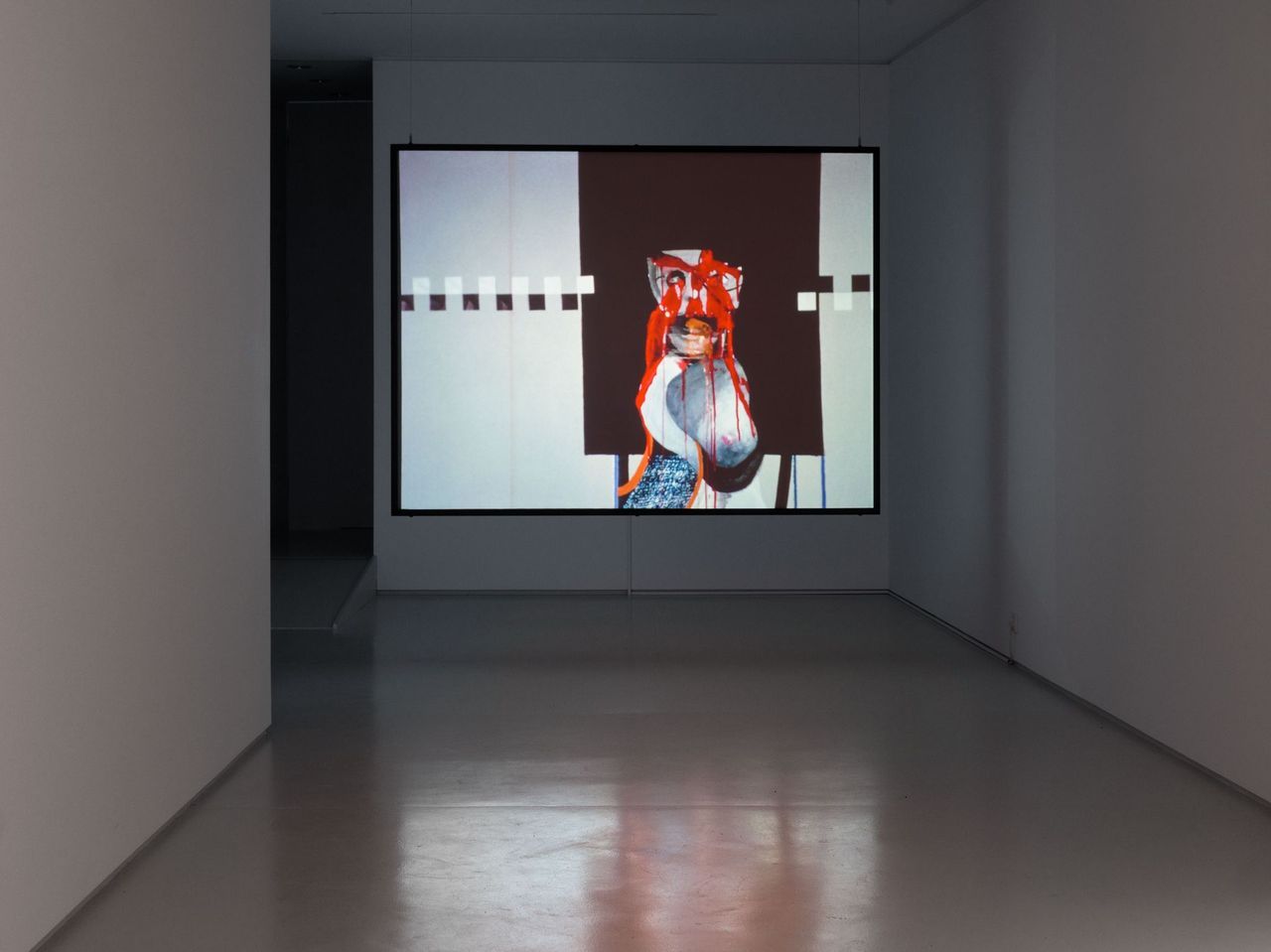
Upon entering “David Lynch” at Pace Gallery Berlin, a curious, hand-painted animated film immediately interrupts your line of sight. In this film, The Alphabet (1969), one of the late artist’s first moving image works, the hum of a child chanting “ABC” meets the shrill cacophony of a baby’s cries, which are voiced by none other than Lynch himself.
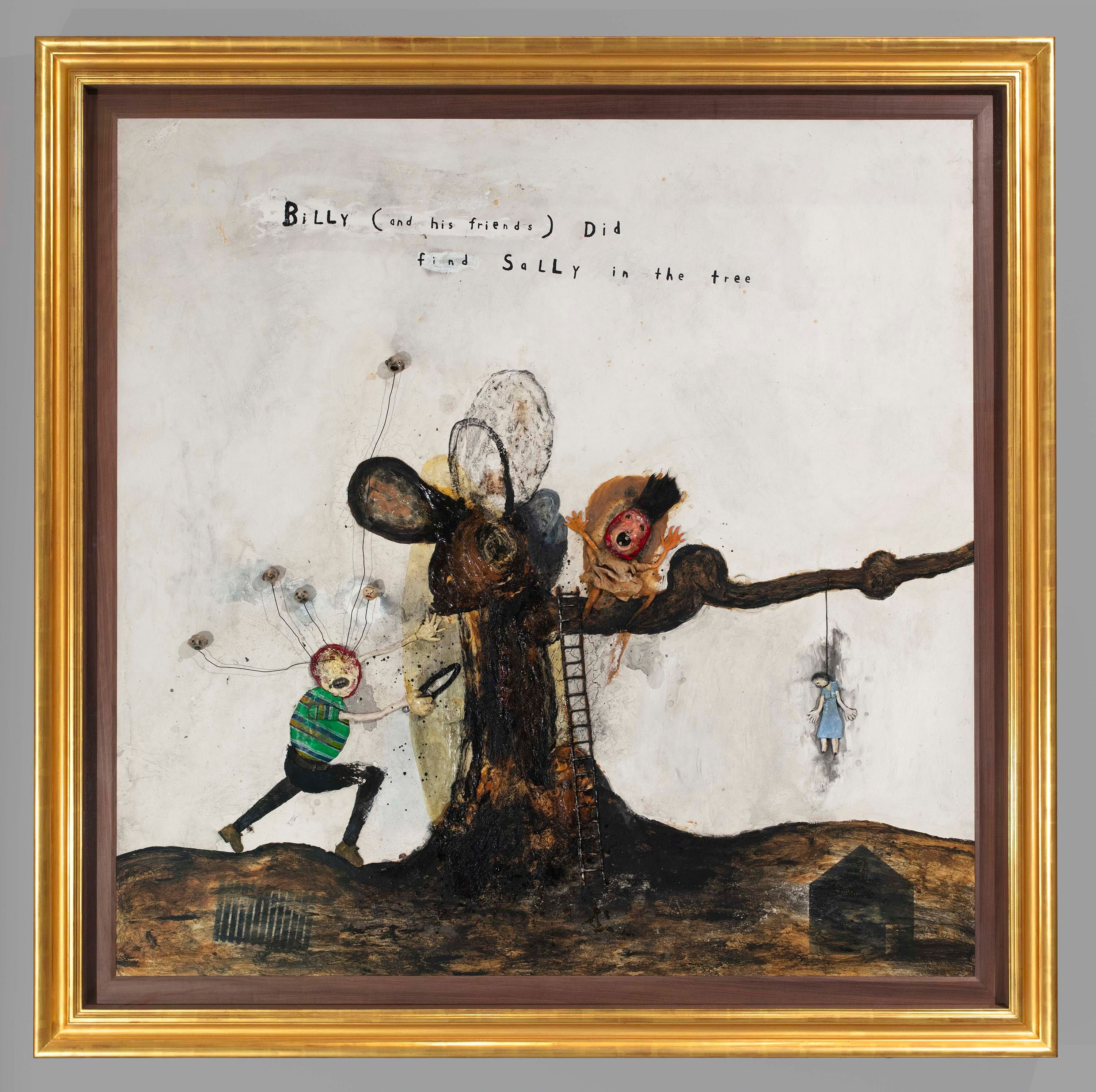
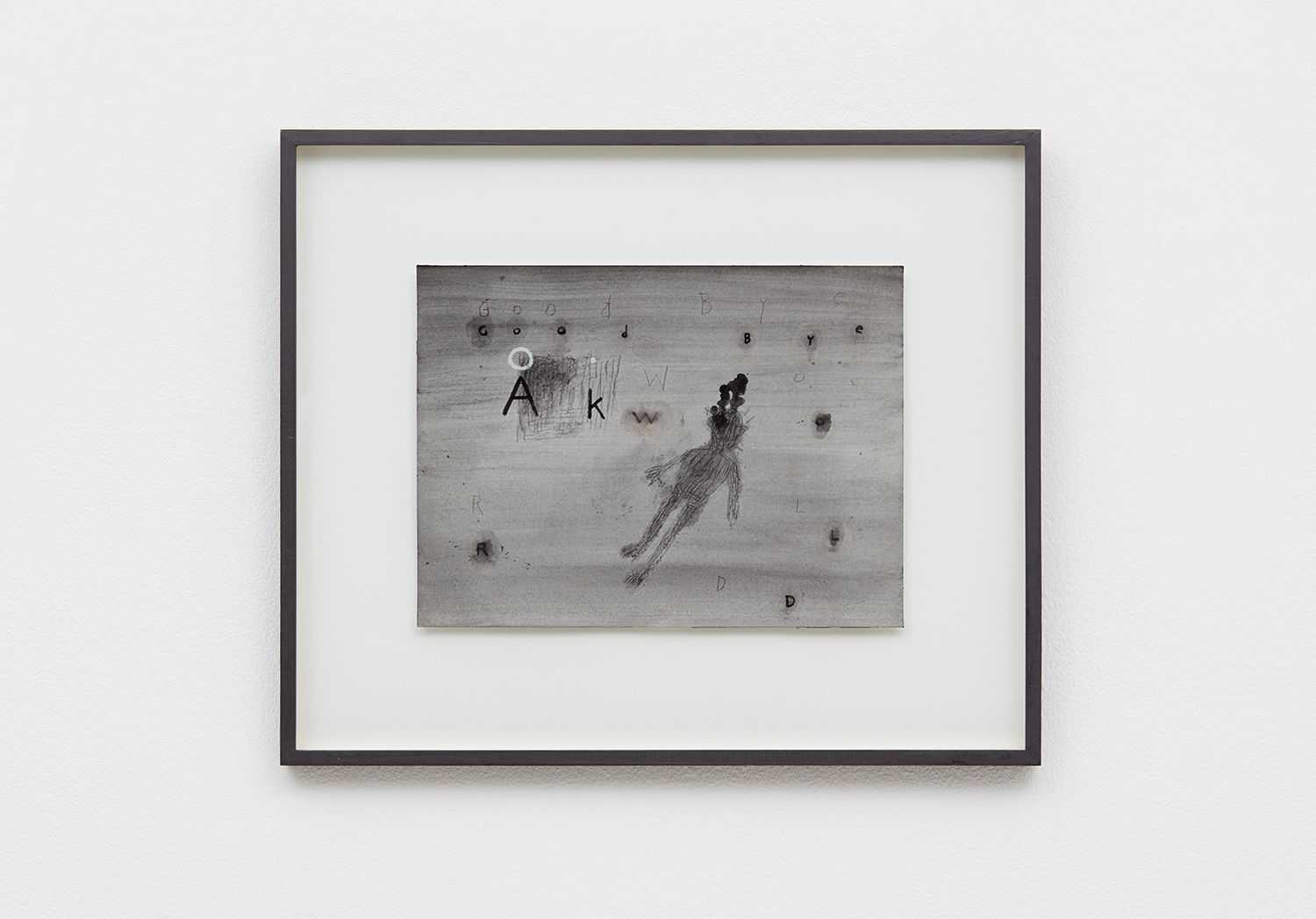
The nightmarish film is a surrealist experiment in expressing chilling parts of the unconscious, sublimating the most primordial form of language into a meditation on the cycles of birth and death. A common entry point for those wishing to descend even further into Lynch’s imaginative world than what is already proffered in his feature films and television series Twin Peaks (1990-2017), The Alphabet is joined by a sampling of the late artist’s lesser known visual works, such as Tree at Night (2019) or the self-portrait, untitled (Berlin) (1999), in the exhibition at Pace’s new Schöneberg location.
Initially conceived as a collaborative curatorial effort between Lynch and Oliver Shultz, Chief Curator at Pace Gallery, to place the filmmaker’s work in dialogue with contemporary artists whose practices operate within the ‘Lynchian’ register of surrealism, the exhibition was drastically transformed upon Lynch’s sudden death last January. Serving as both an in memoriam and a prelude to a larger, forthcoming major exhibition slated for this fall at the gallery’s Los Angeles location, the Berlin rendition of “David Lynch” encompasses a fraction of works from his interdisciplinary practice, which spanned painting, sculpture, film, and photography. The works conjure feelings of claustrophobia, dizziness, and even sublimity, which are only heightened by the irregular architecture of the former Shell gas station-turned-gallery. The result is, in short, Lynchian—in the truest, least clichéd sense of the term.
In conversation with Em Mai Chmiel, Shultz reflects on translating Lynch’s sensibility into the gallery space, working in the absence of the artist, and approaching curation not as interpretation but as a dialogic process of care—one that begins with “an empty room, a set of crates, and no clear idea of what the work will ask for.”
Em Mai Chmiel: What was the origin of this show?
Oliver Shultz: It really started with opening the gallery last May, and thinking about what would be right for the space. Part of the reason we wanted to do a show of David’s work in Berlin is because we felt his aesthetic resonated with that place so strongly. I’ve always been interested in the hauntedness of Berlin—the way ghosts inhabit its darker corners. And then to discover Lynch’s photographs of abandoned industrial architecture, those voids and dark spaces where fantasy can unfold—that felt like an essential part of the Lynchian aesthetic.
Berlin also has so many practicing artists, and I was curious how contemporary artists were embodying a relationship to the surreal that felt like it belonged to Lynch’s world, whether or not they intended that.
EMC: The show was originally conceived as a group exhibition. How did it evolve?
OS: The idea was to combine other artists’s work that Lynch would curate alongside us. Then he died, sooner than anyone thought. We still wanted to do Lynch in Berlin, but shifted to a show of his work alone. We already had a larger exhibition planned for Los Angeles next fall, so we decided to make Berlin a kind of prelude—different works, but the same essential idea: to look at all the mediums in which he worked and think about how they exist in dynamic relationship. They come out of the same mind, the same fascination with consciousness and what lies beneath it.
EMC: How did you conceive the Berlin show in relation to the upcoming LA exhibition?
OS: Different works for the most part, but a similar idea—to put all of these different mediums in conversation: painting, drawing, time-based imagery, early film, sound, music, photography.
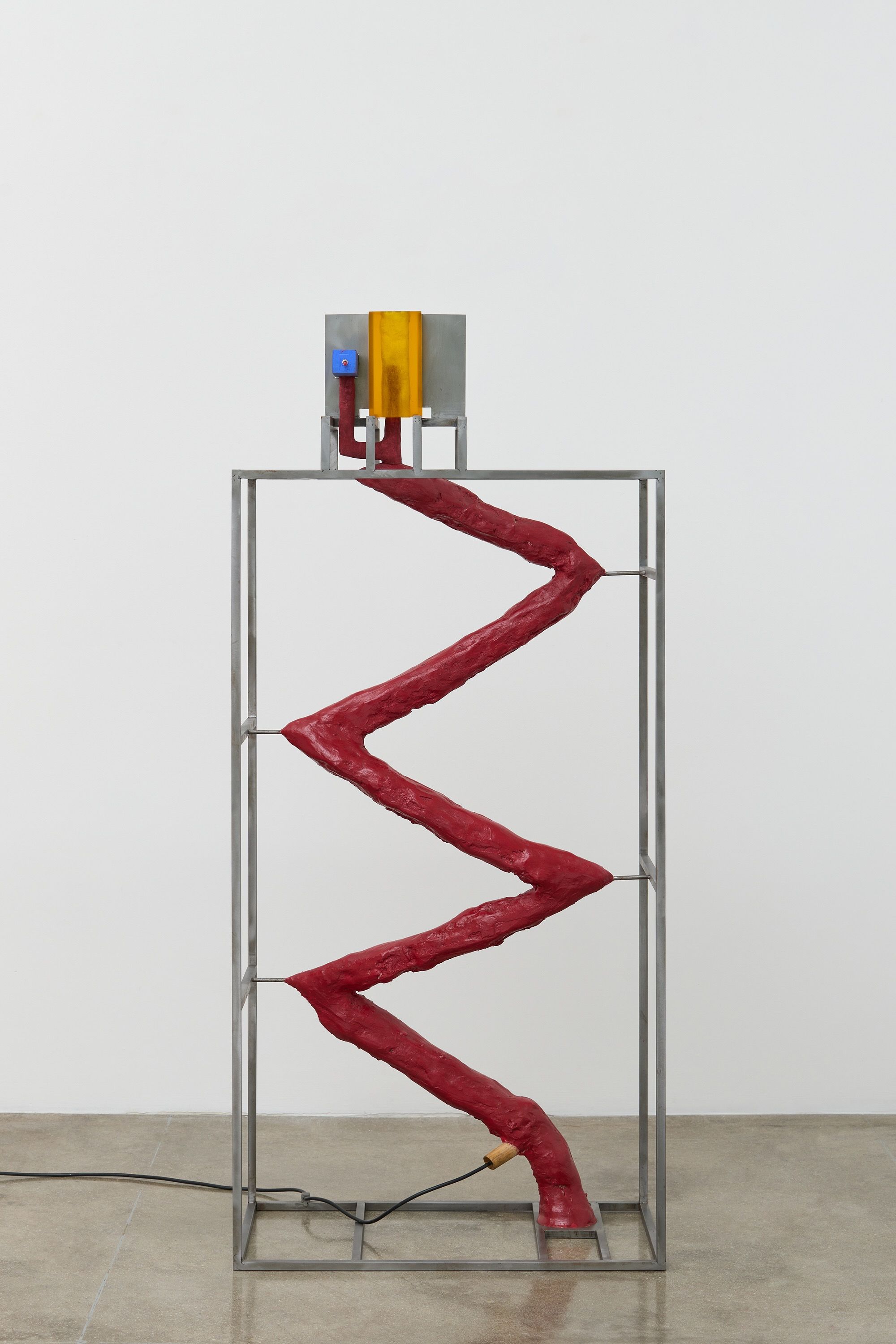
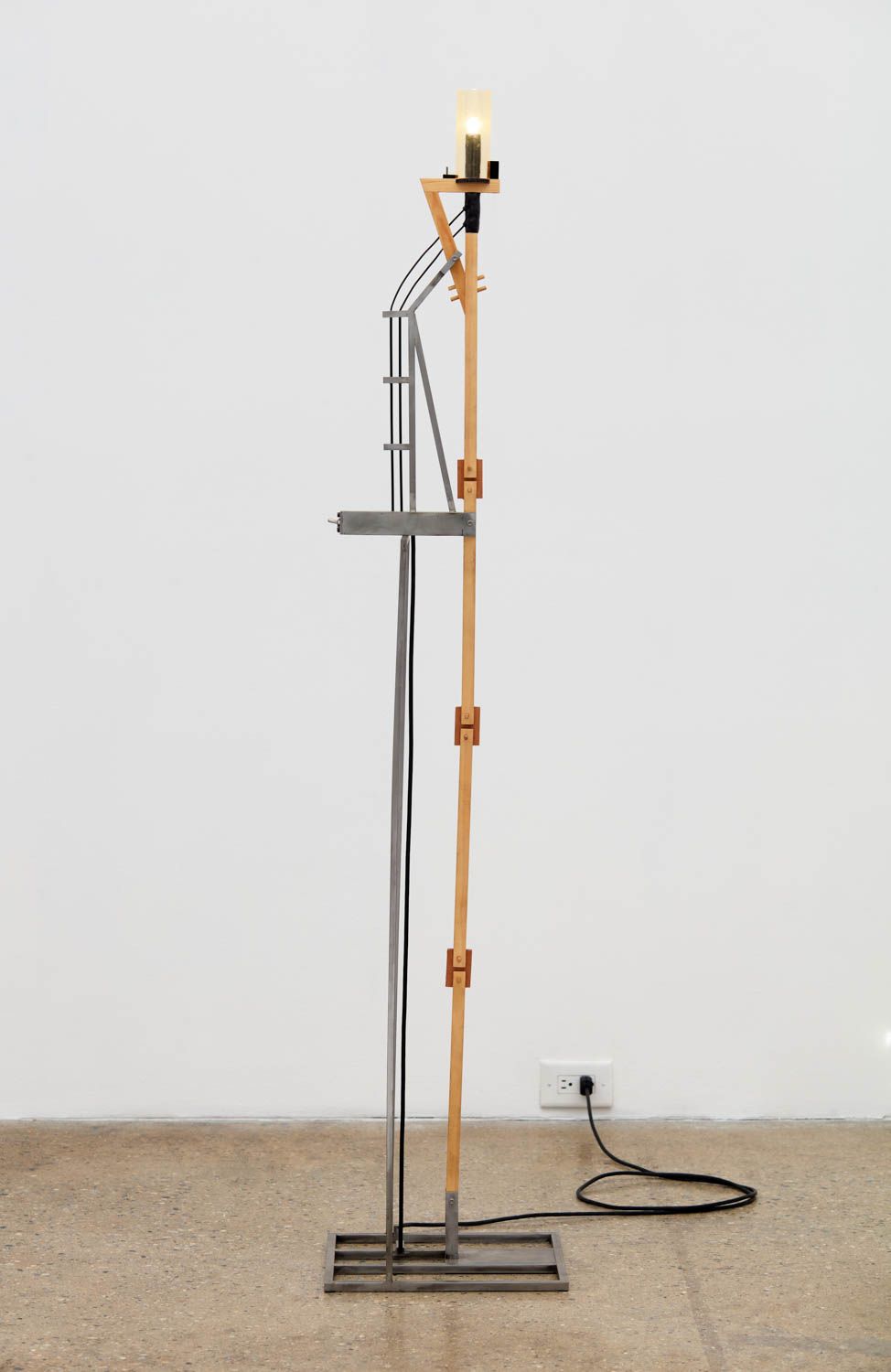
And then, of course, the lamps. To me, the lamps are what pulls it all together, because they transform the gallery into a domestic space. Lynch lived with his lamps, with the furniture he made. His house was, in a way, a sculpture he inhabited. I wanted to give the gallery that same quality, the sense that you were walking into someone’s home. What people don’t know is that before it was a gallery, the space actually was a house—a gas station first, then a residence, then converted. So, it doesn’t have the proportions you’d expect. Strange planes that don’t quite add up, a Frankensteinian hybrid of different moments in history. That seemed exactly right for this work.
EMC: You chose not to lean into the most recognizable Lynchian imagery—the red curtains, the black-and-white floor. Why?
OS: That’s been done, with the Fondation Cartier retrospective ten years ago and countless bars paying homage. We considered it, but I felt strongly that it was more important to get to the core of what made something feel like Lynch without being so literal. We did take a cue from one of his films, but a lesser-known one: the short animated film Rabbits. And the work anchoring the whole show is The Alphabet, essentially his first real film. It’s about language and learning to speak, but it’s also horrific. That combination—innocence and violence, the soft and the hard, repulsion and attraction—is at the core of everything he did.
"Lynch was never interested in violence for violence’s sake."
EMC: The show seems to argue that darkness can be redemptive. Tell me more about that.
OS: Yes. It’s about trying to decenter the moral valuation of light and dark—to say that what might be most valuable in culture, or in our minds, might be found precisely in the darkest parts. And then we can elevate that, rescue it, transcend the negative connotation of darkness and find in it something redemptive.
Lynch was never interested in violence for violence’s sake. He was a deeply humanistic person. It’s our most raw, untapped parts of ourselves—something we all share. Not to condemn humans, but to say this is something deeply true about us, something that reveals what is exquisite, fragile, and ultimately redeemable about the human condition.
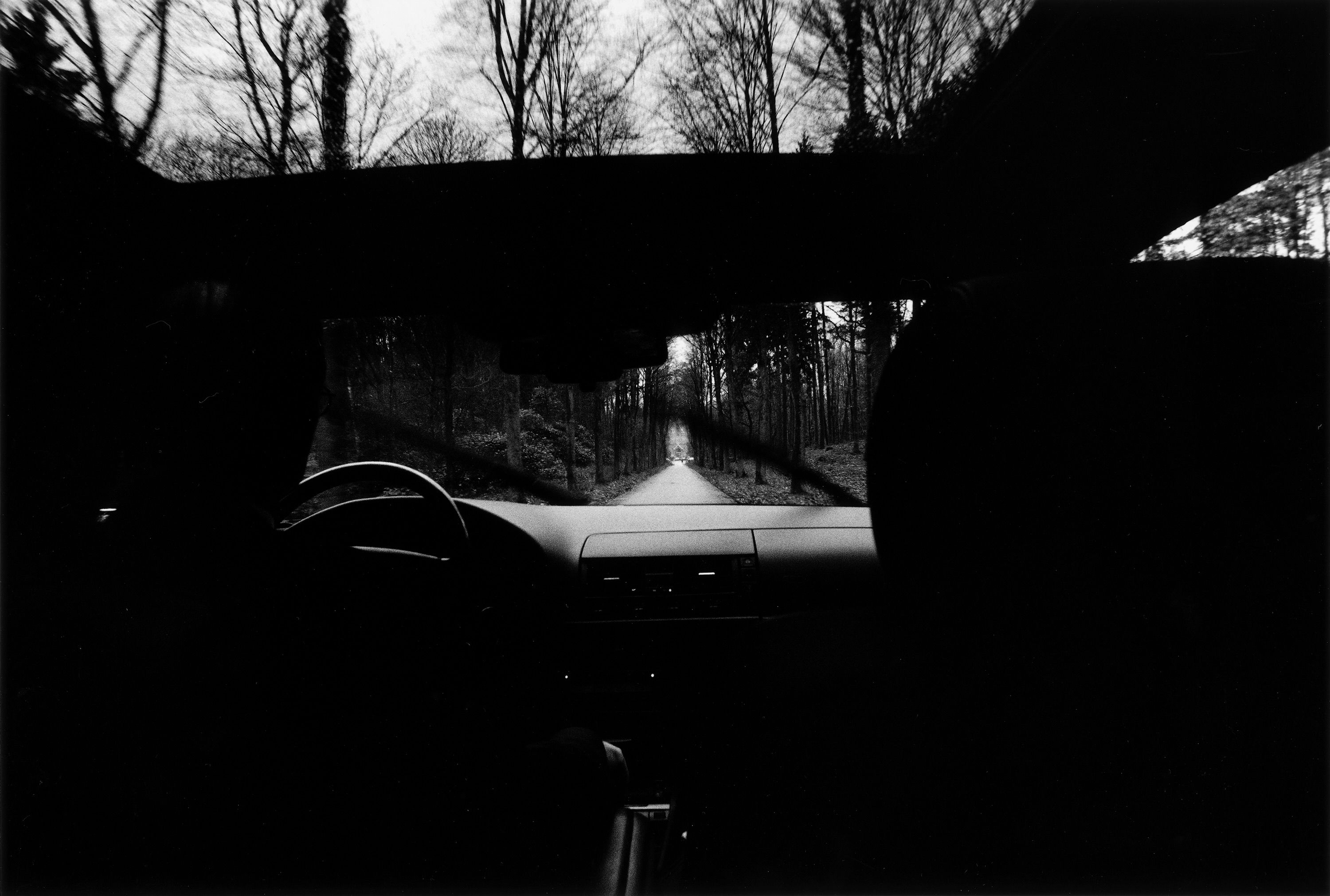
EMC: Is there a specific work in the show that crystallizes that for you?
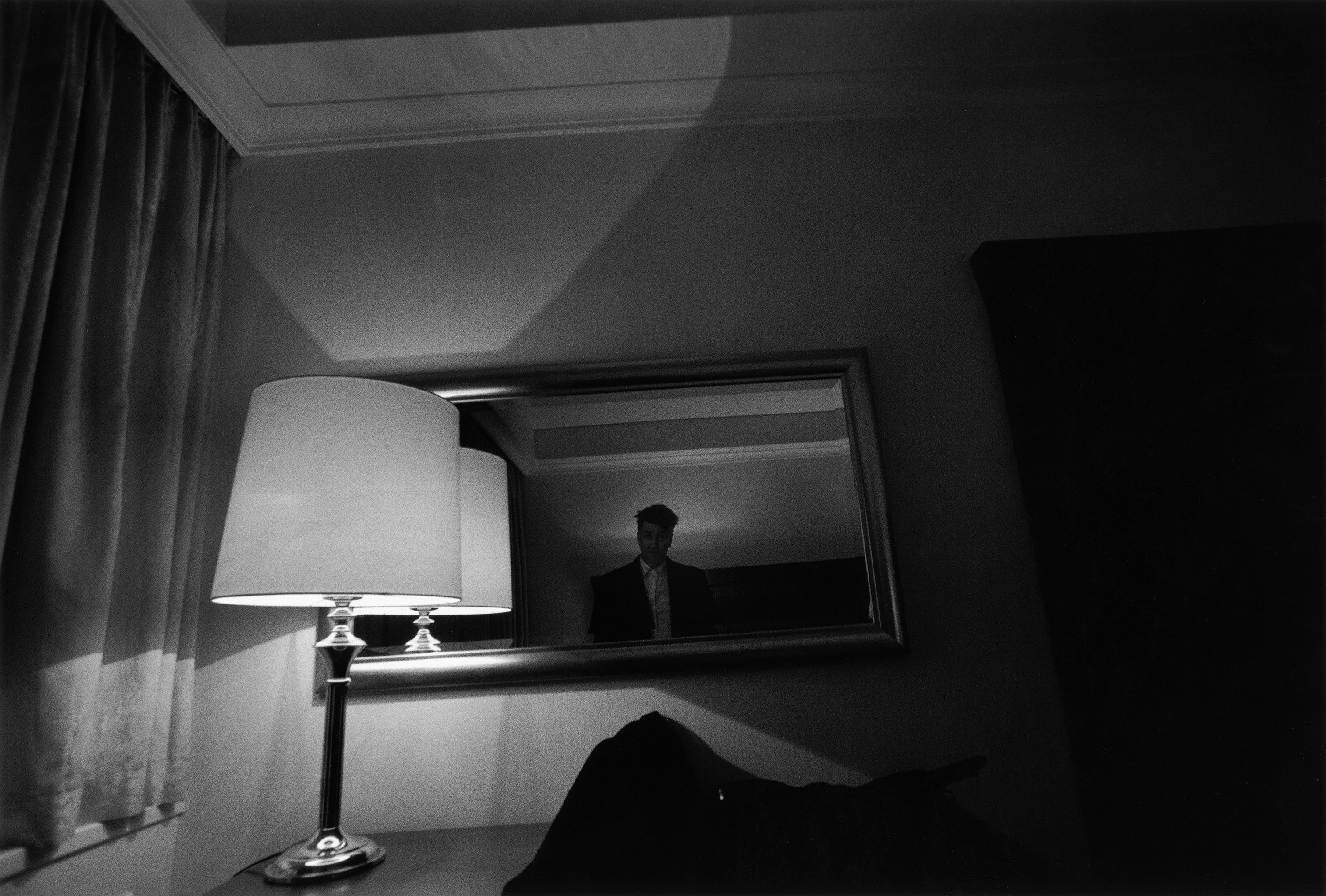
OS: The photograph Lynch took of himself with the lamp—the reason I made it the hero image. You recognize his silhouette even though you can’t see his face; he’s literally a shadow. The lamp is the real subject. It’s a self-portrait in which, to portray himself, he has to make himself disappear. The lamp becomes the self-portrait. And I think that also speaks to what it means to be an artist—where the truest expression of yourself is in the things you make.
EMC: You placed The Alphabet at the very entrance. What was the intention there?
OS: Lynch is best known for film, but those early films are the least known. I wanted to start with the idea that he was already a painter when he first picked up a camera—and even before that, he considered himself a professional artist at sixteen.
But there’s also something in the content: We learn the alphabet early in life because it gives us the tools for everything else. Language introduces us into society, into meaning, into connection. Yet in Lynch’s work, language is so often breaking down. In Rabbits, you can’t understand what they’re saying, and in the paintings, words appear on the surface but the stories don’t cohere. We’re given this alphabet and taught how to use it, but David also teaches you how to misuse it. When does language become a tool for the frustration of meaning rather than its transmission?
"...the scariest thing about the job of the curator is an empty room with a bunch of crates and not knowing what you’re going to do."
EMC: Was it intimidating to install a show of this scale in such a confined space—and without the artist present?
OS: Absolutely. It was really, really hard. It’s even more intimidating when you don’t have the artist. When the artist is with you, it’s a dialogue. In this case, I had to do my best, to do something I felt David Lynch would have liked, without him there to critique me. I did have the foundation, his sons, who were in Berlin, and the people at the gallery who had worked with him for fifteen years. So, luckily, there were voices to consult. But yes, the scariest thing about the job of the curator is an empty room with a bunch of crates and not knowing what you’re going to do. You have to listen to the art and figure out what it needs, what it wants. And then you try a lot of different things until it works.
EMC: This is one of the first showings of his work since his death. What has it meant to you personally?
OS: I can’t imagine another artist who infected my dreams more successfully from an early age. I feel unworthy, honestly. My experience as a curator is that you can get to know artists who have been dead for hundreds of years through their work. But the most exciting thing has been discovering that I didn’t know him as well as I thought—having seen every film, read everything about him. Spending time with the paintings introduced me to a whole other depth. It changed how I see the films. I got to go back through work I’d spent my whole life loving and find it entirely new. It’s like getting to see those films for the first time again.
EMC: What was your own first encounter with Lynch?
OS: This is terrible, but I think I may have first seen Dune, with no idea who David Lynch was. Blue Velvet was the film that made me think, “Who is this?” That’s the one that made me fall in love with him and realize he was a genius. Twin Peaks followed pretty quickly after.
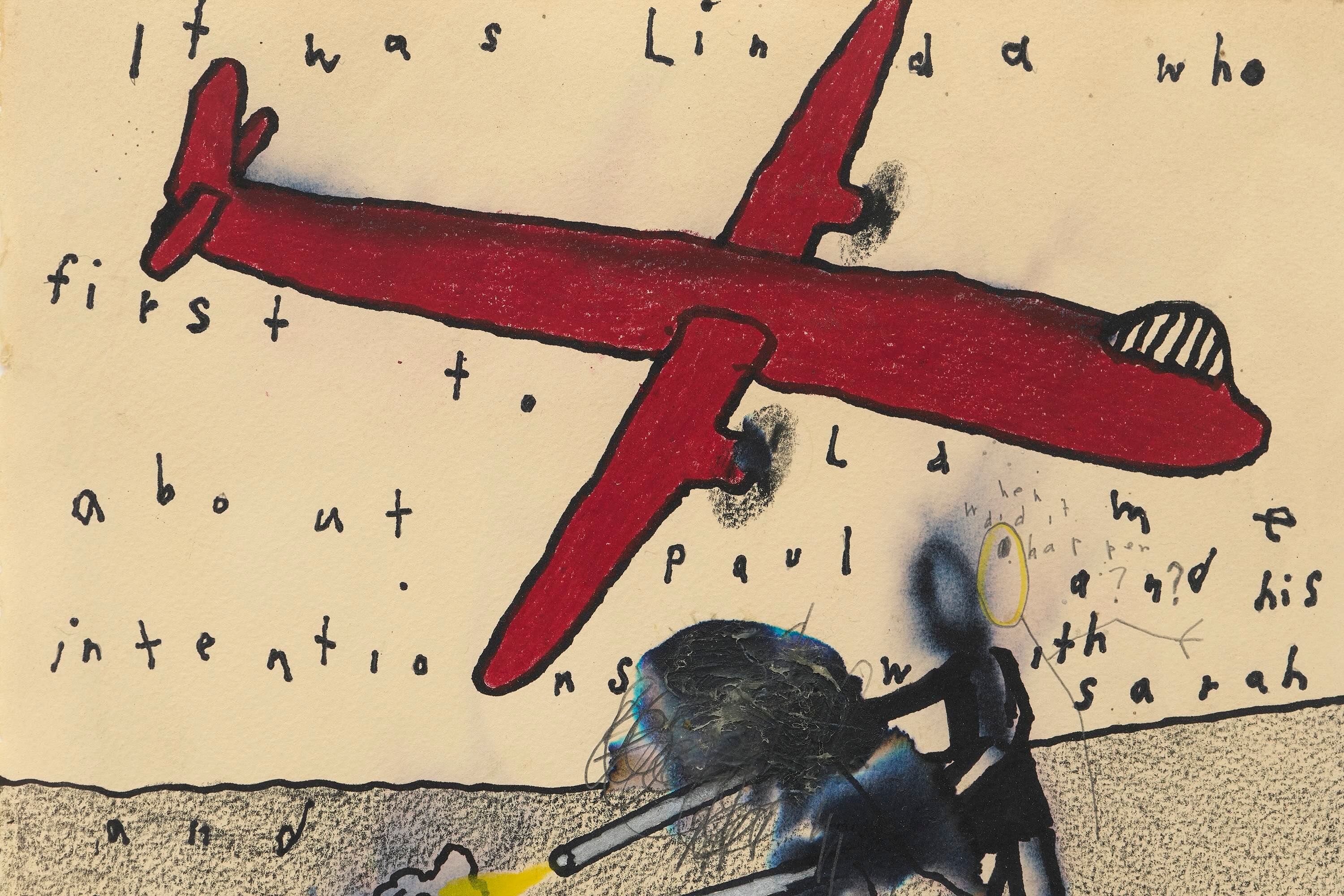
"I felt like the color red belonged to David Lynch in a way — it was almost like a medium in itself."
EMC: The red-tinted window overlooking the Zen garden is a striking moment in the show. What was behind that choice?
OS: I felt like the color red belonged to David Lynch in a way — it was almost like a medium in itself. It runs through the films and the graphic work; it's one of the few colors that appears consistently in the drawings. I wanted the space to feel like a portal, a threshold. I don’t think of it as an artwork so much as a kind of scenographic illusion—an allusion to a certain aesthetic. That first floor is almost like a thesis statement: one film, one painting, and this color atmospherically connected to Lynch.
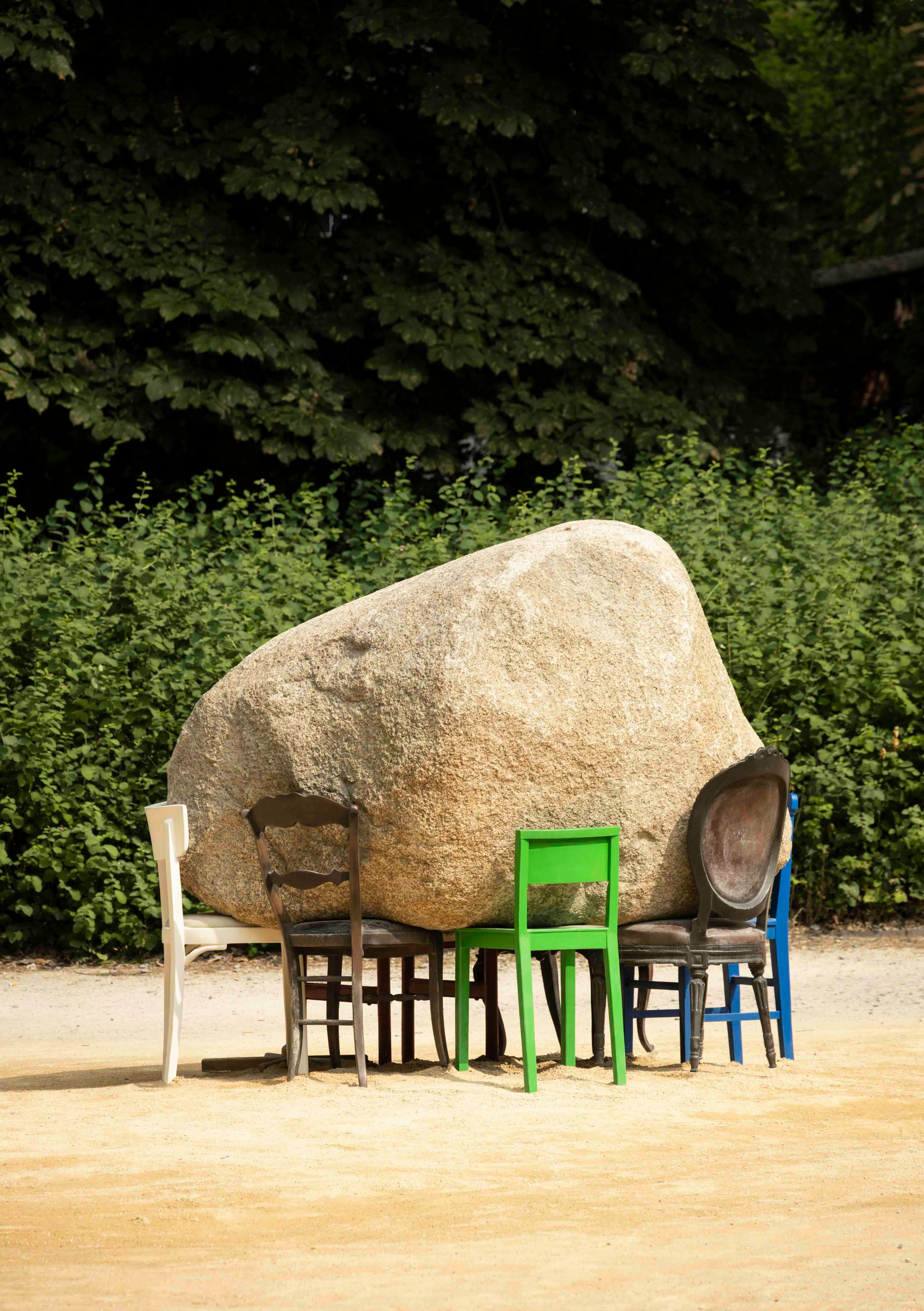
EMC: And the rock sculpture outside—was that a deliberate nod to the silent, witnessing objects in Lynch’s films?
OS: That’s an artwork by Alicja Kwade, one of the artists I proposed for the original group show. Her sculpture was already out there—if you had the window open, you’d see it migrate into the space. Alicia is deeply impacted by Lynch, so there’s a beautiful dialogue happening, even if partly by chance. It’s both accidental and considered, which felt right.
EMC: Do you see the group show of contemporary artists in dialogue with the Lynchian aesthetic happening eventually?
OS: I want to do it. A show exploring how contemporary artists have embodied that aesthetic, consciously or not. Maybe a traveling show, maybe a bigger space. We’ll see. But I do love our little building. There’s nothing quite like it in that part of the city.
EMC: How would you describe your curatorial process more broadly?
OS: My process is always to try to disappear into the work—to find not so much what the artist wanted to say, though that matters, but what the art itself wants to say. There’s always a degree of longing involved: you’re chasing a feeling you want the show to produce, knowing you'll probably never fully achieve it. That’s what ultimately drives every choice.
EMC: There’s also this idea that curation is inherently a violent act. Do you agree?
OS: I think it can be. But I think it’s closer to the opposite—the word itself comes from the Latin for “care.” It means tending to something so attentively that you might understand it more deeply than anyone else. An artwork is like a plant: it needs the right conditions. Water, the right amount of light. Without them, it withers. With them, it can become extraordinary. That’s the mission: to reactivate work, to give it access to new audiences, and to expand awareness of who an artist truly was.
Credits
- Text: Em Mai Chmiel
Related Content
Techno-Development and Desire: Mindy Seu’s Sexual History of the Internet
The Internet is Air with Maya Man
Image Spamming with Paul Hameline
Worldbuilding With Daisies
Image Stacks With ISABELLE GRAW

WERNER HERZOG
WILL BENEDICT’s French Cuisine
We Salute OKWUI ENWEZOR (1963-2019): The Only Thing Modernity Teaches Us, There Are No Innocents
SPRÜTH MAGERS: The Art Gallery and the World
SMASHED COLLARBONES: Berlin Art Week 2022
032c Selects: Berlin Gallery Weekend 2022
How Do I Feel More? A Weekend With JORDAN WOLFSON
ARTHUR JAFA INDEX: A Series of Utterly Improbable Statistics
Where Does The Puppet End And The Human Begin?