Techno-Development and Desire: Mindy Seu’s Sexual History of the Internet
|Em Mai Chmiel
Three minutes into the New York premiere of A Sexual History of the Internet, a live performance lecture by researcher Mindy Seu, a cacophony of voices quotes a proposition that an early internet technologist once made to Seu, while working together, “I’m looking for my third wife, and you could make a great option.”
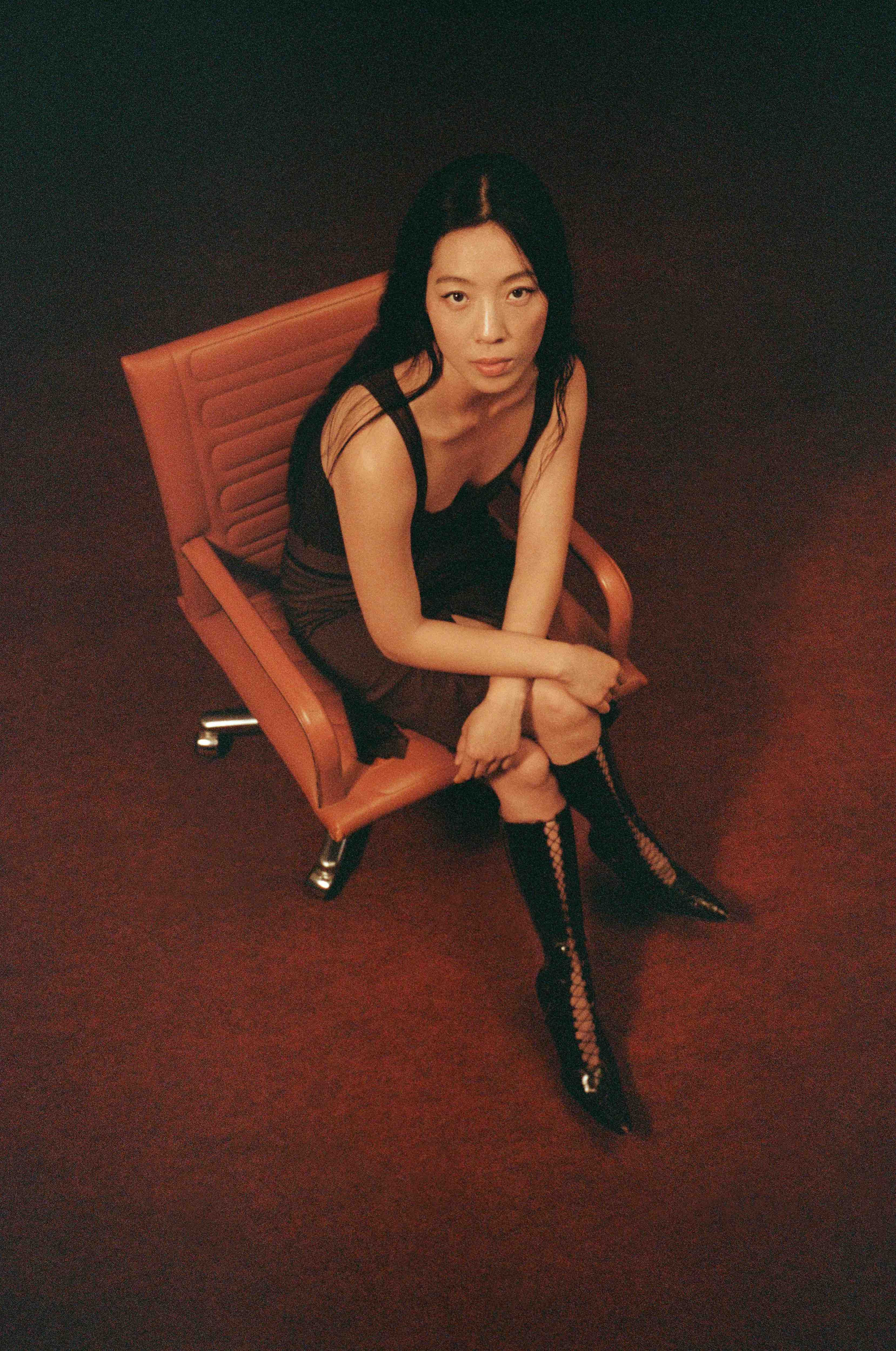
The interaction, posed by the then 70-year-old man to a 25-year-old Seu, serves as a microcosm of what A Sexual History sets out to expose: that the underrecognized labor and sexualization of women are embedded within the infrastructure of our most ubiquitous technologies. The story is merely one of roughly fifty citations that comprise the multimodal project – part live performance, part book object, part financial experiment – which compiles a spectrum of voices and histories long suppressed by dominant narratives of technological development.
A Sexual History of the Internet is the artist, technologist, and author’s follow-up to Cyberfeminism Index (2023)—a cult tome for women who own “a pair of tabis or Miista boots,” as Brian Park lovingly put it on the Middlebrow podcast. More than a clever marker of one’s own presumed cultural knowledge, the thick lime green book is a landmark anthology: an open-source spreadsheet turned print compilation of theories bridging feminist thought and the history of technology.
Whereas Cyberfeminism Index operates as an expansive, open-ended archive, A Sexual History of the Internet hinges upon the mechanics of narrative rather than the those of data accumulation. In conversation with Em Mai Chmiel, Seu unpacks how the pitfalls of our shame-based society are operationalized into internet laws, censorship, and the ways we name—or refuse to name—our symbiotic, sexual relationship with technology.
EM MAI CHMIEL: I want to talk about A Sexual History of the Internet as both a book and an object – it’s an incredibly sexy object. What did you initially want the work to communicate?
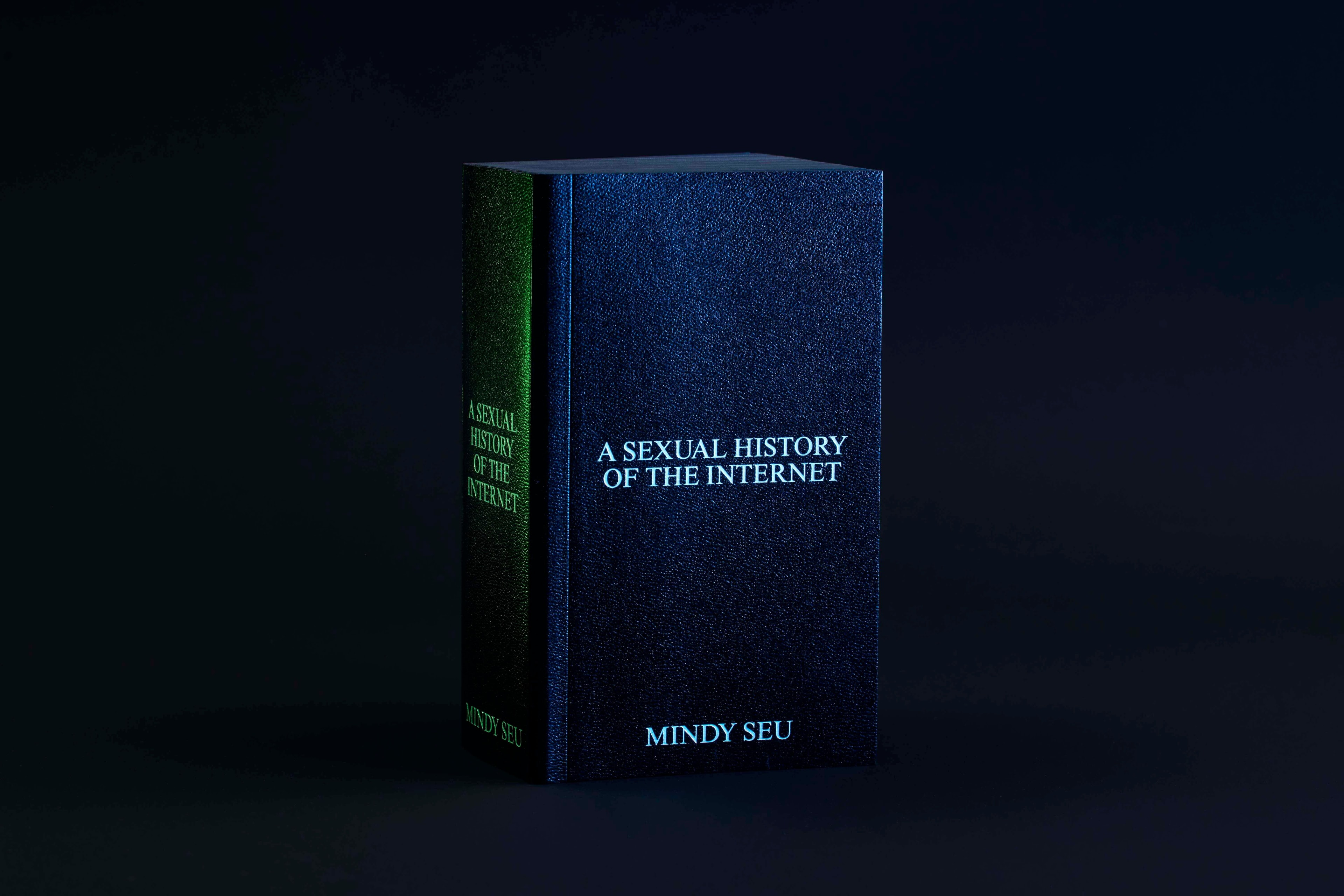
MINDY SEU: For these projects I’ve continued to work with Laura Coombs, a good friend and collaborator. She also designed my first book, Cyberfeminism Index. When we were thinking about this object, I had a very short brief: this should feel like an iPhone, a little black book, and it should serve as a facsimile of the performance.
When converging the iPhone and the little black book, it ended up feeling like a Bible. The scale feels very pocket-sized. It’s like a phone was extruded to 700 pages. Even if we were meaning for it to feel diaristic, it suddenly had this very religious quality, which I appreciate. We used black greeting card paper from Germany, with silver ink on top, which, if you apply light to it, shimmers.
EMC: The metallic ink replicates the fluorescence of a phone, in a way.
MS: Yes. With the way that Laura lithographed the images, and also because of that slight texture of the paper, the visuals feel more pixelated and reflective. Regarding the cover, some people got mad at us and commented that they were upset that we used leather. For the record, it’s not real leather!
EMC: Do you see this work as a departure from Cyberfeminism Index, or a continuation of it?
MS: Cyberfeminism Index is a very encyclopedic form. One project focuses on accumulation, and the other one focuses on narrative. The Cyberfeminism Index is in chronological order, but it’s a thousand or so entries across a broad range of themes and media, all under the umbrella of cyberfeminism, such as hacktivism or free/libre open source software, online activism, wetware, etc. One of the throughlines that emerged in this project was the topics of embodiment or naturalistic metaphors of the body online. It became clear to me that it could benefit from a more narrative arc. Then I isolated some of those examples and then added more contemporary ones to give texture to how it could flow with a clear chronology—A Sexual History of the Internet.
It's called “a history,” but I almost see it as a series. I could imagine peers like Legacy Russell, Nora N. Khan, Noelle Perdue, or Liara Roux all doing their own version, because this version only includes maybe forty to fifty examples.
“…anthologizing is violent—to pull things out of context, claiming that it’s rooted in something bigger.”
EMC: When you say that, though, whose history do you think this work is? Is it your own?
MS: In Cyberfeminism Index’s intro, I specify that anthologizing is violent—to pull things out of context, claiming that it’s rooted in something bigger. For A Sexual History of the Internet, the article “a” is important. It’s not “the history,” but one of many. The article “a” suggests that it is a very subjective history, rooted in my own personal examples and online experiences, while expanding out to things that are more global or historical.
EMC: What draws you to the compendium as a form and these larger data-based works and archives?
MS: I’m sensitive to the framing of these histories as universal truths, when in fact, we see that history is told from the narrative of the victors. It’s important to understand that these things have happened, but have also been isolated, framed, reordered in ways to provide a larger argument.
The act of crowdsourcing, compiling and referring to many different examples is a way of showing that citation provides a polyphonic view of a history. It adds texture that’s rooted in individuals. It shows that even if people might have been impacted by similar events or timelines, their understanding or the impact on them as an individual varies drastically. It’s an interpersonal view of a historical arc, rather than a state perspective. For me, it’s been helpful also because I always considered myself an anxious writer, but I love talking to people. Sourcing through discourse is natural to me.
EMC: Why did a non-linear, more cumulative form feel necessary for this work?
MS: Each chapter is trying to frame a different component of this very subjective historical overview, so they act as building blocks. One chapter reframes our conditions, behaviors, and tools—how iPhones are appendages of our body that gives them a cyborg-ian quality, how Instagram is like a dating app, or how our phones are sex toys, as described by Melanie Hoff. It situates the audience immediately to understand that we’re using this ubiquitous thing, but we’re trying to trouble it somehow.
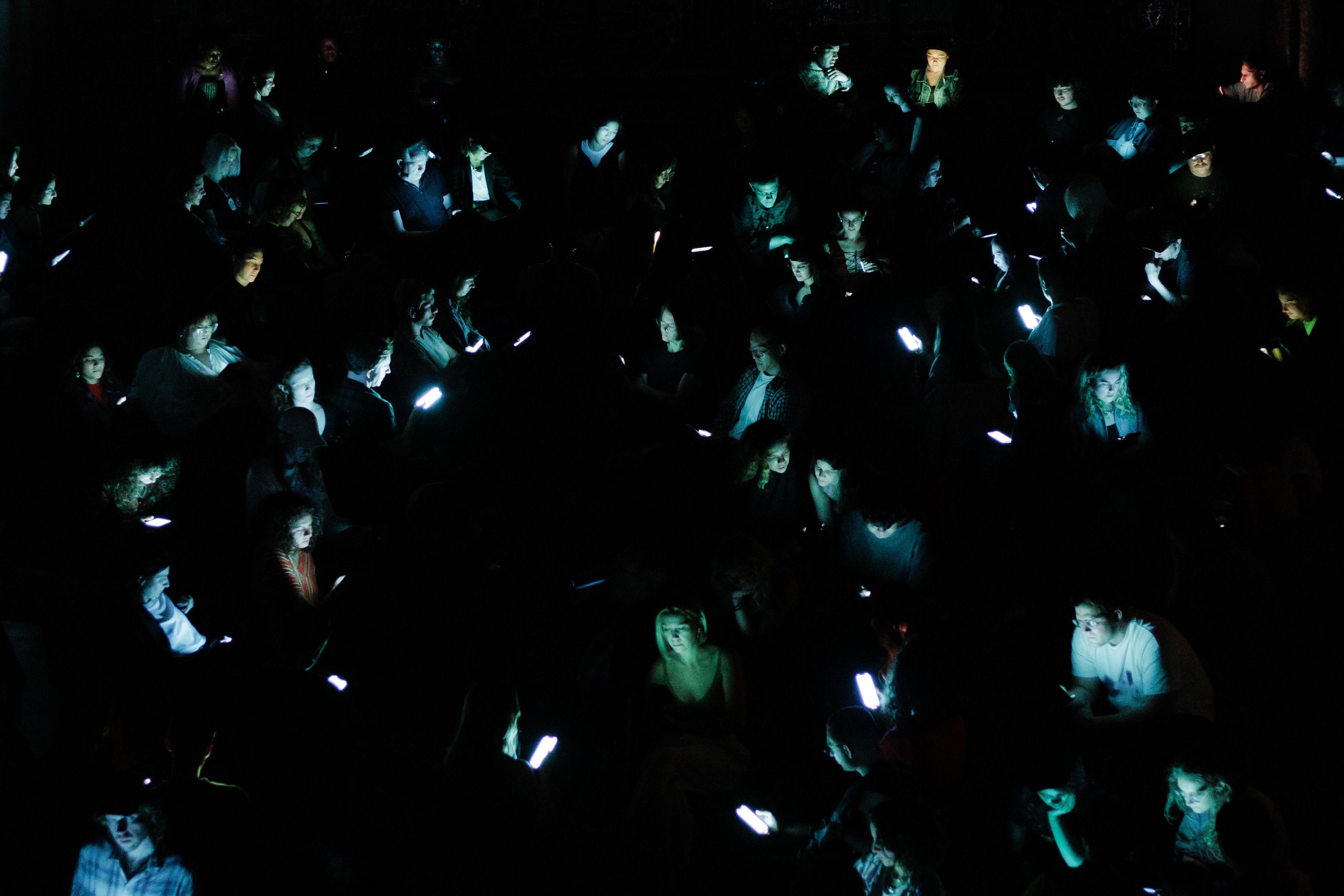
EMC: We’re very comfortable engaging with our technological interfaces in fetishistic ways, but also resistant to calling them that. Why do you think there’s so much hesitation to name these dynamics and acknowledge how we’re using them?
MS: It’s likely due to shame-based societies. Some websites, such as Patreon or OnlyFans, started off as subscription-based content creation apps, and many of the early and active users were sex or sex-adjacent workers. Once the platform became popular, they wipe all of the sex-related content, for fear of being pigeon-holed and/or litigated.
But time and time again, sex is at the forefront. It drives the fast production and innovations of these tools, and then it’s made very quiet. Cultural shame then permeates into legislation, which makes companies way more tenuous about what they want to participate in or not, even though it’s lucrative and prolific.
We can also map these larger historical moments during which legislation changed, and therefore technology changed. For example, in the 1990s, there was the Communications Decency Act, which said that platforms were not liable for what was put on their platforms. Users were held liable for what they posted. Then, with SESTA-FOSTA (Stop Enabling Sex Traffickers Act and Allow States and Victims to Fight Online Sex Trafficking Act), this switched, and platforms became liable for what is distributed on their channels. Because of this, they used algorithmic erasure to wipe everything that might possibly trigger moderation. Most people remember this most actively on Tumblr. Their content moderation tools were very under-resourced and fear-driven, so they were deleting things that might appear like nudity, when in fact, it was an illustration. This sledgehammer approach impacts everything, like Mastercard pulling out of Pornhub.
“...regardless of what you’re posting online, if it’s considered political or obscene, the first step is that it’s algorithmically made invisible…”
EMC: You’ve spoken in the past about how the book, as a form, is interesting because it can live beyond the site of a performance. Did you conceive of the book alongside the lecture in the beginning, or is that something that emerged later in the process?
MS: Throughout 2024, I was collaborating with Julio Correa. When he was my former grad student at Yale, he was playing with Instagram stories as a publishing format but then retired the idea. Years later, I reached back out and we began working together. We created a variety of test posts to test out the narrative flow, figure out how to censor or what we could get away with, etc. Many of those accounts got deleted. We understood that even if the current structure of the performance has not flagged these community guidelines yet, we should print a more finite object, because this clearly won’t live on Instagram forever. We decided to keep the Instagram account up for the performance, but also to be open access. But we also wanted to print a physical book, because it’s more accessible, and it [the book] also has an archival impulse.
EMC: How do you think about holding all these forms together in one cohesive project?
MS: It makes sense for me, because even if you’re using the same content, the affordances of the various media highlight different parts of the history. When we’re telling A Sexual History of the Internet through your phone, you’re adhering to the rules of the interface of Instagram. In this performance, we twist it. Instead of allowing people to rapidly click, you let it autoplay, which actually makes it really slow. It’s five seconds per slide—a clear pace. It’s almost like an endurance test, whereas the book can become as fast as a flip book. With all of these projects, having different outputs is an important way to make sure that the content can be made as accessible as possible in different ways. This project is really one in three parts. It’s a lecture performance, a book, and a financial experiment.
“We treat someone’s story, told to me in a whisper at a bar, at the same level as we would some scholarly text.”
EMC: Where did the idea for the citational splits model originally come from?
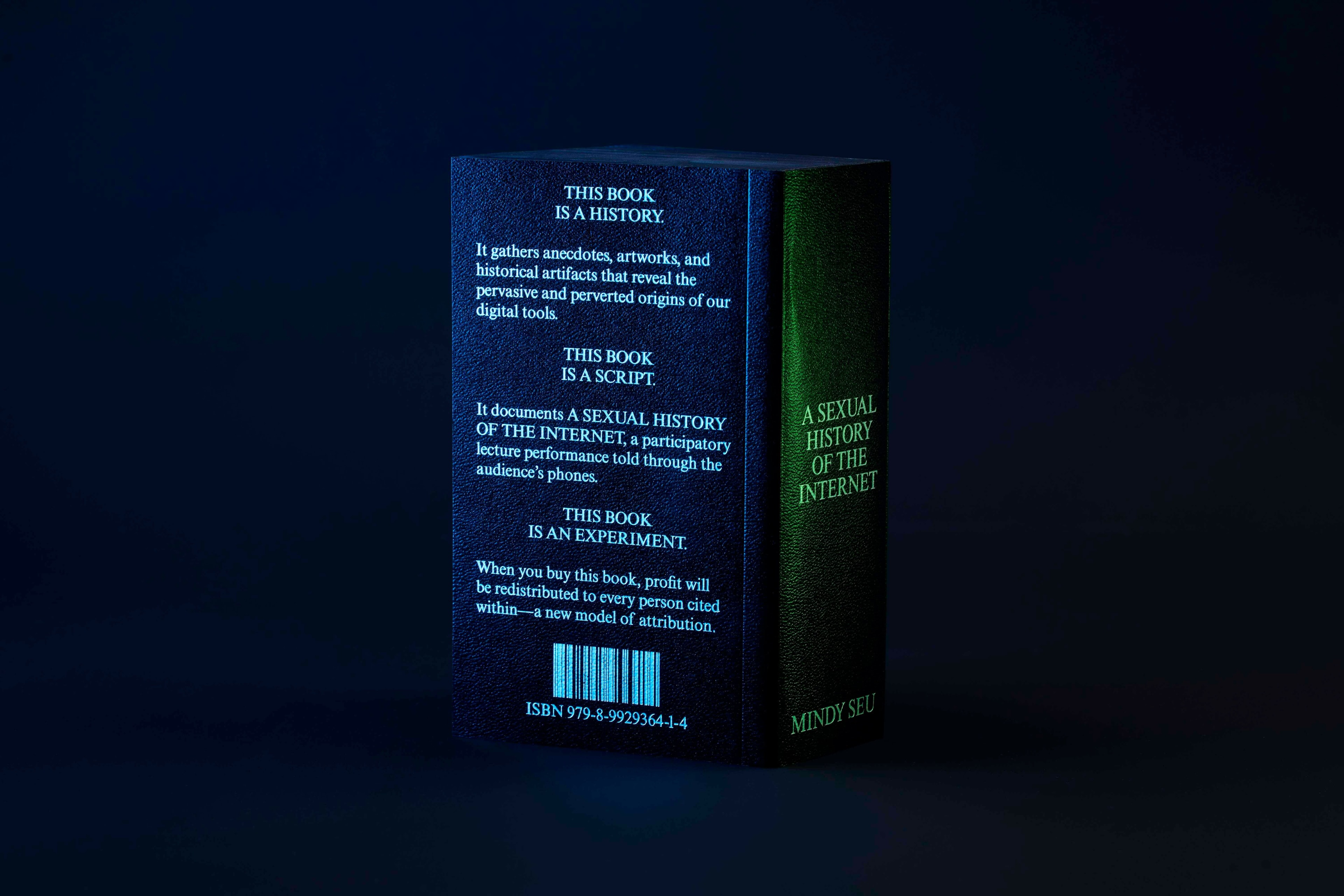
MS: It’s worth defining citational splits more concretely. It’s an experiment of attribution in which 30% of all of our profit is redistributed to those who were cited in the project. Anyone who’s in that pool—at this point, it’s 27 people—will have an equal split.
Many scholars explain how citation is the most representative form of a feminist technology. In this work, we treat a variety of citations at the same level. We treat someone’s story, told to me in a whisper at a bar, at the same level as we would some scholarly text. Then, we went out of our way to make sure not only were all of these people cited thoroughly, but they could also opt in or not. The majority did participate, and then a few people, after understanding the rules, chose to opt out, but asked us to redistribute their share.
EMC: In performances, there’s often the assumption that the performer holds the power and the energy over a room. Do you ever feel that maybe the audience is directing you as much as you’re directing them?
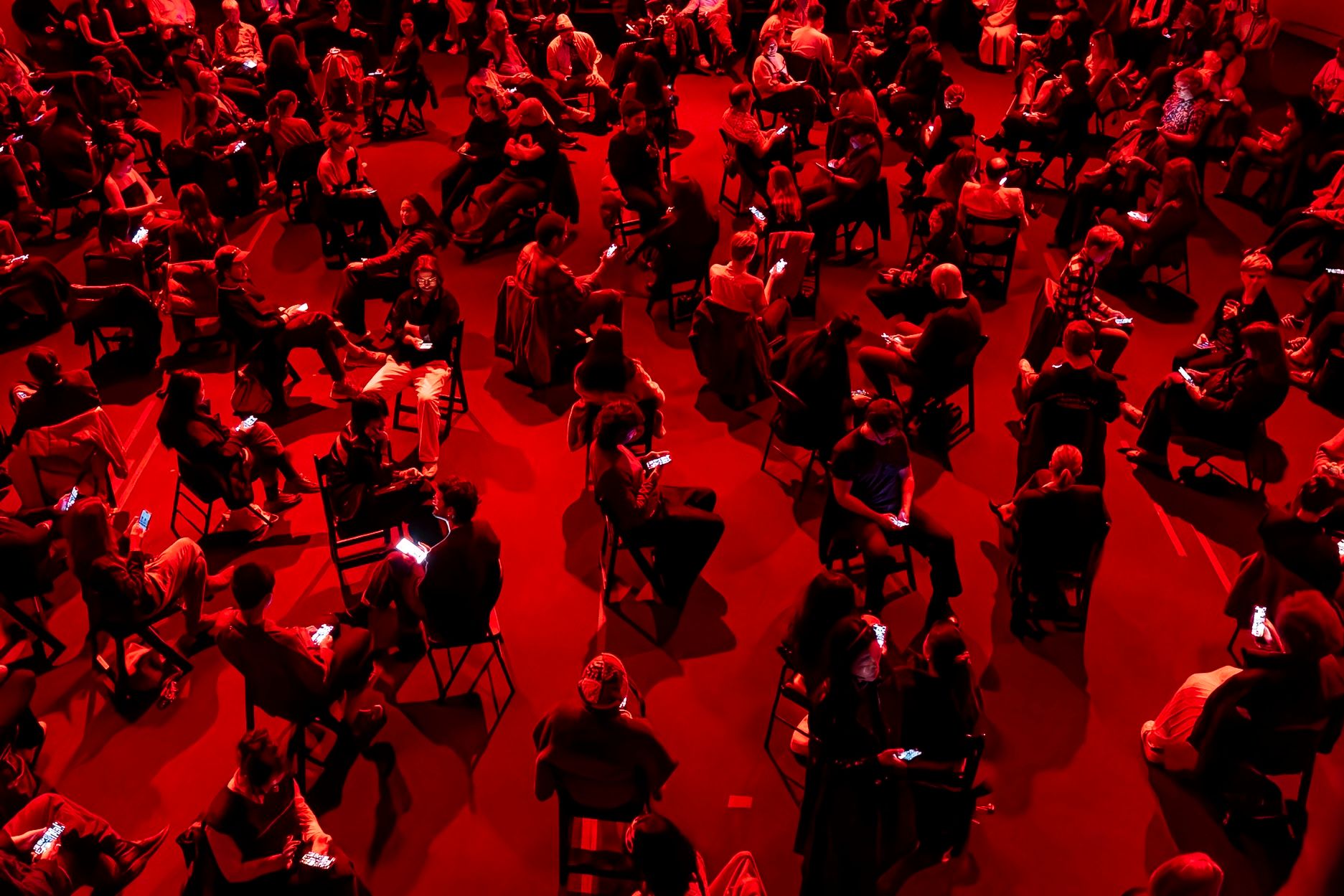
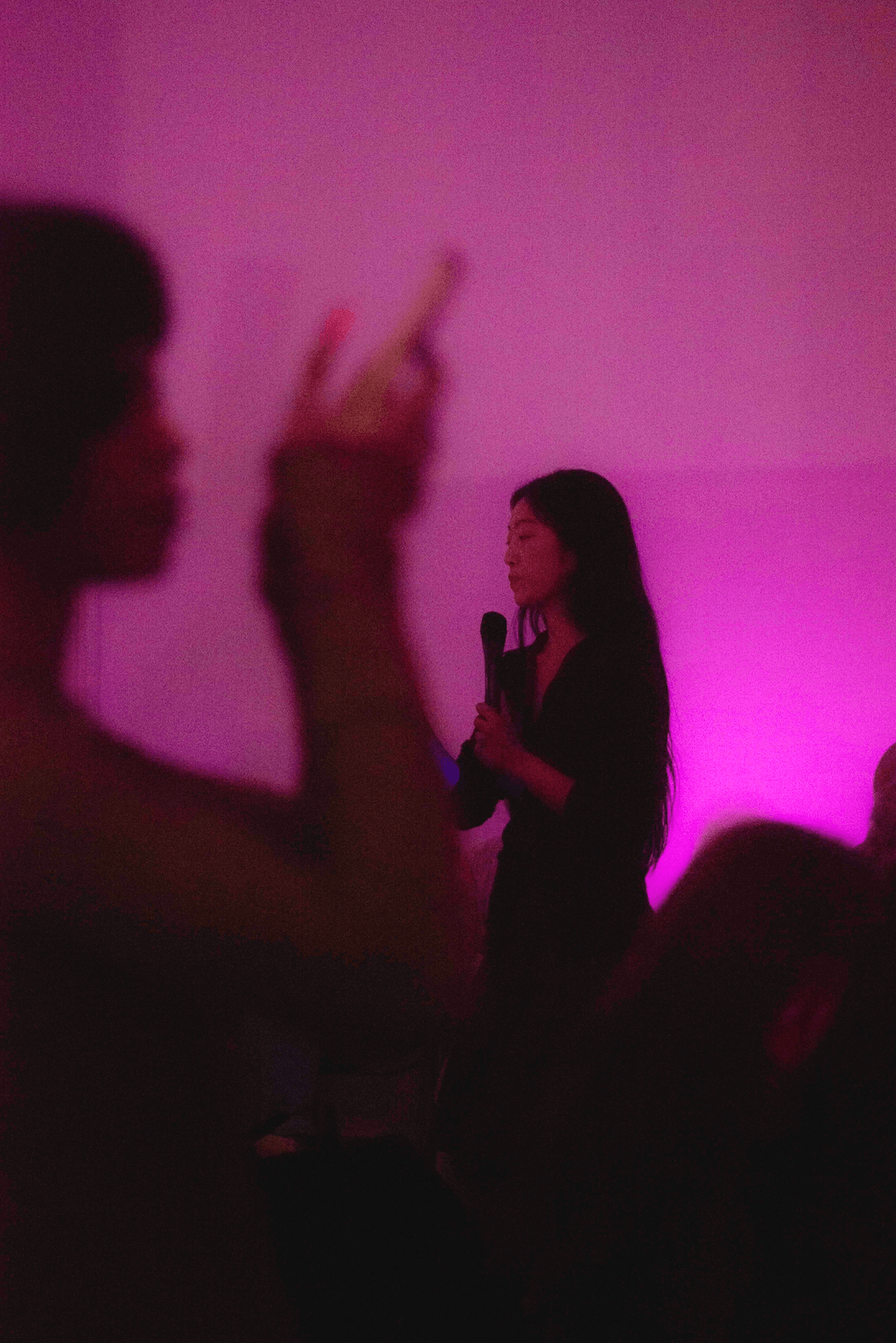
MS: I love the genre of performance lectures because it emerged in the 90s when artists were being included more in institutional contexts, and then twisting these institutional formats. Artists have a unique capability in trying to understand those conventions and tweaking them. With this lecture, you enter a room and all of the seats are randomly askew. There’s no stage, there’s no projector, and there’s no spotlight. Everyone’s directed to pull out their phone and let the Instagram stories play—it’s basically hundreds of individual slideshows happening in the same room at the same time, because you’re looking at it through your phone. The phone acts as a natural spotlight for each audience member, and as a unique speaker. There’s also a participatory reading component, because I felt it was very important to not only cite all sorts of people, but also make that experience of citation embodied, through audible recitation.
The performance mirrors the culture and the infrastructure of the city that it’s in. In New York, socially and conditionally, it’s very rowdy. There’s a lot of cacophonous energy in the room. Whereas when we did this in Antwerp, my curator friend was like, “Just so you know, Flemish people are very shy.” She was right. During the performance, maybe half the people didn’t read. But that’s the beauty of performance—we create scaffolding and the audience enlivens it—it changes every time.
Credits
- Text: Em Mai Chmiel
Related Content
No More Ghosts, Please: On Taste and NTS Radio as an Antidote to AI Slop

Bryan Johnson: “Death is a Technical Problem”
Are We Still in Control If AI Has Already Rendered Our Future?
I’m sorry, but you do not have enough coins for democracy

Chat GPT Therapy, AI Boyfriends, and the Rise of Automated Intimacy

What is AI? Matteo Pasquinelli
Labor of Perfection with Alton Mason