The Internet is Air with Maya Man
|Em Mai Chmiel
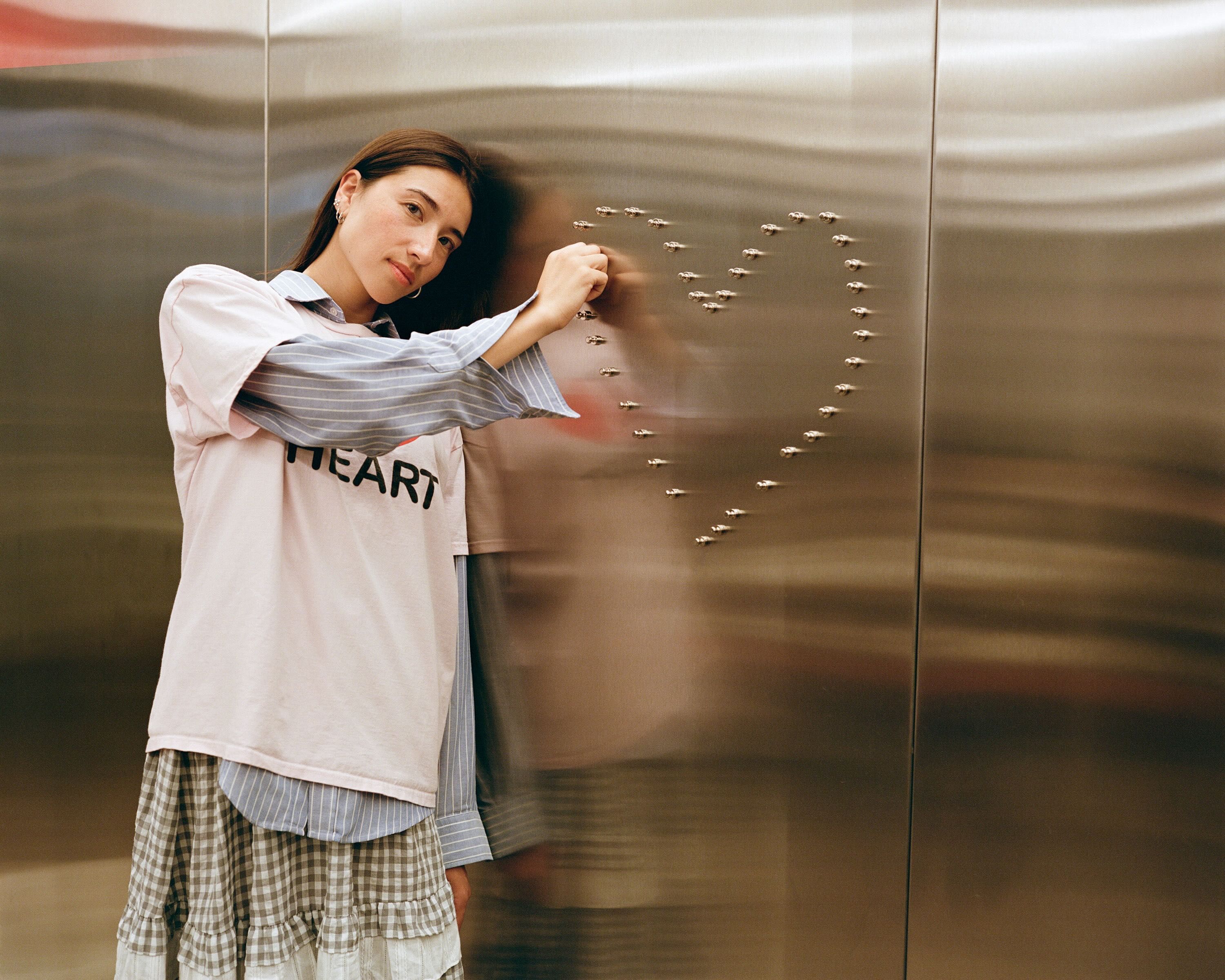
For Maya Man, making internet-based work is less a curatorial decision than it is the natural consequence of growing up online. In the New York artist’s practice, coding websites and building browser extensions—such as Glance Back, which photographs users from their webcams at random moments in their day and prompts them to title the resulting image—are not merely the next steps in a computer science pedigree. They are also ways to metabolize one’s online existence—addressing the gap between our actual selves and the “acrobatics we perform” to present an idealized version of the self.
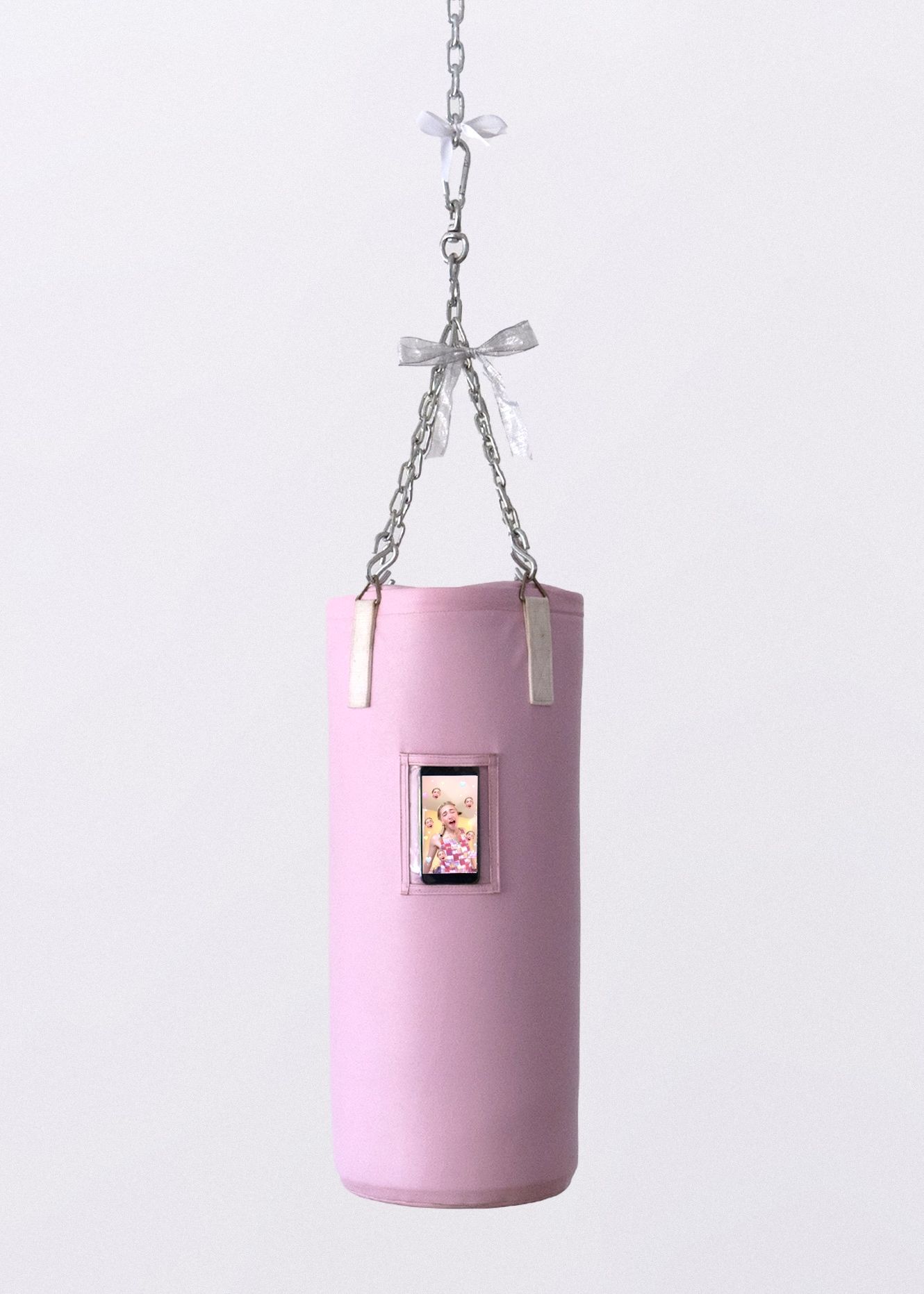
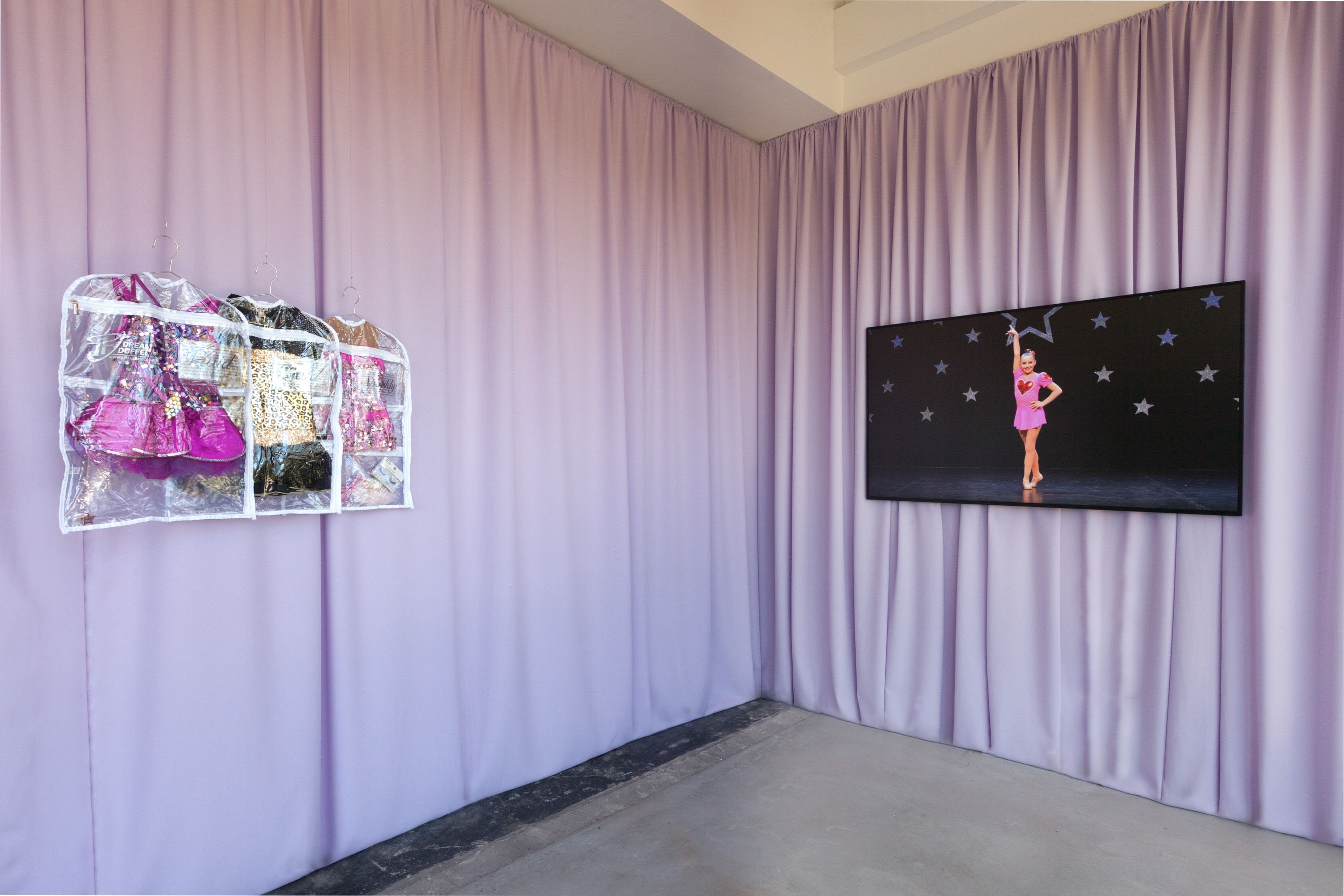
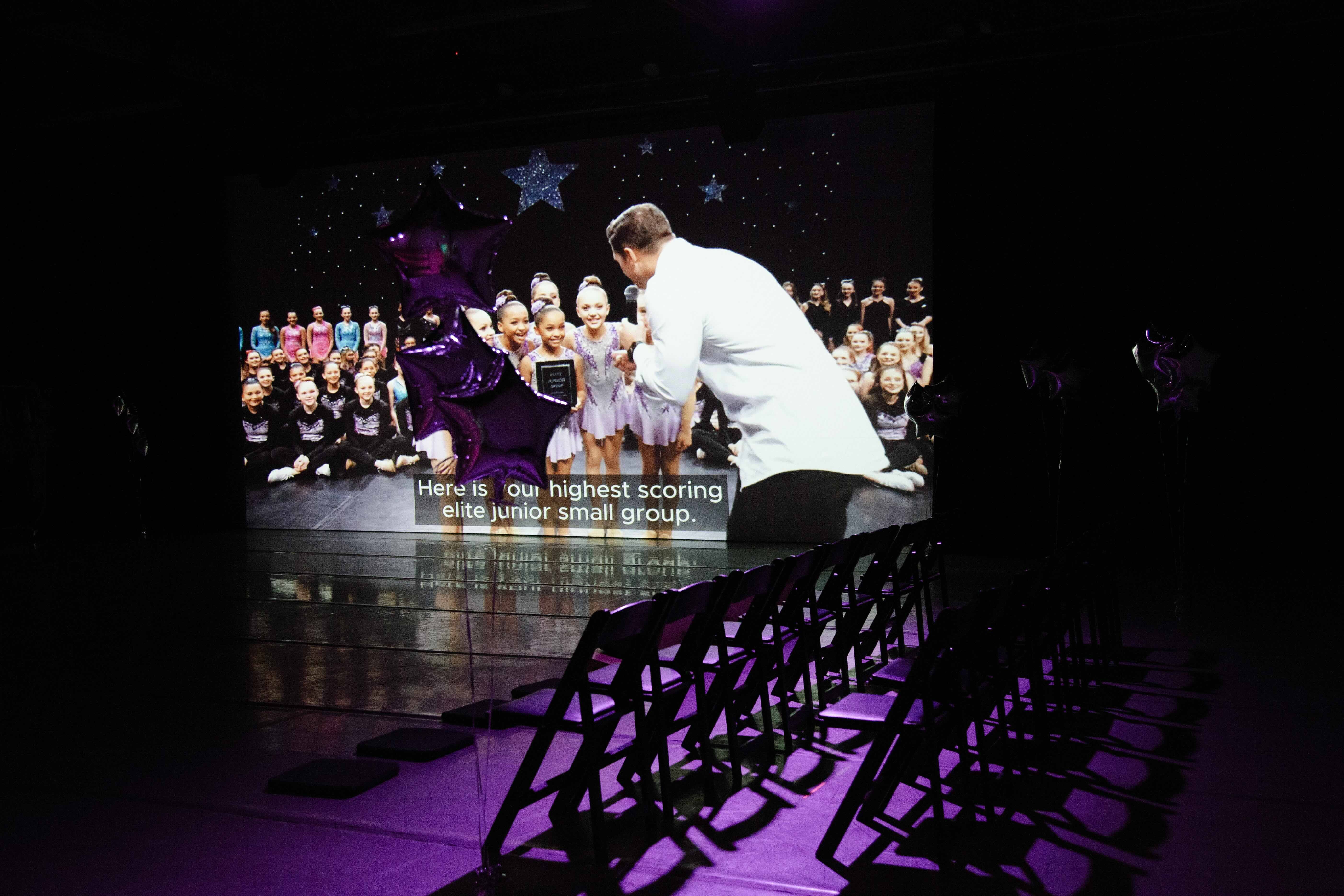
For her 2024 commission for the Whitney Museum, A Realistic Day In My Life Living In New York City, she appropriated the “day in my life” TikTok genre as method to critique the politics of self-curation, online performance, and the industrial engine behind content geared toward optimization and wellness culture. In her latest project StarQuest, which premiered last month as a performance-lecture at the L.A. Dance Project, Man turned that same scrutiny toward her own past. Accompanying her solo exhibition “StarBound” at SOOT Gallery, StarQuest draws on the reality television series Dance Moms and the artist’s own experience as a competition dancer to interrogate aestheticized stagings of the self. The work, which is accompanied by physical objects and a generative software-based installation, will also be shown later this month in “StarPower,” Man’s forthcoming debut solo exhibition in New York, which opens at bitforms gallery on March 19, 2026.
In this wide-ranging conversation with Em Mai Chmiel, Man discusses performative Luddism, the fundamental goodness—or lack thereof—of the internet, and what it means to finally create work that is unabashedly her own.

Em Mai Chmiel: You grew up in a suburb in central Pennsylvania. What was your experience like growing up there, culturally and socially?
Maya Man: My early cultural influences were mass culture. I grew up listening to the radio, 99.3 Kiss FM, and going to Capital City Mall. I didn’t have access to anything below the surface. And I loved it. But when I got a little older and started spending a lot of time online, I had a little more agency. I was classically on Tumblr and really compelled by the imagery there. And in high school I read Rookie a lot—Tavi Gevinson’s magazine.
EMC: Many would refer to the culture that you grew up with as “lowbrow.”
MM: There has been a shift in the past five to ten years where people think it’s fun and silly to be into more lowbrow cultural stuff—with a wink that says, “Oh, I’m not actually the target audience. I have all these other cultural references, but I’m choosing to be interested in this.”
EMC: Yeah, you don’t have to be.
MM: Right, the attitude is like, “I don't have to be, because I read theory.” But growing up, and still today, my engagement with pop culture is earnest. That’s why I make work about it. It’s not purely from the position of being outside of it.
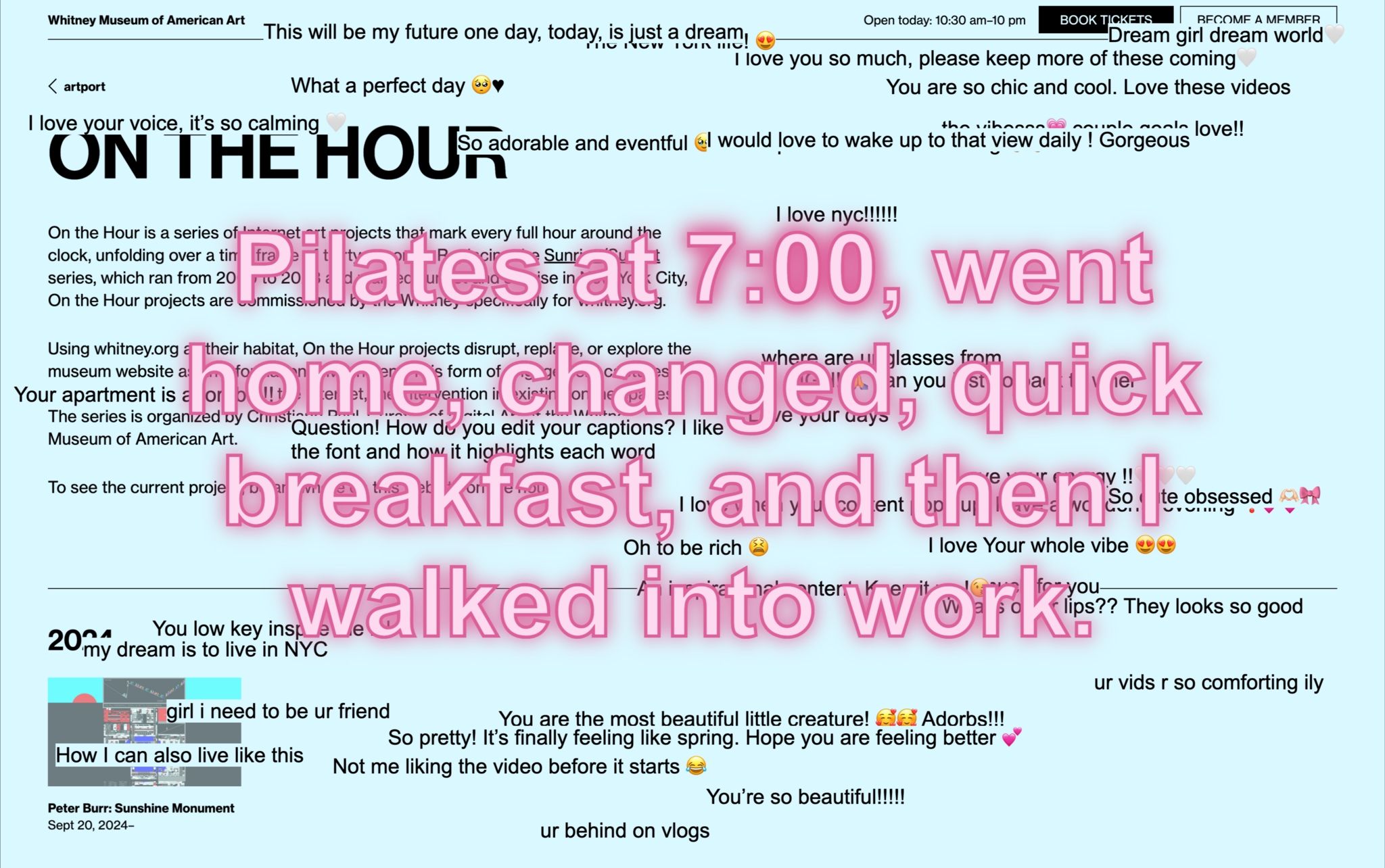
EMC: Have any of your coaches, or the folks you grew up dancing with, seen your most recent work, StarQuest?
MM: No. I’ve been lightly in touch with my childhood dance studio because I was looking for old costumes to use. We didn’t talk about the project directly. I have a looming fear about this because StarQuest is very critical of the competition dance system and draws an analogy between those mechanics, social media ecosystems, and generative AI. But, at the same time, I really value the time I had as a competition dancer. I just hope the project doesn’t read as wholly negative, because it isn’t.
EMC: Most of your works point the lens onto broader cultural phenomena rather than your own life. What brought you to focus on your personal life with this project?
MM: I’ve been wanting to push myself toward making bodies of work that are larger and can sustain themselves across multiple instances, mediums, and exhibitions. Because I’m so conceptually driven, I tend to build out a piece nearly from scratch with every work. I was excited about going deep into the world of competitive dance culture and staying there for a while.
I’ve been shy about showing up in other pieces. For StarQuest, I wanted to show up more legibly. I’ve now been over a decade removed from my last dance competition, and I needed that distance to see everything clearly.
“…for a lot of women or young girls, there’s an expectation that you are nice and palatable and frictionless.”
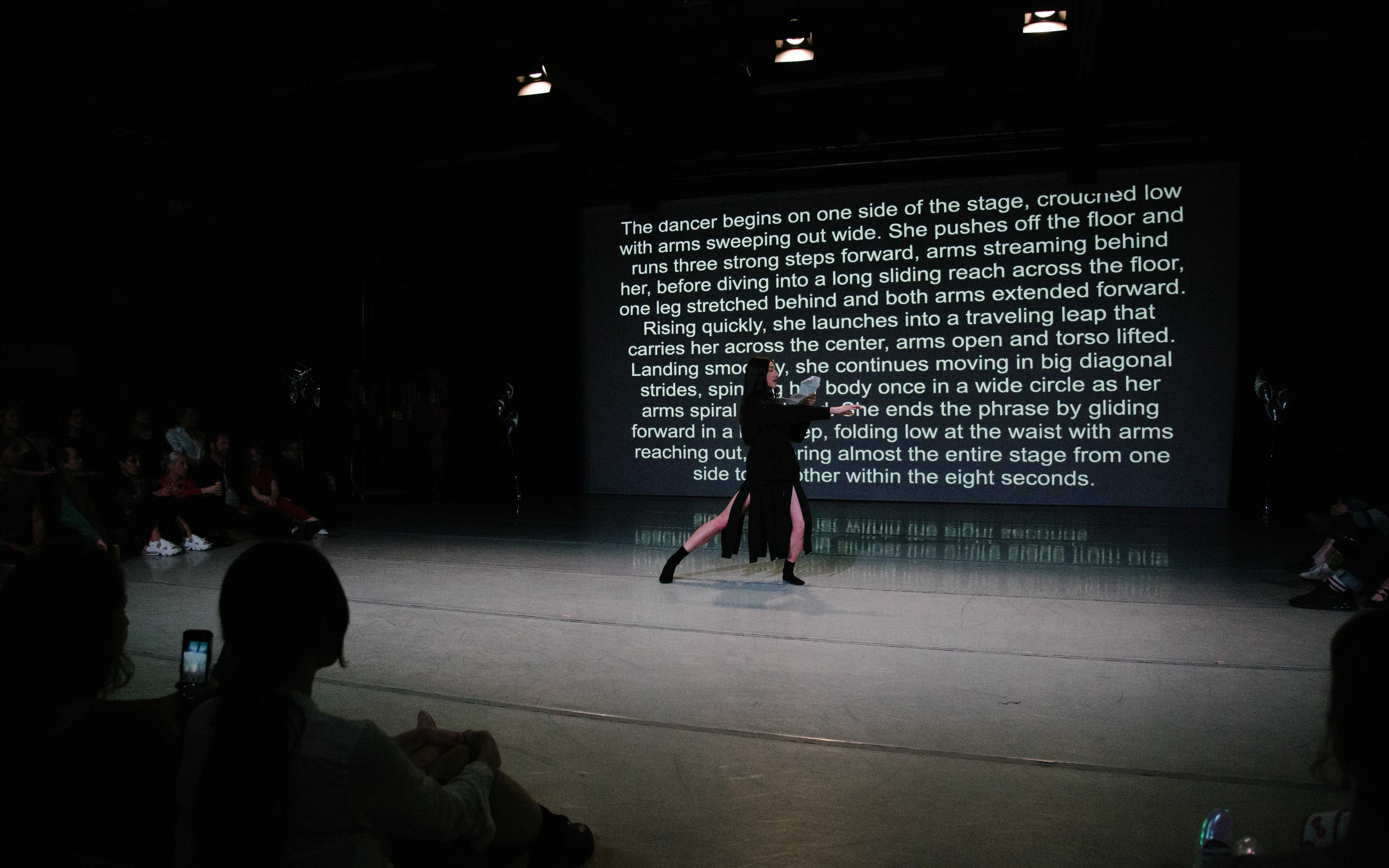
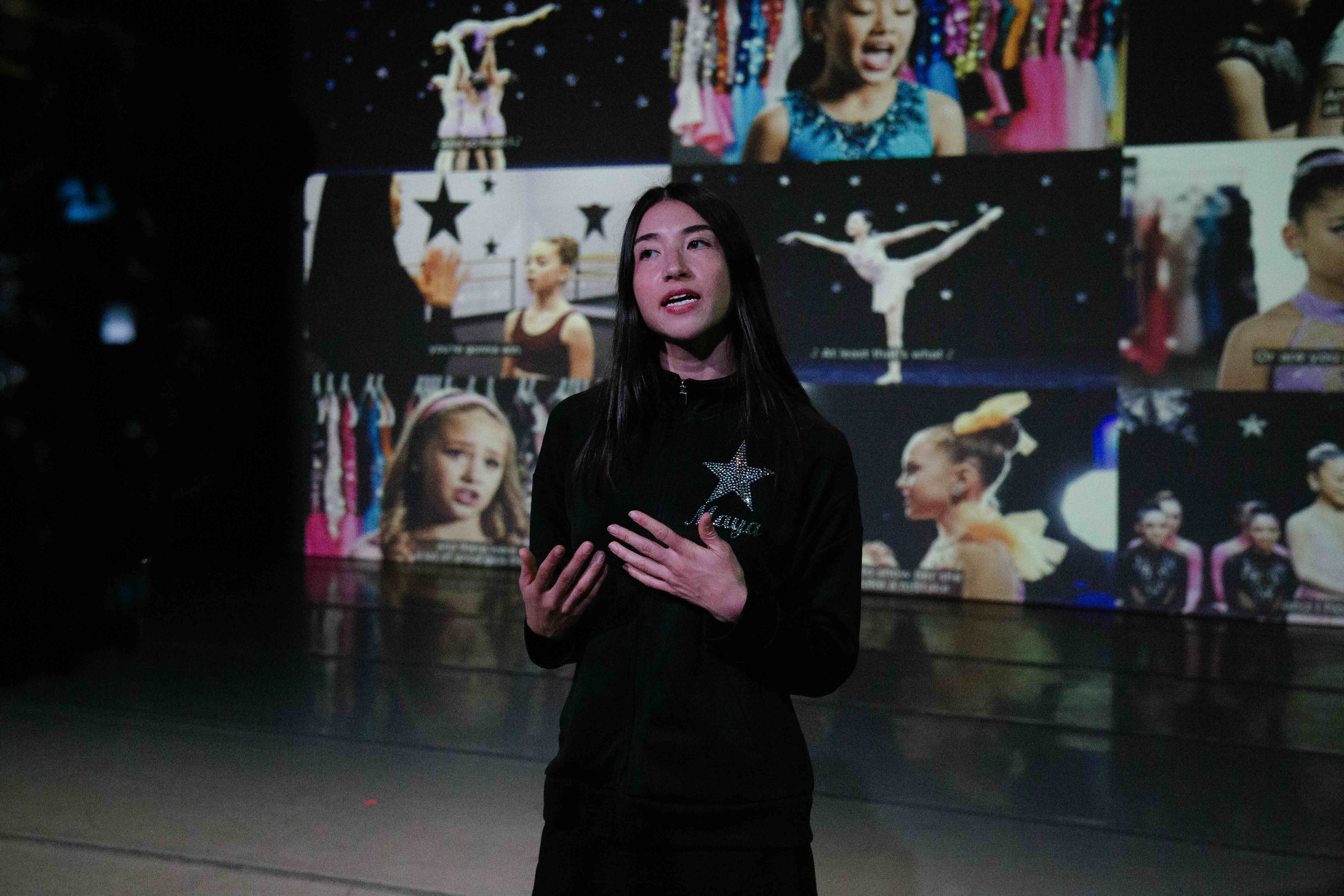
EMC: Even though StarQuest is so personal, the girl depicted in the work is completely neutralized. She’s expressive, but also expressionless. Outside of this work, do you think that we carry that determinism into our day-to-day lives?
MM: Totally, and it’s very gendered. I think a lot about the distance between who you are and who you aspire to be. Everything I make is about understanding the acrobatics we perform to try to become some idealized version of ourselves. For a lot of women or young girls, there’s an expectation that you are nice and palatable and frictionless. I often find myself wanting to be that way.
EMC: Self-curation shows up not only in your works, but also in the simple acts of creating your website or deciding what to post on Instagram. How do you navigate the constant need to render yourself legible?
MM: I’ve tried to adjust my perspective to see it as an opportunity for artistic intervention. I used to harbor a lot of guilt for cultivating any kind of persona online. There was something about it that felt performative in the negative sense. People treat posting as if it’s self-centered, but I actually think it’s about self-discovery. Of course you’re going to overthink how you’re presenting yourself online—it’s the same as going to a party in the physical world. Self-consciousness is unavoidable.
So, I feel it’s actually an opportunity, especially for an artist. It’s a chance to frame your work the way you want—directly, with no middleman. Often, when work leaves your studio, you give up that sense of control to a gallery, an institution, a publication.
EMC: You once said “that the internet is air.”
MM: I really believe that. That's why I don't use “IRL.” The internet is so real.
EMC: After studying computer science and media studies at Pomona College, you briefly worked in corporate tech. When did you realize that path wasn’t yours?
MM: I felt really complicated about it from the beginning. I was genuinely interested in the intersection of technology and power, but ultimately it gave me a lot of stability at the time. Eventually, I realized I was in a machine that was exponentially larger than me, and it was delusional to think I could have any steering effect on it. At the same time, I was developing the language and confidence to take my art practice more seriously. When I finished undergrad, I didn’t know that being an artist was a possibility for me. I decided to leave working in tech and get my MFA during the pandemic.
EMC: Right now, we’re in this cultural turn toward neo-Luddism—people romanticizing disconnection and being offline, analog aesthetics, and logging off as resistance. Do you see any of that as a meaningful critique, or is it merely an aesthetic performance?
MM: I have a really complicated relationship with this. I haven’t yet been able to fully articulate why, but I’m skeptical of the whole discourse. Of course, I share the same critiques of these platforms—that they’re forms of centralized power or engineered to capture attention.
But something doesn’t sit right with me about the rhetoric around rejecting technology, because it’s often unspecific and tries to be overly holistic in a way that proves unsuccessful. People get a flip phone and then go back after a few months, because it’s too hard. We live in a time where operating that way requires enormous sacrifices, and I don’t think most people—myself included—are ready to make them.
I agree there’s too much time on screens. There’s a whole genre of content creation about getting offline —“the story of me deleting Instagram for a month”—and I don’t find it very inspiring. It feels unrealistic. It’s almost embarrassing that a very specific slice of humanity—the Western upper-middle class—is doing this sort of acrobatic exercise.
The fact that we want these devices in our hands so badly means we need to actually think about it more, and also acknowledge what these critiques miss: these technologies bring something sweet into our lives, too.
EMC: Do you fundamentally believe that the internet is making us more free, or is it creating more possibilities for constraint?
MM: It’s very hard for me to land on either side of, “is the internet good or bad?” Everyone wants an answer to that question. I do think the internet is expansive, and I mean that positively. It’s personally given me a read/write relationship with the world. Coming from a place that was not at all connected to cultural centers, the idea of contributing to culture felt impossible. The chance to self-publish images and text on the internet changed that completely for me.
EMC: So much of internet art is built on cutting, pasting, remixing, reposting, or using AI and algorithms to generate work. What is your relationship with appropriation?
MM: I appropriate stuff all the time. But artists have been doing that since way before the internet. For me, it’s my way through an overabundance of content online. We see so much that it’s hard to look at anything specifically. As an artist, I have the opportunity to ask people to look at something very specifically—to take one slice, one genre of content, and ask people to see it as special.
I steal a lot from the internet. I'll scrape Depop or transcribe “day in my life” TikToks. I’m essentially using content as raw material. When you upload something to the internet, it’s not yours anymore. I operate under that assumption, and also under the assumption that I’m never making something in bad faith. I’m always coming from a place of respect and deep love for the people who made the original content.
EMC: Most of your works are digitally oriented, but some others, such as Glitter Tubes (2025) and love/hate (2022), exist materially. What can physical projects offer that digital ones cannot?
MM: I think it's important for all work, whether the practice is digital or not, to be shown in physical space. Beyond that, employing physical material adds what I’ve been calling “metadata” to a digital piece.
I operate in a digital-first way, so the choice that happens in the translation of digital work into physical space is really important.
“with code, I know exactly what I want; in any other medium, there’s more friction.”
EMC: Do you think the hierarchy between digital and physical works in your practice will ever shift?
MM: I can’t say it won’t, but when you spend so many years working in a specific medium, you become spiritually intertwined with it. When I’m making a website, I can pixel-push and shape the energy of the site to truly feel like mine. With code, I know exactly what I want; in any other medium, there’s more friction. Maybe eventually I'll feel just as powerful in another one. Or, maybe I'll be pixel-pushing until the end of time.
Credits
- Text: Em Mai Chmiel