Mastering Disruption: Skrillex in conversation with Ecco2k
|CASSIDY GEORGE
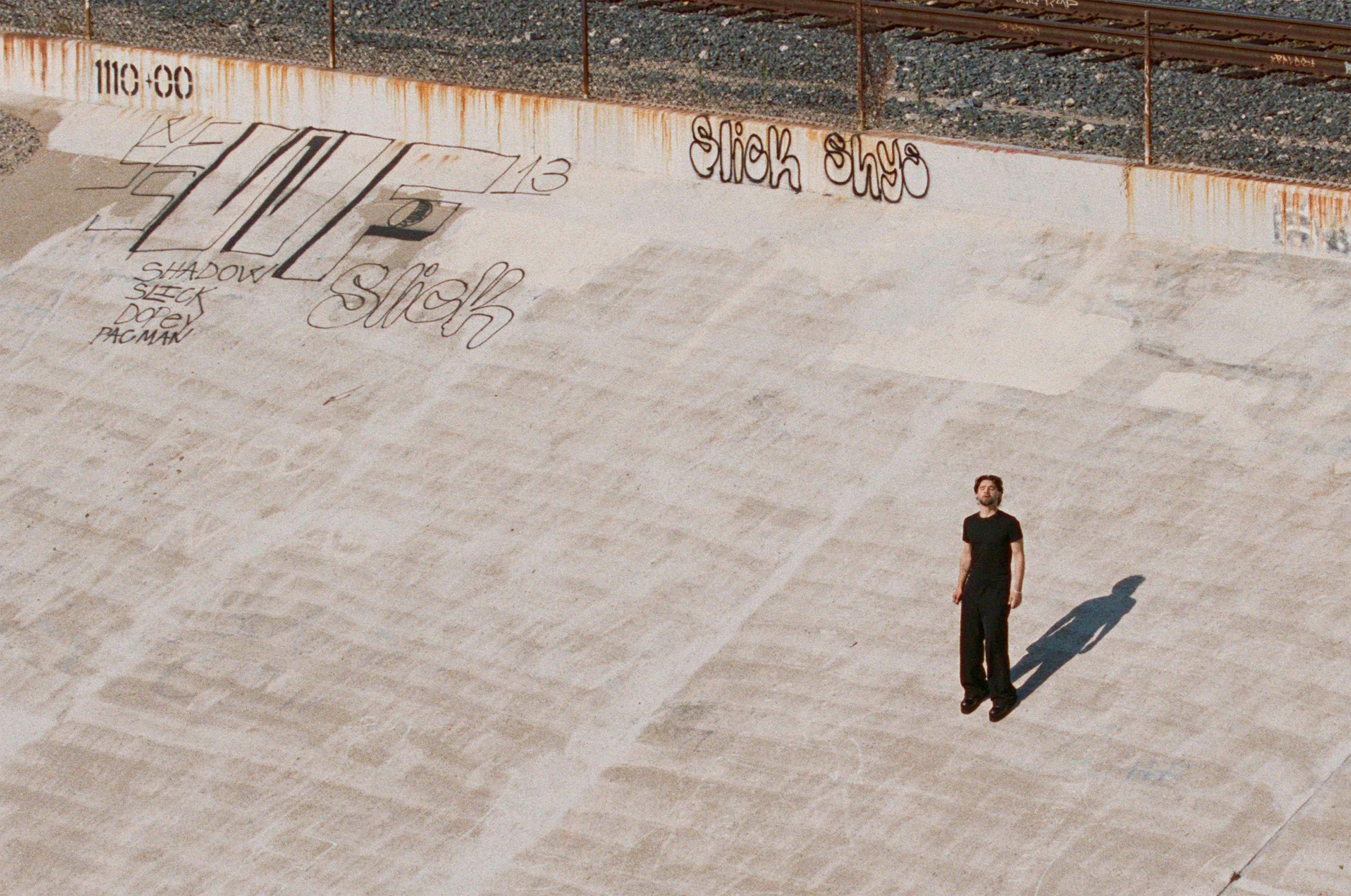
Shirt COURRÈGES, pants GUCCI, shoes ALEXANDER DIGENOVA, jewelry TALENT’S OWN
This cover story appears in 032c's Summer 2026 Issue. Get your Skrillex cover here.
Arguably the most influential electronic music producer of his generation, Sonny Moore consistently challenges existing structures. His discography destabilizes the hierarchies of old and new, kitsch and avant-garde – and dismantles prevailing beliefs about what popular music is, or can be.
“FUCK U SKRILLEX YOU THINK UR ANDY WARHOL BUT UR NOT!! <3” is scrawled in graffiti on the cover art of an album released by Sonny Moore last year. Under that same title, the album is the third full-length Skrillex project Moore has put out in the last three years. Although it was made by one of the most popular electronic musicians alive, it is a 46-minute-long sonic experiment in temporality and song structure, created with fringe sounds and techniques.
Listening to Fuck U Skrillex feels like riding every attraction at an amusement park simultaneously. It is whimsical, brash, even funny – and it continues the broader legacy of the Skrillex discography. For the last 16 years, Moore’s work has consistently destabilized binaries: good and bad, old and and new, digital and analogue, individual and collective, kitsch and avant-garde.
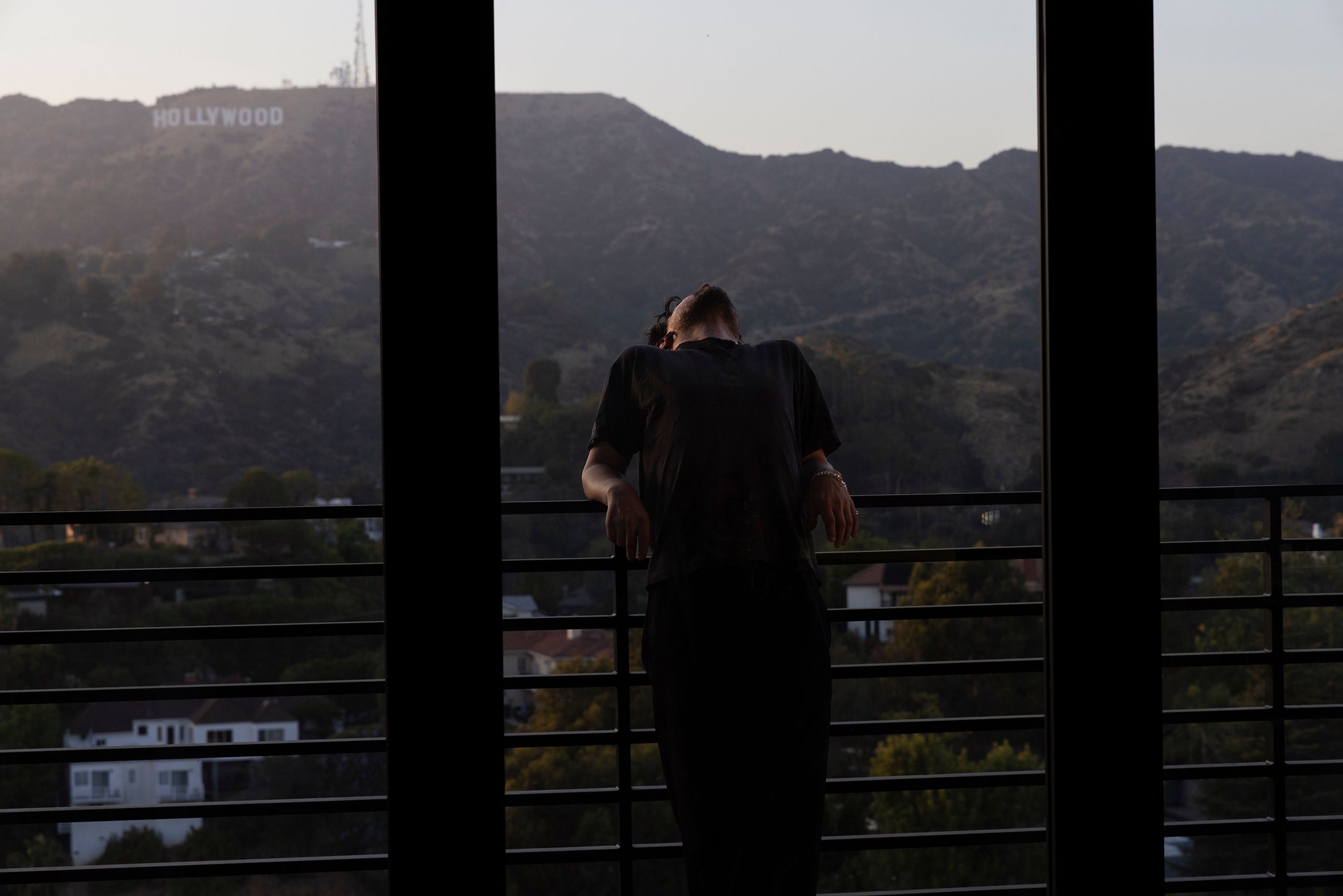
Shirt COURRÈGES, pants GUCCI, jewelry TALENT’S OWN
“I THINK THE VALUE OF ART CAN ALMOST BE MEASURED BY ITS ABILITY TO MAKE SOMEONE FEEL SEEN.”
Though the album title is framed facetiously, the comparison between Moore and Warhol is apt. Both are American artists from humble beginnings who showed substantial talent in their respective crafts at an early age – and later outraged formalist establishments with their adoption of new technologies. The laptop Moore used to create My Name Is Skrillex (2010) and Scary Monsters and Nice Sprites (2010) now sits in the Rock and Roll Hall of Fame, but at the time of their releases, dismantled belief systems around what contemporary music is, or can be – and what it means to make and distribute it. Warhol’s mass-produced, silk-screened Coca-Cola bottles and Campbell’s soup cans proposed similar questions about fine art.
The unexpected commercial success of Moore’s radical take on dubstep – an electronic music subgenre rooted in Jamaican sound system culture and pioneered by British producers Skream and Benga – made him a superstar and helped propel a new youth culture movement in the early 2010s. It also earned him widespread criticism from electronic music purists, many of whom believed Skrillex’s fandom endangered the genre’s underground ethos and historical lineage. For the last ten years, however, Moore has also lived in accordance with one of Warhol’s core beliefs: pop art should speak for itself.
Technically speaking, Moore’s production style conjures comparisons to postmodern architecture: his method of construction typically foregrounds its disparate influences and structural contradictions rather than concealing them. Through collaborations with artists across genres, generations, and geographies, Moore has proven himself to be a chameleon, capable of disappearing or asserting his signature presence at will – all in service of what is best for a particular song.
The nine-time Grammy-winner and architect of hits with A$AP Rocky, Beyoncé, J Balvin, Justin Bieber, and FKA twigs has recently been collaborating with kindred spirits: a league of experimental artists exploring new frontiers in pop and electronic music who are also invested in collapsing binaries, rejecting orthodoxy, and embracing the inevitability of misunderstanding. This community converged in May 2026 at CONTRA, a weekend-long festival Moore created with his creative director, Bill Kouligas of PAN, alongside an international curatorial team. The lineup included Blawan, Bladee, BNYX, Boys Noize, Crystallmess, Flowdan, Isabella Lovestory, Juliana Huxtable, Malibu, Mechatok, Tohji, and Varg²™ and was hosted – in a coincidental nod to Warhol – in a repurposed factory in Berlin.
In his first formal interview in over a decade, Moore speaks with fellow CONTRA headliner and friend Ecco2k about his rollercoaster ride of a career.
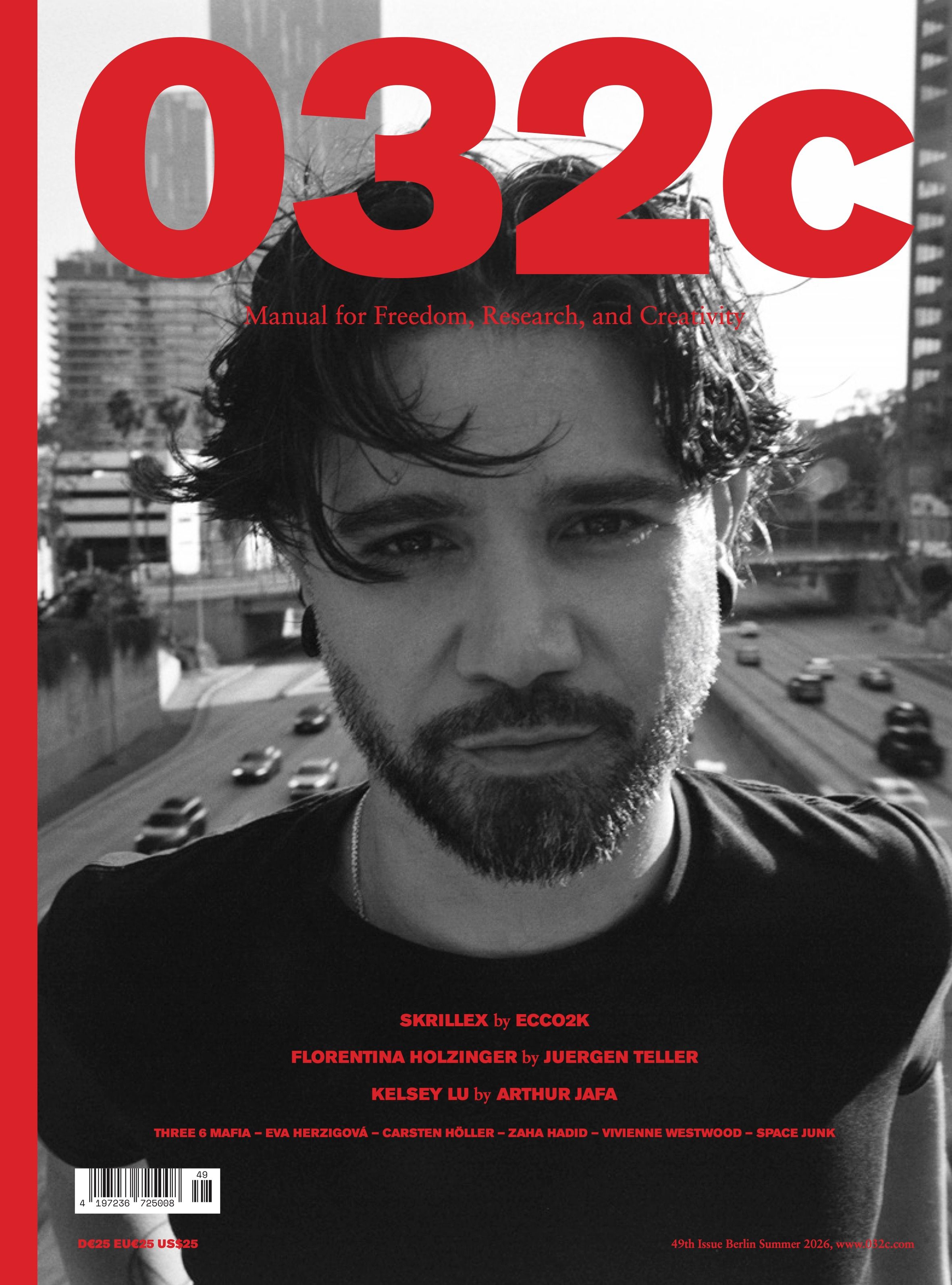
Ecco2k: What are you working on right now?
Skrillex: Another single from this next project. I’m turning it in today or tomorrow.
Ecco2k: Are you happy with it?
Skrillex: It feels like, maybe not the end of an era, but it’s part of the last batch of songs I’ve been stockpiling because of my previous deals. I had been making more music than I was able to release, so I’m really excited to get this stuff out. I still love it and think it’s great, but I’m so ready to make new things.
Ecco2k: Sometimes I think it’s really beneficial to let the work sit. If you come back to it and you still like it, you know it’s good – that’s the final quality test.
Skrillex: It’s true that it stood the test of time. But you know that feeling of having just done your homework? Because it’s just technical stuff now. Zak, you’re one of the most detail-oriented producer-ears I know. You remind me of myself. Every micro-nuance, you’re in there. If there’s one thing I want people to know, it’s how much every decibel across every frequency matters to you.
Ecco2k: Well, you taught me a lot! And a lot about how to actually execute those things. You’re self-taught as well, aren’t you?
Skrillex: Yeah.
“SONGS LIKE ‘BANGARANG’ WERE MADE ON SNOWBALL MICS OR LAPTOP MICS.”
Ecco2k: That’s what’s so cool about sitting with other people and watching how they work, because there are so many ways to accomplish the same goal. I credit a lot of my development in production to having watched over the shoulders of some of the best producers in the world. My friends, and now you.
Skrillex: I always knew you were a crazy producer, but once I saw your Ableton sessions and how organized, detailed, and intentional everything was, it gave me a deeper understanding not only of what you’re trying to do but also why your stuff is so special. There are great musicians and collaborators, but some of them tend to just do what they do, and that’s their magic – you can’t really contain it. That’s a different mindset from being really locked in to the details of intention.
Ecco2k: I think we’re both quite good at holding both sides of it – improvising and then editing and refining. It sounds like we’ve both been in a refining mode this past year, which is extremely rewarding in its own way. Sometimes all you want to do is polish. Other times you feel like it’s time to start playing around again. One thing that surprised me about your production technique: you don’t use a lot of exotic tools. You use stock Ableton plugins, and only a very lean selection of them.
You’re not a crazy gearhead, even though you understand and know how to use all of it. There is something to be said, not just in music production but in general, about being able to make something truly distinct from quite simple tools. These are tools that are inexpensive, ubiquitous, and available to everyone. The work is special because of the idea, the execution, and your particular perspective. The fact that your music is so singular and is made with the same things that everyone else has says everything about what’s actually coming out of you, and the skill you’ve built to translate your ideas so well.
Skrillex: It came from the early days of getting Ableton – 2007 was when I got my first version. I don’t even want to do the math. Almost 20 years?
Ecco2k: I was in primary school then.
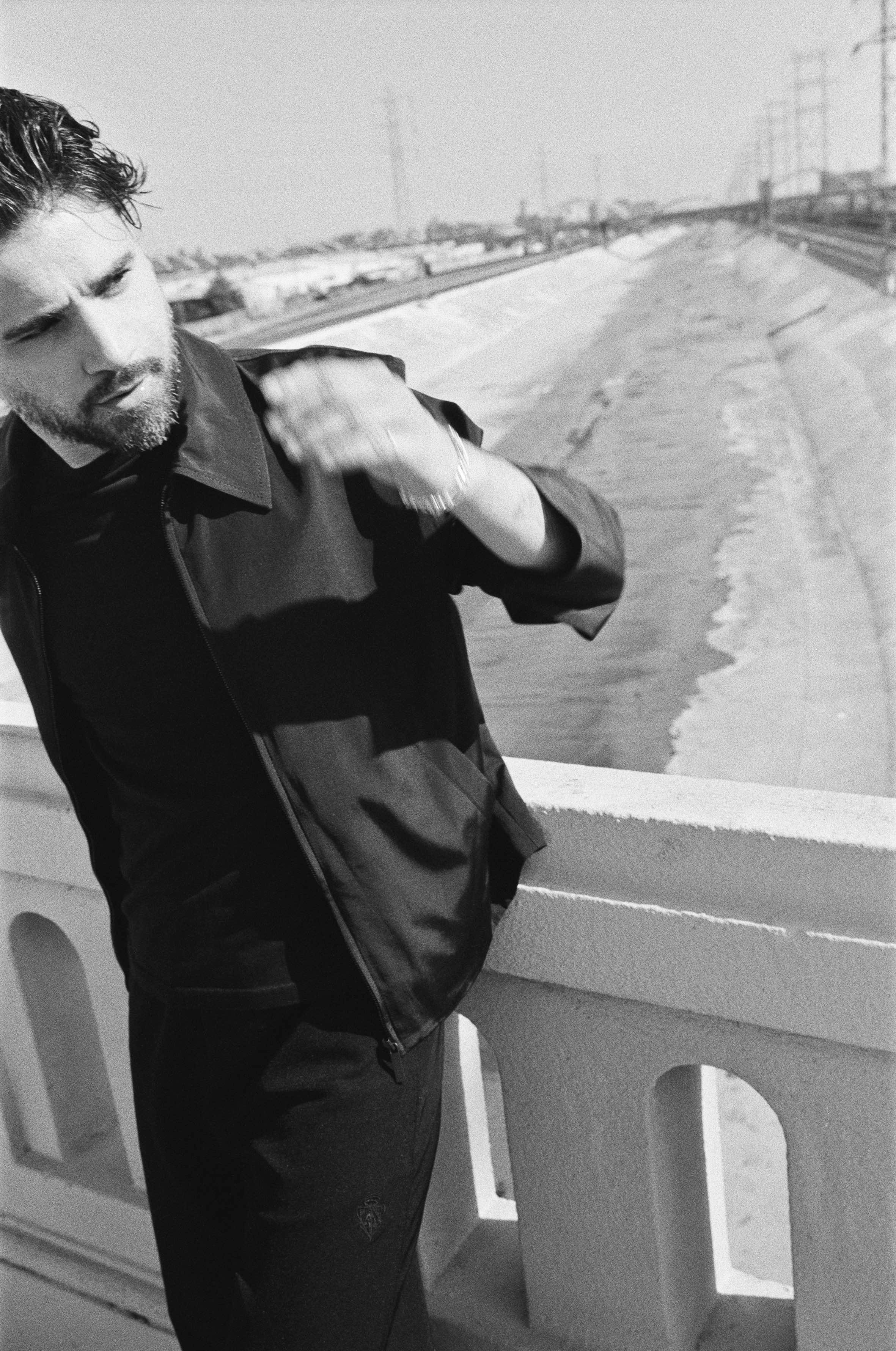
Shirt COURRÈGES, pants and jacket GUCCI
Skrillex: I was broke, fresh out of From First to Last, in between that band and what I’m doing now – but super fun times. I was living in a 408-dollar-a-month loft in the Arts District in downtown LA when it was still quite dangerous to go to that area. I got Ableton and had no gear. I would take a millisecond of a vocal, put some reverb on it, drop it into a sampler, and that would be my lead. I’d take little transients from whatever and just sample pretty much everything else. Songs like “Bangarang” (2011) were made on Snowball mics or laptop mics. Hearing it first in this dull, lo-fi version, and then pushing the character out of it, is what gets you somewhere interesting. Starting from something imperfect forces you to end up somewhere you’d never expect.
Ecco2k: I was really happy to hear some of those demos from that period when you played them for me last year. You were around 20 at the time – I was so impressed.
Skrillex: The demos were from when I first got signed to Atlantic – as a singer, actually.
Ecco2k: You can really hear that DNA in your later music. Once you have that context, it all connects. The melodic language, the character, and the voice of those early songs are still there. I also think it’s really cool that you use your vocals throughout your electronic stuff. A lot of people might not realize it’s not a sample and that you’re actually singing on a lot of those tracks. People should know and appreciate you more as a vocalist. You should sing more! I’ve told you that! Many times, actually.
Skrillex: I don’t know if I’ve gone into this much depth on this before, but I was signed a couple of years after From First to Last as an electronic producer who was singing on his own music. I made a couple of albums’ worth of material. I did an EP with Atticus Ross from Nine Inch Nails and a whole project with Noisia. The label never said, “Let’s go, we have something!” They just told me to keep writing. But I was singing over all of it, and I think that’s what drew me to what you guys do. It reminded me of the spirit of what I was already doing: experimental beats, electronic music, really melodic and strange ideas.
When I pivoted to Skrillex, I was broke. My advances weren’t big at all. I started DJing to have a little bit of fun and to be able to book shows myself. I brought the first Skrillex project to Atlantic, and they said, “This is cool, but you can put it out for free yourself.” I put it online, and that was the thing that actually took off. Back then, there weren’t a lot of people putting out free projects. And in that Skrillex era, I started to sample myself and use all of those demos I made before to create entirely new tracks to DJ. That’s the lore!
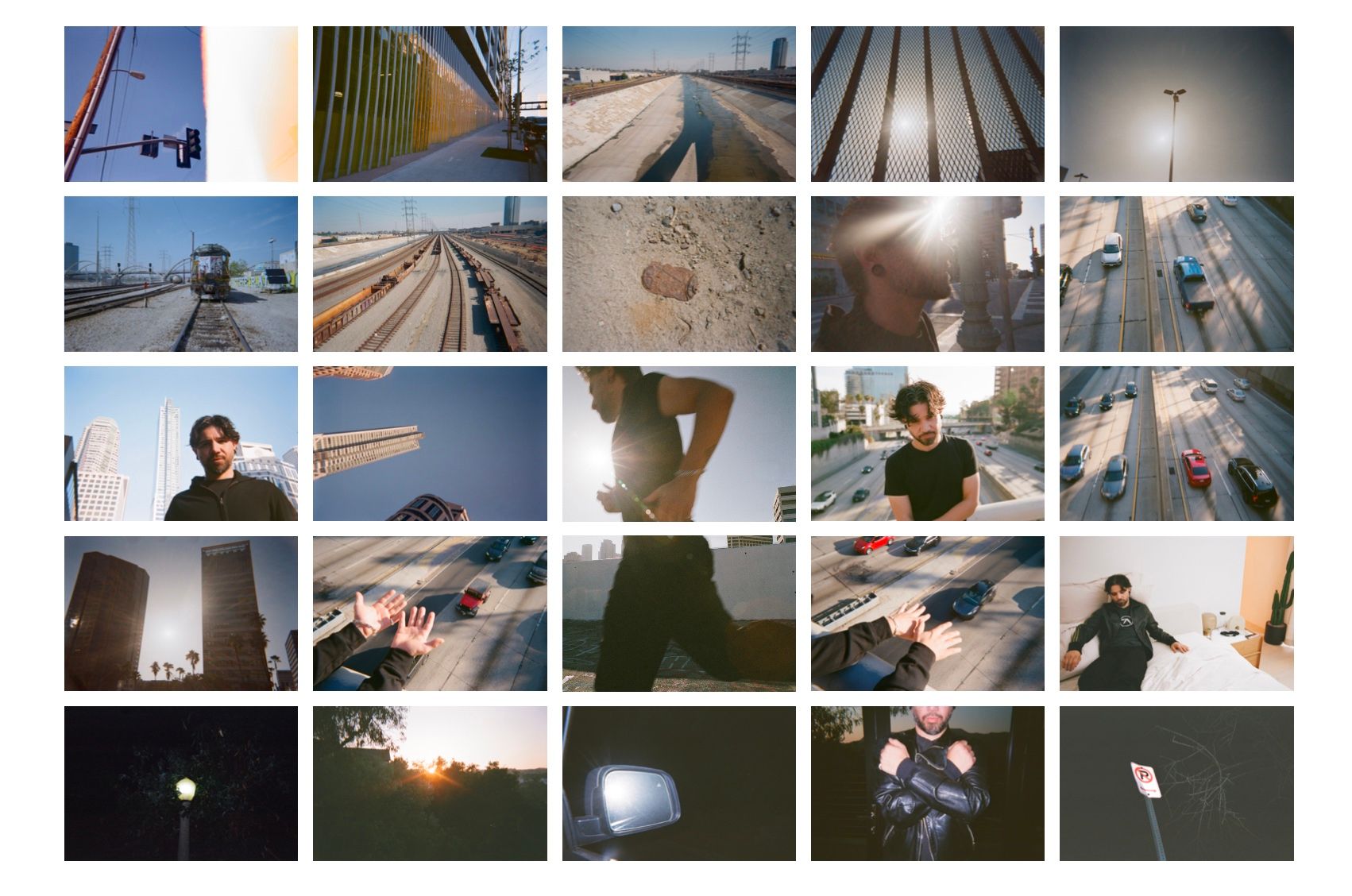
Ecco2k: “Mora” (2009) is probably the best-known track from that period and still sounds extremely fresh today. Given how young you were and that it’s self-produced, the fact that it holds up in today’s climate is quite an impressive achievement.
Skrillex: Most of that production was actually done in GarageBand, which is crazy. I was just learning Ableton at the time – I moved some of it over to Pro Tools, but all the beats were GarageBand.
Ecco2k: How do you feel about those songs now?
Skrillex: I still love them – but you go through stages. For a long time, it was tough to go back to that stuff and hear myself, because I felt like I had been rejected: like it wasn’t good enough, even though I’d poured everything into it. It was probably only post-pandemic that I could start to appreciate it again. That’s around when we linked up, 2021 or 2022. We were both in a weird place post-pandemic.
Ecco2k: I was in LA for a few weeks, and you let me use your studio. I was there working alone on Christmas Eve in 2022. You came by and were like: “What are you doing for Christmas? I’m leaving for Vegas in two hours. Do you want to come?” And I was like, “Yeah?” [laughs] I didn’t even have time to think about it.
Skrillex: We got in my friend’s car that same night! And one of the wildest things [was] when we walked into the lobby of the Wynn, we ran into some other friends completely out of nowhere. We were like, “Why are you guys in Vegas?” But also, “Why are we in Vegas?” It’s a fun thing to look back on – where we were in our lives at that moment, and how different things are now. We were both going through it, figuring a lot out. We didn’t know where we’d end up. And here we are, four years later.
Ecco2k: Such an adventure. It was the most absurd Christmas I’ve ever had, and probably one of the best.
Skrillex: When we were first cooking up [music] in Sweden in 2022, you, [Yung Gud], and I ended up doing some crazy time-stretch thing and made a beat out of “Mora.” That’s when I really started to listen back and think, “This is cool – who made this?” Even though it was me! There are some lyrics on the last album I dropped, Fuck U Skrillex You Think Ur Andy Warhol but Ur Not!! <3, that I would never write today. It feels like I’m sampling someone else. It’s kind of beautiful to be able to fold that into something contemporary. I never could have planned it.
Shirt COURRÈGES
“[RESISTANCE] IS SOMETHING I PREPARED MYSELF FOR.”
Ecco2k: When I was growing up, what you were making was so divisive. It really drew a reaction out of you, either really positive or really negative, because it was bold and it was new. A lot of people really didn’t like it, and a lot of people really did. What is cool to see now, almost ten years later, is that people have re-evaluated that work.
That’s always the case when you do something truly bold and new: you face a lot of resistance in the moment, but then you look at who’s coming up now – they’re all inspired by it. It must be reassuring to see, after all that resistance and all those people writing you off, that the right people took something important from it. We see the results of that now. Going from being a “guilty pleasure” to someone who is cited as a formative influence by so many musicians now –
Skrillex: You can totally relate to that, I’m sure.
Ecco2k: Now, with some distance, I feel like [your music] has been universally recognized as pioneering work. That’s so different from how many people perceived it at the time.
Skrillex: [Resistance] is something I prepared myself for, even in From First to Last. We weren’t hardcore enough for the tough hardcore crowd, but we were more aggressive than Fall Out Boy. I had pink eye shadow and got called all sorts of things. I can’t tell if it was intentional or if I was just so self-unaware, but I would always just go for it. I would open up the Legos and just start building.
Ecco2k: That’s exactly the stuff that ends up resonating. You can become successful playing it safe in the moment, but what really endures is the stuff that takes some risk. That’s also why it’s so important to be uncompromising. If you were concerned with making other people happy, you would never have made anything interesting.
Skrillex: I was thinking about AI the other day when something hit me really deeply. I think the value of art can almost be measured by its ability to make someone feel seen. Or at least that’s true for me, as a listener. When I go back to Justice or Daft Punk or Metallica, it hits so hard because there’s something familiar that hadn’t been done before. It makes you think: “They get me. They’re on my wavelength. They’re speaking to me.” Maybe there are some AI songs that can go viral, but you can’t have that feeling of being seen if there isn’t a human on the other side.

Jacket GUCCI
“I’M NOT HERE TO DEFEND ANYTHING, AND I’M NOT APOLOGETIC ABOUT ANY OF IT.”
Ecco2k: I’ve never met anyone who has been in the music industry – not to mention the American music industry – at the scale you’ve been immersed in it for as long as you have who hasn’t come out cynical or bitter. That’s pretty remarkable. Your curiosity, your enthusiasm, this lust for adventure – it seems very difficult to extinguish, given everything you’ve been through and all the resistance you’ve faced. And you’re still so uncompromising!
Obviously, you want to affect and reach people, but always on your own terms – and that’s the crucial distinction. People considered your work to be mainstream, big-stage, festival music when it came out – I mean, just listen to the music. Pretty fucking extreme! Even though it operates at that scale, it is not that accessible. That’s what a lot of people overlook.
Skrillex: Listen, I’m not here to defend anything, and I’m not apologetic about any of it, but one funny thing about how it was received: the entire marketing budget for Scary Monsters and Nice Sprites (2010) was about 2,000 dollars. People thought it was part of some massive machine that people were dumping heaps of money into, but it was just good timing and natural virality. As far as not being jaded: I have really simple expectations. With Skrillex, I wanted to make music I liked to DJ. That’s it. I just wanted people to come see me live, jump around in a room, and create a real, shared space – that is all I want my music to do.
With Skrillex, in every era, I have this moment where I think, “Okay, victory lap, fuck it, let’s just do something” – and I keep coming back to that mindset.
It always brings me where I need to be. When I started working with Justin Bieber, I remember people telling me, before they even heard the music: “Why the hell are you doing music with Justin Bieber, bro? You’re Skrillex.” I remember playing the “Where Are Ü Now” (2015) demo to some of the old regime at Atlantic and saying, “Guys, this feels like something!” They were on their BlackBerrys like, “Justin Bieber, hmmm interesting.”
Ecco2k: It’s kind of like [Quentin Tarantino] casting John Travolta in Pulp Fiction (1994): working with Justin made no sense to anyone else, but to you it made complete sense.
Skrillex: Exactly.
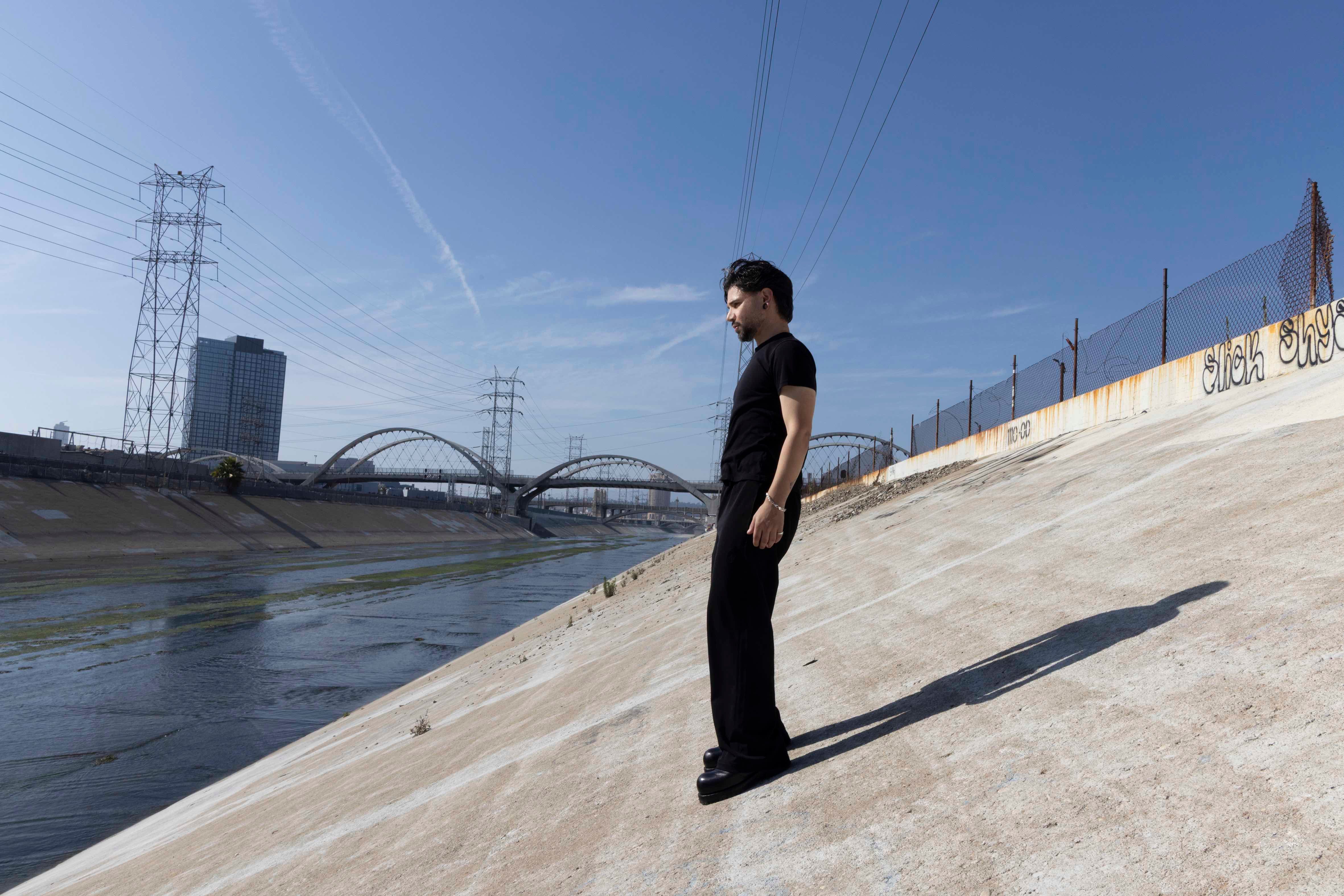
Shirt COURRÈGES, pants GUCCI, shoes ALEXANDER DIGENOVA, jewelry TALENT’S OWN
Ecco2k: That reminds me of this mini-festival take-over [CONTRA] you're doing at Kraftwerk in Berlin, which I’m excited to be a part of. What makes it even more special for me is that I had my first live solo gig at Kraftwerk, in that room. To most people, I was John Travolta – I didn’t belong there. But Jonas [Varg2TM] believed I did, and he put me on that stage. Coming back now, almost ten years later, is such a full-circle moment.
Skrillex: It’s a reflection of everything we’ve been talking about. I guess it is also a byproduct of me touring. I used to tour constantly – every continent, every corner of the world. Massive productions, the full circuit. This idea came from one of those “fuck it, victory lap” moments. I didn’t want to build another spaceship on a stage. I wanted to create something genuinely unique. I wanted to reverse engineer some of the best experiences I ever had. I really feel like, in this era of AI and smartphones, it’s more important than ever to create spaces where people can just be present together and feel something the way it’s meant to be felt. How do we break the mold?
My father gave me a piece of advice that still rings in my head. I didn’t come from a lot of money – it was a very humble beginning, to say the least – but my dad was always really interested in art. Growing up in LA, when I was 12 or 13, I started going out to punk shows in Lynwood, Bell, Huntington Park – East LA and Compton-adjacent areas. My dad told me: “Go out there and study. Don’t get fucked up like everybody else; just really take it in.” I respected him so much for that. I’m still a student.
To this day, if I start to feel burnt out or over something, I know I have to go on a quest and reset. Go to a show, don’t have a beer, don’t do anything – and ask yourself: does this make you feel anything? You can’t fake it, no matter how hot something is. That’s why Daft Punk don’t play shows anymore. I feel the same; I’d rather hang up the boots. I have to find an authentic place [that excites me] first. With CONTRA, the question became: how do we rethink what production even means and build something fresh with a lineup that reflects that? I really didn’t want it to be about me or to be some kind of Skrillex-fest – so we are announcing the lineup backwards. The first wave of artists we announced are deeply curated talents who are inspiring a lot of major acts now, and even just that first wave of tickets did so well. It was incredible to see.
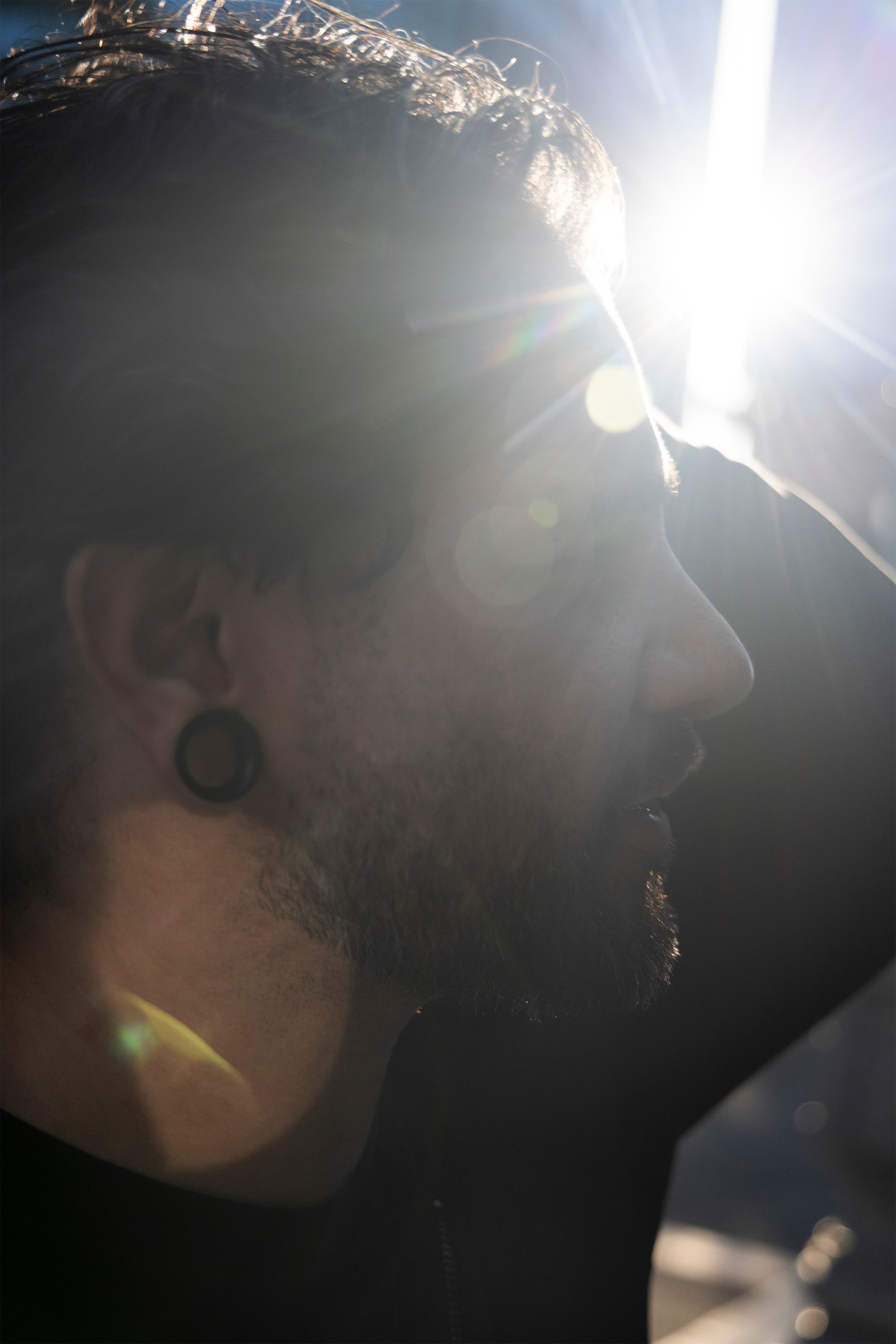
“I’M NOT AS TECHNICAL AS PEOPLE THINK.”
Ecco2k: Another thing worth mentioning: Kraftwerk doesn’t open often. The fact that you got it [for CONTRA] is pretty special. This isn’t a big commercial festival with corporate sponsors. It’s a DIY project at the highest level, and not many people are willing or able to pull that off – especially independently.
Skrillex: It’s true. I’m so excited by this lineup, with you, Jonas [Varg2TM²™], Benjamin [Bladee] – there’s connective tissue between all of this music. Back to what you said about Kraftwerk: it’s almost like an art gallery for music. It’s a very challenging space to figure out, but what we’ve done in there is unlike anything I’ve seen.
Ecco2k: When I was in my early 20s and started spending more time in London and Berlin, there used to be more moments where you’d look at a lineup and love every single act on it. A lot of my friends and I have really missed that feeling. Nowadays, it doesn’t make financial sense. You have to convince a lot of people to take enormous risks.
Skrillex: If you have a crazy idea that doesn’t make sense on paper, but that you know has to exist, put it out there. Not just for yourself – for everybody. That’s
what I really attribute to me still being here and doing this. I don’t want to gatekeep ideas, ever. I also think there’s magic in music, and that can be preserved. It’s like seeing CGI as a kid and thinking, “Wow, how did they do that?” Some things don’t need to be explained or disclosed. But earlier in my career, the best sound designers used to hide their kicks and snares under other sounds so you couldn’t steal them. I just put mine out in the open so people could sample them.
Ecco2k: That also comes from confidence, right? I use your song “Summit” (2011) to test speakers when ever I’m in a new room – and I’m still just like, “How?” Even having watched you work, I still can’t come close to making something that deep, that sharp, that wide, and that is somehow so much louder than anything else, but not redlining.
It doesn’t matter if someone can sample your drums or reverse engineer your patches, because it’s not about the individual techniques – it’s about your perspective and your ears. It makes sense that you’re just like, “Here, take it!” You’re confident in the singularity of your voice and expression. No one can steal that.
Skrillex: Just to get slightly technical for any nerds tuning in: EQ is GOATED, man. EQ is everything. Turn it up as loud as you want to hear it, then reduce the things you don’t like. If I make a snare out of something like [snaps] that, then EQ is just a paintbrush. You just go wherever you feel. And that is not taught anywhere. That’s my Legos without directions. Back in the day, EQing was only used to equalize – not to boost crazy frequencies or make wild cuts. Most of my sound comes from simple stuff: EQs, limiting, saturation, keeping the loudness up but the dB levels down. Little things like that.
Ecco2k: You also work destructively, which to me is very unnatural. My background is in image-making and postproduction for video, where working non-destructively is the professional standard – every change has to be reversible. I carried that into music production too. You will flatten and print stuff and never look back. Once you like how something sounds, you lock it down. You just commit.
The best compliment you can give someone is “Only you could have made this.” That’s true of you, definitively. I’m not the best vocalist, not the best producer, not the best filmmaker, not the best performer – but the way I apply all of those mediums is quite specific to me. Everyone has their own version of this. That’s what’s so great about meeting people who have figured out what is specific about their circumstances, their skill sets, and their point of view – and who have built their life around it, so that the work is fully in harmony with who they are.
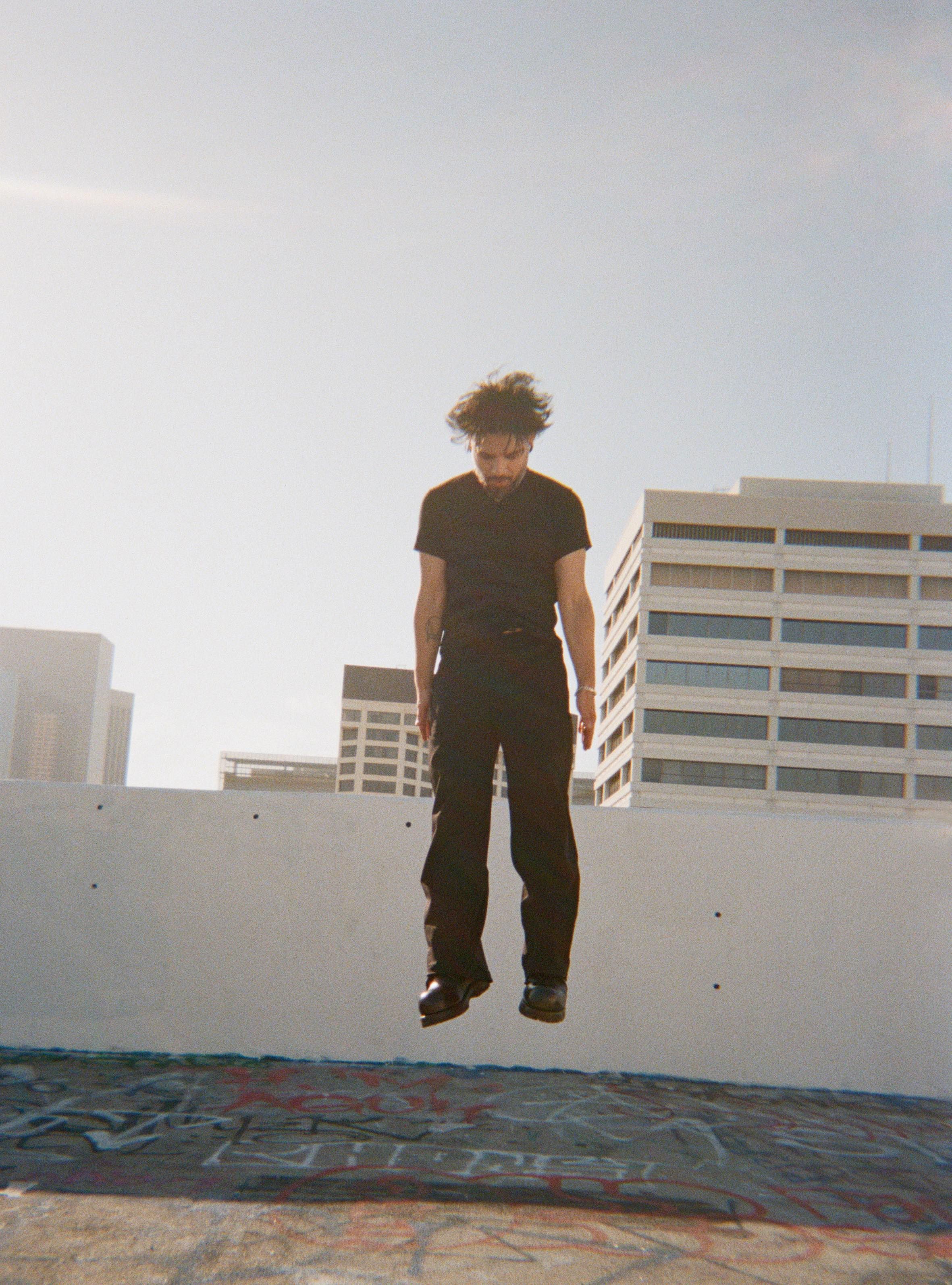
“FLUENCY AND FLUIDITY IN YOUR MEDIUM. IT’S EVERYTHING.”
Shirt COURRÈGES, pants GUCCI, shoes ALEXANDER DIGENOVA, jewelry TALENT’S OWN
Skrillex: There’s a crazy flow state I get into when I’m on my way to a venue and I do a quick tweak. I’ll know immediately the hi-hat just needs to be two dB louder, and there’s no time for tinkering. I make so much music that even if I have an idea [for a track] that’s a minute and a half [long], I’ll make it that night to play it. When I’m on the move, there’s this instinctual thing that kicks in around getting the sound right. It’s all feeling. I don’t even have my [contact lenses] in most of the time, so I can’t read anything. And I don’t want to self-diagnose, but there’s something wrong with me when it comes to math. I cannot retain numbers; I can’t even do simple math! I’m not as technical as people think. I have friends who know that if they add a certain value to a certain number, it will produce a particular chord. They see everything mathematically. I’m not on that level at all; I’m just blindly moving EQs wherever they feel right.
Ecco2k: The only valid measure of how good you are at something in the arts is your fluency in your medium. It all comes down to how effectively you can communicate something from here [points to head and chest] into something that can be received and understood by someone else.
Skrillex: Fluency and fluidity in your medium. It’s everything. That goes back to the limited plugins. As soon as I’m thinking too much, I start to lose the flow. That’s the hardest part about being a producer. Every once in a while, I’ll pick up a guitar. When I played guitar on one of Jonatan’s [Yung Lean’s] projects, we were just jamming and recording freely with an engineer in the room. Lean would say, “It’s good!" And I’d be like, “Great, done!” It’s so different from feeling like, “Oh God, now I have to EQ, restart the computer, reconfigure everything.” It’s a crazy dance, making this computer music. It can be so rewarding and so frustrating. Last weekend my hard drive was full, so I had to do all of this admin – new computer, new plugins – it’s so much power. And with great power comes great responsibility.

Credits
- Text: CASSIDY GEORGE
- Photography: NOAH DILLON
- Fashion: PERI ROSENZWEIG
- Talent: SONY MOORE
- Producer: MARA WEINSTEIN
- Producer: BEN TAN
- Production Company: PAAR
- Photographers Assistant: MILES PIMENTEL
- Creative Assistant: MAGGIE CNOSSEN
- Lighting Tech: STEVEN PERILLOUX
- Photo Assistant: MATTHEW LOREN
- EQ vendor: RICK ROSE
- Beauty: OCTAVIO CRUZ
- Groomer: JULIUS CAESAR
- Styling assistant: ALICIA RODRIGUEZ APARICIO
- Production assistant: JACKSON BUSH
- BTS Video: ARYA PETERSON
Related Content

Drain Gang

Wolves and Thistles | Varg²™
Mastering Disruption: Skrillex in conversation with Ecco2k

Thaiboy aka DJ Billybool: Everything “DYR”
032c Issue #49 “MEMPHIS” Summer 2026
032c Winter 2025/26 Issue #48

Tohji: The Step Forward is Zero
Malibu: “Like sex on a summer night”

Christelle Oyiri: “All life comes from rupture”