Christelle Oyiri: “All life comes from rupture”
|Phillip Pyle

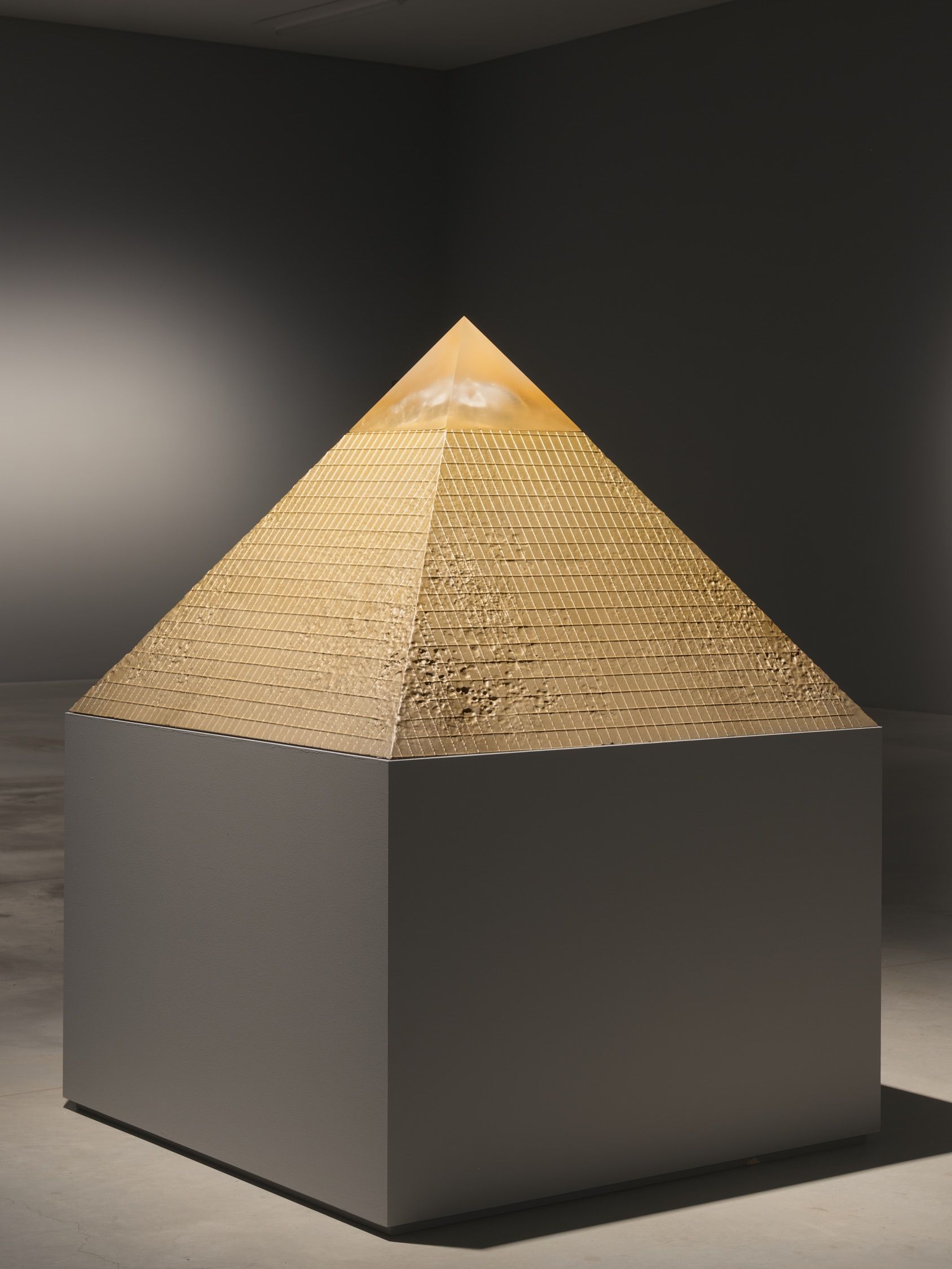
In 2012, far-right conspiracist Alex Jones posted “Devil Pyramid Rotting in Memphis” to his YouTube channel. Much of Jones’s tirade against the occult symbolism of the Memphis Pyramid, which was opened on the east bank of the Mississippi River in 1991, in the video is mere drivel. However, one fact remains true: Soon after the pyramid opened, a maintenance worker found a crystal skull in its glass-encased apex, or “Illuminati capstone,” as Jones prefers to call it. And, in an even stranger turn, it was revealed that the skull had been placed there by Hard Rock Café co-founder Isaac Tigrett, the son of the entrepreneur largely responsible for bringing the towering 32-story edifice to the Egyptian-named city in Tennessee in the first place.
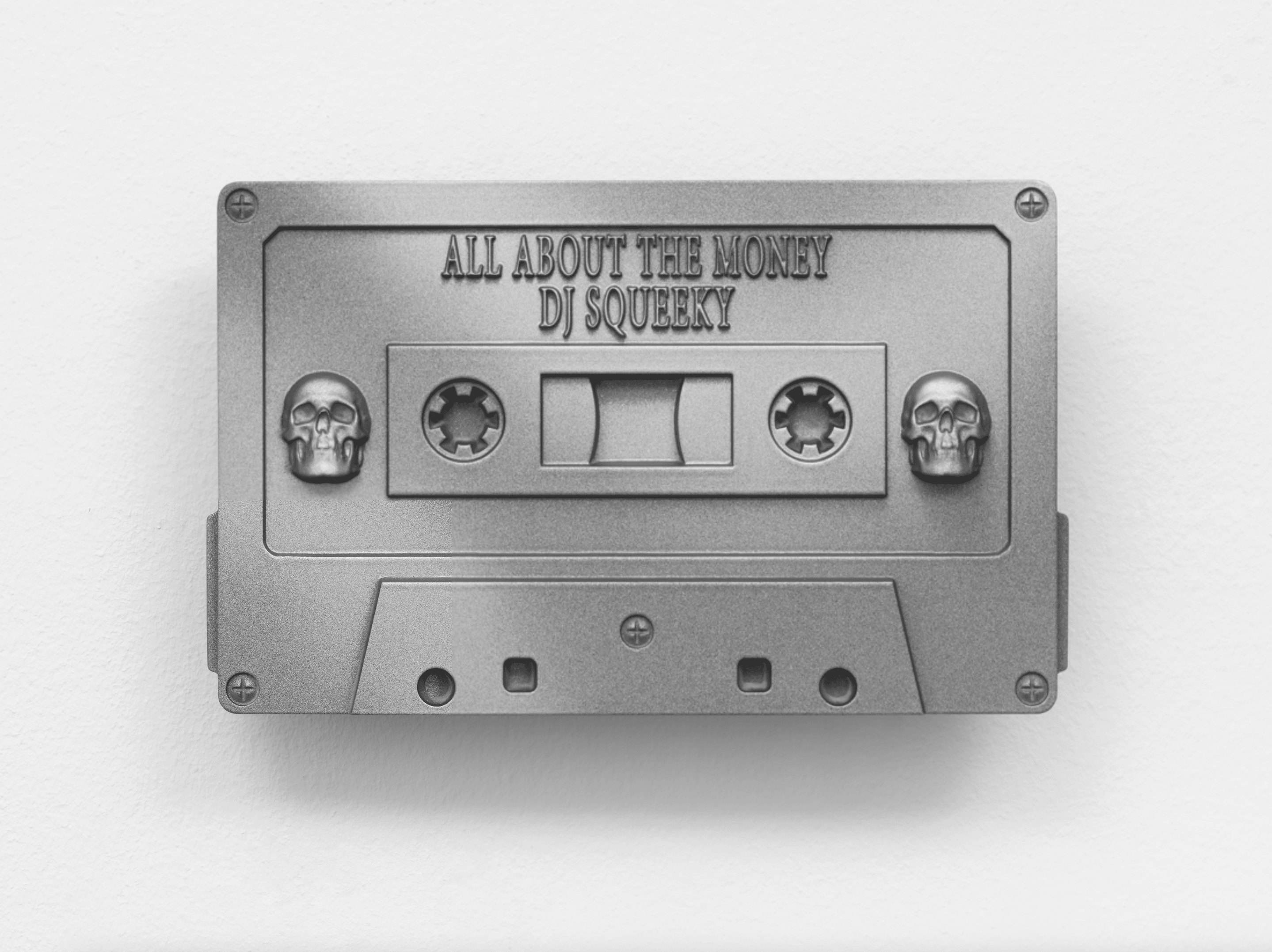
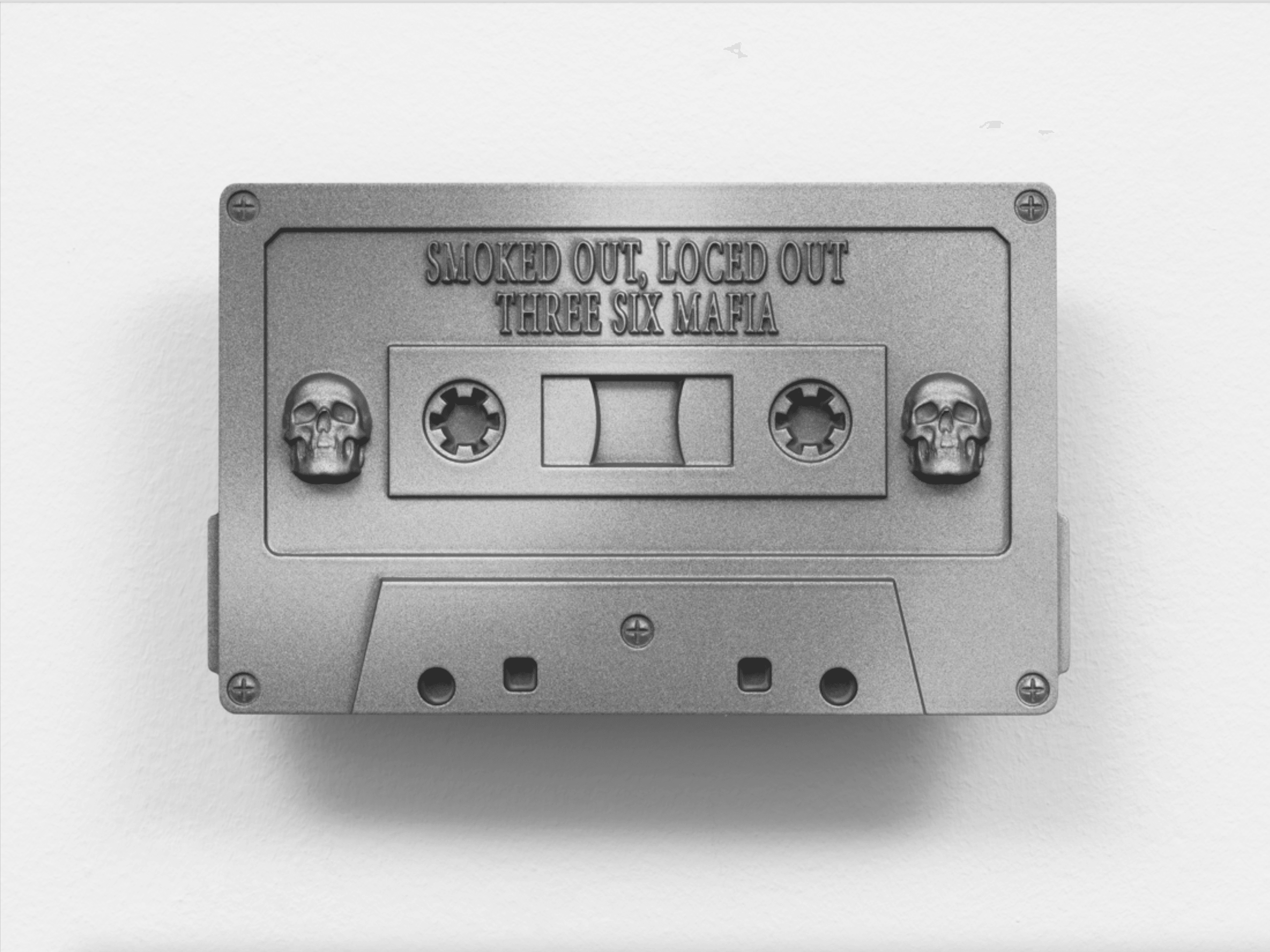
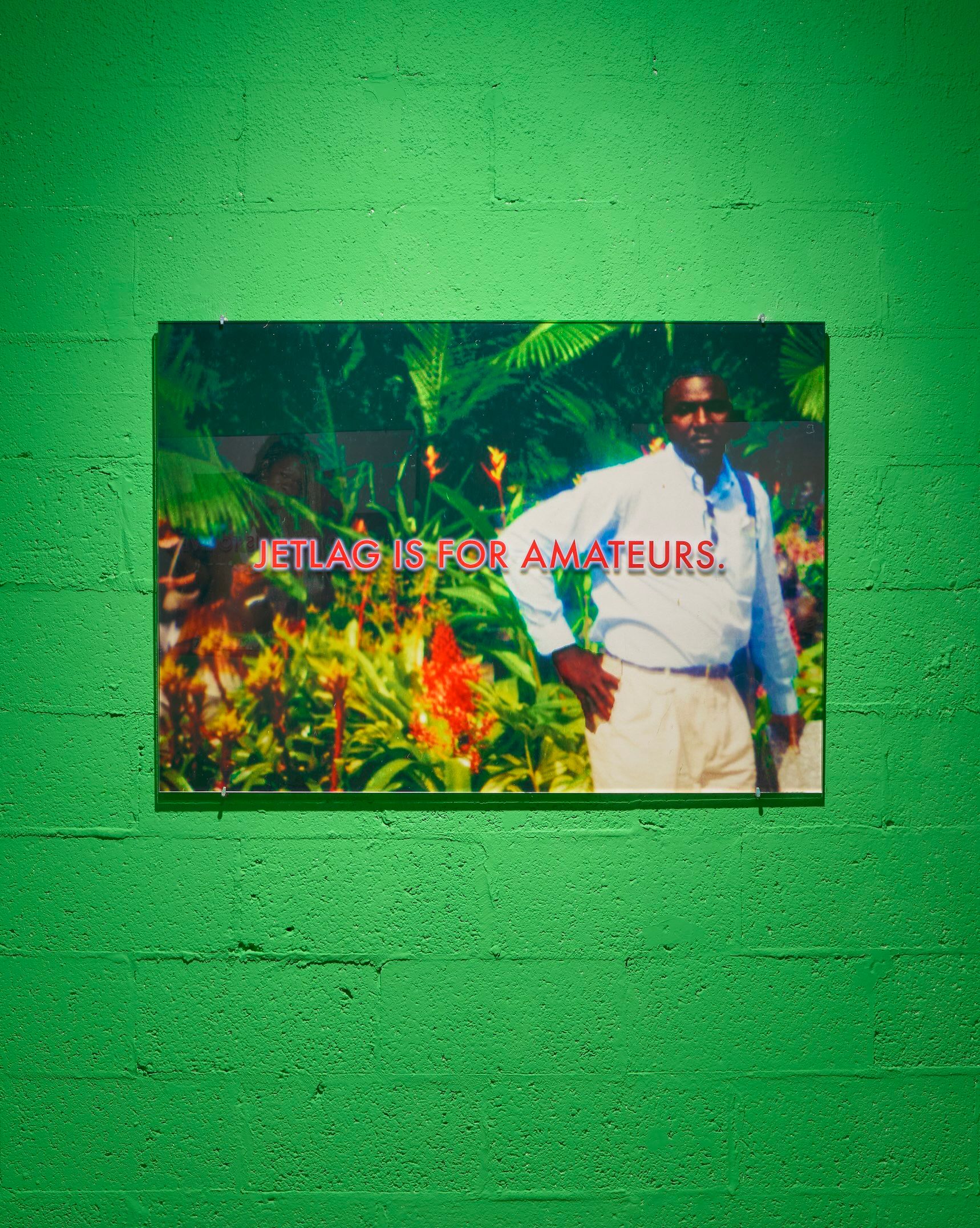
The power of conspiracy is also at the center of artist Christelle Oyiri’s new solo exhibition “Belief May Vary” at Amant in Brooklyn. Comprised of a duo of polyurethane bas-reliefs, a series of aluminium-clad polyurethane sculptures monumentalizing the mixtapes of Memphis rappers (8Ball & MJG, Tommy Wright III, Three 6 Mafia, DJ Squeeky), a lenticular print of three men who appear to be proselytizing, and, of course, a pyramid with a crystal skull entombed at its tip, the exhibition gives physical form to the contradictory, transformative, and persistent forces of faith surrounding particular images, occult symbols, and sonic relics.
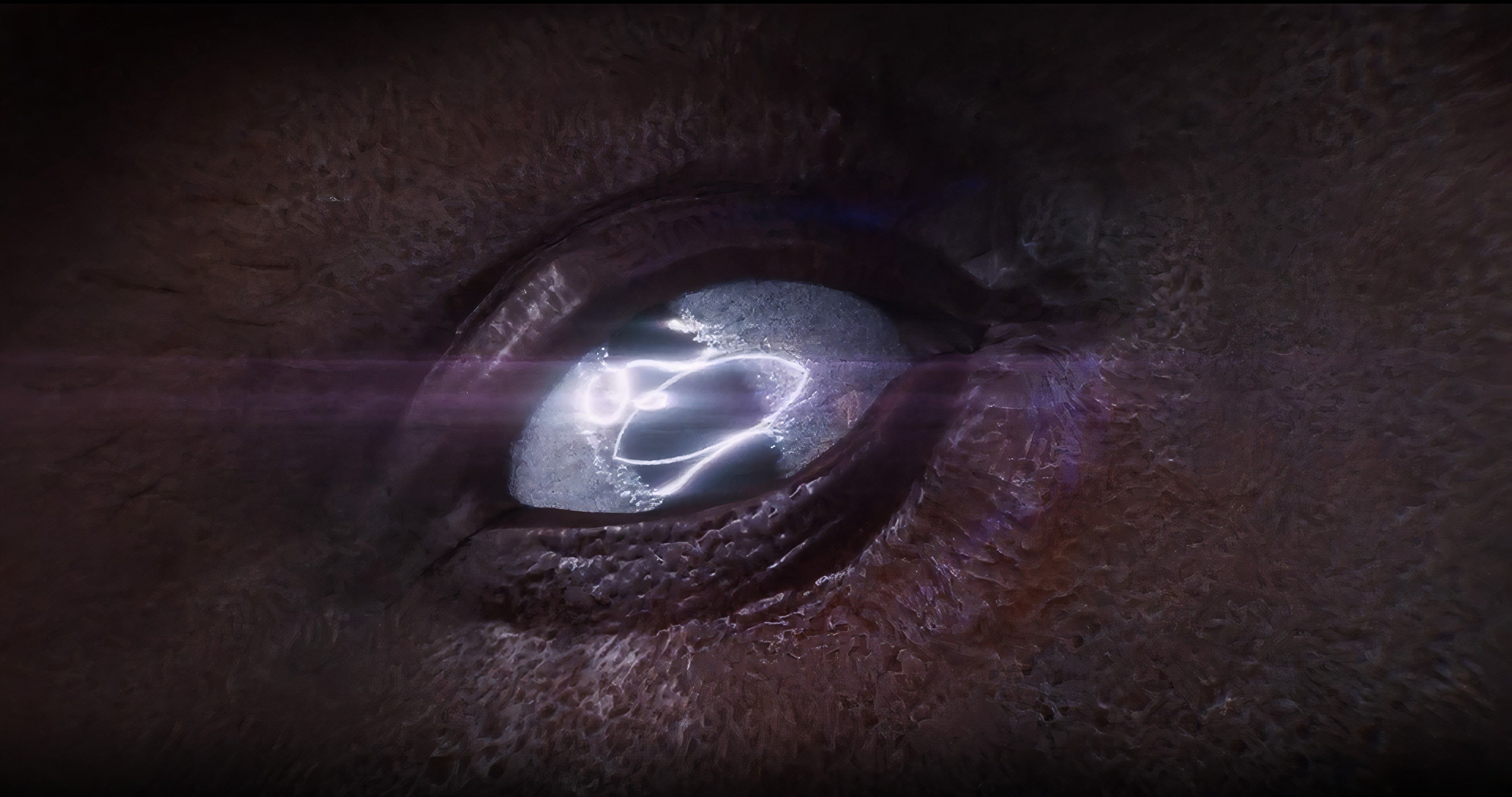
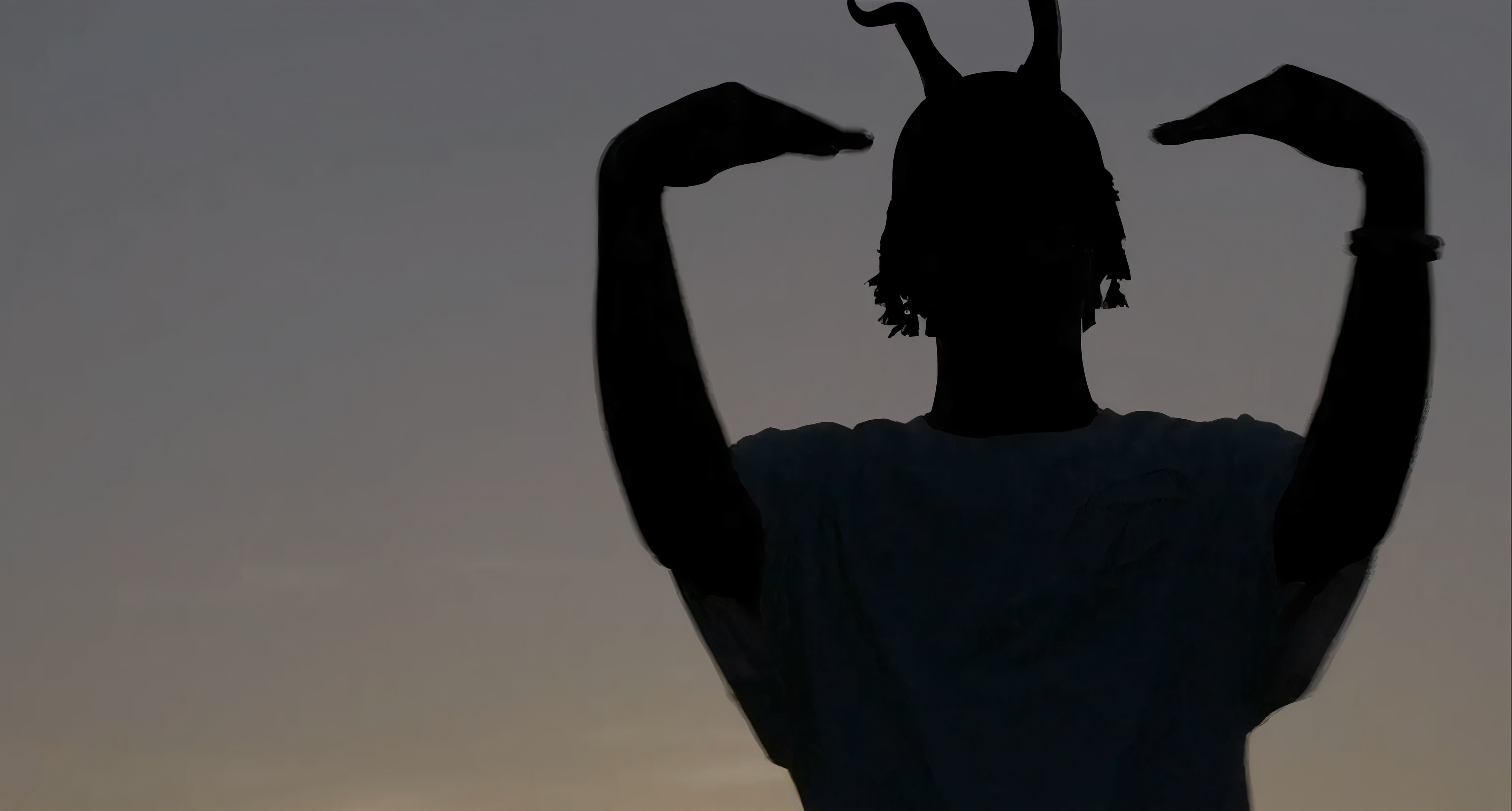
At the core of this universe of hybrid mythologies is Hauntology of an OG (2025), a video which Oyiri made in collaboration with artist and photographer Neva Wireko during a visit to Memphis. Divided into two sections which borrow from the structure of an A-side/B-side mixtape, the video begins with a compilation of original and sourced footage depicting cemeteries, burning churches, strip clubs, tattered American flags, and Gangsta Walking, set to the narration of Darius “Phatmak” Clayton, who ruminates on the city’s degradation under the forces of racial capitalism: “And on this land, where King died, we merchandise. We sell tickets for entry. We sell memorabilia.”
Rather than succumbing to the nihilism easily precipitated by such historical facts, the video’s B-side, “Do You Believe in Ghosts, Problem Child?”, looks past the late capitalist decay contained in the city’s recent history to the ancient, necrological origins of its most iconic symbol, the pyramid. Against a score thumping with the 808s of Memphis rap, an animated simulation of the city’s iconic Hernando de Soto Bridge transforms into a glistening skull, which, in turn, morphs into a pyramid resembling those still standing in the ancient city’s necropolis of Giza. Capped with a dedication to Princess Loko, Gangsta Boo, Young Dolph, Lord Infamous, and Big Scarr—rappers who were from the Southern city responsible for more in modern global culture than is often recognized, and whose lives were tragically taken too soon—the video reminds us that just as one can wield a crystal skull for an act of “devil worship,” they can also wield one for an act of veneration.
In conversation with Phillip Pyle, Christelle Oyiri discusses the conspiratorial nature of Memphis rap, France as the ideological foundation for neo-fascism, and her belief that “all life comes from rupture.”
Phillip Pyle: At the center of “Belief May Vary” is your video Hauntology of an OG (2025), which you made after taking a trip to Memphis. What drew you to Memphis?
Christelle Oyiri: There was a sense of mystique in Memphis that I didn’t find in other places in the US, except New Orleans. I was always drawn to Southern rap because it kept some element of their Africanity, like call and response chants for instance. Another thing that specifically drew me to Memphis rap as a teenager was the cohabitation of a super godly presence and very ingrained Christian traditions from Baptist and Pentecostal churches in Tennessee—while having some of the darkest sounds and lyrics.
It was something that I could relate to as someone who went to Catholic school, and my aunt and uncle both being bishops. At school, there was the sentiment of being an outsider, but also a growing desire to be provocative and disruptive—because when you have a lot of rules, especially as a teen, you often make it your duty to break them.
Memphis rap made me feel seen in that way. I relate to figures like Juicy J, whose dad was a traveling pastor, but also to that feeling of inadequacy and rebellion that you feel when you're a teen who cannot just go along with things. That was my experience. I was an atheist, I didn’t believe in God. I was convinced that it was because of scientific materialism and the French concept of laïcité, and that’s partially true but it was also out of sheer provocation.
Also, for millennials, or late millennials like myself, after 9/11 and the disruption of so many things, the idea of blindly believing in God was kind of weird. I’m from a generation that was posting videos about the Illuminati and about superstars making pacts with the devil on YouTube. [Laughs] I’m part of the first generation of people that were actively underage on 4chan and conspiracists—and Memphis rap sits at the intersection of all of this. It felt like the perfect genre as a Black teenager that felt all of this angst for the world but couldn’t escape the religiosity that I was brought up in.

PP: Displacement, death, and rupture are often zero points in your work. In your installation “Venom Voyage” (2023), for instance, you smeared a fictional travel agency with the simulated residue of toxic contaminants left behind by France in the former colonies of Guadeloupe and Martinique. When you’re working with sensitive, tragic histories, how do you square the imperative to bear witness with the desire to build something new?
CO: I think that all life comes from rupture. When we are born, the first thing that we do is scream and cry. I don’t find joy in revisiting trauma, but I’m not convinced that anything meaningful is born in its absence.
The way I work is simple. I always start with the story. When I did “Venom Voyage,” for instance, I didn’t want the story to be outwardly about trauma, because my own story about the island I’m from is not about trauma. My story is about vacationing in the island with my family, going to see my granny, picking up fruits, eating spicy food, hanging out with my cousin, doing God knows what.
"Venom Voyage" is about making love and happiness cohabitate with the darkness. It’s this weird interstitial space.
All stories are metaphors. I try to create a metaphor about the sense of naïveté that you lose when you reach a certain age. With Memphis, for instance, I was drawn to this demonic idea partially because I wanted to piss off my parents and my teachers—I had this uncontrollable urge to explain to people that I was not somebody to be fucked with—but now I have new knowledge about it and want to confront it with my adult brain.
There’s this one-man play by Samuel Beckett called La Dernière Bande (Krapp’s Last Tape, 1958), where an aging man listens back to recordings of his younger self, trying to make sense of who he once was. He listens, almost skeptically, asking himself things along the lines of: “Was that really me? Did it ever truly speak to who I was? That’s what I thought back then? That is crazy!” [Laughs] The whole piece is basically that same mechanism, over and over again.
The piece is less about memory than about estrangement, like this quiet, unsettling realization that the person you used to be can start to feel like a complete stranger. I love Beckett because he pushed the idea of meaning and dismantled it completely. At the end of my life—fuck my career!—this is what I would love to be able to do, because we’re already at the edge of meaning. The ideas of meaning and truth have been collapsing for the last ten years, and the Trump election was a further shift into post-truth.
I’m trying to keep meaning alive for now. That’s my rebellion—to be into meaning until the end of my life, until I’m a blabbering old person who goes back to a state of naïveté.

PP: Where do you see meaning existing in your work?
CO: I’m trying to generate meaning for myself by making different dialogues. It basically exists in the friction between different versions of myself. I don’t believe in fixed meaning, I think meaning is something you produce by confronting yourself. Not your ideal self, but the one that contradicts itself, that fails, that consumes, that desires things it shouldn’t. My work is a space where those contradictions can coexist without being resolved. Contradictions are where my art and myself feel the most authentic and fruitful.
I’m not trying to offer answers or moral positions. I’m trying to create a structure where people can recognize themselves in that instability and maybe sit with it instead of trying to clean it up. And from there, meaning also becomes something collective.
I’m trying to generate that for my own people, too. Collective Amnesia (2018–2022) is part of that. France pushes assimilation to the point where it feels like the only option. And it’s somehow the ultimate country of meaning—at least French people are always thinking about some shit in the best and worst possible ways. For instance—and we don’t say this enough—France has been a major catalyst for new forms of fascist thinking. Le Grand Remplacement (2011) came out over ten years ago, before Trump. It fed into white survivalism and helped normalize the idea that white Americans are somehow indigenous to the U.S., which is simply not true.
Europeans are indigenous to Europe—fair enough. I’m not panini-pressed to be of French lineage to the point of claiming I’m indigenous to Europe. [Laughs] But when people from Virginia or Oklahoma pick up that narrative, it becomes absurd. Like babe, “Oklahoma” doesn’t even sound white! And I can’t believe a French person gave the ideological framework for this circus.
PP: The name is indigenous!
CO: What’s more insidious is the intellectual groundwork, the nourishment these ideas have received.
There was a time when that influence felt generative: Foucault, Baudrillard, Fanon, Bataille, and Deleuze provided frameworks that were opening things up, destabilizing power, questioning structures. Now it feels like that same tradition has mutated in the wrong direction. It’s giving worms for brains.
French people are always the first at the crime scene but the last to commit the crime. They leave the manifesto, but they’re not the ones throwing hands. They’re not the ones shooting. The Americans will be the do-ers, but the French will lay some of the ideological foundations.
PP: They want to be there, theorizing it.
CO: Exactly. At the same time, the way we talk about Blackness is so fragmented. Even though I said I’m not French, I also am—deeply—because that’s what I do too. I theorize. [Laughs]
PP: While a lot of meaning resides in language in your work, you’re most often working with image, performance, music, and other, non-linguistic modes of communication in your practice.
CO: I come from a culture where language is also articulated through sound, togetherness, and rituals, not solely through books and written history. There is sophistication in the unwritten. With performance, and especially DJing, you’re always in that space of in-betweenness. It’s about viscerality and emotion as well. That’s why I’m drawn to sound, image, and performance. They allow meaning to exist in a more unstable, embodied way. You don’t fully “understand” them, you feel them.

PP: Something I was thinking about—in regard to both the name Hauntology [of an OG] and the 2023 performance you did at Serpentine Galleries, Faster Than This is Suicide, which was framed as a farewell letter to Mark Fisher—is that, in your work, you often look to artists, musicians, and writers who see music as a transcendent cultural category. At Amant, you’ve included a spoken word piece by Klein, who also has this theory-praxis way of working with music. What other people do you look to as peers or role models for thinking through how music relates to other areas of culture?
CO: Laurie Anderson, Chief Keef, Herbie Hancock, City Girls. Laurie for how she uses narration and brought abstract thought in pop music; Chief Keef because of his use of language and his self-mythology—he survived one of the craziest wars ever; City Girls because they changed the economic dynamics and discourse around straight relationships for my generation. [Laughs]
What I love about Mark Fisher, and why we did Faster Than This is Suicide, is that his work always related to my own life and was not just solely anchored in theory. 2023 was the year when my life started to shift in a much more intense way. I was on bigger stages, beyond just the SoundCloud streets, adapting myself to touring intensely, and producing more art than ever.
Faster Than This is Suicide was also a response to what was happening in culture at the time. In 2023, people couldn’t have a set below 160 BPM. DJing became what I’d call “DJ slop”—where it was all about capturing the drop, people raising their hands, and proving energy through Instagram clips. People knew you were a good DJ not because they listened to your set, but because they saw people losing their minds online. The only parameter was: Do people look completely out of their body when the drop hits? It felt very reminiscent of EDM.
I needed a break from that. That performance was about improvization and low stakes. It was about communality—not in the way it’s used in brand decks—in a real sense. We were feeding off each other without worrying about reception, timing, or outcomes. I created this performance with friends Oxhy, Covco, and WordsofAzia, and it was truly a delight working with them and exploring new possibilities. It was about being fully present and building something note by note, in front of people, so they could actually see what process looks like. It’s uncomfortable, it’s messy. It’s strangely mythical, receptive, and not driven by dopamine.
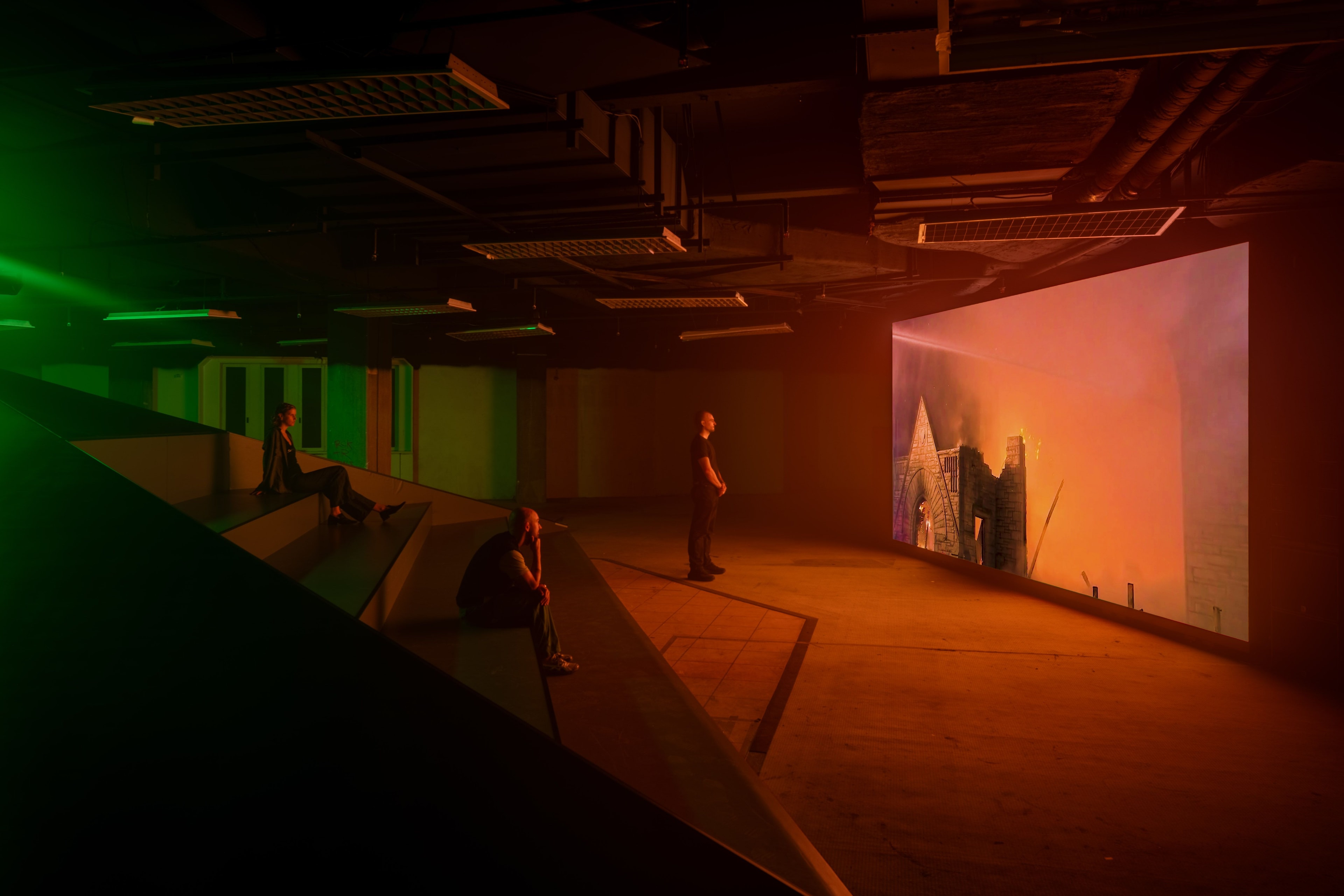
PP: This critical look at spectacle reminds me of Arthur Jafa, for whom you curated the “Memphis special” night at the Bourse de Commerce last year and whose artist party you recently DJ’d at MoMA. I’m also thinking about how Jafa is from Tupelo, Mississippi, which is not far from Memphis, and the shared Southern Gothic current that runs beneath both his work and Hauntology of an OG. In Hauntology, for instance, there are clips of cemeteries, skulls, and Clayborn Temple as it was burning last year. Could you imagine creating a mythology, as you do in the video, that doesn’t directly engage with darkness?
CO: I would love to know how that’s possible. I have a hard time imagining it, especially right now. For me, it’s about chiaroscuro. It’s not just the darkness that interests me anymore, but the way light and darkness cohabit.
PP: Memphis makes sense as a city to think about this idea of cohabitation. In Hauntology, you connect Memphis rap and ancient Egypt, especially through the Memphis Pyramid, which is now a Bass Pro Shops—a perfect example of an ancient symbol turned into a late-capitalist shell. There are also contradictions in the fact that the city was named after the ancient African city by Andrew Jackson, and that the pyramid appears on the U.S. dollar bill.
CO: Indeed, Memphis, Tennessee, was named after the ancient Egyptian Memphis, which was the empire’s political and spiritual center. The naming isn’t just imitation, it’s a kind of projection. It’s an attempt to align a new territory with an already existing idea of power, permanence, and civilization. So the American Memphis doesn’t copy Memphis in Egypt: It doubles it, but in a completely dislocated context. One is rooted in ancient cosmology and empire, the other is built on stolen land, slavery, and industrial capitalism.
And that’s where the tension in my work comes from. The presence of Memphis in Egypt is still there, but as a kind of ghost, something that structures meaning without ever being fully present. The pyramid makes that even more explicit. In Egypt, it’s a structure tied to death, transcendence, and the afterlife. In Memphis, Tennessee, it became a Bass Pro Shops. It’s almost obscene, but also very precise. It shows how a symbol of eternity can be absorbed into logistics, retail, and leisure.
Like I said, it’s about the cohabitation of light and darkness. Some of the most extreme, right-wing white people claim it as their history. At the same time, pro-Black and Pan-African narratives, such as those voiced by Cheikh Anta Diop, assert that Egyptian pharaohs were Black and from Sudan. It’s always about storytelling and about which side of the fence you’re sitting on.
There has also always been a strong fascination with that civilization because it appears to have been so advanced without what we would consider to be the necessary tools or knowledge.
PP: That’s why there are so many conspiracies about the pyramids.
CO: Exactly. And the biggest Egyptologists are French men. It’s really their specialty.
PP: Do you think you're making an intervention in the French tradition?
CO: Lowkey, I do.
Credits
- Text: Phillip Pyle