EQ Navigates Hyper-Fragmentation
|JULIETA COLANTONIO
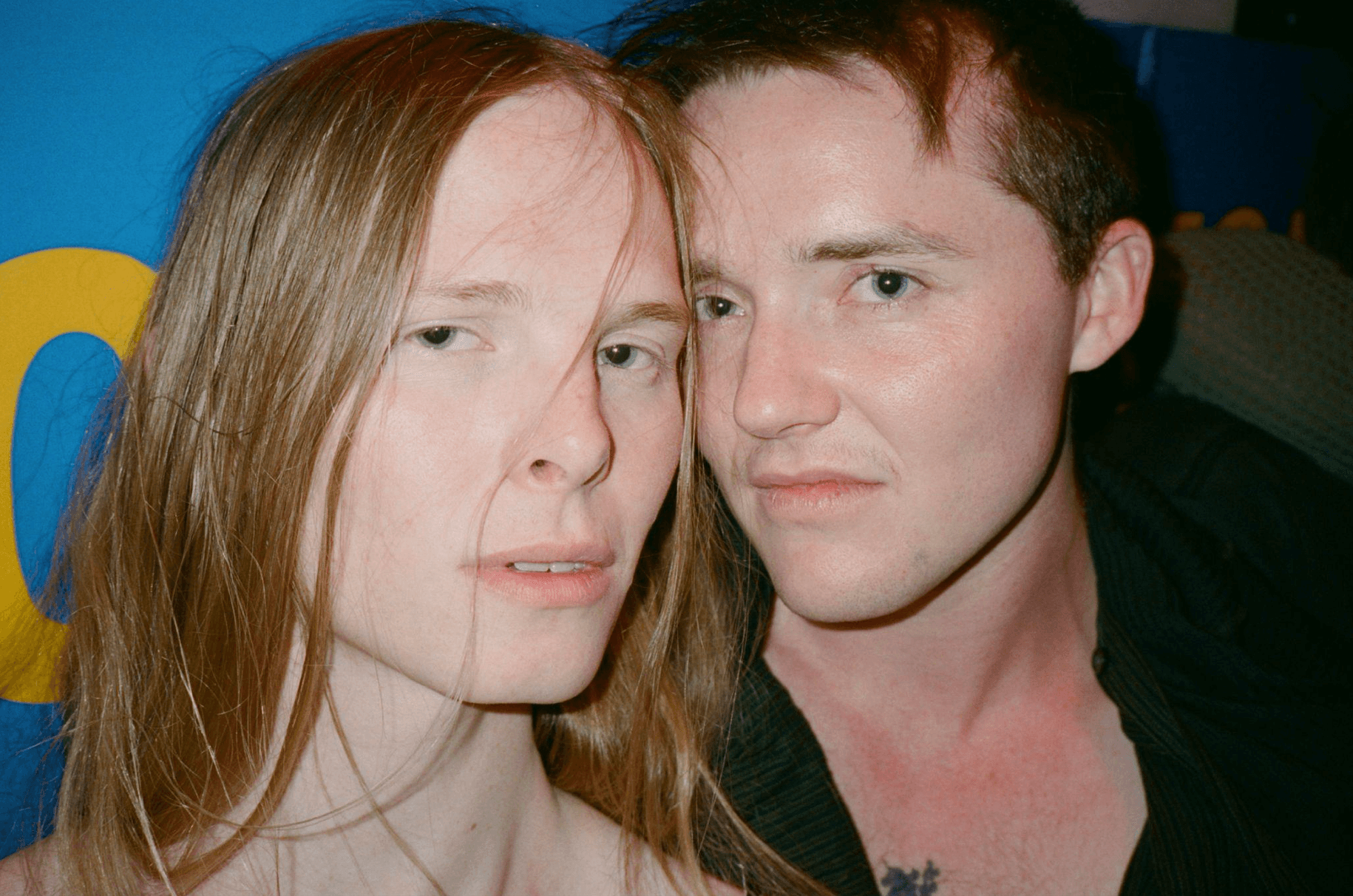
Estratosfera and Qiri are EQ. Their sound exists somewhere between a cold, calculated infrastructure and collective club heat. Buttressed by bilingual lyrics that set the coordinates for a new kind of electronica—one navigated by a “Latin-feminine vision,” ethics, and aesthetics—that is both a product of and a self-conscious response to contemporary hyper-fragmentation.
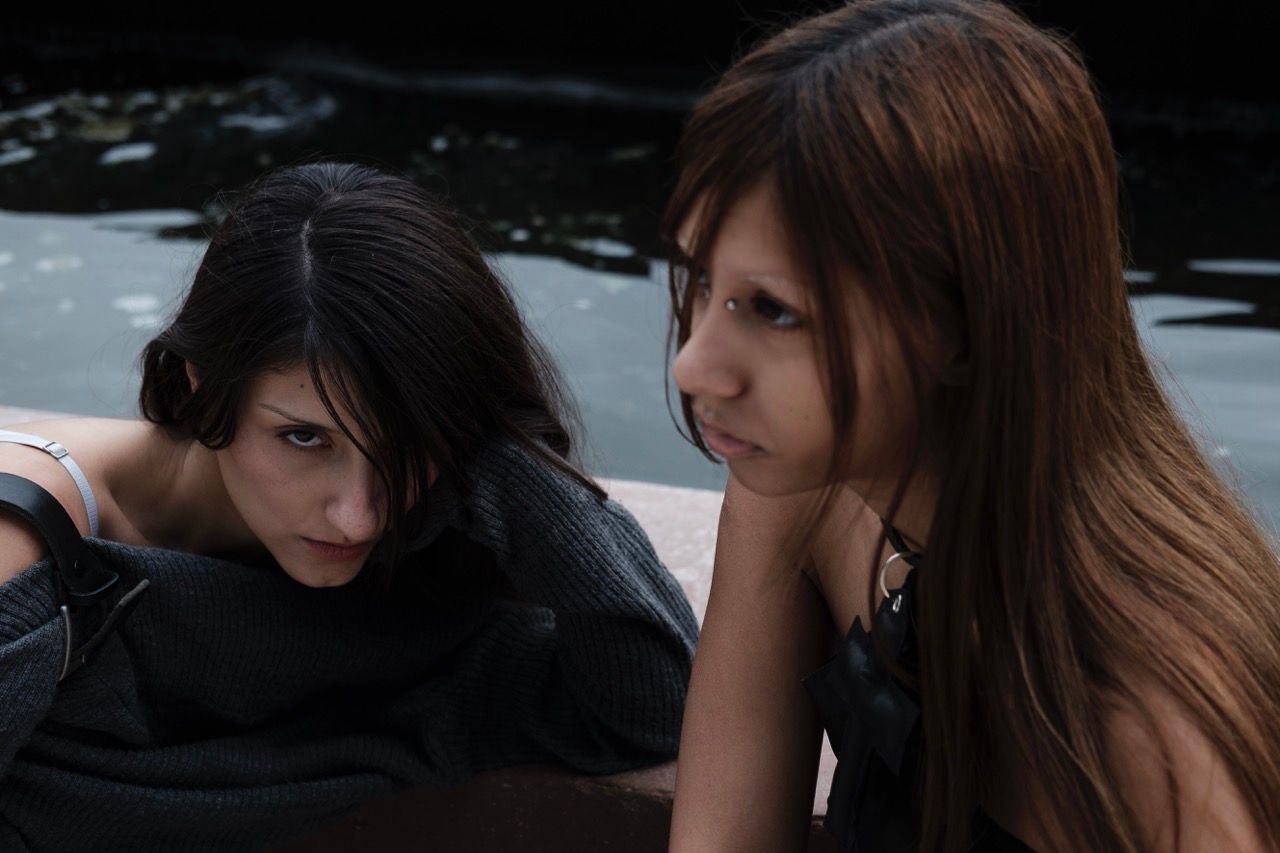
Serving as creative directors, producers, and theorists of their own project, the duo’s universe ultimately responds to disillusionment under technocapitalism. The specific experience of being Buenos Aires-born, internet-raised girls who witnessed globalization’s fantasies through an iPod screen vantage their operation with sonic and visual precision.
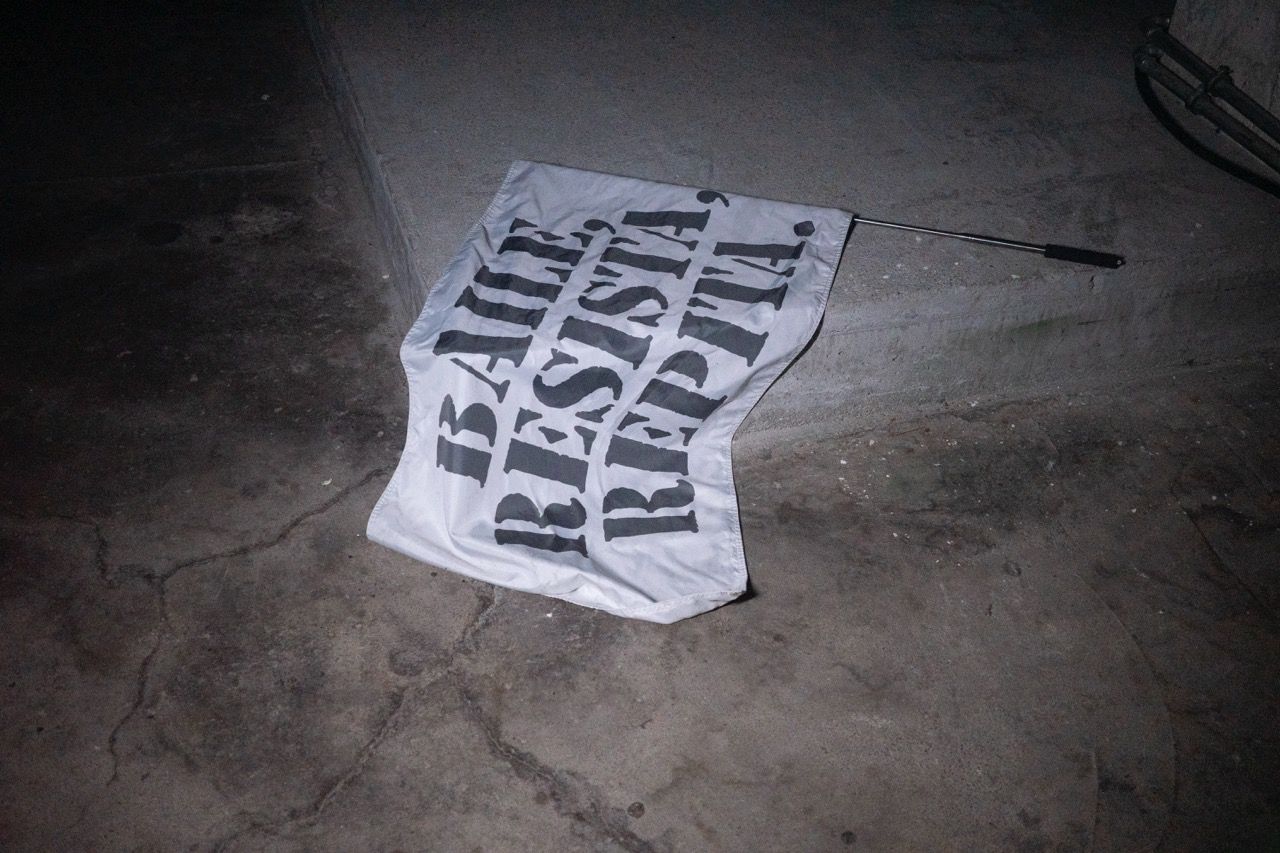
Six songs into their eponymous debut EP, released last year via Fractura, they were invited to play CONTRA at Kraftwerk Berlin. During the first hours of Monday, they walked into their set at Globus carrying a flag inscribed with “baile, resista, repita.”
Julieta Colantonio: History loves duos, and the mind does too—moving through ideas and their antagonists into new forms of synthesis. How does that connect to EQ?
Estratosfera: We met through the local scene in Buenos Aires and a shared interest in alternative and experimental music, but above all, through the same desire to produce our own music. Being women in more technical spaces is still not common, in music or in life. That was the first spark.
Qiri: Everything was understood from the start. Our friendship began that way.
Estratosfera: What’s interesting is that beyond that encounter, each of us had an entire life preceding it. We’re from opposite neighborhoods, very far from each other, which produced two very distinct upbringings and experiences growing up.
Qiri: Some days it takes me two hours by public transport to get to her place. So each time we were together, we made it count.
JC: There’s a kind of esoteric mythology around the sleepover in your story. What happens in that space?
Qiri: The first track we produced together for Estratosfera’s solo project, “Racecar” (2023), was born at a sleepover, and it became the hit that set a precedent. We knew this had to work, no matter what. I think a lot about Jung’s concept of synchronicity: a series of inevitable, serial connections that are just there and can’t be denied. When that happens between two people, it’s powerful. That’s where EQ vision comes from: a shared pulse that only we can understand and know how to bring into material life.
Estratosfera: Even the origin of the name: I had the alias Estratosfera, she had Qiri. One day I was showering at her place, and I realized our initials together formed EQ, equalizer, a fundamental concept in music.
Qiri: Before the name, we had spent an entire year together talking about making an EP: what it would say, how it would sound, what the songs would be about.
JC: The master signifier: a mass of floating meanings that suddenly got fixed.
Estratosfera: In that moment, everything that had been gestating abstractly, sonically, came down to a dimension that could actually be seen.
JC: There were two antagonistic forces at play: accelerating when you were together, and then outwardly, very contained.
Estratosfera: We’re both sides of that: very analytical, very intense.
Qiri: In a solo project it’s easy to follow your own thread and say, “fine, I’ll try it, and if it misses, it misses.” In a duo, you know immediately when something works and when it doesn’t. It’s very hard to lie to yourself.
JC: There’s a double articulation here: self-recognition through the other, and a deeply introspective solo practice. Argentina has the highest rate of psychologists per capita in the world. How does that inform the work?
Estratosfera: It connects directly, especially with its psychoanalytic tradition: word, sign, and the symbolic. In the hidden, the banal, the healthy, and the not so healthy: everything surfaces through the people you spend the most time with. And making music with someone is an emotional and psychological process. You end up auto-psychoanalyzing yourself.
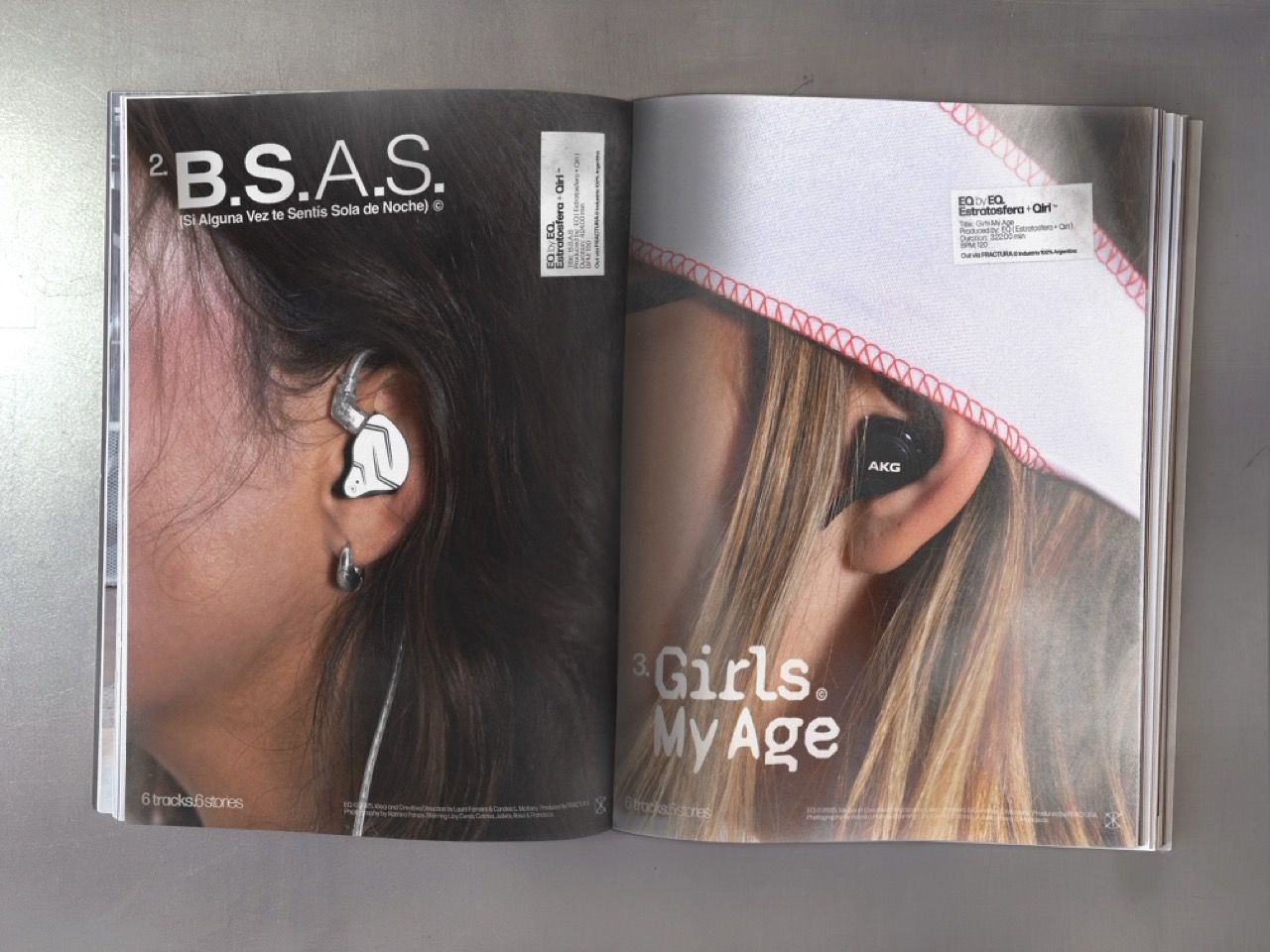
Qiri: We’ve been friends long enough to have witnessed at least three complete life changes in each other. When we started, I had a shaved head. The song “Girls My Age” (2025) is about seeing myself reflected in them.
JC: Your sound maps onto the hyper-fragmentation of this moment: multiple subgenres, multiple identities layered together. The sound references behind the EP suggest an almost surgical quality. How do you understand that precision?
Estratosfera: Surgical is indeed very accurate for our process. We were very detail-oriented in the production of this EP. The process is very sample-by-sample, an eternal audio-cutting operation, and we wouldn’t have it any other way. When something sounds that pristine, even if it’s a bit strange, it becomes easier to understand.
Qiri: Also easier to listen to, sensorially.
Regarding structure, we analyze it in our music a lot. You can have the weirdest sound, but repeat it enough, and you can manufacture it, manipulate it into something more palatable. Repetition is something capitalism does very well when it’s selling you something, and pop does just as well. There’s a gesture of being self-aware, and also realizing that’s what works. That duality is very EQ.
JC: The visual universe reads as a commentary on technocapitalism: cold, aseptic, calculated. The same logic appears in your tags and slogans. Where does it land?
Estratosfera: From Argentina, we gave the Northern Hemisphere a masterclass in that aesthetic. In the process of building the visual world, we left behind the typical moodboards: everyone was looking at the same Pinterest photos. We started looking for references in daily life, in books. That’s what a good creative does, but we were young and had to learn it: your resources can’t come from the same algorithm as everyone else’s. We arrived at the experience of being a kid in the 2000s and being a spectator of the growth of globalization and its aesthetics in real-time, all the fantasies of that period through an iPod, and we recovered that vision just before it broke.
Qiri: A lot of EQ’s lyrics are slogans. I wanted to sell a sensation of happiness to someone listening in a club, which is exactly what companies do: if you want to be happy, consume my product. It’s analogous to the visuals, and it comes from a completely neurotic critique of the times we’re living in. We’re not exploiting anyone but ourselves. And I think that’s why a certain audience adopted us: they know that when it comes to producing the music, it’s us. It’s a double face of the same thing: I have to go out and sell you a fantasy, but I’m also the one doing the work.
Estratosfera: We’re nurses, clinicians, there with the syringes. Our generation, born in the 2000s and late 90s, is now becoming adults. There’s more autonomy, a path made to arrive at certain philosophical conclusions, or rather questions, and then to show them: artistically, in a book, in philosophical or political currents on the internet.
We’re the people who lived the disillusionment of the new millennium. As girls, we saw how the 2008 financial crisis hit and how it reflected culturally. There’s both lived experience and theoretical production connecting us to that.
Qiri: The spirit of the times is a very fleeting place. Today’s reality is largely understood online, and everyone’s online world is highly fragmented. We could spend all day together, but virtually be living in completely different realities. There’s no longer one feeling at a time, but millions: a spectrum of many shades of virtual reality. The niches are tiny, and they last very little. As an artist, it’s hard to be understood within that complexity.
JC: That’s why your syntagmas play such a role in your project, as they both outline and expand its logic of navigation. Is there a lexicon you’re building?
Estratosfera: One of the first things we did together was the “EQ Bible.” We’d sit down and write words. Every day we’d go into the doc, delete things, edit. The Bible is bilingual, and that itself was a word that was already in it. Along with others: horses, latex, gloss, leather—all elements now present in the lyrics and in the visual world.
Qiri: Androgynous. Feminine. Heel. Roland TR.

JC: Girlhood as spectrum. The songs of your EP EQ (2025) play as the soundtrack to a specific scene. Like an answer to the question: what sound could hold this moment?
Qiri: For us it was a very conscious decision to make the EP a short set of very different songs. We were too early to say, “this is what we are, and we want to make a whole album about it.” We wanted to have fun and see the full range of what we could do together. It was a presentation letter: now we can make a record with the vibe of any one of these tracks. So it shouldn’t come as a surprise what we do next.
JC: That draws onto the logic of a corporate portfolio. And onto the tag you used to announce your first European and Australian tour: “Take your dose.”
Qiri: That’s also why in our shoots we have so many extras, so many different characters. They’re all a little us, but they’re also all the different women in our lives—personalities, friends, people we don’t know. There’s always that pursuit of including more alter-egos.
JC: All the productions under your creative direction work with Buenos Aires photographers, fashion designers, alongside your graphic design collaborator, Sofia Mastrogiacomo. It gives the project a cyberpunk quality: a sci-fi universe framed by Argentina’s apocalyptic political and economic climate.
Estratosfera: It is cyberpunk. There’s something about being a woman in Latin America, not being a nepo baby, coming from a middle-class upbringing, being part of several oppressed groups at once, that makes simply existing and saying, “I deserve the life I want, looking the way I look,” punk, because a lot of people don’t want that for you. In moments of crisis, there are two outcomes: either there’s a lot of hostility and a competition mentality, or one of community and inspiration.
Qiri: Also, punk is anti-internet. If we only wanted to work with people from outside, we’d stay on the internet all day. But we have the need to build a community we haven’t found yet: a Latin-feminine vision, where everyone can work and earn a dignified wage and live the life we deserve, under a technological point that isn’t fully explored yet. But between us, we understand it.

JC: There are very elegant, almost subliminal, gestures in that logic. “Industria 100% Argentina” is one of your tags. If you trace it, it comes from a movement to defend national production against imports.
Qiri: In the 90s everyone was saying to buy from abroad because local products fall apart. When we choose to work with people there, it answers exactly to that.
Estratosfera: There’s something that comes not just from the physical place, but from who we are as women: learning to have to take things, because nobody gives them to you.
JC: What can you share about the flag you bring into the shows on this tour?
Estratosfera: We designed the flag with Sofia Mastrogiacomo, who made almost all the art direction for the EP release. As the visual was refined, so was the sound: it was an integral part of the project. We had made several logotypes for EQ, one for each track and its shoot: a techno one, a more corporate one, and then this one, which is revolution-vibes.
Qiri: We wanted to bring a visual element into the live show. On one side, it has to do with a more combative, punk tradition: I’m here, I’m bringing this. On the other, it carries a slogan we wanted to introduce that doesn’t appear anywhere else in our artwork or lyrics: “baile, resista, repita.” Dance, resist, repeat. It has a queer Latin identity imprint. It’s a reminder that if you’re here, it’s because you value the space sheltering you right now, and even though we’re having a great time, we have to give that weight.
Estratosfera: Fun isn’t banal to me. But it can’t only be that in a moment when, everywhere you look, the world isn’t fun. The message is a reminder. And bringing it to Europe was satisfying because aesthetically it reminds me of Napoleon. There’s something about taking signs and inverting them toward our own reality: to resignify meanings toward directions we believe in.
Qiri: With the right ascending globally, it’s a dimension of experience that needs to be cared for and valued. And the flag was the EQ gesture that sealed the identity of a show that included the many mythologies of each of us.
JC: The fourth wall breaks.
Estratosfera and Qiri: It’s the most genuine thing: I’m talking to you.
Credits
- Text: JULIETA COLANTONIO
- Art Direction: SOFIA MASTROGIACOMO
- Photography: YANNIS KONSTANTINOS
- Graphic Design: SOFIA MASTROGIACOMO
- Photography Assistance: MARIA-ANTONELLA CALCAGNO
- Styling Assistance: CAMILA CAMILA