underscores Lifts the Veil on Pop
| SANIDHYA SHARMA
After hyperpop’s post-100 gecs haze began to settle, and PC Music’s transgressive sound was definitively appropriated into mainstream pop, underscores emerged amid a wave of new artists still treating DIY electronic music as a kind of eternal blood pact. However, like her peers, she faced a problem familiar to the times: how to continue using a rapidly diffusing genre as a sincere vehicle for expression.
To avoid this flattening, underscores leaned into excess. On her first album fishmonger (2021), she used punk-rock guitar riffs and fragments gleaned from other genres as a way to reassert her chaotic, self-proclaimed celebrity status within a crowded and sometimes monotonous scene. The fictional Michigan town at the center of her second album, Wallsocket (2023), unfolded across an online world comprised of a fake website, fictional mailing address, student newspaper, and “Moms of Wallsocket” discussion forum. In both projects, her work remained anchored in the spaces that she had observed directly around her. The resulting fictions functioned as activations of sorts, transforming familiar places into ones she could observe, (de)construct, and project onto.
Her most recent album, U (2026), released in March, ruptures this process. If her earlier albums were about meticulous world-building and pushing the limits of concept, U erects a scaffolding under which she can take a breather from her own mind. It’s the kind of pivot that high-concept artists are often expected to make—the sincere return to self—but few do with the same urgency and potency as underscores.
On U, the artist grounds things in a specific world that is not imagined but remembered: the Galleria, her hometown mall. Through this homecoming, underscores allows herself to play in the vastness of her inner world, where desires collapse upon their fulfillment, identity blurs between performer and person, and instinct overwhelms the intellect. This emotive turn colored the artist’s work flow in the studio, too, where she recounts sobbing and having a “full breakdown” while recording the album’s penultimate track, “Bodyfeeling.”
After the release of the album, underscores and I discussed what’s left of a musician in the aftermath of a project that erupts so intensely from the personal.
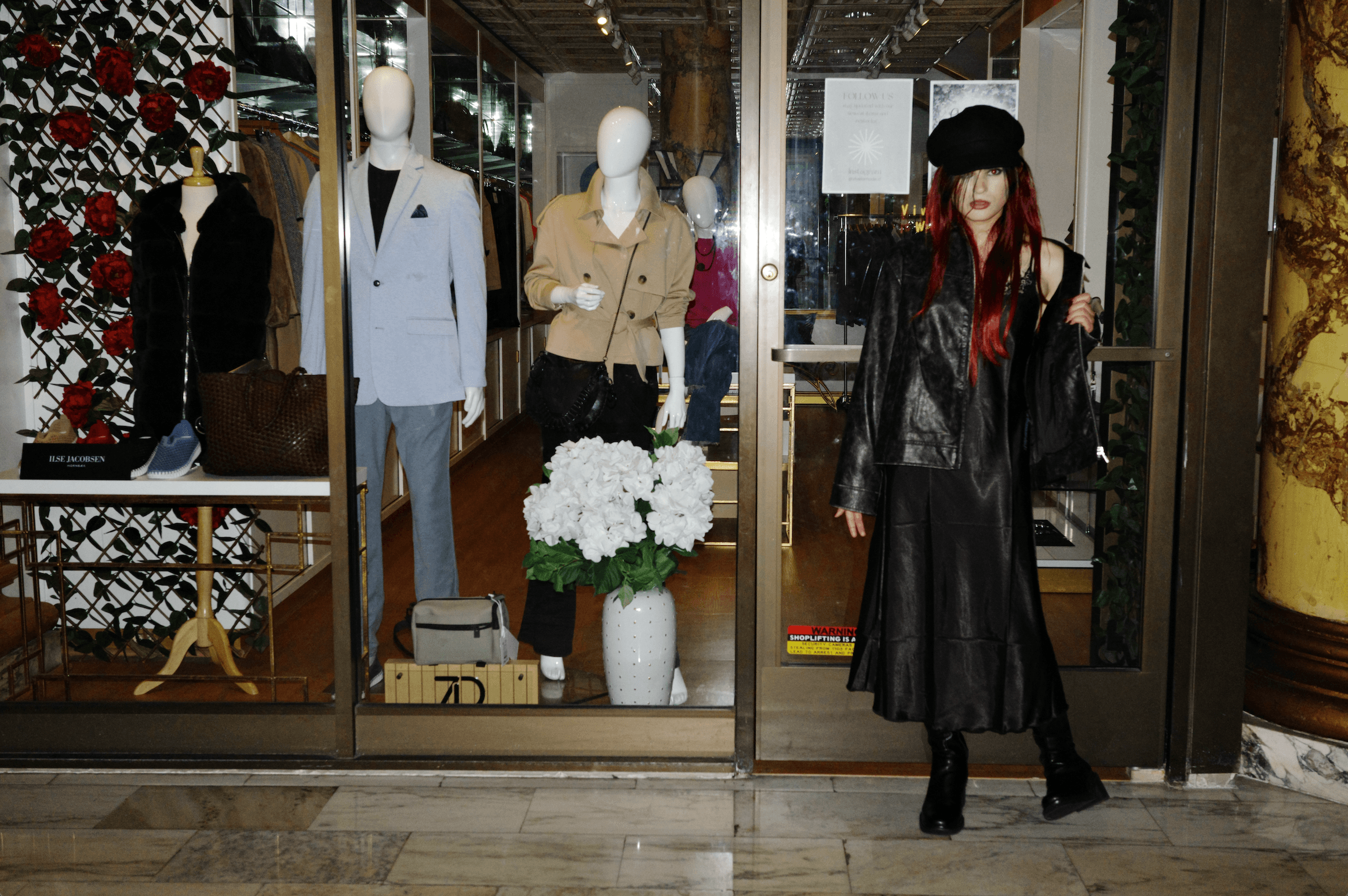
SANIDHYA SHARMA: In the lead up to the new album, you’ve mentioned that you’re drawn to places like malls and airports for their “glistening artificiality.” What is the importance of those spaces and how do they form the affective backdrop of U?
underscores: I think it's important to clarify that the affective backdrop functions less like a liminal space and more like a third space that’s meant for people to gather in. I’ve been very obsessed with them [third spaces] since I was younger; those spaces were my first architectural fascination. They really come alive to me when there’s a ton of people in them, which is ironic because for the album video, I’m dancing around the mall with no one in it.
I also think there’s something about yearning for a time and place I wasn’t fully there for. Even though I hung out in malls when I was in middle and high school, I was sort of a baby when pop stars would come to the mall and perform, when people would hang out at the mall as the main activity.
I’m drawn to the idea of there being a place for people to gather that’s not familiar to them, but everyone is moved to come to. That’s an important thing to have, even if, ultimately, most of those places get taken over by capitalist forces and made into tourist traps.
SS: What were some actual physical spaces that shaped how the album came together?
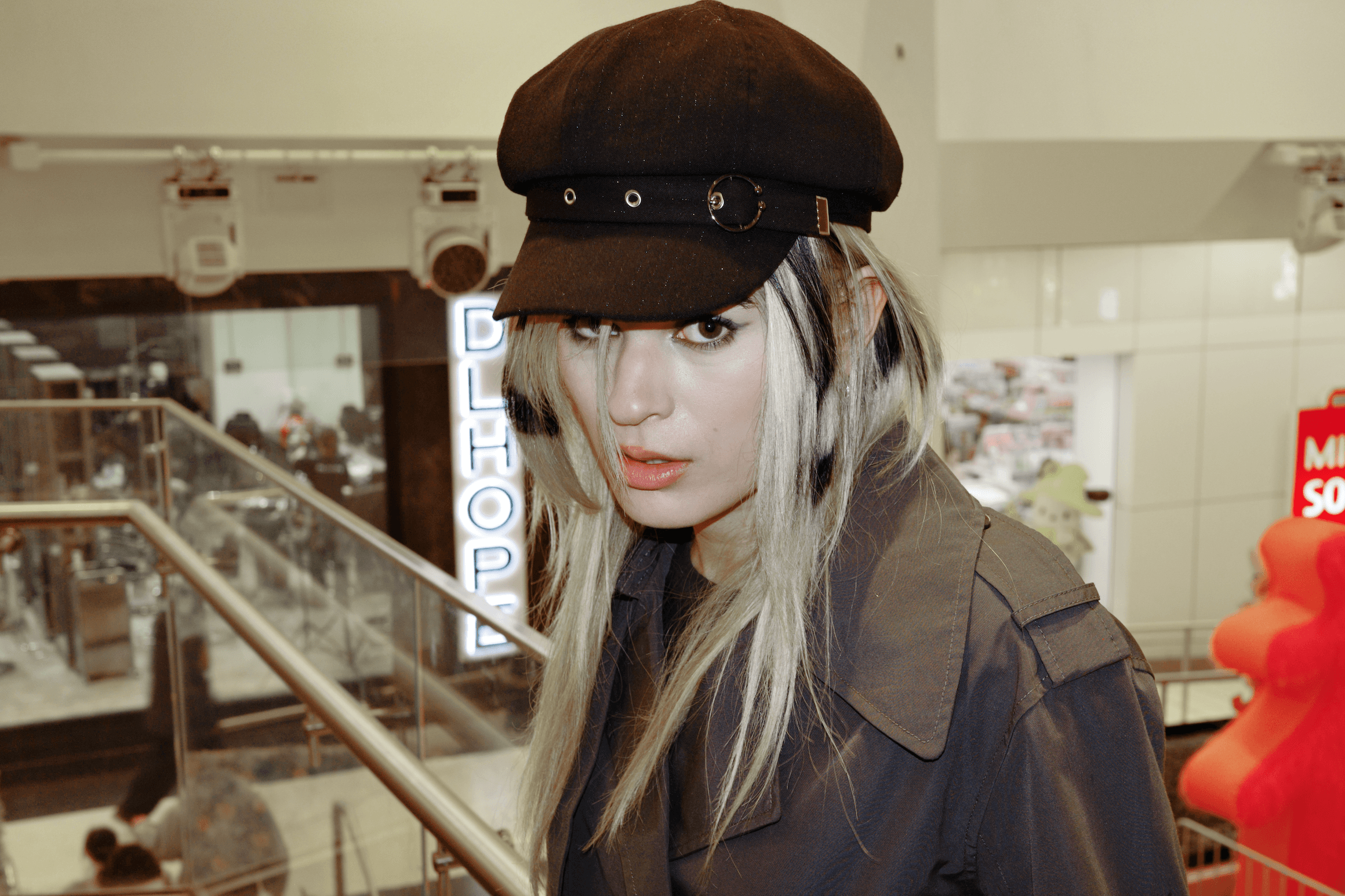
U: The biggest space was Stonestown Galleria, which is the mall I grew up going to in San Francisco. I used to have this ritual in high school where I would listen to this one album and walk from my house to Stonestown—the perfect length for the walk. The album was Melting by Mamamoo, which is this K-pop girl group. I used to do that maybe once every weekend. It was grounding for me to have that kind of routine and certain checkpoints along that walk.
I’ve always liked to tether all of my albums to a geographical location. For my first album, that was New Jersey, around this water tower near Atlantic City. Then, my second album was set in Michigan, outside of Ann Arbor. Having followed that trend through two albums, I assumed that, at some point, I’d be doing this big return, my hometown San Francisco album as the epicenter for underscores.
SS: I had a visceral reaction to the opening track, “Tell Me (U Want It).” One thing that stood out to me was how complex desire feels throughout the record, and this song starts it off with the lyric “I get what I want and then find out right after I get it / I don't even want it.” Is fulfillment the goal of desire, or is the act of wanting the point?
U: I think it’s the latter… [pauses] at least at this point in my life. It extends past just relationships or a romantic kind of thing. For example, I’ve been traveling a lot because of my music, which has been really cool. I’ve always looked at these places like, “Oh, I can’t wait to visit there,” and then I get there and… I just want to go home. It’s not me trying to be ungrateful, it’s just the way it works sometimes. I really want something, I get it, and then I’m like, okay… that’s that.
I also think that’s a lot of people, especially when it comes to music or any fame-related things. I’ve even had childhood heroes hit me up, and I haven’t been as phased as I thought I would be. I wish I could have more of an emotional response to it, but for some reason I don’t have that—when, even a year ago, I would’ve been like, all I want is for this person to hit me up.
SS: On “Hollywood Forever,” you question whether something you do is “out of love” or just “material for your eulogy.” Has it become harder to experience things as they happen without turning them into an underscores narrative?
U: That’s something I’ve been trying to break down within myself. I think it was actually worse last album. Since I was maybe 13, I’ve kind of been living my life as if I was famous already, and scrutinizing myself at that level so that, you know, by the time I actually became famous, I would have a squeaky clean record. I wouldn’t have been in any messy relationships or hurt anybody, or anything like that.
That’s something I’m trying to undo for myself. I think I can relate everything back to the project: every hobby, even something like exercising or whatever, can funnel back into underscores somehow. And I think that’s an unhealthy way to go about it, because as much as the music is everything to me, it shouldn’t be. It is something I've realized within myself over the past year: how am I gonna get myself out of this [line of thinking]?
SS: The themes you’re singing about—how much of them are you, and how much of them are filtered through underscores? It's like that age-old question: where does the project end and where do you begin?
U: I think I can funnel a lot of different things into songs, and my work can be construed in different ways, but I don’t think there’s any separation between me and underscores.
I’m really bad at acting, and I’m a bad liar. So, it’s hard for me to put on a character with this. But when I’m making a song, I am thinking about multiple different “you”s. It’s not necessarily about one person. There’s one way to interpret this record where it feels like the start of a relationship and the end of a relationship, and I didn’t even realize that until I listened back to it after it was done. But when I was writing it, it wasn’t strictly about one person.

SS: I remember being a fan of Lady Gaga growing up, and people would always ask her, “Who is Gaga and who is Stefani?” And she would say they’re the same. At the time, I thought that was kind of bullshit, but now I think it’s actually true. The performed self can be the more authentic version of you, because it’s something you actively choose to build.
U: Definitely. When people say they’re putting something on as a character, I don’t fully believe it. That is just you. You can’t completely separate yourself from it.
SS: You’ve mentioned wanting to get away from the way you usually make music. In earlier albums, you at least had one person who was co-mixing or co-engineering with you.
U: Yeah! Heba Kadry, who mastered my previous album, mastered “Music.” When I put out "Do It,” we couldn't get a master in time, so I just mastered it, and then remastered “Music” for the final album.
SS:You really did everything on your own! Given your recent collaborations with Oklou and the songs you’ve written for other artists, what did it feel like to return to making something entirely by yourself?
U: I mean, it was still very frustrating to work by myself. I think I've talked about this before, but there are just some things that you realize when you’re working on music by yourself that you can’t as well as other people.
SS: Like what, for example?
U: I think the biggest thing is vocals. I get frustrated recording my voice because I can't get it to do what I want. Same for songwriting. These things are always easier when you work with others.
But working on it yourself just makes it more earnest. Your intent comes across more clearly to other people, and you’re better understood. I don’t think working alone is that rare, and I don't think it will be that rare in the coming years. I think there’s an emergence of artists like Slayyyter, for example, directing her own videos and styling and bedazzling her own pieces. Jane Remover directs her own videos, edits her own videos, produces all her shit. Same with 2hollis and Tiffany Day. All these artists that are doing one-hundred percent of it, and as a result, listeners are less drawn to songs or albums and more to the artists making them. Even when songs aren't super produced or the songwriting isn’t that great, for example, people are still investing in these artists because they can see the potential and visualize what a fully executed production could be.
The general listener has become way more savvy. Knowledge of pop culture is not just limited to girls and the gays anymore.
SS: The veil has been lifted, almost.
U: Exactly. I think that’s why I was so passionate about trying to do everything myself. Even “Bodyfeeling,” for example, is clipping and pumping in parts… that master does not sound as good as it would had I got it professionally mastered. But that’s what makes it more endearing and emotionally adds to the song’s climax.
SS: Does that approach affect how you collaborate?
U: Not necessarily. Having my own projects makes it easier to work in those [other] spaces without being too precious. My last two albums were also entirely my own. With this one, I just wanted to be faster and more impulsive. I wanted to sit with the music less.
When I made the album before U, I had to submit it six months before the release date so the vinyl could be made in time. So I ended up sitting with that album for six months, and by the time it came out, I didn’t like it anymore because I’d been the only one listening to it.

SS: That sounds harrowing.
U: This time, I wanted to be a little more reckless and follow the album wherever it was going. So when I finished the album on January 15, I only had two months to sit on it by myself and listen to the music before everyone else. It's only been a month since the album has been out, but I still think this music’s pretty good.
I think this is a better way to make music by myself. Crafting something, then sitting on it and being super, super, super intentional was one way, but there’s a way to be intentional yet fast and impulsive at the same time.
SS: This record breaks the seal of underscores as a self-contained world. Your real relationships start to complicate the narrative.
U: I think so. Music is one of the most important things in my life, but I have begun to realize I care a lot more about my personal life and relationships. As much as I say on the record that it’s all about music, my relationships are the crux of my life. I don’t want to jeopardize that with my music, because there are so many things baked into it too, like the success it brings me, which is something I worry about. The further I go into my music career, I always have that in the back of my head. Like, is this something I can actually write about and still seep at night? But I think that’s an every-artist thing.
SS: And a human thing, to some extent. It’s harder when you have a platform, but in a way, it can also be easier because you can always say it’s not about you.
U: That is true. There is an element of obscurity in my lyrics and in the themes where it does seem like that. That’s kind why some people question if the songs are about them. It’s not as crystal clear all the time. Some songs are, but most songs are a mix of many things.
SS: If I was a musician and I wrote a song about someone and that person came to me and asked if the song was about them, I would just say, “no, what are you talking about? You think you’re so important that this song is about you?”
U: Yeah, like “you're sooo vain.” But it’s a tricky thing to navigate and something every artist has to deal with unless they’re doing a concept album.
Credits
- Text: SANIDHYA SHARMA
- Photography: BAILEY KRAWCZYK