Frost Children: “Our objective is ageless”
|Cassidy George
“Is solace anywhere more comforting than in the arms of a sister?” My older sister and I both chose to place this Alice Walker quote beneath our photos in our high school yearbooks. References to “twin telepathy" are commonplace, but mind reading and thought transference often extend to siblings in general.
Many of our shared thoughts and memories are deeply embedded in sounds from the past. Nowadays, my sister and I often send each other voice memos, singing hymns we were forced to learn in elementary school, cereal jingles from 2005, and background music from Kingdom Hearts and The Sims 2. Decades later, these function less like sounds and more like keys that unlock hidden chests of images, associations, and emotions.

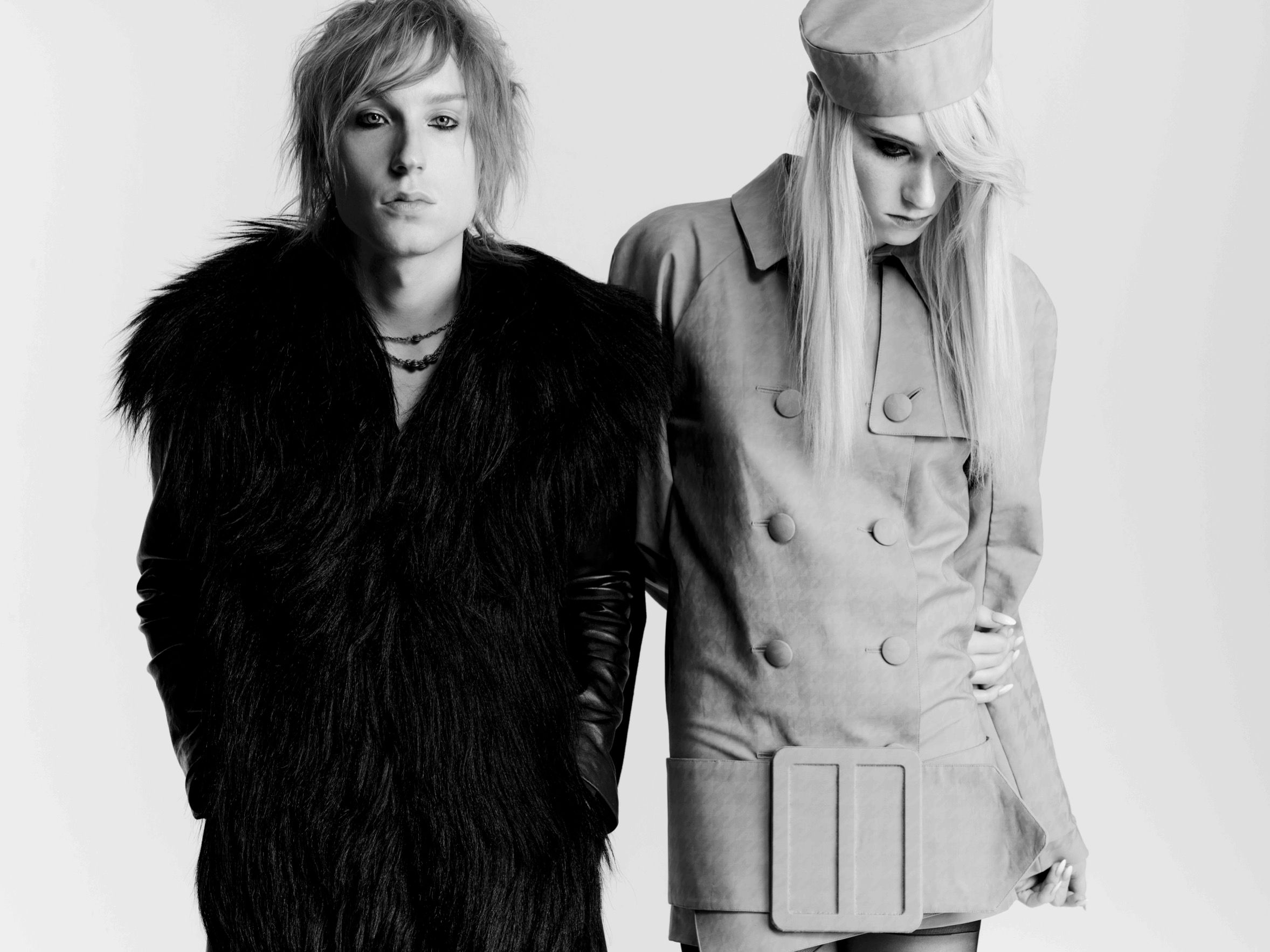
When I listen to music by the sibling duo Frost Children, I’m reminded of this “unlocking” feeling. The Missouri-raised, New York-based artists make ornate and experimental music that fuses references to Y2K EDM, bloghouse, pop-punk, and emo in an uncanny and contemporary way. Their inventive body of work continues a lineage of acclaimed bands whose members also shared parents (The Beach Boys, The Jackson 5, Oasis, and The Ramones, to name a few). After all, what is a sibling, if not someone to face the music with?
Following their neo-folk album Hearth Room (2023), Frost Children made an indulgent return to dance music in 2025 with Sister. On the album’s cover, a woman in pigtails stands with her back to the camera. A scarified “S,” etched in the graffiti-style endlessly drawn in classrooms and at cafeteria tables in the 2000s-2010s, looms between her scapulae. Both the icon – which most of us remember from childhood – and Frost Children’s music question the mechanisms of cultural transience: Why are certain sounds, styles, rituals, traditions, and relationships canonized, while others are de-legitimized or doomed to expire? Beyond celebrating the joys of experimentation and self-actualization, Frost Children may ultimately be a project about memory.
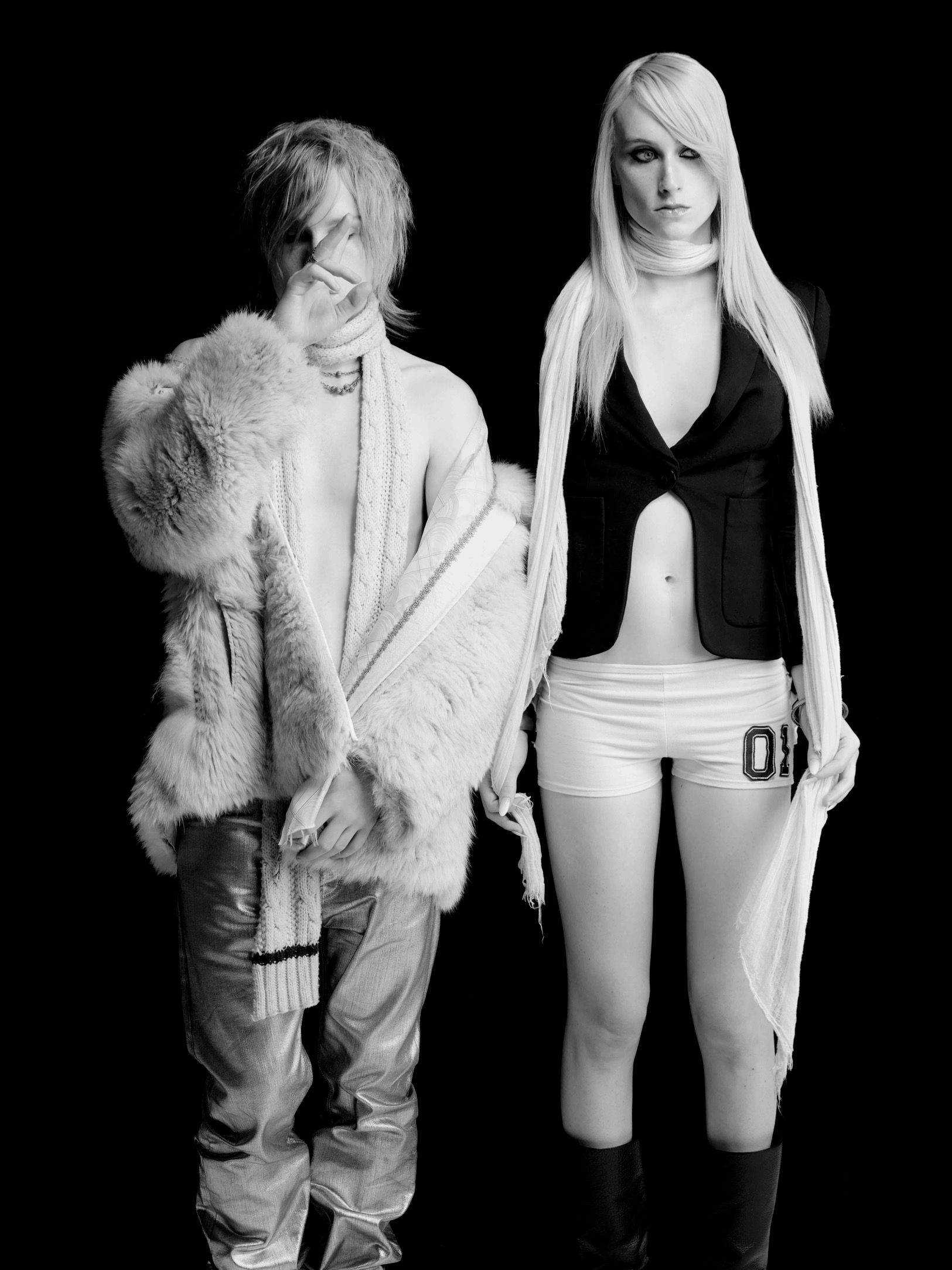
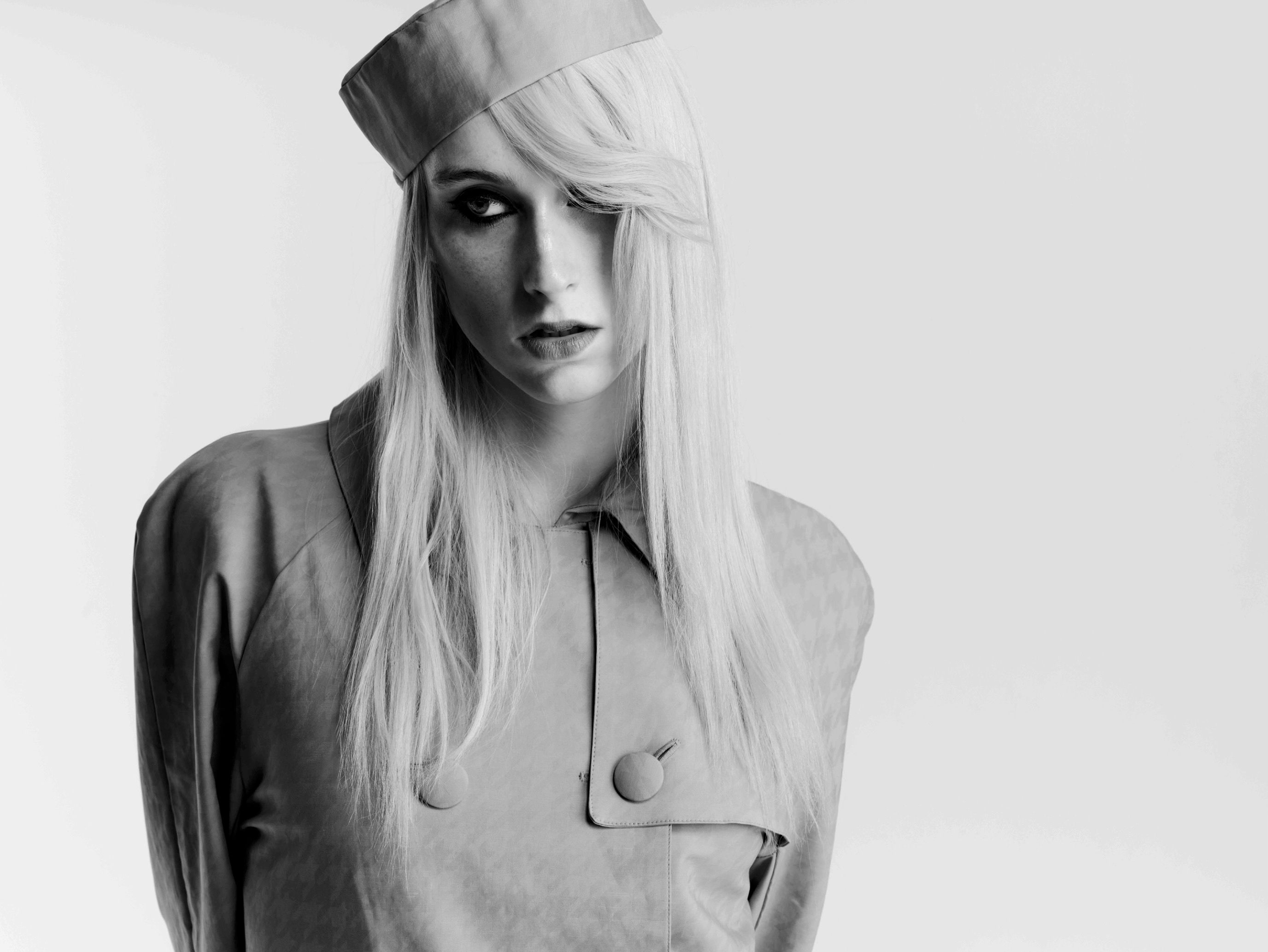
With their latest record, band members Angel and Lulu Prost also suggest that sisterhood can be a shared, universal experience (much like learning to draw the “cool S”). They remind us that sisterhood is not about gender or genetics, but rather the strength of a bond. It is a way of being.
From their parents’ apartment building somewhere in snowy Virginia, Angel and Lulu spoke to me after the Sister tour about Russian dolls, Grey Gardens, and proving New York music journalists wrong.
Cassidy George: When I saw the Sister cover, I thought of this article I read in The Atlantic in 2022 called “Why Did We All Have the Same Childhood?” The writer cites it as an example of a ritual and legend that children develop and pass on to each other, which researchers call “childlore.” What does this icon mean to you?
Angel Prost: It’s weird—everyone thinks it belongs to their generation or that it is unique to where they grew up, but it’s actually a universal bond shared between people. Already knowing the title of the album, we were gravitating toward the letter “S.” When we were in LA, we met a girl who had this S on her back. It’s not exactly a tattoo, it’s a cut that heals over and scars.
CG: I never even considered that could be real. I just assumed it was edited or some kind of prosthetic.
AP: Everyone says that because it seems so unbelievable. She’s not a model or on socials, she’s just a friend of a friend who happened to be in town.
CG: Frost Children has some “childlore.” I was recently watching your interview on the Neoliberal Hell podcast, and one of the hosts casually mentioned that you went upstate and married your fans? Or maybe he said friends?
Lulu Prost: Wait, did we marry our fans? This is kind of a Nardwuar moment. [Laughs]
AP: I’m trying to remember. We were one of the last guests on that podcast. I think we killed it.
CG: Do you remember talking about deep-fried Hot Pockets and Moon Shoes on The Danny Brown Show? You three appear to be very good friends. Would you say that you are kindred spirits?
LP: I can never watch an entire interview of ours back, but I did watch a little bit of that one and it wasn’t even really a podcast—we were just talking about how awesome each other’s music is and how fun it is to collaborate. When we met Danny, it was right after his last album and he was in a period of transition in his life. Since then, he’s had such a glow-up as a person and found a new sense of happiness with all of his new music. It’s also so inspiring to see someone reinvent themselves at that age. He isn’t even old—
AP: Well, he calls himself uncle. I actually fantasize about getting older. I have reverse age dysmorphia. Anyone at 21 can be like, “Hey guys, I made a cool song!” Of course you did. When you’re past 45, your swag just multiplies. I think of Vivienne Westwood—her swaggiest era was when she was old as fuck and still had full-beat makeup on. She never looked better. That’s a real one, you know.
The underground is getting way younger now. I love that you can be huge at 16 and that it can happen more on your own terms than it used to when people like Justin Bieber were child stars.
LP: As long as you’ve got the right skincare routine and hydrate, you’re not even really aging right? [Laughs] I’ve always thought that I’m going to be sexier when I’m 35. That will be me in peak form—I’m still growing into it.
AP: Yeah, you also gotta get the bag up. By the time I’m 35, I’ll have the money to afford all of the surgeries I want, and then I’ll have this perfect—
LP: Persona.
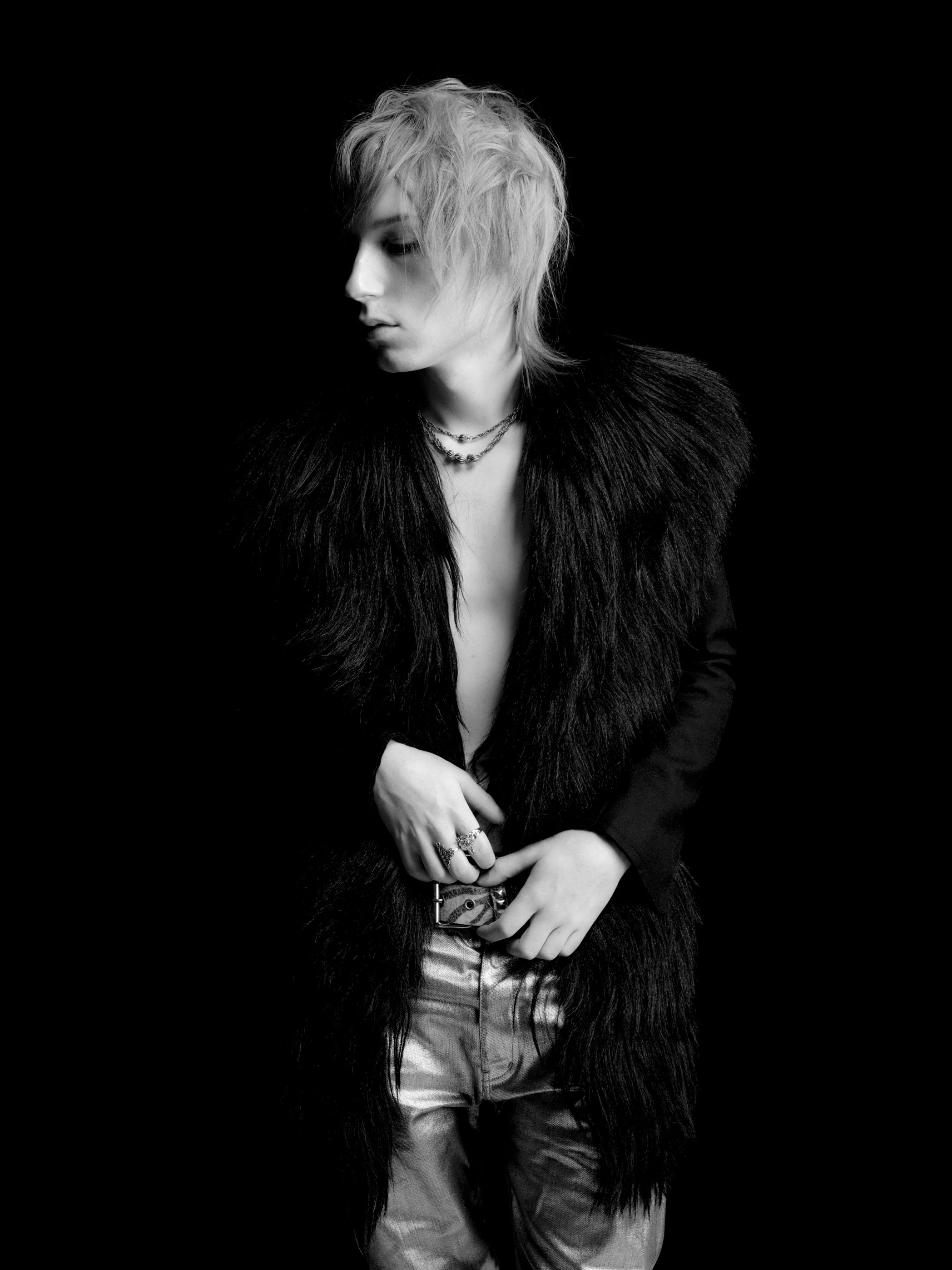
CG: I think this plays a major role in the joy of getting older. In many cases, aging can mean gaining more access to resources that help you self-actualize. You’re able to fix things you’ve always wanted to fix, or perhaps you gain a different kind of security that allows you to realize those things didn’t need fixing in the first place.
LP: There was definitely a time in my life when I compared myself to younger people, but that voice eventually faded. Our objective is ageless, and our ethos will be the same at every stage of life. And this thing that we’re doing—we’ll do it for life.
We did an acoustic album called Hearth Room a few years ago. Most artists do a “stripped back,” “unplugged” album like this later in their life. At the time, we were wondering what would happen if you just get that over with when you’re still really young. What happens when you allow yourself to evolve beyond the typical ending point in an artist’s lifelong career trajectory?
"We can’t aura-farm our way out of that. It’s just part of who we are."
CG: I thought Hearth Room was a clever move. It was also a bit of a “gotcha” moment to showcase your musical breadth when everyone was eager to label you under a specific genre. Actually, my favorite part of that era is the documentary you made, with all of these vignettes in a rural part of the country.
LP: It is actually a really touching and cute documentary. I’m so happy we captured it and that everyone has seen this side of us. We can’t aura-farm our way out of that. It’s just part of who we are.
CG: Your interactions with each other come across as completely genuine and natural, as if the camera isn’t there. It reminded me of Grey Gardens.
AP: We were at this cabin in Pennsylvania by the lake, in complete isolation. That’s what’s so amazing about Grey Gardens—they don’t interact with the outside world, so they’re just perpetually feeding back off each other’s vibes and vocabulary. That’s what makes really interesting, singular art—isolating and not allowing yourself to be influenced, or limiting your influence to very specific, pointed things. It’s a lot like self-sampling, which is something we’re doing more often. The song “Bound2U” on Sister samples “Bernadette” from Hearth Room. We love being self-referential in that way.
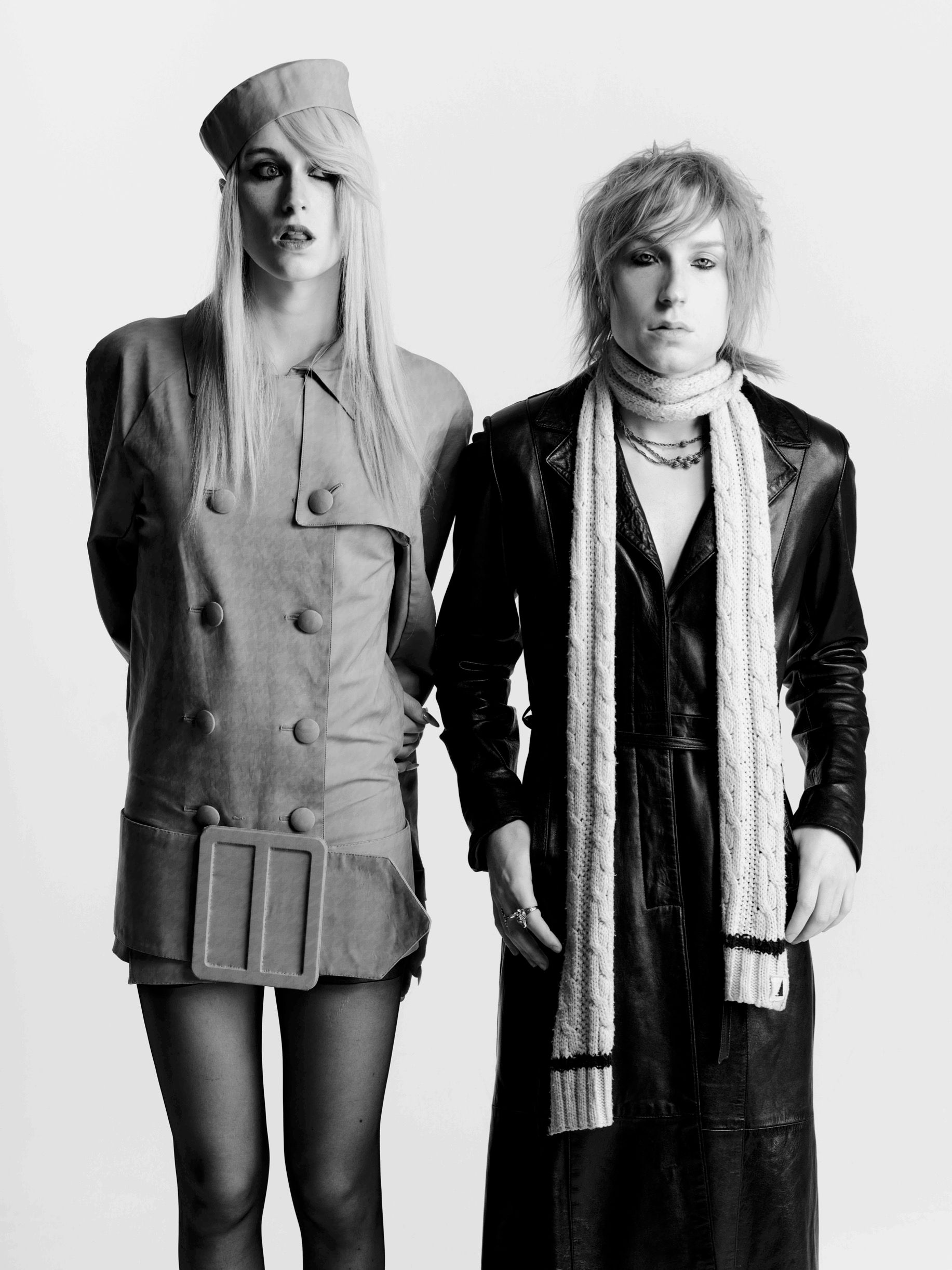
CG: Where are you two right now?
LP: We’re in Virginia, which is where our parents live.
AP: Before that, we were in Mexico City, and before that, we were in Japan for two weeks.
LP: When we go back to New York after tours, we don’t know what to do or how to act. It feels sad to return to normal life. We planned to go to Tokyo and start a new project right after the Sister tour. We love it there. If it wasn’t so far, I’d probably be there once a month.
CG: Did it bring anything new in you, sonically or artistically?
AP: We’ll see, it’s still a work in progress. With music, almost everything we do is on our laptops—plus maybe a guitar and microphone. No one is doing themselves any kind of service by staying home or going to the same studio over and over again.
LP: Movement is always good for you. It makes you feel like you aren’t trapped in some hellish cycle. By the way, have you seen our music video for “Sister” yet?
AP: It’s the one with the ball-jointed dolls, which were animated with stop-motion.
CG: Yes, I watched it and thought: “Protect the dolls!”
LP: Our creative director Andrea hooked us up with a group of people in Russia who do this for a living. It was their idea to turn us into dolls in the music video. We started chatting with them and then met over Zoom. They interviewed us about everything: how we behave, what we wear, what we have in our bedrooms. They wrote everything down, creating these mini-versions of us, and then moved into some kind of Airbnb for two months just to work on this. It was amazing to see them breathe new life into the project, especially with something that is so time-consuming. It was the first video of ours where we had zero notes. We saw the first cut and just said, “It’s done.”
AP: I’m really proud of that video.
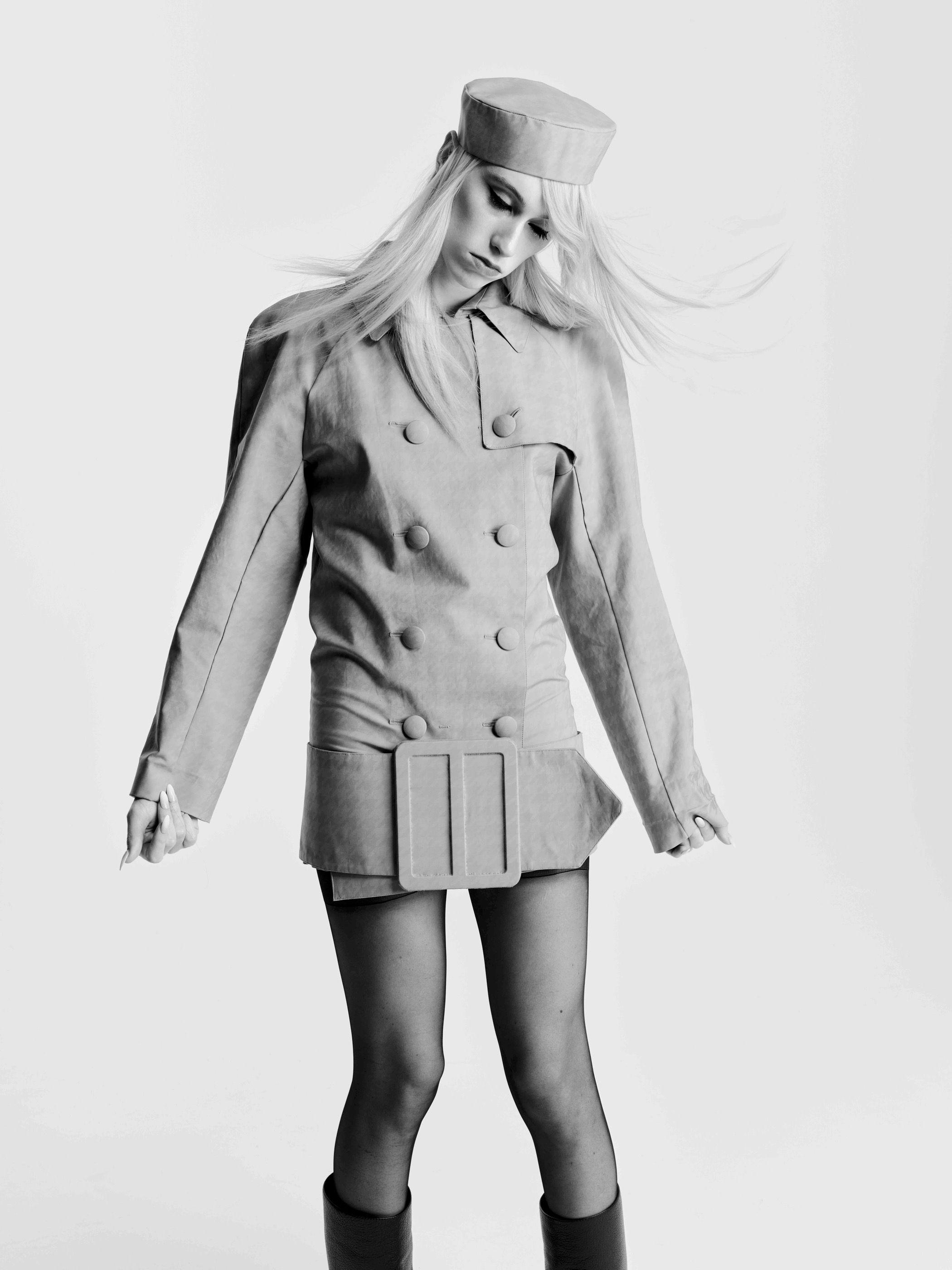
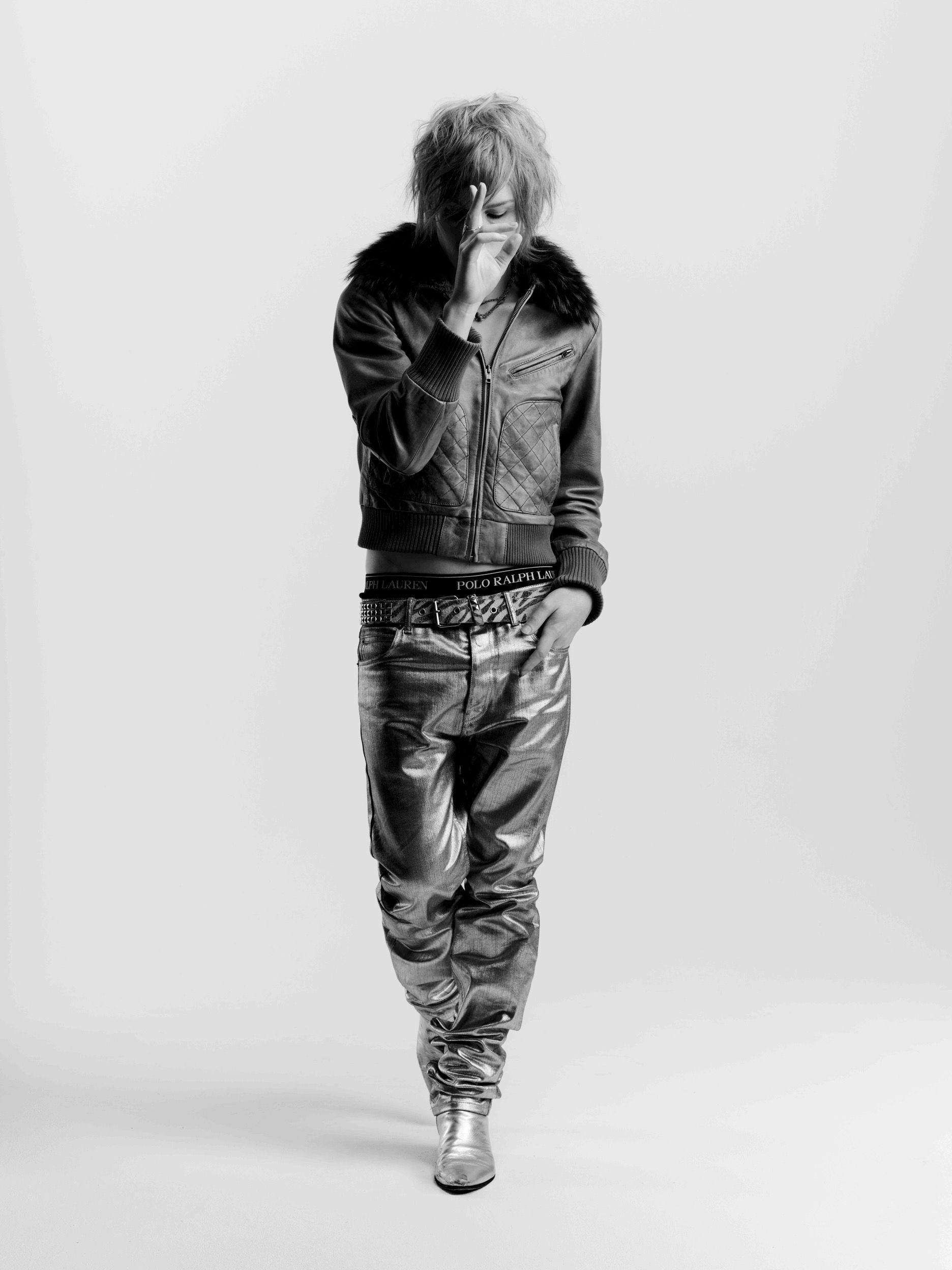
CG: Now that the Sister era is coming to a close, looking back, has any aspect of the album roll-out surprised you?
LP: People really connected with the back end of the album, with the more subtle tracks like “Don’t Make Me Cry,” “Blue Eyes,” and “2 LØVE.” They weren’t singles and we didn’t promote them at all, but a lot of people at shows told us that those are their favorite tracks. It was really exciting to hear because those songs are the sweeter ones—they aren’t built for the stage. You’re just supposed to listen to them with your headphones on and feel some crazy emotions. It’s cool to know that people really fuck with emotional dance ballads!
AP: The tour itself sold out, so we did some venue upgrades and those sold out too. I posted about this on my [Instagram] story yesterday: there have recently been a lot of fluff articles about how young people don’t want to dance anymore, and that they go out just to film stuff. We have experienced the complete opposite in our work. In building this idyllic world of dance music, community, and euphoria, we’ve proved all of these pieces wrong.
CG: That’s a great ambition for any artist. Prove the think pieces wrong!
AP: These journalists go to one lame industry party in New York and then claim that people don’t dance anymore. They’re just going to the wrong places. This isn’t unique to the EDM world. Screamo shows still go crazy—same with underground rap.
LP: People are even freaking out and dancing to Geese! I don’t even like Geese, but –
CG: I want to like Geese.
LP: Same, but either way I’m so happy that their fans have them. Everybody needs something to dance to.
Credits
- Text: Cassidy George
- Photography: Tom Funk
- Fashion: Isis Ritter
- Makeup: Julia Barde
- Hair: Noriko Takayama
- Photography Assistant: Jakob Reimann