Jonathan Saunders: “Aspiration is great, snobbishness isn’t”
|Franka Rosa Maria Klaproth
Those who have the most lasting impact on culture rarely foresee themselves doing so.

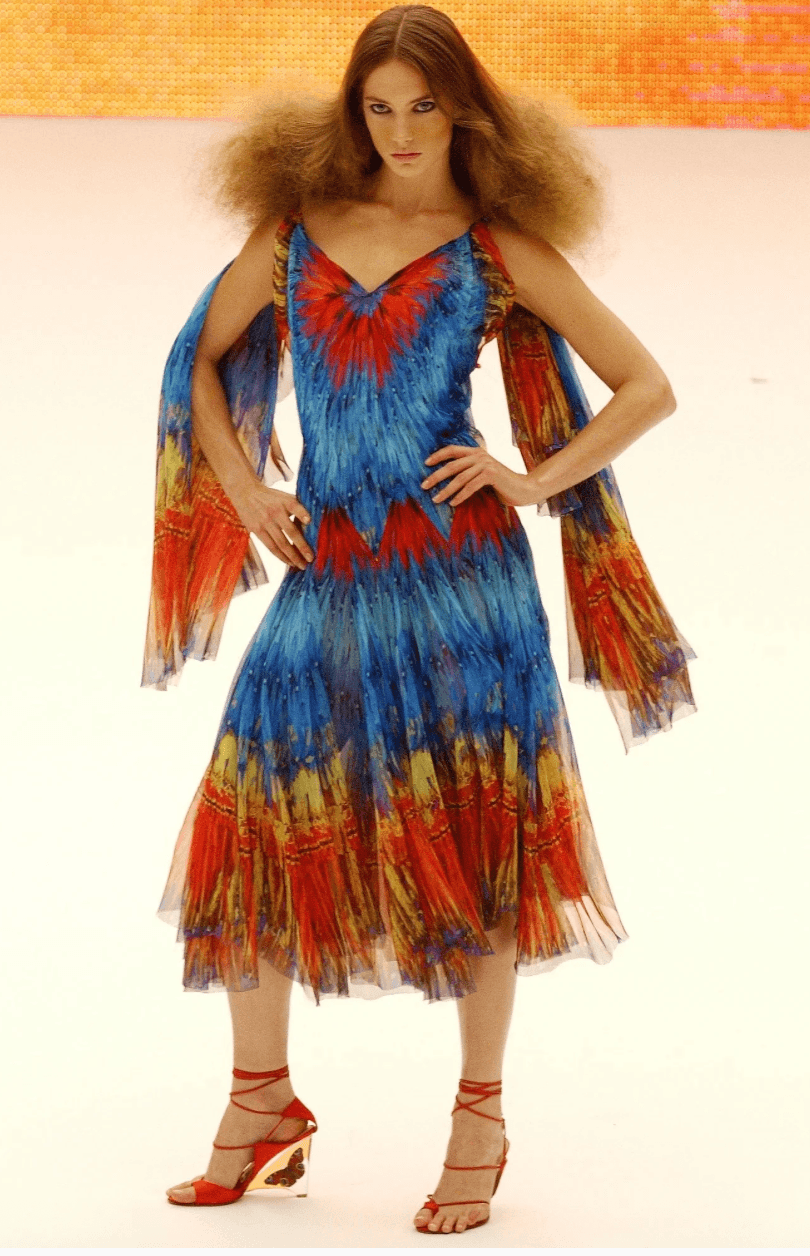
Such was the case when Jonathan Saunders first created the iconic bird-of-paradise print for Alexander McQueen’s Spring/Summer 2003 collection. Designed fresh off the heels of Central Saint Martins, where the young designer’s master’s collection immediately drew international recognition and the attention of McQueen himself, who sent the graduate a job offer in just 48 hours, Saunders’s first stamp at the label became not only the most photographed look of the collection, but a defining motif in the house’s canon.
Despite this early moment of recognition in his career, Saunders continued to suspect that he was somewhere he wasn't supposed to be. Luxury fashion continued to think otherwise. After his tenure at McQueen, he began consulting for brands including Chloé, Louis Vuitton, and Pucci, all while running his own namesake label, where he became known for blending bold and often unexpected prints with traditional techniques and craftsmanship, and working as Pollini’s Creative Director. Following the shuttering of his label in 2015, Saunders continued to serve in leadership roles at major labels, including Diane von Fürstenberg, where he served as Chief Creative Officer.
Most recently, Saunders was appointed Creative Director and CCO of & Other Stories, where he recently released his first full collection. On the occasion of the launch, Franka Rosa Maria Klaproth chatted with Saunders on what he believes makes a creative leader successful.
Franka Rosa Maria Klaproth: You come from humble beginnings, yet you launched your own line and showed at London Fashion Week at just 24. That takes nerve.
Jonathan Saunders: Totally. I got a scholarship to Central Saint Martins. I never could have paid for it otherwise. When I graduated, I started my own line immediately. I felt like a baby, being so young and showing at London Fashion Week.
My home life and childhood were very separate from fashion. I came from a very working-class family who could never afford designer clothes. Then, all of a sudden, I was studying in this world and making clothes for people in a sector completely different from my own life.
FK: Where did your obsession with fashion come from?
JS: I was consumed by imagery and photography. I was a kid when Dazed & Confused, i-D, and all those magazines were starting.
I was also always drawn to interesting, eccentric ways of constructing things. The two designers who really shaped me were Helmut Lang and Martin Margiela. What Lang understood was how to take the language of everyday wear and elevate it in an unexpected way. There was a real sexiness and sensuality to it. Craftsmanship was always at the core, but it never felt inaccessible. And Margiela’s approach took everyday clothing and turned it completely on its head, in a way nobody had seen before.
FK: Is their influence visible in your own work?
JS: Aesthetically, no. But from an ideological perspective, definitely. The same goes with Rei Kawakubo and Miuccia Prada, two incredible women who managed to articulate their brands in ways that balance commerciality and extreme creativity, where everything can exist under the same umbrella.
FK: Speaking of extreme creativity, the offer from McQueen came just two days after your master’s collection at CSM. When you designed the bird-of-paradise print, were you already confident in what you were doing?
JS: That’s a good question, because I think it really takes courage. And honestly, I often didn’t feel courageous at all. If anything, I felt like an imposter. I was always trying to prove myself.
FK: I’m assuming that affected your work ethic.
JS: I’ve always worked hard. And I made a lot of mistakes while doing so. But you learn from them. The more mistakes you make, the more you learn.
FK: How do you ensure you actually learn from them?
JS: It requires a certain humility, which is something I really took away from observing Christian Lacroix, whom I consulted for at Chloé and Pucci. Lacroix is a master of imagination; learning how somebody that creative actually works is everything.

FK: What does humility mean to you?
JS: Listening more than you talk. I listen to friends and to customers, which is especially important when you don’t wear the clothes yourself. It’s an interesting position to be in, trying to understand why people connect with the things that you design. We’re often asked to be supremely confident in our point of view, in a “this is what I believe, like it or not” kind of way. It’s easy to fall into that trap as a creative. Having humility has been crucial to me, or trying to have it—often, I'm not that humble.
FK: You seem quite reflective for someone in this industry.
JS: Maybe. Lots of therapy. I lived in New York for 11 years.
FK: You worked as a consultant to fund your own line. Looking back, was that the right call?
JS: Back then, I found it very stressful. All I wanted to do was concentrate on my own line. But looking back, I am so appreciative that I did that.
FK: Why exactly?
JS: Because I learned so much that had nothing to do with me. Working with McQueen, Calvin Klein, DVF, Tiffany, you learn to see from different perspectives. Not just how a brand operates but how to find its unique attributes, how to celebrate them, focus on them, make them feel a genuine point of view.
My own brand had such a specific, niche identity. Consulting gave me a much broader skill set and taught me a great deal about the customer. I’m grateful I never solely focused on my own brand.
FK: Your career has taken you through a lot of different contexts—your own brand, consulting, creative director roles, chief creative officer positions. What have these experiences taught you about creative leadership?
JS: At any level, customers are looking for value. They are not willing to spend money on something where they don’t see it. We have such a saturated market, so value is key. My process is always: here is an idea, let’s execute it. The next question is: how do we make it in the most beautiful way, with the best craftsmanship possible?
FK: & Other Stories has only existed for 13 years. What is their defining attribute, and do you connect with it?
JS: In a world saturated by quiet luxury and minimalism, it [& Other Stories] has a far more expressive point of view. It was always about everyday wear, but from the very beginning, there was a genuine commitment to expressive clothing. A trench coat with an unexpected detail or proportion, for example. That resonates with me deeply. There is a real synergy between what I have always done as a designer and the brand’s DNA.
FK: For your role as COO, you moved from New York to Stockholm. How has the move been?
JS: Fascinating, and a lot of change on a personal level. Moving from New York to Stockholm is quite something. Plus professionally, I was moving into a sector I hadn’t fully worked in before.
FK: Did your creative approach change when you moved into this broader, more accessible context?
JS: I don’t think the conceptualization of an idea is different, and that was really important to me. The pressure might be that you have such a wide audience, so you need to be all things, to all people—and of course, when the audience is wider, the idea needs to be broader. But I don’t think you should approach it any differently. We are accessible premium, because we work with cashmere, silk, natural fibers, real quality. I need to be able to work with those things. I would find it harder if the price point were lower and craftsmanship wasn’t possible.
FK: When it was announced that John Galliano will start designing seasonal collections for Zara, the reactions were largely negative. Why is there often a public aversion to high-fashion designers entering brands with a broader audience?
JS: I think this specific case got that reaction for specific reasons. In general, to avoid that kind of aversion, the answer is simple: design in an authentic way. There are many examples of luxury designers working with broader audiences, including Clare [Waight Keller] at Uniqlo and Zac [Posen] at Gap.
It’s also very common in architecture and furniture design. What’s new is that high-fashion designers are now being asked to bring their originality and authenticity to these brands, and to help them have a unique point of view, irrespective of price point.

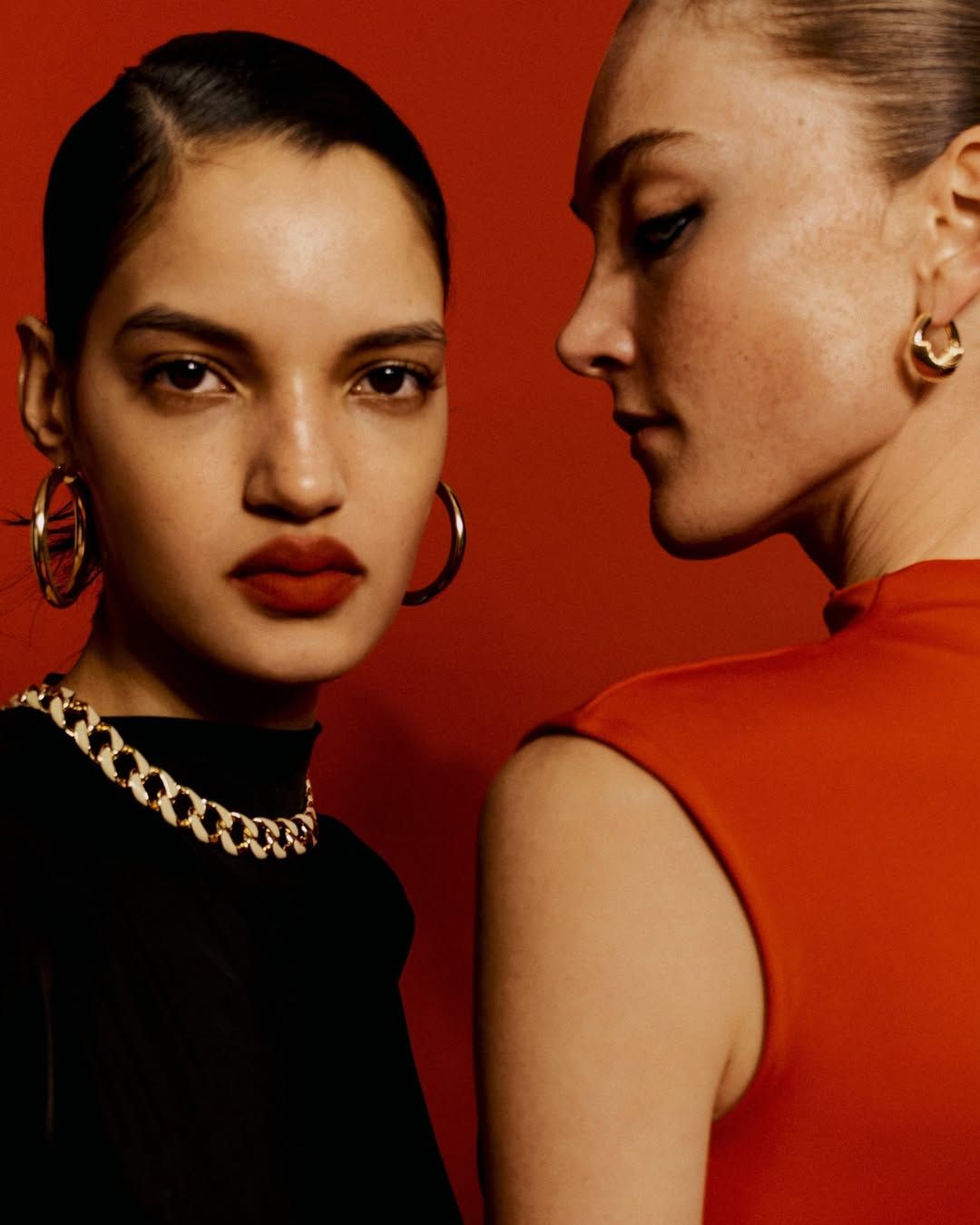
FK: People on the internet often have very confident opinions about creative leaders. Every appointment, every collection gets an instant verdict. How do you perceive that pressure?
JS: I think it’s reflective of society as a whole. We have a very short attention span. Change drives us, and fashion is hinged on change.
But brands need time to develop. It’s a little destructive, to be honest.
FK: People jump to conclusions too fast.
JS: A little. But there are brands that stand the test of time, designers that stand the test of time, who are true to themselves, irrespective of whether they’re in or out of fashion at any given moment. If people can make it through the tough parts, longevity becomes easier.
FK: Should talent be more accessible and less elitist?
JS: Fashion shouldn’t be snobbish. There’s beauty in luxury, and I love luxurious clothes. But snobbishness doesn’t feel relevant. Aspiration is great, snobbishness isn’t. Pushing quality and originality to be the best they can be is what matters.
Credits
Related Content
Labor of Perfection with Alton Mason
Shaping Courrèges: Farewell, Nicolas Di Felice

Rokh H&M’s Texan Landscapes
Kim Petras: “Reinvent Yourself and Start Over”

How to Build a Set with Atlas of Shows

Who the fuck is Vaquera?

Eckhaus Latta Prefers Glitches To Filters

Lifesaving and Poisonous: Women’s History Museum
Barragán for Dummies

RAF SIMONS RETROSPECTIVE: 1995–2015
MARTINE ROSE in Three Acts
Menswear Metaphysics: GRACE WALES BONNER’s Bejeweled Visions