Shaping Courrèges: Farewell, Nicolas Di Felice
|Rahim Attarzadeh
FAREWELL, NICOLAS DI FELICE! Upon the announcement that he is stepping down from his role as Artistic Director of Courrèges, we're revisiting our feature on him from 032c Issue #48.
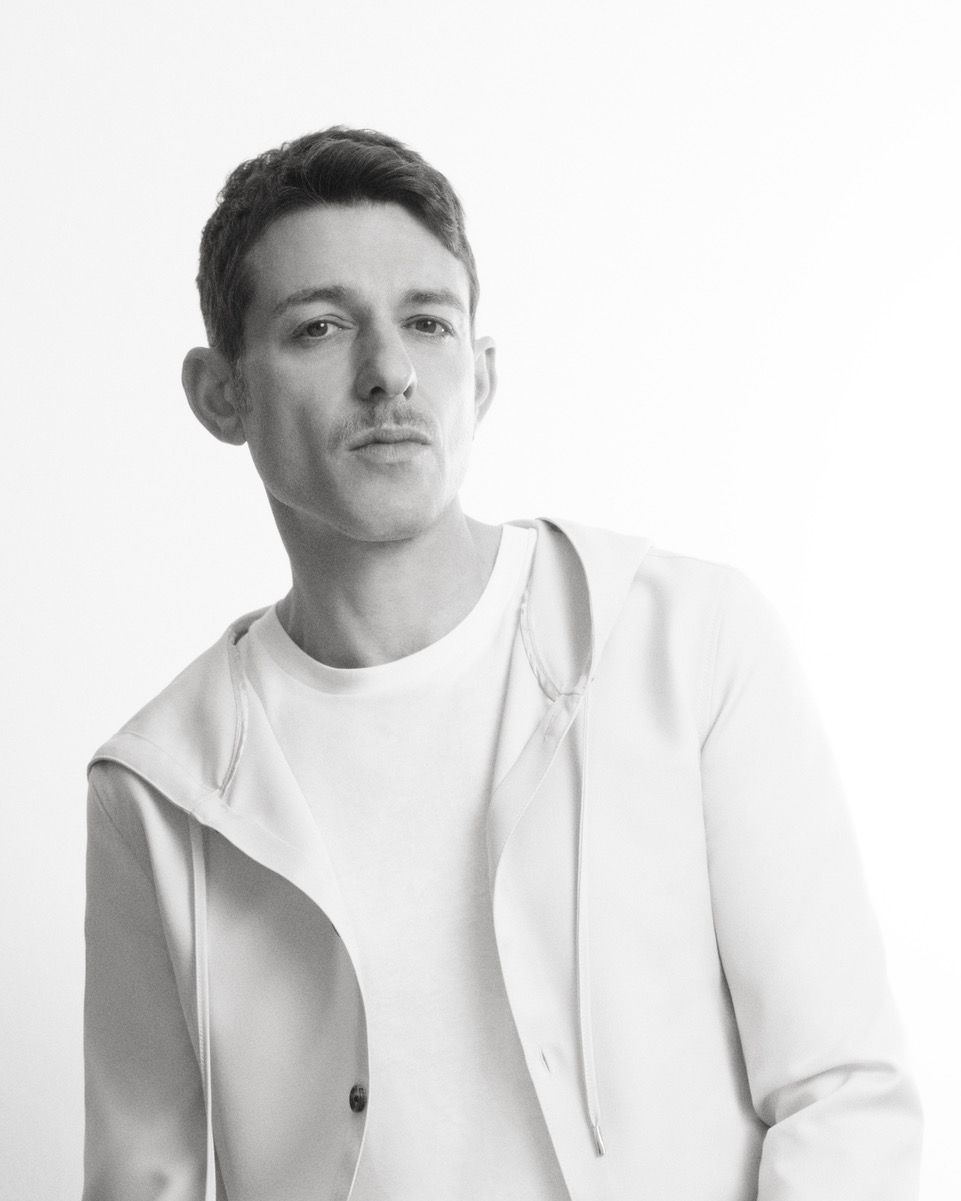
Nicolas Di Felice is avoiding burnout by having fun. That might seem counterintuitive, but the Belgian designer who has been at the helm of Courrèges for five years is relishing the opportunity to experiment across different creative mediums. From his partnership with New York artist Dan Colen for the brand’s Fall/Winter 2025 collection and campaign to collaborating with Jean Paul Gaultier on a guest couture collection for Fall/Winter 2024, Di Felice demonstrates an ability to consistently create and reinterpret has made him one of the most talked about designers in recent years. Di Felice – born near Charleroi in the Walloon countryside, a southern French-speaking part of Belgium – did not have fashion design on his horizon until he joined La Cambre Mode[s].
His burgeoning talent was nurtured at the Royal Academy of Fine Arts in Antwerp in the early 2000s, keeping him in the same school of thought as Martin Margiela, Ann Demeulemeester, and Helmut Lang (all of whom he cites as inspirations). One could argue that although such designers laid the foundations for his approach to design, there is an unpretentious grounding in his ability to make clothing for everyday life. This outlook was further honed by his time under Nicolas Ghesquière at Balenciaga and Raf Simons at Dior. Di Felice was then reunited with Ghesquière at Louis Vuitton and rose to senior womenswear designer during his five years there before applying for his current position at Courrèges.
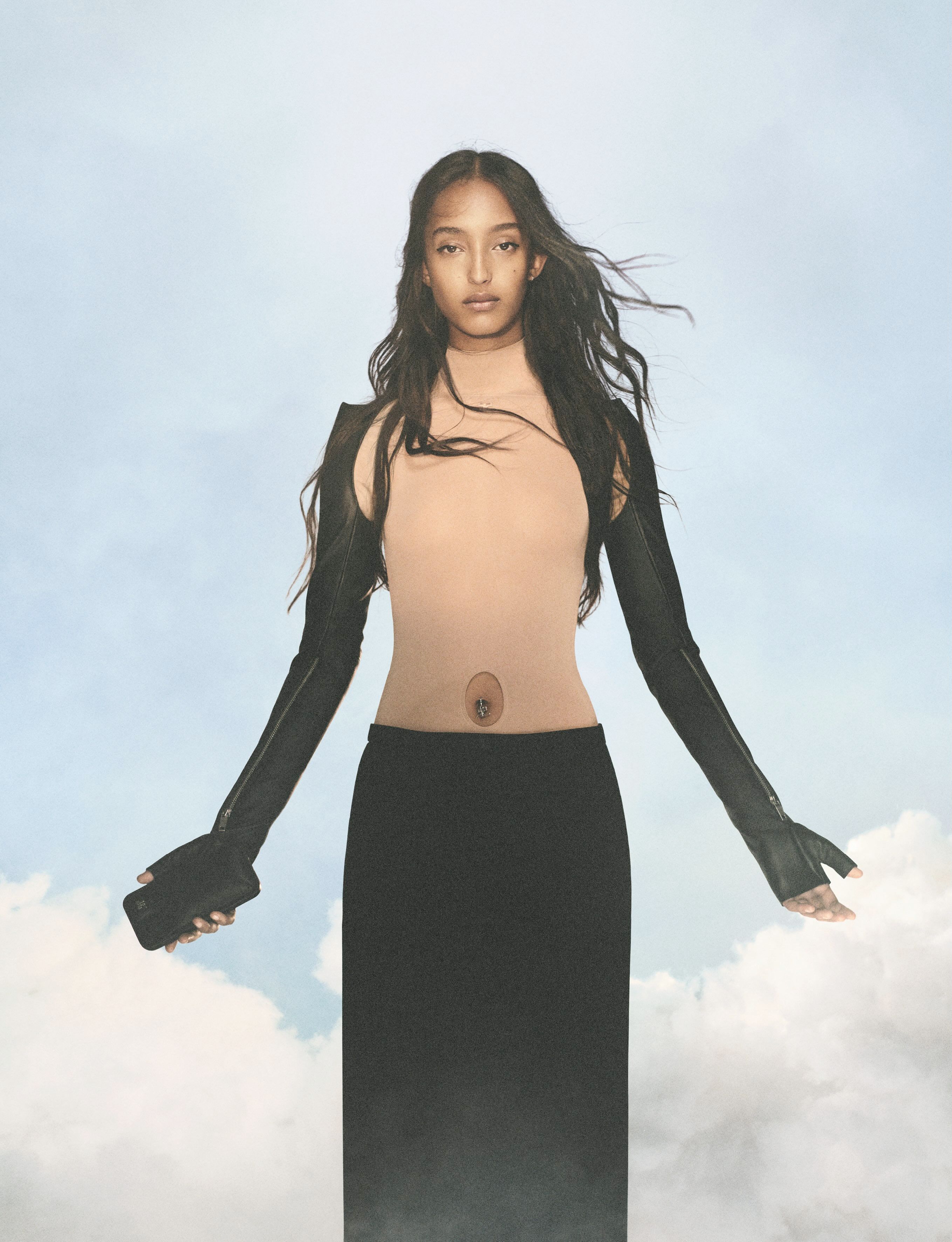
RAHIM ATTARZADEH: You like clean lines in your clothes. Is Courrèges rooted in sharp, pin-point accuracy?
NICOLAS DI FELICE: Of course. When you look at the work of André [Courrèges], one of his main design characteristics was these beautiful, clean lines. Yes, it’s geometric shapes too, but once you learn this technical level of skill, everything else falls into place. That’s what André was a master of.
RA: A Courrèges collection is not about a statement piece as such. It’s about execution and purity of vision, like how you have homage to the house’s historical use of vinyl.
NDF: Sharpness and clean lines are at the center of every collection. From there, we can create different styles. The vinyl jacket is all about execution. It’s at the core of every collection and it’s the perfect testament to André’s innovation. Sometimes, when I see it photographed in a magazine, I think, “I did manage to do that, but on my own terms."
RA: Is this something you learned whilst working with Nicolas Ghesquière at Balenciaga? You often refer to him as a mentor?
NDF: Nicolas was the best at this. He would always tell me, “If you want a straight line, it better be really straight.” I won’t lie to you, back then at Balenciaga, we were working on the same garments for months at a time. Now the industry has changed a lot. As designers, we are not afforded the luxury of time. Sometimes, things can feel very rushed, and it’s not fair on the whole team. I feel a duty to maintain and emulate what I learned from Nicolas. It was difficult when I started here at Courrèges. It’s a small house, and it was like starting from scratch. I just wanted to make sure that our technical abilities could equate [those] of André.
André Courrèges founded his label in 1961 and is, perhaps, best known for introducing the revolutionary Space Look – an intergalactic breed of dressing featuring white boots, goggles, and boxy dresses, designed in futuristic metallic shades, high-shine fabrics, and PVC. His technical garments pioneered a new look that blended avant-garde geometry with sports classics, driven by the youthful energy that defined the decade. An engineering graduate, André completed an apprenticeship with Balenciaga before launching his eponymous label. Inspired by Le Corbusier, his clothing was architectural: from sculptural dresses in stark white to metallic squares and triangular forms. He is also credited with the “second skin” – the all-over tights adopted by women in 1967. He once said, “A man must consider a woman for what she really is, beyond bosoms, buttocks, and all female shapes.”
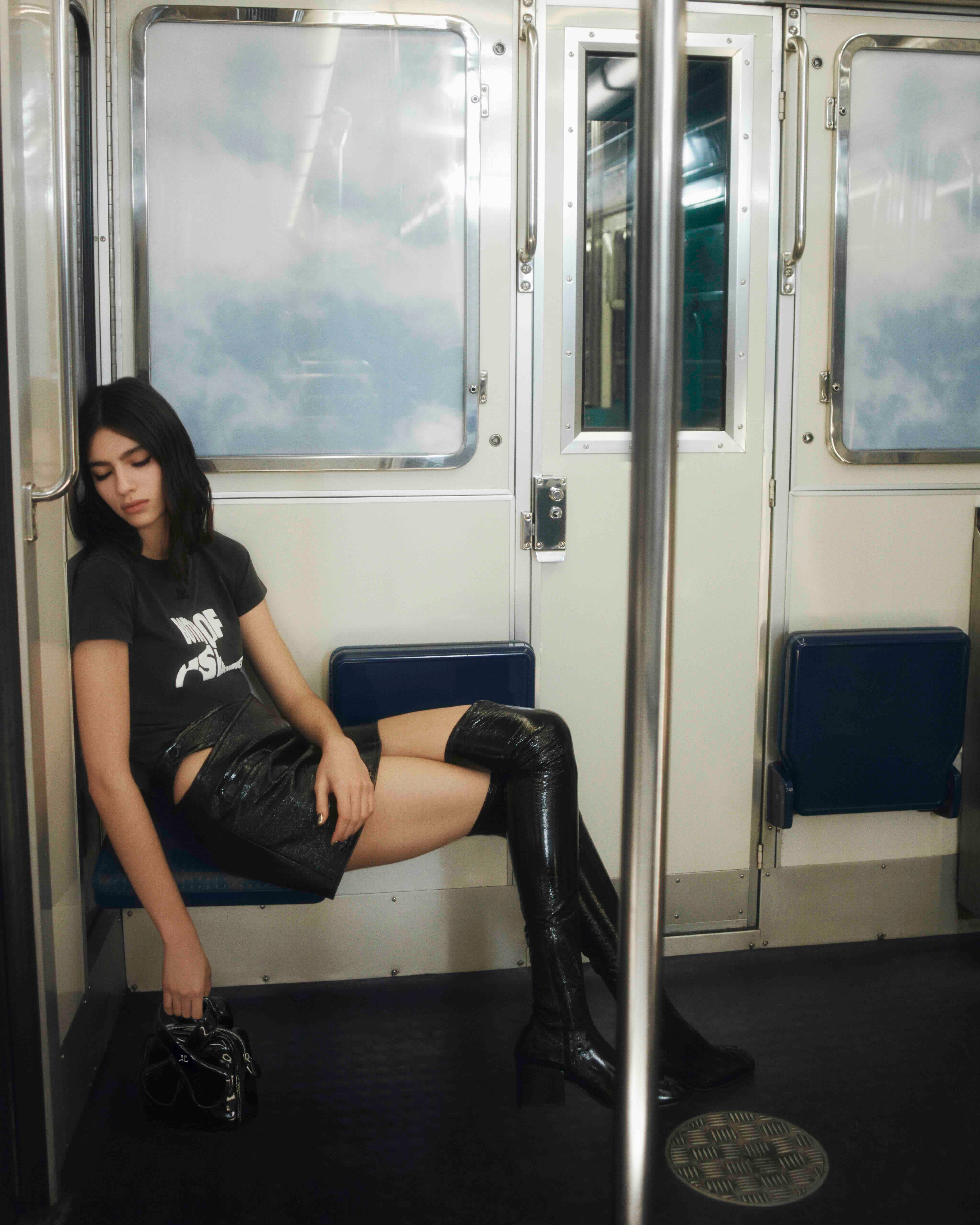
RA: When you arrived at the house, did you want to look at the archives of André’s work? I remember reading about a sign, here at the HQ, by Coqueline Barrière [André’s wife], that read, “Never copy the past.”
NDF: I was more interested in the level of detail that went into his approach, as opposed to trying to reproduce clothing from the archives. It’s like what we were just saying about clean lines. I didn’t want to take silhouettes from the 1960s and reproduce them. I wanted people to understand that era and those designs, but through a contemporary lens. I’d hate it if people didn’t get that through my work. Now that I’ve been here for five years, I’ve started to develop my own patterns. Of course, I looked at the archives, but the way to honor this house and André is only through precision and originality. In fact, I have been watching a lot of archival videos of André speaking about his work. He spoke so clearly, so directly, about geometry and simplicity of form.
RAL André Courrèges’ sketches portrayed women in motion. That freedom and ease of movement is conveyed so well in your designs. How does this translate to the runway?
NDF: The work behind my collection is deeply rooted in storytelling. I have to think about all of the elements that constitute a show. My ideas for the show have to be in correlation with the clothes. It’s almost like inviting someone into a world. You don’t need mass scale to create a world. You need to combine personal elements – from interests such as music and art – and converge these into something professional. Every preparation for a show begins with something I’m feeling. It’s all about emotion. When you’re able to translate this into the format of a fashion show, that freedom and ease you mentioned comes naturally. If you’re at ease, everything else will be. In order for me to wrap my head around show prep, I have to disconnect myself first. You’re right about André’s sketches. They depicted women really wearing his clothes. Walking, running, as though you could see the wind in their hair. It was like [his obsession was] to make clothes that allowed freedom.
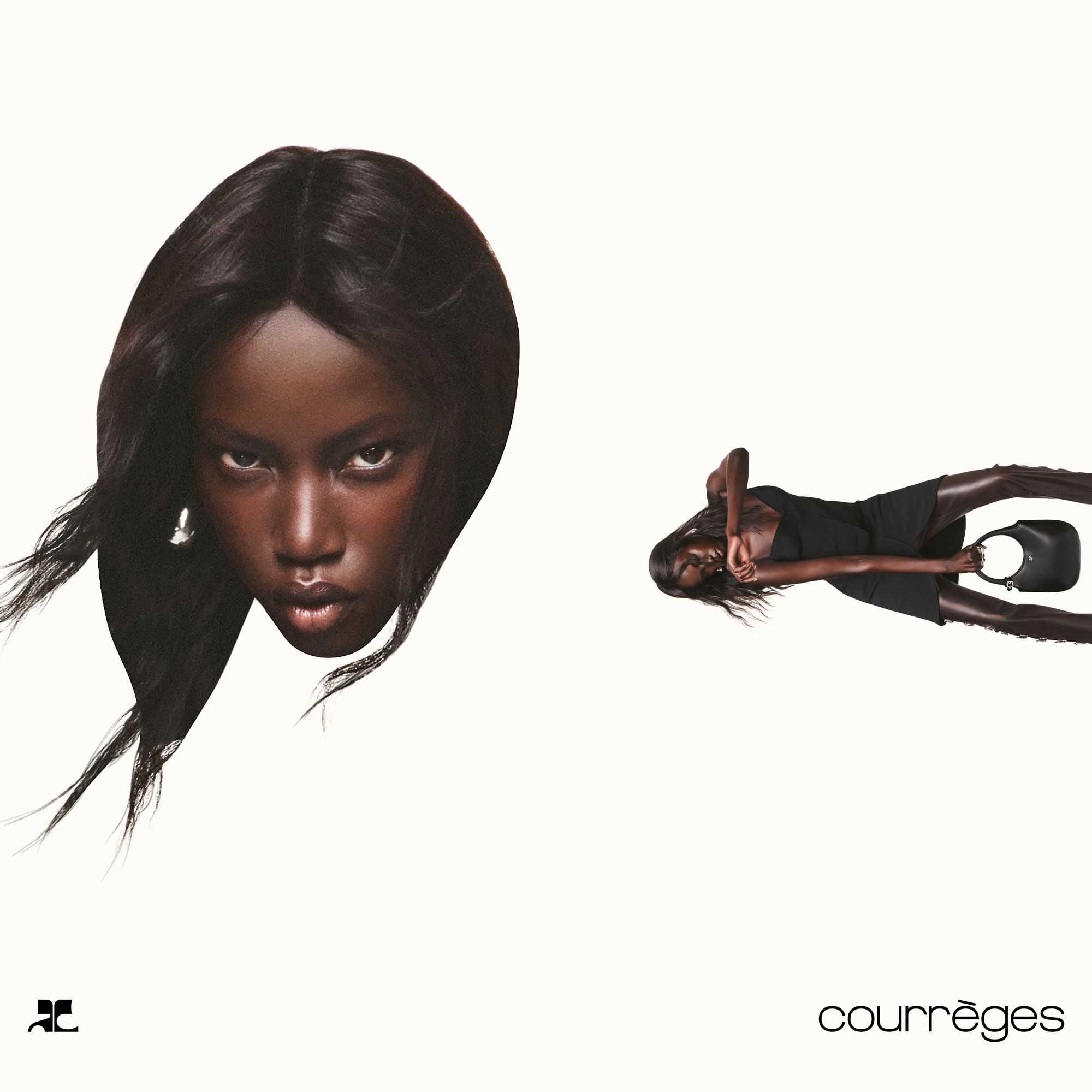
RA: Do you feel the need to disconnect yourself when you’re trying to create a show that feels personal and intimate? Something that feels more than just part of commercial strategy?
NDF: It’s totally this. When you’re at the heart of creating something, and then you have to think about a fashion show, an industry, and therefore an audience, it just puts a lot of psychological pressure on you to do something “magnificent.” I find that it’s almost selfish to think this way. There’s so much devastation going on in the world, and here we are, stressing about finding the right music for a show. The only way I feel I can create an environment around Courrèges is by removing myself from the enduring stress of worrying about the fashion industry. I’ll go for a walk or go to a gallery and I’ll feel something, and that very emotion I’m experiencing, at that specific moment, will somehow form the foundations for my next show.
In September 2020, Di Felice was named creative director of Courrèges. His debut collection, named I Can Feel Your Heartbeat, fell in line with the label’s 60th anniversary. It was no small feat to rebuild a house from scratch – quite literally, from the logo to the shopping bags, and the stores themselves – while respecting the past. Then, in 2018, François Pinault holding company Artemis acquired full control of the house, carving the way for Di Felice’s holistic blueprint. Cut-outs of miniskirts and dresses, silhouettes in geometric shapes with clean and round finishes, and the stylistic rejuvenation of vinyl conveyed Di Felice’s respect for the past and the introductio of the here and the now. Under this stewardship, Courrèges has grown from strength to strength, relishing in experimentation, expert craft, and unpretentious fashion. This approach in how to relaunch a brand soon caught the attention of the wider industry, earning Di Felice a reputation as an innovative thinker with fresh ideas among his peers and fashion-conscious millennials. This past year heightened the designer’s ability to further cultivate his formative influences, uniting his commitment to optimism with a strong sense of emotion and purpose. His Courrèges shows, held inside the Carreau du Temple in Paris’s 3rd arrondissement, have always been covered in white (now a Di Felice runway signature). For his Fall/Winter 2025 Women’s collection, the floor was laid out in a square of red, white, pink, and blue mylar confetti, over which the models walked in what became a color-coded crescendo. Gradually, the confetti began to flutter upward as the first looks emerged.
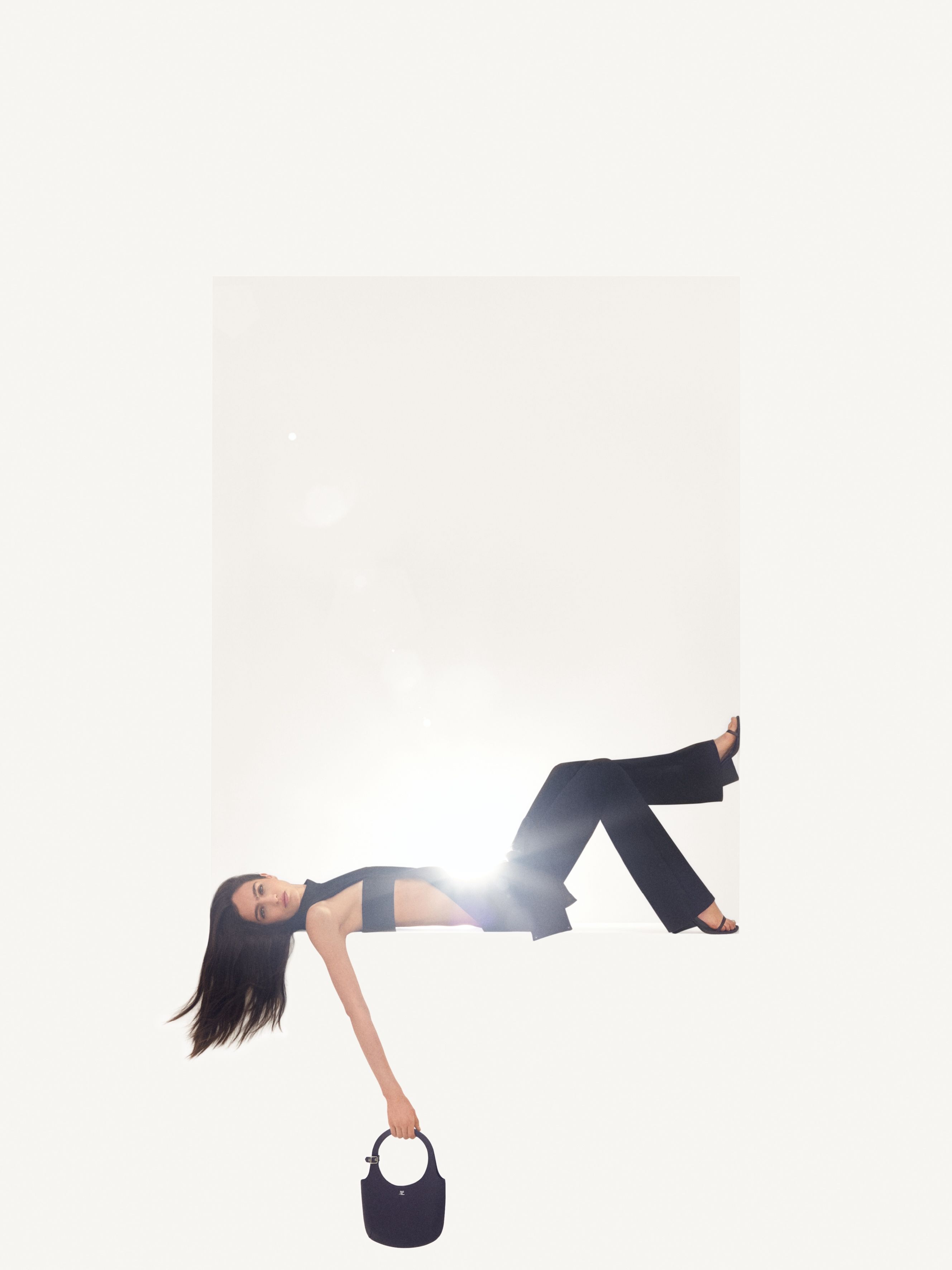
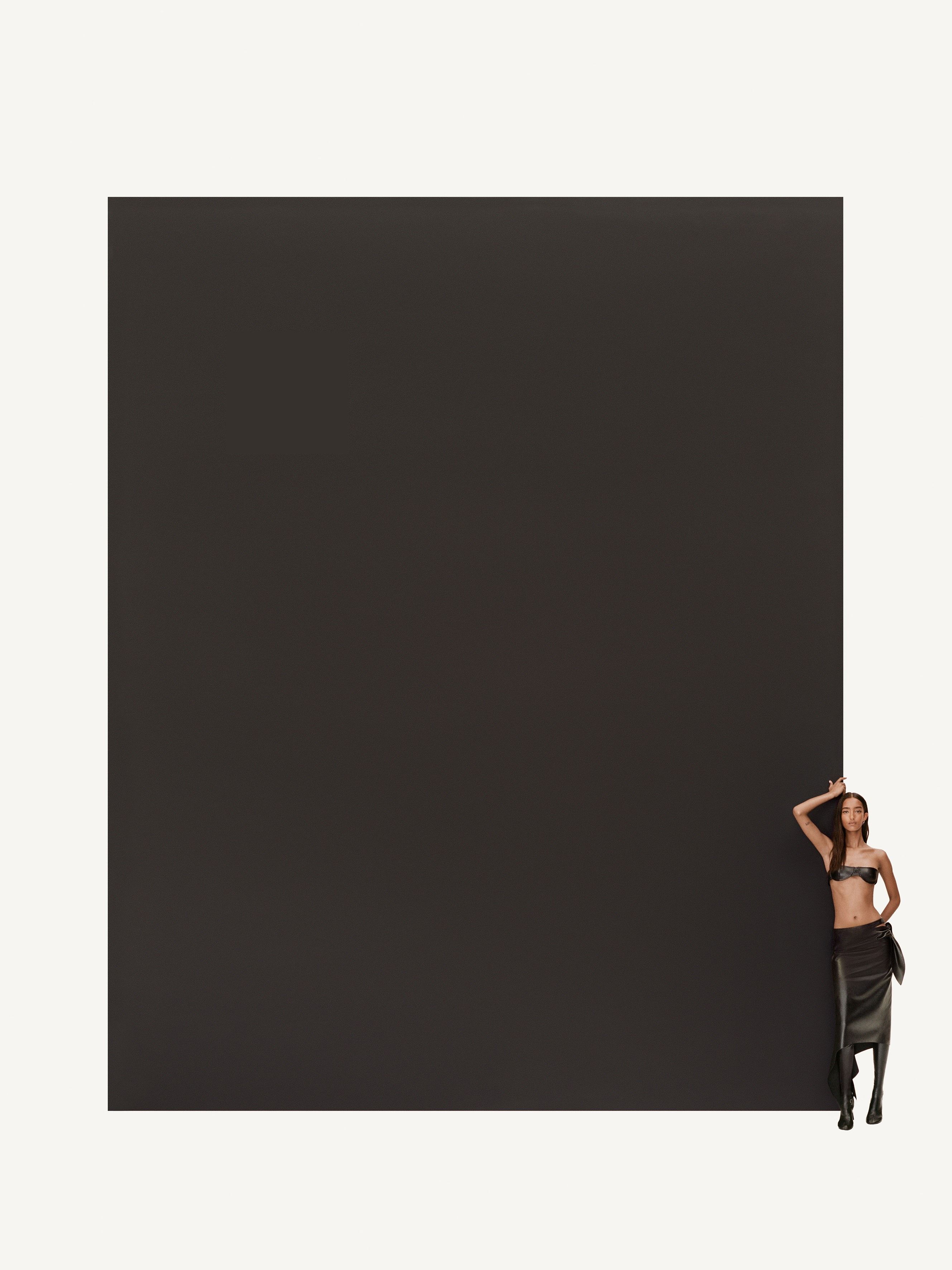
RA: Can you talk to me about your relationship with the color white? It seems to be a Nicolas Di Felice signature. Do you see this color as a blank canvas, or something that resembles the totality of the essence of your work? It’s prevalent at the HQ and at all of your shows at The Carreau du Temple?
NDF: I’ve always been obsessed with white. I suppose it’s to do with what you’re saying about a blank canvas. I got this job by writing a letter. The joy of filling in a blank page has always been inspiring to me. It feels amazing that we built this white box at the Carreau du Temple. We’ve kept true to the vision of the house without feeling like we’ve made it tired an repetitive.
RA: And can you talk about your relationship with art? You’re an admirer of New York artist Dan Colen and, particularly, his confetti sketches.
NDF: I admire a lot of artists, but Dan’s work had a personal effect on me. I found one of his books, Nest [2008], while I was searching for inspiration for a new collection. What I admire about Dan’s work is that it’s so deeply rooted in gestures. When I saw the book, I felt uplifted. It’s as simple as that. When an emotion is so easy to project through art, that’s something very rare and very special. I feel like I’m discovering art all the time. At school, this wasn’t the case. I went to a normal school. Art and the arts in general weren’t really promoted. I always felt it easier to convey emotions through images and art. Art has the power to make you construct an opinion – even if it’s only three words.
RA: How did this connection with Colen’s work correlate to your Fall/Winter 2025 collection?
NDF: It was inspired by Dan Colen’s confetti paintings. As I was saying, Dan is always making gestures through his art, and that’s what I’m trying to do at Courrèges. For example, a rectangle of fabric, cut like a blown-up piece of confetti, curls around the body in one gesture to form a minidress. The paintings were the driving force behind the entire Fall/Winter 2025 collection. I took Dan’s idea of capturing a moment in time, beginning with the “one minute silhouette.” I also approached the more decorative elements in the collection this way. Dan’s work enabled me to form the foundations for this collection. I’m really trying to make the connection I have with an artist’s work feel universal on the runway. I’m very into this idea of shared experiences
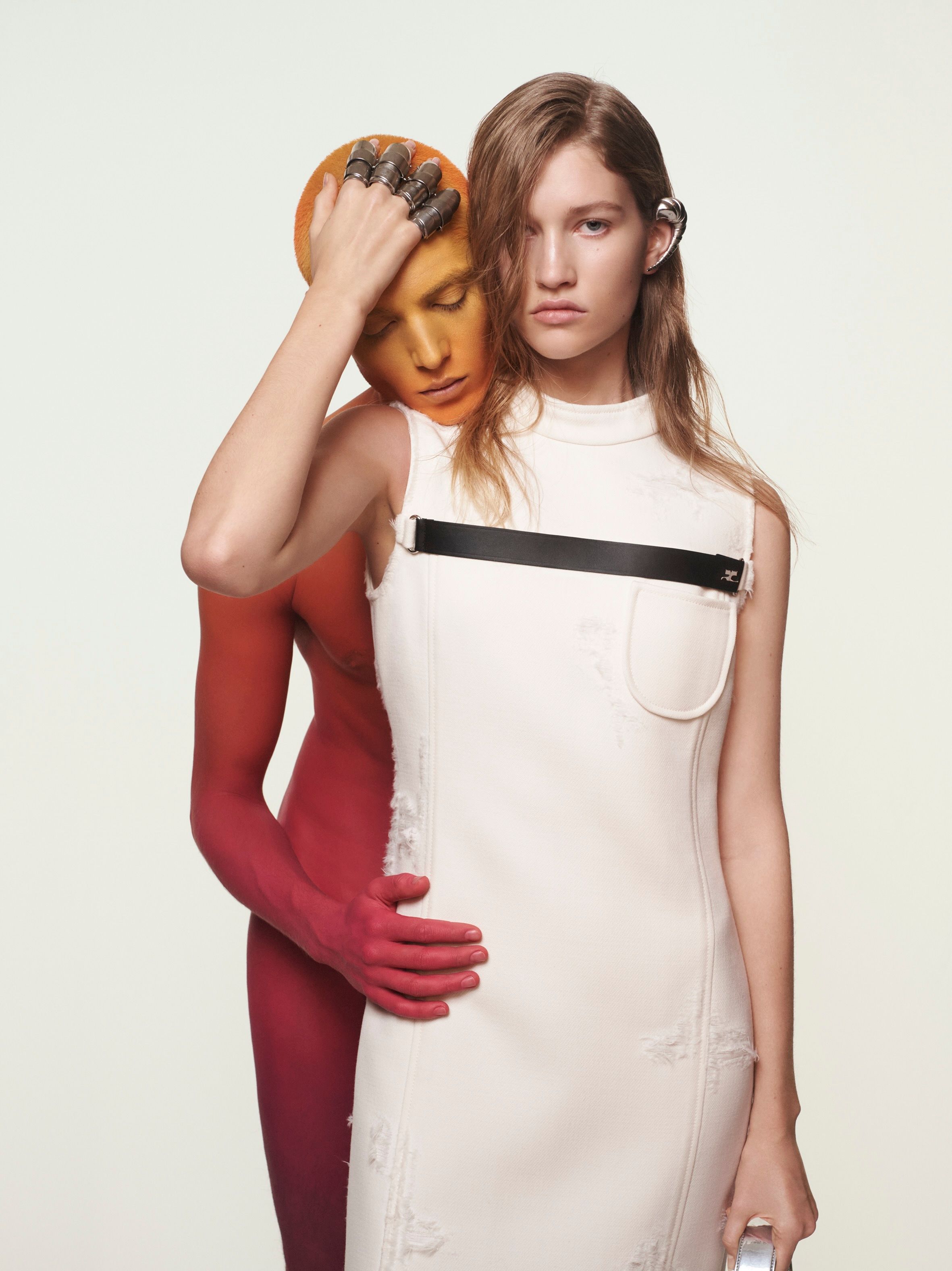
Di Felice’s work at Courrèges has fused his shared passions; his aforementioned debut collection paid tribute to the locked-down kids who couldn’t dance during the Covid-19 pandemic. For a film shot at the Paris nightspot La Station, Di Felice took inspiration from the house’s archives for his vinyl minidresses; cinched trenches; and second-skin, poppy red all-in-ones. Then there was his Spring/Summer 2022 collection, presented at the sprawling Parisian park Bois de Vincennes – the site of his first kiss with his boyfriend – which channeled the feverish, heart-swelling excitement of a day rave, complete with clubwear, bomber jackets, metallic boots, and, of course, a pumping soundtrack. When it comes to his design ethos, Di Felice’s desire to expand the house’s vocabulary and captivate a new audience is clear: he is determined to design for real people living real lives, and perhaps to contradict some of our notions about Courrèges. The clothes are insouciant rather than aloof, sexy instead of cold. With micro minis, neat little boxy jackets, slinky dresses for the girls, and slick body-conscious tailoring and rough-hewn denim for the boys – swapping between the two is fully encouraged – Di Felice’s Courrèges has found legions of fans in Paris and beyond.
RA: When you look at how the fashion industryoperates nowadays, five years feels like a celebration.
NDF: [Laughs.] You know, in a way, it’s also nothing. Here, it feels longer because we’re a small house, and, particularly at the start, I had to take on so many roles outside of cutting any patterns. From the shopping bags in the stores to the campaigns and art direction. I’ve learned so much, and, most importantly, I’ve learned to trust my team.
RA: It seems to me that you are a true believer. You believe in balance, you believe in dedication, and you believe in joy. That word rarely gets used in the industry nowadays, especially when you’re chatting to a designer more than five years into his tenure at a house.
NDF: [Laughs.] You know, when we’re doing our job, we have to produce a collection every three months. We never really stop. I’m okay with that, as long as I can still find the time to go out or go to the cinema. That means I can create. It’s the third house I’ve worked at, and it’s a feeling I’m used to. I think when you’re grateful to be where you are, you don’t allow yourself to feel hard done by, just because you work hard. It’s fashion, and it should be about joy.
RA: You speak about emotion in your work and in other people’s work. Do you go to fashion shows? If so, how do they make you feel?
NDF: Yeah, I go to shows. I went to see Julien at Paco Rabanne, Jonathan Anderson, and Glenn [Martens’] Margiela debut. We practically came up together. I admire Glenn so much because he’s really striving for his vision. It takes a lot of strength and resilience, from pressure and expectations, to take on that role and just go about executing your vision. I think it’s a wonderful thing. Glenn is strong because he takes risks.
RA: Do you think we’re missing a little bit of fashion these days? It’s a global industry, yet we’re talking more about revenue stream and who’s going where more than the actual clothes
It’s sad. I feel like with fashion right now, everyone needs to feel reassured by something. Whether it’s everyone dressing kind of the same or everyone having kind of the same opinion, because they don’t want to speak out. When I look at most of the Belgian designers, like Ann Demeulemeester, they really pushedon with their vision. They weren’t trying to change every season. It’s things like how she used fabrics, how she created patina with wear, and where she put the darts on the jacket. It forced people to change the way they dress. It opened them up to new shapes and new ideas. Fashion has the power to transform, but only when the designer is allowed for the continuation of this.
Credits
- Text: Rahim Attarzadeh