Canal Street Research Association is an Ongoing Contradiction
|MATTHEW LAWSON GARRETT
On Canal Street, in the shadow of blue-chip galleries and luxury retail stores, a polyphony of haggling can be heard coming from makeshift markets selling counterfeit luxury handbags from carts.
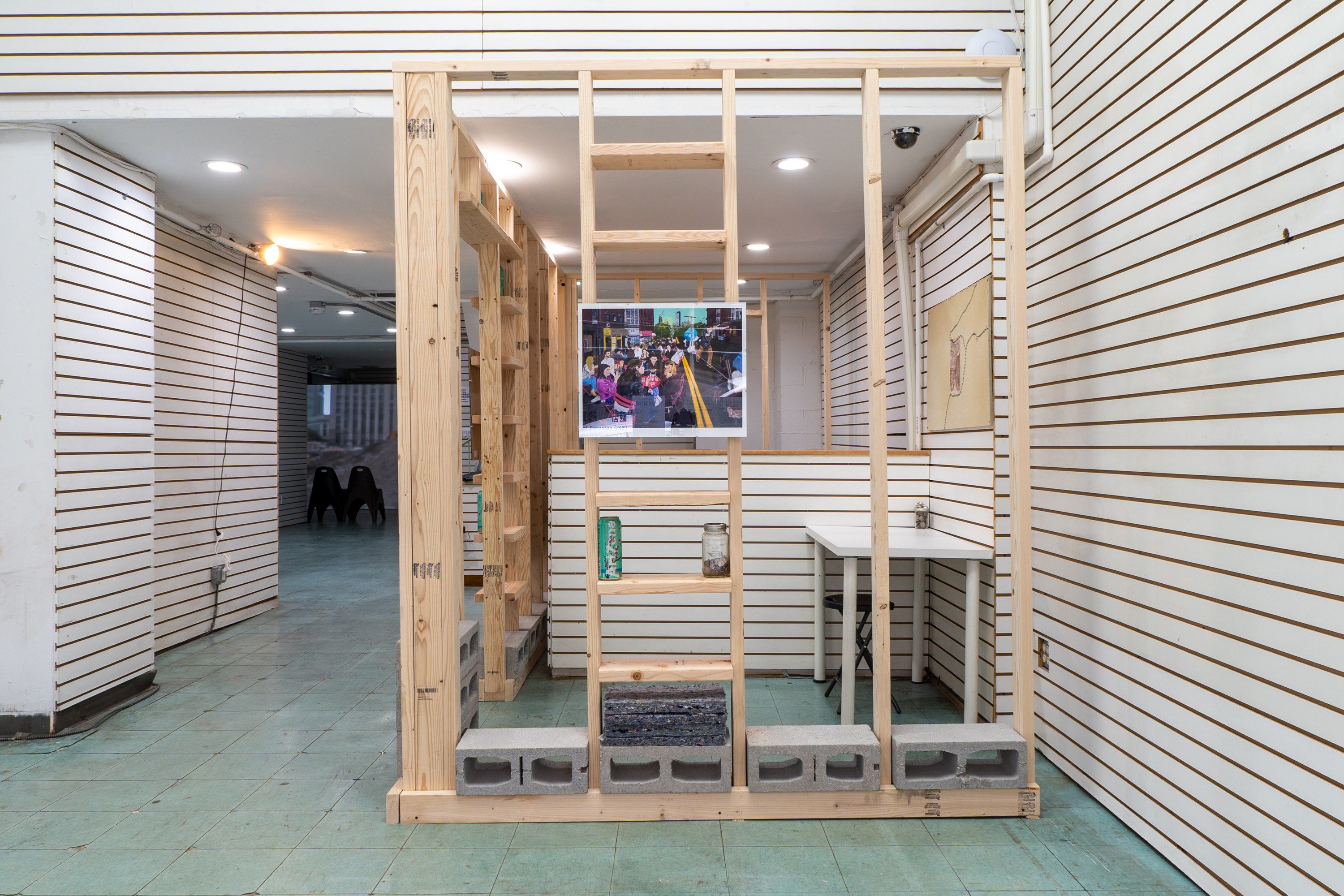
At once a confluence of marginalized workers and immigrants, and luxury dealers and real-estate speculators, the historic Manhattan street has become a source of inspiration for a new generation of artists. Since 2020, the research duo Ming Lin and Alex Tatarsky’s project Canal Street Research Association (CSRA) has been among the closest observers and chroniclers of the high street’s crowded historical tensions.
CSRA began as a temporary “fictional office entity” for “Shanzhai Lyric,” Lin and Tatarsky’s archive of bootleg fashion “poetry-garments.” When the COVID-19 pandemic ended their plans to follow a garment’s production around the world, the duo instead founded CSRA in a disused storefront on Canal Street, aiming to “gather ephemeral histories and map the major thoroughfare’s lore, past and present, by tracing the flows and fissures of global capital.”
Since its founding, CSRA has taken on a life separate from Shanzhai Lyric. Its associates have devoted an unexpected six years to tracing the histories of Canal Street, creating public events that engage and advocate for its diverse communities. These projects, which are always collaborative, range from unsanctioned street markets, makeshift parades, and “bootleg” restagings of iconic Canal Street artworks to drum lessons and the creation of cigarette-flavored ice cream.
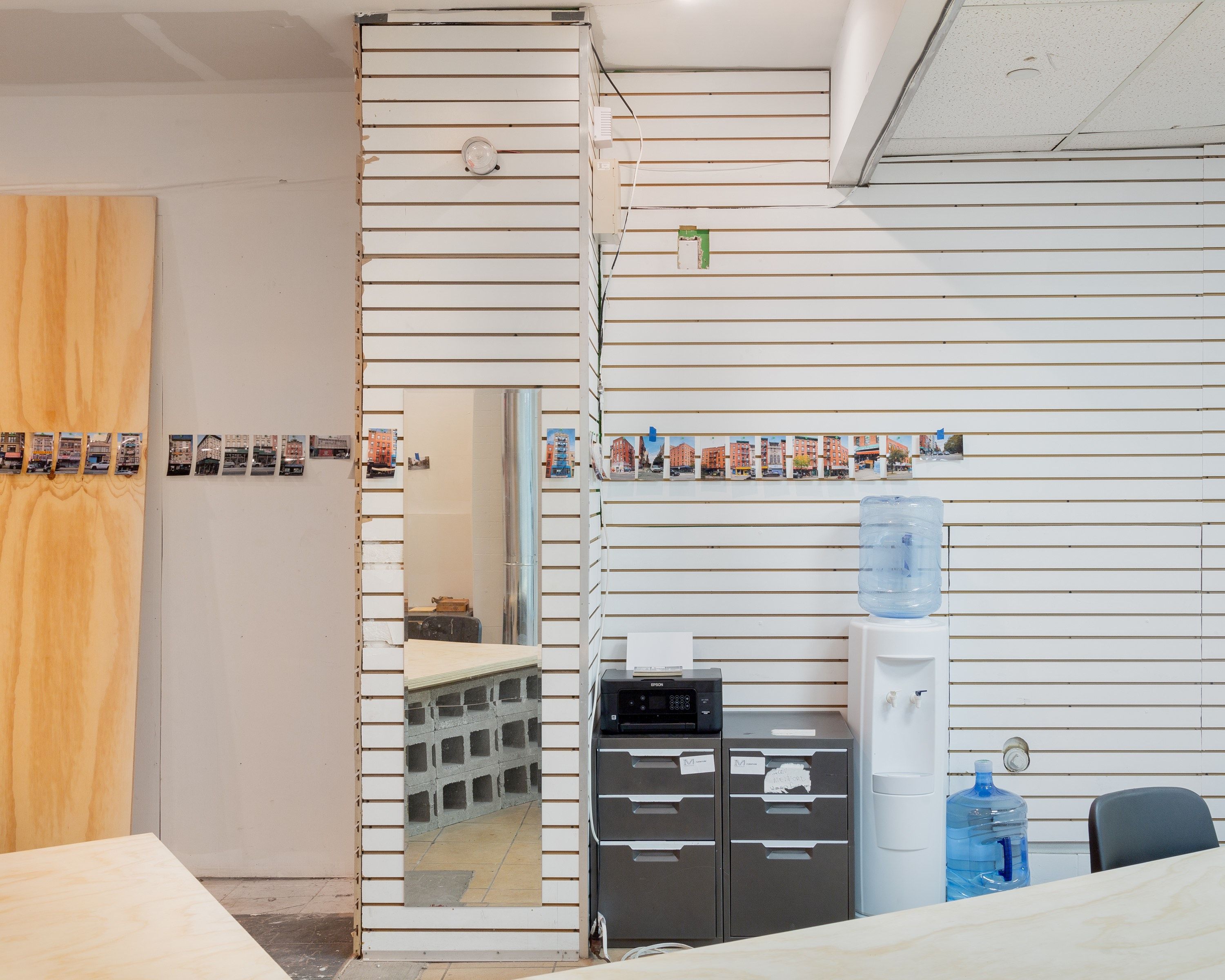
For the CSRA, the history of Canal Street contains the history of the world, and serves as a vantage point from which the movements of global logistics can be gleaned; it is a place that is haunted at once by its centrality in the history of New York, and by the “hungry-dreams” of the marginalized artists and immigrants who meander throughout its congested intersections.
Although CSRA has received support and attention from the art world, its eclectic projects ultimately take forms that avoid the art industry’s narrow demands, centering instead on collaboration, community, and relationality as methods to elucidate the material histories of Canal Street and engage with publics rather than collectors. Throughout the month of May, CSRA will be a part of the exhibition “Mulberry Bend” organized by Dylan Seh-Jin Kim and Protocinema at the Storefront for Ideas, which is run by Immigrant Social Services and located at 127 Walker. All month, CSRA will be doing research to triangulate histories of gleaning, rag picking, and canning. On the morning of May 26, from 8 am to noon, there will be a one-day pop-up redemption center in Columbus Park, followed by a press conference and community panel in the exhibit with the artist Siyan Wong, Sure We Can, and local canners and reps.
I met with Lin and Tatarsky at Canal Street’s Albert Capsuoto Park on a warm spring morning to talk about Hamlet as a melancholy prince, the “sinking and stinking” history of Canal Street, and the ongoing tension between culture and speculative real estate.
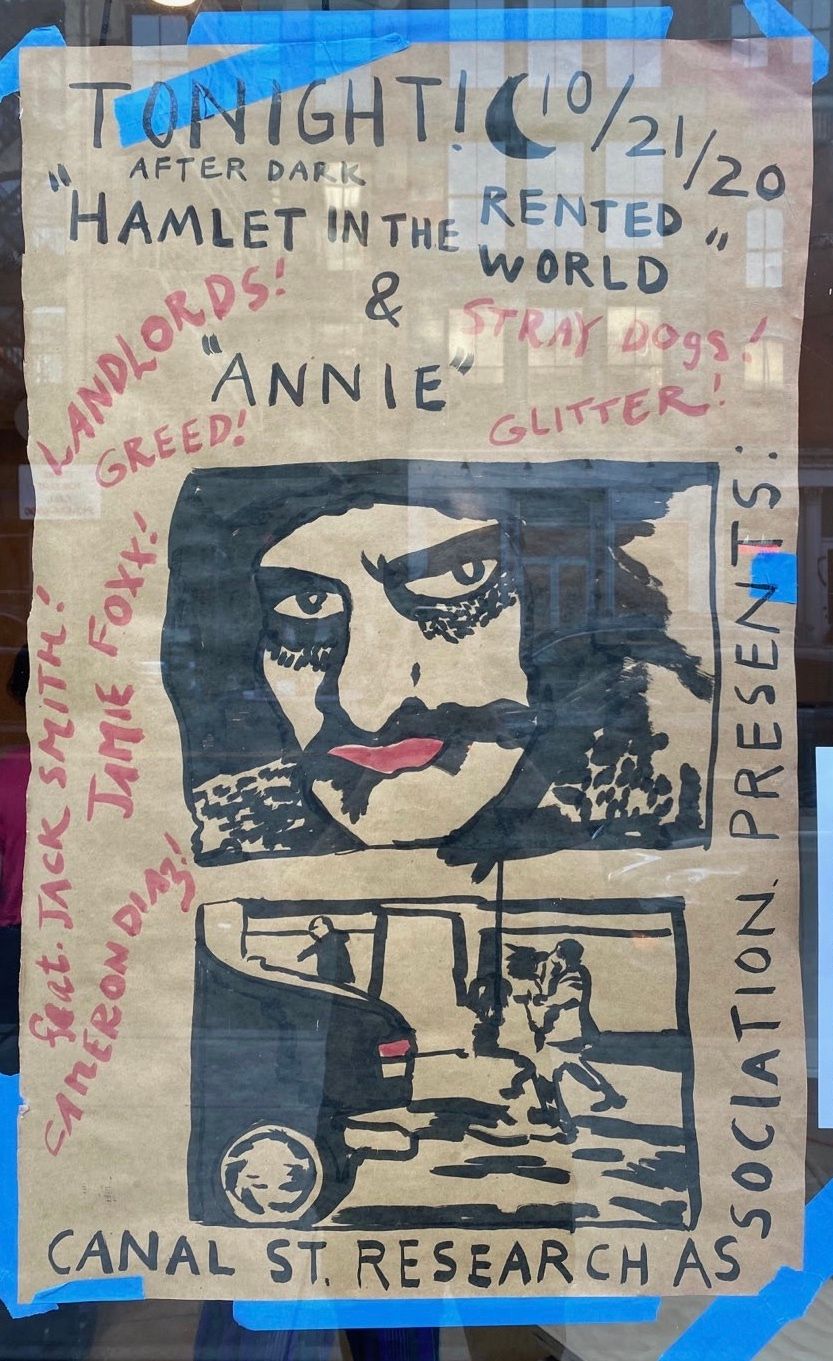
Matthew Lawson Garrett: You wrote that your first retail space was designed across “four zones of poetic reflection: Archive, Library, Timeline, Hamlet.” The word “hamlet,” across several meanings, is a key point of reference for the project. Can you speak about the importance of hamlet to Canal Street Research Association and its beginnings?
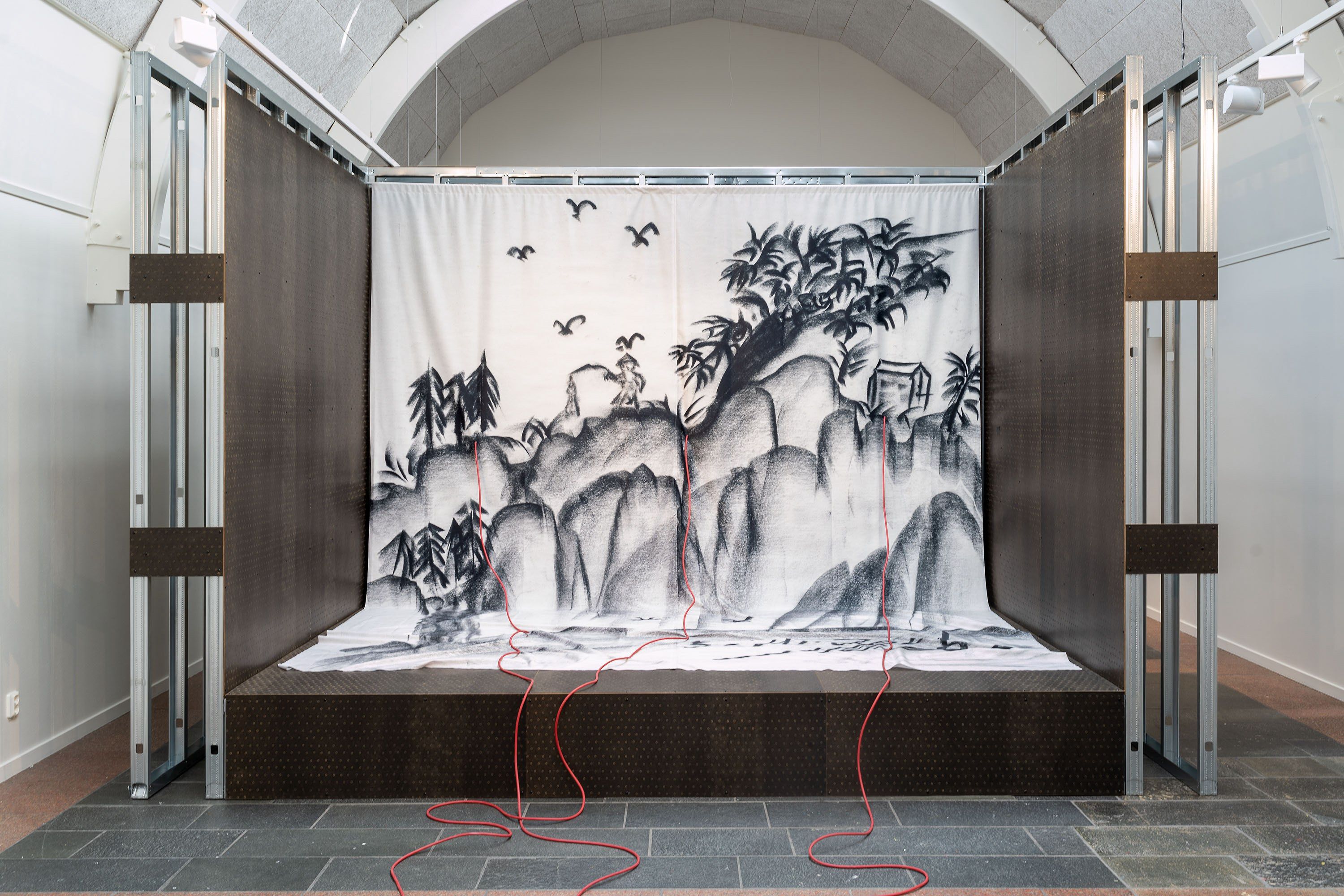
Canal Street Research Association: The starting point for all of this was being unable to travel with our project Shanzhai Lyric during the pandemic, and therefore finding ourselves in a storefront in New York’s counterfeit epicenter, Canal Street. “Shanzhai,” the Chinese word for counterfeit, has been the central thematic locus of the project. It translates literally to “mountain hamlet,” in reference to a Song Dynasty story of robber-bandits stockpiling goods taken from the Imperial center, and then redistributing them to those living on the margins, protected by the landscape of the mountain hamlet. What had excited us from the start of the Shanzai Lyric project is this geographic origin, and wanting to retain the more liberatory aspects of the counterfeit that are embedded in its etymology.
We think of Canal Street as a kind of mountain hamlet, a place whose geographic specificity and difficulty offer some protection from government interference and allow certain kinds of activities to flourish. We learned about the artist Jack Smith, whose live-work studio space had been on Canal and Greene before he was evicted and moved to a new space on Canal and Mercer. Our disused storefront was right in the middle of his two evictions. He was an experimental filmmaker, artist, and performer who had been involved in a very long-term attempt to re-stage Shakespeare’s Hamlet. His version was Hamlet “in the rented world,” where the royal family is landlords. In Jack Smith’s view, disputes over property and landlordism are at the heart of every play. Every play has to reckon with the people who own the land on which the players play. This introduced another facet of the word “hamlet” that has become crucial to us: Hamlet as melancholy prince, and Hamlet as a story that is itself a bootleg composite of many earlier texts, many stolen bits. Hamlet, the play, helps us rethink binaries around authentic and counterfeit, individual and collective, because Hamlet itself, although attributed to Shakespeare, is a kind of collectively written bootleg.
The last facet of hamlet was that we found ourselves in this storefront courtesy of an attempted rebranding of Canal Street that had been going on for some years. In 2008, under then-Mayor Bloomberg, landlords were made accountable for any illicit activities on their property, so they kicked out everyone involved in the counterfeit markets and found themselves with empty industrial-scale properties nobody wanted. They tried to rebrand the block by using art as a gentrification tool, offering discounted rates to galleries or artists to use the spaces. That’s how we ended up there. It became clear to us in talking to and negotiating with our landlord that he was also a Hamlet-esque character. His family immigrated to New York and got their start selling belt buckles on Canal Street before working their way up to become landowners. Our landlord, who was about our age, had been given this swath of property that was deemed difficult to upscale, and was told by his father and grandfather to take charge. He was really trying to prove himself, an unruly, sad-boy prince of Canal Street—aka Hamlet.
MLG: There are several dialectics that CSRA’s research explores, a primary one being art and development. Speculators rely on art to increase the cultural value of a neighborhood, then, as prices increase, the artists get pushed out. This is a popular subject of discourse in the art world at the moment. Has the project’s relationship to this tension changed over the six years that you’ve been active on Canal Street?
CSRA: One thing that our research has shown us is that so-called "beautification”—gentrification, redevelopment, and rebranding—are ongoing displacement projects that go back to the very founding of the city. New York City began as a genocidal gentrification grift, as a theft of land from indigenous people, and as a doomed attempt to make a swamp profitable and productive.
This neighborhood, in particular, has been perpetually sinking, resisting that development attempt ever since. We don’t see some kind of radical rupture or break with that history. The hardship that folks are experiencing right now in New York City is part of this enduring tension between communities trying to survive, and small groups who hold too much power and access to too many of the resources, making life very difficult for the majority of people and creatures on this piece of land. It’s very hard right now, but this current hardship is part of a long history of struggle. We’ve been in a storefront, a basement, an empty office building, and a public market, and accepting invitations to occupy these spaces temporarily is part of the project. The spaces we work from inform the shape of CSRA, including now, having no space at all.
Our research is related to the various economies of the street that emerge from these dynamics. More recently, we are thinking a lot about the economy of canners, for instance, who operate entirely outside, doing this valuable work of sorting the city’s waste, and that doesn’t actually require us to have access to an indoor space. That kind of work can happen in the same place that the canners are doing their work, which is in public space.
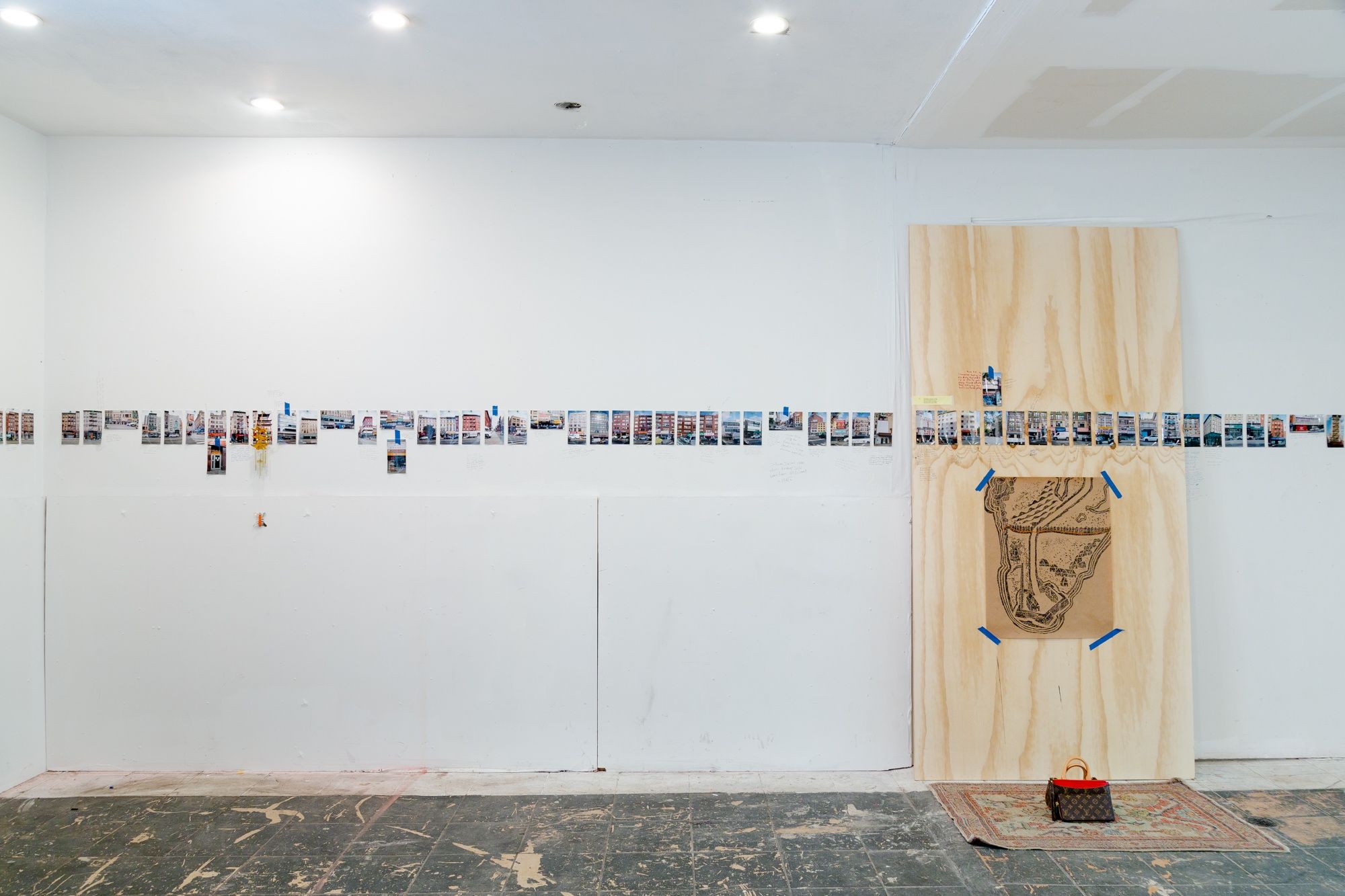
MLG: For the exhibition “Mulberry Bend,” you will set up a temporary redemption center and advocate for raising the price of cans from five cents (a price set in 1982) to ten cents. Can you talk about that project?
CSRA: We’ve been meandering our way across Canal Street for some years, embedding ourselves, and trying to understand the different economies that make up the block. We learned about Ragpickers Court at some point, which is just below Canal Street, where Manhattan’s courts and jail complex now sit. That area was formerly Collect Pond, a body of water surrounded by marshland, which fed into a stream that traversed east and west. This stream was eventually dug out to become Canal Street when the pond became too polluted, and they needed to drain it and fill it to make it a profitable piece of land.
In the late 1800s, that area had been covered over, but it was very much sinking and stinking. Therefore, it was where the city’s poor and disenfranchised were relegated to, including the lowliest form of street vendor, the rag-picker, who sorted used textiles for use in paper making. Ragpickers were a form of gleaner, taking society’s discard and repurposing it.
We want to connect that history of ragpickers to contemporary gleaners: canners. Canning is a major underground economy of Canal Street, and it’s growing by the day because it’s a way to make a living without legal status. Ragpickers Court is an ongoing project to connect gleaners to ragpickers to canners and celebrate these ecological engineers who operate at the margins. One of the forms we hope to do that is by honoring the former site of Ragpickers Court in today’s Columbus Park, in front of the controversial jail construction.
Part of our methodology is to open up the research and put it in dialogue with the public. So, for “Mulberry Bend,” we have a few activities planned. On May 26, we’re working with artist Siyan Wong and Sure We Can, a canner advocacy group in Brooklyn, to create a one-day event pop-up redemption center in Columbus Park where canners can bring their cans to be redeemed at 10 cents per can instead of the current five cents, which was the rate established back in the 80s when the Bottle Bill was first introduced. This is an attempt to spread the word and advocate in a very public way for the Better Bottle Bill, which would not only raise the wage but also expand the kinds of beverage containers that could be accepted. With this one-day pop-up redemption center, we hope to make a symbolic gesture, modeling what we hope to see happen and to will into reality. We are also collecting non-redeemable aluminum materials (tea and coffee cans that are not currently accepted) to experiment with aluminum as a material for a public-facing monument or intervention in the park commemorating Ragpickers Court and honoring the lives of gleaners past and present.
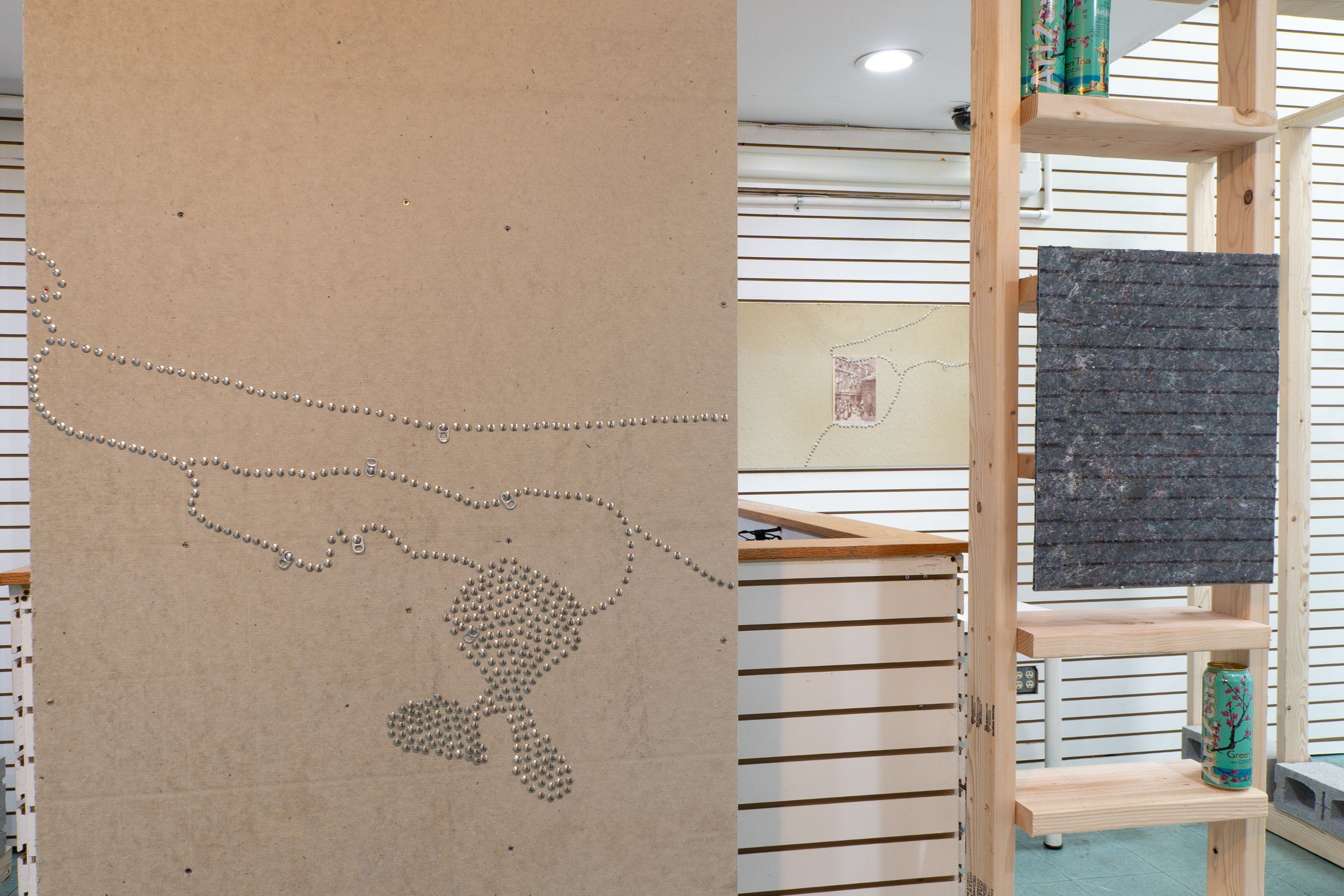
MLG: CSRA and Shanzhai Lyric function within the art world, yet both of these projects exceed the parameters that the art world typically demands of its participants. Do you see a disjunction between the work of CSRA and the particular demarcations of the art world?
CSRA: It’s an intriguing tension, because we are curiously supported by arts organizations, and so weirdly that has framed the practice as art. But for us, initially, it was a poetic inquiry and a research project, and we continue to feel that the real work does not, and cannot, happen in art spaces. Art spaces can hold relics and traces of the work, and they can be sites of encounter for folks who aren’t familiar with the project. But what you see there is not the work because the work is a relational practice.
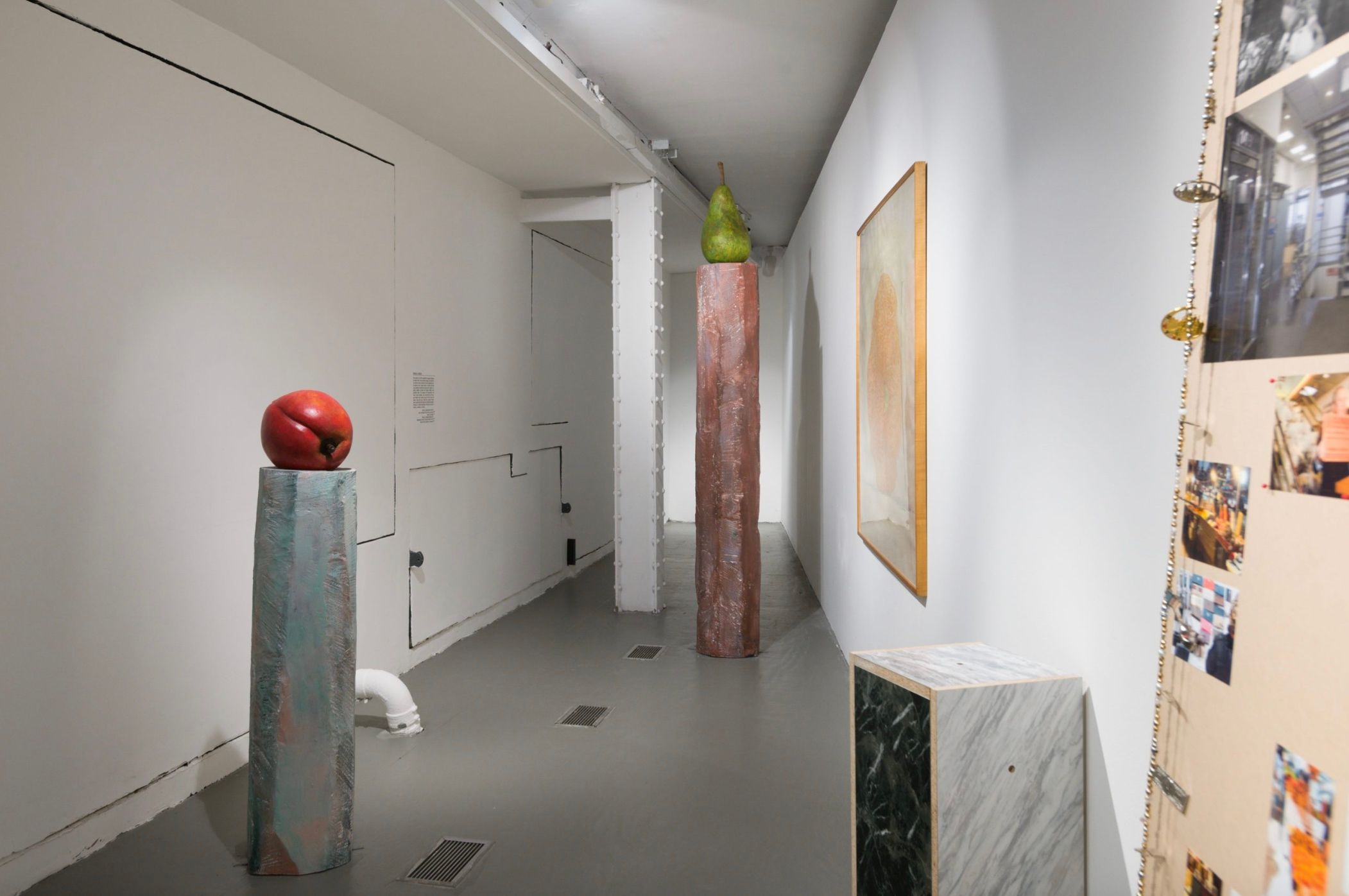
We’ve created a practice of relay between the art space that is supporting a period of research and experiments that happens outside of it. A good example is at Storefront for Art and Architecture, where we exhibited research on a Canal Street site called New Land Plaza, a scrap of land that is in a triangular shape because it resists the grid imposed on the irregular land mass of Manhattan.
At Storefront, which also happens to be in the shape of a triangle, we shared research notes and speculative proposals for projects off-site. The exhibition culminated with a parade from the triangle of Storefront to the triangle of New Land Plaza, near a once-thriving immigrant produce market. It’s now a city park filled with trees that obstruct gathering, where the landscaping functions to prevent community activities. We worked with artists Georgia McGovern and Sebastian Jemec to create guerrilla seating. The street was the place where that work was most alive, but the collaboration with Storefront made it possible.
Going back to the very beginning of the project, our initial storefront was offered to us by curators, invited by landlords who wanted art in their spaces. We were there for six months before the landlord picked up on the fact that what we were doing did not fit his definition of art. He told us that it was interesting, but it was not “Art.” This was affirming for our project. We are a research operation, and in a way, he most correctly identified it, and that was precisely what then got us kicked out.
Our project is visibly anti-commercial, so what he also did was point out the commercial heart of the art world, that the purpose of art is to sell objects, amass capital, and raise real estate value. CSRA isn’t that kind of art, and it couldn’t be instrumentalized in that way. Of course, this is also what gives it value to other kinds of institutions. It’s an ongoing contradiction.
Credits
- Text: MATTHEW LAWSON GARRETT
Related Content
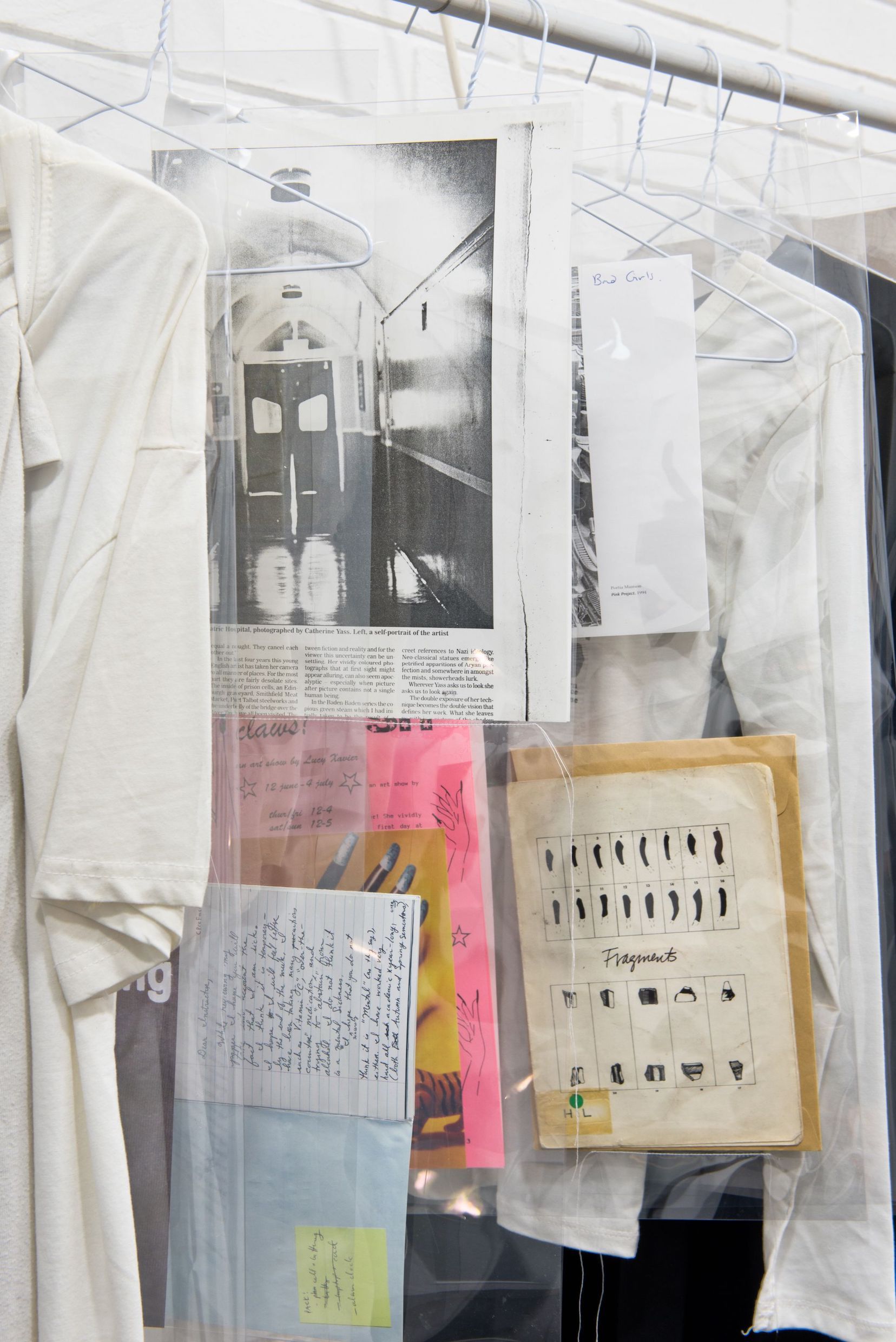
Radical Disinterest: An Interview With Shanzhai Lyric

Lifesaving and Poisonous: Women’s History Museum
How to Survive with Kembra Pfahler

The Denatured Machine
Discovering the Aura with Puppies Puppies (Jade Guanaro Kuriki-Olivo)

Eckhaus Latta Prefers Glitches To Filters
A Gateway to Forbidden Realms: Rob Kulísek
DEAR MICHEL MAJERUS (1967–2002)
ARIA DEAN Life World
Barrikadenwetter: Image Acts of Insurgency with WOLFGANG SCHEPPE