Brenda's Business with HEIDI KLUM
|BRENDA WEISCHER
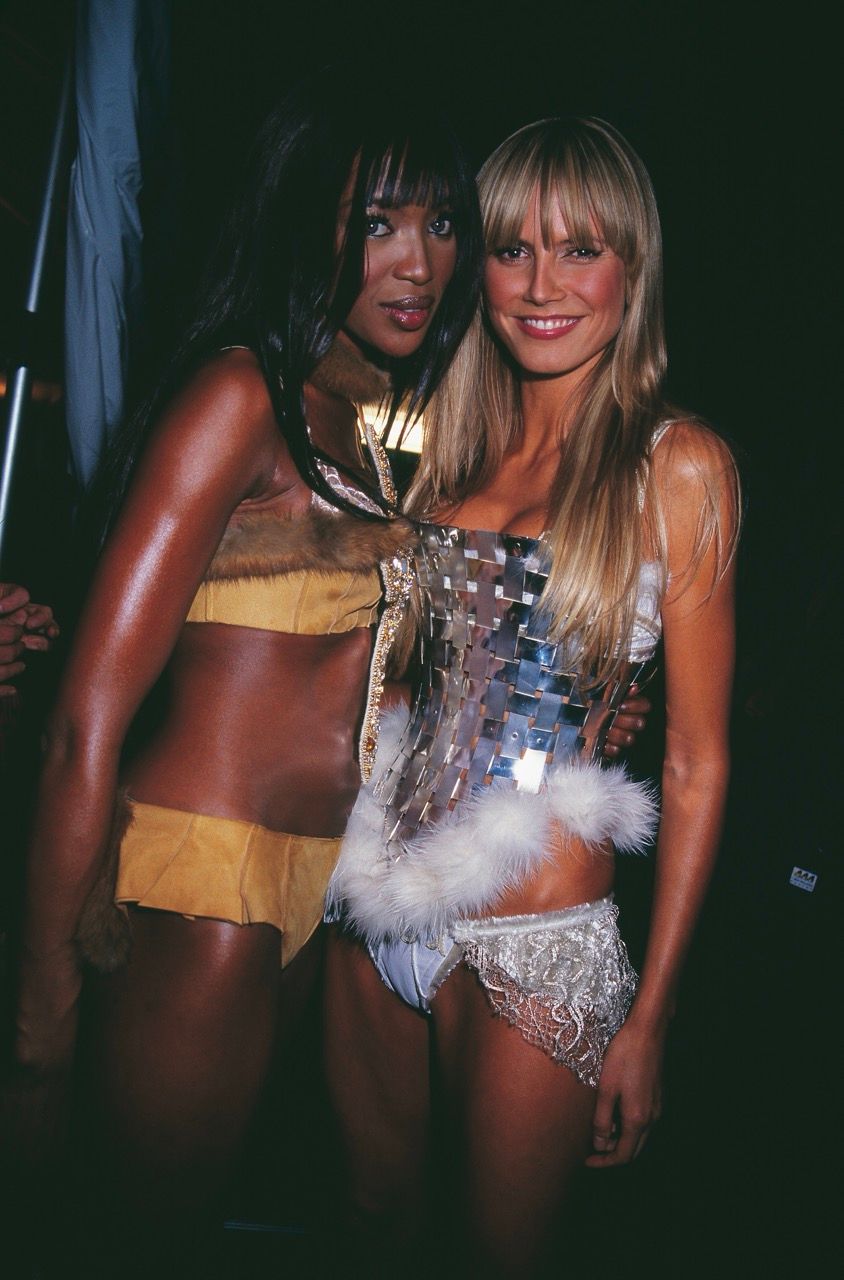
If you are ever asked to list things associated with German cultural heritage, you can look to official sources, which often recommend places such as the Aachen Cathedral, Berlin’s “Museum Island,” and buildings associated with the Bauhaus. More unofficial tips about German culture might reference its people’s habits of being on time, respecting the rule of law and order, honesty to a sometimes hurtful degree, and iconic exports such as sausages, Berghain, and, of course, Heidi Klum.
Few have managed to become both a famous national export and a permanent resident of German pop culture in the way that Heidi Klum has. In a world where attention spans collapse faster than startup valuations and cultural relevance changes with every scroll, the model-turned-businesswoman and host of Germany’s Next Topmodel has maintained a level of fame over the past three decades that feels almost structurally impossible today.
I interviewed Klum over Zoom, where she preferred to keep her camera off—a choice that can easily flatten conversations into the awkward, corporate call territory where jokes come to die. But with her, I immediately remembered that I was speaking with a professional.
Brenda Weischer: Articles about you use terms like “media mogul” or “Heidi’s Imperium.” Do you feel like the tone around you has changed at all over the last one or two years?
Heidi Klum: I think the perception changes depending on where you are in your career and what projects you’re working on. I’ve been fortunate enough to be in the right place at the right time many times throughout my career, and to have built great relationships with so many incredible people and brands along the way. I’ve always been curious and someone who likes to think outside the box, and whenever an opportunity came my way, I was never afraid to give it a try.
Calling me a media mogul is very kind, but all I’ve really done is document my career journey, with its many ups and downs... mostly ups. At the end of the day, I’m still the same person who loves creating, working hard, and taking on new challenges. I’m always curious about what’s next.
BW: I was emailing with your team at Full Picture for this interview. How long have you been with them?
HK: I’ve been with Desiree (Gruber) since one or two years before I’ve been doing Victoria’s Secret, which was around 1995. Before she founded and created Full Picture, she was already my publicist at a different PR firm.
BW: How many people are involved with the image of Heidi Klum?
HK: It’s not that many people, and most of them have been with me for many, many years. As I said, Desiree for over 30 years already. Then, my number one person in my office, Jennifer Love (Vice President of Heidi Klum Company), has been with me for 22 years. Besides Jennifer I have two more people in my direct team, and then of course my publicists at Full Picture, agents at UTA, and one in Germany, too. But I didn’t have a huge team for many years. I packed my own suitcases and wiped my own butt. And I have only had an assistant for two years.
BW: But there is also a management team, right?
HK: I have different agents in different parts of the world. Someone in Milan, someone in Germany. I’ve had various agencies over the years, and at some point I left some of them because I felt like, why am I on their roster if nothing is happening through them anymore? I’ve always been someone who goes after the things I want instead of waiting for opportunities to come to me.
If I have a specific idea, I’ll go directly to the company and ask if they’d be interested in doing something together. A lot of my ventures happened very organically because of things that were happening in my own life.
For example, when I was pregnant with one of my four children, maternity wear wasn’t the big category it is today. At the time, I was filming Project Runway and wanted looks that felt worthy of a fashion television show, so I realized I needed to create them myself. I saw a gap in the market and an opportunity.
The same thing happened with baby products. I wanted to create my own baby clothing line, which led to a collection with Babies “R” Us. But it wasn’t just clothing. We designed cribs, changing tables, dressers, strollers, lamps, bedding collections, blankets, plush toys, nursery décor, rugs, mobiles, artwork, paper lanterns, and more. A lot of the things I’ve created over the years came from a personal need first, and then grew into a business opportunity.
BW: The best products come out of a personal need. I want to go back a little to being a model and having ownership. We say times have changed for models, but when I look at [models] have license deals and their own brands, there are not that many. In that regard, times haven’t changed much. So I wonder what that journey was like for you because I know you had the rights to your name quite early, right?
HK: Yeah, I got all my domains straight away. The trademarks and the domains, the .NET, .org, .de—all of these “dots” you had to get.
BW: I feel like all of us in 30 years are going to sit on so many URLs that we still save because we thought we were going to start something.
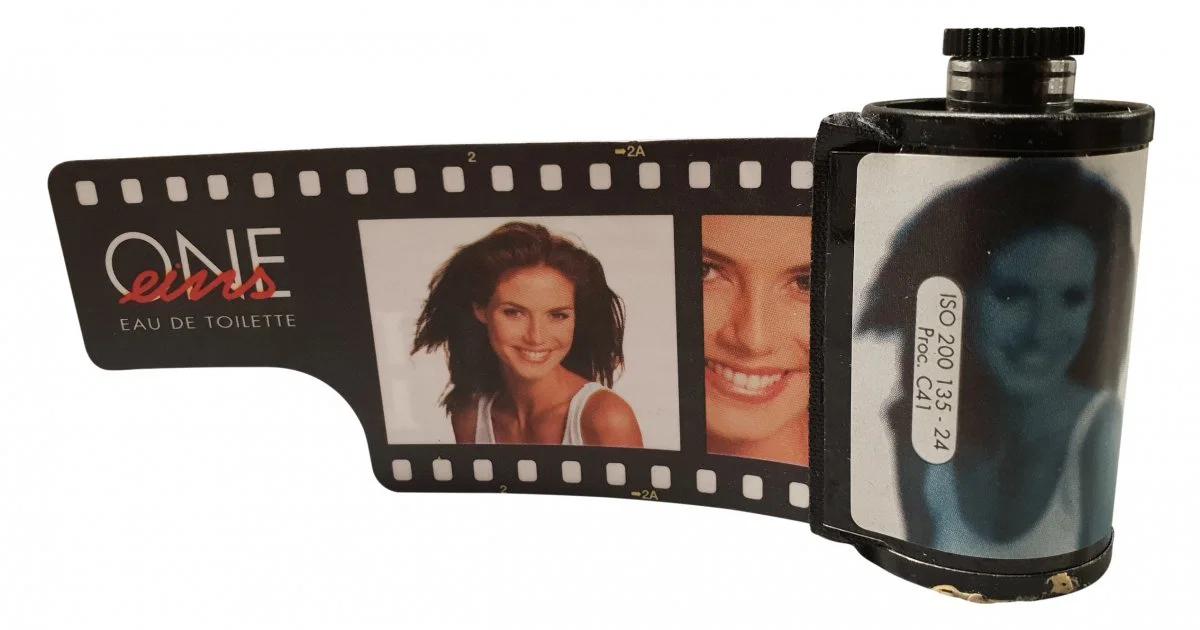
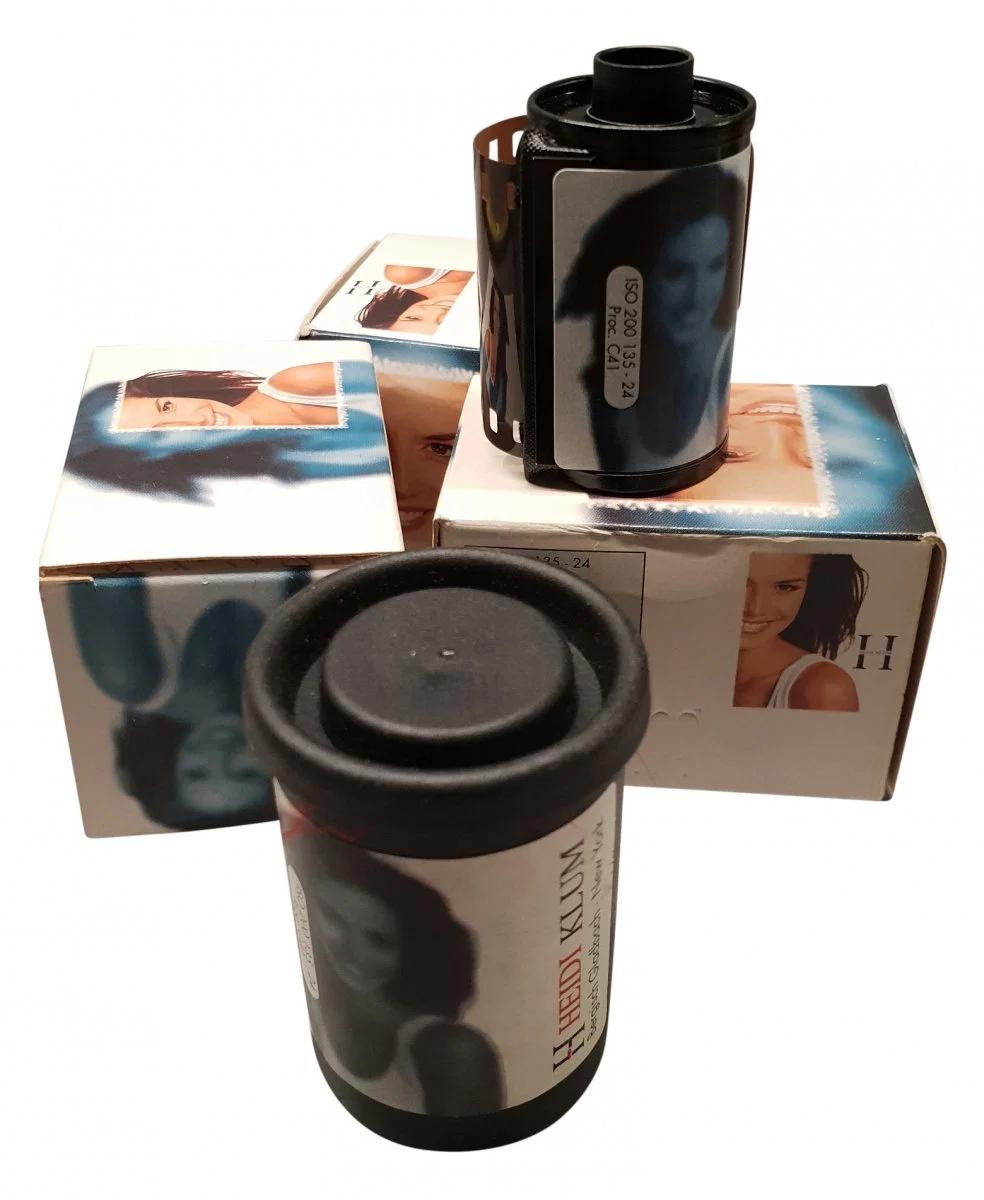
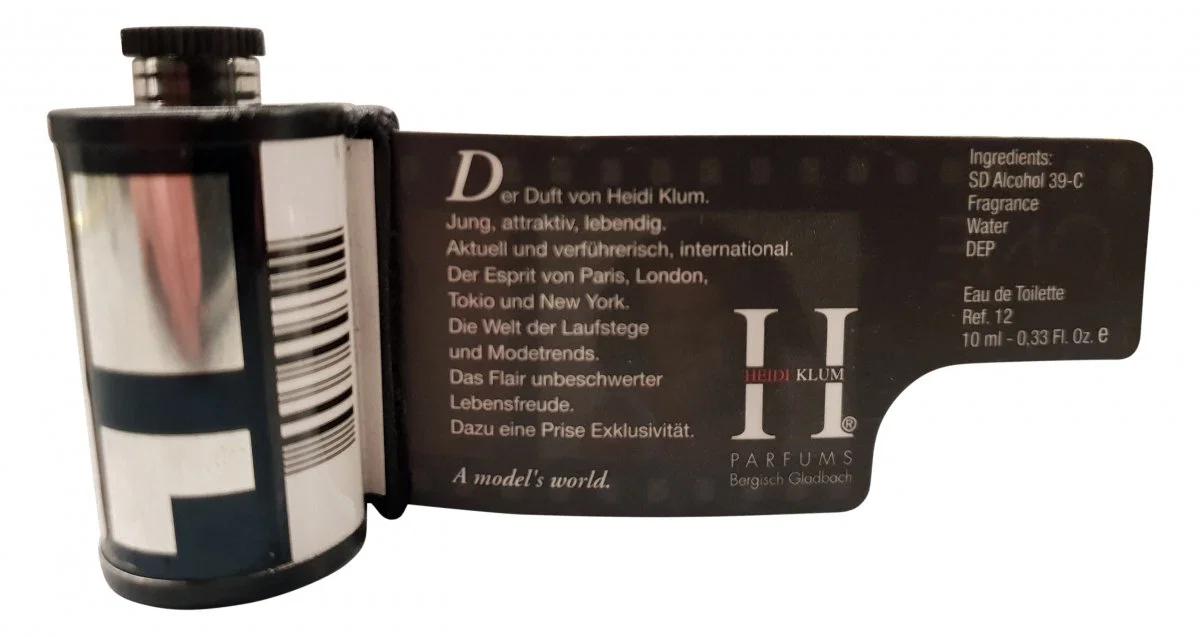
HK: It’s a good thing to do because you never know. And if you’re already dreaming about certain things that you want to put your name on, do it. My dad was in the perfume industry. That’s where I did my internship. At the time he was doing things with Gabriela Sabatini. She was a famous tennis player. I watched him create this whole hype around her. And I think she was one of the first ever celebrities who has done a perfume. At the time, that was a big thing. Years later, I made my first perfume with my dad, creating this bottle that was kind of milky that you couldn’t see inside. I had a camera lens on the front that you could look through, and you could see a photo in the back of me smiling at you. And the closure of the perfume was a Kodak film roll. It was a very creative bottle.
BW: Do you own the rights to the name Heidi?
HK: I’ll need to check, it’s possible. I have an H logo with Heidi Klum written inside of it, so that it would fit better onto products where there is less space.
BW: We can’t not mention the topic of “personal brand” in this interview. Is there a moment, or a job, where you realized Heidi Klum is a brand?
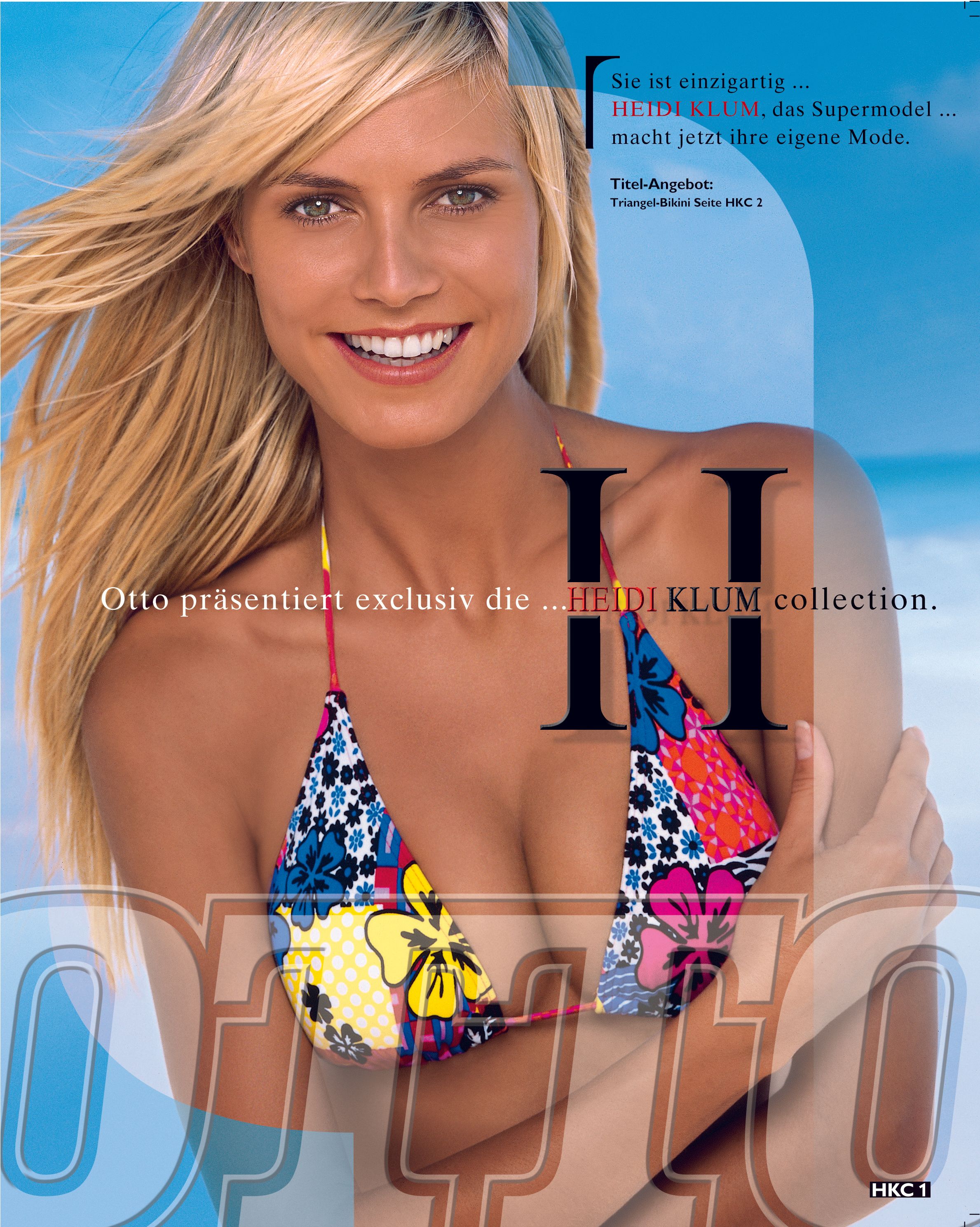
HK: We have to go all the way back to the Otto Versand catalog in the late 90s and early 2000s. It sounds strange now, but back then there were only a handful of magazines, no social media, and Otto was a huge platform in Germany. They didn’t just hire me as a model. They created collections with my name on it. I was on the cover, we did swimsuits, evening gowns, all kinds of things. Looking back, that was probably the first time I stepped beyond simply being the face of a campaign.
Around the same time, in 1998, I was on the cover of Sports Illustrated Swimsuit, and in 1999 I became a Victoria’s Secret Angel. Those opportunities introduced me to a much bigger audience and opened a lot of doors.
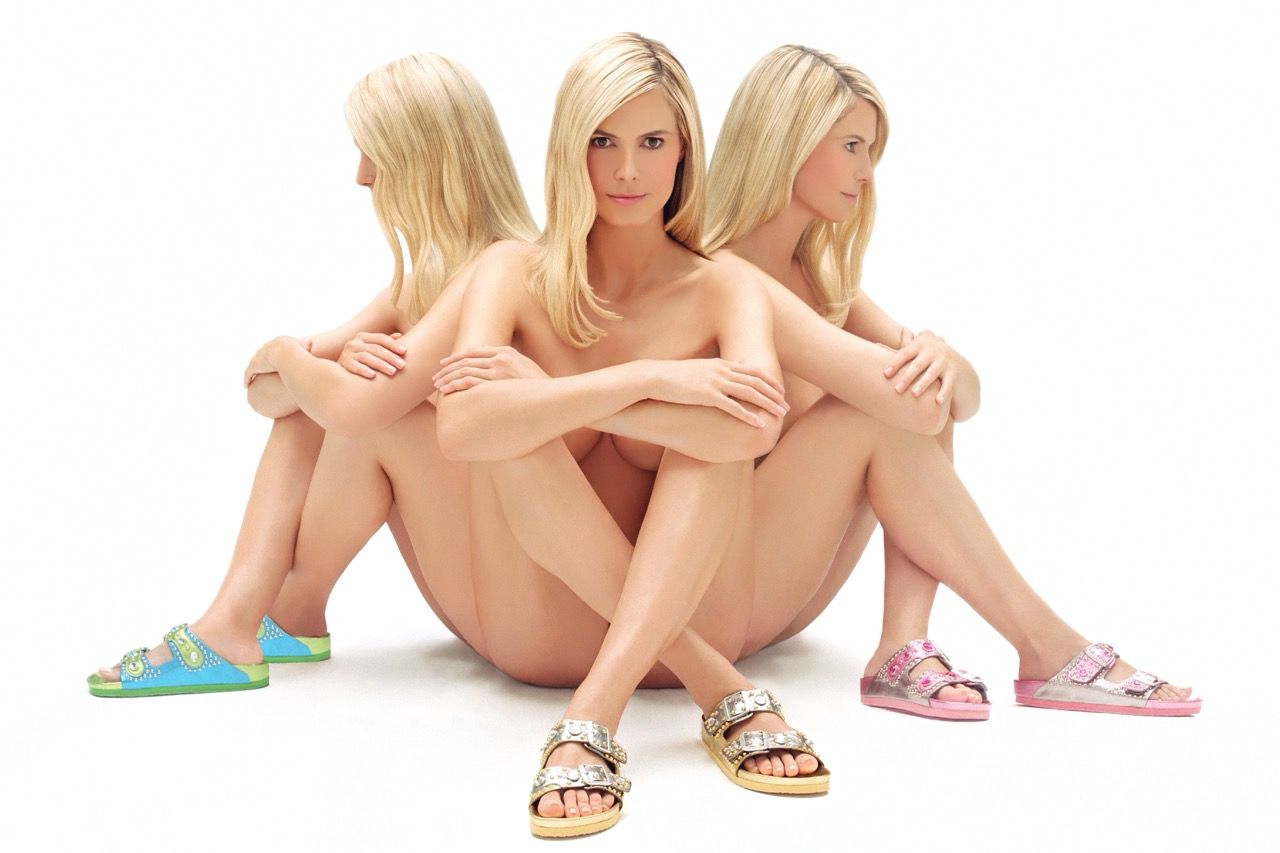
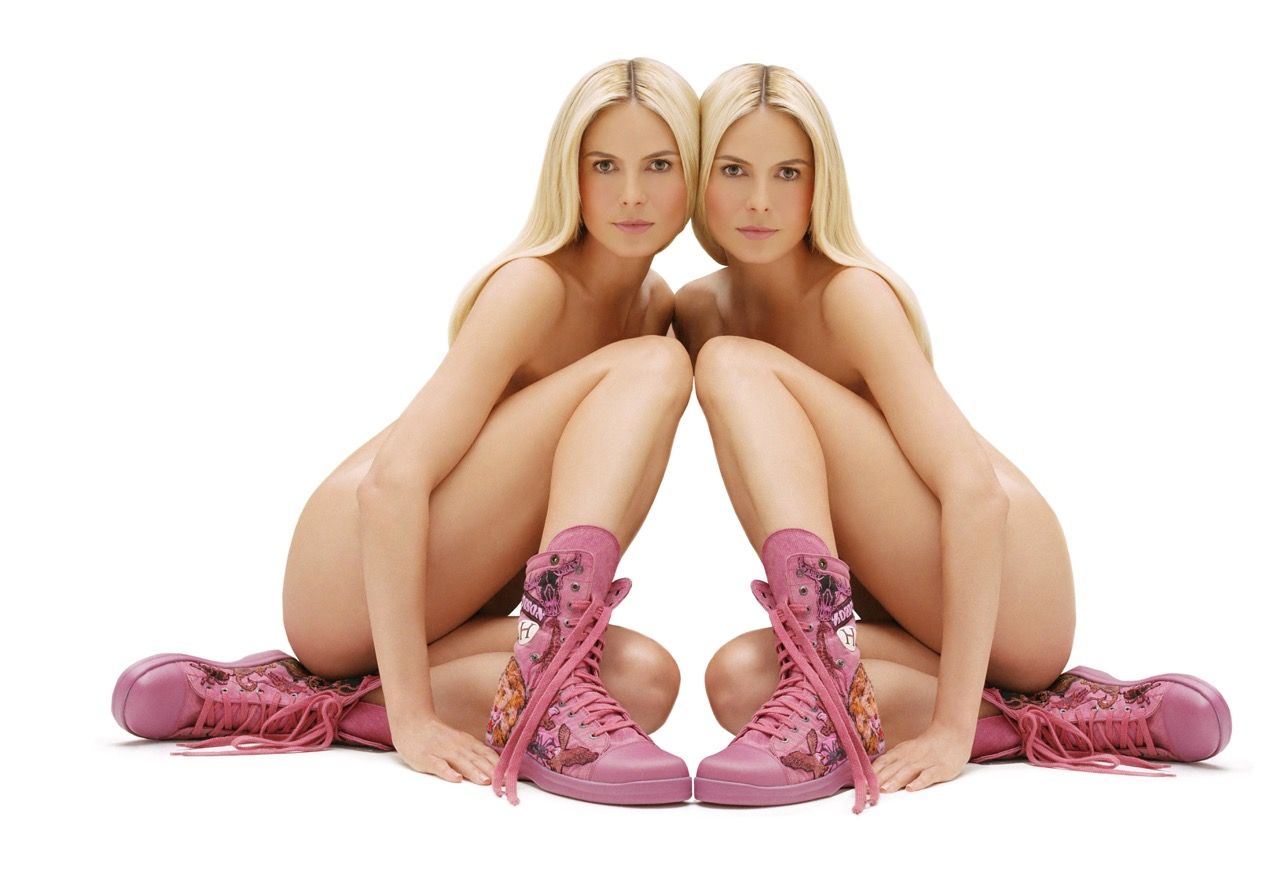
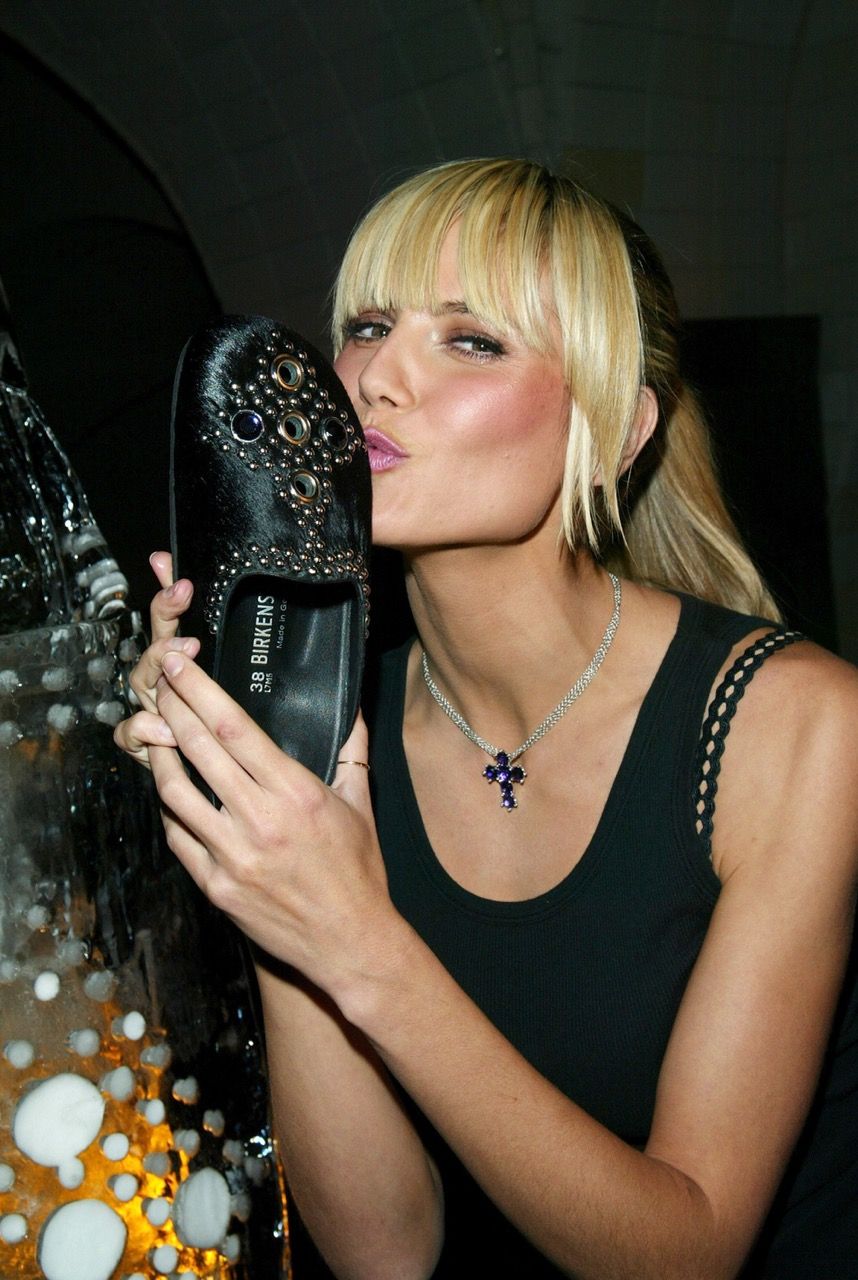
I started working on product collaborations and licensing deals. In 2003 and 2006, I launched jewelry collections with Mouawad. Later came beauty projects and fragrances. Then I did my Birkenstocks also in 2003. In 2010, after having children myself, I launched maternity collections for A Pea in the Pod and Motherhood Maternity, and around the same time I created my activewear collection with New Balance.
Over the years, I kept expanding into different categories. I launched Heidi Klum Intimates in 2015, and since 2022 I’ve had a wonderful partnership with Intimissimi, which has become a very meaningful relationship, especially because I’ve been doing it together with my daughter Leni for so many years.
So when people talk about the “Heidi Klum brand” today, there wasn’t one moment where I suddenly thought, “Okay, Heidi Klum is a brand now.” It happened organically over nearly three decades. Someone would come to me with an idea, or I would see something that I felt was missing in the market, and I would give it my all and went into it 1,000 percent. I still do that today, I always give my absolute best.
A lot of these ventures came directly from things happening in my own life. Whether it was jewelry, maternity wear, lingerie, activewear, beauty, or fashion—most of it started because I was genuinely interested in it. I’ve always been curious, and I’ve never been afraid to try something new. Looking back, that curiosity probably built the brand more than any master plan ever could.
BW: Wait, I don’t think I knew you have your own Birkenstocks! How did they approach you?
HK: When I won my modelling contract on German TV, I was in the press constantly. So I went to Birkenstock and said, “I love your shoes, but they could also have more of a fashion aspect to them.” And they were like, “Okay, you do the topping and we do the sole and you can do whatever you want [from there].” I was never allowed to touch the sole because it’s an orthopedic shoe. My first shoe that I designed was in distressed denim with a lot of rhinestones. and black and white with grommets. I did really unusual color combinations. But these kind of things really only happened because I was in love with the product and I felt that I could add something to them to make them a little different. But these were always genuine real collaborations. I would not just put my name on something.
BW: Do you still have them?
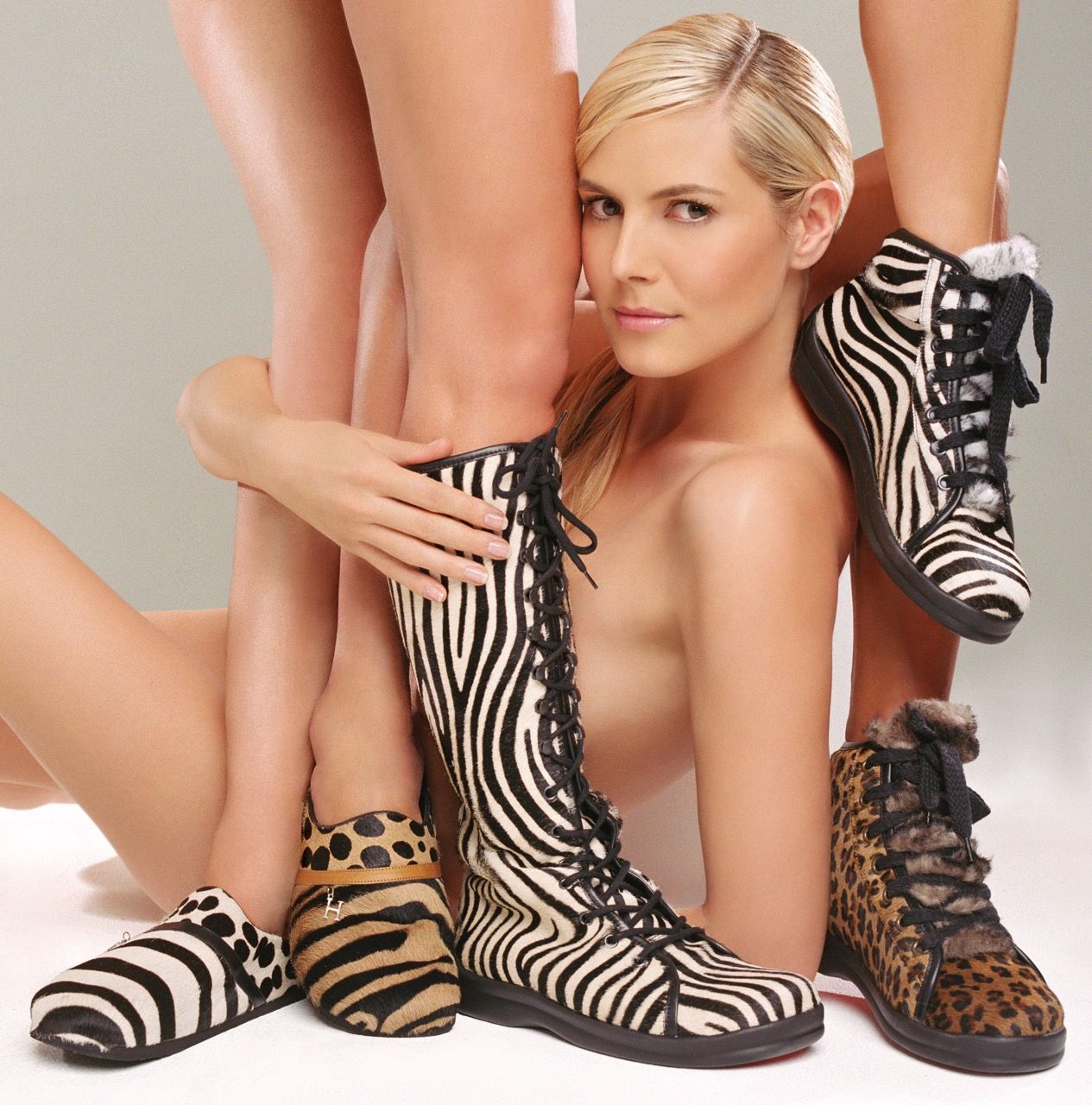
HK: Of course! I kept everything, even prototypes! My Barbie collection, certain things from the Babies [“R” Us] collection, my Mouawad jewelry, my perfumes, some things from my New Balance collab and my Katjes candy. So with being a brand, I realized it when they didn’t just want my face on the products, they wanted my name on the products.
BW: Was there a point where you started thinking more in terms of equity than in terms of fees?
HK: A bit of both is always good.
BW: What are you doing with your money? Are you taking a lot of advice on it?
HK: When you make money, all those people come to you—managers, advisors—and want you to put your money into so many different stocks. They advise you about all the different things that you should and shouldn’t do. But it’s no different than going to the palm reader. We don’t know the future and what the heck is going to happen. They preach all of these different things to me all the time, so many things land on my desk. And at the end of the day, you have to do what you believe in. I have always believed in real estate, for example. I have also put money in stocks and businesses, but I always found those by myself.
BW: I’m curious if you ever had media training? You had already had an on-screen personality during a time when a lot of models were muted.
HK: My media training was just learning by doing. Being on TV, you constantly learn new things. I started with smaller gigs, doing backstage interviews and segments for shows like Access Hollywood, and then the opportunities got bigger. Over time, you become more comfortable in front of the cameras. You get less intimidated by the stage, the lights, the questions, and all the things that could potentially go wrong.
At the same time, television is constantly evolving. There are always new guidelines, new standards, and new ways of addressing people respectfully.
Especially on shows like America’s Got Talent, we regularly receive training and updates on language and communication. It’s important to me to stay informed because I never want to make someone feel uncomfortable or address them in a way they don’t appreciate. We spend a lot of time learning about these changes and understanding what is appropriate. Things that might have been considered completely normal years ago, like calling someone “darling” or “sweetie,” may no longer be encouraged in certain professional settings. So you’re always learning, adapting, and trying to be respectful of everyone. For example, I used to call everyone “darling” and “sweetie,” and I don’t do that anymore?
BW: What’s wrong with sweetie?
HK: It’s not about something being “wrong” with it. It’s about understanding how people want to be addressed today. Language evolves, and when you work in television, you’re constantly learning and adapting. I actually want to know these things because the last thing I want is to make someone feel uncomfortable.
I’ve always believed that people should be free to be who they are, love who they want to love, and live their lives however they choose. If there are better ways to communicate respectfully, why wouldn’t I want to learn them? That’s really been my media training over the years: staying open and adapting to change. Even though I for example have been called and still do get called “sweetie,” “darling” among a lot of other things.
BW: But you just felt comfortable talking in front of the camera from the get-go?
HK: Actually, people would often just hand me the microphone. I started doing interviews backstage at the Victoria’s Secret shows. At the time, a lot of the models weren’t particularly interested in doing interviews, so producers would come to me and say: “We can’t get anyone to talk. Can you take the mic and go around?”
So I would grab the microphone and start interviewing people like Stephanie Seymour, Naomi Campbell, Helena Christensen, and all the fabulous women backstage. I just enjoyed talking to people, and I was never afraid to walk up to someone and start a conversation. I guess that’s how it all started.
BW: Now the content every client wants at a fashion show is the backstage video, which you already did 20 years ago. Whenever I do any kind of consulting job, I get asked, “who are your celebrities in Germany?” And I’m like, “football players and Heidi Klum.” What is our deal? Do we just explain it with Neidkultur (“culture of envy”)?
HK: I’ve heard magazine publishers say that a divorce sells better than a wedding on a cover. There seems to be something about conflict or negativity that naturally grabs people’s attention. I know that from reading comments over the years.
What I’ve never really understood is: why not be happy for someone? Why not cheer them on? I’ve always been a cheerleader for other people. If I can help someone get to the next level, I’ll do it. I don’t lose anything by someone else succeeding.
I don’t know why some people spend so much time focusing on what others are doing. For me, that’s not a very productive way to live. I also think that if you want to be original, you can’t spend all day looking at everyone else. The more you’re focused on your own ideas, your own work, and your own path, the more interesting and authentic you become.
BW: True! I always think about this when people ask about the creative process, or how people get ideas. It doesn’t really help me to scroll on Instagram. Mine come in the shower.
HK: The shower is a very good place for me too. I make my to-do list and a lot of times I will have my phone in the shower because I will have another idea right afterwards.
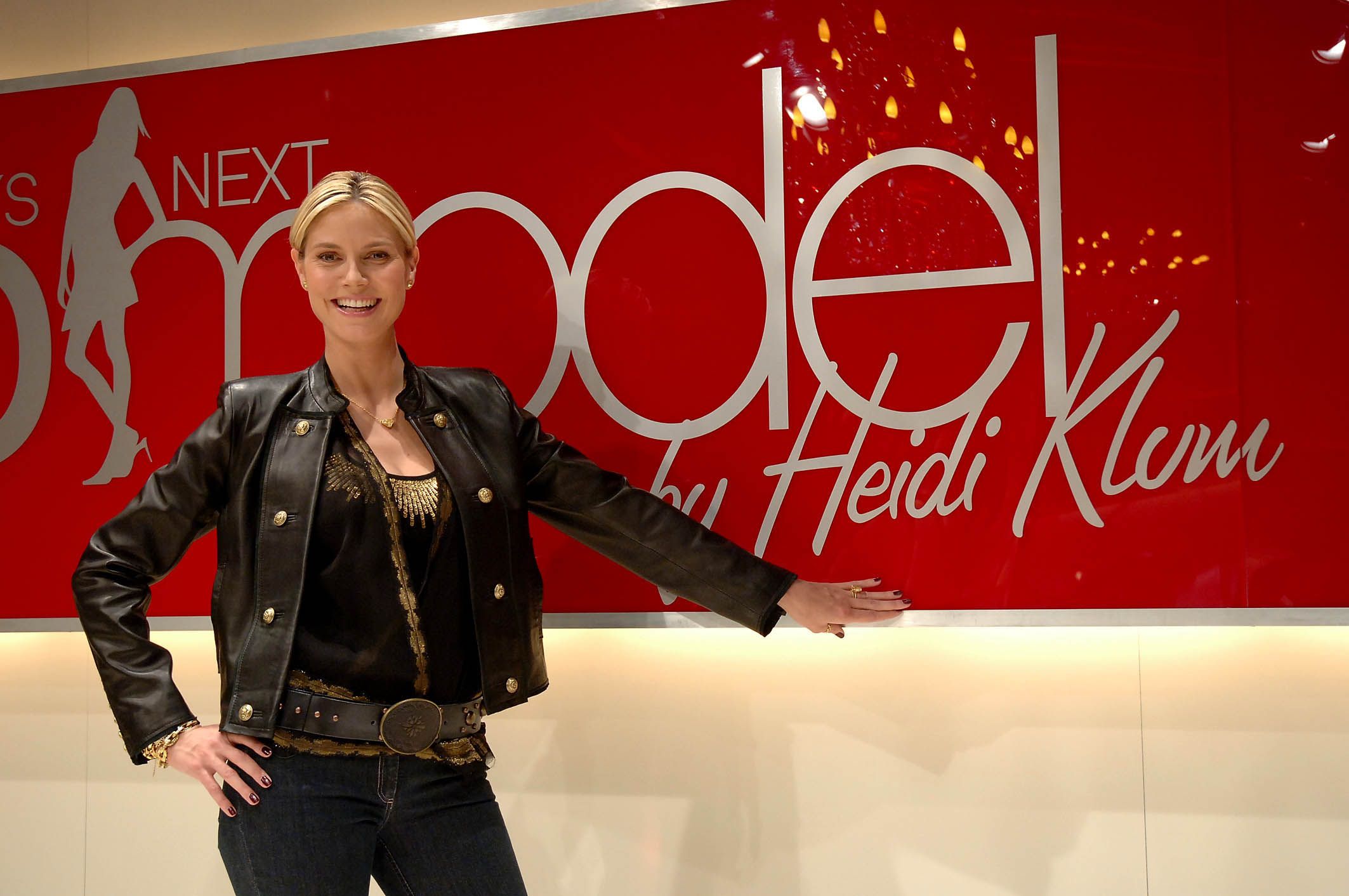
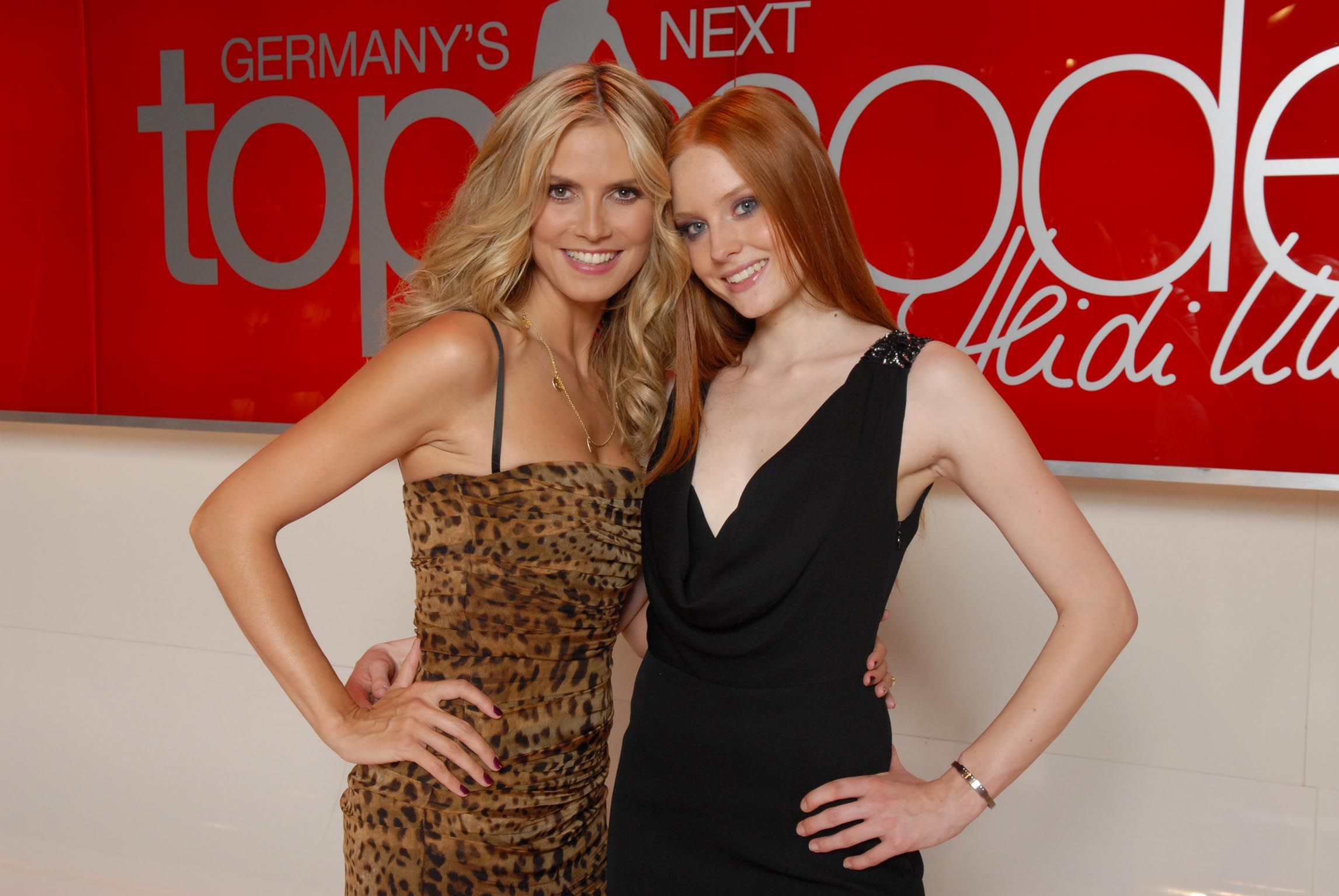
BW: I want to talk about Germany’s Next Topmodel. Can you walk me through how you got the gig?
HK: I have to go way back. I was working with Tyra [Banks] a lot through Victoria’s Secret at the time, and she told me about this idea she had for a television show about aspiring models. I remember thinking it was a really interesting concept.
Around the same time, I was beginning my own television journey with Project Runway. I was meeting with so many networks trying to sell the idea of a design competition. It was a whole new world for me. So in a way, Tyra and I were both starting our television ventures at around the same time.
Then a few years passed and I was asked to host Tyra’s show in Germany, Germany’s Next Topmodel. The timing felt right because I had just started exploring television beyond modeling, and I was excited about the opportunity.
BW: So that channel got the rights from the American version?
HK: Exactly. They have the rights. I don’t.
BW: Still don’t?
HK: No, I don’t have the rights to the show. I honestly don’t know how long they originally acquired them for. We’re now on season 21.
After the first season, I realized I wanted to be much more involved creatively. The television producers were very good at making television, but fashion is a very specific world, and that’s the world I come from. I wanted to bring more of that perspective into the show.
I wanted the photoshoots to look more beautiful and editorial. I wanted stronger photographers, better styling, better hair and makeup, and industry professionals as guest judges. All of those details matter because they’re what create great imagery and make fashion exciting to watch.
So from season two on, I became much more involved in shaping the creative direction of the show, and that’s also when my name became part of the title and I became an executive producer.
BW: And is this a yearly contract?
HK: I have a few more years. I know how long my contract is, so I’m assuming they bought it for the same amount of years that I still have on the contract.
BW: You can’t ignore that Next Top Model has popped up in a lot of countries, died down, popped up somewhere else, and died again. But Germany’s has been running for 20 years, so you must have done something incredibly right.
HK: I have not watched the other shows in other countries, only my producers do. I look at what’s happening in Paris, London, New York, what’s in the magazines. I like to be inspired there instead of by what others are doing on other shows. I think it’s important to stay current.
BW: I’m one of the audiences that got lost simply because I don’t have a TV anymore. And I started watching again only because you had my friend Johannes [Boehl] on and Maria Koch was a guest juror.
HK: It’s been fun to introduce boys. I originally never wanted to mix the genders because I always thought it was unfair. The girls are walking in heels, they have to do different kinds of transformations, and in many ways the expectations are different.
What changed my mind was that we weren’t asking the boys and girls to compete against each other for one title. The women compete against the women, the men compete against the men, and in the end we have a female winner and a male winner. Once we found that format, it felt fair to me.
It took a few years to make it happen because it’s double the content, and we couldn’t squeeze everything into a Thursday. So I asked ProSieben to open another day for me, which is a lot in prime time television. We do four hours of prime time television every week, which is huge.
And honestly, you’re the perfect example of how people consume content today. A lot of people don’t watch television the way they used to. Young people are doing everything on their phones. They want to watch what they want to watch, when they want to watch it, and not necessarily when we tell them to watch it. So it totally makes sense that the way we used to do things is no longer current.
BW: We’ve already talked for an hour but I still want to talk about your song [“Red Eye”]! I was not aware of the discography of Heidi Klum.
HK: This is actually my fourth song. I’m kind of a closet singer. I would have loved to have been a singer in my life. Unfortunately, I was not given the pipes to be a good singer. But I can pretend to be a singer, so that’s what I do. Because, why not?
I had the opportunity a few times over the years. It started with Douglas. I worked with them for many years, and one year I was asked if I wanted to be part of a Christmas song where all the proceeds went to a children’s charity. I was actually pregnant with my son Johan at the time. When you look at old footage, you can see me in the recording studio singing “Wonderland.”
Then, when I was married to Seal, I did a song with him and performed it live at the Victoria’s Secret Fashion Show. I nearly pooped my pants, but I wanted to do it because I love a challenge. One time I sang “Teenage Dirtbag” with Wheatus for MTV. And for America’s Got Talent, I sang “Santa Baby” live on stage with my Golden Buzzer, Sal Valentinetti.
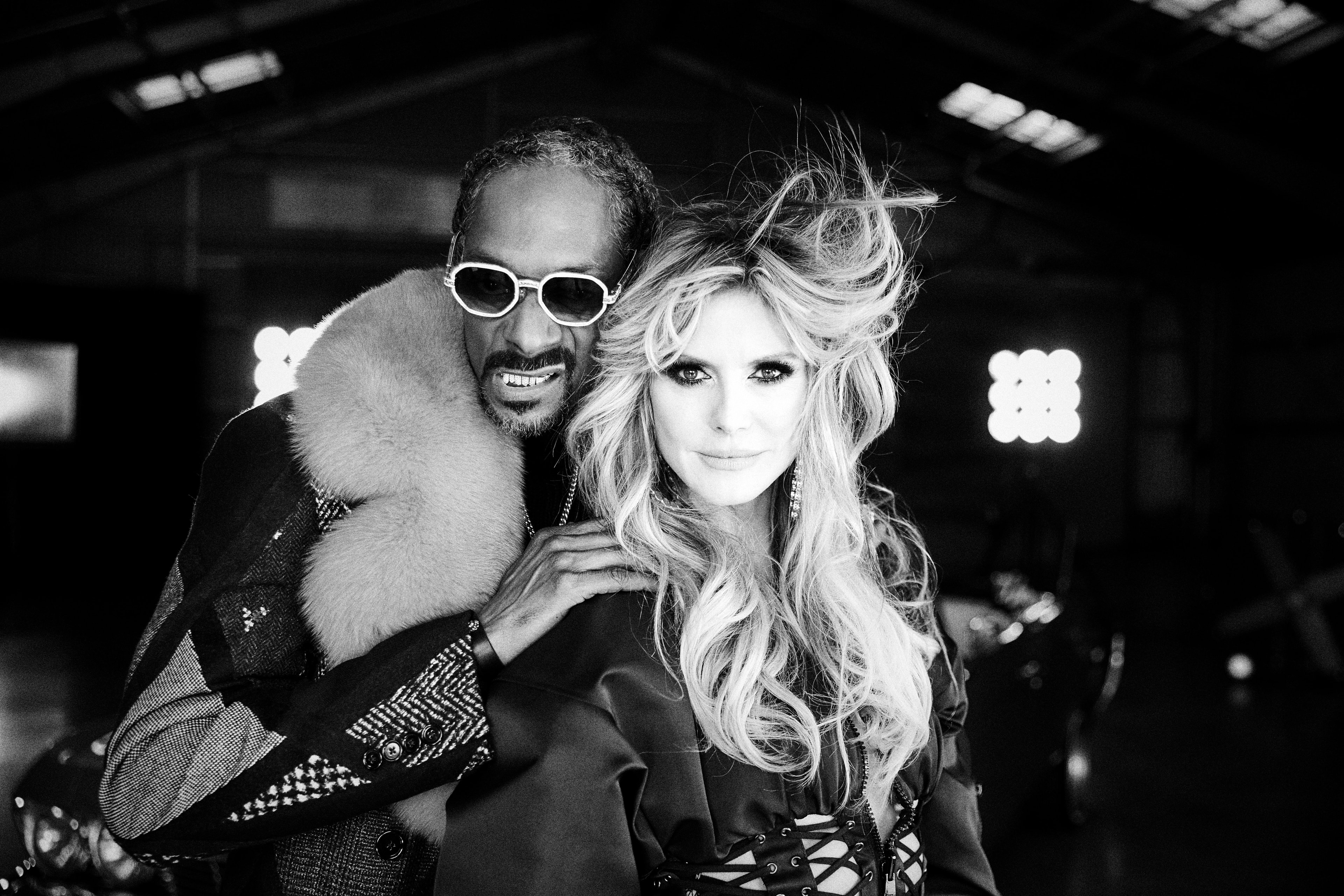
For Germany’s Next Topmodel, we need a theme song every season. One day during one of our many meetings, the question came up whether I would ever be open to doing one myself. So I started wondering if I would ever actually do it, just for fun. Then I thought, if I were going to do it, who would I do it with? And the first person who came to mind was Snoop Dogg.
So I called him and said, “Would you do a song with me?” And he said, “I didn’t know you sang.” [laughs] I rolled up to his studio in Inglewood with the song, he rapped on it, and we created “Chai Tea with Heidi” together. We made a music video and everything. It was so much fun. I love him. I had so much fun doing that, I thought, let’s see who else I can ask next. Then I ended up working with Tiësto, and together we created “Sunglasses at Night.”
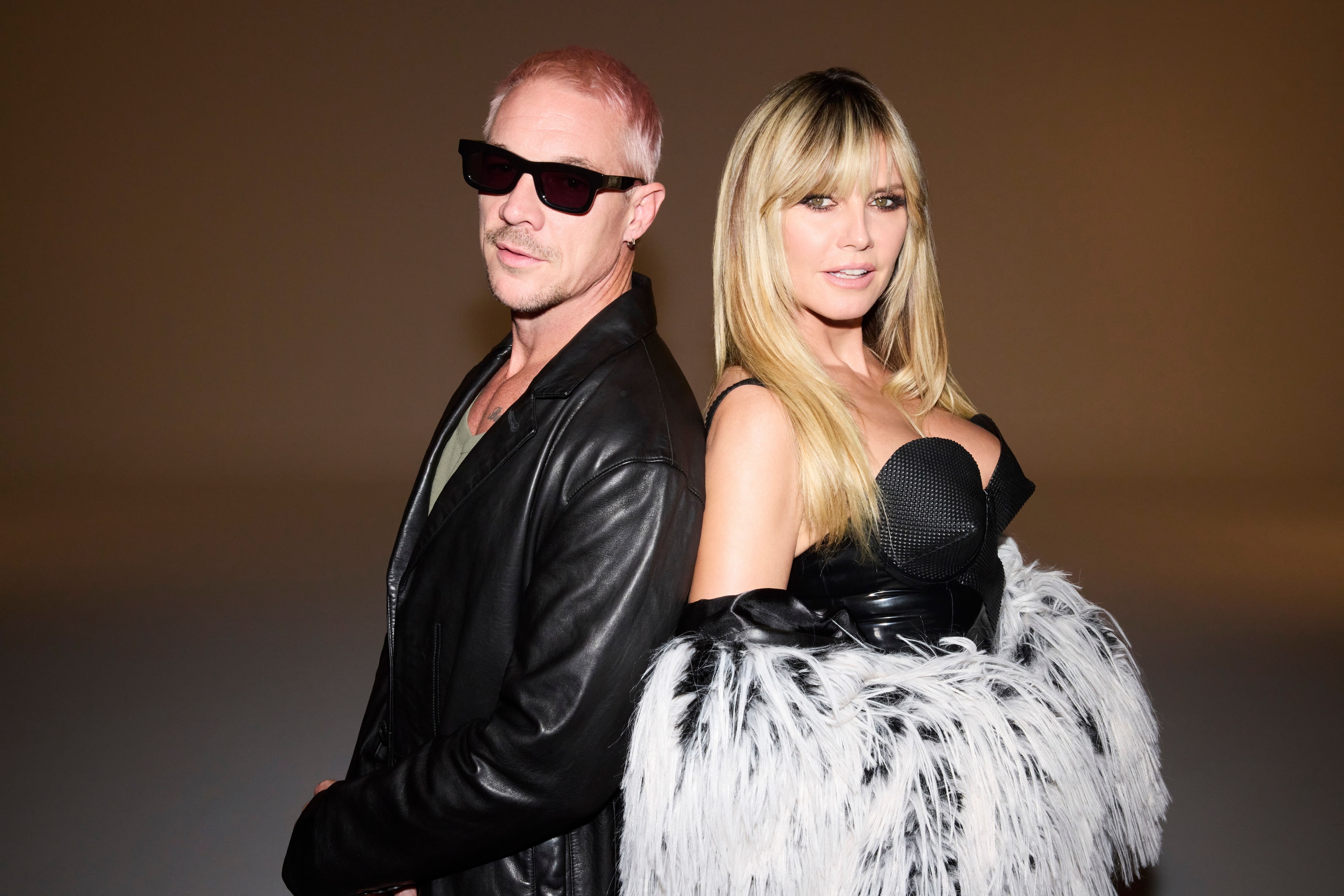
After that, I thought maybe I should give it a rest for a while. I didn’t want people in Germany to think, “here she comes again with another song.” [laughs] But then, for this season of Germany’s Next Topmodel, I asked Diplo if he had any fun tracks lying around. He sent me a few songs, I picked one, and that’s how “Red Eye” happened.
I think if you have an idea, and you believe in it and it excites you, it’s important to go after it. Looking back, all of these songs happened because I was curious enough to ask. I asked Snoop. I asked Tiësto. I asked Diplo. Sometimes people say yes, sometimes they don’t, but you’ll never know unless you try. A lot of the fun and unexpected things in my life happened because I wasn’t afraid to ask the question. So if there’s something you’ve always wanted to do, even if it’s not what people expect from you, why not give it a shot?
BW: Not everybody has Diplo as their homie, but yeah.
HK: I feel like with a lot of the things that have happened in my life, people think there was some grand master plan behind it all. But there really wasn’t. I’ve just always been curious. And I still am. I still go after my dreams and things that excite me.
BW: I want to find the master plan of people’s success stories because of my own laziness. We don’t want to admit that somebody just went out and got it, said yes to chances, created their own chances.
HK: Everyone wants the master plan. But most of the time there isn’t one. It’s the same when people ask me, “How do you stay in shape?” They’re hoping there’s some secret shortcut. But usually it’s all the boring things nobody wants to hear. You have to put in the work. You have to keep showing up. You have to stay curious and keep trying things.
I think a lot of opportunities come from simply saying yes, asking questions, meeting people, and being open to things you didn’t plan for. That’s certainly been true for me. Most of the exciting things that have happened in my life weren’t part of some carefully designed strategy. They happened because I was willing to try.
Credits
- Text: BRENDA WEISCHER