Marc Brandenburg: Mainstream Allergens and Other Urban Debris
|PHILLIP PYLE
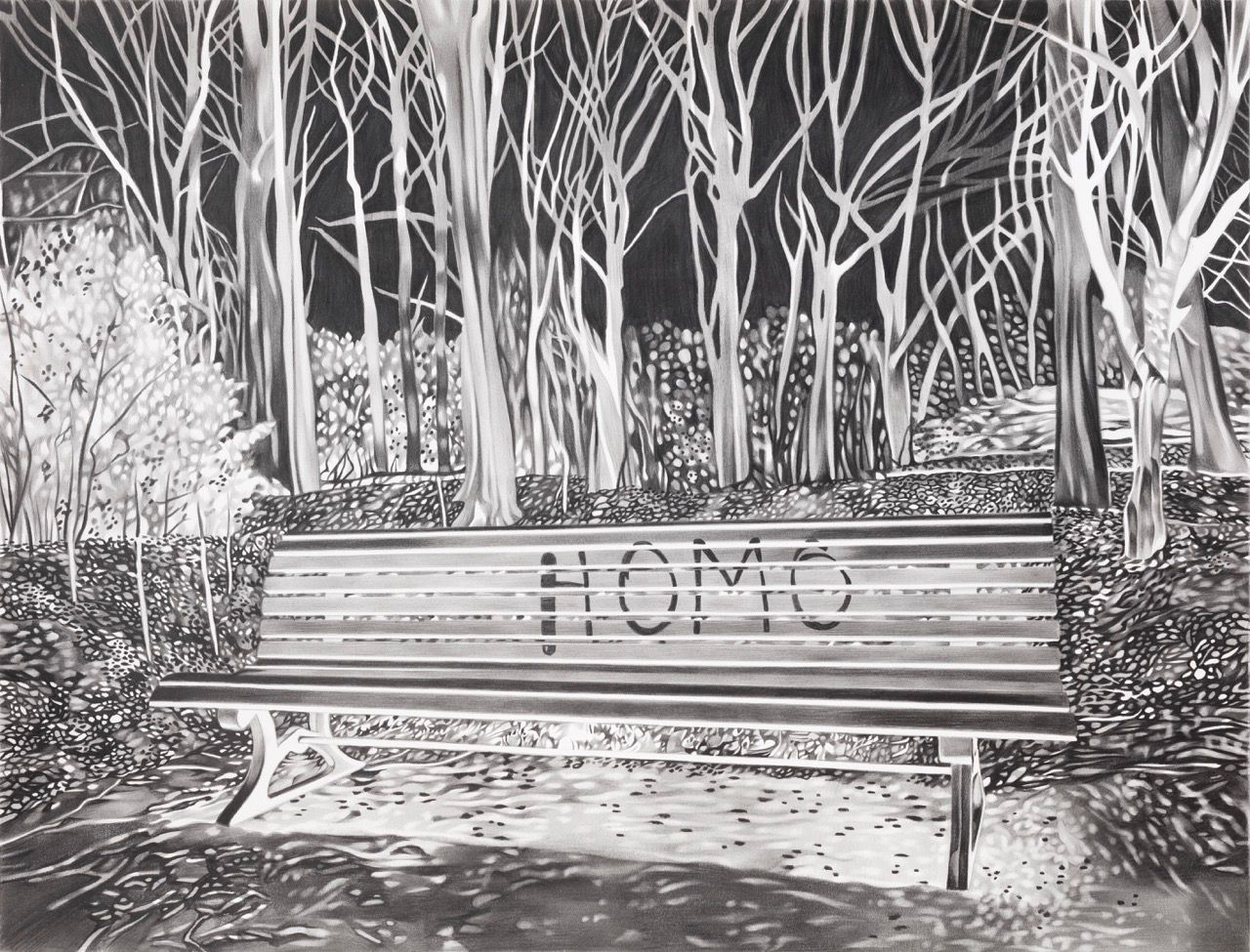
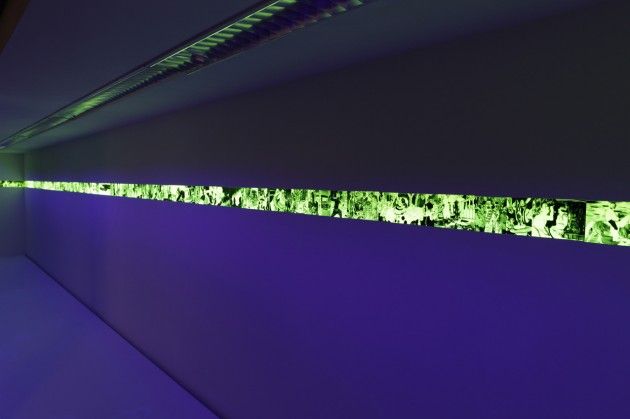
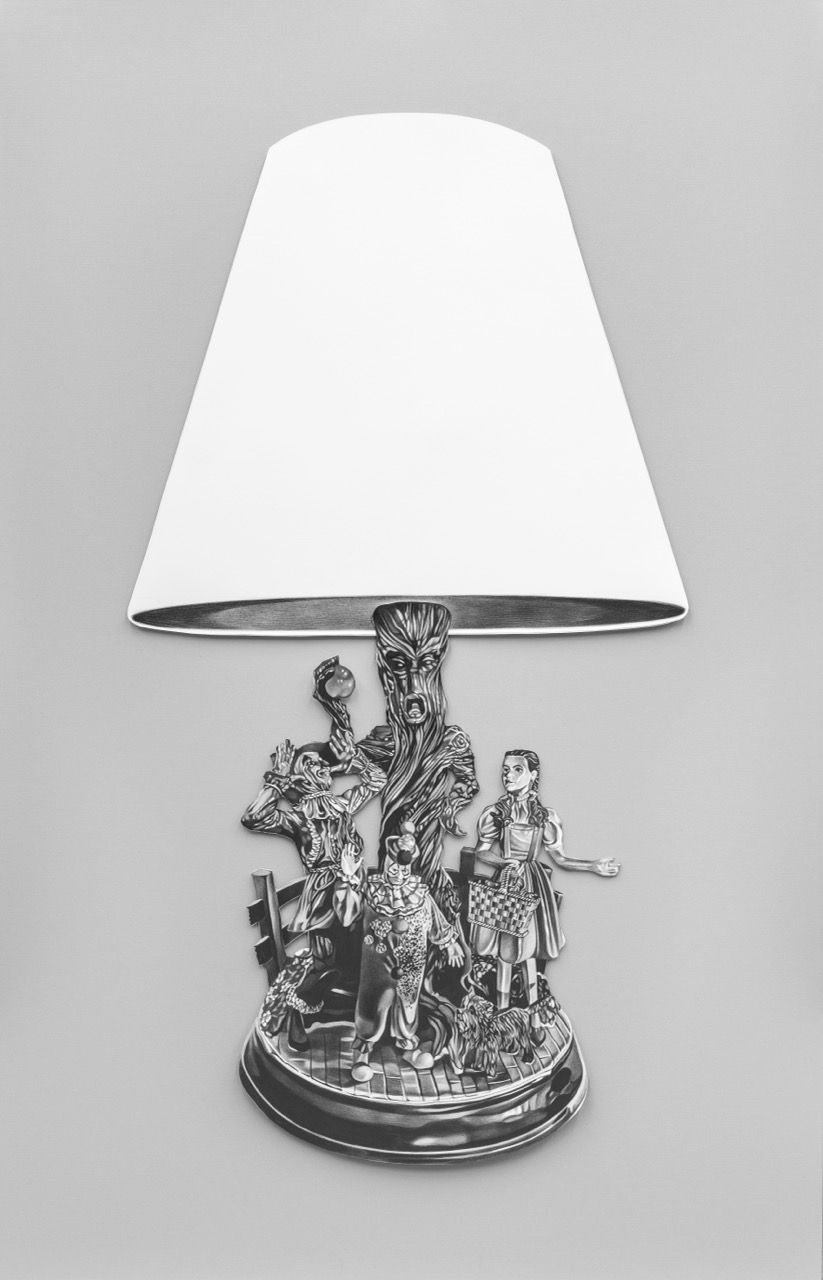
Flotsam drifts in various forms across the white walls of “20th Century Debris,” Marc Brandenburg’s major retrospective currently on view at Berlinische Galerie. A lone bench is scrawled with the word “Homo”; Madonna appears as the dominatrix from the Erotica music video (1992) in two separate, side-by-side vignettes; a Wizard of Oz (1939) lamp is affixed with a cutout of John Wayne Gacy and scrutinized under blacklight; a man, whose face is first digitally, then graphically-blurred, fists another man who is not afforded such anonymity.
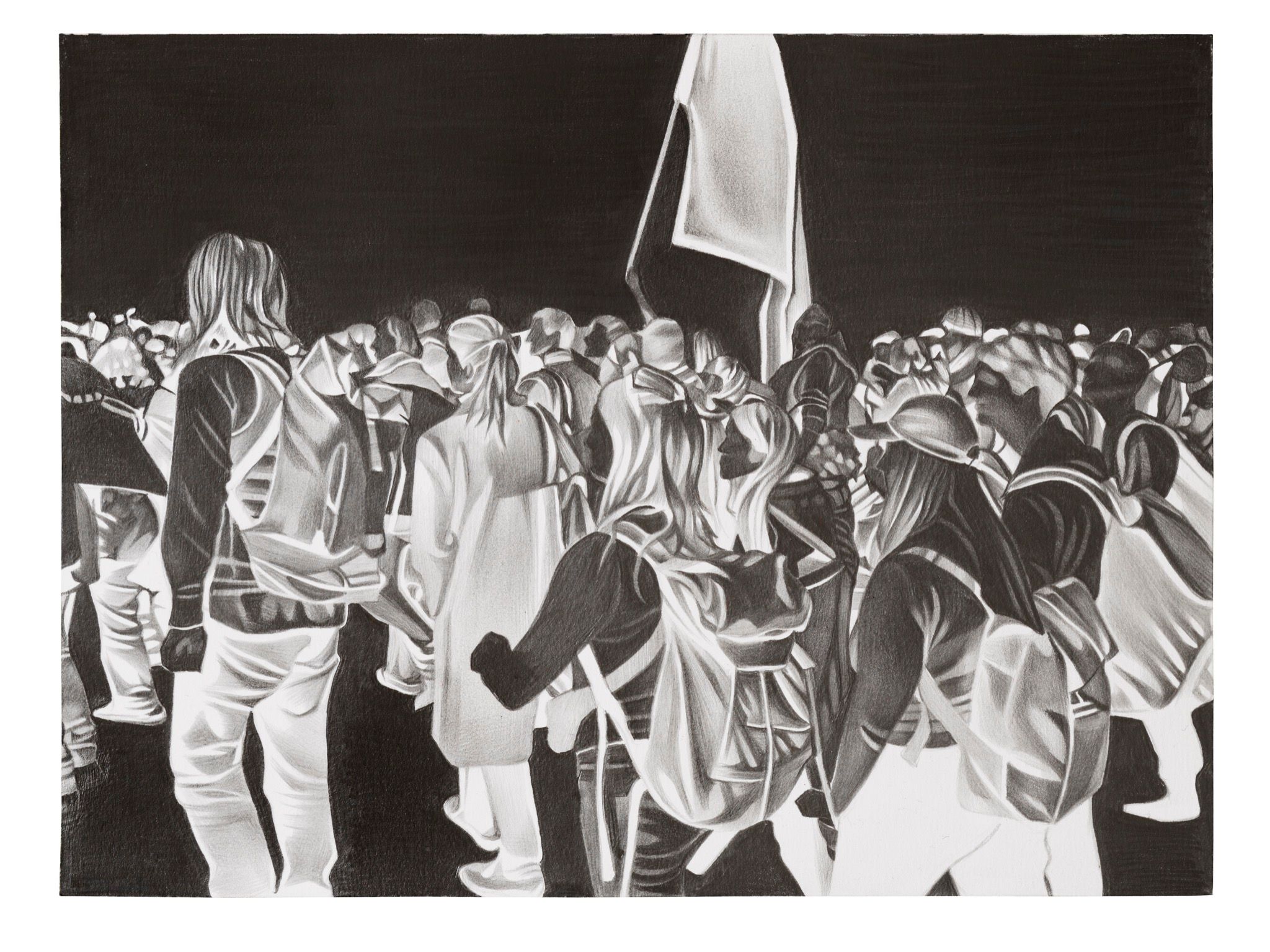
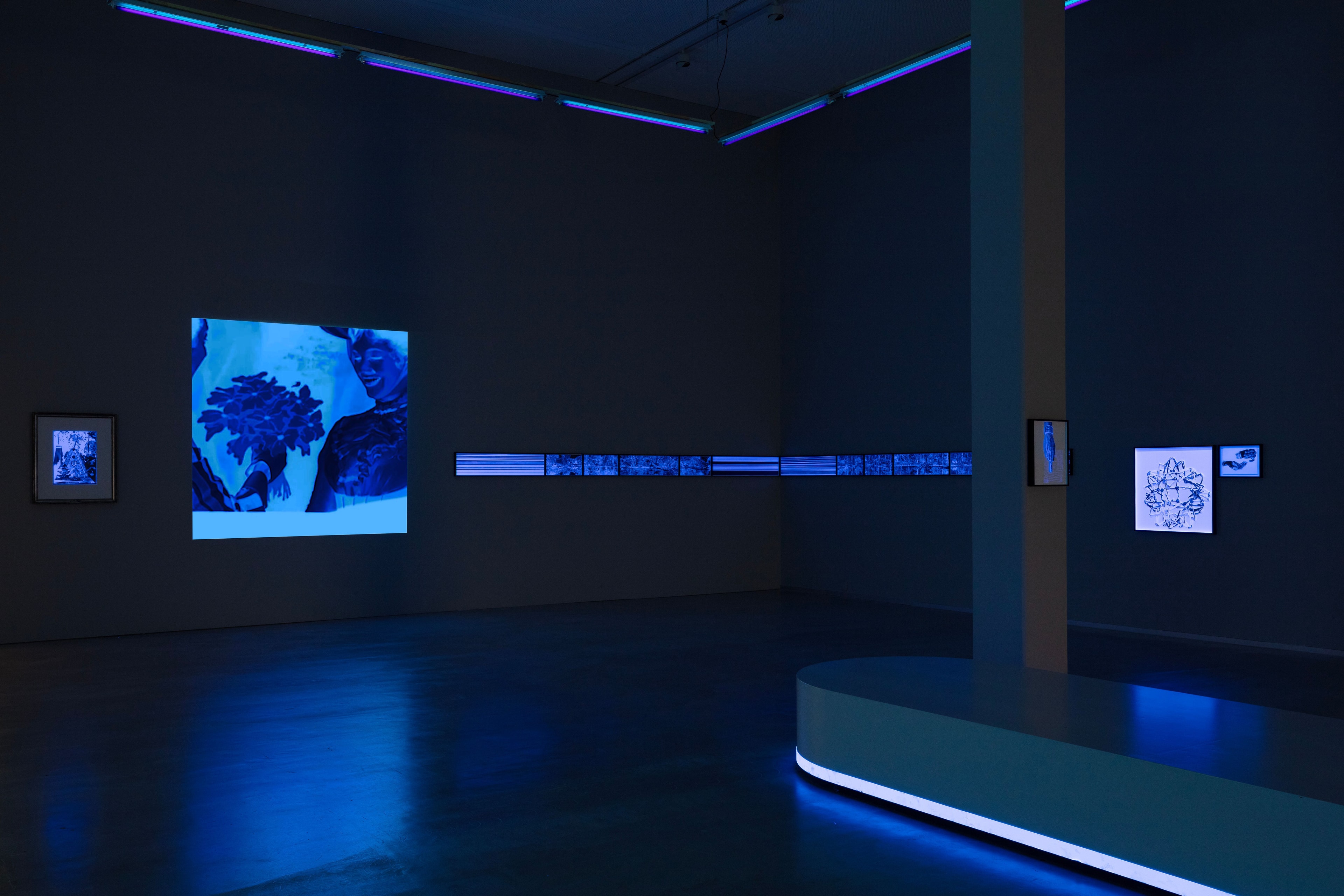
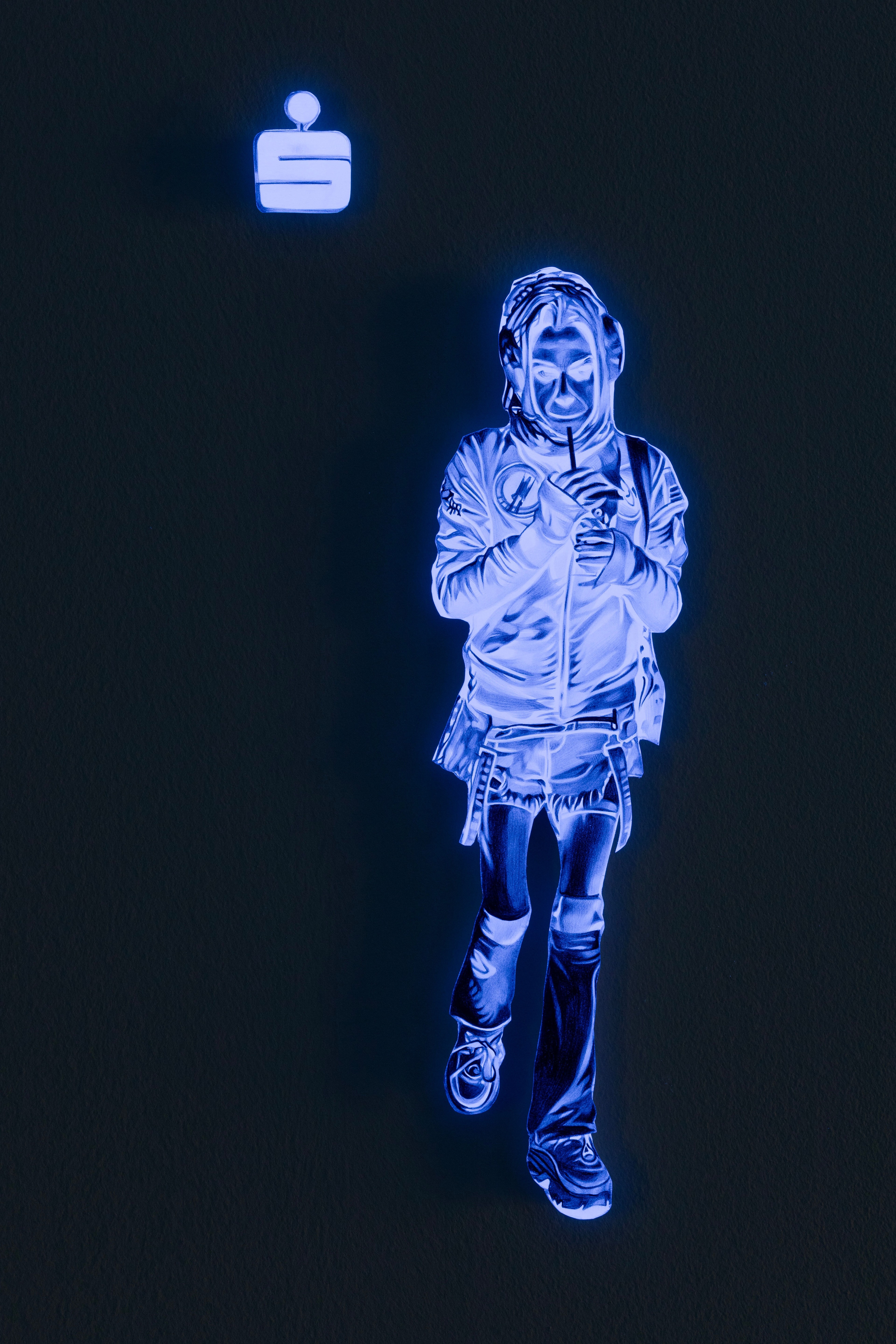
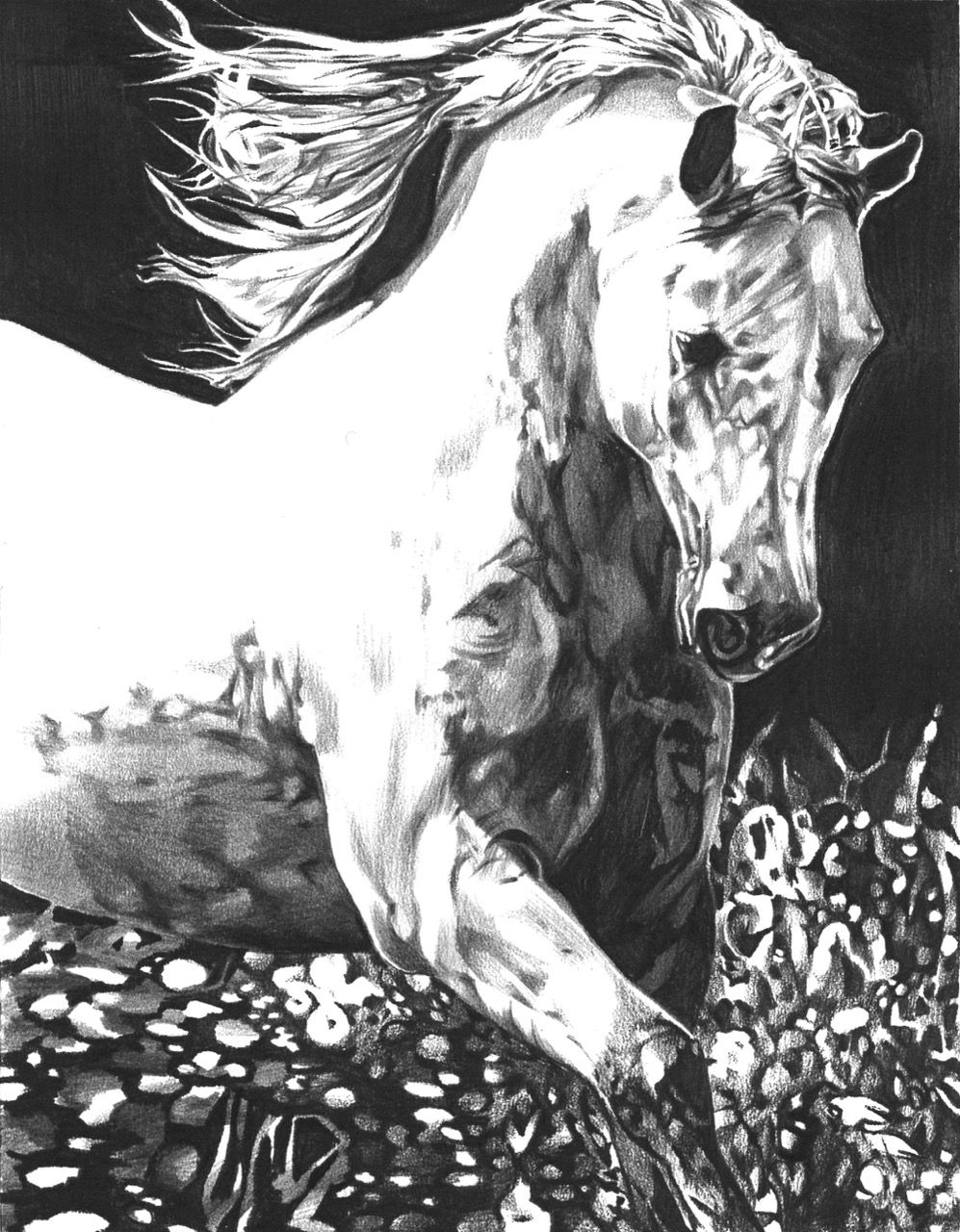
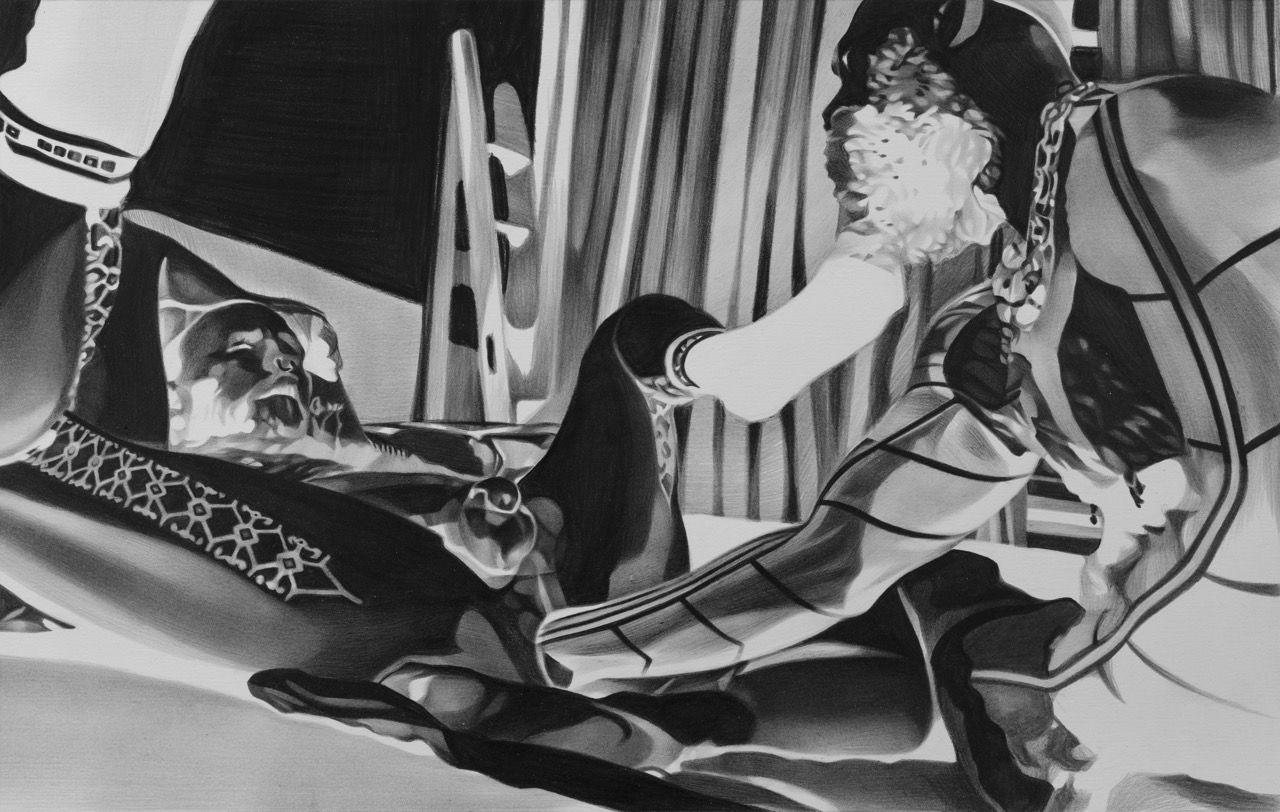
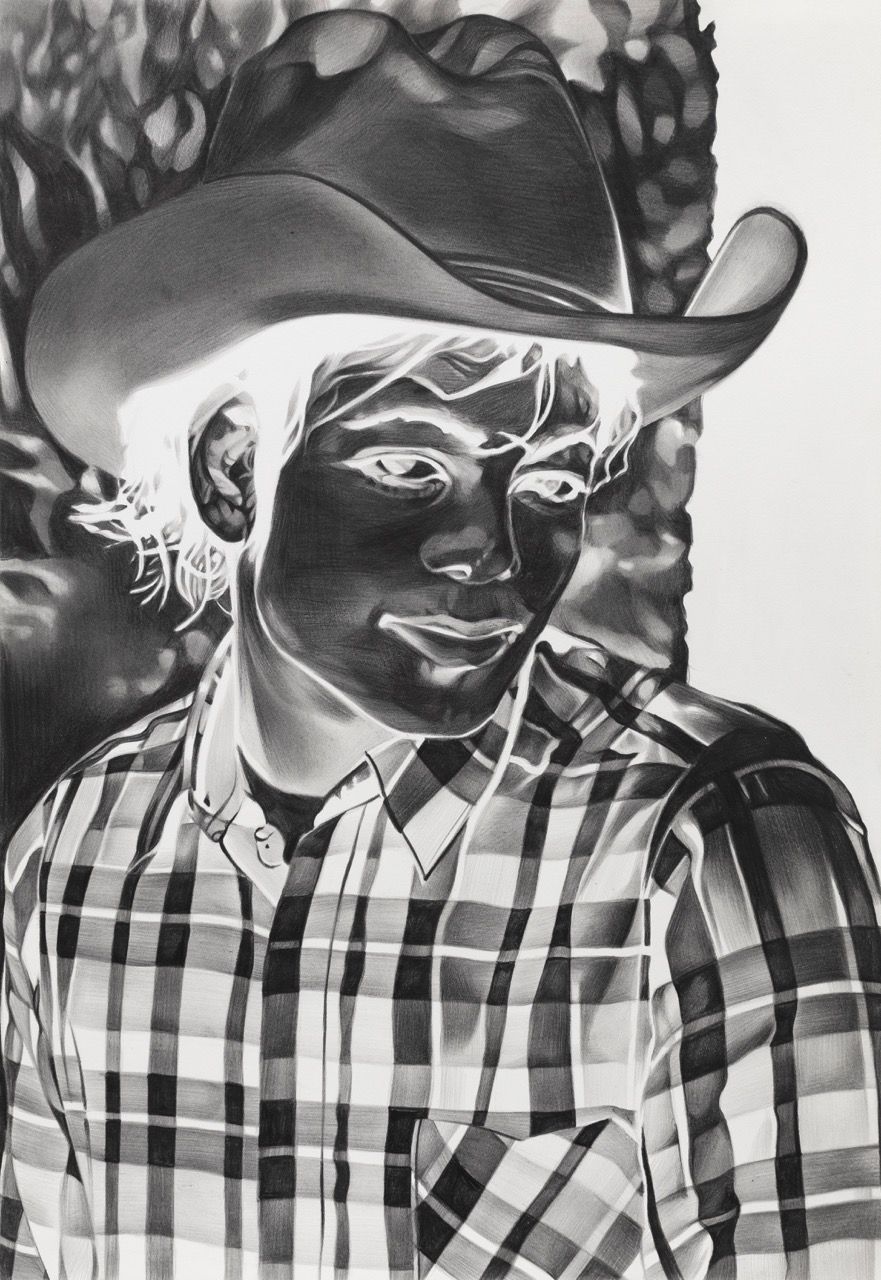
“20th Century Debris” encompasses 150 drawings and videos-turned-spectral gifs of the friends, lovers, passersby, rogue objects, and extant scenes that have crossed the West Berlin-born artist’s line of sight for the past four decades. It ventures from his early 1990s drawings, culled from advertisements, popular culture, and domestic scenes he photographed, through to the late 1990s, when he began reversing the positive images into negative drawings, and all the way to the 2000s-onwards, when the blacklight became his trademark way of presenting his works. “Debris,” in all that it encompasses, pictures a life—and way of seeing—from the margins of normality that is rarer with each passing day.
Phillip Pyle spoke with Marc Brandenburg around the opening of “20th Century Debris” about transforming reality through its translation, his choice not to identify as a photographer, and the gay mainstream as an allergen.
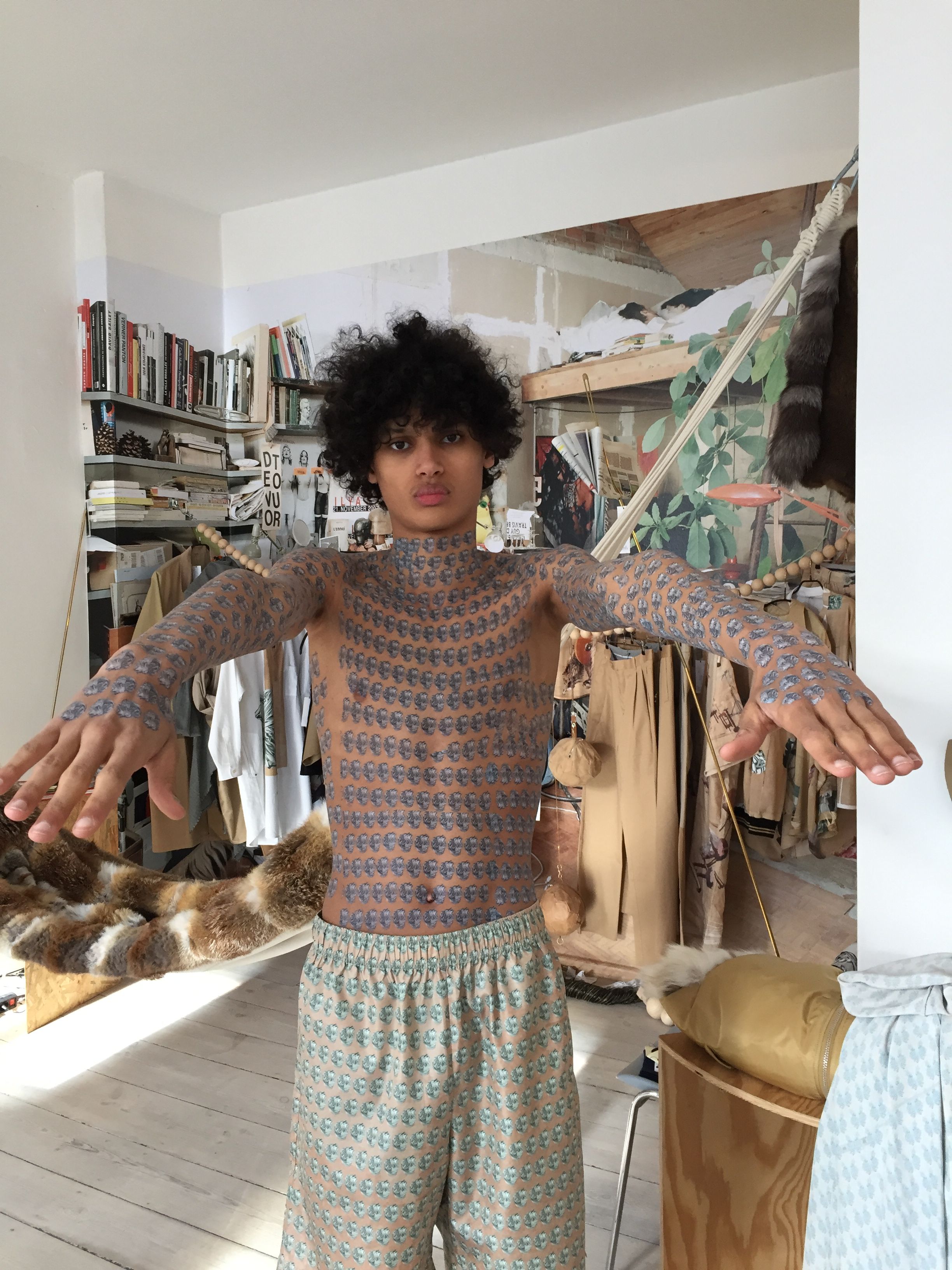
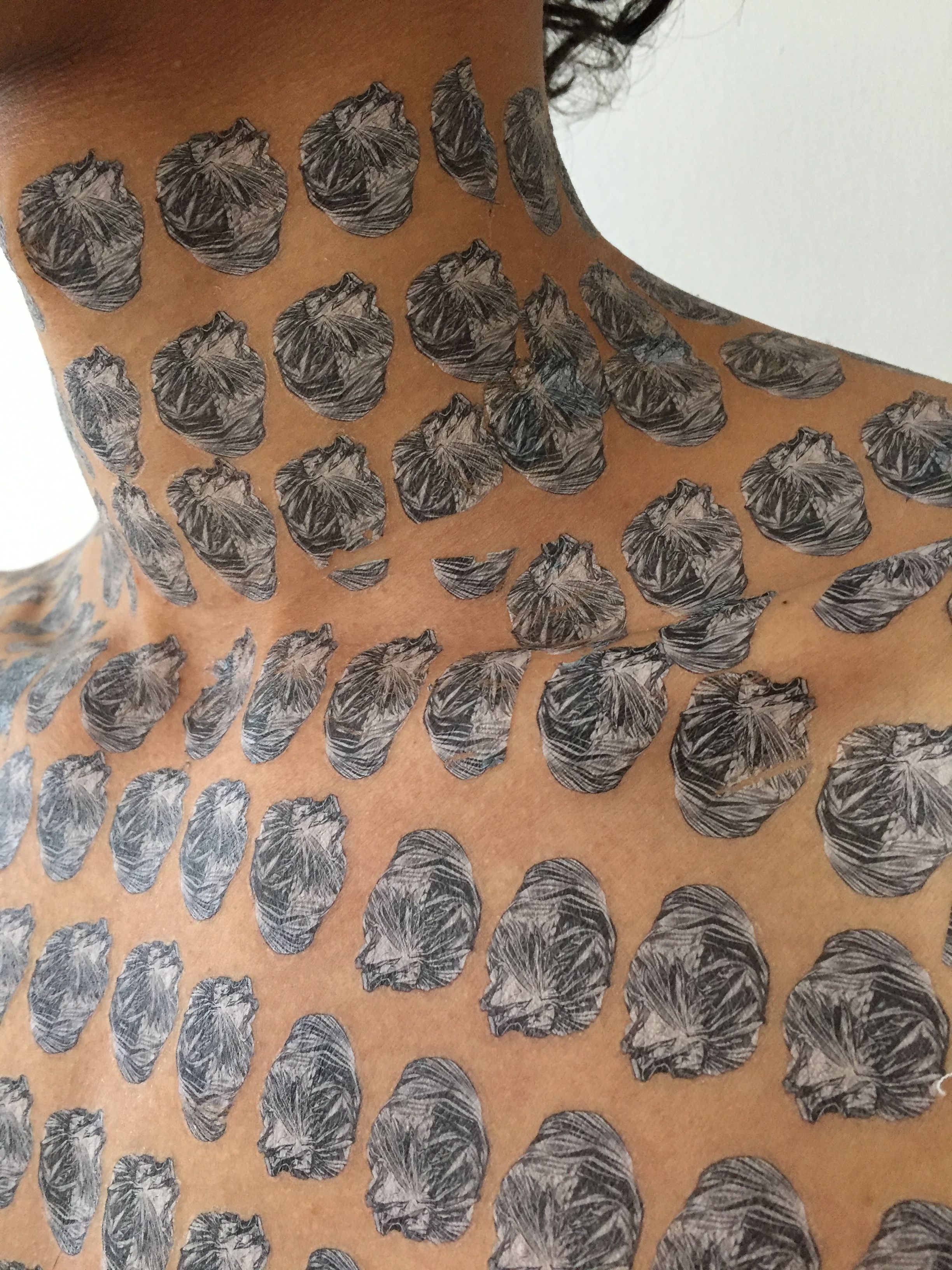
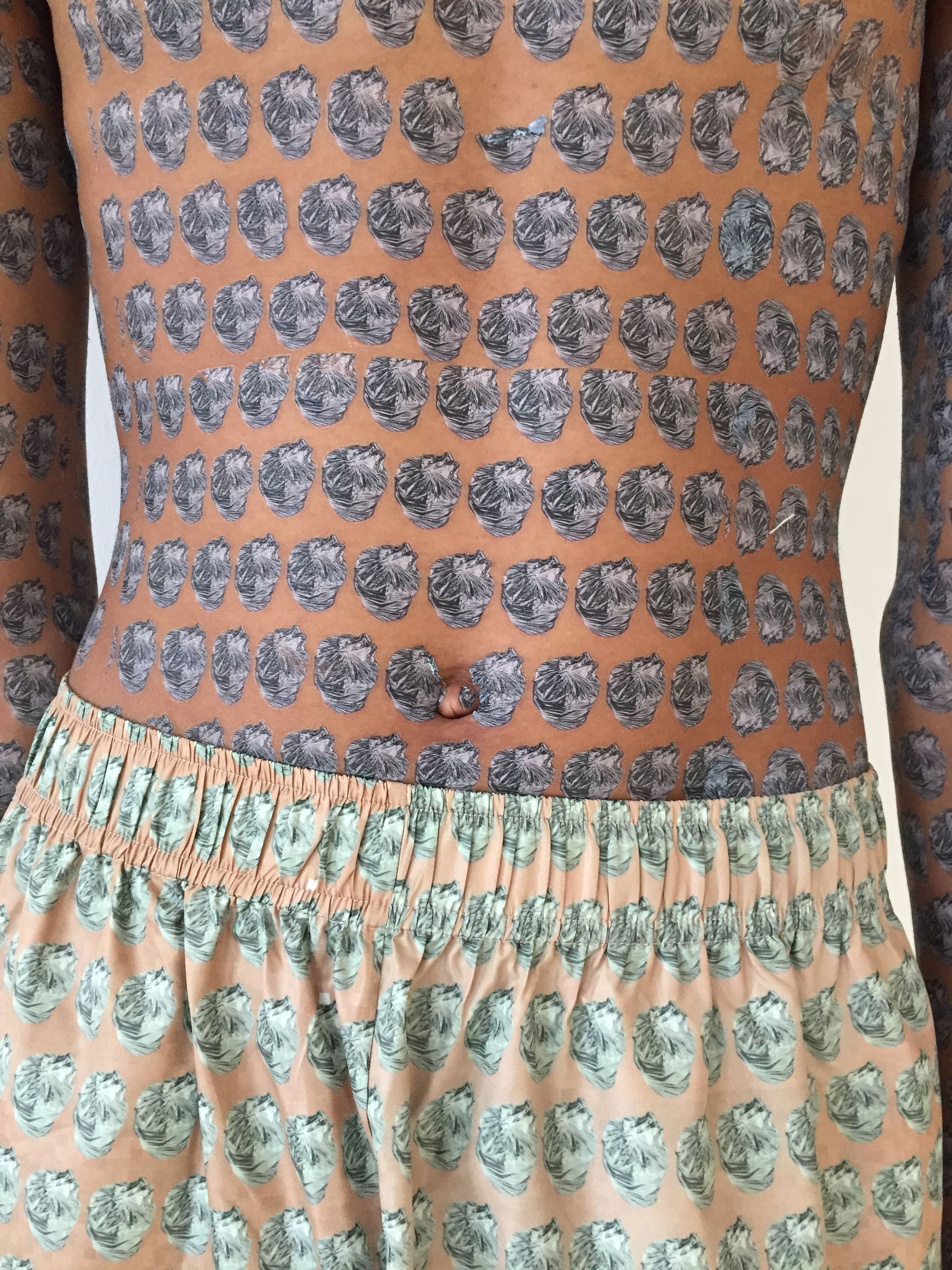
This Friday, June 26, Berlinische Galerie will host “Brandenboogie #1,” in which the artist will DJ within the exhibition space, soundtracking his drawings while simultaneously inviting audiences to apply his new edition of temporary tattoos to their own bodies.
Phillip Pyle: You had mentioned to me earlier that you’re interested in translating reality into something “more,” something political, or something magical. I’m curious what that process actually looks like for you.
Marc Brandenburg: I don’t know if I have a clear explanation because there’s always a part of the work process that’s mysterious. You can take multiple photos of the same object or situation from a slightly different perspective, and it becomes and transports a totally different message.
I’ll see something and it will trigger a physical reaction. It might take me back to the past. It is often only when I look back that I know the exact reason why I chose a certain object to depict. In choosing, its never only about just one image. I always have corresponding images in mind, a network of things and the way things work together that puts you in a certain state, or gets you in a certain mood. It’s almost like they’re all little puzzle pieces that, together, get the effect you want.
PP: If you see something that you want to, let’s say, invert then draw—or transform in some way—do you feel like you already know the finished product in your head, or that that transformation doesn’t come through until you actually do it?
MB: I do. There’s always a surprise when you invert something, but I’ve been doing this for so long that you get an idea of how something’s going to come across. If I see someone with pearly white teeth I know they will turn out black, and it’s going to have a totally different effect.
I have a huge archive of documented imagery that will sometimes just sit for years until it is brought to use and is turned into a drawing, then also transferred into temporary tattoos or stickers. The stickers are also the foundation for giant collages. So it’s never just the original drawing but creating a new original with the reproduction. I was never interested in making exact prints of my drawings, unless it is, for instance, a tattoo sheet that has an additional function: you can use it as something to decorate yourself, cut it up, and so on.
PP: Speaking of tattoos, when you were coming up and designing clothes, fashion was, then, often the most accessible way to signal subculture and political allegiance. I think in a lot of ways, the reverse has happened. Subculture has obviously been hollowed out in a lot of ways—
MB: I don’t even know what would be considered a true subculture nowadays, probably something on the dark web—
PP: —I mean, fashion used to signify subculture, but TikTok or whatever social media has made it to where people think they can access something by way of replicating what they see on your algorithm rather than actually belonging to a culture (that might not even exist anymore).
MB: The problem with easy access is that people do not do properly research anymore and that everyone is very impatient and wants all knowledge immediately. For instance, I’ve collected records for decades now, so I think that I know quite a lot about certain music and recording artists and their involvement with different productions. It stems from a time before the www. It’s different than just looking something up real quick.
PP: You’re quite adamant about not identifying as a photographer. Could you explain why that is?
MB: Maybe it’s out of respect for someone that is a photographer. I don’t know. For my work process photography is more a byproduct—well, it’s not a byproduct, it’s something more like a sketch. It’s not the end product.
I do admit, I think I’m actually quite good at taking photos. I think I have a good eye. For instance, when I worked with BLESS on the “Daycation” collection, I took pics for a photo shoot. And they could have been taken by a real photographer. I keep it all very simple, which is easy with an iPhone.
PP: How do you conceive of this end product at a time when photography is generally banal or a source of exhaustion for people?
MB: People take millions of photos, but then they don’t even look at them, sometimes not even while taking them. I have a different approach. I try to be very precise in what I capture.
I do think that the whole process of actually spending time with this one millisecond that you captured, and then turning it into a time-consuming drawing, gives it importance. Of course, it’s funny, because then you put it out in the world again, so in a way, you are still part of that whole image machine.
PP: There are a lot of negative connotations to our current image culture, but from an access or practice perspective, do you see any positives to, say, the iPhone camera or the general state of photography today?
MB: I don’t even know if I’m so dialed into all of that because I’m not on Instagram. I have an account, but I’ve never posted anything on Instagram.
Years ago, a friend of mine said, “oh, you really need an Instagram account.” At the beginning, it was more about, how do I start? What’s going to be the first image? And it just never happened. Then it got to a point where I thought, “okay, now everyone’s on Instagram,” and then I just couldn’t be bothered.
PP: It’s like LinkedIn for a lot of people.
MB: See, I don’t really take part. I don’t know if you’ve noticed, but I’m not really online. You can Google me and, of course, something will pop up, but I’m never involved. I don’t have this urge of constant visibility, to be everywhere at all times and to be seen. I rarely go to openings. I need my daily 80-percent of time alone.
PP: As the world is becoming more homogenized and everything is geared toward optimization, the subjects that you depict are becoming less and less common in society in a lot of ways—as with anyone who’s outside of the norm.
MB: I mean, I’m gay, biracial, and Black and I have always had more of a leaning towards counterculture. I do not consider myself within the mainstream of gay life. It is great that gay men can finally marry and all of that, but I never wanted to replicate the family. I’ve never had the urge to make babies or adopt children. I don’t need this validation, this straight lifestyle.
I have had trans friends that I hung out with since I was 14. That was always a normal thing for me. I was never really interested in gay men that function fully in mainstream society. That was not my crowd.
PP: There was this article that Wired ran recently about a how a lot of the tech oligarchs of Silicon Valley, including Sam Altman or Peter Thiel, openly foreground their identities as gay men—which I think shows the limit of allegiance when it comes to a certain use of identity politics.
MB: You had Quentin Crisp talking about that in the 1940s and 50s. They didn’t want him in the underground gay spaces, because he was a liability and too “out there.” And that’s always been around.
I just spoke to my friend Joey Arias, the NYC underground legend. He stood for the “A” in the “ABCs of Drag” on Rupaul’s Drag Race (2009-present). I’ve been friends with him for 40 years and he will be performing at my museum show in Berlin. We were talking the other day, and he said, “we’re going to celebrate you.” And I said to Joey, “No, we’re going to celebrate all of us.”
So many friends of mine are coming from all over. I thought it must have something to do with these times too. You don’t even know if we’re going to be around next year, basically. It’s terrible to say, but that’s how it feels with the state of the world at the moment.
Anyway, I do not want to be too gloomy. It’s exciting to see all my friends that I have known for decades, each with a different background—straight, gay, trans, old, young—come together and dance to Daniel Wang’s fantastic music.
The exhibition title, “20th Century Debris,” references the topics and the freedom that seems to be on the chopping block at the moment. Let’s hope we get through all this and continue to progress but neoliberalism is definetely not the solution.
PP: I have an unfortunate, almost constant nostaglia for that reason, and I know nostalgia is not a good politics to have. I’m not one of those people who necessarily wishes they were born at a different time—that’s obviously a cliche—but for me, that nostalgia has always been particularly in regard to identity. Nowadays, there seems to be less room for a range of persons or identities within a single identity category. When I think of gay identity, for instance, I align a lot more with my maybe delusional conception of it in, say, the 1970s, than how it exists now. Now, a lot of it [gay identity] revolves around a neoliberal conversation of whether you can adopt kids or whatever, but is not aligned with any kind of political struggle or alternative lifestyle.
MB: Yeah, sounds pretty shitty.
Credits
- Text: PHILLIP PYLE