Theater is Not Dead: Calla Henkel and Max Pitegoff’s New Theater Hollywood
|PHILLIP PYLE
As the arenas of contemporary art, film, literature, and criticism have been ransacked by ongoing global political and economic crises over the past few years, theater is the only medium that I haven’t heard proclaimed “dead.” Perhaps this is because theater, as both an ecosystem and a form, has already had to make peace with loss.
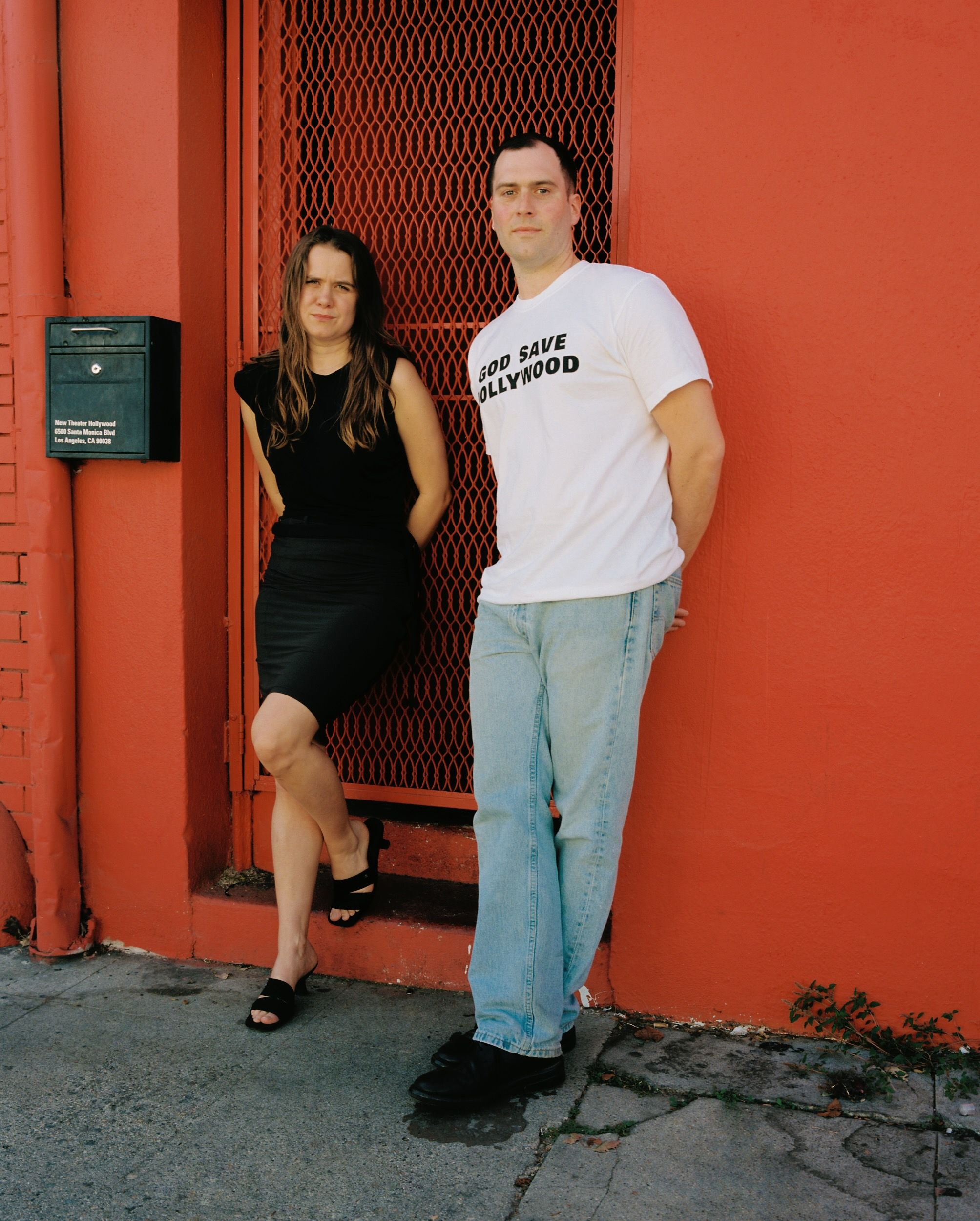
Calla Henkel and Max Pitegoff, the artists behind New Theater Hollywood, were already intimately familiar with loss as both a metaphor and hard, real estate reality well before vibes-based declarations of certain mediums’ “deaths” became casual fodder and the publication of Josh Kline’s buzzy essay, “New York Real Estate and the Ruin of American Art," in October earlier this year.
Having run multiple performance-oriented spaces in Berlin throughout the 2010s, including New Theater (2013-15) and Grüner Salon at Volksbühne (2017-18), the two entered the 2020s with one lingering question (to borrow the words of Henkel): “What would happen if we made one of our spaces open to the public, then privately used as a set?” In response to this query, they opened TV Bar, which, during its three-year tenure in Schöneberg, operated as a normal bar to the naked eye and as a set for a fictional, episodic film for the bartenders, artists’ friends, and a select few patrons who were in on the secret. The pair planned to end Paradise (2020-22), and its investigation of questions of labor, performance, and nested fictions, with the actual handing off of the bar to their employees, but the landlord decided to sell the building, thus ending the story with the bar’s closure instead.
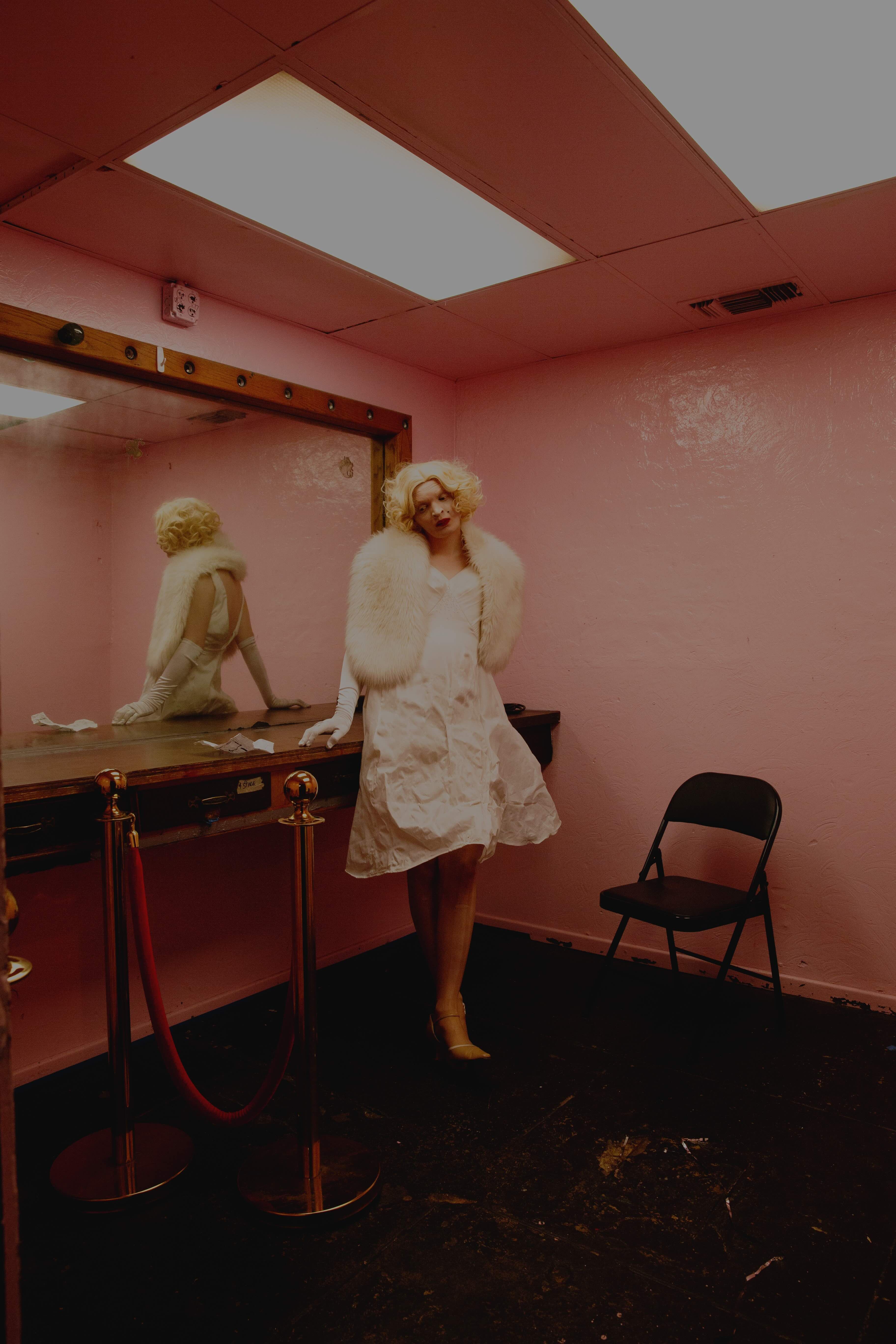
While loss was already trodden territory for them, it wasn’t until the now Los Angeles-based duo opened New Theater Hollywood on Sunset Boulevard in January 2024 that its two axes—as affect and material—began to cohere so deliberately in their practice. Operating out of a 49-seat blackbox theater that has been in use since the 1980s, New Theater stages new productions and acts as the set for THEATER (2023-25), an episodic film starring artist and filmmaker Leilah Weinraub as a fictional theater owner named Kennedy. Much like its predecessor Paradise, THEATER combines the scripted and real, interspersing Kennedy’s desire for connection and musings on the ghosts that she believes reside in the space with rehearsal footage from actual productions, which have featured actors, artists, musicians, and writers ranging from Kaia Gerber, Collier Schorr, and Elias Rønnenfelt to Diamond Stingily, Georgica Pettus, and Karl Holmqvist. Built on Henkel and Pitegoff’s experience and interest in dealing with the losses embedded in performance, and in the inherent fiction of any attempt at documentation, the film makes sense of the ghosts that perambulate New Theater’s surroundings, architecture, and the very art it houses.
During the last week of “The End of Theater,” Henkel and Pitegoff’s exhibition—which presented the entire sequence of THEATER, alongside two videos documenting rehearsals of their 2025 play, The End is New—at Isabella Bortolozzi in Berlin, I spoke with the two artists about the difference between theater in Berlin and LA, the fictions that come with the medium, and the transformation of the American Dream.
Phillip Pyle: Calla, I was rereading the piece that you wrote in Spike in 2024 about leaving Berlin for LA. At one point, you write, “I’ve learned you cannot escape yourself by moving… But we have found plenty of new questions as the proverbial bar for theater is very low in LA.” What are some of the immediate differences that you saw between theater in Berlin and LA? Do you still find yourselves frustrated by this proverbial bar?
Calla Henkel: I think that the bar being low is the best thing that ever happened to us. In Berlin, there are a lot of ideas about what theater is supposed to be. It is an extremely socially embedded form. In that way it’s politically active, I think everyone feels a relationship to theater—which is so far from how it is in America, and particularly in Los Angeles.
There are no preconceived notions of what needs to be happening, and there’s an absolute excitement and openness to it that I think, for us, has been really helpful in making the project move quickly in a way that we couldn’t have in Berlin.
Max Pitegoff: In the US, theater is so commercialized. There’s Broadway, and in LA, it’s so connected to the [entertainment] industry, so anything that’s below the bar of high-level entertainment has a kind of freedom.
CH: That has enabled us to create a language with a group of people here in a short period of time. It is always easier to develop something new in a space where there’s an openness..
And also, it’s a city where everyone is an actor, a writer, a director, and because of the current collapse of the studio system, there is all this unharnessed energy. We opened the theater just after the strike. Projects aren’t getting made at the same rate they were—and that unsettled energy is able to get channeled into theater and these alternative pieces.
PP: New Theater Hollywood has the title “theater” but appears to operate more like a performance space in terms of the programming. Was there something about the form of theater, specifically, that interested you?
MP: We’re actually pretty strict about actually putting on theater. We work with so many people who haven’t necessarily worked in theater or performance, so we decided it was important to make that a clear boundary.
CH: We see theater as a structural challenge. We ask people to meet us in the middle. We were so turned on by this space on Santa Monica Boulevard because it’s been a theater since the 80s, so it provided that innate invitation to the audience: everyone knows how to behave when you walk into a theater. It’s the opposite of going into a performance at a museum or a gallery where you’re like, “oh god, I just want to leave,” or don’t know if you’re supposed to sit or not.
Theater as a hierarchy and a structure creates extreme focus, and that’s really important to how we think about performance. We don’t do comedy, we don’t do stand-up. We don’t do things that you can do in any other theater, or any other bar in the city. We tell every single person that we work with, “We’re actually going to make a play. We’re going to sit, we’re going to do table reads and we’re going to figure out the questions together.” We just did that with Sophie Becker, who’s never made a play before. We brought in the director Jos Howard Demme, who has a relationship to theater, and then we’re all able to move towards a new form together.
The artists who come in here have to take the tools of theater and think, “how are we going to work this?” With someone like Leilah Weinraub, who is an amazing director and performer but who had never worked on a theater piece, she is essentially being asked to realign her entire practice. It’s our work to sit together and figure out how to pull that off. She brought in the brilliant Mykki Blanco to write, she starred in the piece, and it was unlike anything any of us had ever made or seen. That is when the theater works, when it brings together these combinations of people to look at the form and think about how they can use it.
And Max and I also don’t come from this theater with a capital “T” background, so theater is also a challenge in our work.
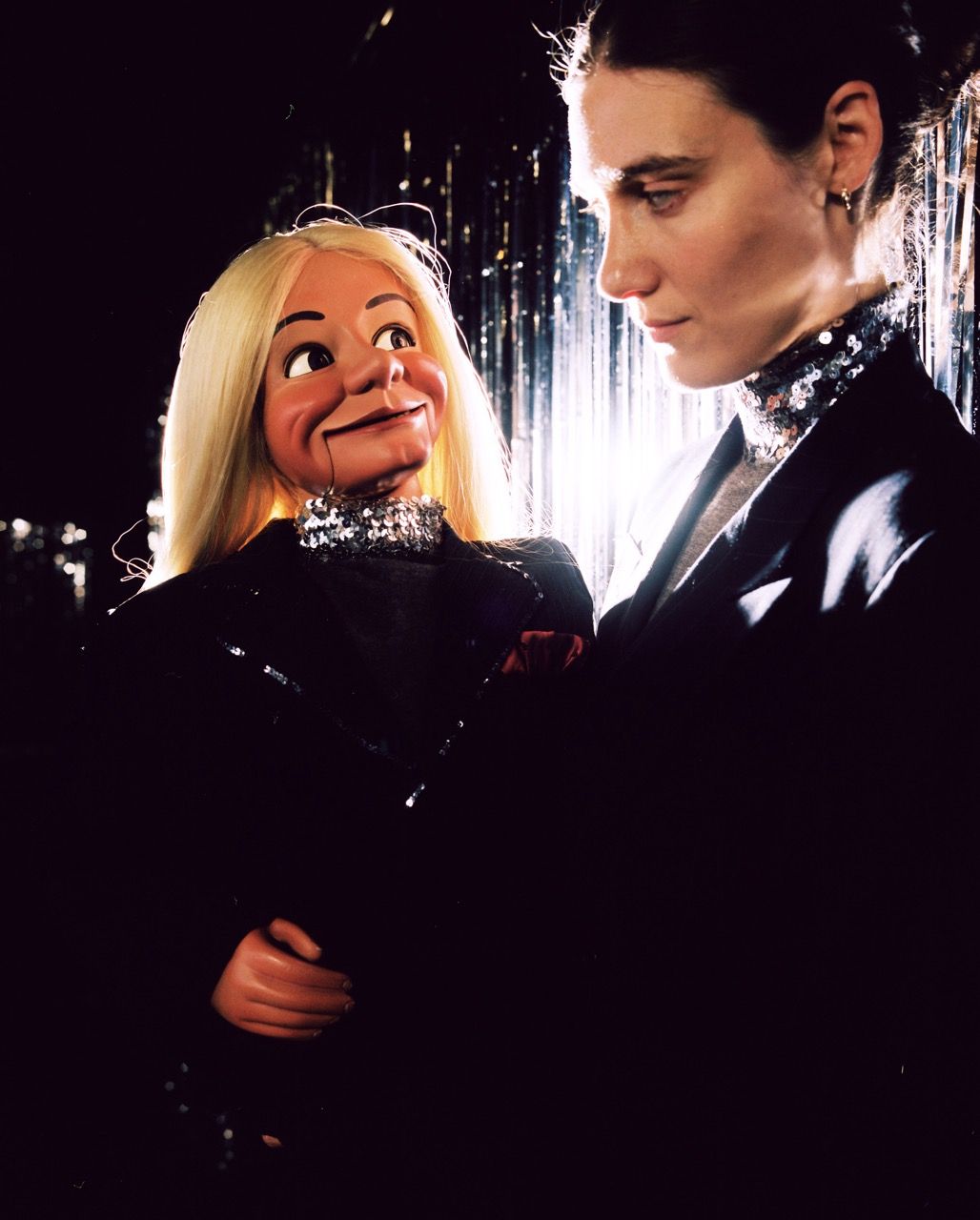
PP: You mentioned this in terms of the entertainment industry collapse in LA, but the diversity of other practices that people are bringing into New Theater—like Colin Self, Diamond Stingily, or Karl Holmqvist, who are coming from visual art or music backgrounds rather than, say, film—seems to represent a general paradigm shift toward theater right now.
MP: It’s one of the only places where there is absolute focus, both as the artist and as the audience. The audience meets the artist’s level of focus in the theater in a way that isn’t true of any other form.
CH: I hate saying it because it feels so base, but you literally can’t take your phone out. Even in the movie theater, people take their phones out, but you really can’t do it in a 50-person theater. You have to be present. We’re all extremely hungry to be present together, to be transformed. Theater, even when it’s not something you love, is transformative.
We were talking about the studio system collapsing, but I also think the art world has collapsed in a lot of ways, alongside attention spans. It’s really hard to go look at work and give it the amount of time it’s asking for.
Theater is demanding, but it’s also so rewarding. Two weeks ago, every single person in Los Angeles said to me, “Quentin Tarantino is writing a play.” As if it was some sort of great tipping point. I was like, “That’s great.” It was always followed with this sentiment about how jaded we are by screens, like, “now, if you blow up a house in a movie, everyone knows it’s CGI. But if you blow up a house on stage, everyone’s going to scream.” Theater is the last frontier of reality.
It’s funny, we went to see Paranormal Activity, the play—
MP: It started in London, then came to the Ahmanson, one of LA’s biggest theaters. It was packed full of people, and we overheard several of them saying they had never been to the theater before.
CH: People were screaming. It was like being at the Colosseum in Rome, and no one had their phones out. It was like, oh, we’ve entered into this other thing that’s also about bigness. Like, in the idea of the exploding house, this question of “how are we going to feel these things in a narrative space at a huge scale with other people?”
Theater is really exciting because it can do both: it can enlarge and be fantastical but it can also be poetic and small and just as moving,and these different levels can come together at really interesting points and can also separate.
That’s the fun part about being in Los Angeles and making theater: the lack of shame. Maybe that’s what we should have said earlier—it’s not about the bar being low, there’s also a shamelessness to it. Everyone wants to be famous here. No one says no to performing. I think everyone in Berlin would be like, “What does it mean?” But people here are like, “Let’s go, let’s try it.” There’s this instant desire for activation here, which is like what I said about speed. The projects work so much faster because people are so excited, borderline desperate, to do the thing they’ve spent their entire lives trying to get here—to this place in time, in Hollywood—to do.
MP: People here are so skilled.
CH: And so underused. It’s an interesting cross-section of shamelessness, skill, and this basedesire to be seen, in a kind of beautiful and simple way.
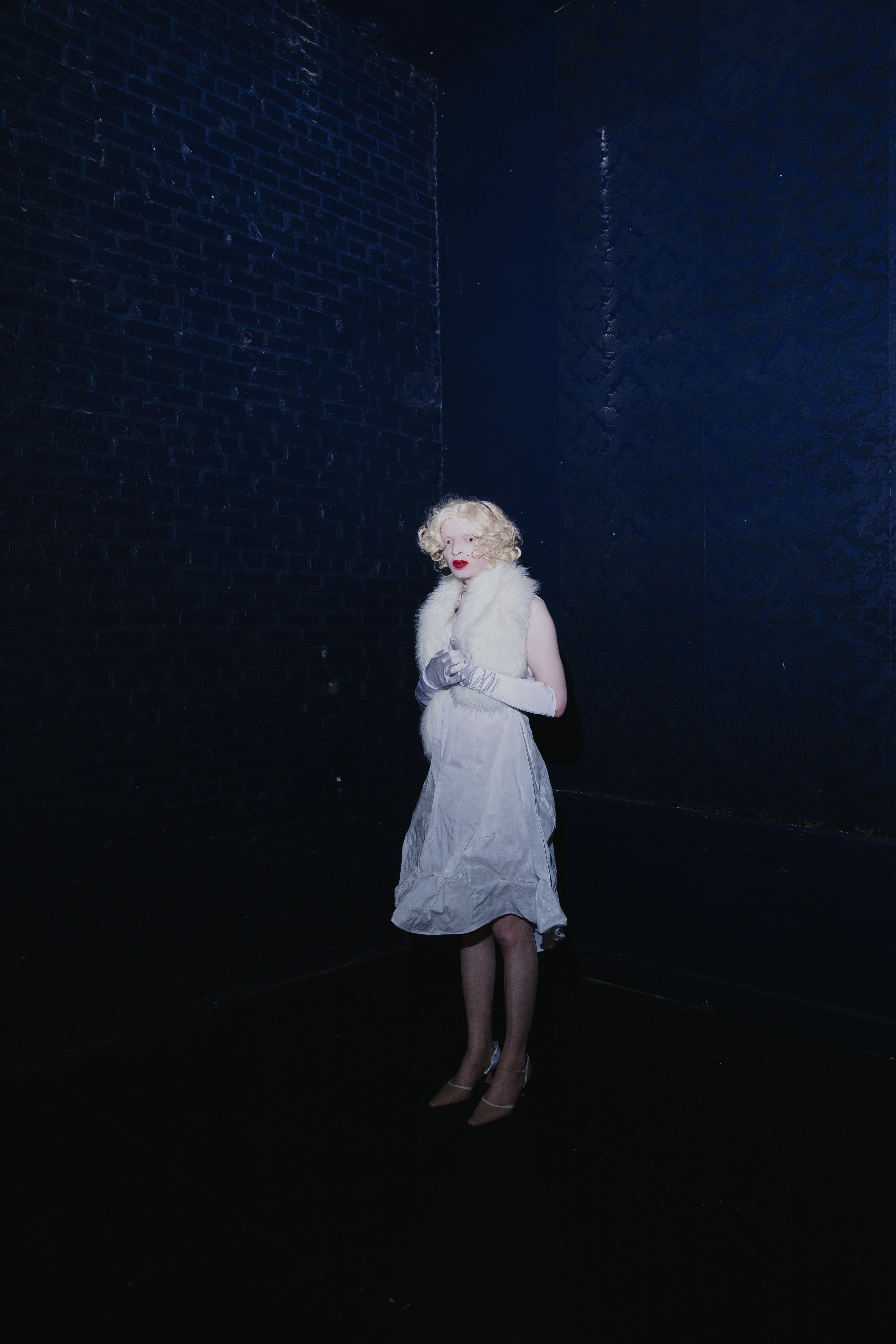
PP: Something I was struck by in “The End of THEATER” at Isabella Bortolozzi is that you portray theater as having its own sense of loss unique to it as a medium—and it’s also unique to the space that you operate within because it was formerly a different theater. Could you talk more about this idea of loss being inherent to theater or performance?
MP: We love documentation of theater because it completely disappears otherwise.
CH: Max and I went to school as photographers and started working together doing a photo blog when we were teenagers. We were obsessed with this idea of what is lost after a performance. I think all of our work has been this meditation on the grief of making a performance and losing it, which is arguably universal. That is what it means to live and lose, wanting to hold onto something, and the absolute impossibility of that.
Really good theater allows itself to be released every night. You get to be there, and if you were there, you were there, and you have it. And there is no way to export it. That’s part of the reason theater is having its moment right now. We want to live in a present that is non-exportable, that is only for us and us together. But within that larger question, grief is the compass Max and I have always returned to within our work.
With the film THEATER, we knew we would be producing all these pieces one after another, and we knew that we couldn’t film the plays—there’s nothing worse than a film of a play—so we had this question of, what is the thing itself? For us, it’s rehearsal. So that became us documenting just a few seconds of rehearsal and extracting from these pieces. Then we built a narrative around it, and the film became the document—because nothing will ever be the thing itself. There’s no hope in making a proper form of performance documentation.
MP: And the film comes from all of the years running spaces in Berlin, where we played with different forms of not-documenting or not-taking photos. Or working at the Volksbühne, we tried to document everything, which was also a failure. So this is our way, after all those experiences, of figuring out how we want to remember something.
CH: And letting grief lead. It’s sort of like what happens after a really intense breakup, where you tell yourself a story of what happened.
MP: And that then becomes the story.
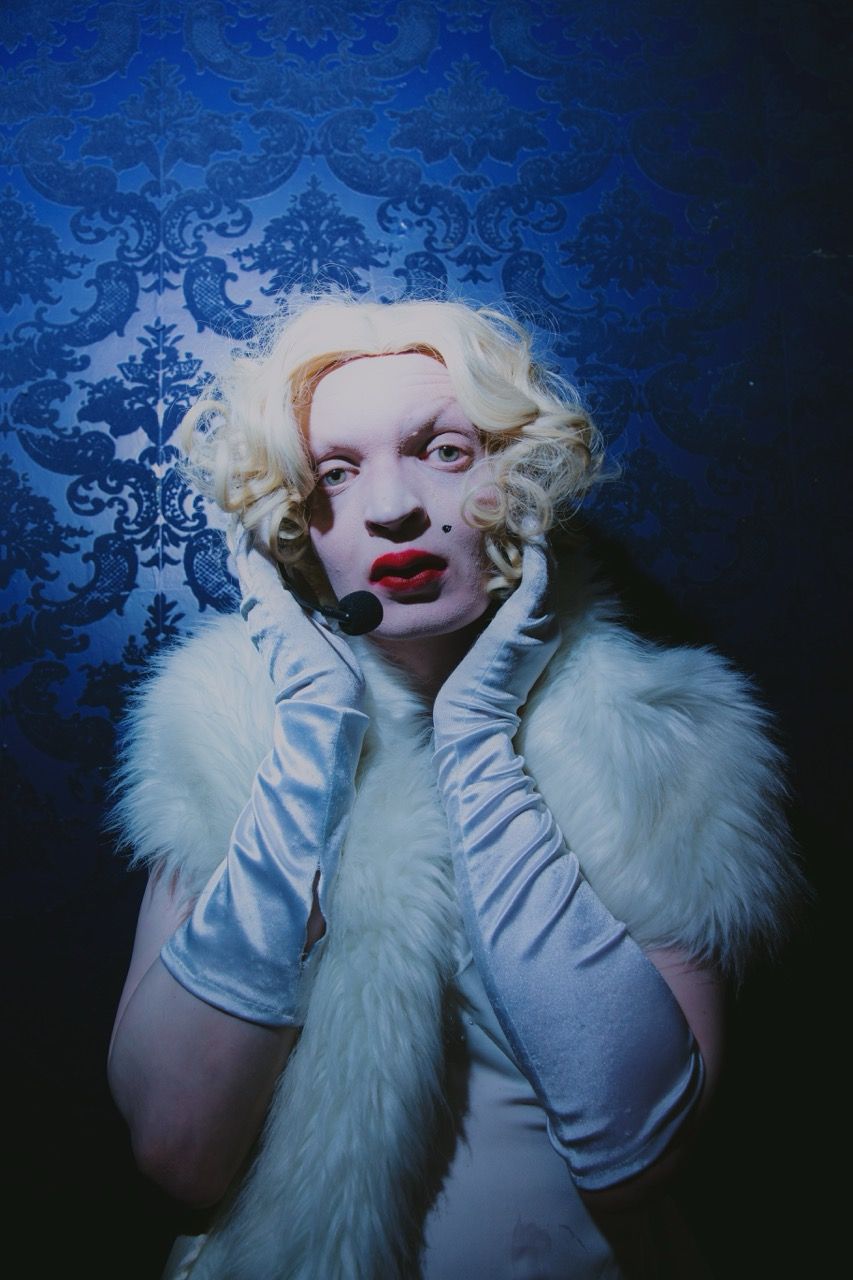
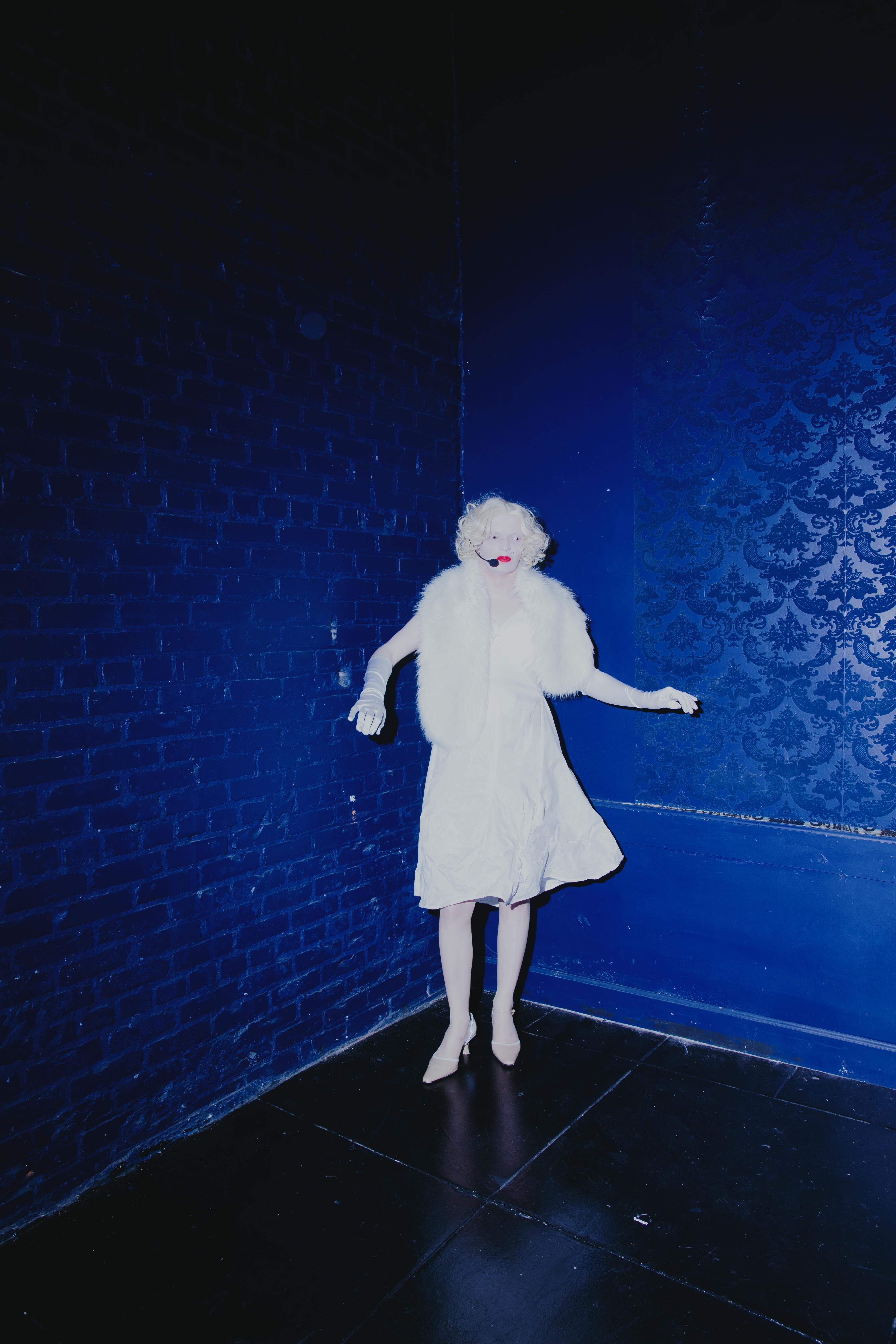
PP: The theater originated as an idea for a fictional film about two artists making a theater. Do you find that your ideas often originate from a lens-based angle?
MP: The act of filmmaking has become central for us over the past few years. And we even opened TV Bar in Berlin knowing that we’d make a film there as well.
CH: We opened TV Bar after being at Volksbühne, when we were like, “we’ll never make theater again.” We almost thought that we would stop working together, but we realized that we had one more question: What would happen if we made one of our spaces open to the public, then privately used as a set? It was a response to a post-theater moment, and that was definitely a lens-based pull.
I think our pieces get to live in people without people knowing that it’s our work or having to care. If you came into TV Bar, you did not need to know it was the set for a film. You could just get a beer, hang out with your friends, and leave.
We really like our work to be grounded in reality, and we get to respond to that reality in what we make. The film Paradise, which was set at TV Bar, followed this fictional group of bartenders who had an absent boss, who then had to deal with the realities of a workplace that was falling apart. We got to deal with our own questions—and of the city and the people working there—making that film over three years.
With New Theater, we thought maybe we don’t need to run the space, maybe we can just make the film. We were not intending on opening a theater, then we stumbled on this place and were like, “Oh, we’re going to make a theater here.” There was no choice. He [the landlord] also sort of threatened us and said that it was going to become a hair salon if we didn’t take it [laughter].
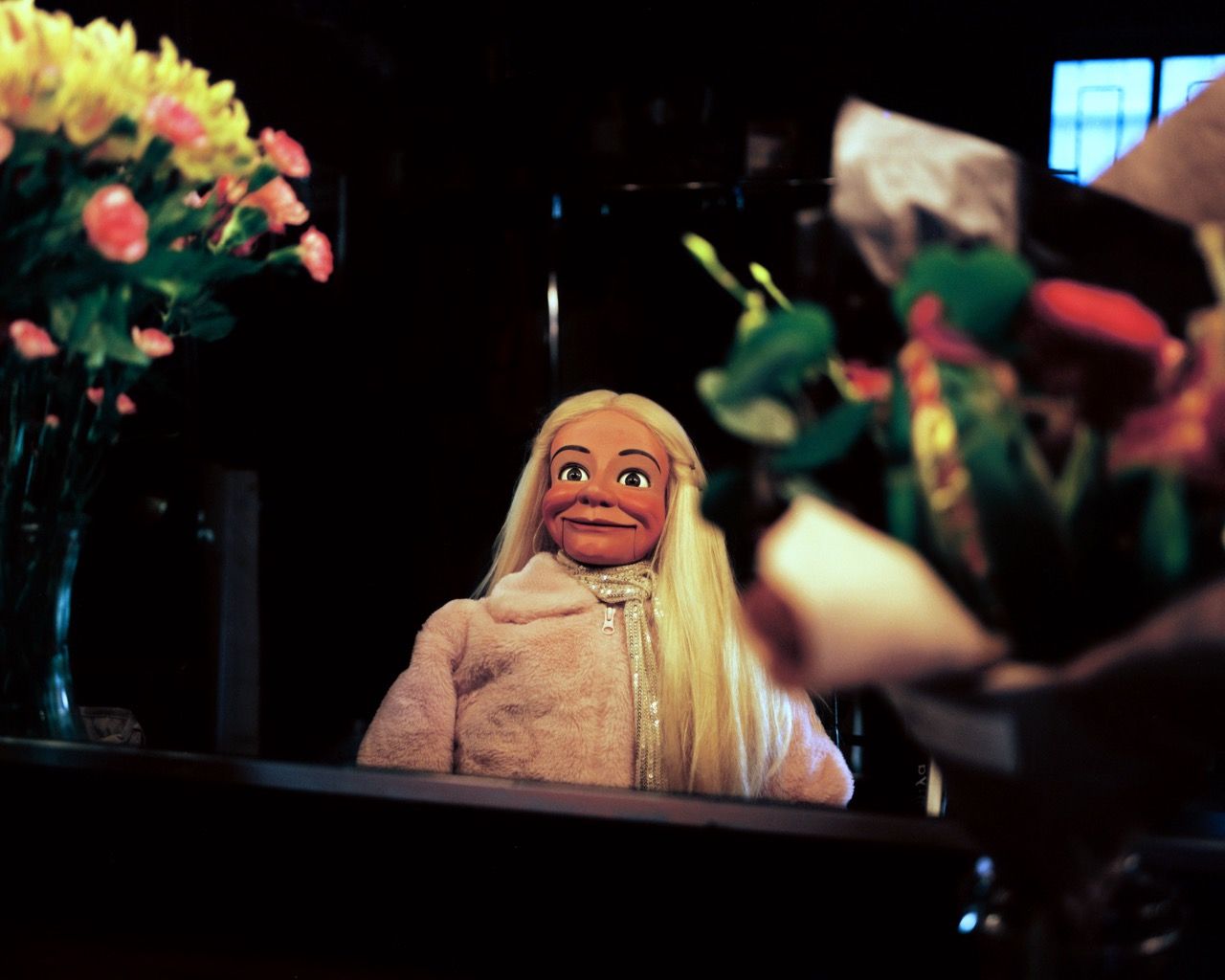
PP: There are all these subjects who are simultaneously involved in the reality of the theater and in the fictional context of the film, but there are also real-world events happening, like the Los Angeles fires, that enter into the film. In the process of making the film, how did you negotiate these variables that weren’t initially accounted for, these events that were happening outside of the theater space?
MP: These outside events definitely influenced the process of making the film. We started filming when the strikes were happening in Hollywood. Part of the development of the piece was thinking through how we document strikes and how we respond to that through the film.
CH: And through the theater as this site of alternative production. We like to weave in the things that we feel personally within the space along with what happens outside; like the fires, which we could see from the theater. For us, the things that show up are the things that show up. We can’t control them, we just have to narratively figure out how to fold them in.
With Paradise, for instance, we wanted to give the bar to our actual employees, which would also happen in the film. But then the bar was sold, and we were not able to continue [with the plan], which ended up being the ending to the film.
We let reality dictate the bends in the narrative, but letting that happen lightly, and with an open hand is the challenge for us.
PP: One of the strongest realities that I can sense in your programming is the death of the California Dream in the last decade, and particularly in the last year, with the monopolization of streaming. When you were opening the theater, did you have this death of the quintessential LA image in mind?
MP: Definitely. We knew that the studio system was changing very quickly.
CH: There was a need for something else, and we had a lot of conversations with people. That’s how we start every space. You have to be like, “Is this interesting? Would you want to work on this?” And there was such a desire for something else.
I think it’s actually the death of the American Dream. It’s more general. And that’s what’s so interesting about California as a metaphor. It’s the West, it’s this place where the sun sets, where all of these American desires live.
And what America has been really good at is exporting images. This town has been the biggest exporter, and watching its collapse has been very extreme. Everyone who’s inside of it knows that they’re at the center of this transformation. All of the people involved in the California Gothic bus tour, which we’ve worked on for the last year and a half, think about what Hollywood is and can be. I don’t think it’s dead, I think it’s just radically changing. We have to face what is here to be able to accept that change. Theater is a great place to do that because it is meditative.
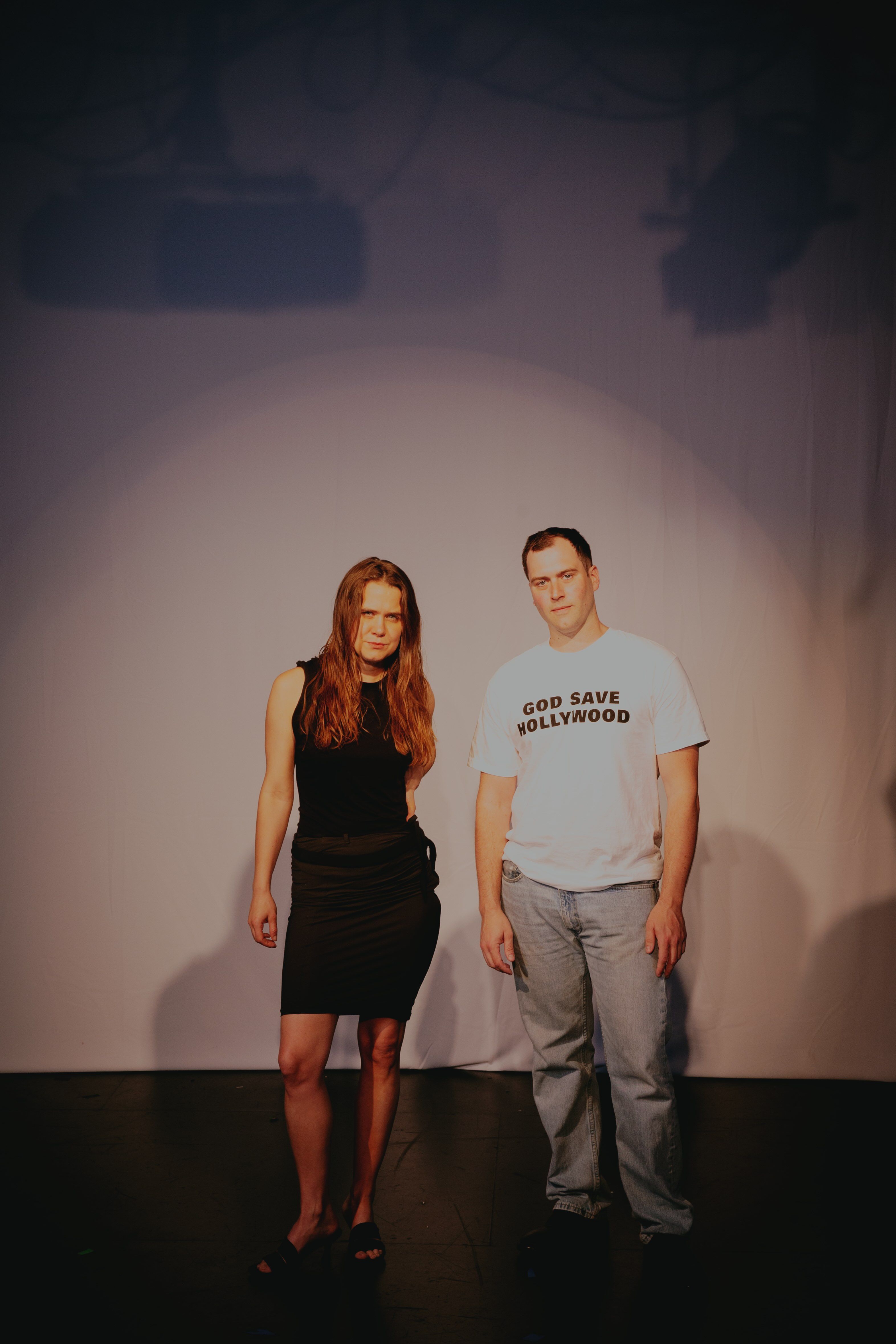
Credits
- Text: PHILLIP PYLE
- Photography: MORGANNE BOULDEN