Tadashi Kawamata Talks With Nature
|LUNA SFERDIANU
Contemporary living is marred by accumulation, expansion, and impermanence. Artist Tadashi Kawamata reminds us these forces play out in the architecture that surrounds us.
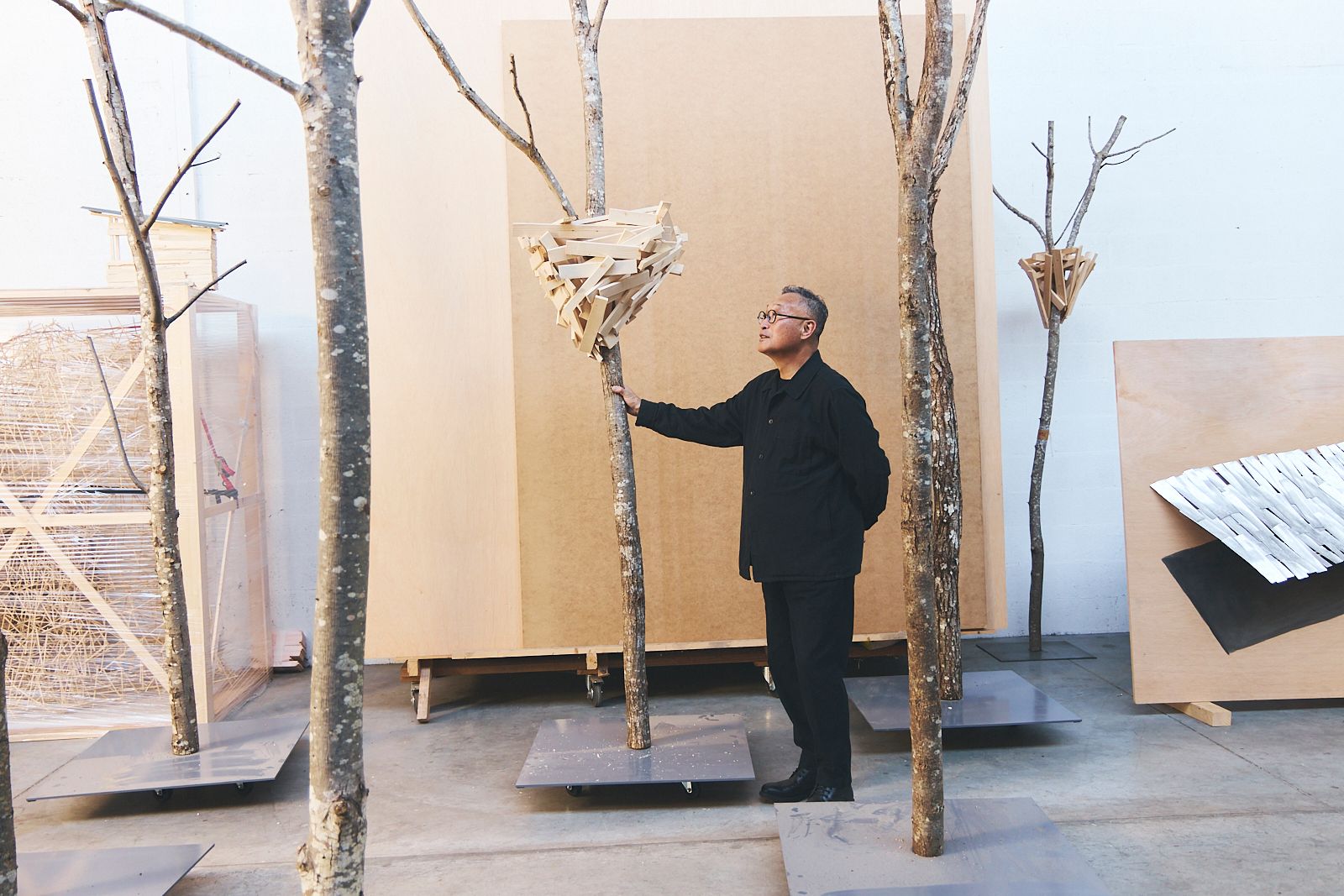
Born, raised, and trained in Japan, the artist’s in-situ installations have been spawning around the world for almost half a century. From early on in his childhood, Kawamata was struck by the ephemerality of our natural and social surroundings. Eventually, this resulted in the sporadic and transitory forms for which he is known today. Assembled from planks, barrels, and chairs, his installations—while occasionally monumental in size— are less about grandeur than they are an attempt to find a visual and scalar language in harmony with with the world they reside in.
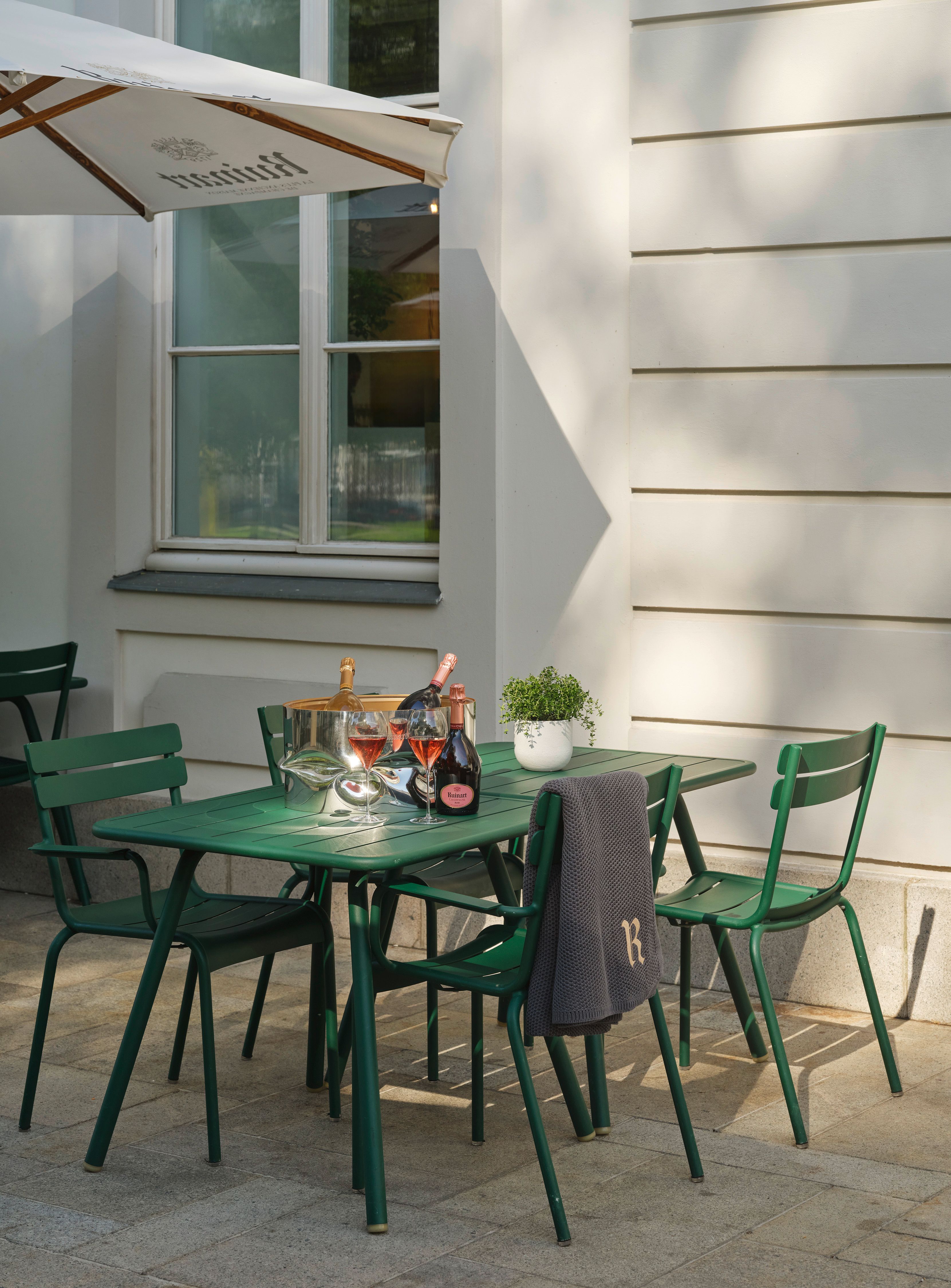
In his recent commission for Conversations with Nature, Ruinart’s artistic program highlighting biodiversity and sustainability, Kawamata does not stray from this worldview. Converging his ethos with the sensitivity champagne makers have been mastering for years, he revealed an exclusive work at Ruinart’s Champagne & Art Bar at PalaisPopulaire during this year's Berlin Gallery Weekend.
In light of the collaboration, the artist distilled the process of his craft in an interview with Luna Sferdianu, where the two talked about what precedes and what follows an installation.
Luna Sferdianu: Your art addresses a certain ephemerality. How do you relate your art to our zeitgeist of impermanence?
Tadashi Kawamata: My work, with its focus on ephemeral structures and natural materials, inherently speaks to the impermanence that pervades both the natural world and human experience. Just as my installations are designed to evolve and transform with time and the elements, moral and immaterial concepts also shift and change.
By highlighting the fragility and transitory nature of physical structures, I hope to invite contemplation on the broader impermanence we experience in our lives and societal values. Nothing is fixed, and this constant flux is a fundamental aspect of existence, whether material or immaterial.
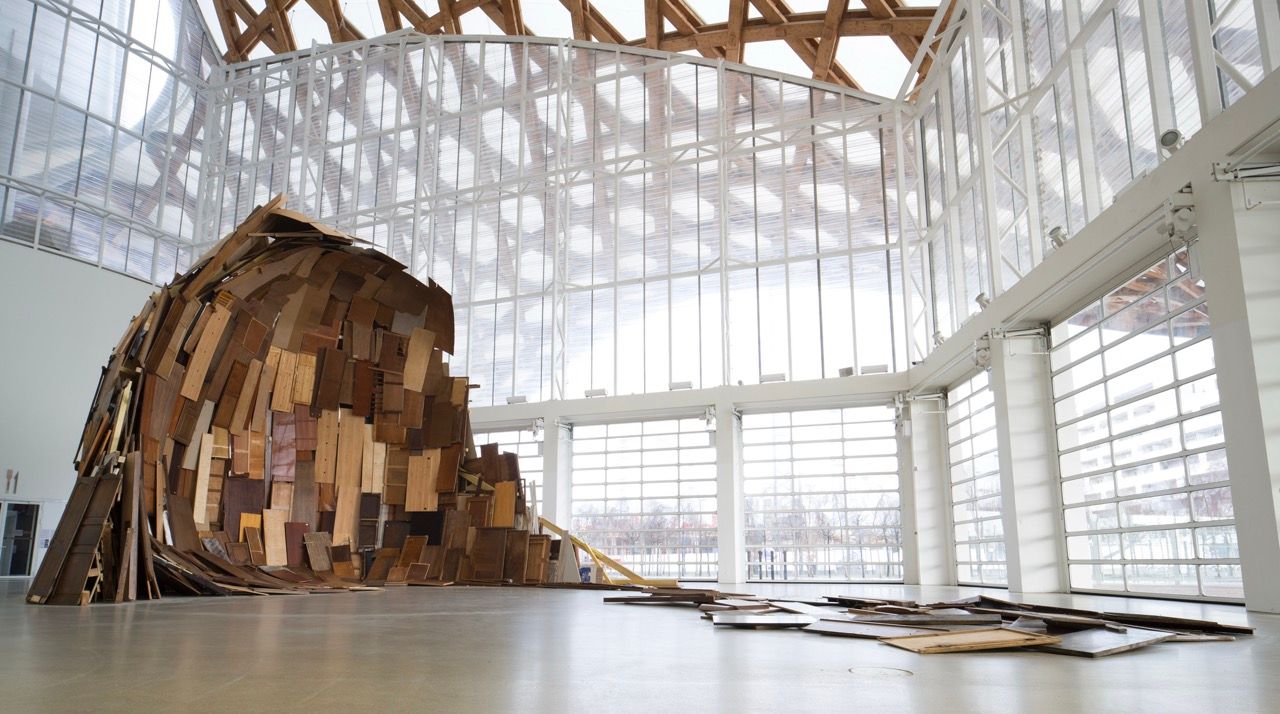
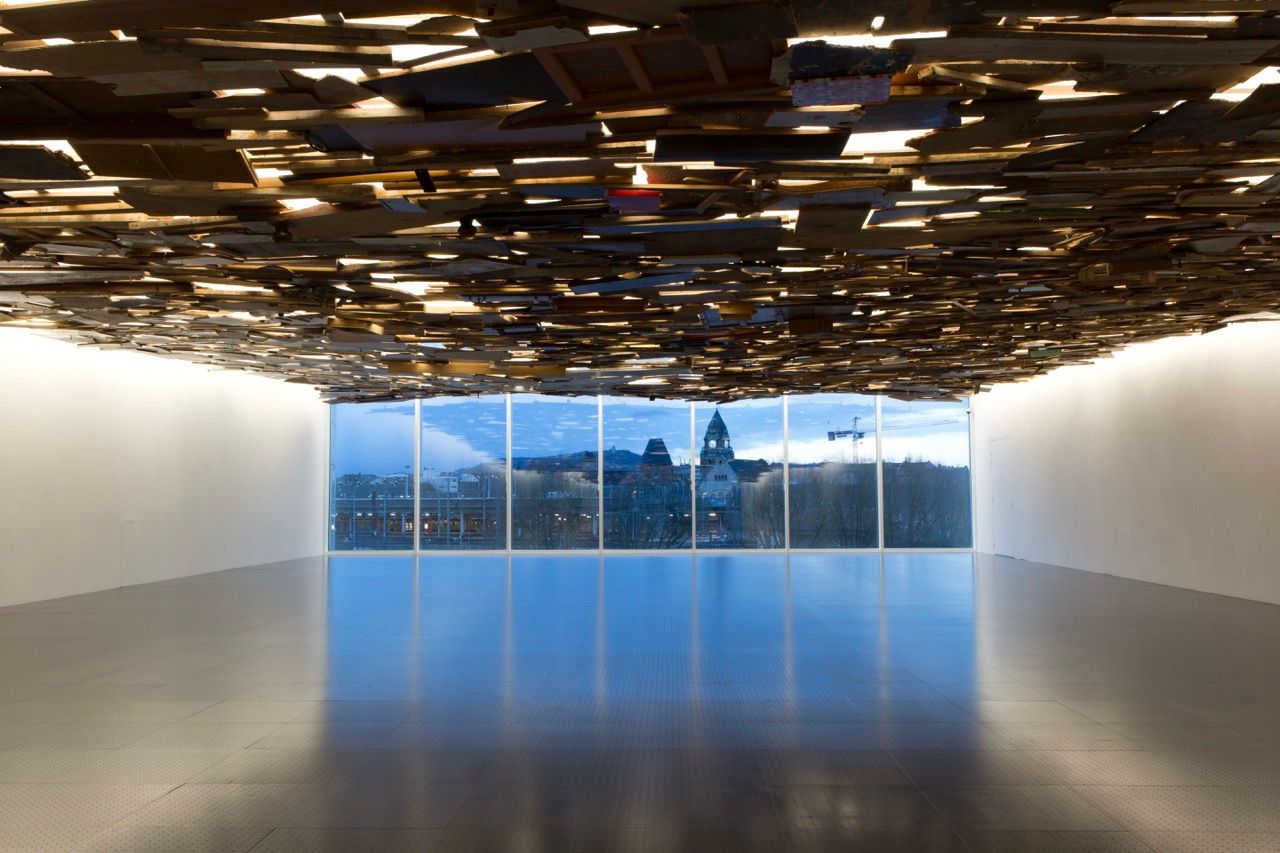
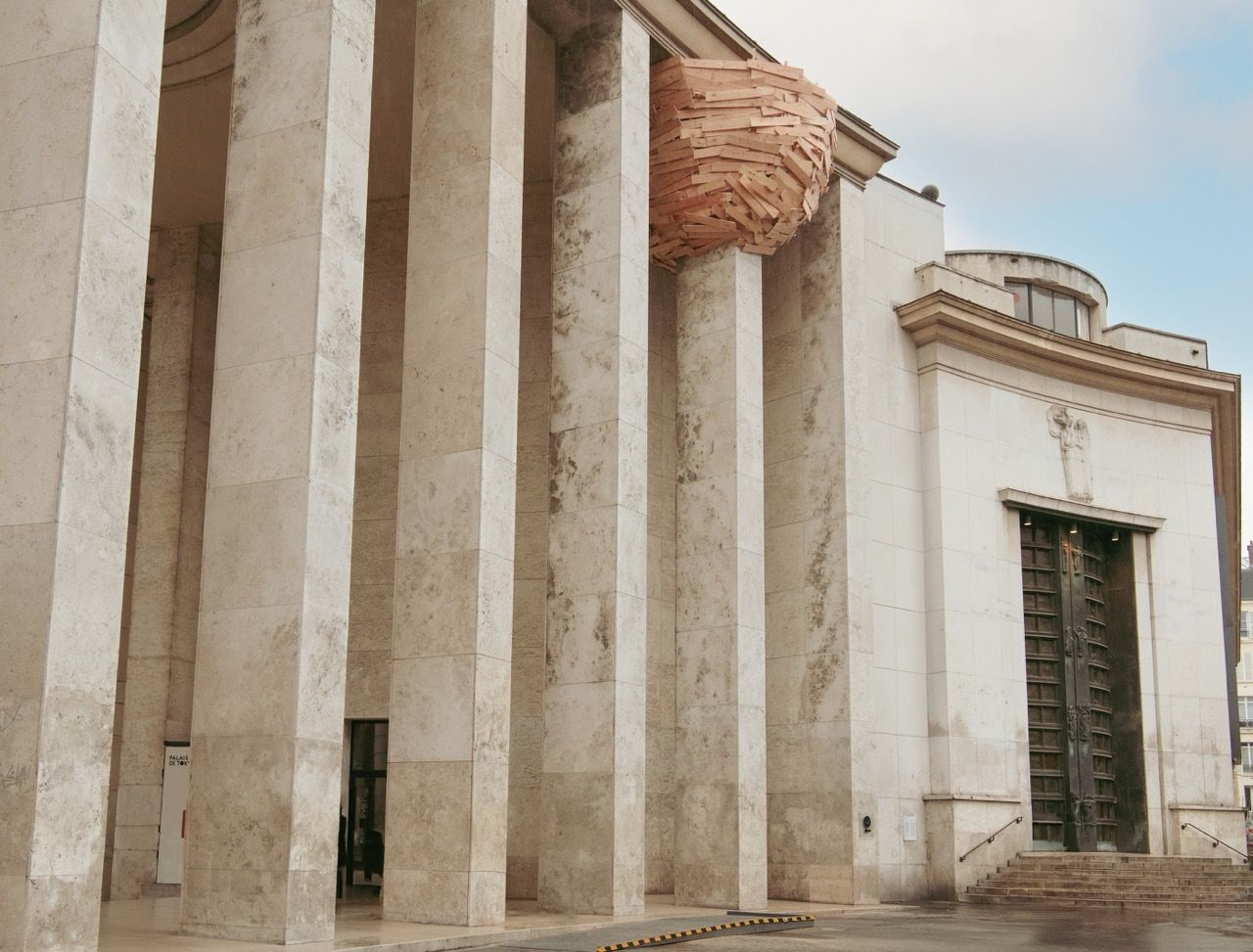
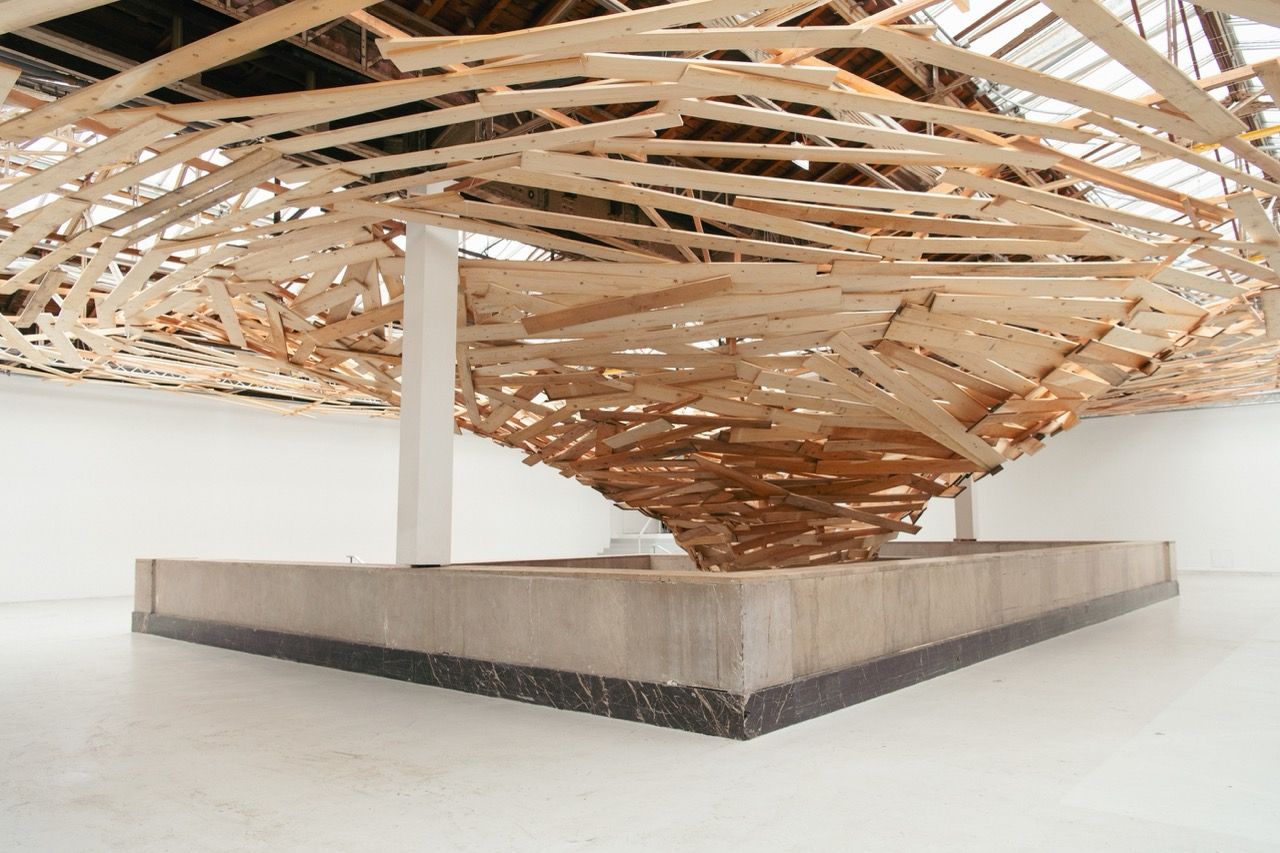
LS: I am thinking of your recent Parisian installation, Nest, at Palais de Tokyo. Your interventions, despite being expansive and immersive, do not seem to disrupt the spaces they inhabit. Does relating to space in this way carry any implicit commentary?
TK: My approach to space is a core element of my artistic philosophy. My interventions are not intended to dominate or disrupt a place, but rather to engage in dialogue with it. Works such as Nest or Tornado at Palais de Tokyo aim to offer a new perspective and subtly shift how one perceives their surroundings. By creating structures that blend with the environment, often using natural or reused materials, I want to emphasize that nature persists and reclaims space, even in man-made settings. This non-disruptive integration becomes a commentary on our relationship with the environment—an invitation to observe, reflect, and recognize the interconnectedness of all things without imposing a permanent or rigid presence. It suggests a more harmonious way of coexisting with our surroundings.
LS: Historically, there has been a tension between Japanese architectural aesthetics and the monumental scale of European traditions. How do you interpret this divide within your installations?
TK: There are indeed distinct architectural philosophies between Japan and Europe. My work, which often uses simple natural materials and ephemeral structures, may appear closer to a Japanese aesthetic of harmony with nature.
However, I believe my installations bridge this divide. Whether in an urban European setting or a natural landscape, I seek to highlight the porosity between art and landscape, and the constant dialogue between humans and nature. While European traditions often embrace monumentality, my work finds scale differently— through immersion and the visitor’s engagement with space.
The fragility and impermanence of my structures may seem opposed to the idea of lasting monuments, but for me this is precisely their strength. It emphasizes that art, like life, is always in transformation. Rather than becoming lost in translation, these contrasts enrich the experience and encourage viewers to reflect on how nature can persist and reclaim spaces regardless of architectural conventions.
LS: Even if not explicitly stated, your work alludes to ecology and has a telluric quality. Do you feel particularly connected to the Earth? Do artists have a duty toward it today?
TK: I do feel a profound connection to the Earth, and this is central to my work, even if I do not explicitly frame it as ecological. Nature exists in a continuous state of flux — growth, decay, renewal — and my installations are designed to evolve with time and the seasons. This naturally draws attention to ecosystems and their vulnerability. As artists, I believe we can foster a deeper understanding and respect for the Earth. Through moments of quiet wonder and reflection, we can encourage people to reconnect with nature and observe the delicate balance of the living world. I would not define this as a “duty” in a prescriptive sense, but I do feel the desire to use my art to encourage awareness and appreciation for our planet.
LS: Is there a political dimension to your current intervention for Ruinart?
TK: There is no direct political agenda in my work, including the intervention for Ruinart. I simply want people to think and question their beliefs. At the same time, my art implicitly addresses concerns surrounding climate change and environmental impact. For Ruinart—a centuries-old institution deeply connected to the land—the installations explore how heritage must adapt and innovate in response to ecological shifts. The use of simple, often reused materials and the emphasis on impermanence are subtle statements about sustainability and the cyclical nature of resources. Rather than direct activism, the work aims to foster awareness and reflection on these issues.
LS: What is your craft’s relationship to utilitarianism?
TK: My work does not primarily serve a utilitarian purpose in the traditional sense. My installations are not built for permanent function or practical use. Their usefulness lies instead in their ability to provoke thought, shift perspectives, and create emotional or spatial connections. Works such as Tree Hut, Nest, or the Observatory for Ruinart invite visitors to observe and contemplate, offering a narrative journey rather than practical shelter.
LS: What do you look for in a landscape?
TK: When approaching a landscape—whether the vineyards of Ruinart or an urban setting—I look for its inherent character, hidden narratives, and subtle vibrations. I seek to understand its history, its relationship with human presence, and its natural cycles. I am particularly drawn to elements such as light, wind, sound, and texture, and to the way they interact with space.
LS: What drives your crafting process, and what does it pay respect to?
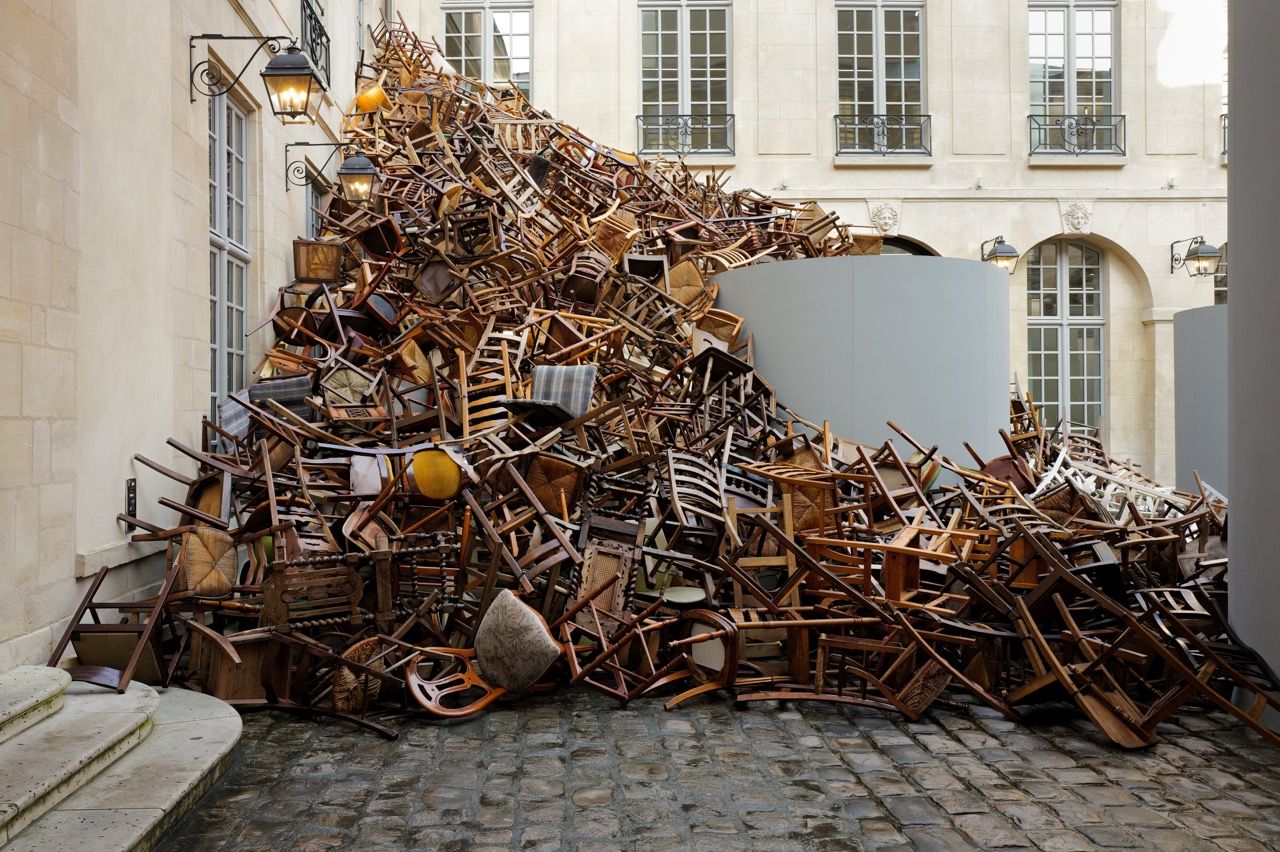
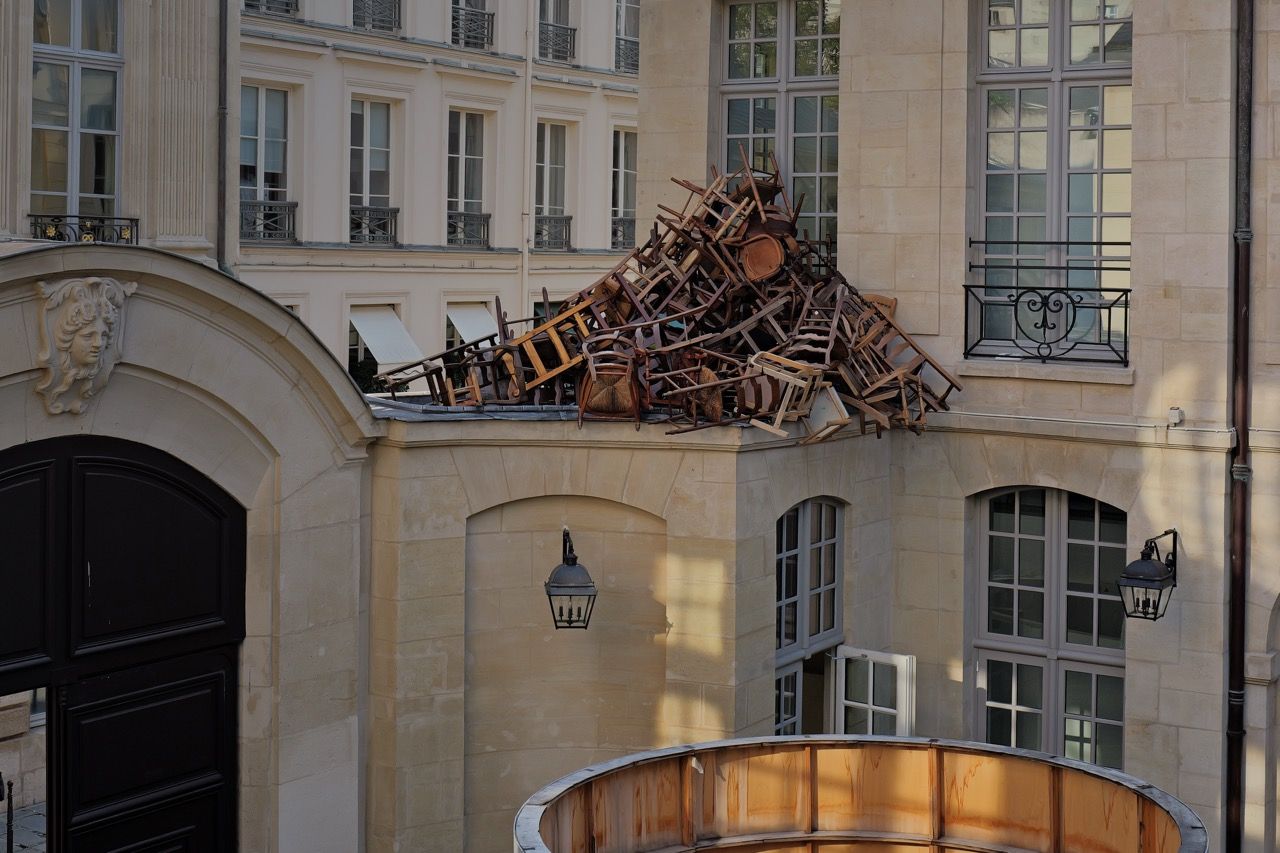
TK: I draw constantly and create many models because I enjoy working across different scales. These sketches and models become ways of thinking and help me create in-situ installations. I am not interested in static perfection, but in creating works that age, evolve, and transform with time and the elements. This is why I often use materials like wood, which can grey, crack, or grow moss, reflecting natural processes of growth and decay.
Another essential aspect is the dialogue between human activity and nature. My installations highlight how nature persists and reclaims space, even in artificial settings. The visible assembly process also emphasizes the artisanal dimension and the human touch behind the work. Finally, my process pays respect to the spirit of the place. I strive to create site-specific interventions that engage in conversation with the existing environment rather than dominate it.
LS: Regarding your current Ruinart installations, how do you think a city like Berlin could complement them, architecturally or energetically?
TK: My Ruinart installations are deeply rooted in the landscape of Champagne and designed in response to its rhythms and history. A city like Berlin would offer a fascinating contrast. Its layered architectural history, combination of historic and contemporary structures, and dynamic urban energy would create a very different
context for the work. But to answer this more fully, I would need to come to Berlin more often.
LS: Do essential aspects of your process change depending on urban or rural environments?
TK: Yes, absolutely. In rural settings, such as the Ruinart vineyards, my process often involves deeper immersion in natural elements. I focus on organic integration and draw inspiration directly from trees, earth, and light. In urban environments, the challenge lies in creating a subtle contrast within man-made spaces. Here, my work often emphasizes the tension and porosity between human construction and the natural world. Natural materials remain central, but their placement and form may be designed to reveal how nature can interact with or reclaim the urban fabric.
LS: Do you have a dream project that has not yet come to fruition?
TK: Many projects throughout my career have remained unrealized. In fact, perhaps only 60% of my proposals have actually been completed. Some projects were technically too ambitious, too large-scale, too controversial, or at times even too political.
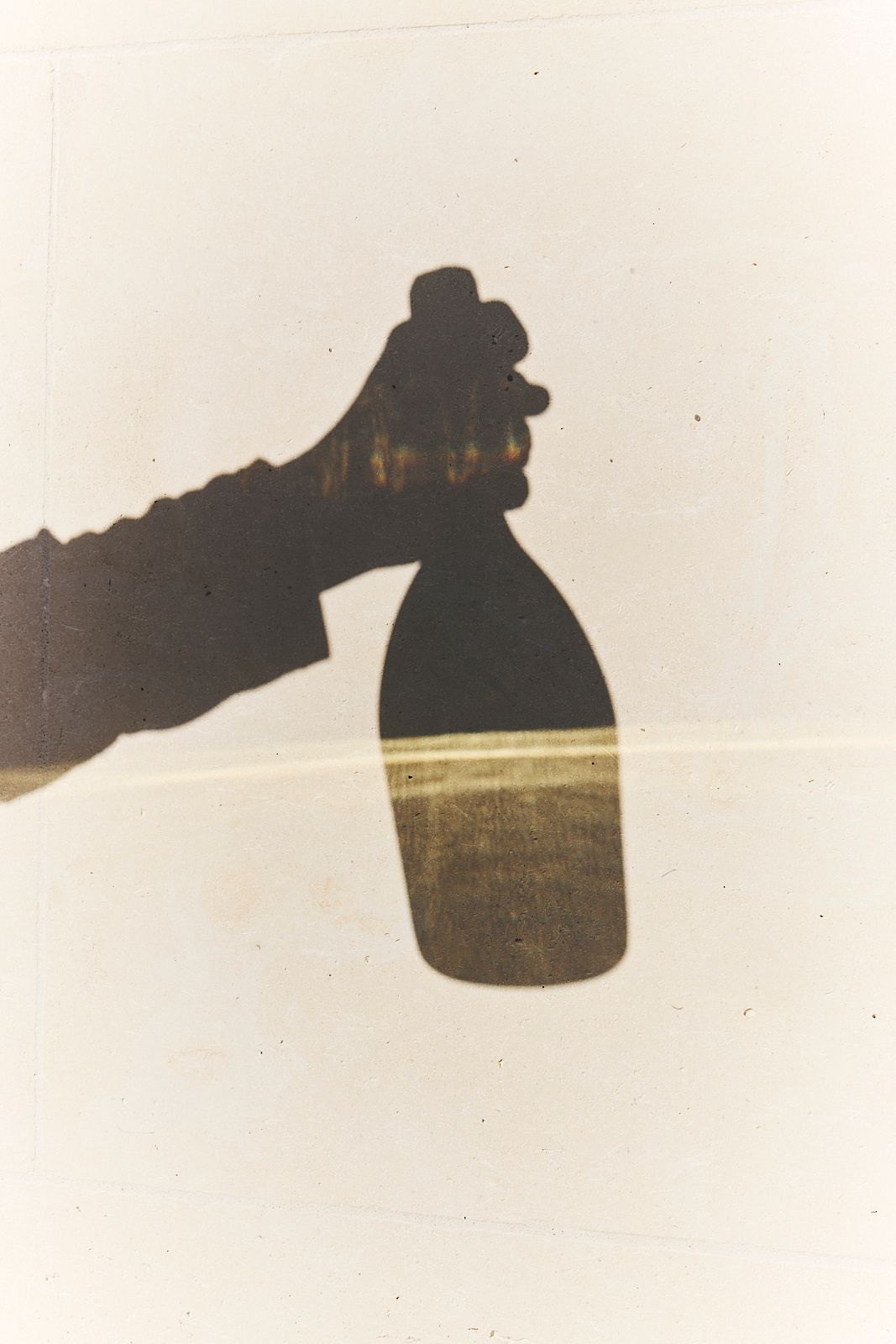
In May, Tadashi Kawamata unveiled in-situ installations for Ruinart's site at 4 RUE DES CRAYÈRES in Reims, where they are currently on display. His work for Ruinart will additionally be exhibited at different major art fairs throughout 2026.
Credits
- Text: LUNA SFERDIANU