Requiem for a Meme: Elan Alexander Presents LooksMAXXING
|LUNA SFERDIANU
Terence McKenna presciently construed our zeitgeist as “so weird that people are going to have to talk about how weird it is.” While this weirdness is actively washing over our feeds and spilling into our hyperreality, Elan Alexander's looksMAXXING (2026) investigates it straight from the eye of the storm.
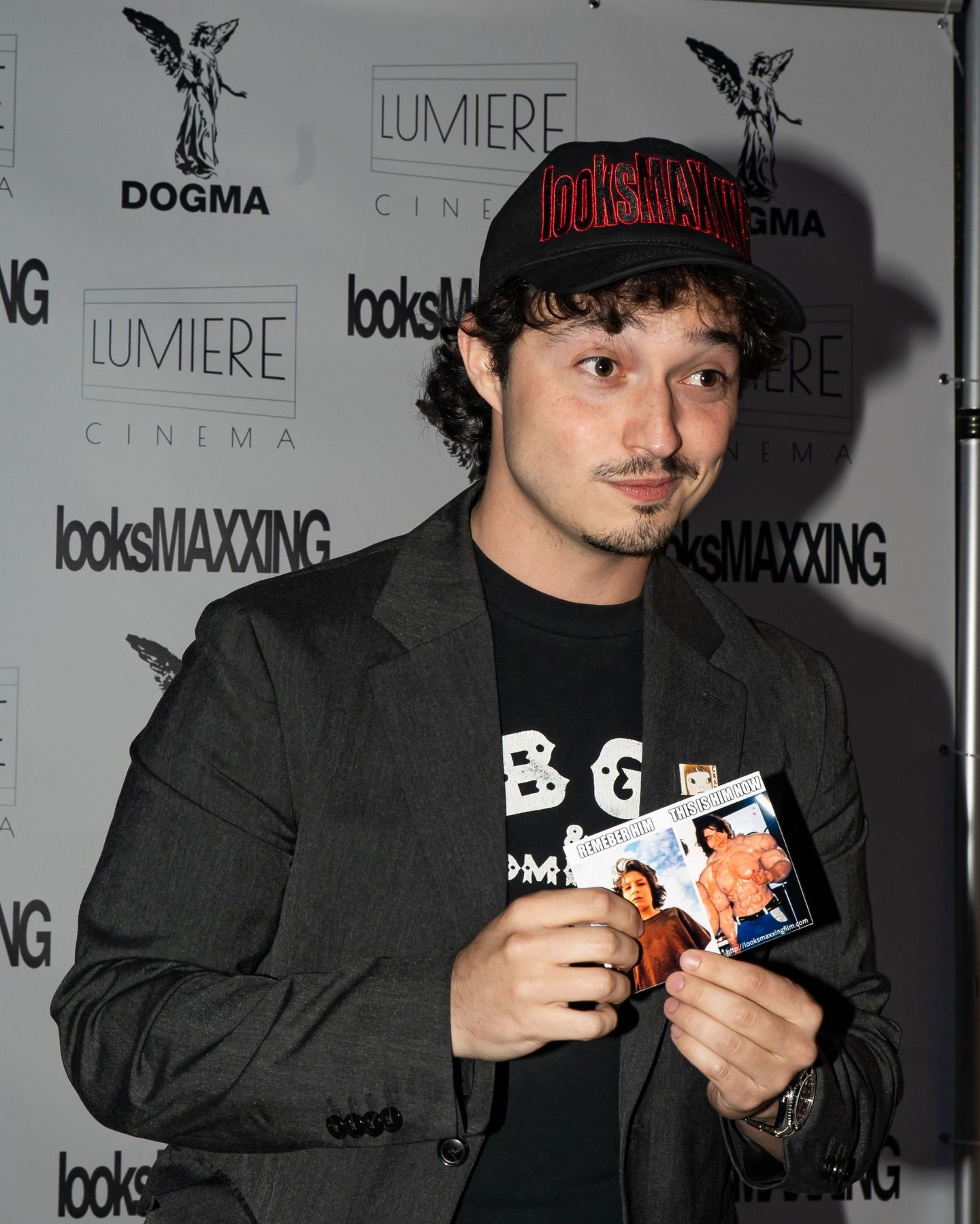
Condemning our era's bleakness has lost some of its discursive momentum, largely because everything unfolds simultaneously and our capacity to denounce it fails to keep pace. But let us linger for a moment on the phenomenon from which Alexander's short takes its name. A few years ago, boys injecting hormones to the point of impotence and (literally) smashing their bones as part of an arcane beauty pursuit would have sounded like a ludicrous Netflix Original premise. Today, a ritualistic subculture once confined to the viscera of obscure online forums, sheltered from gratuitous scrutiny, has metastasized into a common practice among those most vulnerable to social pressure. Unsurprisingly, a 2025 survey found that 60% of its avid looksmaxxer-respondents were under the age of eighteen—a resolution less dismissible as age-specific edgelord-ism, and more symbolic of a structural failure affecting the young.
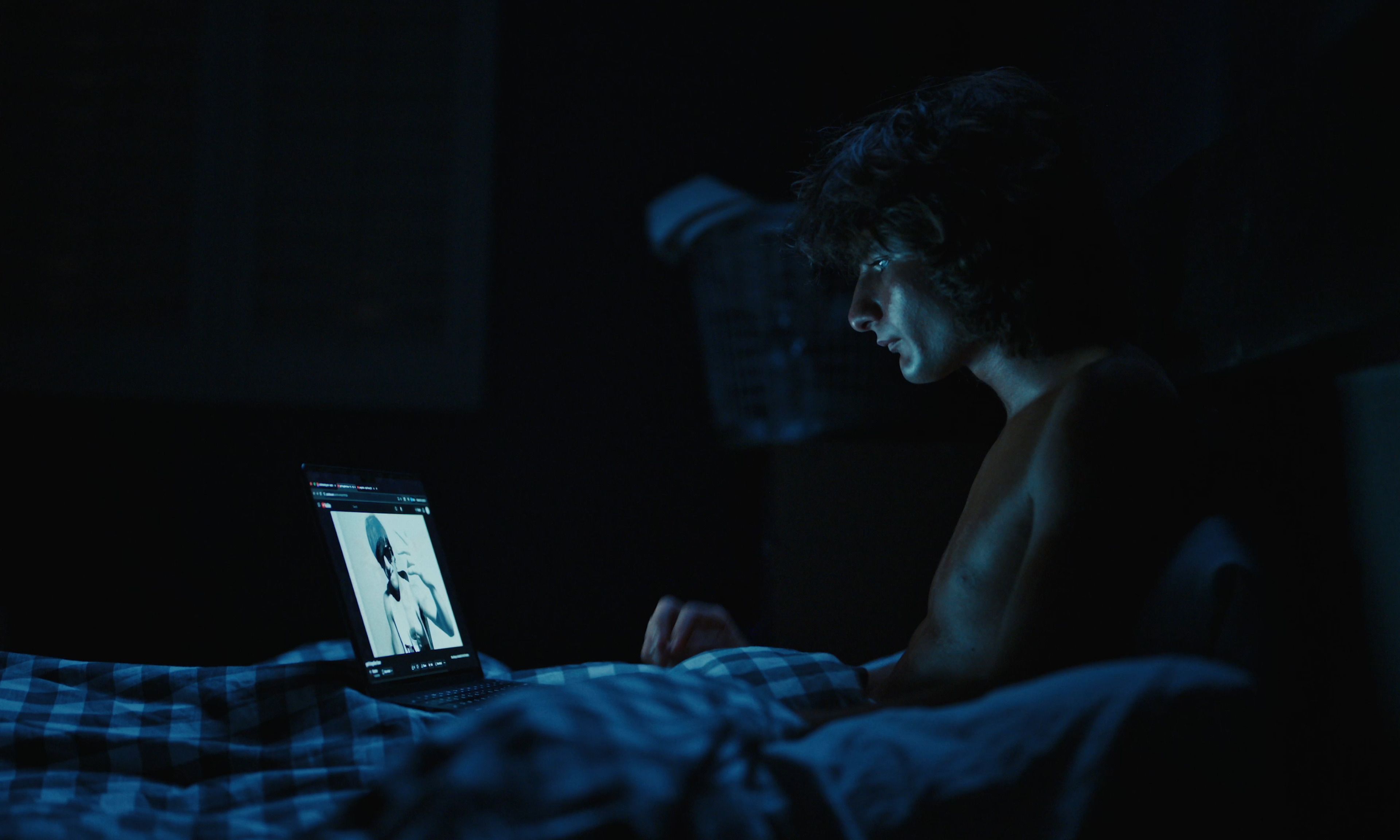
In turn, critiquing looksmaxxing in earnest without either lambasting or ironizing it proves remarkably difficult. In his short, Alexander seems to have found the proper register for framing one of this century's most insidious maladies. The film follows Niles (played by Sunny Suljic), whose respite from his kiosk job and humdrum existence lies in consuming AI pornography, conspiracist brainrot, and manosphere rhetoric, the latter instrumentalized in marketing the supposed cure for his insecurities: injectable peptides. As he falls prey to their deceptive promise, both his body and his relationship to the world around him spiral out of control, à la Aronofsky. Notably, the most unsettling aspect of the horror it proposes is not its uncanny allegorical power, but its presentation of a dystopia that has already settled, simmering in plain sight.
Rather than villainizing either the boy or the atomized reality that produces him, Elan Alexander is concerned with patiently deconstructing his descent into self-erasure. In our interview, I spoke with the LA-based writer and director about the historical singularity of looksmaxxing, its Orwellian vocabulary, and how we might ultimately brace ourselves for this new reality.
LS: Elan! What is your personal relationship to looksmaxxing?
Elan Alexander: We discovered [looksmaxxing] three, almost four years ago with a good friend of mine, my cinematographer. His roommate came in while we were offloading footage after a shoot and showed us the forums. We became obsessed with them, we were scrolling through them all the time. There was all this terminology, and the way that these young men were thinking was such a brand new school of thought for us.
Throughout the years of looking at it, I realized there is a boundary where self-improvement is healthy; everyone should want to be the best version of themselves and should want to feel good and go on fucking runs and eat clean. But what we took away from some of the forums was the moment that self-improvement becomes self-erasure, and then that's what we wanted to focus on.
LS: It’s funny that you call it a school of thought, because the proportions it acquired indeed turned it into that. Have you ever seen any of the people close to you actually succumb to it?
EA: My girlfriend’s younger brother has this friend who came over to their house a couple weeks ago. Her mom was telling me how the kid used to be really short and kind of scrawny, unkempt, and how over the past year he suddenly got buff and taller. There's certain people you can look at, especially teenage boys and young men, and see that they are a little too shiny, too manicured. So I'm hearing this 17-year-old talk to her younger brother, being like, “Oh, you need to get on HGH, and maximize your height while you still can.” This is the very thing that we just explored, and I ended up showing him the short film, and he was taken aback. He had the exact reaction we'd want from someone who's too far into something.
LS: In Europe, looksmaxxing (and the scene revolving around it) still belongs to the digital realm. I assume things look differently in its epicentre, which is Southern California. Can you describe the current offline setting of looksmaxxing? Is it even something that permeates your life offline?
EA: Over here we have the Hedi boys and the already athletic dudes. They probably all adopt it in certain different ways, but they utilize the techniques in minimal ways to accentuate the specific little things that they probably didn't like. It’s a lot more discreet. If you were in, like, freaking Kansas, you could more clearly tell oh, this guy right here is up to something.
LA specifically is a funny place to judge whether it's broken through or not, because everyone is already inherently manicured, so I think it's now hard to tell who has always been doing this, and then who's new to this because of the trend...
LS: ...who's a newgen, and who's been on it.
EA: Which is funny, by the way, the term newcel. When the film was getting announced, people on the forums got really upset about it. They were calling on me and Sunny to not put out the film, they were afraid this thing that's been so close to them is already taken away from them because of Clavicular popularizing the ideology, and so they were worried about it getting pushed further into mainstream and getting even more scrutinized. But for a lot of the guys that were shitting on me and Sunny, for lack of a better term, I could see on the forums they joined it years after I discovered it.
LS: When you say looksmaxxing, you usually associate the term with severe bodily modifications. I wonder if there are any other non-bodily indicators you may recognize as symptomatic of the whole movement.
EA: For people who don't know the full context, the movement as a whole spawned as a result of pickup artists. In the early to mid-2010s, they were becoming pretty popular for - I don't want to use incels, because they're not all incels - these chronically online young men who had issues getting women. They would go to these pickup artist forums and get scammed by these guys, who were selling them on a line, and so these guys were all meeting on these forums, and then they were speaking to each other, figuring out how those guys were scammers and finding their our own place to talk. It was 2015 or 2017 when the first real looksmaxxing forum became a thing.
I think the ideology as a whole is a symptom of the male loneliness epidemic. People feel more and more isolated, and so then they find these echo chambers, and they get caught in this ideology because people are repeating these same ideas back to them, reinforcing them, bolstering them.
LS: In terms of historicity, however loosely, would you personally equate the current developments with any precedents in our humanity's past?
EA: I really hope that this doesn't get stretched, because this has been kind of a running bit for me recently, but I think a lot of this terminology and obsession with aesthetics brings about ancient Rome. Especially since you can add new suffixes to all these terms, it parallels Latin really well.
A couple months ago, there was this girl who crashed a clavicular stream, like stream-slammed him, and I saw this comment that said LARP-maxxing-Stacy. In two words, they describe someone who is both pseudo-attractive and trying to emulate more attractiveness. it's funny, because it's both idiocracy, where we're dumbing ourselves 1984-style, but in another way, it's also very nuanced.
LS: Incredible how language evolves…
EA: It’s like streamlining thoughts to make them more concise. There's a duality to it, because you can actually go dumber this way, and you can actually become more intelligent, and I think , it's a really funny theoretical. It makes most sense with aesthetics and language in mind to go back to ancient realms.
LS: Was there any tipping point that made you want to turn this whole thing into a film?
EA: We started years before this became a mainstream. We spent the years scrolling the forums, and then I actually wrote the script.
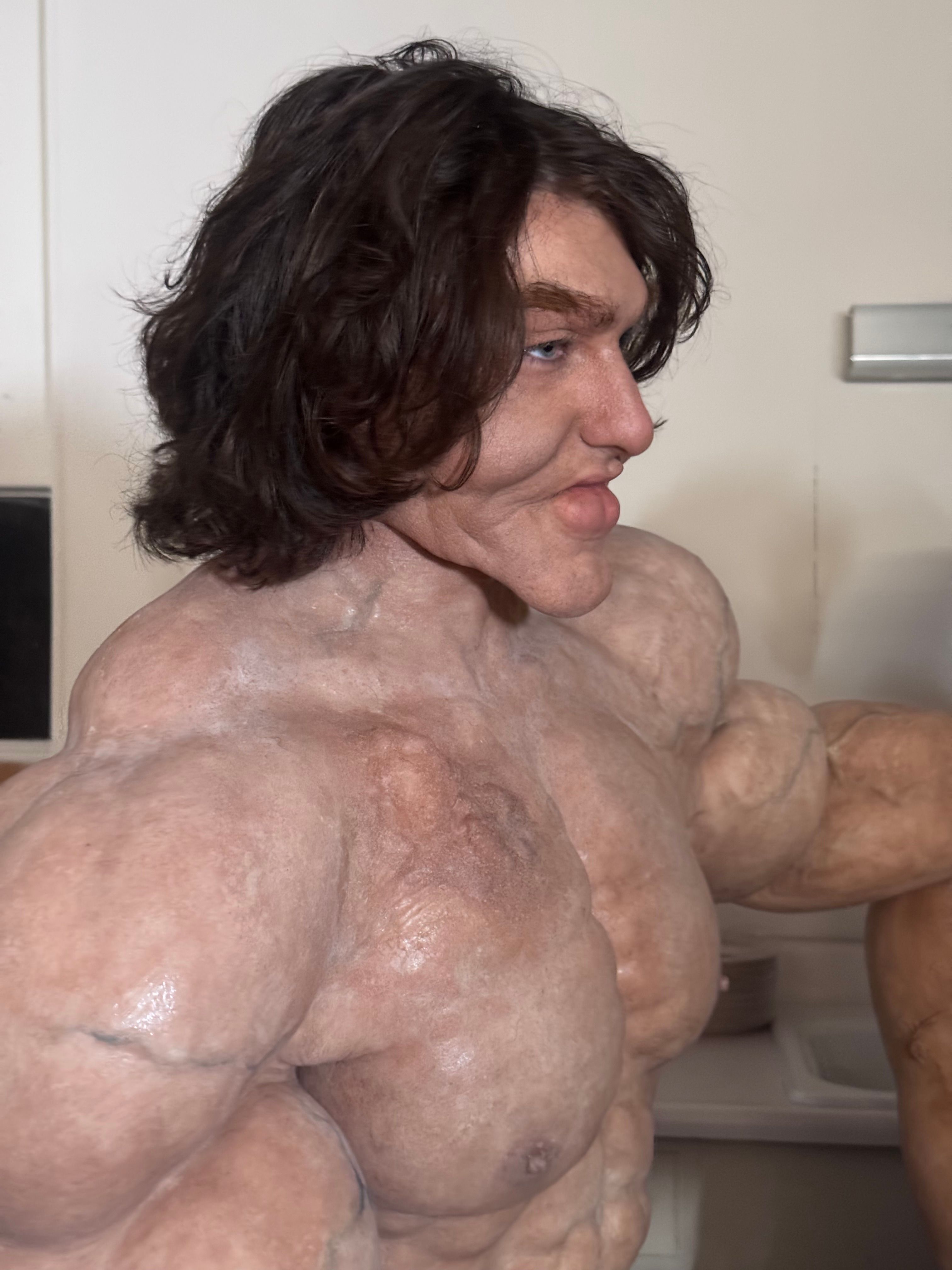
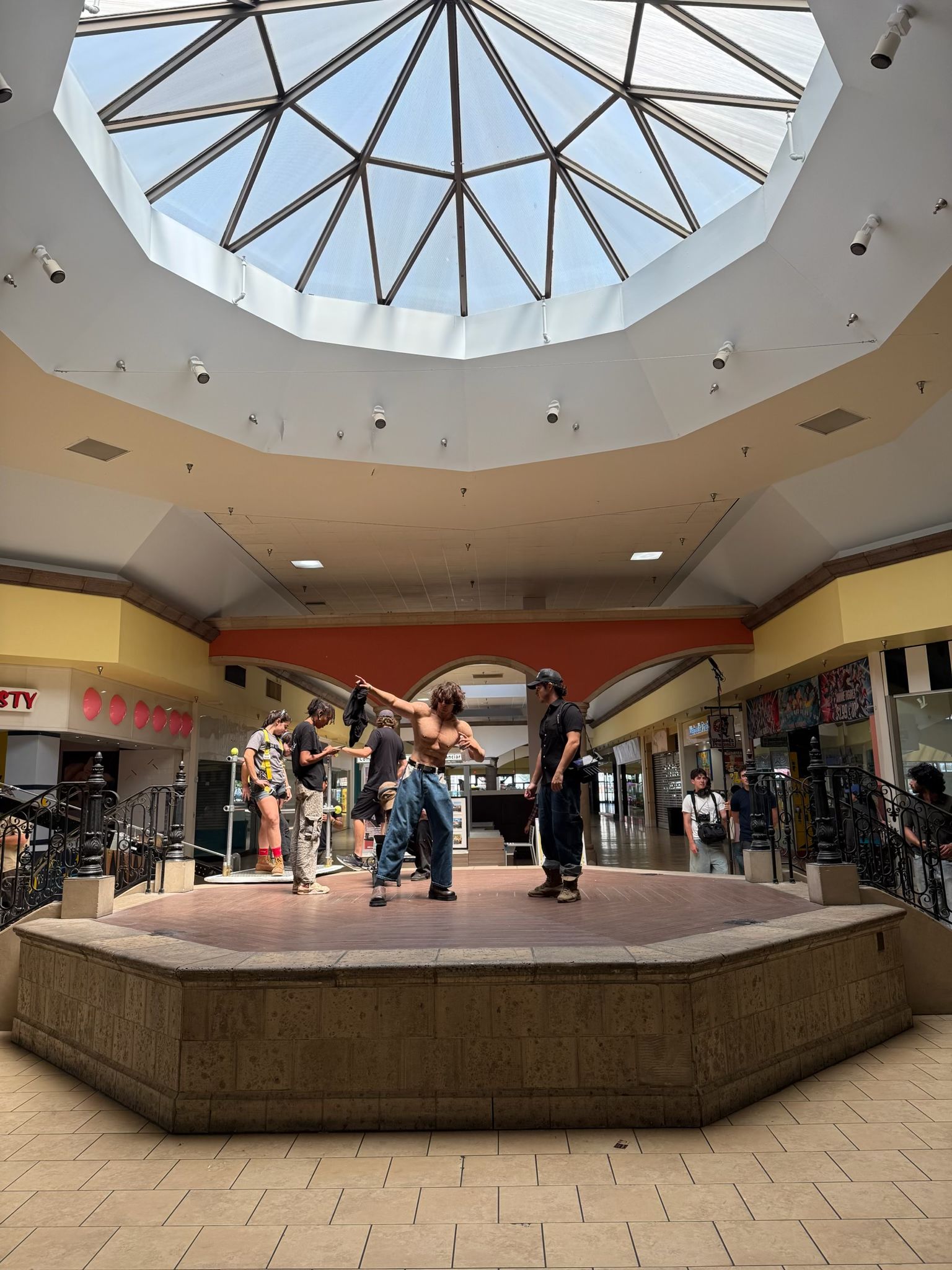
People are mad because they feel like Bastion is evil Zyzz. I just wanted to bring in iconography and silhouettes that people would recognize, to just hopefully make them understand. Just to mention, in this moment, I think Zyzz was an incredible guy (RIP), and he wasn’t associated with any of the toxic ideology that we reflected in the film.
The tipping point was really just very few pieces of media, especially right now, that reflect our generation well enough. I was just trying to hold up a mirror.
LS: In terms of cinema in general, what I personally see is this body horror movement, along with this more sly form of state-of-the-world type of horror. They’re converging at such an increased rate right now, and a majority of the acclaimed movies in the past few years belong somewhere on their axis. Where do you see your film tapping in into this new cultural movement?
EA: It's funny, because while I was working on the script, the substance came out and we were like, this is incredible, because it shows that people want more body horror, but also, fuck, because people are only going to compare this to that. And everyone was like, this is just incel The Substance, and it's okay for people to think that. I personally am more Requiem for a Dream, but I think it works as long as it gives people cultural context. And horror in general is the best genre for social commentary, outside of sci-fi or body horror. Body horror was pretty niche for a long, long time, and I think it's resurgence over these past couple years is not coincidental with the increased involvement in our own cosmetics, with how we look, how we treat people that are older, and our obsession with youth. It's no coincidence that body horror has been growing, as it's hard to scare people nowadays in an actual jump-scare way. We have seen the worst things, we won't blink an eye at, like, a quintuple homicide with a chainsaw. But when you see something coming out of someone's body, you feel some type of way.
LS: The premise centres a young, dopamine-depleted guy who finds some form of rush in the online forum community. Do you see any connection between our collective dopamine destitution and the creation and further popularization of such communities and ideologies?
EA: 100%. We all suffer from so much digital exhaustion—that's especially my whole point with the opening monologue of the film that's kind of through Niles as an avenue. That’s my way of waking up every day and I don’t even have Instagram on my phone right now. But now I am writing new things and I can't wake up and be face-fucked by my phone and ingest like 100 things. We are a generation that was raised on this, and we are the first to experience this. I'm 26 and I can't believe how much of my youth I spent scrolling, and I feel so tired all the time, and it's very clearly a cause-and-effect relationship.
LS: There's a subtle irony that accompanies even your film's opening scene. It feels like our internet-laden lives have this thin layer of irony that is ubiquitous in everything we exhibit, and the way we relate to each other, and the way we communicate, and the way even we perceive ourselves. Looksmaxxing, to me, is a new height we reached. It's so ridiculous, you cannot really take away the irony from the way Clavicular and the likes of him are presented on the internet, regardless of how grave it is. How do you feel about this?
EA: It's funny, because it's the same thing, Brett Easton Ellis with American Psycho, you have this character that is so incredibly self-aware in so many ways and so incredibly unaware as well. He’s self-aware within his world, but he’s not able to look at himself objectively. I think that that same theme passed down on to looks like it's in culture, where to reiterate, there is nothing wrong with wanting to look the best possible, that should be everyone's goal, not just physically, but in a health way. The problem arrives when you start taking that too far, and these young men place themselves in a box automatically. They operate all their thoughts based off of already existing within the space and already having this inferiority complex. They perceive this awareness of how people are treating them, and also people online, but they can't see past how toxic the community they have joined as a solution to their symptoms is.. They're all these things are just alienating them further, they can't even have a normal interaction with someone because they already feel disjointed.
It’s the digital world and reality clashing now. We now see the very big difference between people who live in reality and people who live online. It's what happens when you put extremely self-aware people in a context where they think that they're perceiving themselves, but they don't realize the full picture.
LS: As part of the same cultural context, there’s a stark increase in medicalization: for pain of any sort, for depression, for dopamine deficiency, for beauty. Everything has this sort of palliative that ultimately comes in a medicalized format. How do you feel about that?
EA: You know, it’s so dystopian to me how Serena Williams and Charles Barkley are promoting peptides on TV. Instead of let’s eat healthy and go jog, let’s instead go for a miracle drug that has only been around for so long. Especially as needles are the most intrusive thing ever. It's not like you're taking a little pill or something. It's grabbing part of your body and literally injecting this thing that's make you skinny, and it's just mind-boggling that we've gotten this far. It feels like the fucking Capitol in the Hunger Games.
LS: I’m happy I don't own a TV.
EA: Good. It’s insane. But with all that being said, among all the dystopia and fear mongering, I think that our generation is also poised to hopefully help change the world for the good and hopefully knock some sense into people.
LS: What do you anticipate for our collective future?
EA: I think that looks maxing as terminology will be passé by next year. The manosphere ideology has now been around for six years in the mainstream, and I don't think that that's going away anytime soon. These factions have only grown in popularity. As meme-y as we make it all out to be, it’s still real people enduring real things and subscribing to these real ideologies. I think it's going to be this battle of thought where people are going more in this direction… hopefully we can just create these bridges to be able to have conversations: we are not attacking everything that you think, we're just trying to raise awareness about the insanity of some of these situations.
LS: Is there anything that can save us?
EA: I think communication is entirely that. It's also no coincidence that this all comes with an increasingly shrinking middle class, with wealth disparities driving us toward becoming increasingly more polarized. We can attack each other all day, and that would literally get us nowhere. It doesn't matter if you have different beliefs than I do. If we can communicate, understand where each other are coming from, understanding where our differences are without attacking one another — that’s how we build new ground, and hopefully lead to people feeling seen, because all this stuff is as a result of people not even feeling seen, and so they go to these extreme measures to get that attention, and they're just losing themselves in the process.
LS: Any concluding thoughts?
EA: Don't be a mood board of the things that you see online, touch grass every now and then, don't live life through your screen.
Watch looksMAXXING here!
Credits
- Text: LUNA SFERDIANU