Maja Malou Lyse: Things To Come
|KAROL CHMIELEWSKI
For the Danish Pavilion at the 61st Venice Biennale, Maja Malou Lyse takes as her starting point a real scientific finding: that men who watch pornography through VR technology produce measurably more motile sperm. The show, Things To Come, developed with New York collective DIS, centres on a film shot in a real sperm bank, with Brazzers performers working the labs and directing humiliation at the donors — staged as a musical loosely scripted by writer Patrik Sandberg. Common Accounts extends the exhibition design into an adjacent installation of cryogenic sperm containers and screens playing sperm races, an online subculture in which men compete over their own virility.
What makes the proposition work is that Lyse never seems particularly interested in delivering a lesson. Humor has always been her sharpest tool. The most catastrophic ideas in her work often arrive disguised as jokes, absurd enough to provoke laughter before their implications fully settle in. A sperm bank musical is a ridiculous premise, but ridiculousness is precisely what allows it to remain open, resisting the kind of certainty that more earnest treatments often impose. For Lyse, image culture isn't a subject, but a condition; one she inserts herself into across television, social media, performance and installation. In Venice, that dynamic becomes unusually literal: the image doesn't just shape desire, but acts on biology.
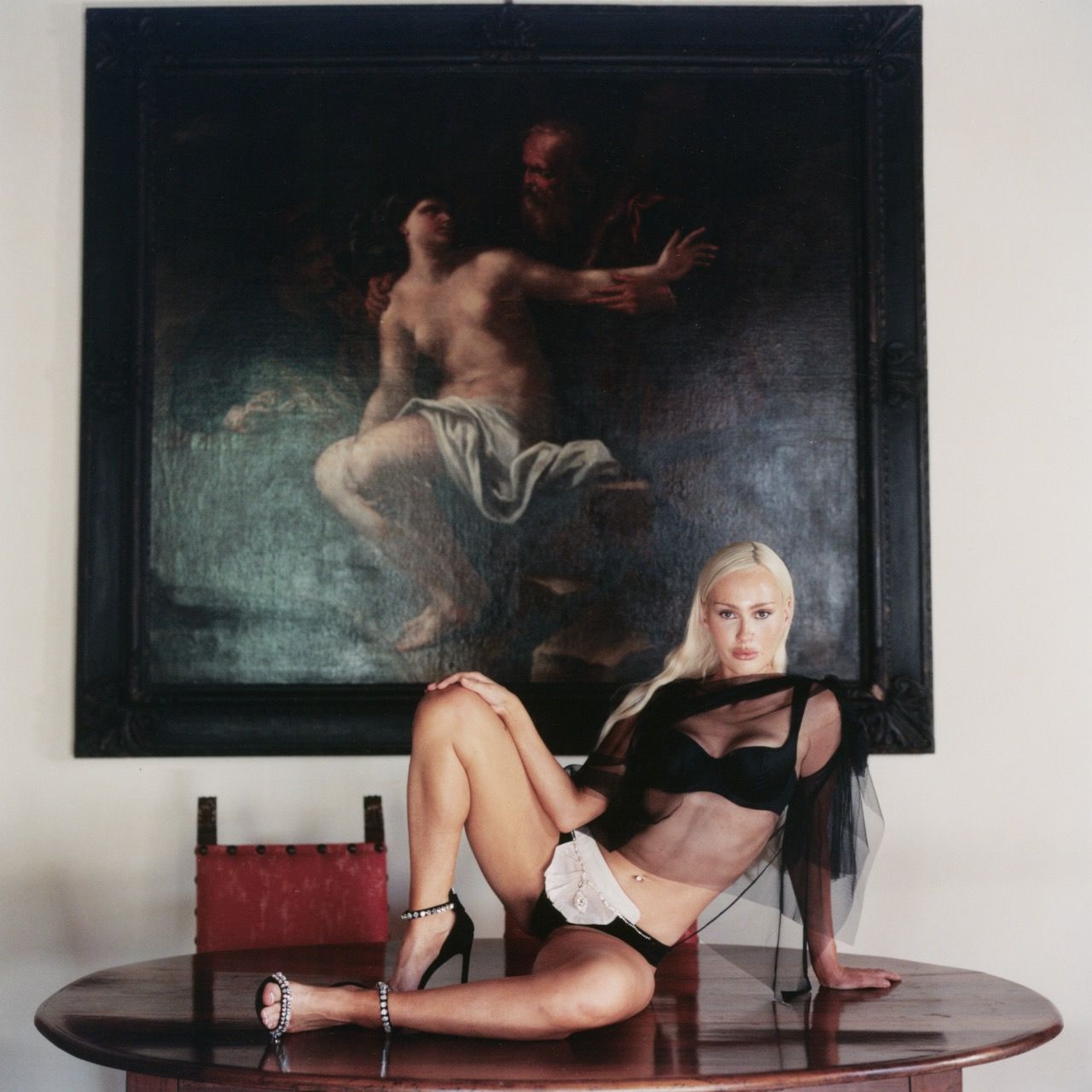
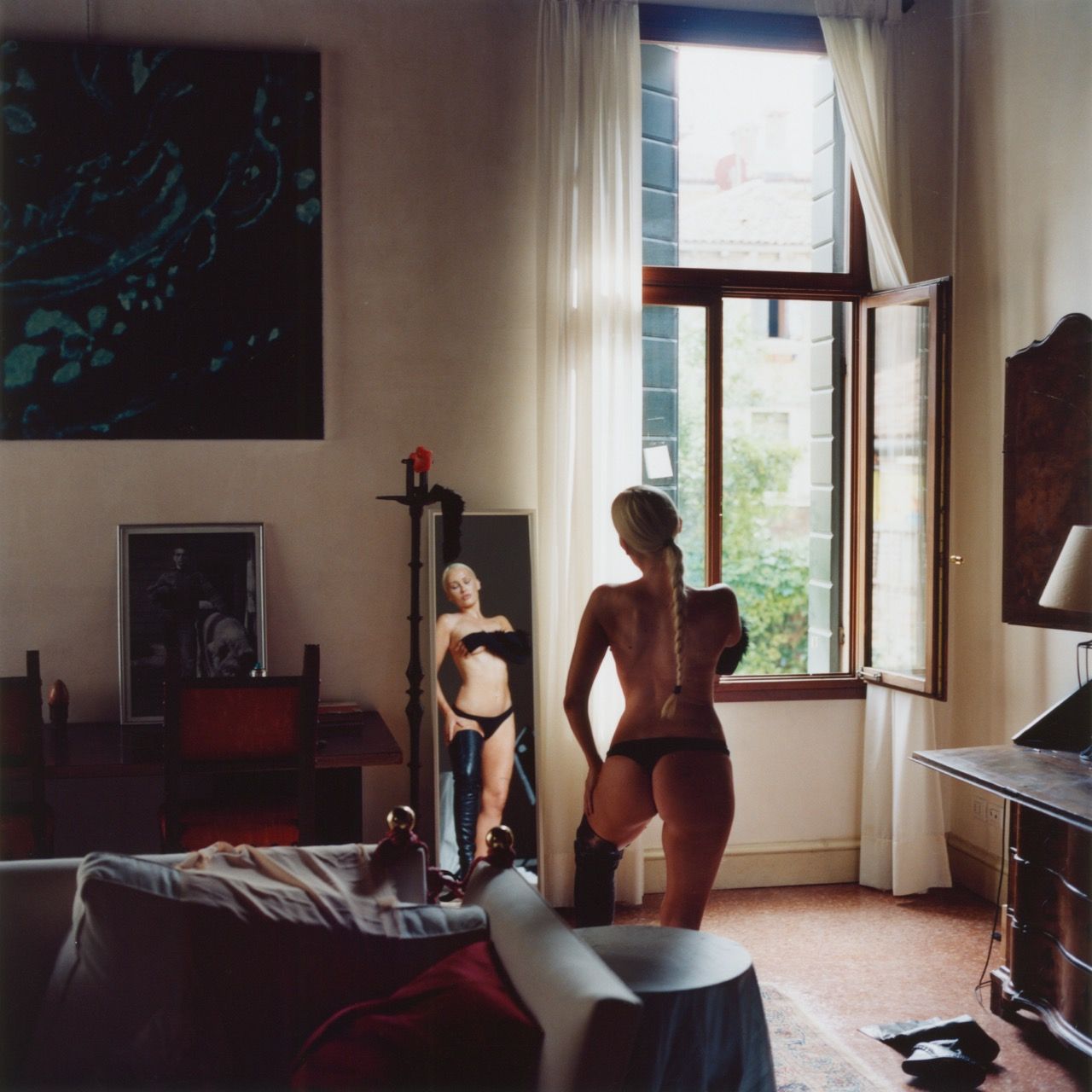
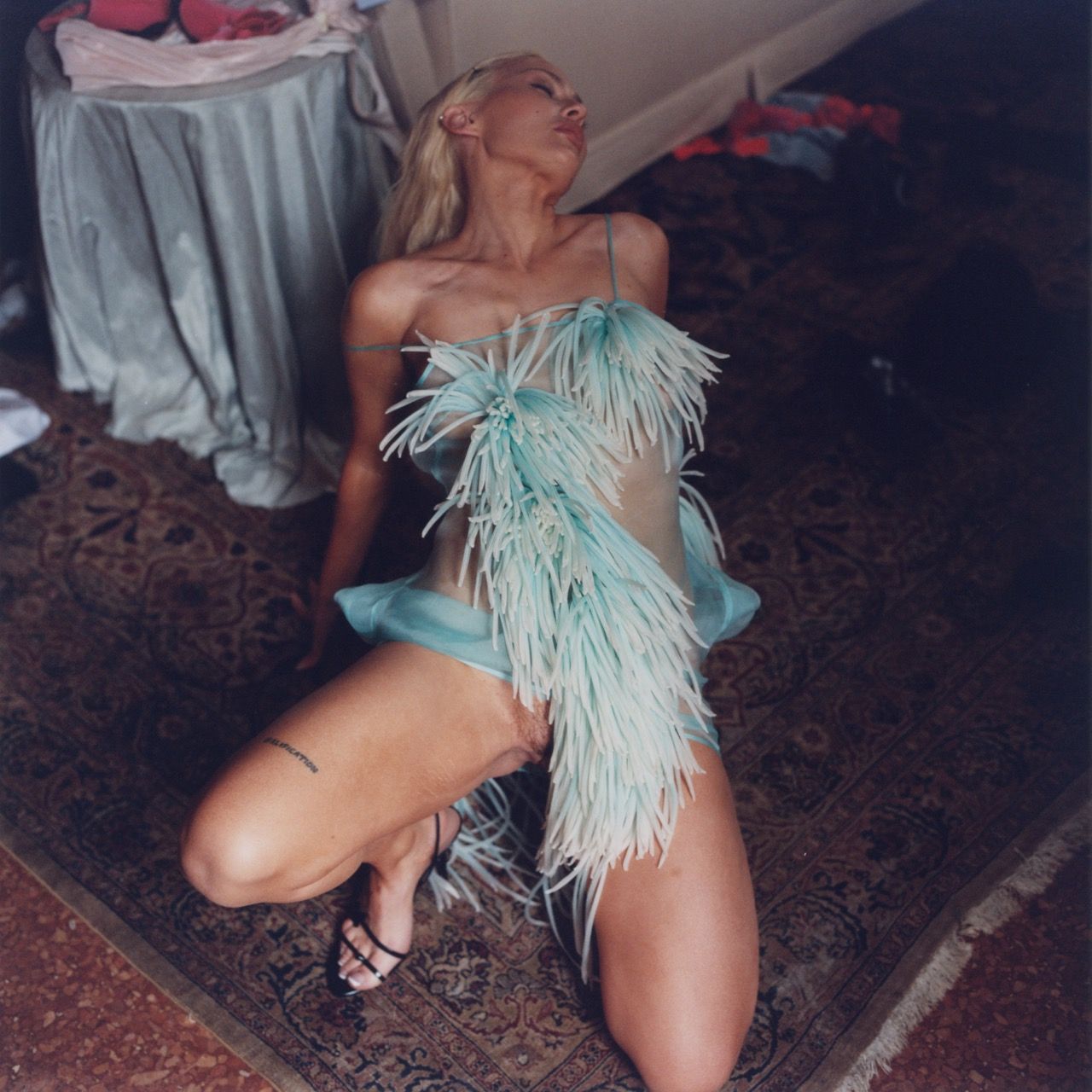
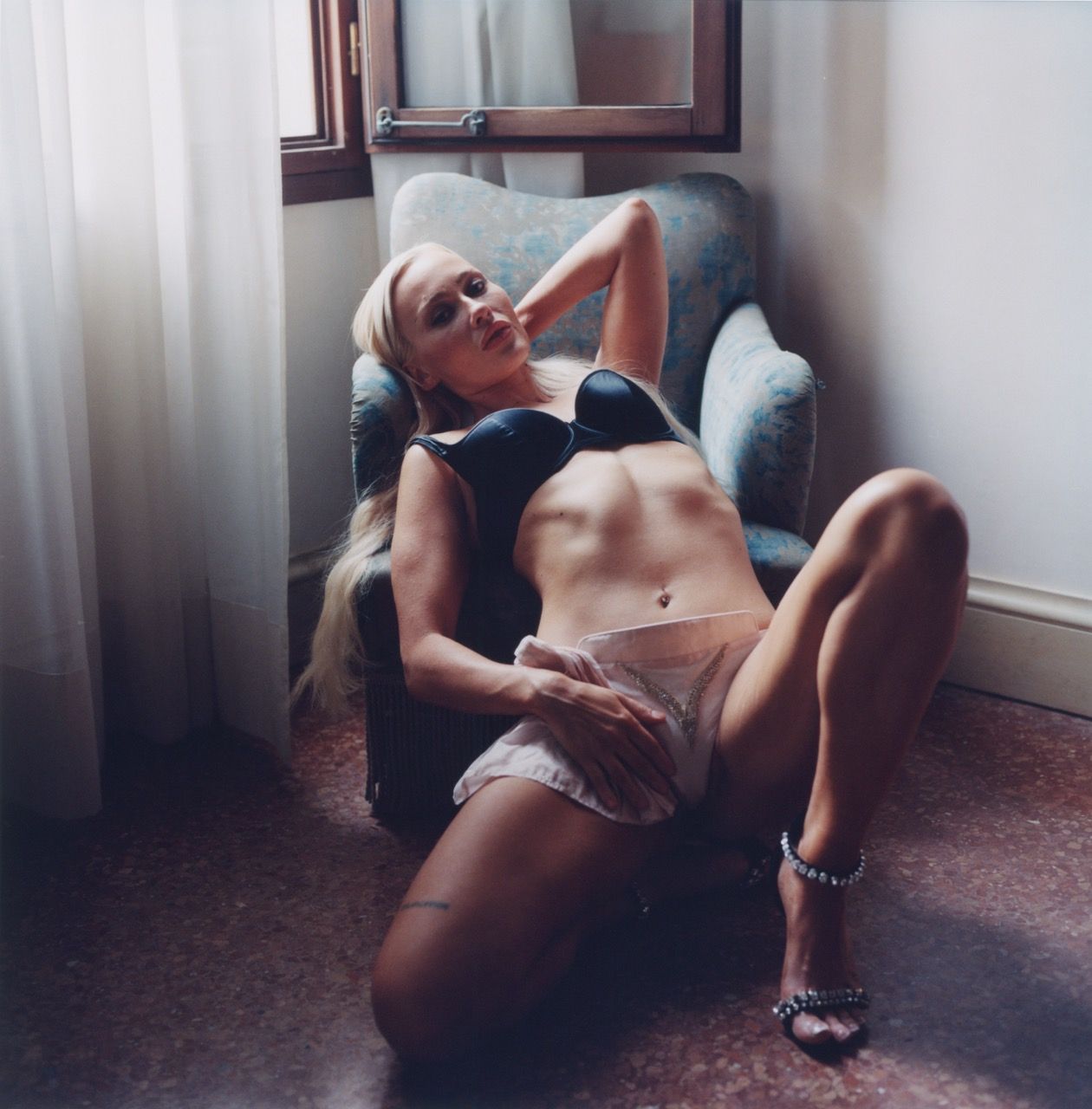
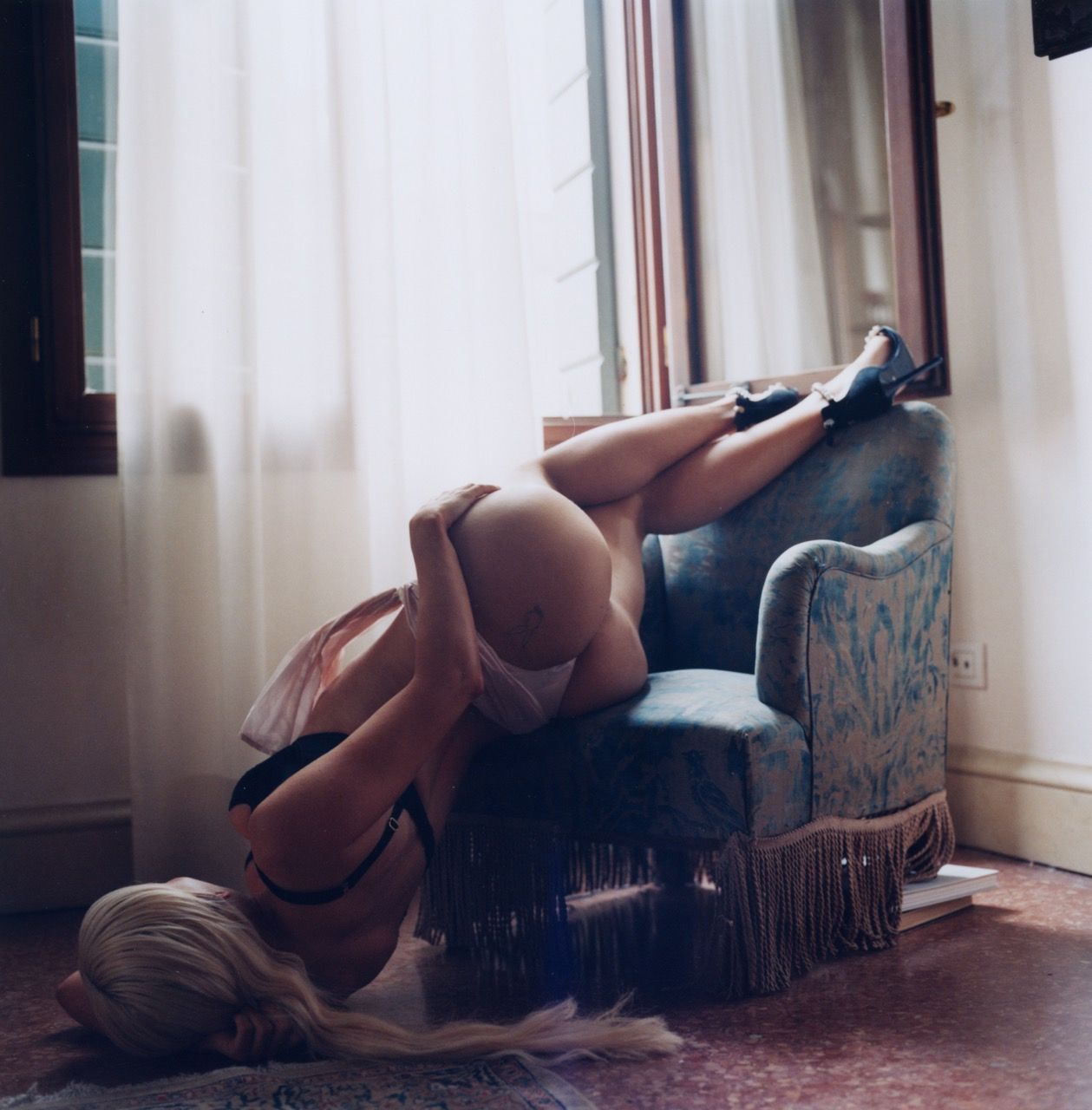
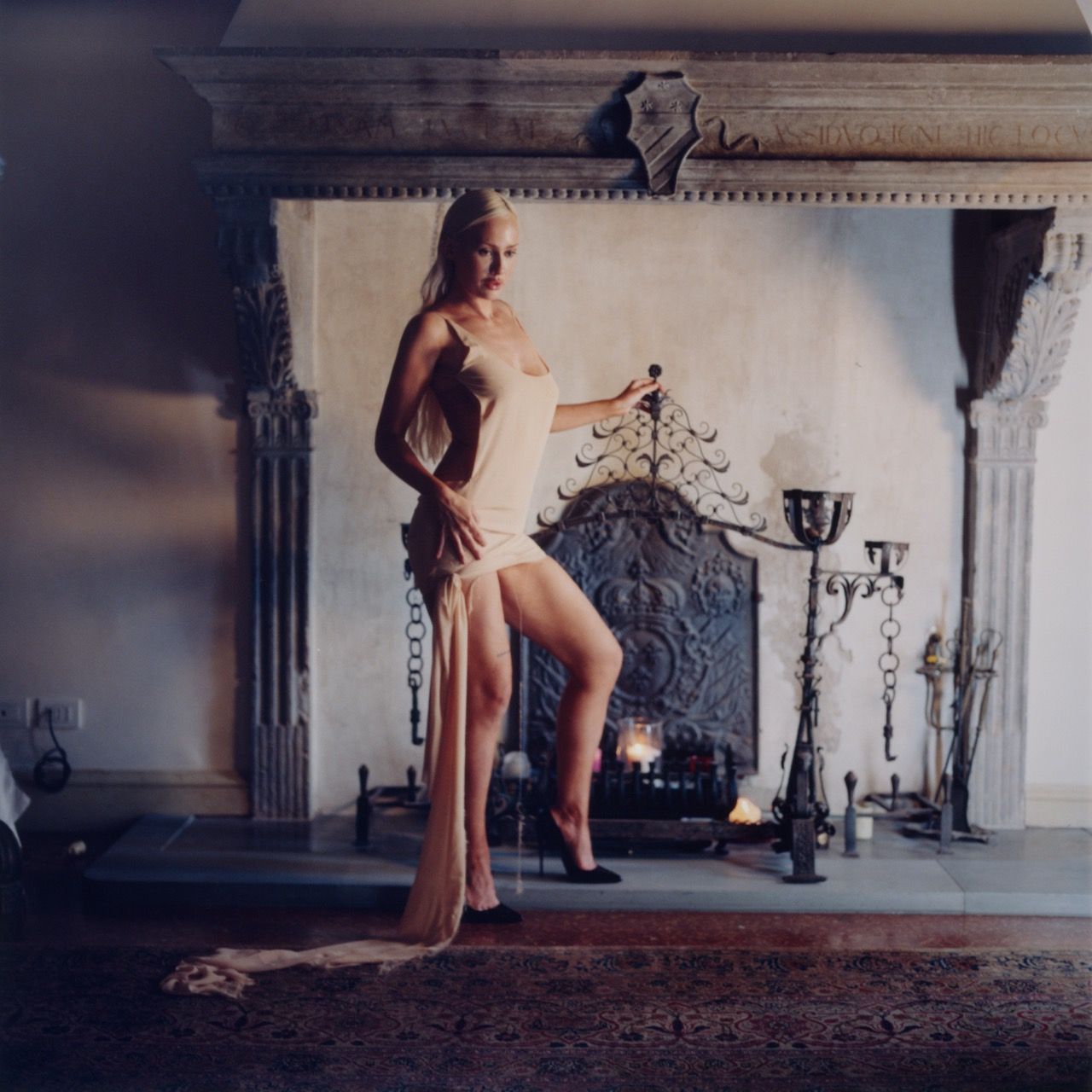
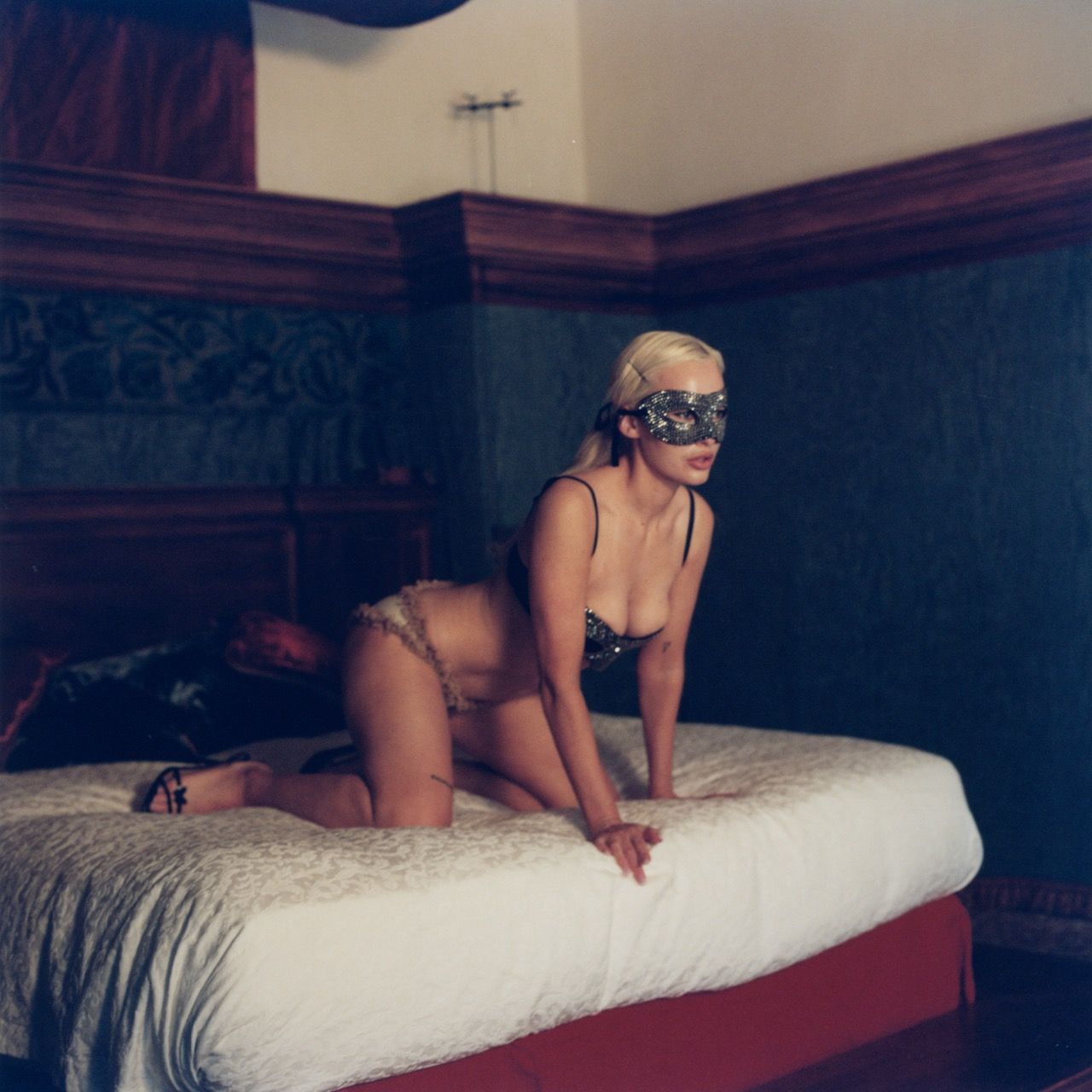
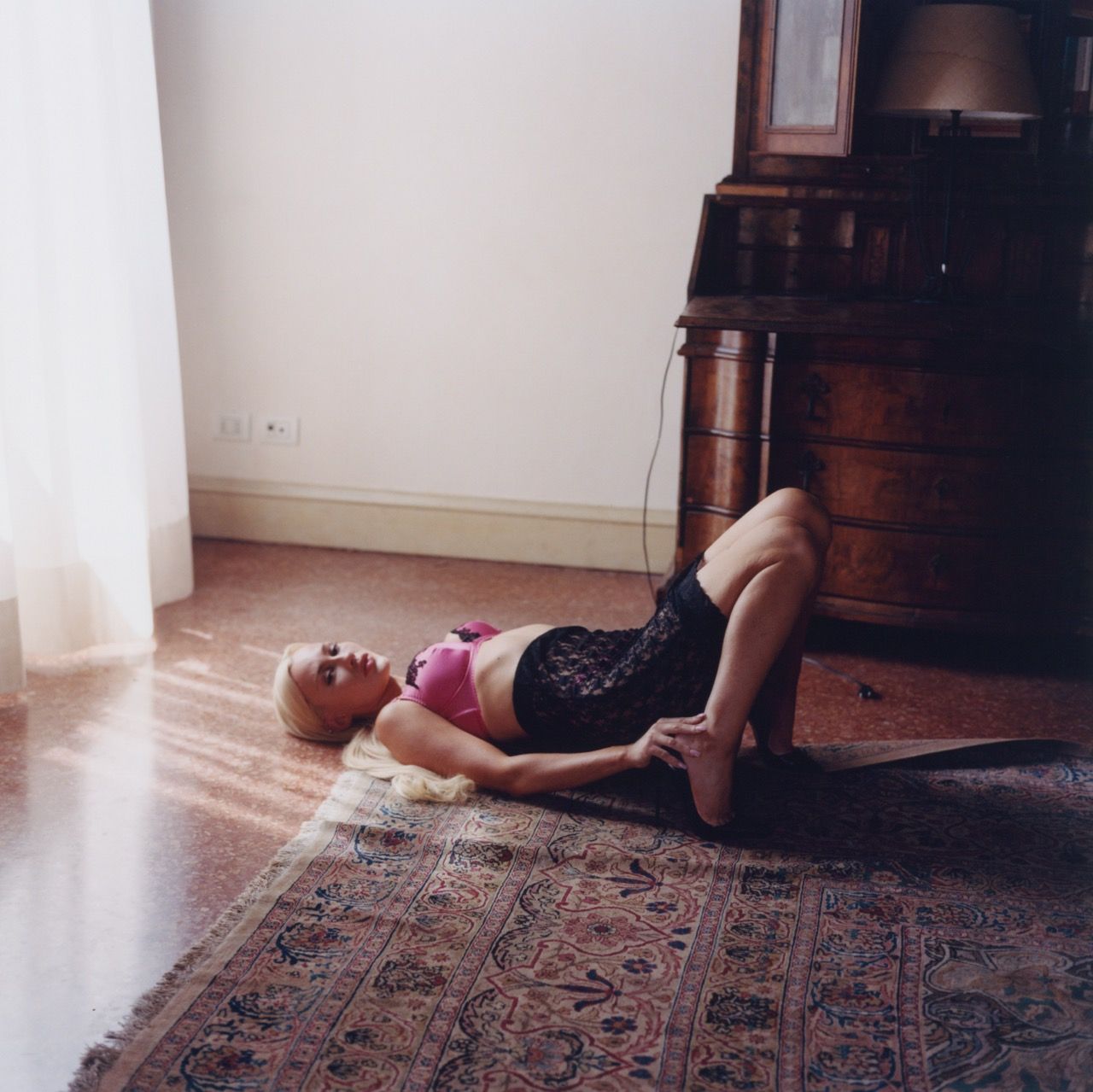
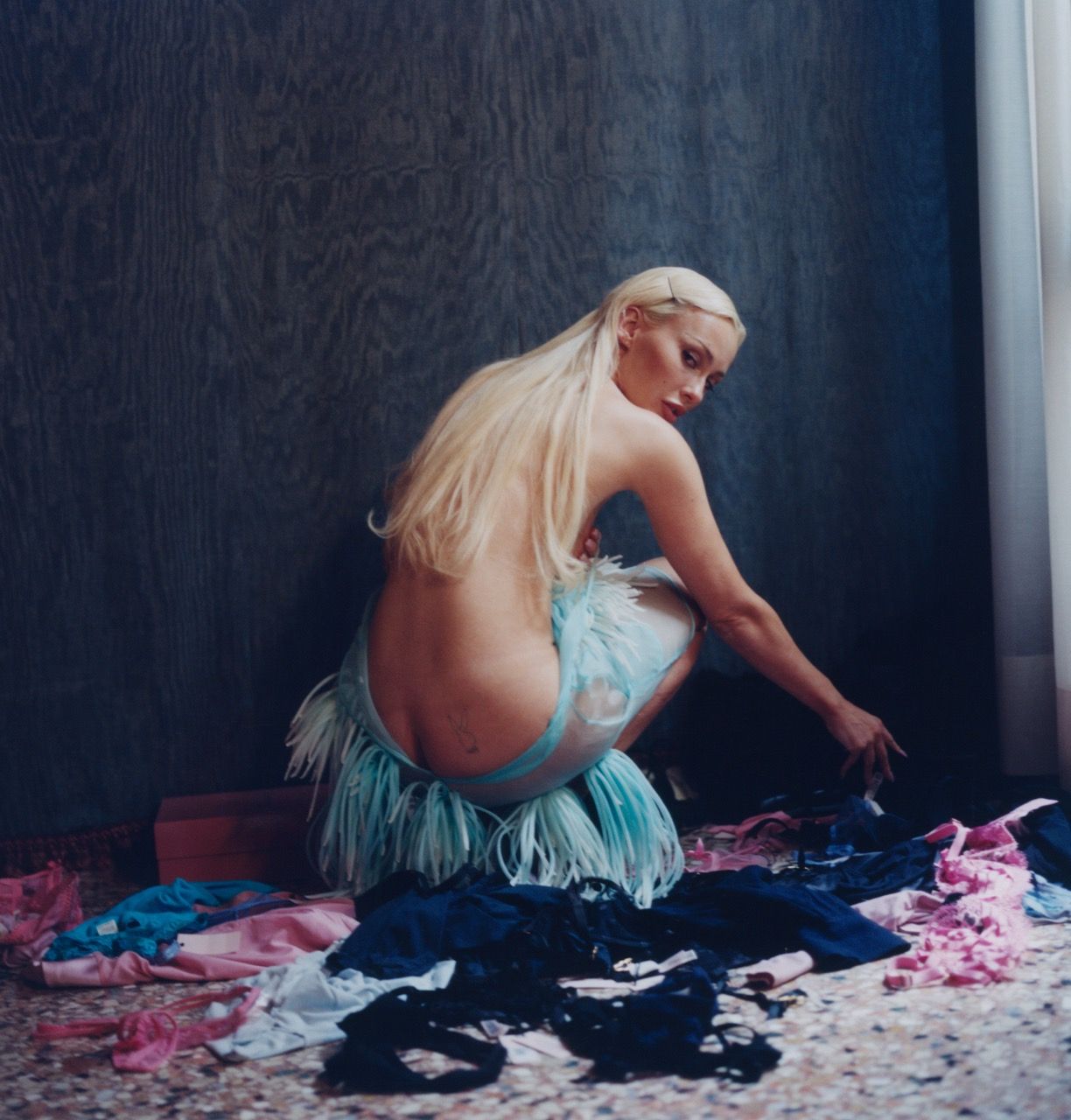
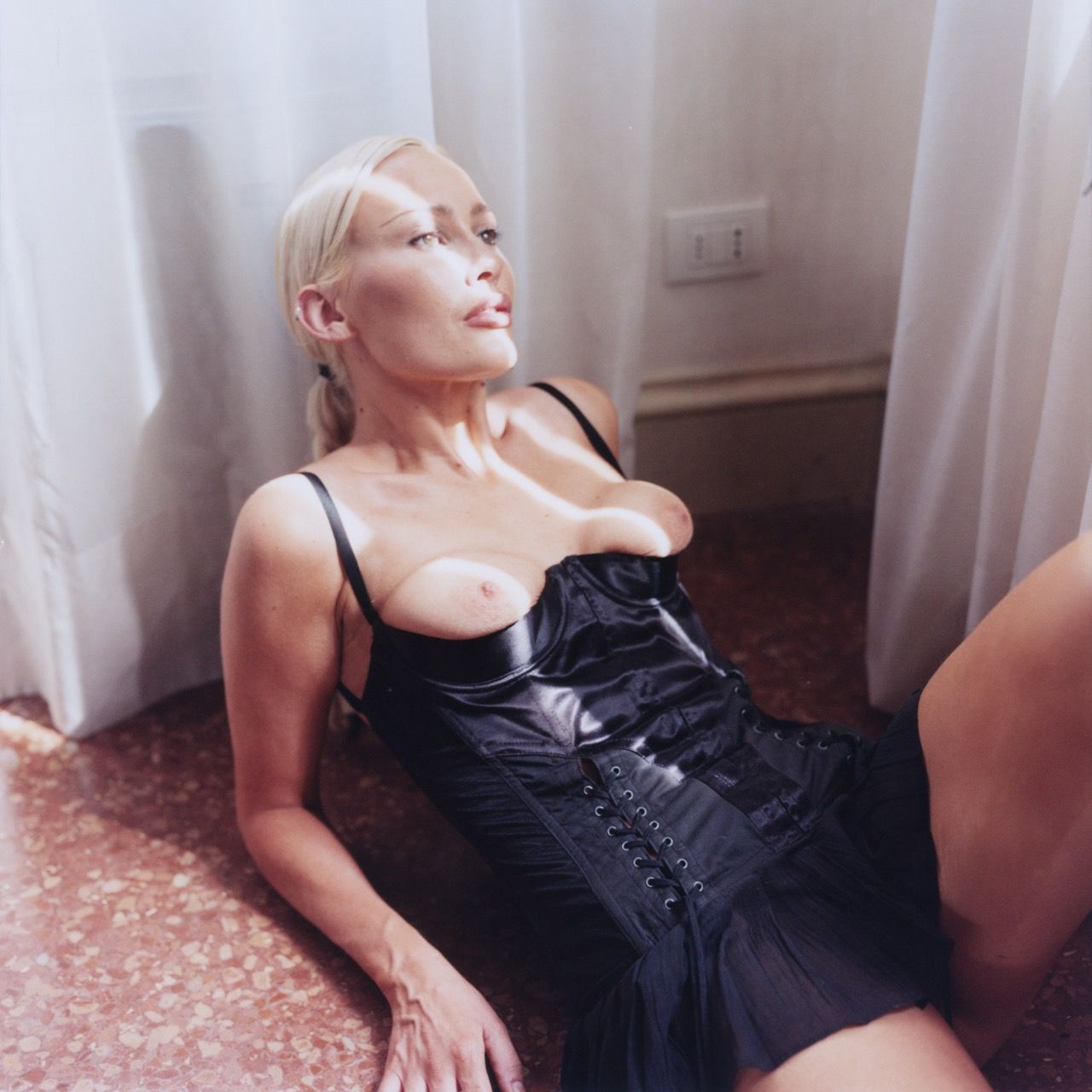
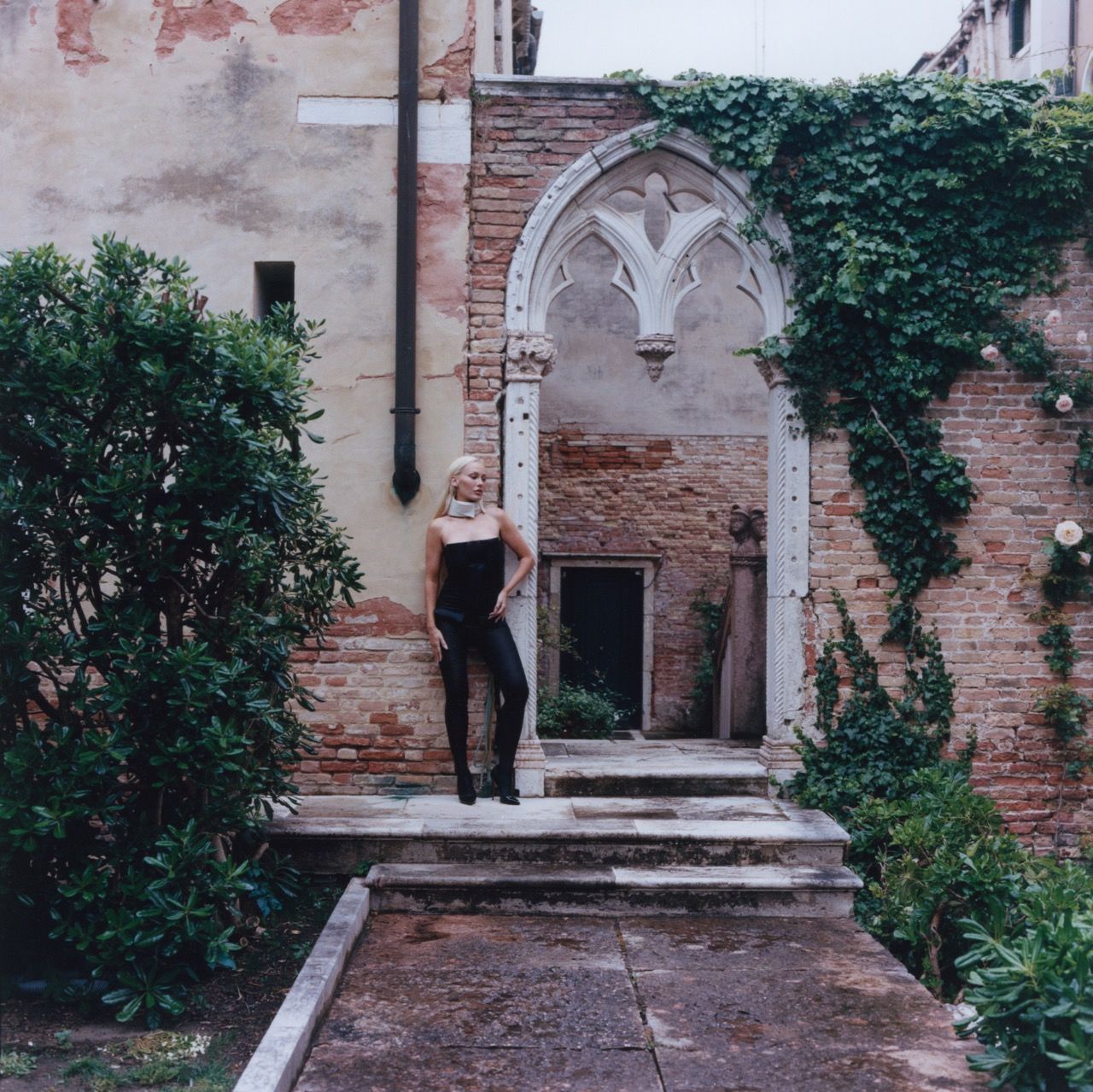
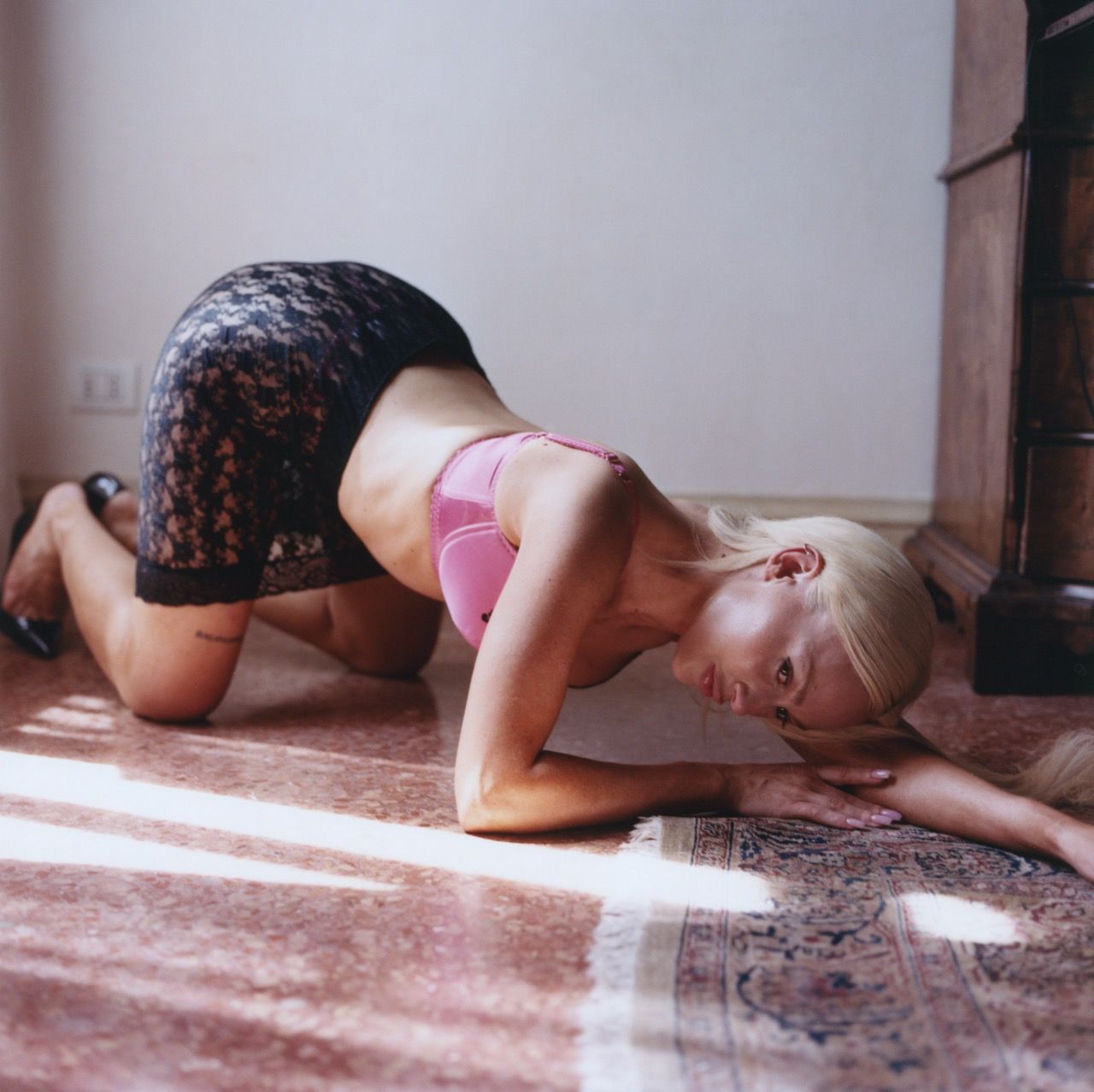
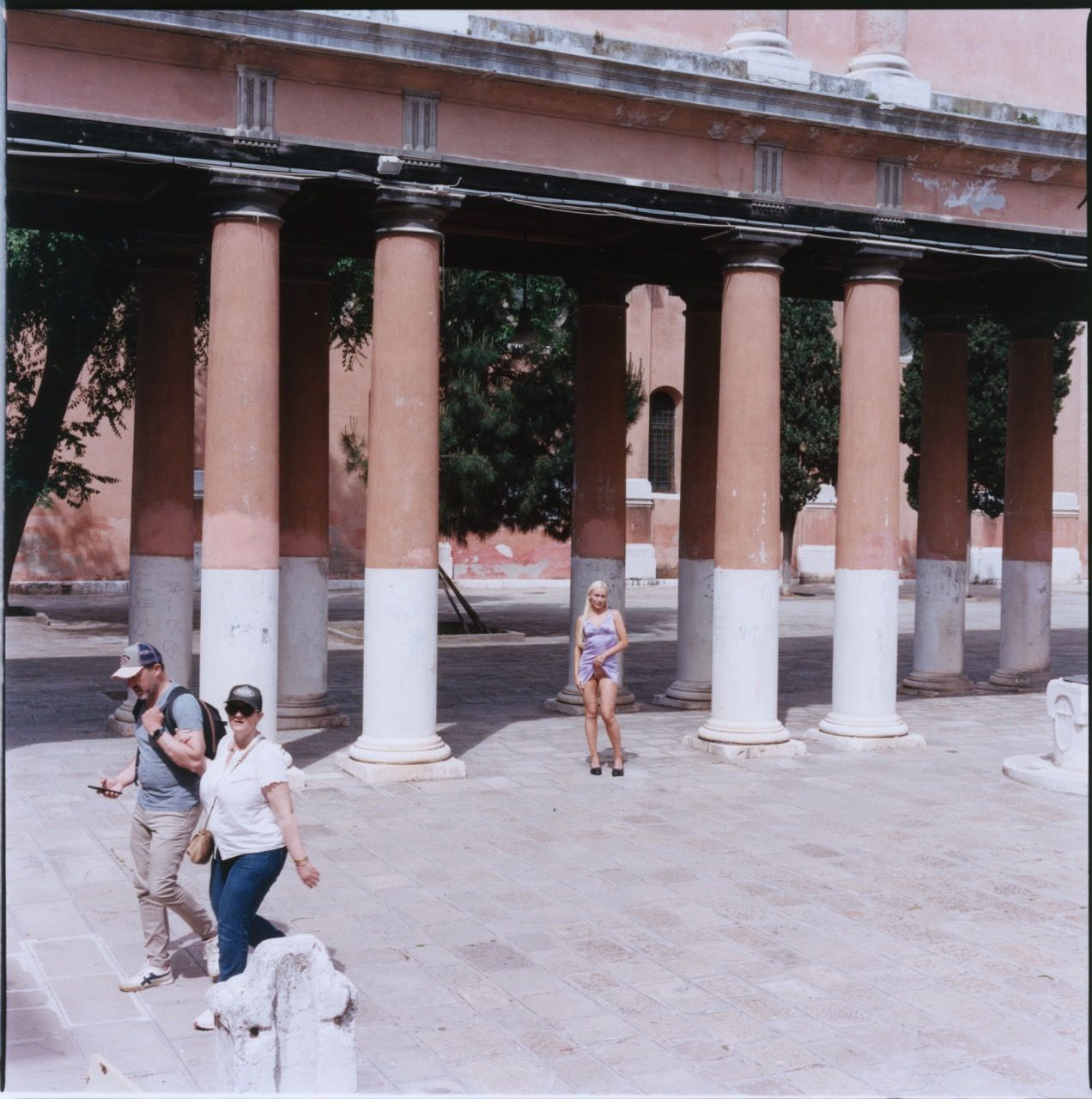
On the occasion of the 61st Venice Biennale, Zoe Chait traveled to Venice to photograph Maja Malou Lyse, after spending the past year documenting the making of Things To Come, the artist's forthcoming publication with Mousse Publishing. Karol Chmielewski spoke with the artist about pornography, sperm banks, and the thin wall between fantasy and science.
Karol Chmielewski: How was Venice, and what was it like working on such a large scale for the first time?
Maja Malou Lyse: Venice was wild in a lot of ways. I arrived a month before the opening and had booked a palazzo on Airbnb for roughly the same price as my teeny tiny studio apartment in New York. I remember thinking, "OK, I'm undeniably going to have a panic attack, so I might as well be somewhere extremely gorgeous while I have it." I was alone in what felt like a deserted Venice, wandering its maze-like streets while knowing all the crowds, attention, and chaos were just around the corner. The anticipation was crazy. The day before the Biennale opened, Zoe came over and we shot these portraits together.
Even though a project of this scale involved a huge number of collaborators, making art can still feel surprisingly lonely. A lot of it is spent hiding away alone in your studio, researching, thinking and second-guessing. Then boom, suddenly opening week arrives and thousands of people are standing in front of it and you've swapped out the grey tracksuit you've worn every day for red-bottom stilettos and a smokey eye. The contrast is kinda crazy, but it was also a lot of fun. And the cherry on top was Cicciolina performing at my party. Our conversation backstage mostly consisted of hugs and kisses due to the language barrier.
KC: The title is taken from the 1936 science-fiction film based on H.G. Wells — a work that imagined a technocratic utopia built on the rubble of war. Is your Things To Come utopian, dystopian, or deliberately refusing that binary?
MML: I was working from a studio right on Times Square, so a friend gifted me Times Square Red, Times Square Blue by Samuel Delany, which I read in just a few days. That led me to his other novel Stars in My Pocket Like Grains of Sand, and from there down a science-fiction rabbit hole. I noticed how science fiction often functions as an outlet for processing our fears of the unknown. We project our hopes and anxieties onto it. We imagine aliens, UFOs, flying cars — we aestheticize uncertainty, perhaps in order to live with it. It also reminded me of the manosphere-affiliated sperm racers that are also in the exhibition: teenage boys turning fears about their fertility into a spectacle and game show. More generally, I think image-making often gives us a sense of control over the ultimate uncontrollable experience: being human. When I came across Things to Come, I was like, "Hell fucking yeah, bingo." The title had the perfect balance of open-ended poetic reflection and horny comedy. It was also very close to the tone I wanted in the exhibition: equal parts playful and serious, equal parts fascinating and frightening. Utopian, dystopian and deliberately refusing that binary.
KC: What surprised you most during the making of Things To Come — either in the scientific starting point, the production, or the audience reactions so far?
MML: What struck me when I did my initial site visit at Cryos Sperm Bank was that there was only a thin wall separating the donation booth, where Pornhub was the default homepage, from the laboratory where scientists were working. I was looking at two industries that are usually treated very differently: science is associated with truth and authority, pornography with fantasy and entertainment. One is respected, the other is often looked down upon. Yet here they were, operating under the same roof and depending on one another. The two worlds overlap in funny ways and share a profound obsession with the body and its functions — one looking from the inside, the other from the outside.
KC: Pornography is probably the most consumed image in the world, yet it's rarely treated as a serious visual language. How did you approach working with it as one?
MML: From the beginning it was important for me to emphasize the authority I see in the pornographic image and the way I regard pornstars as image experts. They understand camera logic, fantasy, performance, and audience engagement better than anyone else. To me it was a question of craftsmanship rather than provocation. So I hope the work can be read beyond the familiar moral panic surrounding pornography — whether it is good or bad, liberating or oppressive. Those are not the questions present in this project. Here, pornography is simply a fact of contemporary life, a prism through which to look at the world around us.
KC: Was the musical form a way of making that unbearable premise survivable, or something more ironic than that?
MML: The musical elements actually came together quite organically in the process of developing the film with DIS. We were also looking at PMVs — porn music videos — an internet-born genre associated with gooners, an online male subculture whose sexuality is deeply mediated by technology. PMVs are fascinating because they transform pornography into something closer to a dream, a mood, or an atmosphere. They're essentially montages designed to keep desire suspended indefinitely. They're less concerned with narrative than with sustaining a state of longing and anticipation through montage, rhythm, and repetition. In many ways, Things To Come became our own interpretation of the PMV. That's how it ended up becoming a porn musical: breast piano, Spanish-guitar POV, and a content-creator whistle choir.
KC: Given your background across television, mass media, and contemporary art, how do you think these different image systems relate to one another?
MML: Art is probably the least influential image operating system we have today. The Venice Biennale is the most visited exhibition in the world, attracting around a million visitors over seven months. Pornhub gets that kind of traffic in a matter of minutes. I'm fascinated by the image logics of mass media, how they circulate, the attention economies they operate within, and the desire tactics that shape them. I sometimes get the impression that the art world wants to outsmart those systems and say, "But I don't fall for that!" Yet the art world absolutely loves it when an artwork goes viral. I think there is a great loss in dismissing mass media as something purely shallow. To me, there's often a lot of depth in these glossy surfaces. If millions of people are consuming something, it can usually tell us something important about who we are and the time we live in.
KC: Your persona and public visibility seem deeply integrated with the work. Do you see a point where the boundary between Maja Malou Lyse the artist and the image/performance of "Maja Malou Lyse" becomes difficult to manage — or is that productive tension intentional?
MML: I'm not sure I experience such a clear distinction between the two. Or at least I don't see it as any deeper than the fact that we all perform different versions of ourselves. Who isn't different at work than they are in private? I love when artists are obvious visual extensions of their artwork and vice versa. But there is always much more to a person than that. Because my work is about sexuality and I have platinum blonde extensions down to my butt crack, people tend to assume I'm some kind of sex-crazed party girl. When in reality, I'm usually in bed by 10pm, I don't drink, and I'm probably the least promiscuous person in my friend group. I don't find that difficult to manage, though. I mostly just find it funny.
KC: What space does the photobook with Zoe Chait occupy in relation to the exhibition?
MML: The book offers a kind of behind-the-scenes look at Things To Come, both the production and the research that shaped the project. It includes interviews with sperm racers, scientists, and porn stars, alongside texts by Jamieson Webster and Sean Monahan. In that sense, it becomes more than documentation — it allows the project to expand beyond the exhibition itself. Zoe followed the making of Things To Come on set. I love working with her because there is something interesting in the collision between the synthetic, high-femme pop aesthetics of my work and her analogue photographic practice. She produces every image by hand in the darkroom — the image is something physical made through time, labour, and touch. At a moment when instant AI image-making is on the rise there is something incredibly meaningful about that. I think that gives them a certain weight.
KC: Are there new directions in technology, performance, or media that this exhibition has opened up for you?
MML: My curator, Chus Martínez, actually told me to start working immediately to keep the momentum and avoid the infamous post-Venice collapse. I'd still say it's too soon to tell. I'm excited to see what comes next and discover what I've brought with me from the experience. But right now, I'm mostly excited to go to the beach and work on my tan.
Credits
- Text: KAROL CHMIELEWSKI
- Photography: ZOE CHAIT
- Styling: NICOLE WALKER
- Consulting Movement Director: Remy Malen