Lauren Greenfield’s Antidotes to Social Media Addiction
|Fionn Adamian
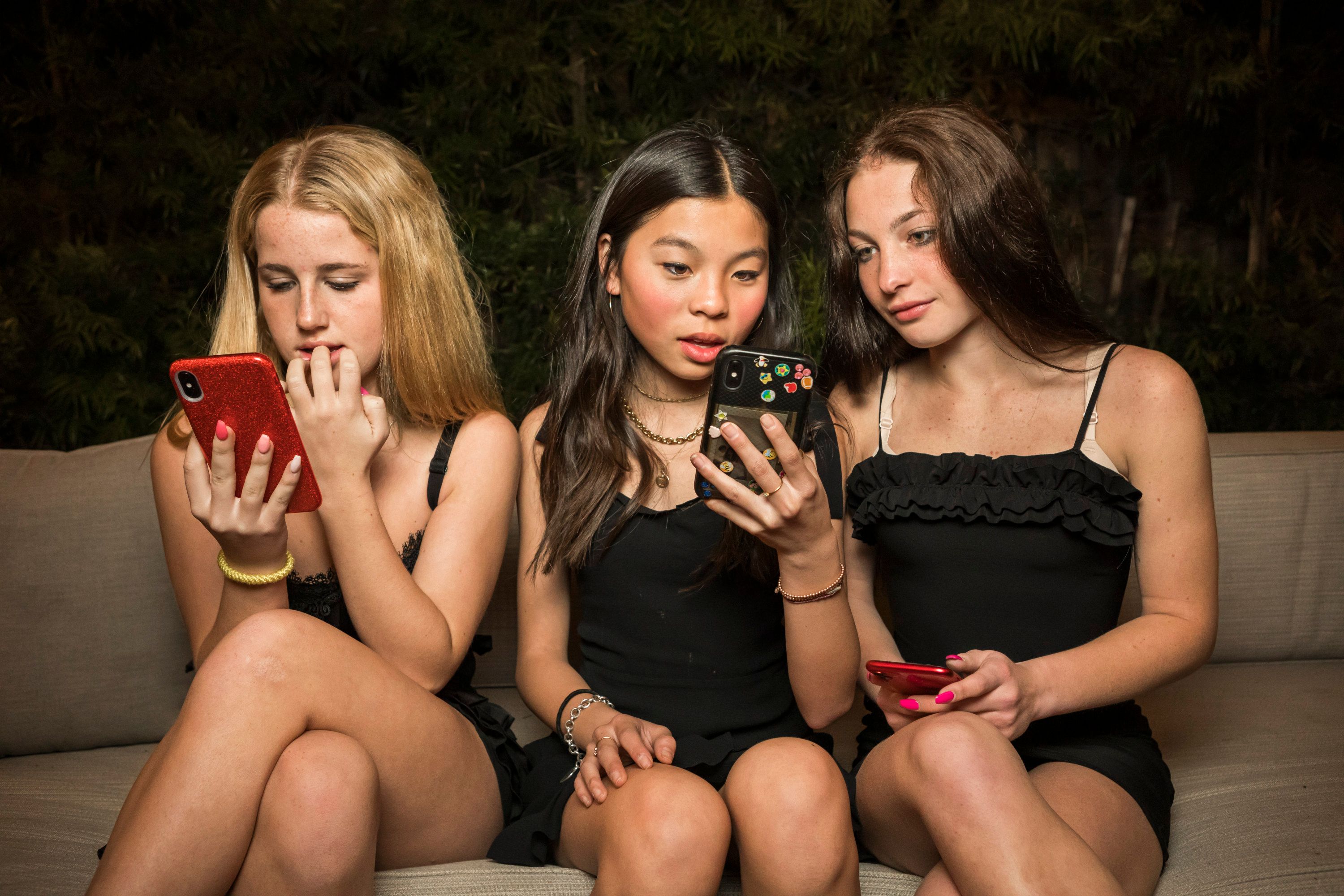
In 2024, TikTok faced historic lawsuits from 13 U.S. states alleging that the application was expressly designed to addict users under the age of 18. As it turned out, the defendants had more scrupulously researched their own malfeasance than any independent expert. TikTok’s internal studies had even determined the exact amount of viewing for the average person to form a habit of use: 260 videos, or approximately 35 minutes of watch time.
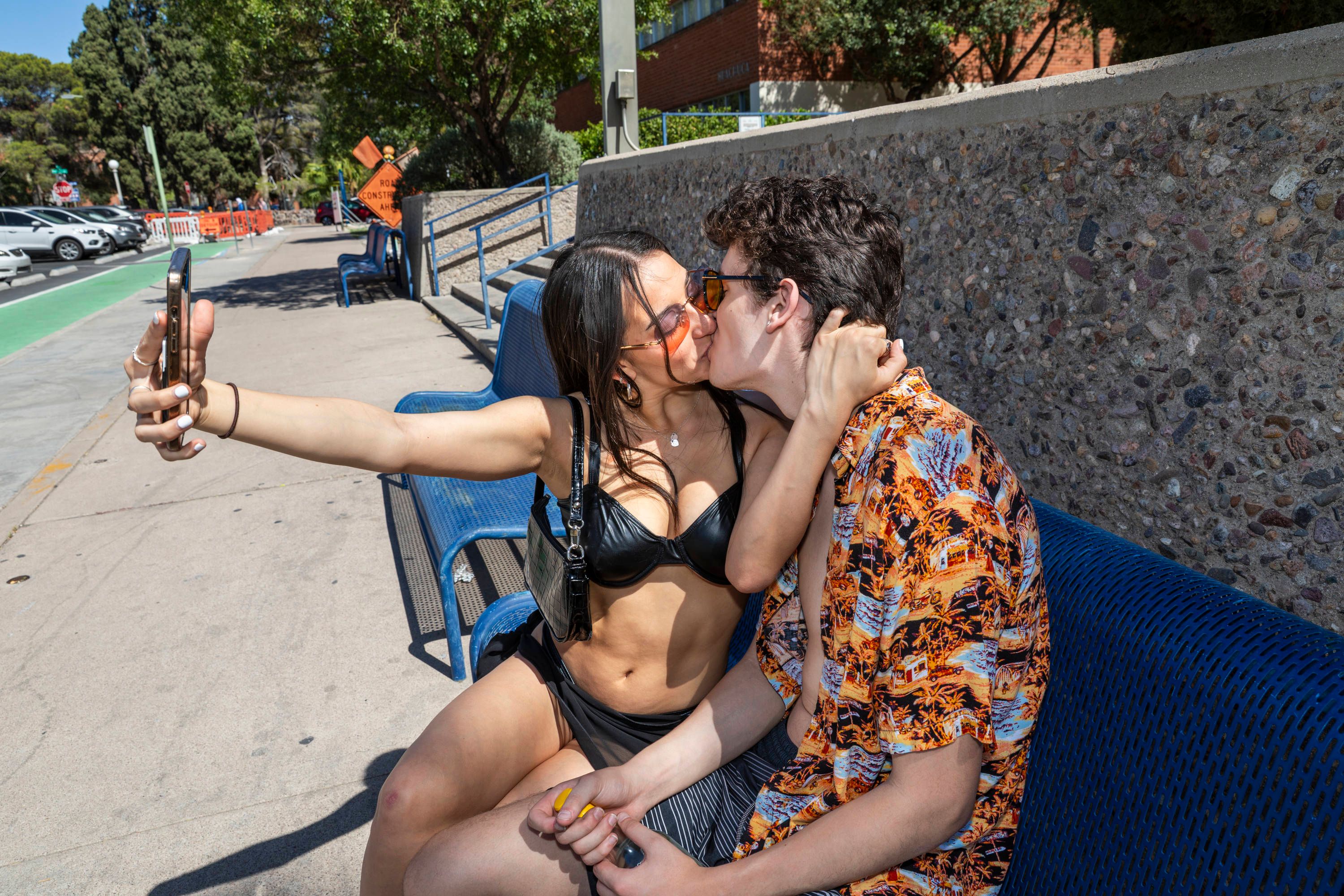
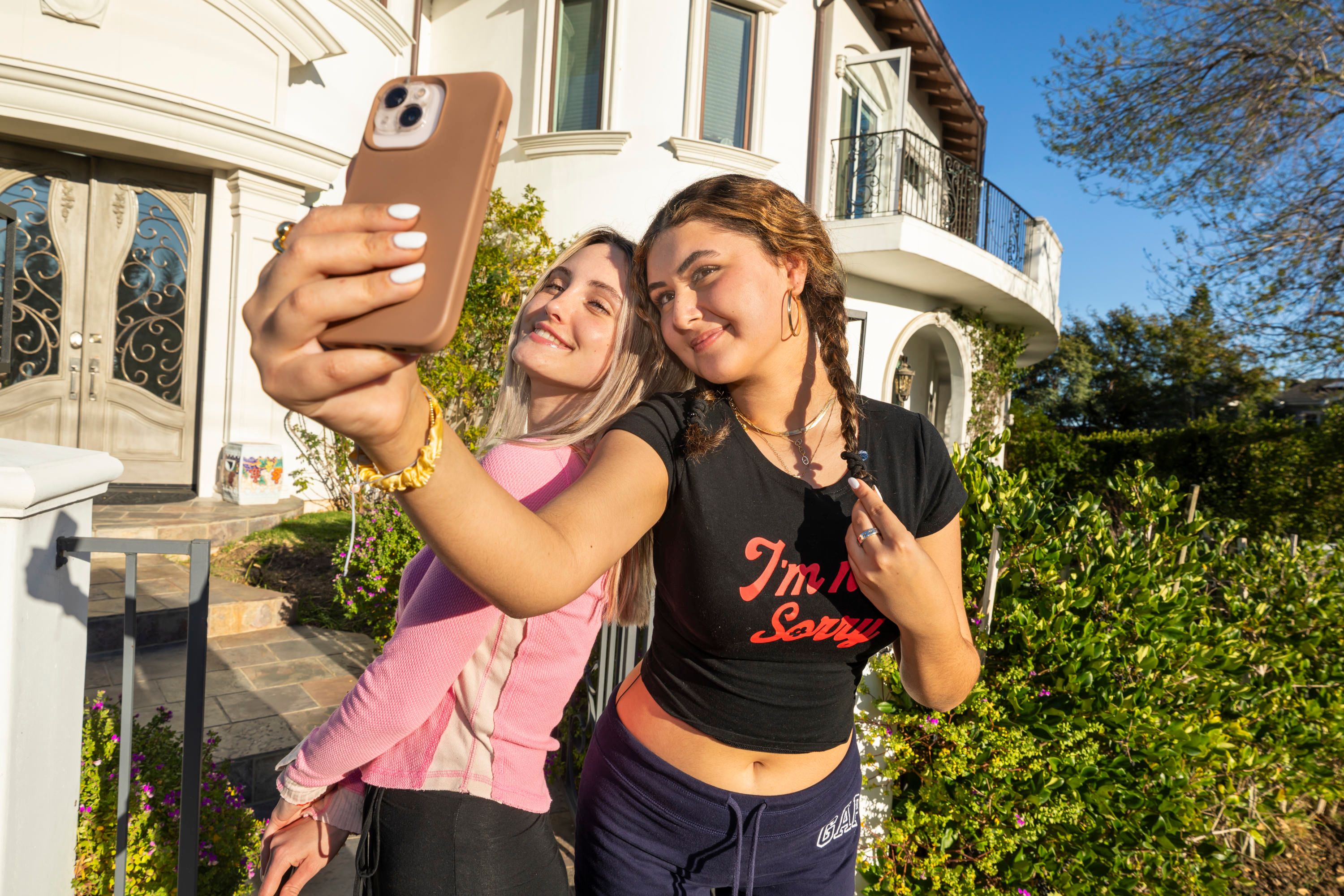
Cast against this political background, Lauren Greenfield’s exhibition “Social Studies” at Fotografiska Berlin makes social media addiction felt in all its skin-crawling intensity. Developed out of a five-part documentary series on Disney+, the exhibition charts the lives of thirty Los Angeles teenagers who gave Greenfield unrestricted access to the content of their phones for a one-year period.
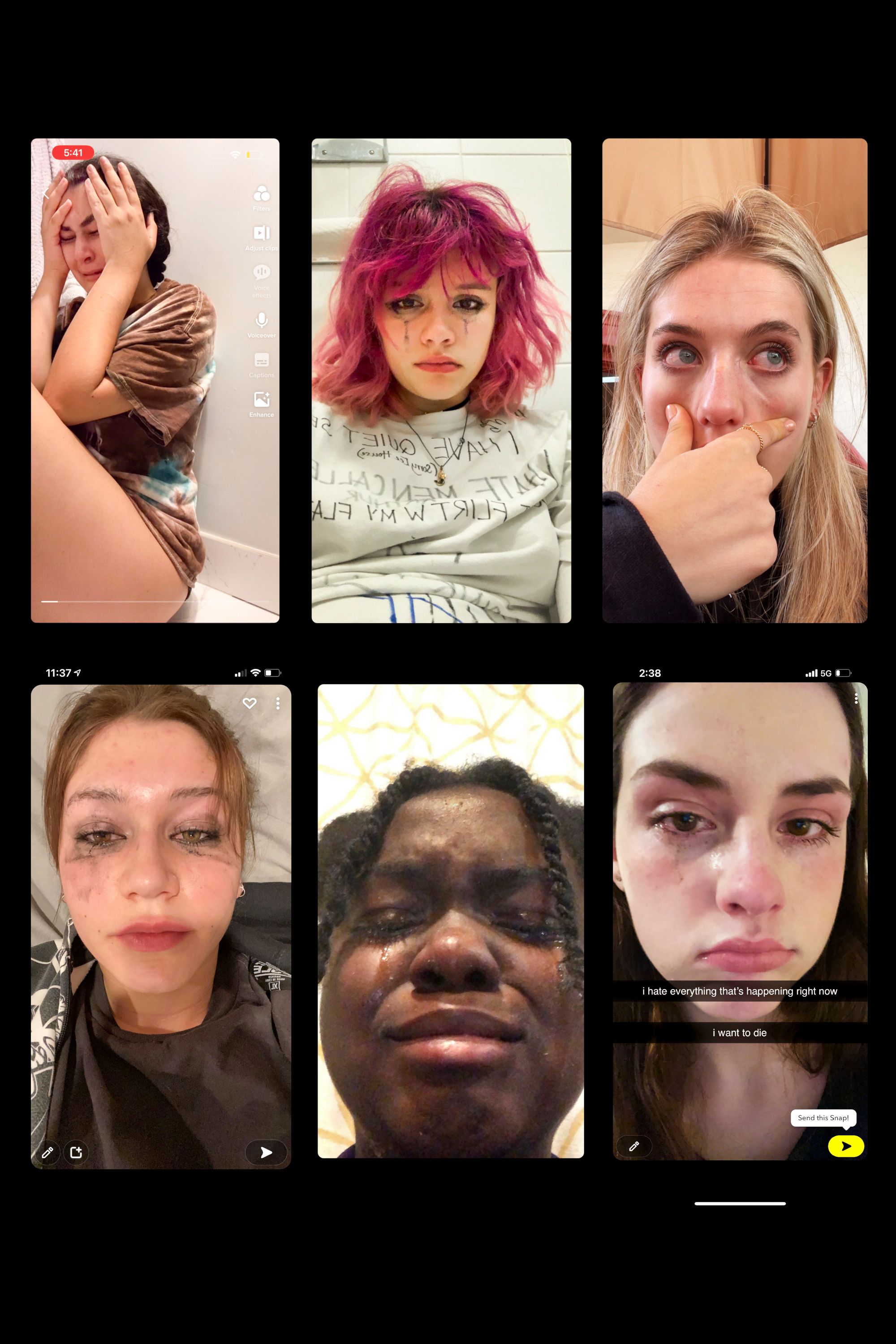
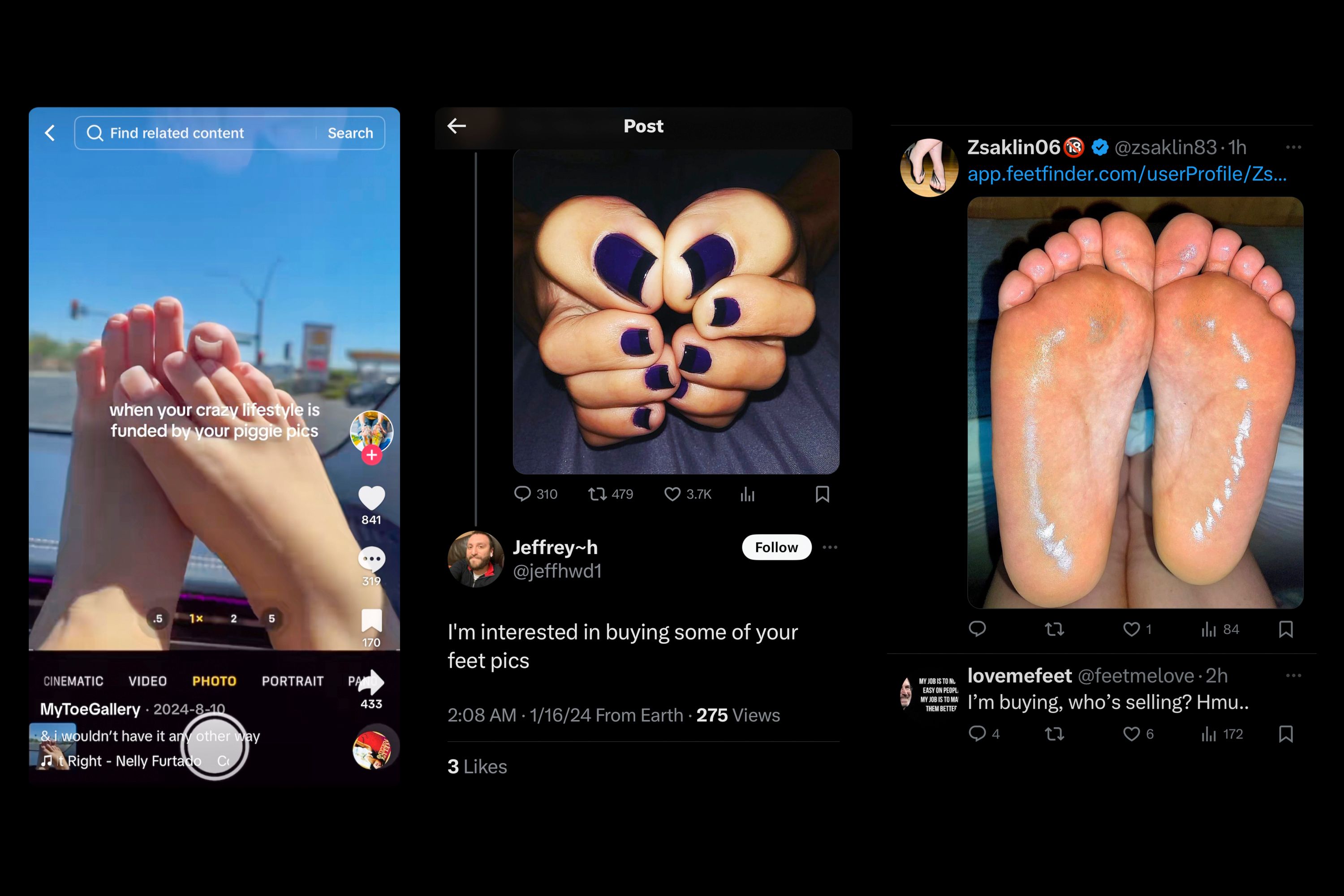
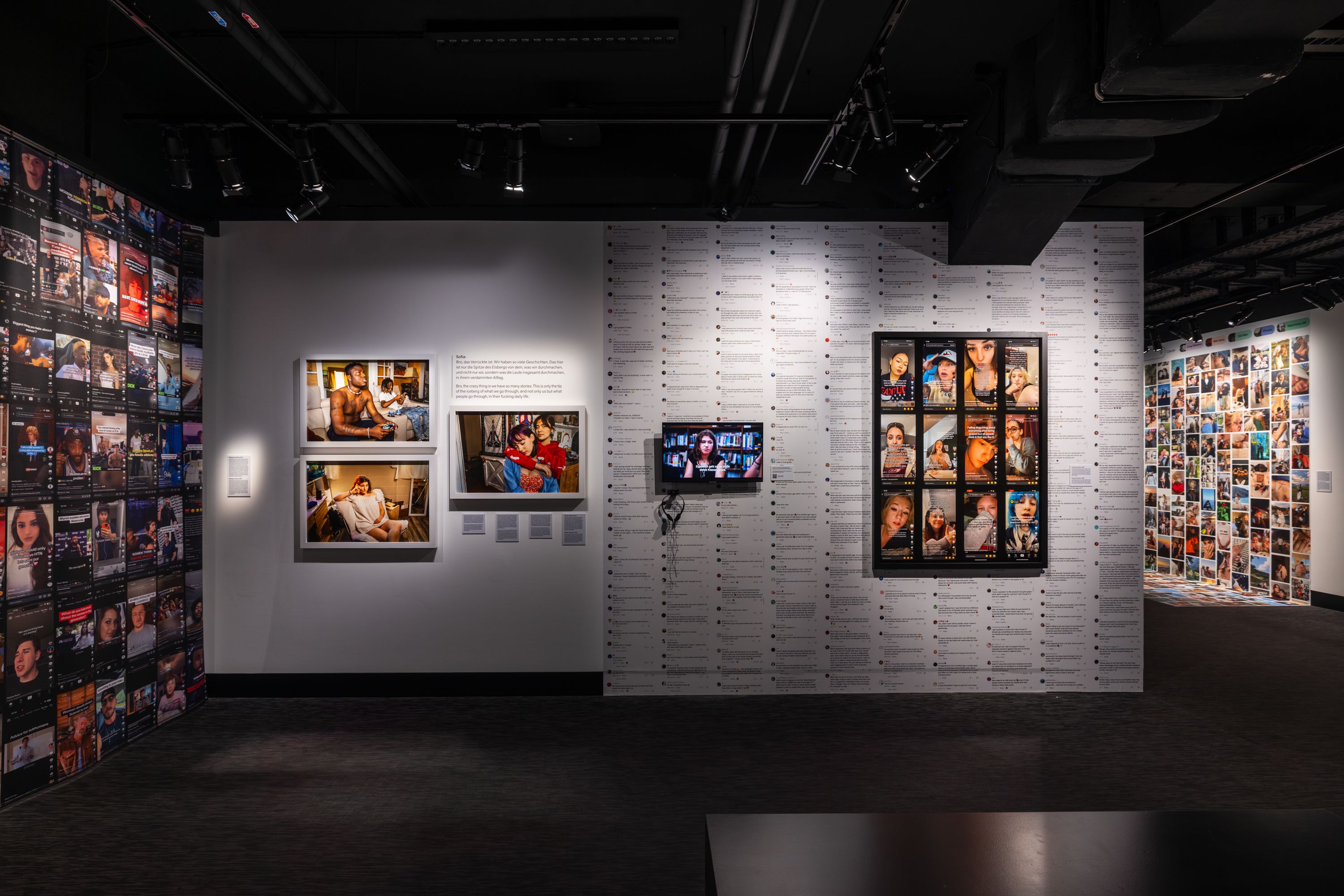
Even for the extremely online, the scale of the presentation is a shock. Blowing up images usually seen on a six-inch screen, the exhibition guides us from giant photo grids of “relationship goals,” multi-channel videos of dance trends, and case studies of cancel culture, all the way to Internet subcultures glorifying anorexia and self-harm. The algorithm room, which models the introduction of three users onto TikTok, serves as trenchant proof of concept for the app’s lurch toward violent extremes—for one model user, less than 8 hours of scrolling separates weight-lifting advice from celebrations of the mass shooter Elliot Rodger.
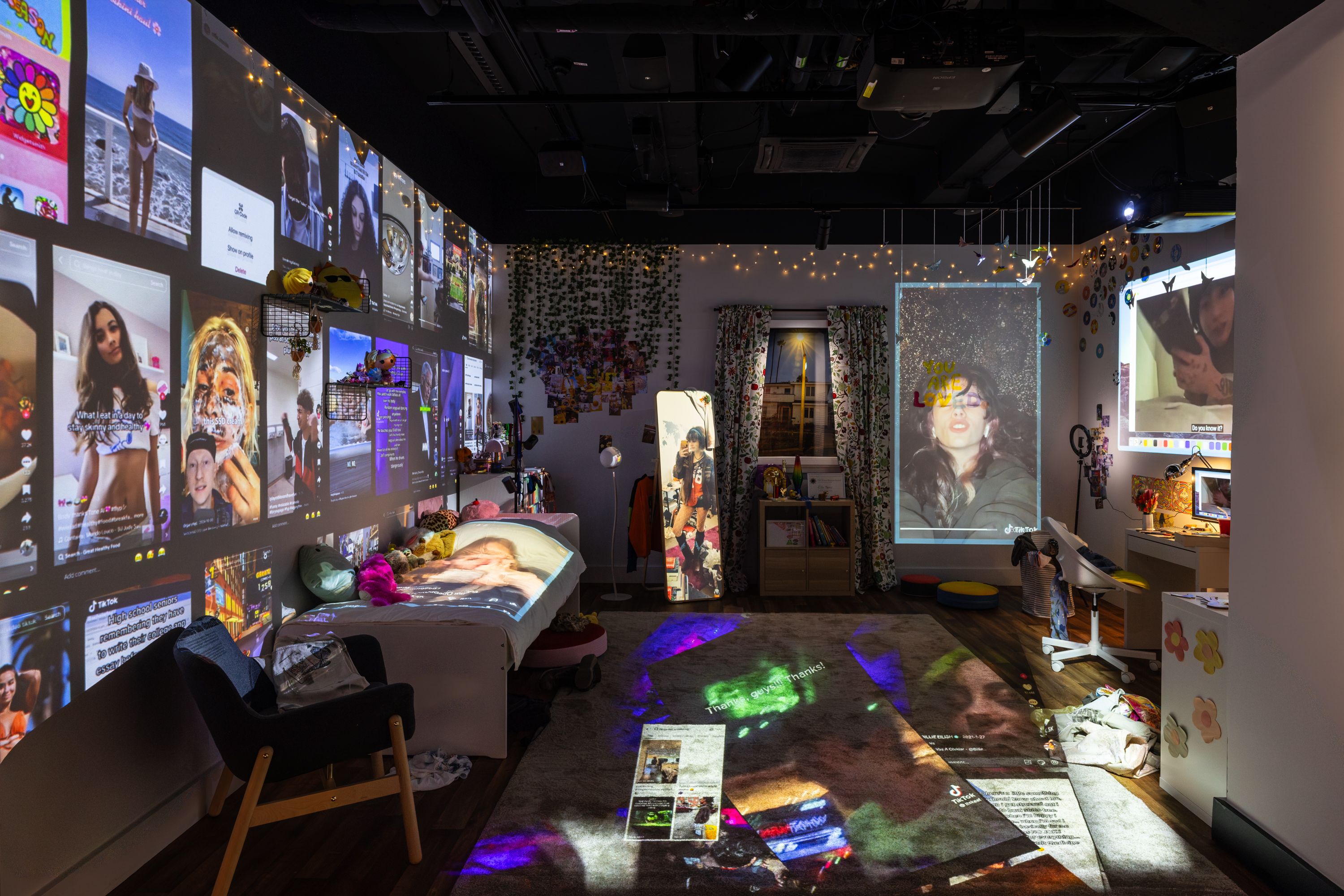
Immersing us in the sensory overload of the rabbit hole, the exhibition neuters the deceptive feeling of agency from scrolling on Instagram. You can’t be said to “consume” the images of “Social Studies”; it’s the images that consume you. The pressure cooker of popular media has been a leitmotif for Greenfield’s work since she started documenting coming-of-age in her first photo-monograph Fast Forward (1997). Featuring a happenstance photo of a 12-year-old Kim Kardashian at a school dance, Fast Forward captured the rites of consumption among an earlier generation of Hollywood’s teenagers. Seen from the present, the cars, clothes, and color grade of these photos have a nostalgic gloss absent in “Social Studies,” but one thing is common across both works: the fatiguing struggle to live up to the fantasies of mass media.
“Social Studies” is partially a shock-therapy approach to our obsession with social media, but talk therapy is the more important part of Greenfield’s antidote. In the course of the documentary series, Greenfield organized group discussions among the participants about the effect of social media on their lives, and the videos of these sessions are interspersed throughout the exhibition. The show’s real revelation is the energy that these teenagers bring to dissecting their smart phone attachment—you can feel the cathartic rush of honesty when the kids discuss the topics of bullying or body image for the first time in a group setting.
One of the foremost portraitists of the initiation into American adolescence, Greenfield spoke to 032c about the ethics of intervention as a documentarian, the visceral reactions to the algorithm room, and the transformative effect of “Social Studies” on the project’s participants.
Fionn Adamian: How did you earn the trust of the teenagers? Were there any ground rules?
Lauren Greenfield: There’s a photographer who says that a picture takes 1/125th of a second plus however many years old you are. That was true with “Social Studies.” I’ve spent much of my career photographing people in vulnerable states, so access and trust are the most important parts of my process. My first photography project Fast Forward (1997) was about the effect of media, materialism, and celebrity on kids in LA, and my first film, THIN (2006), was about an eating disorder clinic. “Social Studies” was obviously a challenge because it was about kids and social media—I know that my son doesn’t want me looking at his phone. But once you have that trust, people want to tell their stories. In a way, they’re waiting for that trusted listener.
From the beginning, I structured the project so that we would film over a one-year period. That time was critical for trust to evolve. I found out later that some of the kids weren’t sharing everything in the beginning. Sydney was one of the first that came to the project after she had this intense slut-shaming experience in high school. When she went to college, I filmed her with all of her tightly knit friends, and a couple months later she told me that the same thing from high school repeated itself. She kissed a boy who was her roommate’s boyfriend when she was drunk, and she became the pariah of the university. While she was still there, she wasn’t ready to talk about it. We only had that conversation after she left. Those things are really worth waiting for.
The edit also presented a lot of ethical questions because I wanted to be sure that the stories were told with purpose, that we weren’t doing something sensational for its own sake. I spent two years editing the material, a year longer than I expected.
FA: And if you spend two years in the editing room, the protagonists surely change enormously. You’re not the same person at 20 as you are at 18.
LG: That was very reassuring for the kids. They knew it wasn’t going to come out till more than a year after we finished. At 18, that feels like an eternity. It was enough time to get out of the petri dish of high school. There’s a scene from a group session where Jordan shares with the other kids that she has a boyfriend that her mom doesn’t know about. They ask her, “isn’t your mom going to watch this film?” She says, “yeah, but by then it won’t matter.”
FA: How did the participants treat you compared to other authority figures?
LG: It’s important to me as a documentarian to not be in an authority role. When I did THIN, it was similar. The patients were confiding in me, as were the therapists and administrators. I was seeing the sessions where administrators and therapists talked about the patients, and I was seeing the things the patients were doing that weren’t allowed. There’s an understanding that I’m going to keep that confidence. It’s not until they see the finished work that they say, “oh my God, she was talking about me.” It’s important to have those two points of view, as well as to document that there are secrets and lies.
There’s another reason it’s important to have enough time for a project: I need to be able to control for anybody that’s doing things just for the camera. You start to know people well enough that you can tell the difference. In this project, it was a real surprise and relief to me that my camera was not treated like a phone camera. The kids were not performative with me, and I could tell because I could compare my footage to the online performance.
FA: Did you experience a tension between your responsibilities as an adult figure and your commitment to documentary objectivity?
LG: Most of the time, you’re not the most qualified person to help. Certainly, I’m not going to let anyone get hurt or hurt themselves if I’m the only person that can stop it. The only situation where that was relevant was the drug overdose at Jack’s party, but they called the paramedics themselves. I’m not a paramedic; I’m not a therapist. My job is to document what’s happening.
FA: I mean, one of the protocols of documentary is non-intervention, right? You’re not supposed to impair your subjects’ natural behavior.
LG: I do want to say though, this was a very interventionist project. It was the first time I’ve facilitated an intervention with the group sessions of the documentary. These were entirely my creation: I set them up and invited the kids. That was a chance for the kids to reflect on the things we were filming and to tell us what we should film. They had the chance not only to collaborate by saying “you have to film bullying because that’s what’s going on,” but also to transform as people. Part of it was being in those sessions and having the chance to reflect outside normal high school life.
The fact that a lot of the kids collaborated with me on the roll-out was also very interventionist: they came to Q&As, met with lawmakers, and some even participated in the exhibition. They say their lives have changed as a result. The project wasn’t just about documenting their lives; they got to create the ending in a way. That’s what made the project hopeful. It was really important to me that the kids also had some agency in the process because they were making themselves so vulnerable and giving up so much privacy by sharing their phones.
FA: It’s so rare for teenagers to have the chance to reflect on the social environment of high school with any sort of distance.
LG: You’re always a certain person in your friend group in high school. In the project, the kids said it was the most diverse group they’d experienced, not just socio-economically, but in terms of personalities. They really valued that experience. It kind of reminds me of how people are about their platoon in the military. They had been through something together.
FA: What changes do you notice in the lives of teenagers when you compare “Social Studies” to your earlier work?
LG: Everything is amplified to the n-th degree with these profit-making motives to maximize engagement. The vulnerabilities have always been the same for adolescents in the time I’ve been working as a documentarian: body image insecurities, worries about fitting in, concerns about sex or having a relationship. Now tech companies have been able to exploit those vulnerabilities for profit. My mom is a professor of psychology, and I used to remember hearing about guardrails in advertising—you weren’t allowed to use brain science to appeal to kids. But there really are no ethical guardrails for the tech companies.
FA: Normally, you’d look at the large glossy photos of the exhibition on the scale of a six-inch phone screen. What’s gained by transposing the scroll of social media into the physical realm?
LG: The exhibition was the missing piece after I wrapped the documentary series. I wanted to slow things down and blow things up, to contemplate the semiotics, messages, and even the aesthetics of social media in a different way. I’m trying to give you the red pill in the Matrix that makes you wake up. When we see this content, we’re in a hypnotic state, just like the addict going down the rabbit hole. I wanted to give people the chance to look critically at what the media actually was. Young people are like, “I recognize this, it’s so weird my life is on the wall.” And the older people are like, “holy shit, what the fuck is this?”
Part of this divide is the algorithm—we’re used to only seeing our own. That was the reason behind the algorithm room. You can see how the tech companies throw a hook out there to check what you’re interested in. I did not know it was going to get so extreme that fast. It’s been shocking for people. I’ve had visitors come up to me afterwards and say they felt nauseous, but the original concept was just to see what other people were seeing. Somebody asked me whether I would put the algorithm room on a website, but I don’t think it plays on a laptop scale. It needs to be twenty-feet-wide by eight-feet-high, and for it to be a shared experience. That kind of person-to-person connection is what happened in the groups, and what I present as the antidote to this debilitating addiction.
FA: It’s all part of the spatial aspect of the museum. You can walk in and out of the algorithm room, but there’s no real outside of the scroll.
LG: As an artist, that was so exciting for me. It’s the first time I’ve created a site-specific project. You have Ella’s recreation of her bedroom right when you come in, and it really gives context about where social media lives for these kids—Ella even said that the installation felt realer than her own bedroom. I’m glad the exhibition is opening in Europe where the show is not as known as in the US. I don’t want people to think it’s an extension of the series. It’s the same archive, it’s the same topic, but we experience it in a different way in this physical space. People can be drawn at their own pace to the individual characters. Someone came up to me last night and said, “I struggled with an eating disorder after a sexual assault” and started crying. Everyone brought something different to it.
FA: You’ve spent years now with this archive. How is it for you to see people seeing it for the first time?
LG: Oh, it’s the most gratifying thing ever. My film teacher from college said that when you put a show on streaming it’s like throwing a quarter in the Grand Canyon. You just don’t know where it’s hitting. When you’re in a screening room, even more so in an exhibition, you get to see how people respond to the work. With the reflection room, we’ve also made a way for visitors to communicate what touched them. From just the last ten days, there are more than a hundred papers on the wall of people expressing their own stories about social media. That’s tangible proof of what they got.
You’re in your own rabbit hole while you’re making this work. It’s been five years since I started. It’s an existential journey. You don’t know how people are going to react. There are some artists who stay in the making process all the time. For me, it’s always been really important to know that it actually hits. I love the making, but I’m also in it for the communication. I want to know that something about the project is hitting the other side. I spend a lot of time when a project is done just bringing it out to the world. There’s so much that’s hard to understand right now, with people acting differently than we’ve learned they should. I think this show explains something about that.
Credits
- Text: Fionn Adamian