It’s a New Age of Looting: Zuzanna Czebatul Takes USM to 032c
|VICTORIA CAMBLIN
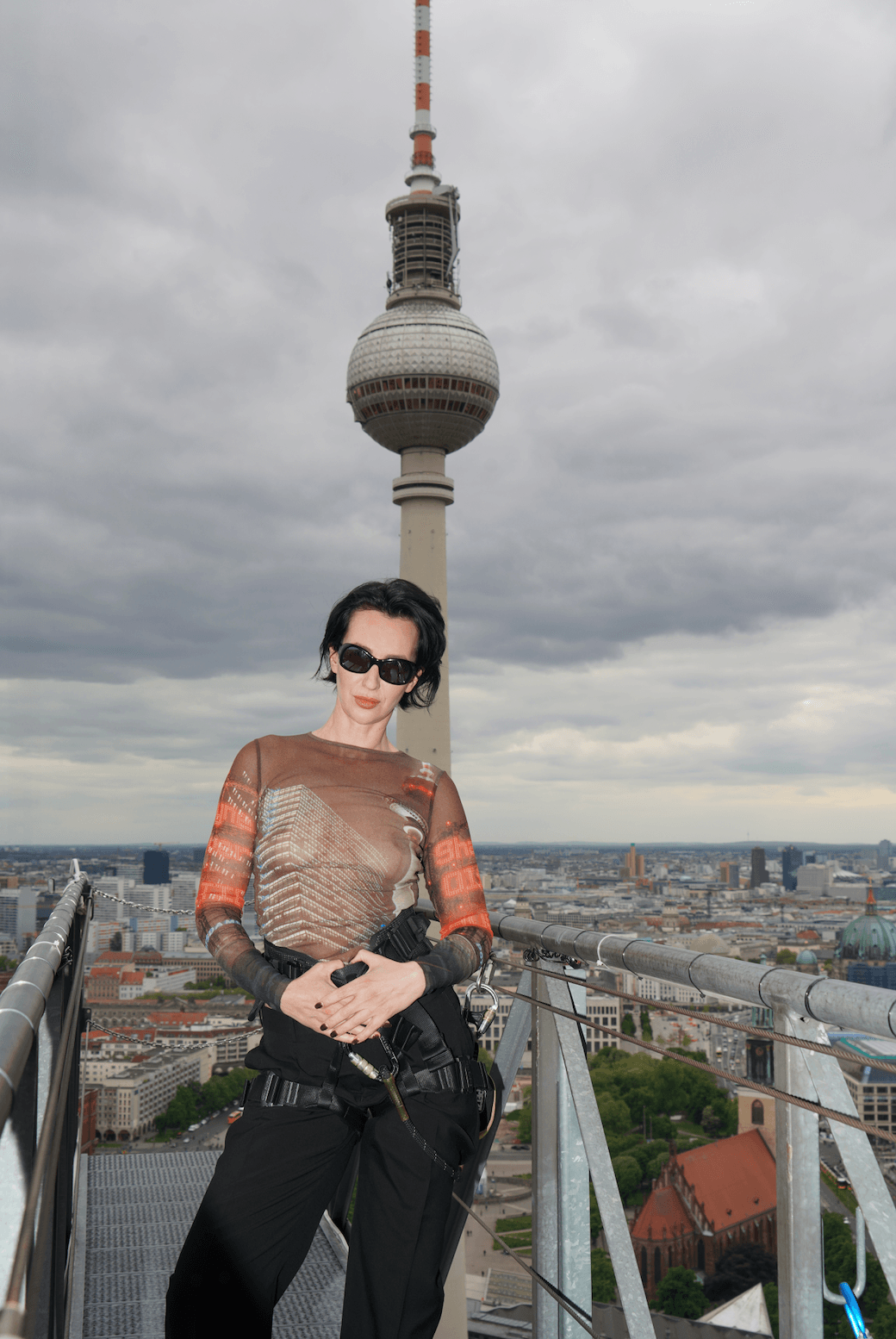
Zuzanna Czebatul was born in Poland and grew up in Frankfurt, where she studied art at the city’s famed Staedelschule, immersed herself in the techno scene, and began to think about how dynamics of power and cultural production play out in public space. Now based in Berlin, Czebatul has built a practice that engages the monumental landscape at its most complex and most fun. Her roguish public works affectionately tease the very institutions who commission them. Her serialized sculptures question the narratives that sculpt our ideas of self- and nationhood, revealing the mechanical repetition required to maintain these identities. It turns out that, in the realm of public art, site-specificity requires a degree of universality — a kind of modular logic that allows established, repeated forms to adapt to their contexts and become singular.
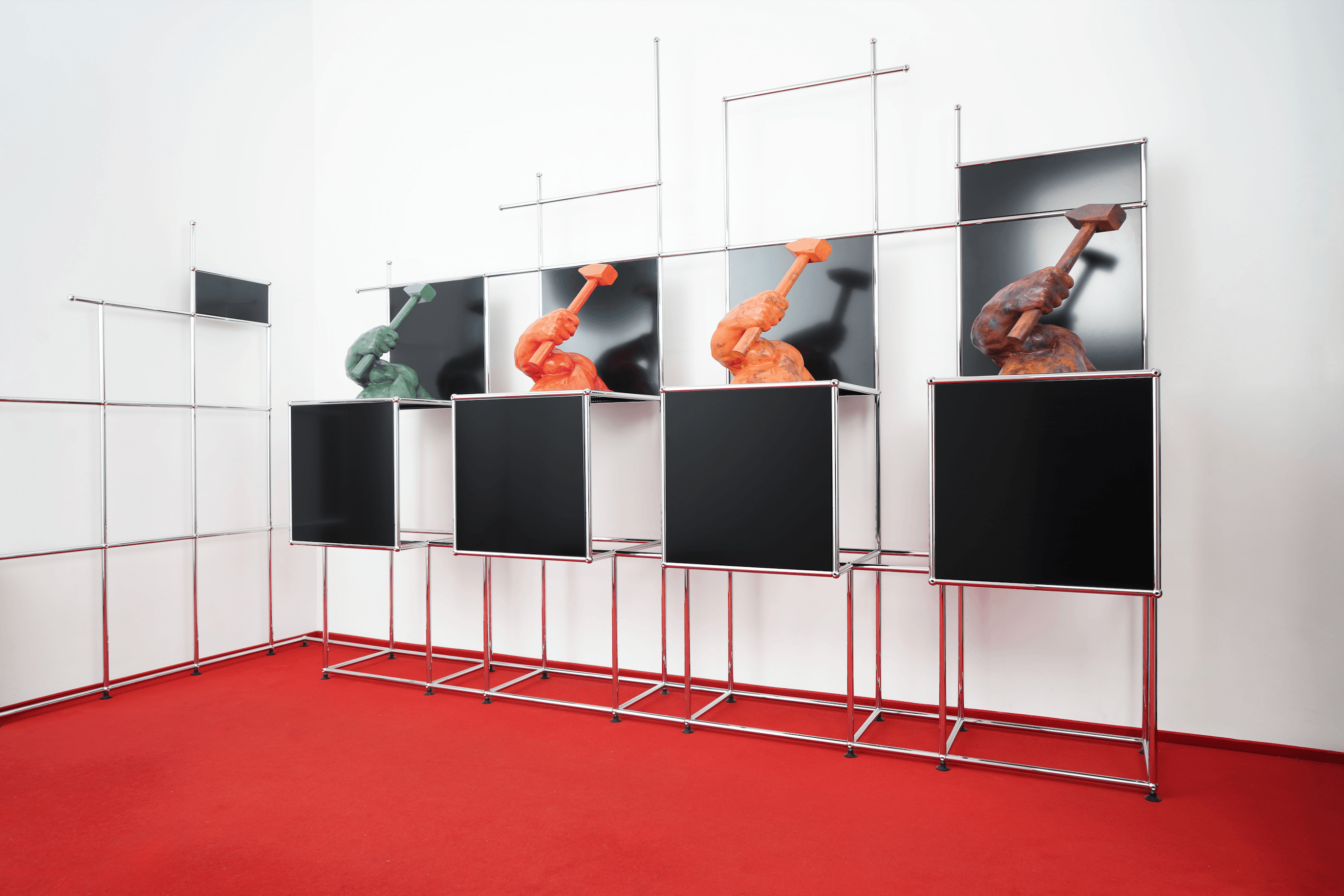
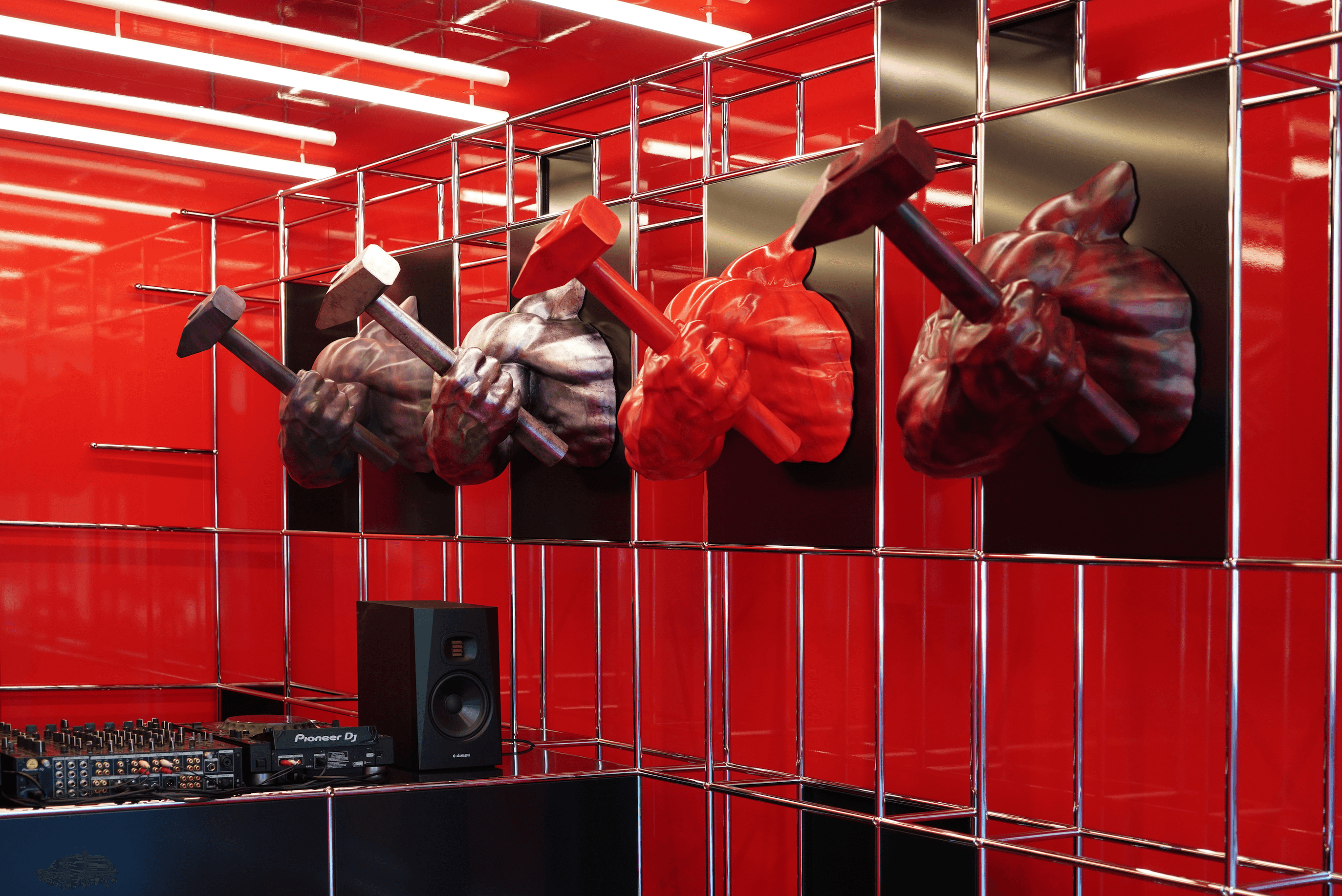
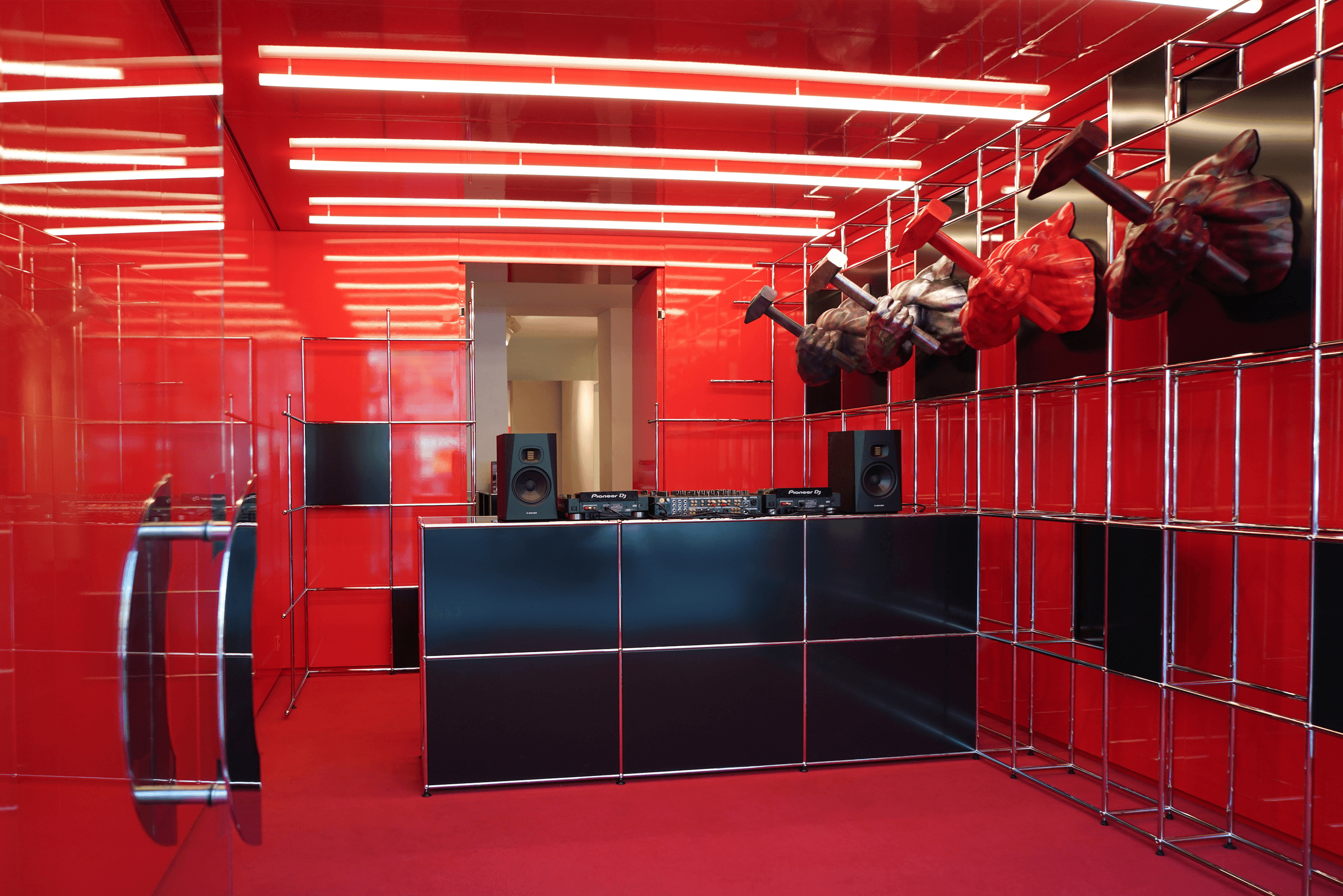
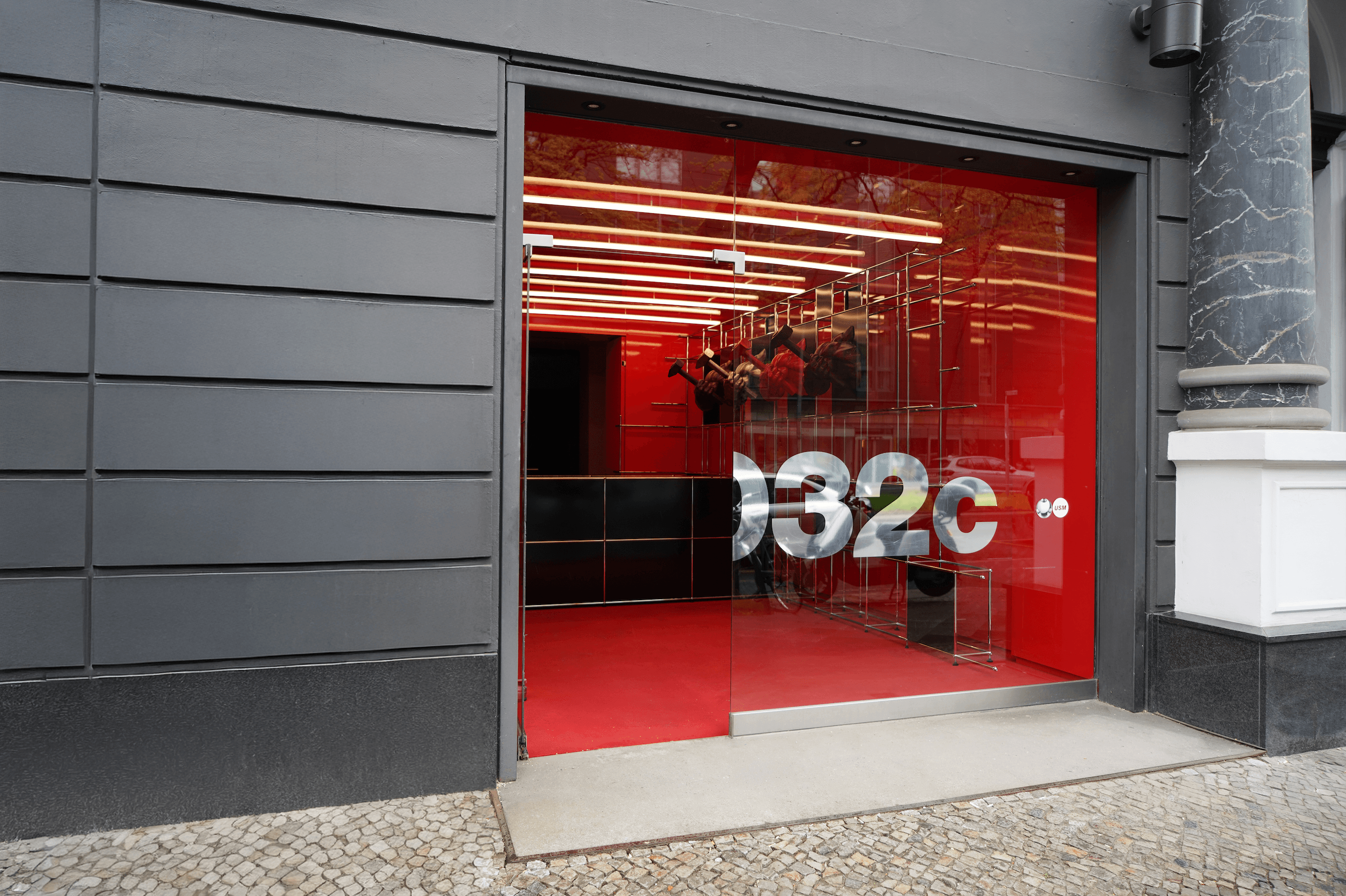
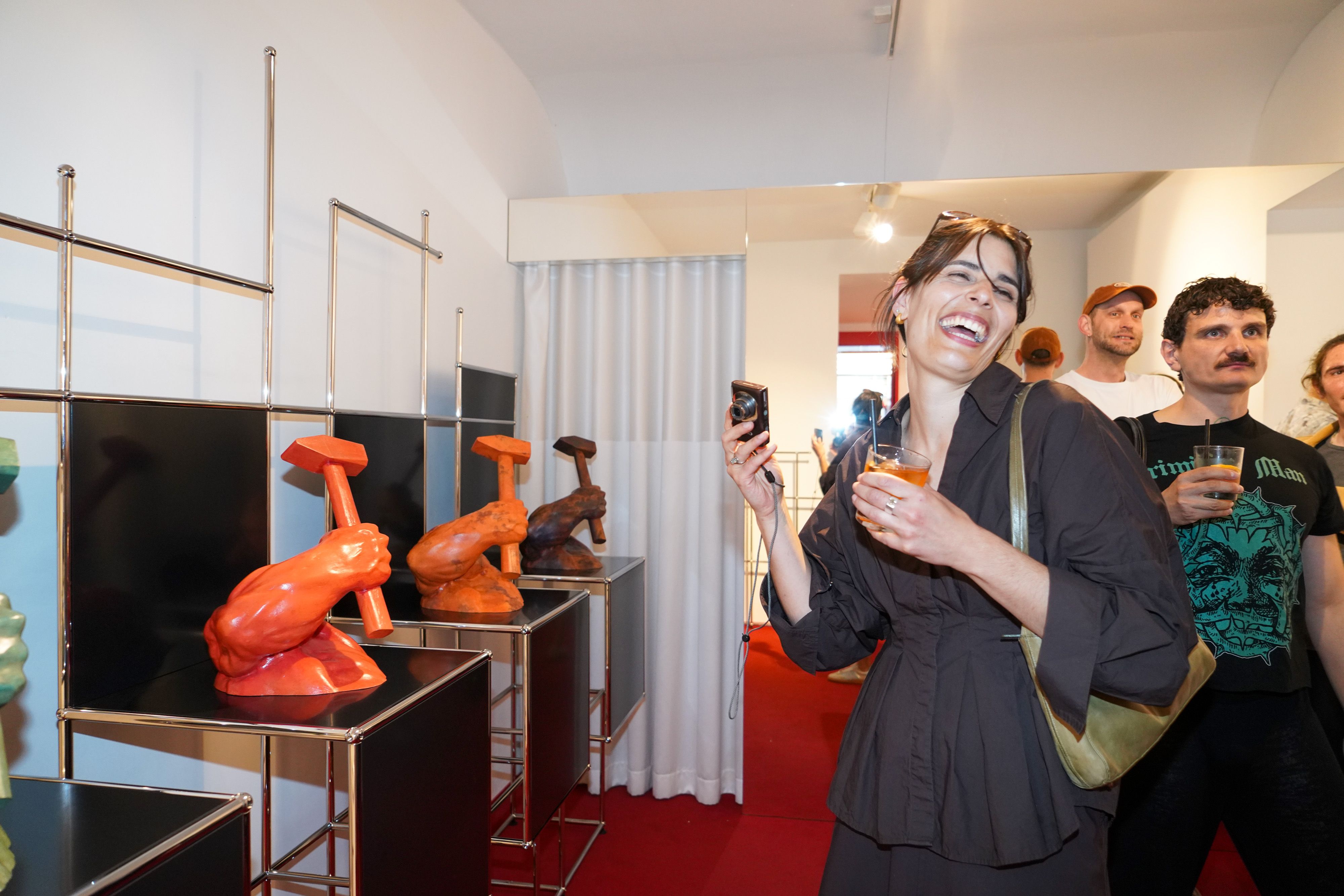
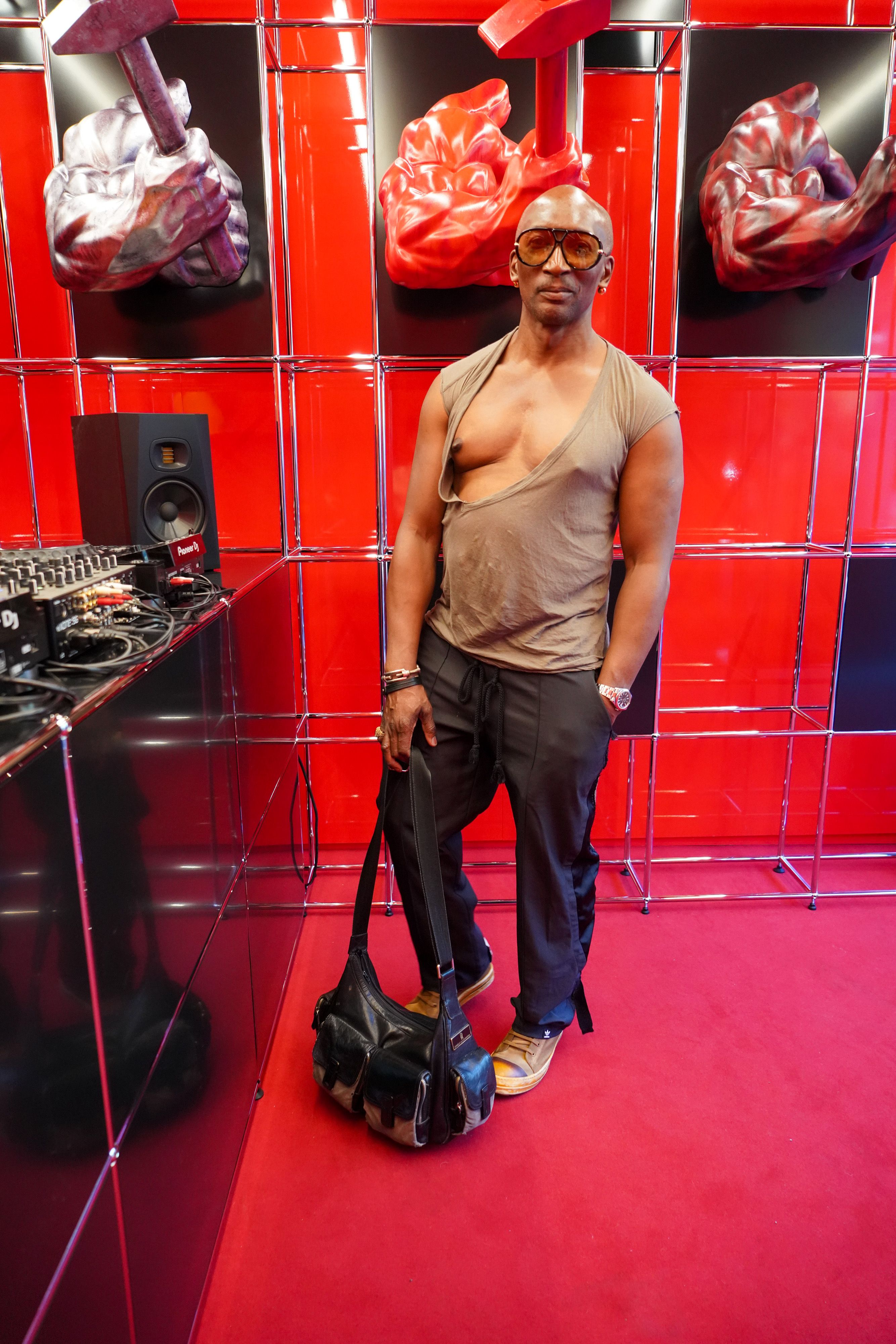
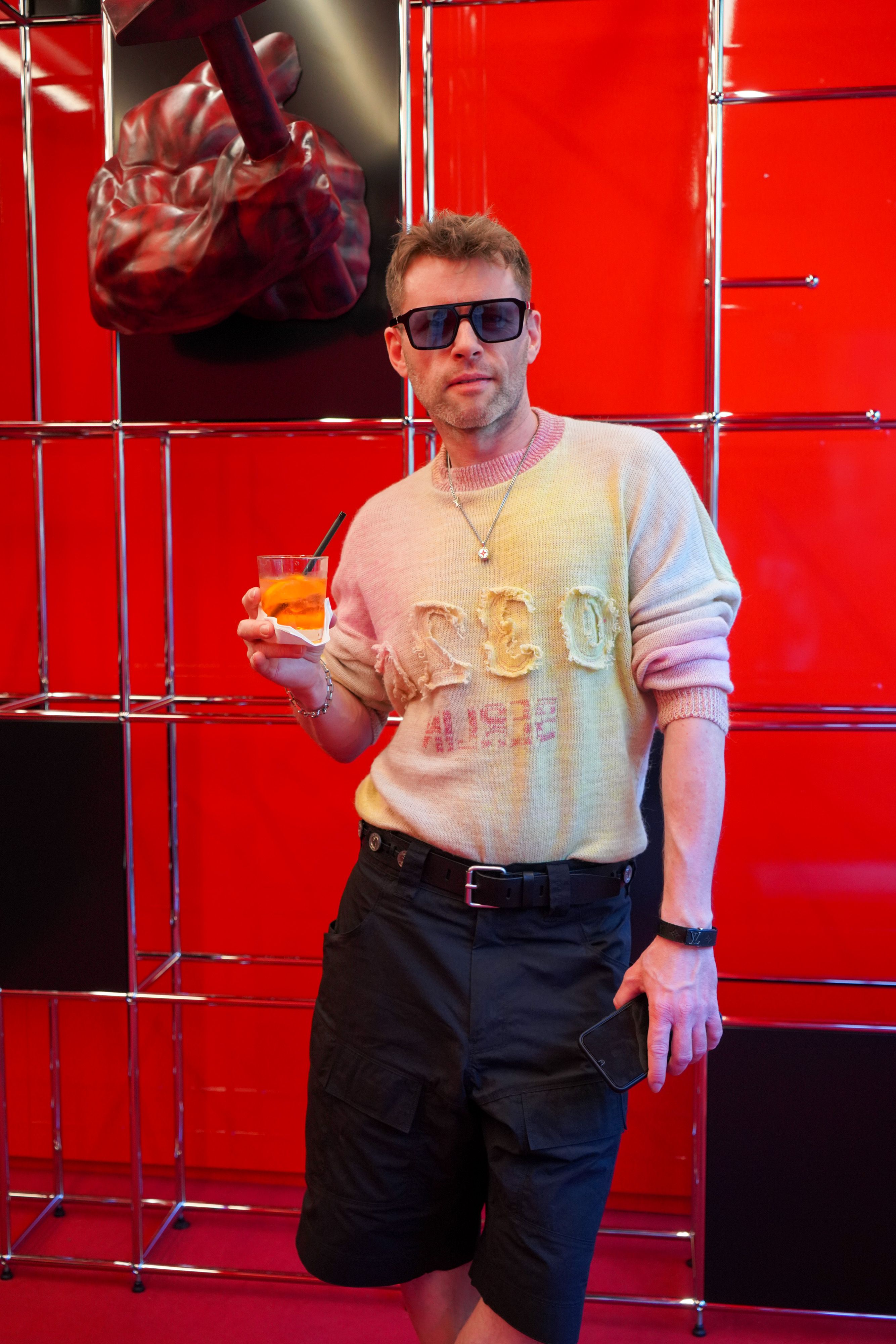
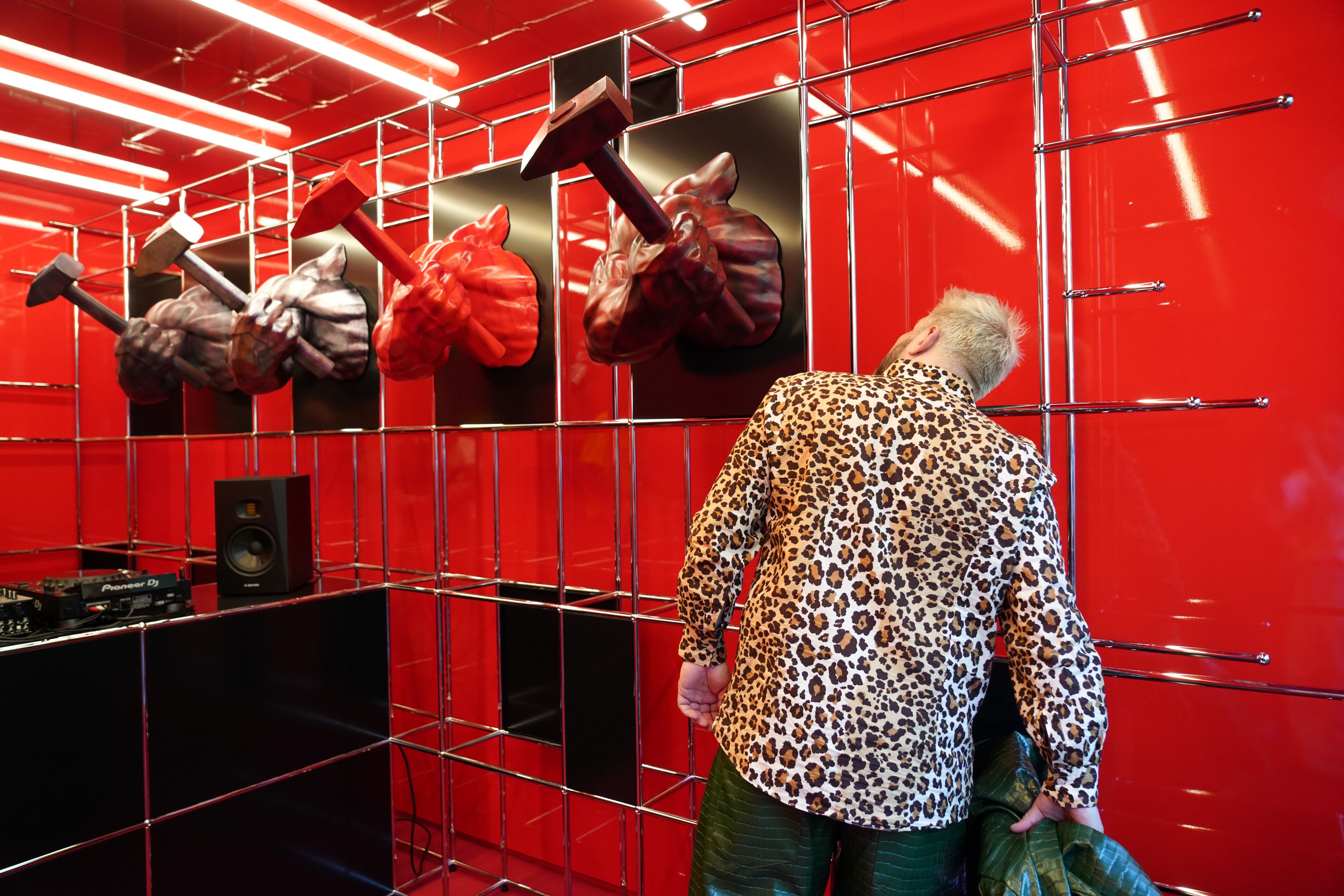
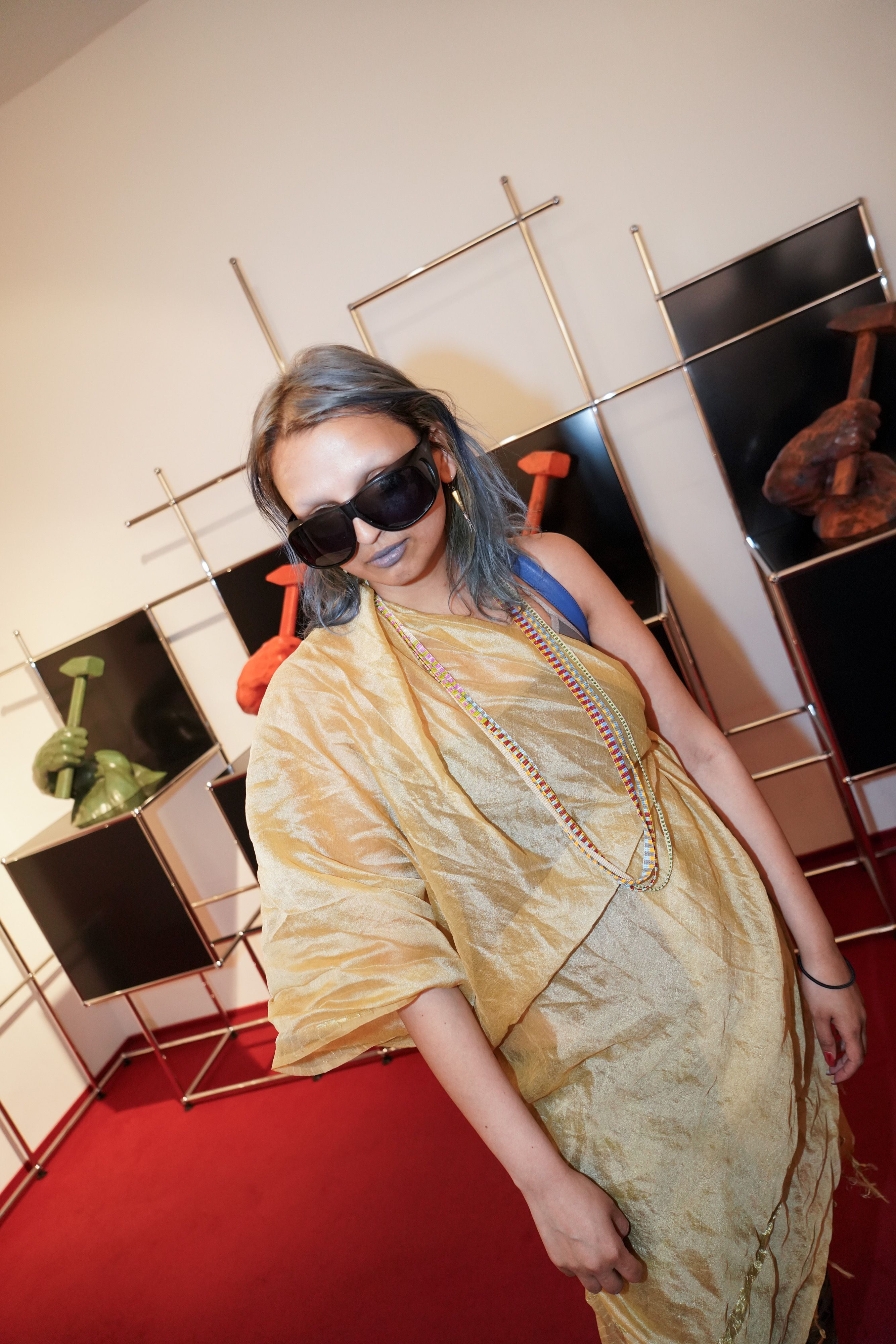
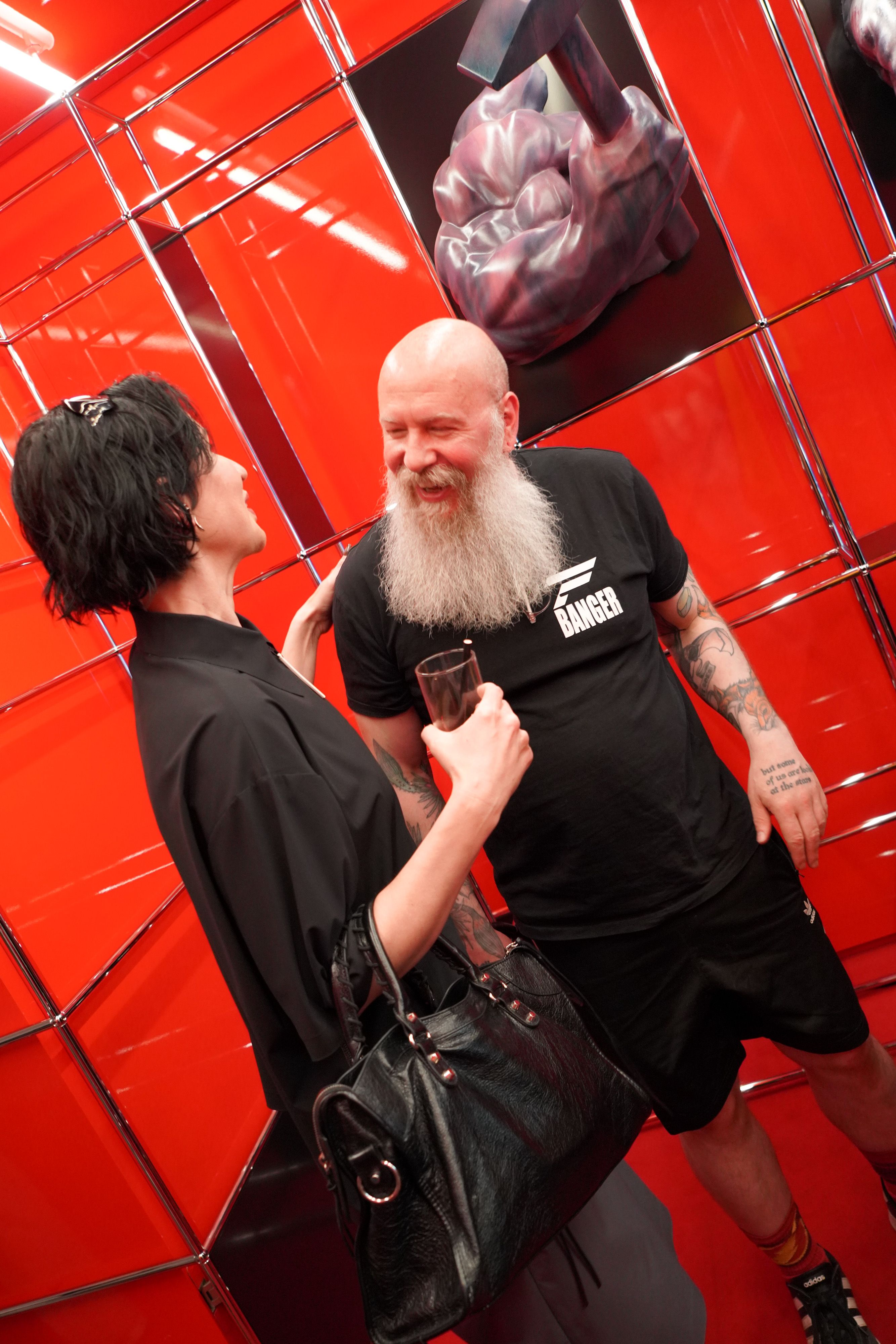
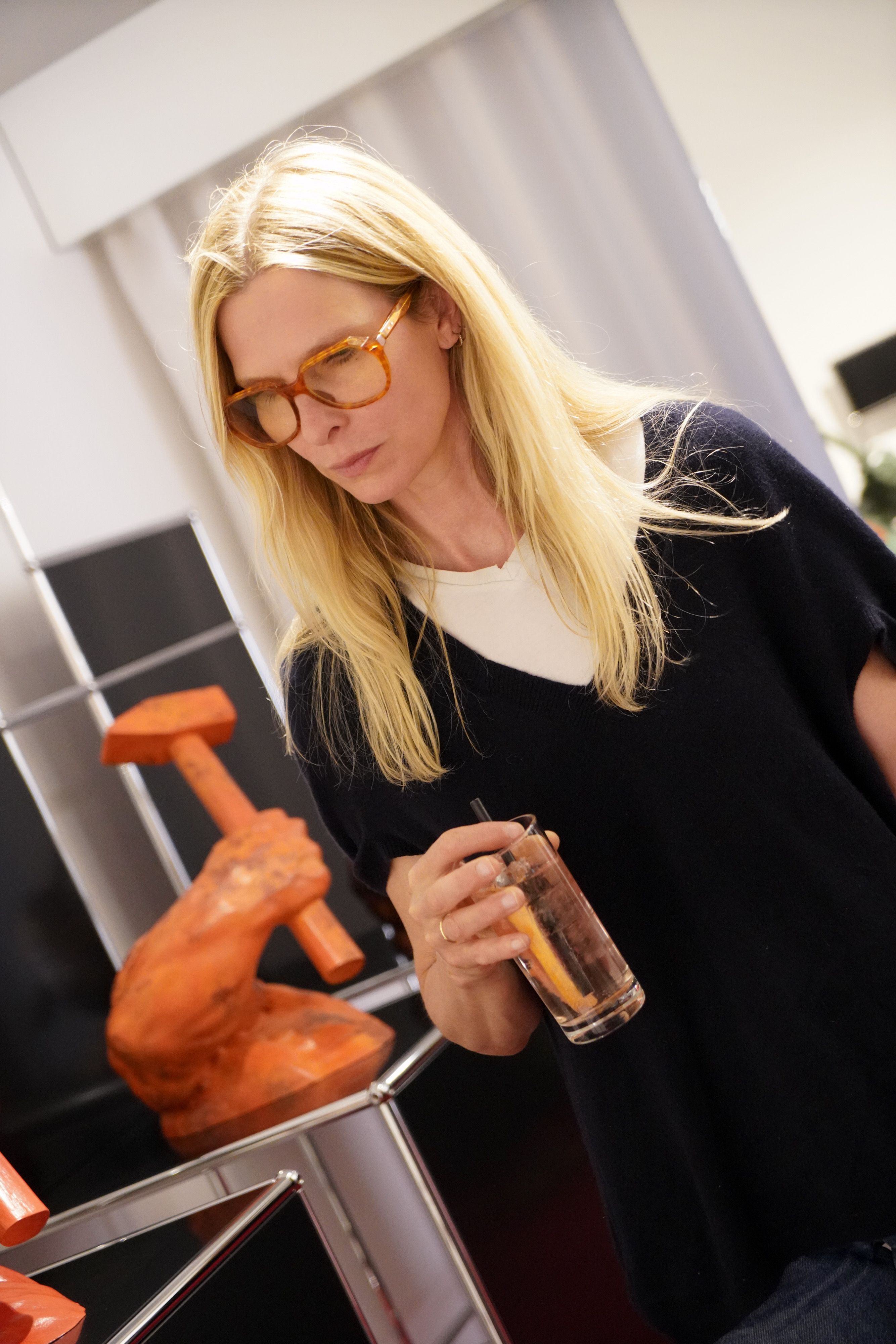
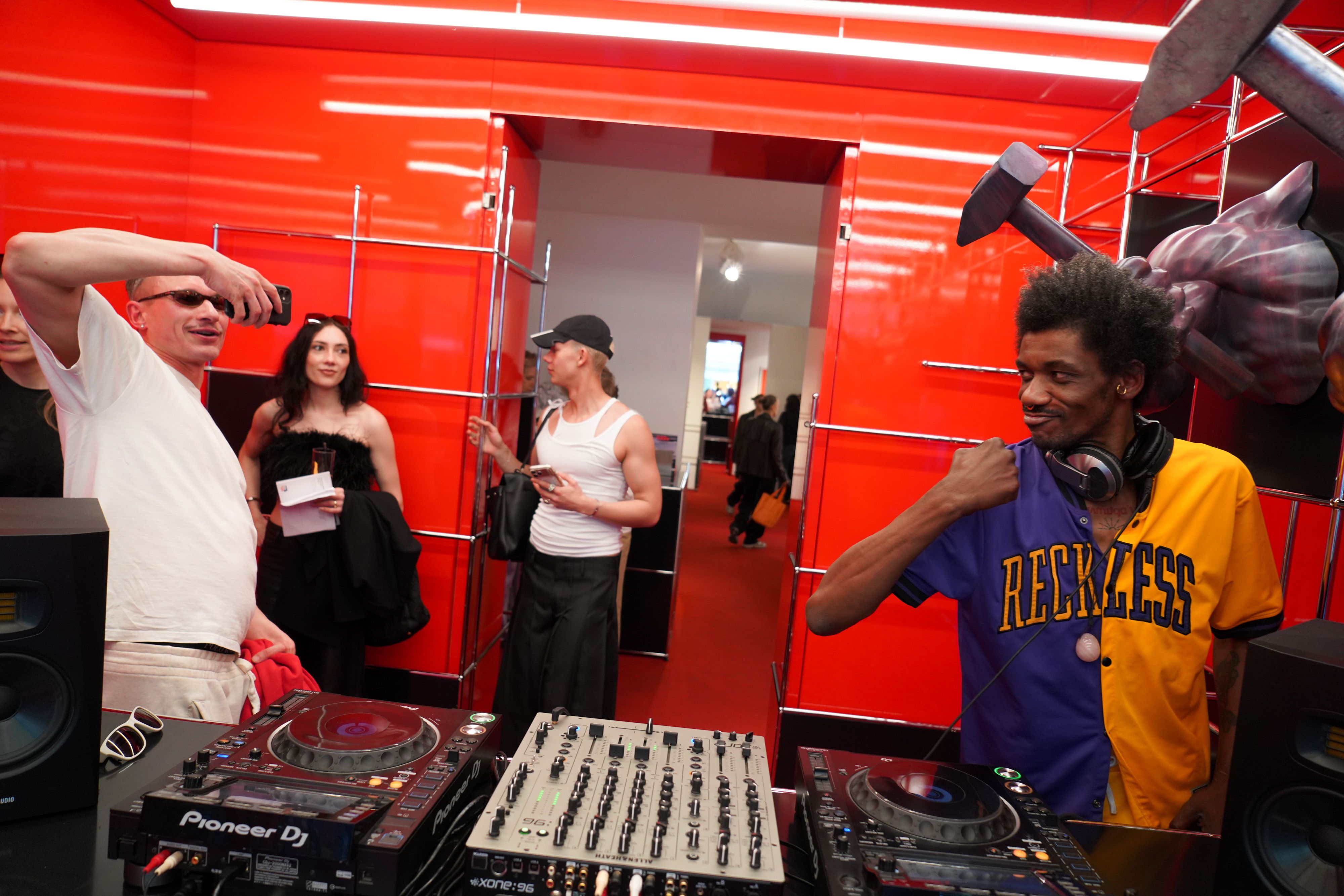
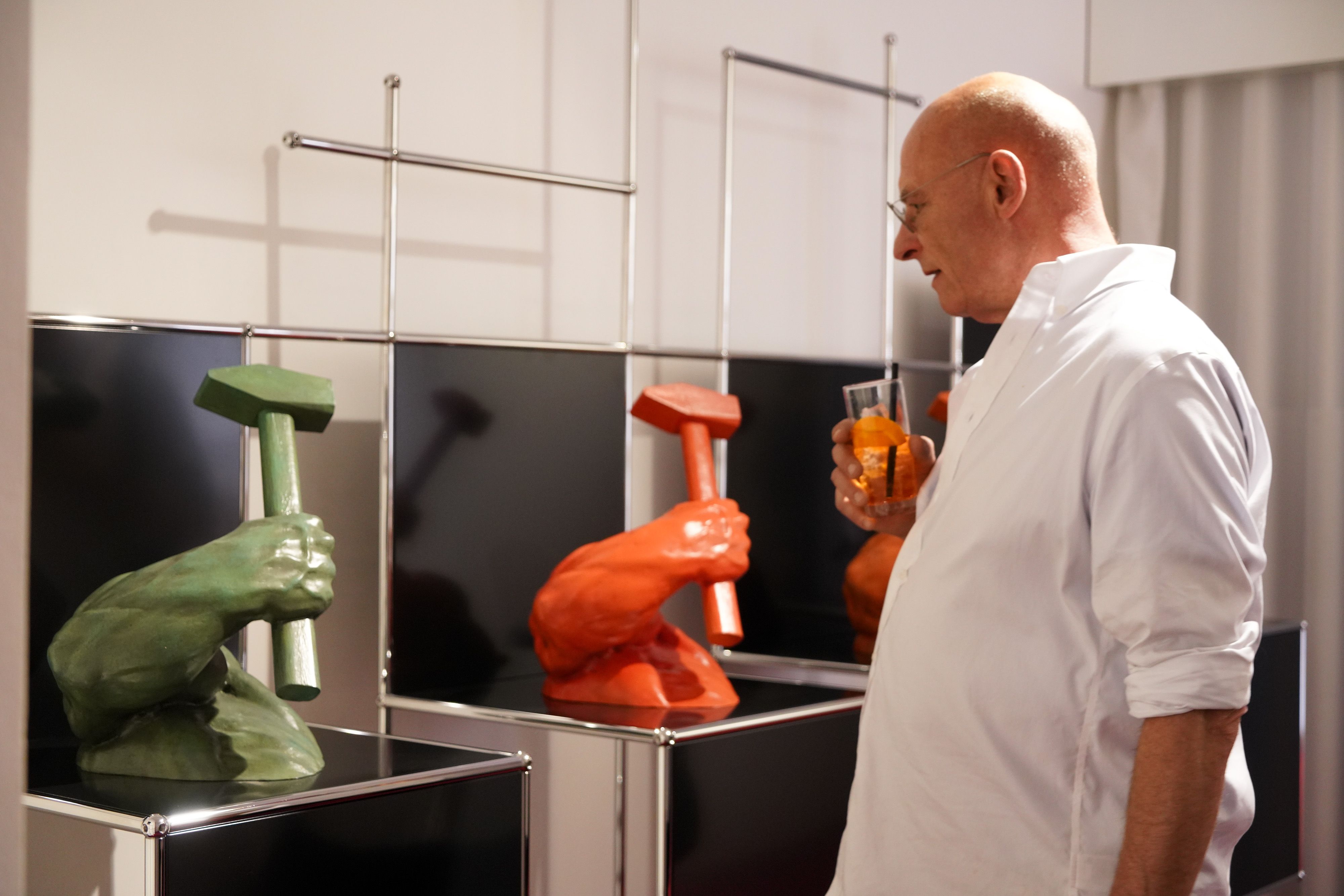
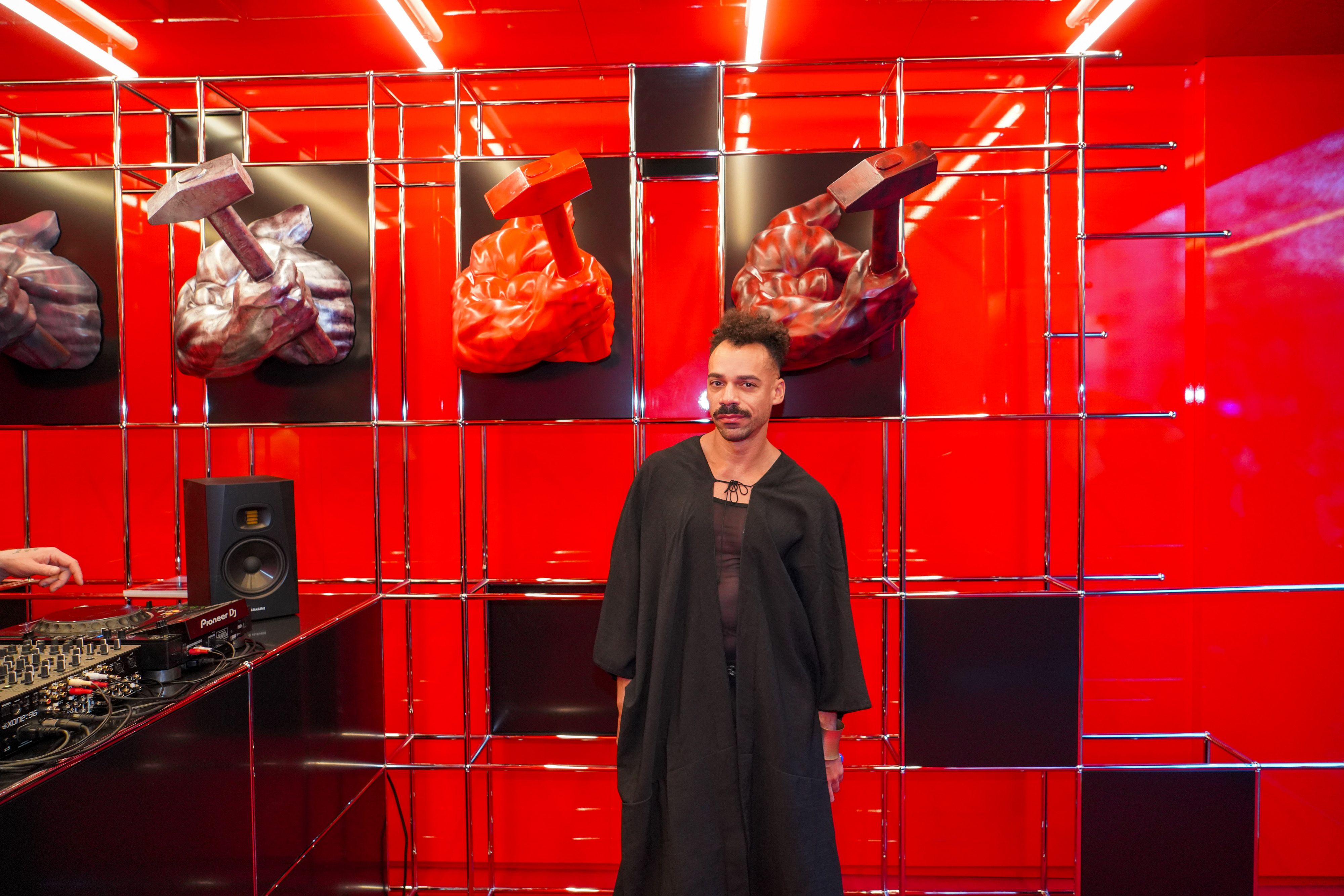
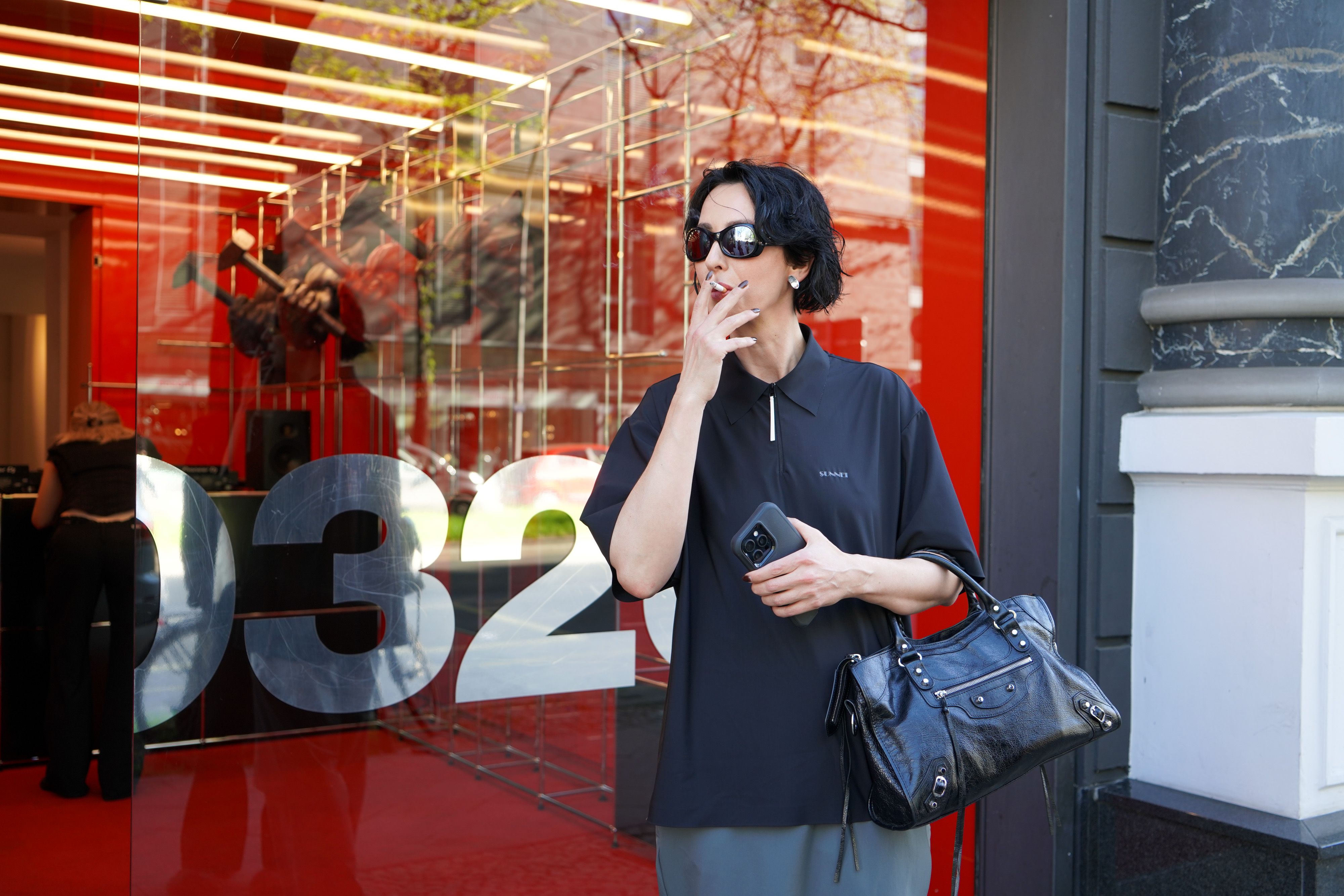
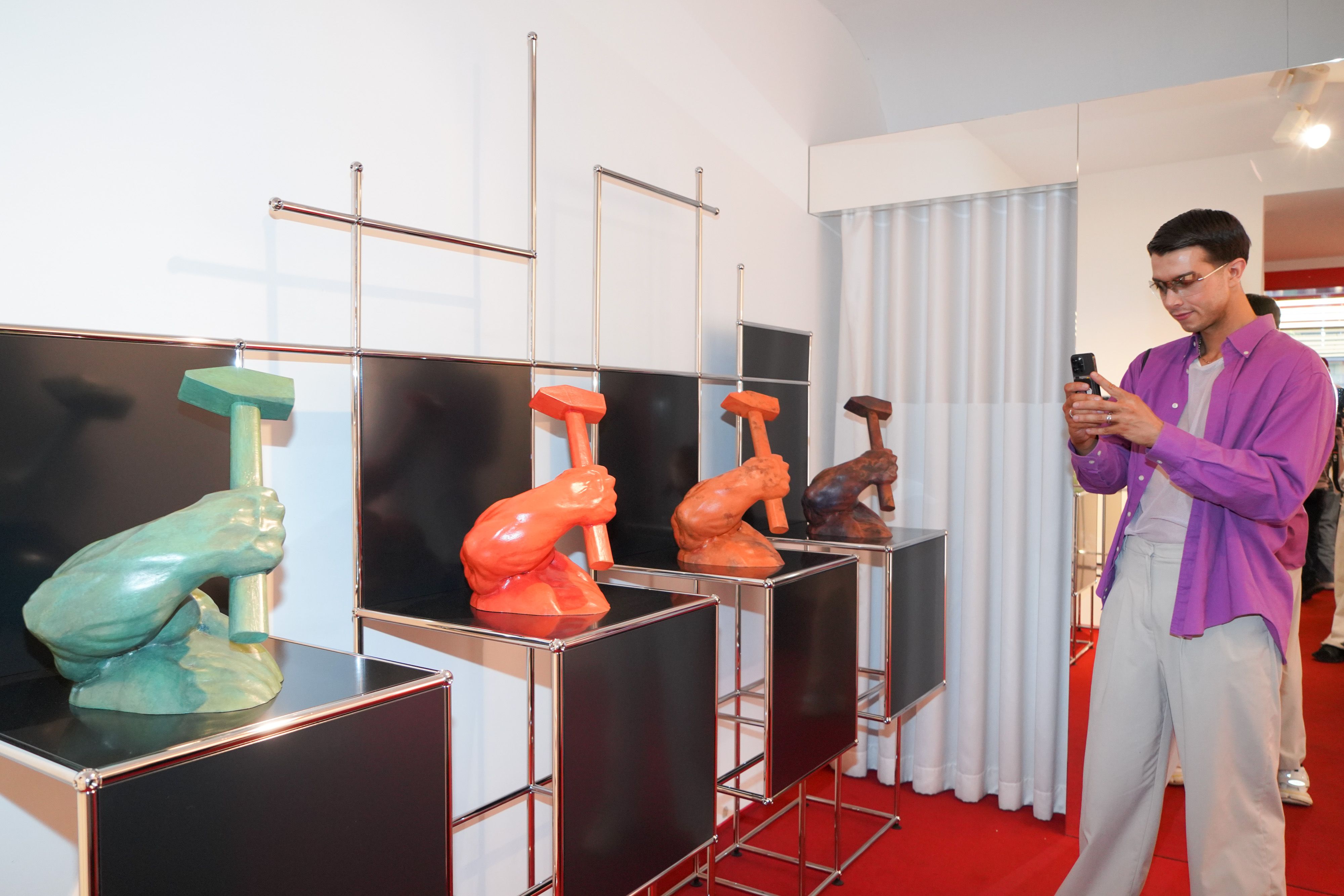
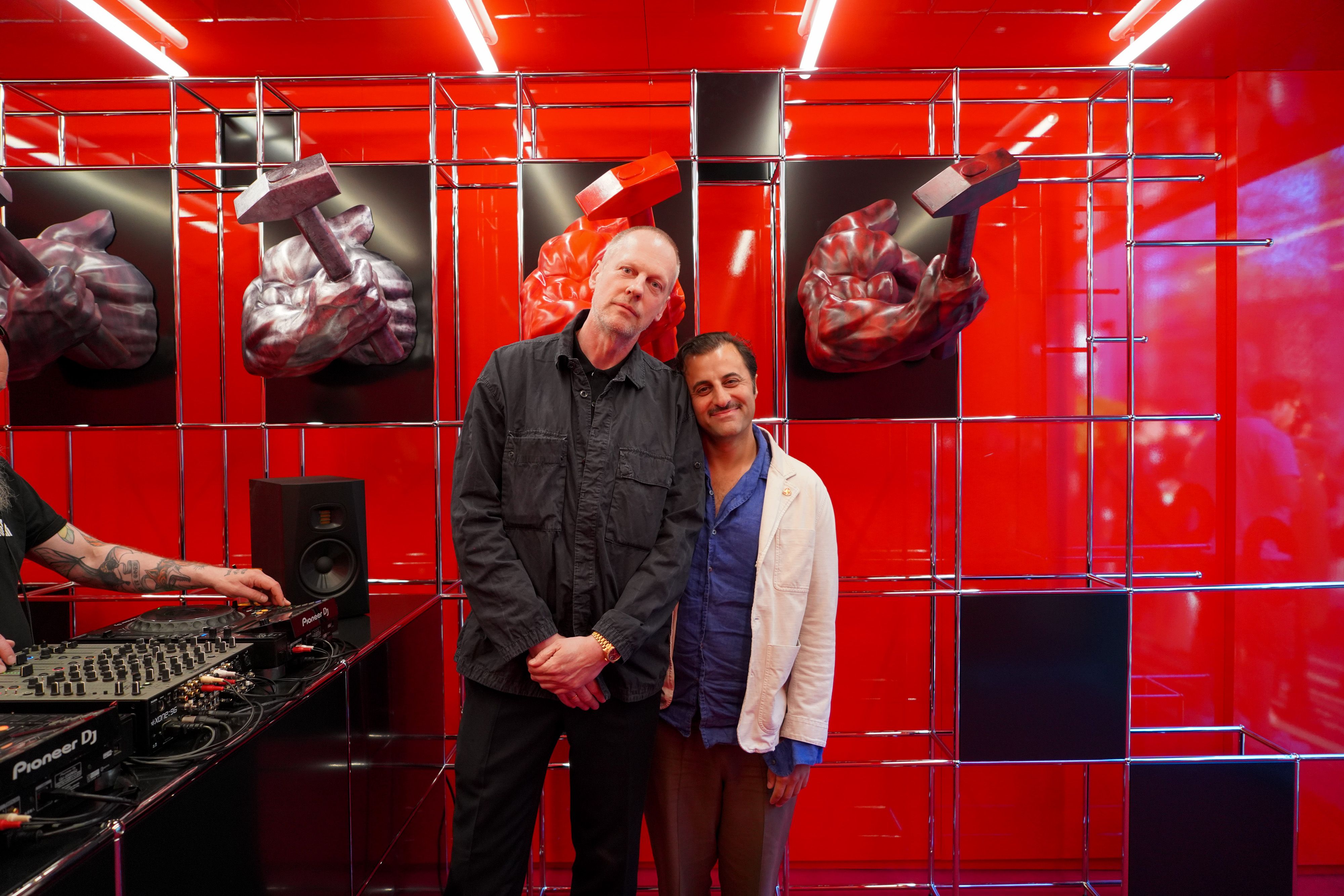
Czebatul’s installation Billie and Chris, on view at 032c’s Berlin store through August 31, inaugurates a new, long-term collaboration between 032c and USM. The exhibition appropriates the Swiss designed modular furniture system, first patented in 1965, as support structure for eight 3D-printed sculptures, each depicting a muscular raised arm clutching a hammer in its fist: a symbol of labor unions and collective work in the 20th century, of muscle culture in the 21st, of technological tools forged in fire in pre-Christian Europe.
The series reprises Andrea, a hulking bronze permanently installed on the main floor of Berghain — another zone of repetition and work, where a heavy industrial beat has replaced heavy industrial production. Czebatul’s sculptures tend to circulate before you realize what they are: a bronze arm and hammer doubles as a meeting point at the club; a monument in a museum archive reappears as a CNC-cut fragment; a public commission courts the meme. Where public sculpture discourse today tends to flatten itself into moral instruction or bureaucratic language, Czebatul still talks about fun, the pleasure of strange forms interrupting a city, and the thrill of familiar objects appearing where they technically should not.
Victoria Camblin: Tell me about Billy & Chris.
Zuzanna Czebatul: The works on view at the 032c store are an adaptation of an existing bronze series called Andrea. These newer works are 3D-printed, lighter versions of the original series. The first bronze is installed permanently at Berghain. What interests me is how a work changes once it moves through different forms of production and circulation — from bronze casting to digital modeling to industrial printing. In a way, each version is both an original and a copy at the same time. Andrea, Billie, and Chris are gender-neutral names, and I can continue until X, Y, and Z.
VC: Your work is about reproduction and technological reproducibility, and there is a degree of “copying” that is embedded into your practice. Do you get mad when you feel like people copy you?
ZC: A lot of the topics I have been dealing with for the last decade are trending at the moment. Monuments, memorial infrastructure, representation in the public space — these are discourses that had an inflection point in the mid-2010s and that have really been taken up again recently. So it's only logical that there would be a lot of engagement with the same discussion. And I think that's beautiful. The more we talk about these things, the better.
VC: Why do you think it's coming back now? Is it a Trump thing?
ZC: It has definitely picked up pace again around Trump. Before that it was BLM and the discussion of confederate monuments, then the pandemic, which restructured our access to public and private spaces. Other global events have simultaneously brought these things into focus. In The Psychic Lives of Statues Rahul Rao reflects on not only the USA but also India and South Africa, where younger generations are revisiting the legacies of figures like Mahatma Gandhi and Nelson Mandela.
VC: What drew you to public sculpture and the monumental landscape as an artist?
ZC: When my family moved from Poland to Frankfurt in 1991, I was exposed to this magnificent sculpture by Claes Oldenburg in the banking district: Inverted Collar and Tie, an upside-down piece of business attire suggesting the fall of a banker from one of the skyscrapers of “Mainhattan.”
VC: Funny, I was obsessed with a Claes Oldenburg as a teen in San Francisco: Cupid’s Span, this big bow and arrow that looks like a ship got stuck on land right at the waterfront.
ZC: I think he left a significant impression on our generation. His work shows how playful the public realm can be. In Poland, there was none of this fun stuff for grownups in the public space. Coming to Frankfurt at five years old I saw the Oldenburg, the giant T-Rex in front of the National History Museum, this old tram car crashing into the entrance to a subway station by the Polish architect Zbigniew Peter Pininski. It was so joyful. That probably caused my interest in sculpture in public spaces and in relation to architecture.
VC: In the discourse around public monuments you rarely hear people talking about “fun” or “joy” these days.
ZC: True — we have lost a bit of that fun factor. Seeing a Jeff Koons in public space today almost feels wrong, right? Once you look beyond that interest in joy and pleasure, you immediately begin to question the conflicting power structures embedded in that landscape. Germany has strong representatives of that tension. When competitions for these commissions come up, you often see them going to the same people — who also often happen to be white men.
VC: Is it a totally different scene than the rest of the art world?
ZC: Partly, as it's a different scale, and you need a particular knowledge about the engineering behind installing art permanently. You have to maneuver between the people who manufacture, the engineers, the architects, the developers, and you have to be able to speak to the environment itself and the people that inhabit it. Making public art is also different from making work for other contexts where you can drill into a topic. In the public realm art is rather conciliating and diplomatic, because you have to align a lot of different groups of society.
VC: What are you monumentalizing this year?
ZC: I am inaugurating two art and architecture projects this year. One is in Stockholm, and the other one is close to Bonn. In Sweden, it's a 1.5 ton bronze sculpture of climbing hands. The work is for the entrance to an administrative building with a library and art club for kids, and an intergenerational living compound. I needed an image reflecting those different functions and the aspect of community and collaboration. In German there is the term Räuberleiter: “robber ladder,” where thieves join hands to lift each other up. So I made these big bronze hands climbing up the roof over the entrance, together. It’s a bit mischievous.
The work near Bonn is commissioned by the Fraunhofer-Gesellschaft, one of Germany’s major research institutes, where they are working on applied AI and Gaia X — the German ChatGPT — as well as surveillance technology for the German state. I came up with these partly goofy, partly scary snake-like creatures made of three anthropomorphic high-speed fibreglass cables that pop out of the ground and surround the building in several places. This sculptural ensemble is called The Networkers.
VC: Sort of a Dune sandworm situation?
ZC: Exactly.
VC: How do you approach making monuments for institutions you are not necessarily fully on board with? I am going to assume that you are not a diehard fan of Big Data, for example. How do you make a sculpture when it’s not necessarily a tribute to your hero?
ZC: Every cultural worker is faced with the challenges of circumventing certain restrictions. People do this in different ways, but you have to be diplomatic in the end. I think being born into a regime change and coming to Germany right after the fall of the Wall has nuanced my understanding of the function of art and representation. When I get invited by the municipality of Stockholm or by the Fraunhofer-Gesellschaft to do something, I can speak to what they want while adding a critical layer. In Bonn, they agreed to depict a dangerous aspect of technology, expressed through this anti-monument. It’s a reminder to question how we operate these systems: are we in control? Will the machine take over? Can it be abused? You have to inhabit this notion of ambiguity, let's say. For me, that's the most interesting thing to think about: how to seal in a critique – if necessary, like a Trojan Horse.
VC: A good fit given that Trojan Horse is also a computing term for malware disguised as tools. I think about this strategy in terms of embedding one’s creative or discursive agenda into commercial projects, which I honestly find quite fun.
ZC: Well, what does it mean for an artist to join up with a brand or be commissioned by a state? Infiltration works both ways. If the Trojan Horse is a useful metaphor, then brands probably assume they’re smuggling visibility and relevance into culture — while artists are quietly smuggling critique, ambiguity, and their own agendas back into the brand. Ideally, everyone leaves slightly contaminated. For the project with USM and 032c, we started with a sculptural series of mine that has notions of industrial manufacturing. The arms are literally working, and there are eight of them, so they are working as a collective.
VC: What led you to the arm and hammer motif?
ZC: I visited the General Society of Tradesmen and Mechanics in midtown Manhattan — a beautiful historical building that houses the first union of stone masons in New York. These were the people who built the city. It functions as a school, as an organizational meeting point, and as a library to this day. It also shaped the self-understanding of craftsmen as a socially mobile community, where stone masons and blacksmiths began to sculpt the skyline as we know it. So the Society has a very important meaning for the foundations of New York — as in, the literal stone foundations — and you can discover many exciting things in their archives. The symbol hanging above the entrance is a highly realistic arm with a rolled up sleeve, holding a hammer. I was very intrigued by that image and decided to adapt it, but put it on steroids. It looks a bit like the Hulk.
VC: I was thinking Thor.
ZC: Yes! I'm a huge fan of Greek and Roman mythology, and I also had Vulcan, the god of fire and metalwork, on my mind. Everybody is a “muscle mommy” or a "steroid lad” today, and I was thinking about where all this industrial development and our scientific achievements have brought us: to the gym!
VC: Looksmaxxers literally taking hammers to their faces.
ZC: We're facing a mutation of an old aspiration to make life easier. We invented all these nice things — light bulbs, machines, appliances — and today we have more devices than we can use, and we're smashing our cheekbones with hammers on social media. After that trip to New York, I did a residency at the Fonderia Artistica Battaglia in Milan, where I produced the first arm and hammer sculpture in bronze.
VC: How did it end up at Berghain?
ZC: The sculpture can also be read as a reference to electronic music, which has its roots in working-class Detroit. When I was working the door at Berghain, selecting people for entry, I couldn’t resist offering them the sculpture for a temporary installation in the club. They agreed. Eventually they acquired it for the collection, so now it lives there permanently. I’m very happy about that; it simply belongs there. I always tell friends to ask their crushes, “what if we kissed under the arm and hammer?” It works every time. I guarantee it.
VC: You are obviously thinking a lot about architecture, but what about the design world?
ZC: Isn’t visual art always somehow design? Working on a project in fashion recently made me realize that there’s one crucial difference: designers are much better trained in accepting a “no.” They spend enormous amounts of time producing mood boards, proposals, and multiple directions — knowing most of them might never materialize. Designers simply have thicker skins than artists.
VC: I think of the difference between art production and design as being about volume and reproducibility. A furniture designer might perfect a table or a shelving system with the level of precision that one puts into a sculpture, but then tens of thousands of these objects will be manufactured, and you certainly have no say in where they end up. Maybe that also goes to your idea of flexibility. You used highly reproducible 3D printing to make Billie & Chris.
ZC: It's very convenient to be able to produce so fast now. I have been sculpting digitally for a while, but more for things like CNC cutting and carving. Today you can 3D print everything; it is great for mold-making and more sturdy than styrofoam and other materials. I'm not a fan of the 3D print being visible, though. To me, it's just the bones. It still needs skin, flesh, ideally some nice garments! But it was fun to mess around with the USM Haller System for the 032c installation: alongside displaying the sculptures, I built some monumental brackets for the three rooms of the store, giving them rough edges and stripping off their usual functionality. You wouldn't see that at a doctor’s office.
VC: Speaking of copies and Greek Antiquity, can you talk about your Pergamon Museum piece?
ZC: That was a fun process, too: I copied nine plates of the Pergamon Altar, plus some singular fragments. In 2013, the museum made a very detailed 3D scan for archival purposes, and that data is technically public property. So I asked for the files, and can now CNC mill the old Greeks until the end of my days.
VC: I could see a design product series — coffee tables or housewares, maybe?
ZC: The plates have an interesting shape when they are standing free. So yeah, I have plans, but I will not spoil them. What interests me is this strange collapse between aura and reproducibility. A monument once designed to project permanence and authority was shipped through empires and can now circulate as a digital file, infinitely copied, resized, remixed, or turned into furniture. In a way, it is the ultimate fulfillment of Walter Benjamin’s idea of the artwork in the age of mechanical reproduction. Except now the reproduction itself has become the original condition. It’s a new age of looting.
What interests me most is why Germany has cherished these artifacts for almost two centuries and continues to do so. In a time when culture and science are facing funding cuts, you don't see the same happening to Berlin’s Museum Island. There is an almost irrational obsession with these representational objects – an overidentification. The National Socialists used the Pergamon Altar as the foundation of their supremacist ideology, which creates an eerie continuity in today’s politics. This obsession reminds me of Timmy, the recently stranded whale in the North Sea that caused a collective psychosis. Looking at these “delulu” responses might be helpful in understanding what is going on in the world right now, and reflecting on that is one of the tasks of art and science.
VC: Maybe even more the responsibility of art. Science feels kind of “delulu” right now, honestly. Or just really conservative.
ZC: Did you go to the Rosalia concert? I was surprised how prude the overall vibe was. While I understand that the world wants something other than the typical US American pop star, there seems to be a craving for European culture, for something Baroque but pure. While the other big religions are at war, and patriarchy is returning, Christianity slides back into the spotlight, but with some romantic vengeance. She is bringing it to that core, which is extremely interesting as an expression of the Zeitgeist. It was a bit unsettling to see teenage fans showing up in these Christian veils.
VC: The mantilla. The Catholic liturgical shawl.
ZC: Which feels like a new representation of femininity. Do we really want that? I went to a Peaches concert a few days later, and between these two artists’ discourses there is a chasm difference.
VC: You know that thing about how kids aren’t dancing when they go to clubs anymore? At least Catholicism is a little bit decadent. There is blood and wine in that iconography.
ZC: And at least Rosalia is singing about Berghain. Apparently the kids aren’t dancing in clubs anymore because they are afraid of someone recording them looking stupid. That’s really sad. Maybe we are living in the unsettling age of amplified chaos and reproduced cringe. Let’s bring back the motto, “it’s better to be embarrassing than boring.”
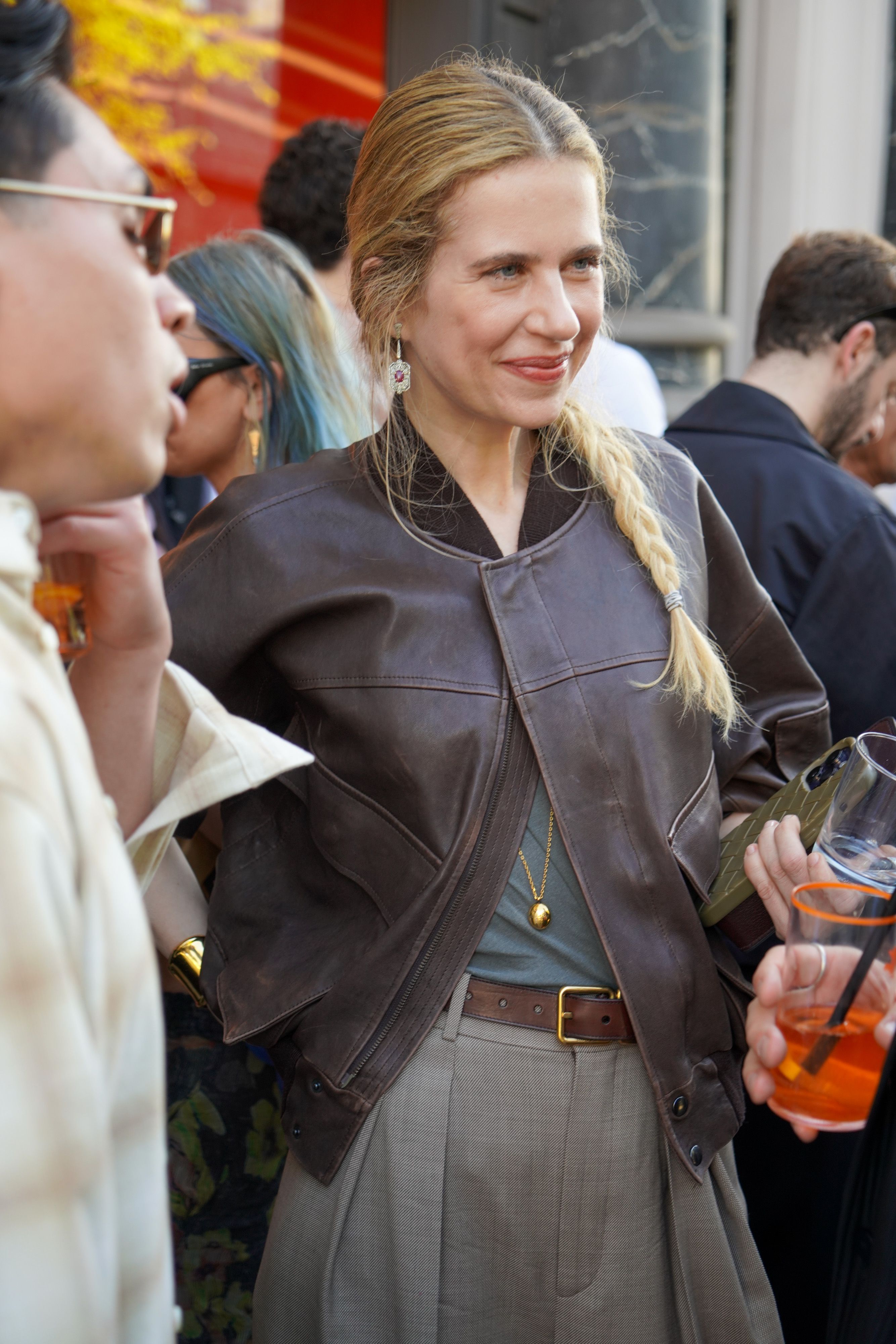
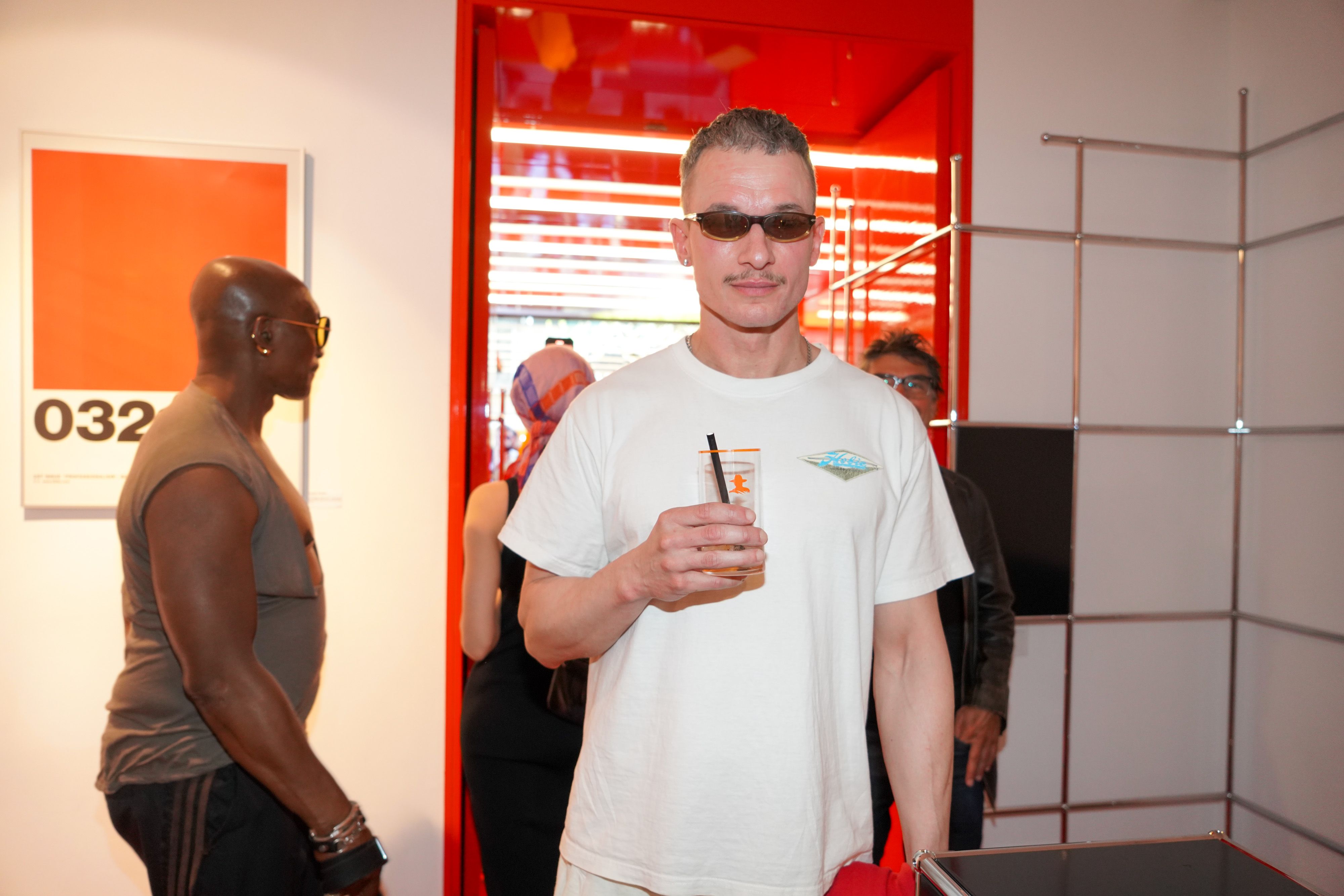
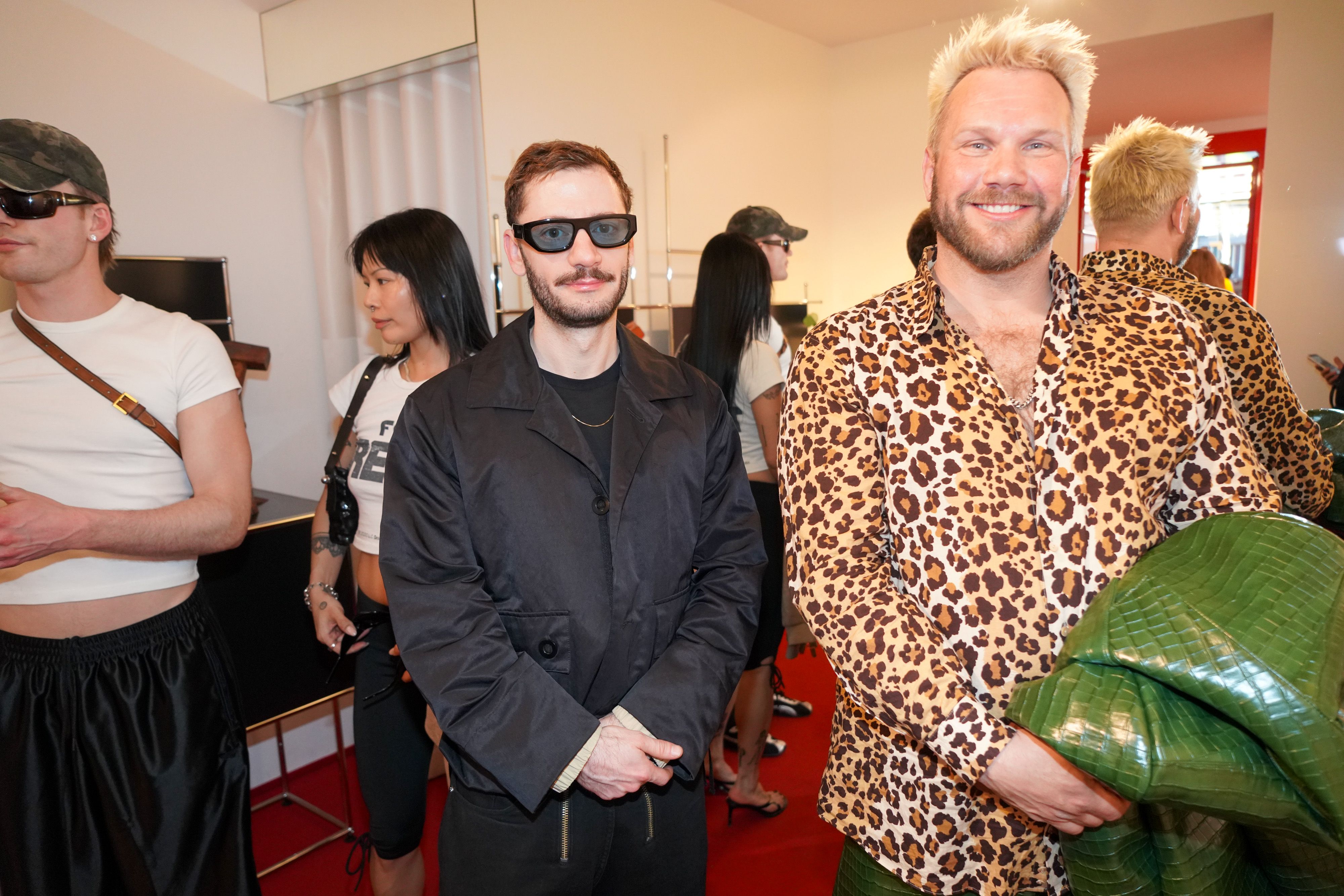
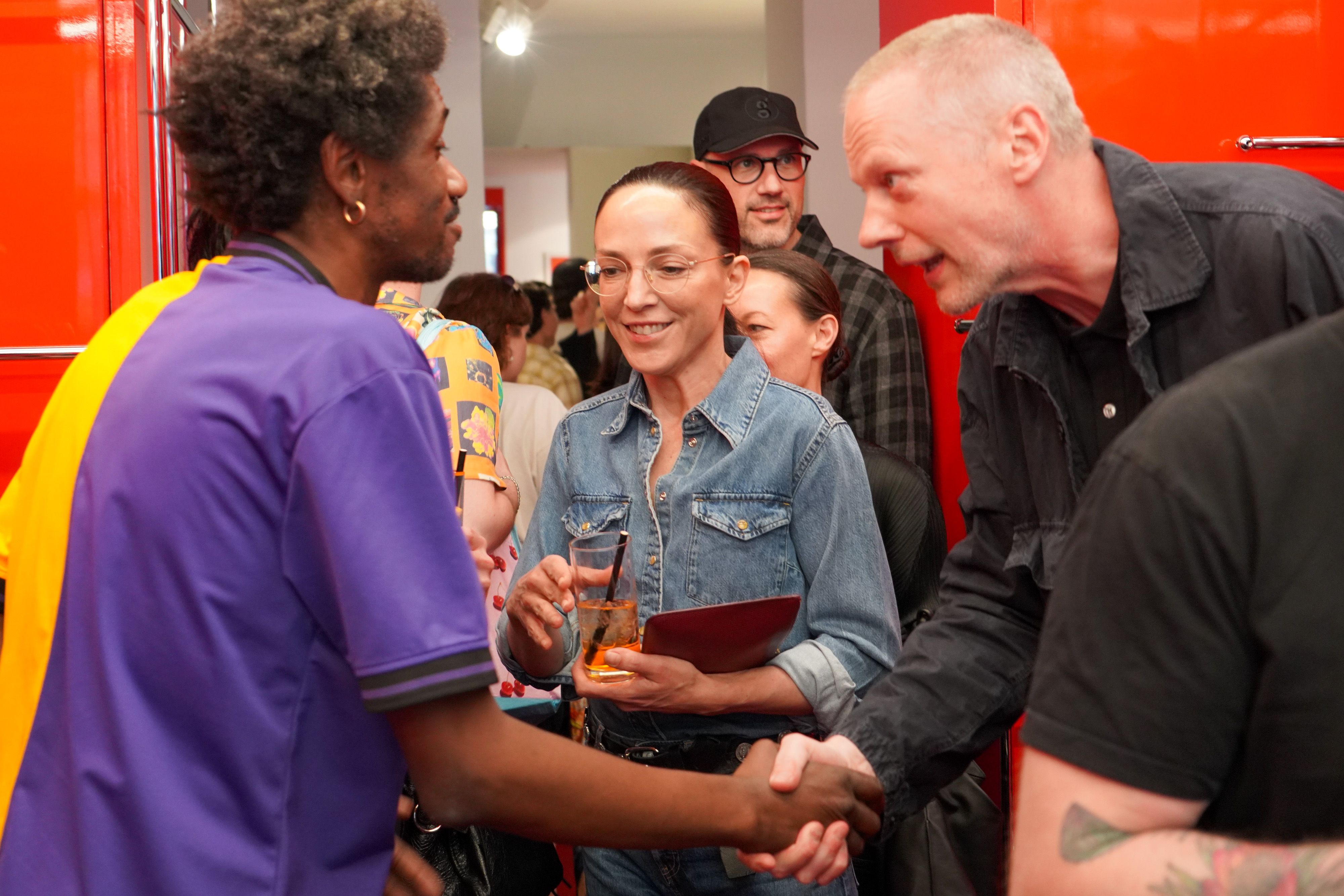
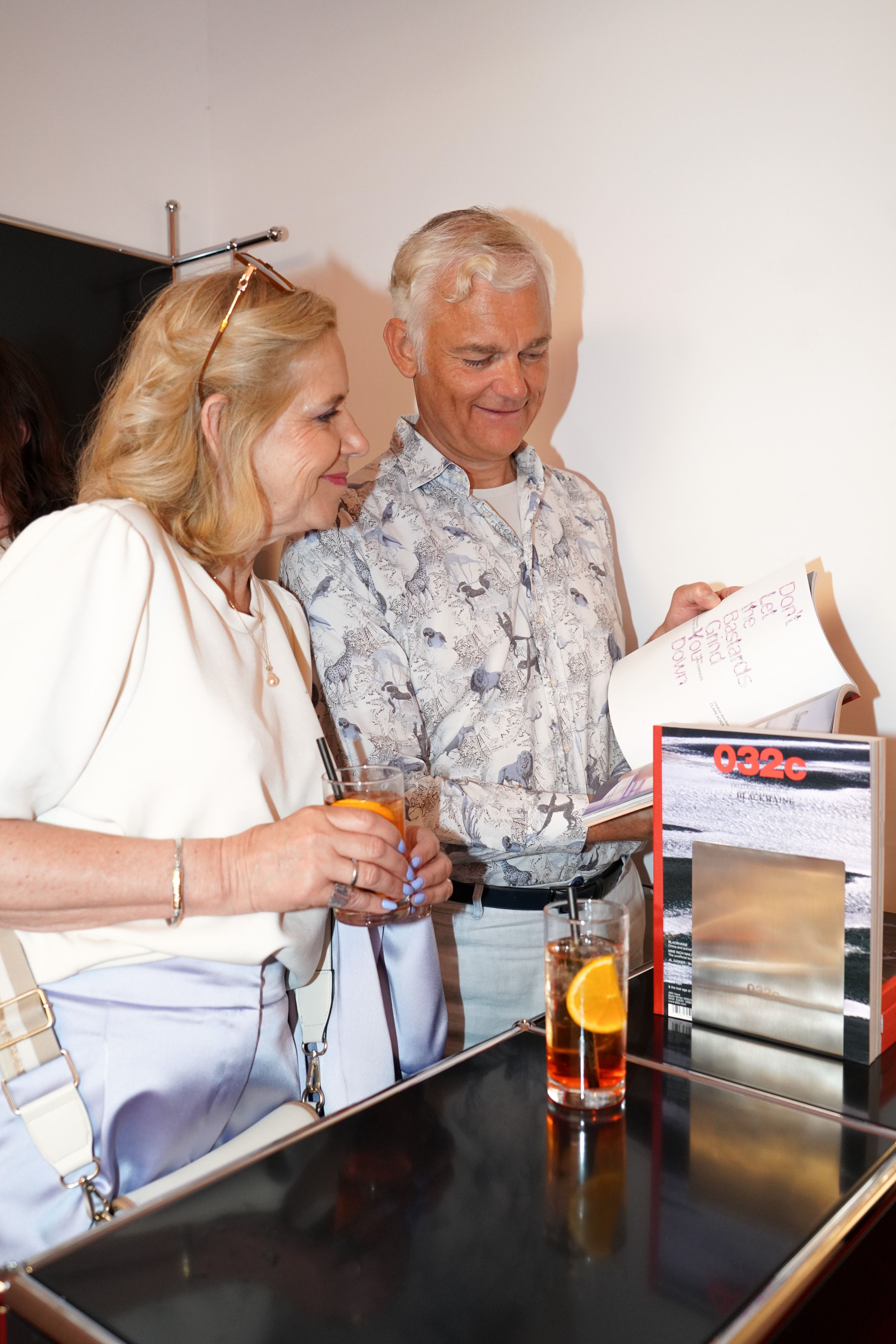
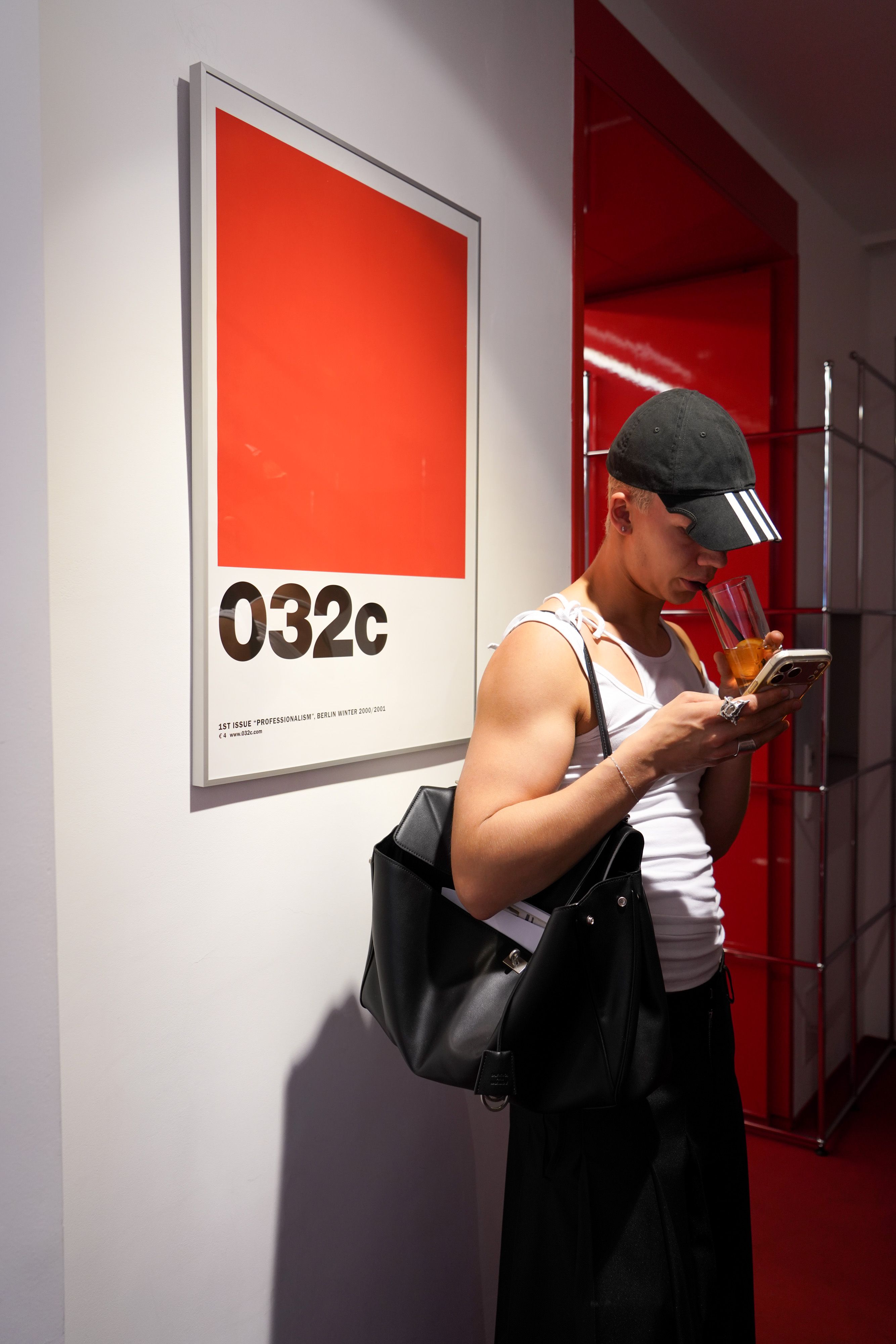
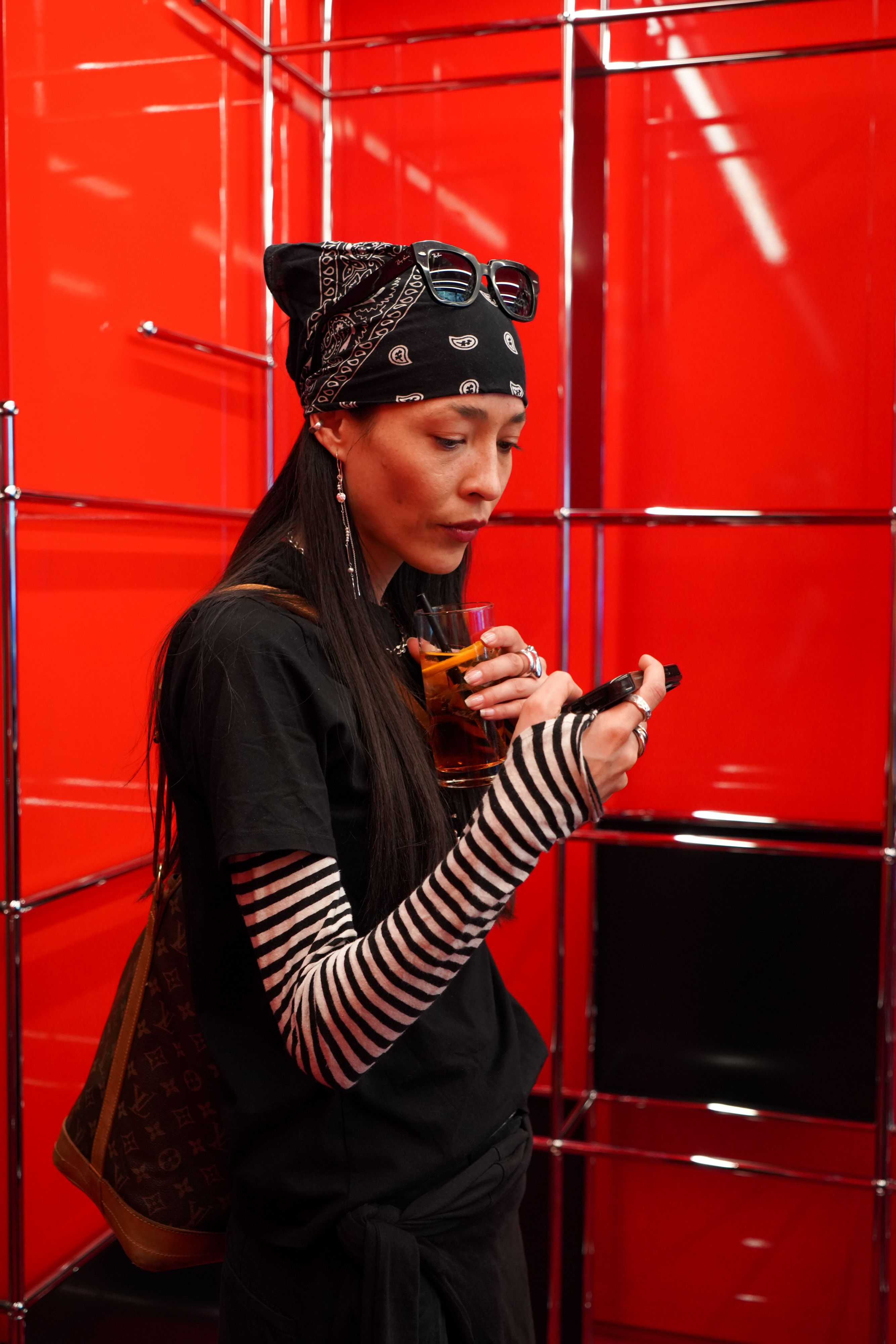
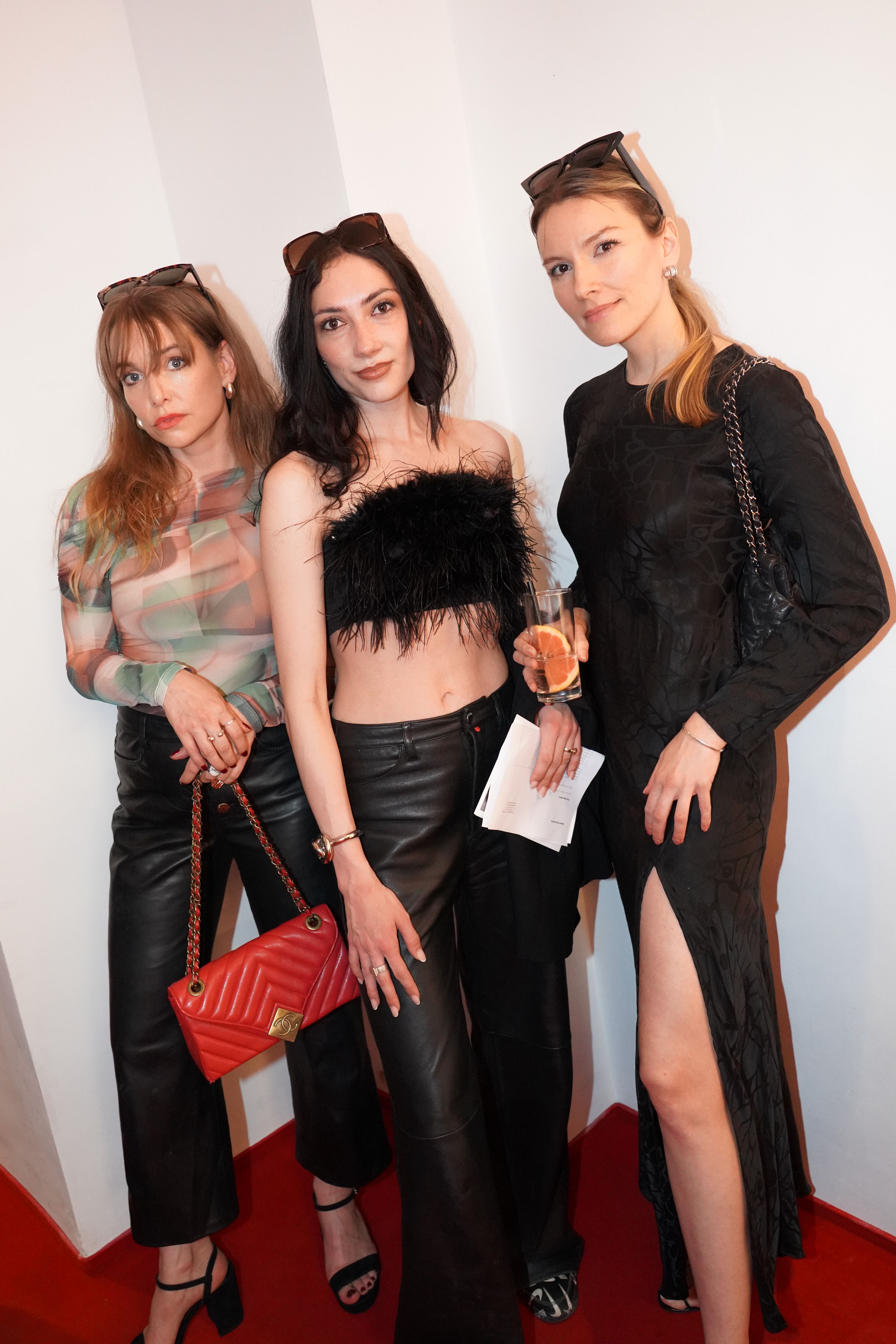
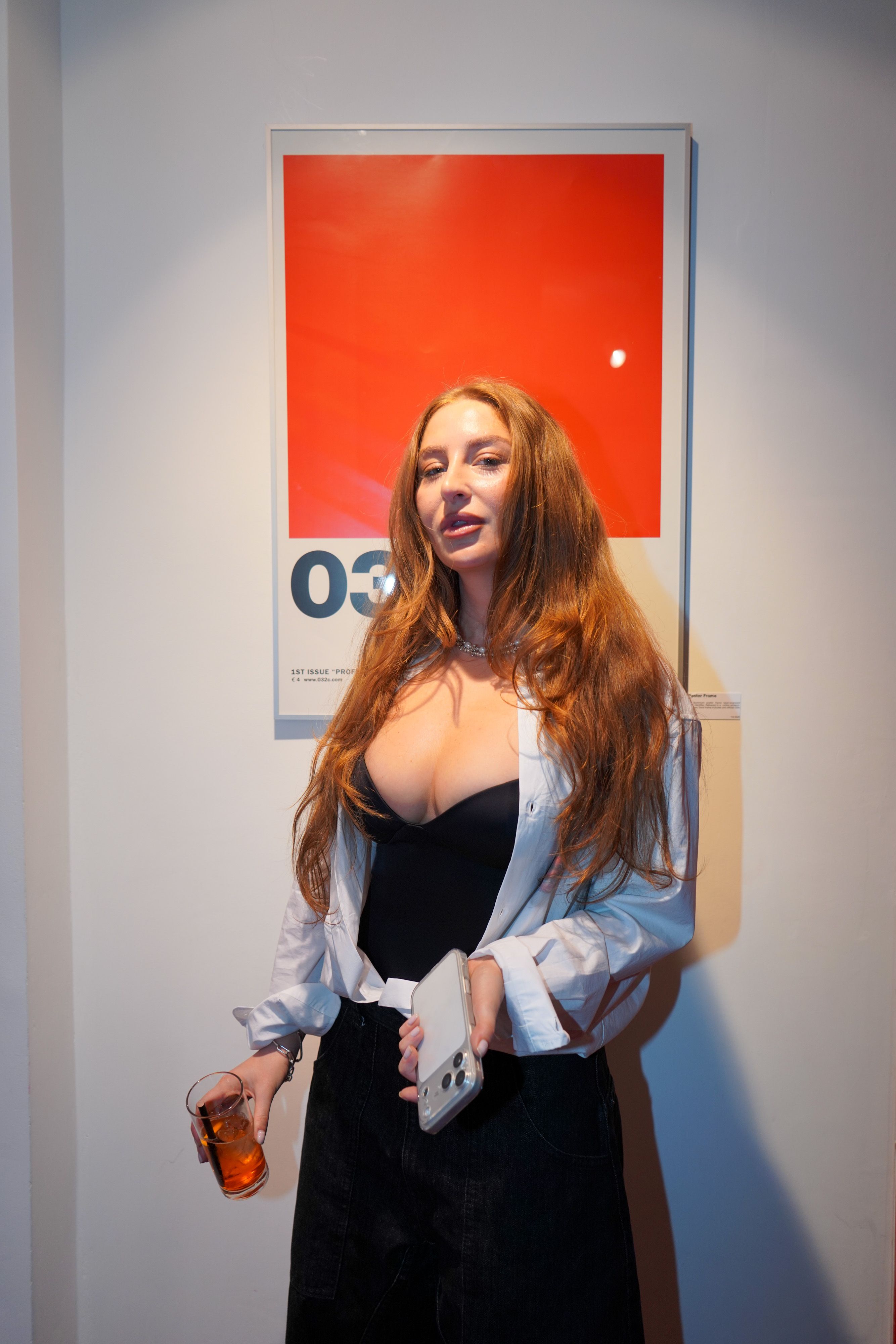
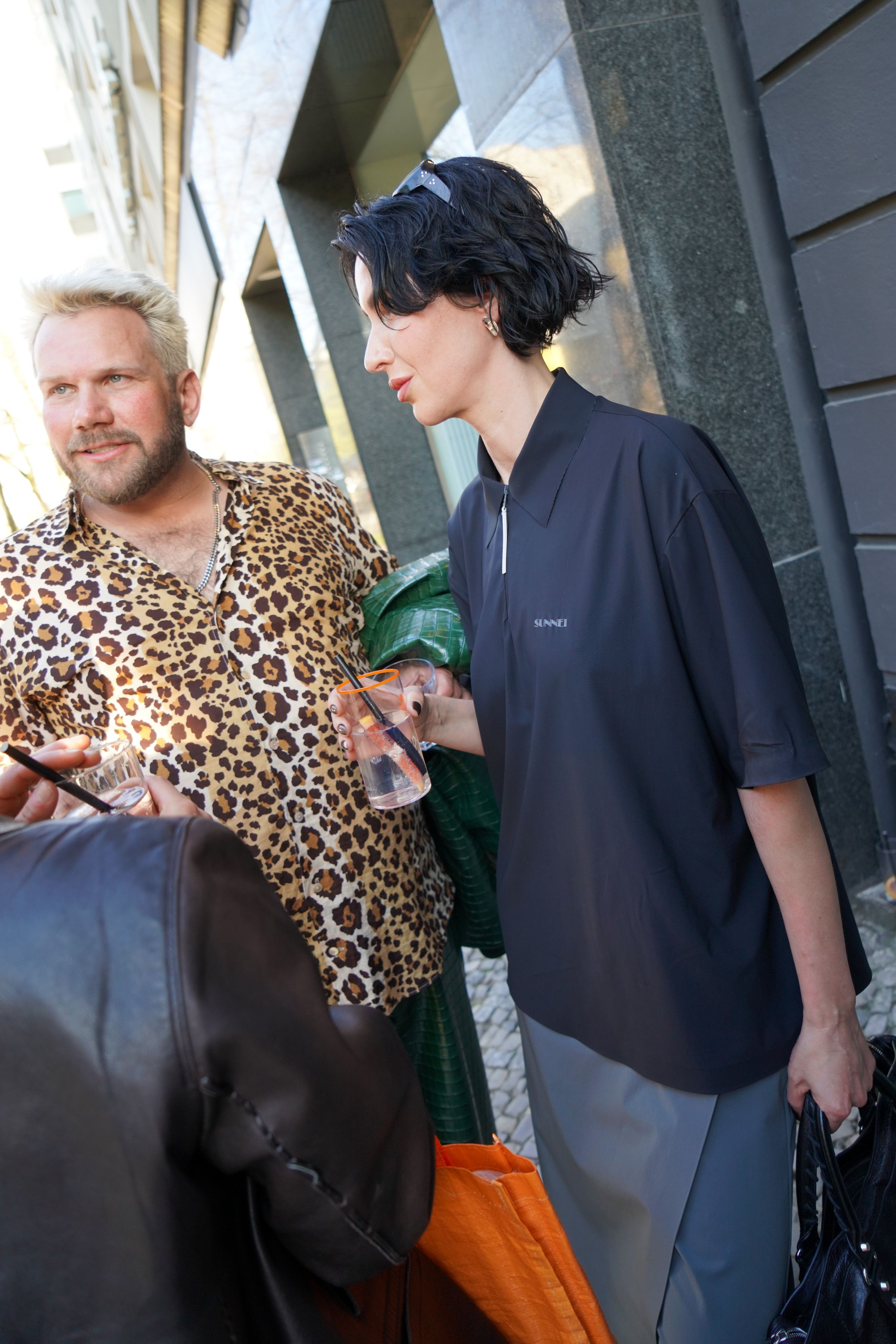
We celebrated the opening of Billie and Chris at 032c Workshop on Saturday, May 2, as part of Berlin Gallery Weekend. The evening was elevated with non-alcoholic drinks by Volée.

“BILLIE & CHRIS”
May 3, 2026 – August 31, 2026
Tuesday to Saturday: 11:00 AM – 7:00 PM
Location: 032c Store, Kantstraße 149, 10623 Berlin
About USM
The Switzerland-based company USM has been producing timeless, high-quality modular furniture designs for 60 years, suitable for both residential and work environments. Recognized as a design classic, the USM Haller Furniture Building System has been officially inducted into the permanent design collection of the Museum of Modern Art in New York (MoMA), confirming the artistic character of the product. The company’s furniture, assembled from a few core elements, offers tailored solutions that can be expanded or reconfigured as needed. Each piece of furniture allows for maximum versatility and creativity. All USM product lines are manufactured from high-quality materials designed for longevity and durability, ensuring they last for generations. https://www.usm.com
Credits
- Text: VICTORIA CAMBLIN
- Photography: TINA KHUNTSARIA