Gorillaz: Face the Void, Kill Your Ego, End the “Celebrity Virus”
|Cassidy George
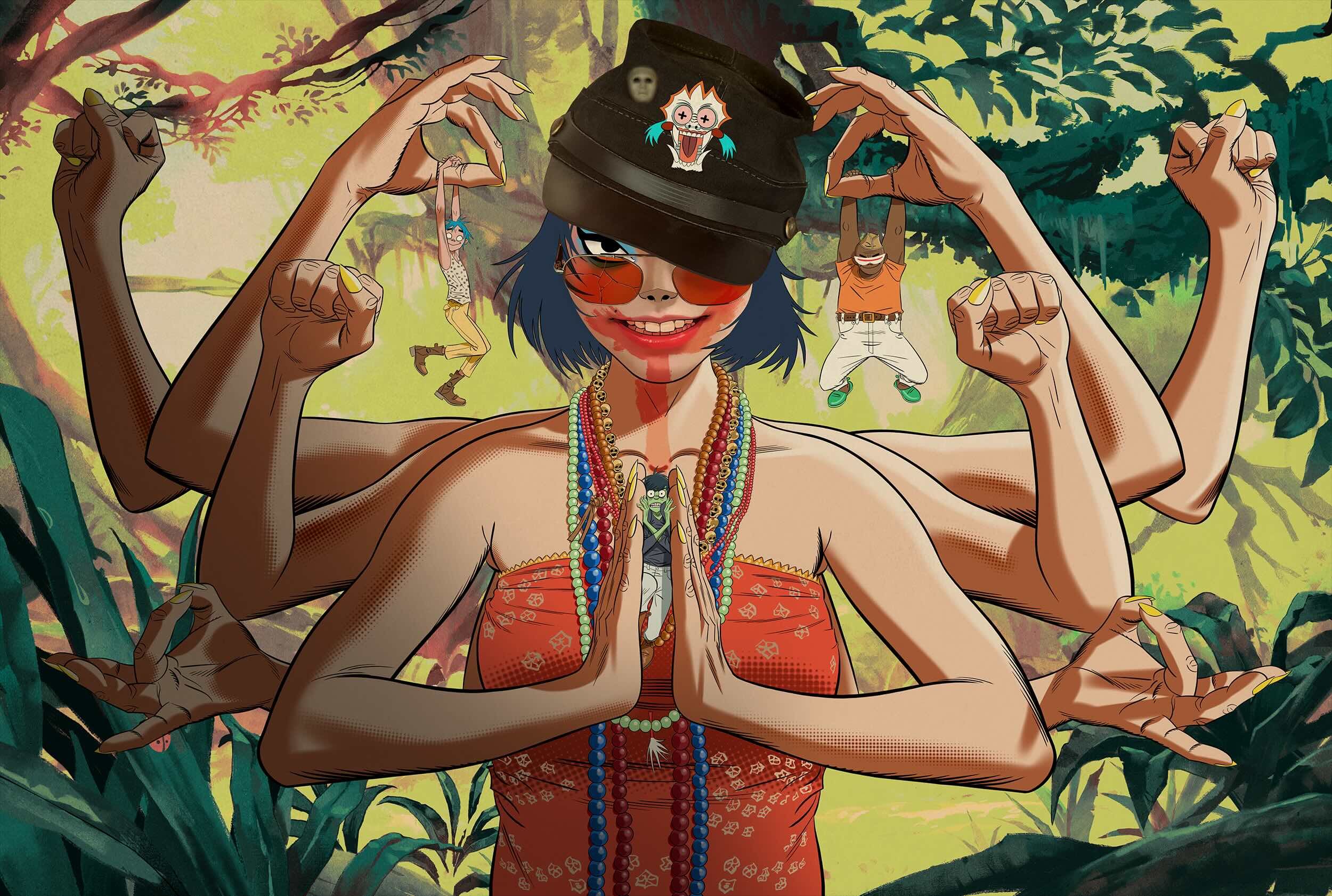
Exclusive artwork for 032c by Jamie Hewlett
Recently in a bookstore, I was heading to the science fiction section when a title screamed at me from the shelf: The Mountain Is You. I carried on and left with the novel I came for, but the phrase stayed with me. How am I the mountain? While researching the title, I discovered that Brianna Wiest’s 2020 book is about self-sabotage. “For centuries, the mountain has been used as a metaphor for the big challenges we face,” the description reads. “In the end, it is not the mountain we master, but ourselves.” Since then, the sight of any summit is a reminder of the psychological summits I am either already trekking, or will inevitably need to hike. A few weeks later, I received an email with the subject line: “GORILLAZ – New Album The Mountain Out February 27, 2026.”
Gorillaz was founded in 1998 by Damon Albarn, the lead singer of Blur—at the time one of the most popular Britpop bands in the world—and Jamie Hewlett, the co-creator of the cult comic book series Tank Girl, about a punk in post-apocalyptic Australia. Driven by mutual dissatisfaction with their respective industries and a proclivity for progress, Albarn and Hewlett created the world’s first virtual band. Its public-facing members were cartoon gorillas that coexisted in an elaborate, ever-expanding universe that developed in tandem with the music.

Damon Albarn and Jamie Hewlett in 2010 by Pennie Smith
Beyond this act of cultural foresight (anticipating a world driven by digital avatars and fractured selves) the music itself was an experiment in futurism. Many were introduced to Gorillaz through “Clint Eastwood,” a breakout single built from Albarn’s use of the “Rock 1” preset on a Suzuki Omnichord. The band went on to become one of the most influential alternative acts of the 21st century by also reconceptualizing the band—in the analogue world—as an ever-expanding collective. Over the years, Gorillaz have worked with Grace Jones, MF DOOM, Lou Reed, Snoop Dogg, Robert Smith, Elton John, Beck, Stevie Nicks, and countless others—all while maintaining a sound of their own. Their discography is sardonic yet soulful, often melancholic but occasionally euphoric, and global in scope despite always bearing some mark of Britishness.
Albarn and Hewlett made The Mountain shortly after the deaths of their fathers, and a period of mourning that coincided with an extended trip to India. True to form, the album hinges on collaboration with artists from India and far beyond, who are both living and dead. It departs from earlier releases in its narrative ambiguity—the idea being that The Mountain is not necessarily Albarn and Hewlett’s mountains, or any given listener’s.
On a recent video call, I was greeted not only by the duo but also by Albarn’s cat, Romeo Santos, who, after walking across the keyboard and filling the frame entirely with his body for a period, ended Albarn’s call prematurely.
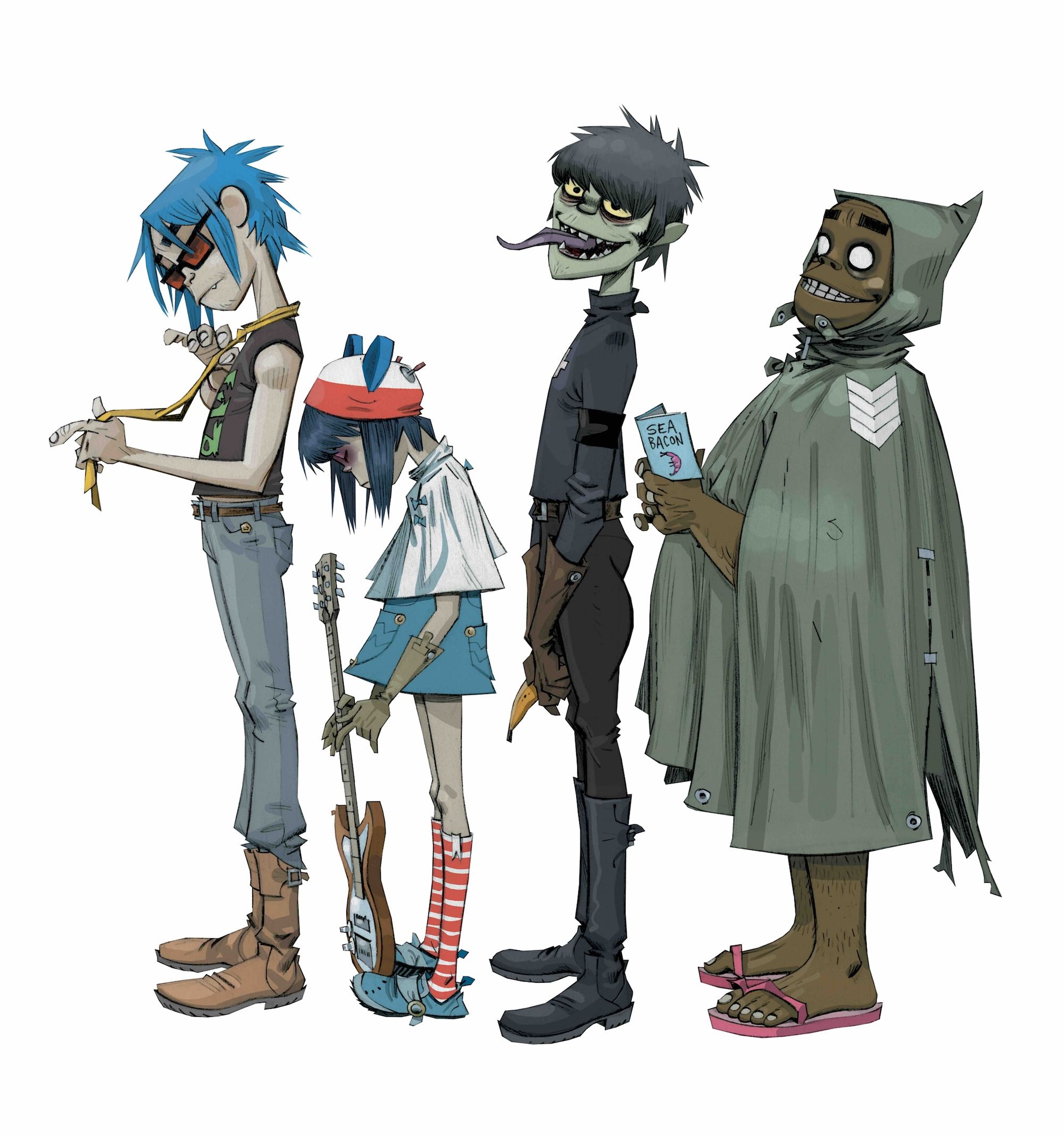
Band members 2D, Noodle, Murdoc Niccals, and Russel Hobbs
Cassidy George: We’ve officially lost Damon [Albarn]. Did his cat end the call or did he?
Jamie Hewlett: You see, this [ethos] is something we picked up in India. If a cow is sleeping in the road in India, you’ll be told to simply drive around it, because the cow has just as much of a right to be there as you do. We’ve adopted the same idea here. I have my dog with me here, and Damon has his cat on his laptop.
CG: I think we could all benefit from adopting that––
JH: You do have to be careful with the monkeys. We’re both born in the Chinese year of the Monkey and love monkeys, but in India they’re like gang members. All they’re missing are leather jackets and flick knives. You quickly learn to never get into any kind of a dispute with a monkey, because they’ll come back 10 minutes later with another 20 monkeys and attack you!
Damon Albarn: I’m back! I don’t know what he did to the keyboard, but I couldn’t see or hear anyone for a while. Romeo plays music as well, and often interrupts sessions by walking across pianos and things.
CG: Damon, I was reading that you grew up with Indian classical music?
DA: I did, yeah! I grew up in a part of London where, especially in the 1970s, there was a huge Indian community. My next-door neighbors were Indian. My parents were into many aspects of Indian culture, but primarily the music. There was also an element of Indian spirituality that they found interesting. I remember my mum had all these 60s posters of hand-painted Indian gods. When you grow up with that, you don’t even see it as “other”—it’s just part of what you are.
When both of our fathers passed, it became something we had to carry and share. We didn’t go to India for that explicit reason, but it was amazing to have the opportunity to reconnect with something from my childhood in the present.
CG: Last year, both of my parents lost their parents, but also had their first grandchild. I think the cyclical notion of samsara is a far more optimistic understanding of life and death than a singular, linear experience with a dead-end.
DA: India is one of the best places on earth to reset your view of mortality and begin to understand the concept of the end not being the end, but the beginning of something. We were so lucky to go to Varanasi, which is one of the oldest inhabited places on Earth, on the banks of the River Ganges. They’ve been practicing cremation there for 5,000 years, every day. You’d assume it was a gruesome place, but it’s quite the opposite—it’s one of the most beautiful places I’ve ever been to, if not the most.
“[India] doesn’t have the same celebrity virus that we all got from America. Their entire culture is built on different tenets.”
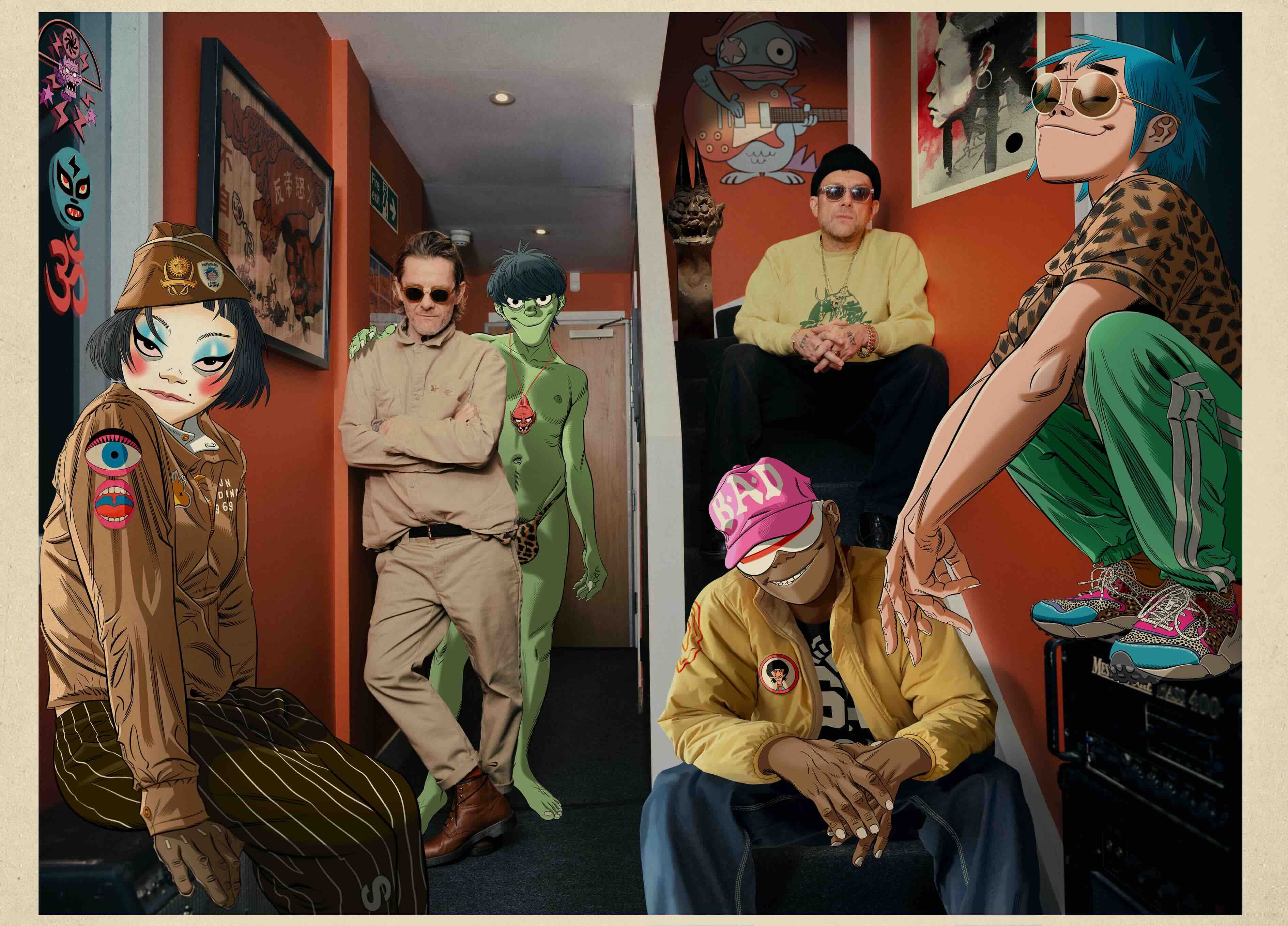
Gorillaz / Reuben Bastienne-Lewis
CG: The role of Indian classical music in pop is chronically overlooked. Even in attempting to educate myself more about it, I was ashamed to realize I hadn’t even heard of many common instruments, such as the tanpura or tabla.
DA: There’s so much music and so many people within the orbit of Pakistan, India, and Bangladesh, that this style of music can really exist in its own world. As a musician, you don’t have to ever step outside of the country really, even if you’re a huge artist there. [With Indian music] I’m really just a student. I’m learning all the time.
JH: Only working with people like you and never leaving your comfort zone doesn’t really create great results, does it? You just end up doing the same shit. India is the sort of place where you can’t help but be inspired whether you’re an artist, musician, or writer – it is infectious in that sense.
DA: It also doesn’t have the same celebrity virus that we all got from America. Their entire culture is built on different tenets. American culture has been a wonderful thing, but it’s also been very destructive. I do think it has reached a sort of hyperbolic level of self-congratulation. There’s an entire awards season. There’s Super Bowl season. Imagine the world if we didn’t have to go through these “seasons,” which are basically just inward-looking, mass celebrations of ego and Americana. Imagine if artists were just able to create work and didn’t have to be judged against each other all of the time—if they could all work together in a wonderful, socialist way. I’m sorry, but the whole idea of awarding people who are already lucky is just nonsense.
JH: And then they just keep awarding the lucky ones even more!
CG: They vote them into office.
JH: But remember, it’s the land of the “free!” [Laughs]
CG: A lot of what you just said seems to resonate with the founding philosophy of Gorillaz, which was ultimately about refusing to participate in an egomaniacal industry, right? You removed yourselves from the equation and inserted cartoon characters in your place. At the time, was this an act of antagonism or were you being futurists?
DA: We were definitely being futurists.
JH: Well, it was a little bit of both to begin with. At that point, some kind of antidote was required. It was the end of the 1990s, when the manufactured band was at its height. There were a ton of appalling bands and music around, and that’s what was dominating the charts in England and America. We were tired of it and wanted to challenge it, but also wanted to think of a future idea. It worked out for us because it was based on animated characters, and their world just gets bigger and bigger over time.
Here we are, 25 years later, and it’s still so relevant: cartoons, cosplay, computer games, avatars, the desire to escape into virtual worlds. [Cartoons] can’t compete with celebrities, but they do mean something to people.
DA: I regularly meet people who, first of all, have no idea what Blur is and don’t give a shit—why would they? And who, second of all, only know Gorillaz through the cartoon. They have no clue who I am, which is great! So, it has worked to a certain degree.
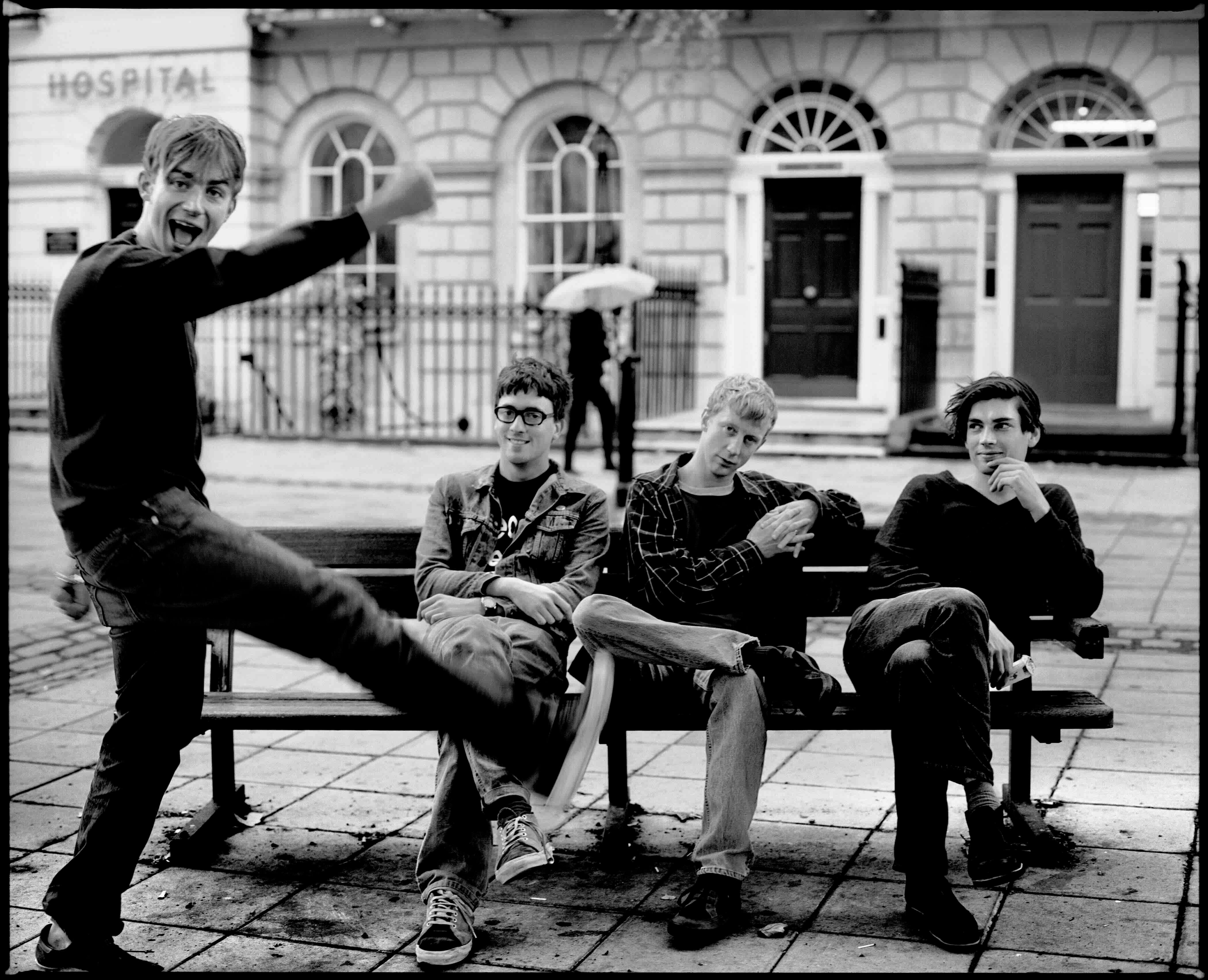
Blur by Kevin Westernberg
JH: After discovering the cartoon, a lot of young people become obsessed and dig really deep into the music. Then we have ten-year-olds discovering people like Bobby Womack, and all of the other people we’ve worked with.
DA: That aspect of it is so positive. That’s why, when the subject of death loomed so heavily over us, the idea of bringing people we worked with previously who have passed back into the fold seemed to make perfect sense.
JH: It’s an idea we’ve had since the very beginning of Gorillaz. When we wrote our one-page manifesto, we said that Russel would act as a conduit for spirits, but we never really took the idea further. Now felt like the perfect moment to go back through all of these recordings of sessions dating back as far as 25 years with people like Mark E. Smith and Dave [David Jolicoeur] from De La Soul. We discovered a complete freestyle rap from Proof that we had never considered using before. We had Lou Reed as well, but his estate didn’t want us to use his voice. We set one rule for ourselves: it had to be something that has never been heard.
CG: It’s crazy to think of how many genius outtakes and B-sides there are, just hidden on tapes and hard drives. I hope we have the opportunity to hear more things like this in the future.
JH: It depends how they do it. I mean, if you resurrect 2Pac as a hologram to make money—that’s a bit vulgar, isn’t it? There are two sides to that idea: one is about paying respect, and the other is about––
CG: Profit?
JH: Yeah, exactly.
CG: I’ve always been curious about the order of operations in your collaboration. Does Damon create music and then you build a story around it, or do you sometimes write the story and Damon uses that as a prompt for music? Or do things ever develop together simultaneously, like call and response?
JH: Damon usually gets started before I’ve even realized he’s started and says, “I’ve got five new songs, but they’re demos.” We listen to them together and that's often how it begins. A great thing is if he gives me a name for the album—so much great stuff comes from that. You did that with Plastic Beach, Demon Days, and The Mountain. Demon Days is one of my favorite titles of all our albums. The moment he said that, I knew we couldn’t go wrong. Demon Days still exists today, we’re still working on it.
DA: We did get a feeling at the beginning of the 2000s that the days of the demon would be our entire lifetime…
JH: After last weekend’s latest Epstein dump, we’re really in the realm of the demons, aren’t we?
CG: Jamie, I’ve always been a big fan of Tank Girl. When you all formed Gorillaz, was the world of comics suffering from some of the same things that the music industry was at the time? Were you equally disillusioned?
JH: I left that industry. There was an English comics industry that I was a part of, and then I felt that my only opportunities beyond that were to work for DC Comics. That didn’t excite me at all, so I had to find a new job. I didn’t want to do what other people were doing. I always see what’s missing or incorrect about—
DA: Jamie and I share an innate dissatisfaction with our own work. We’re always wanting to improve. We don’t [award ourselves] laurels.
JH: The job’s not done yet. There’s so much more to do, and it always must be better.
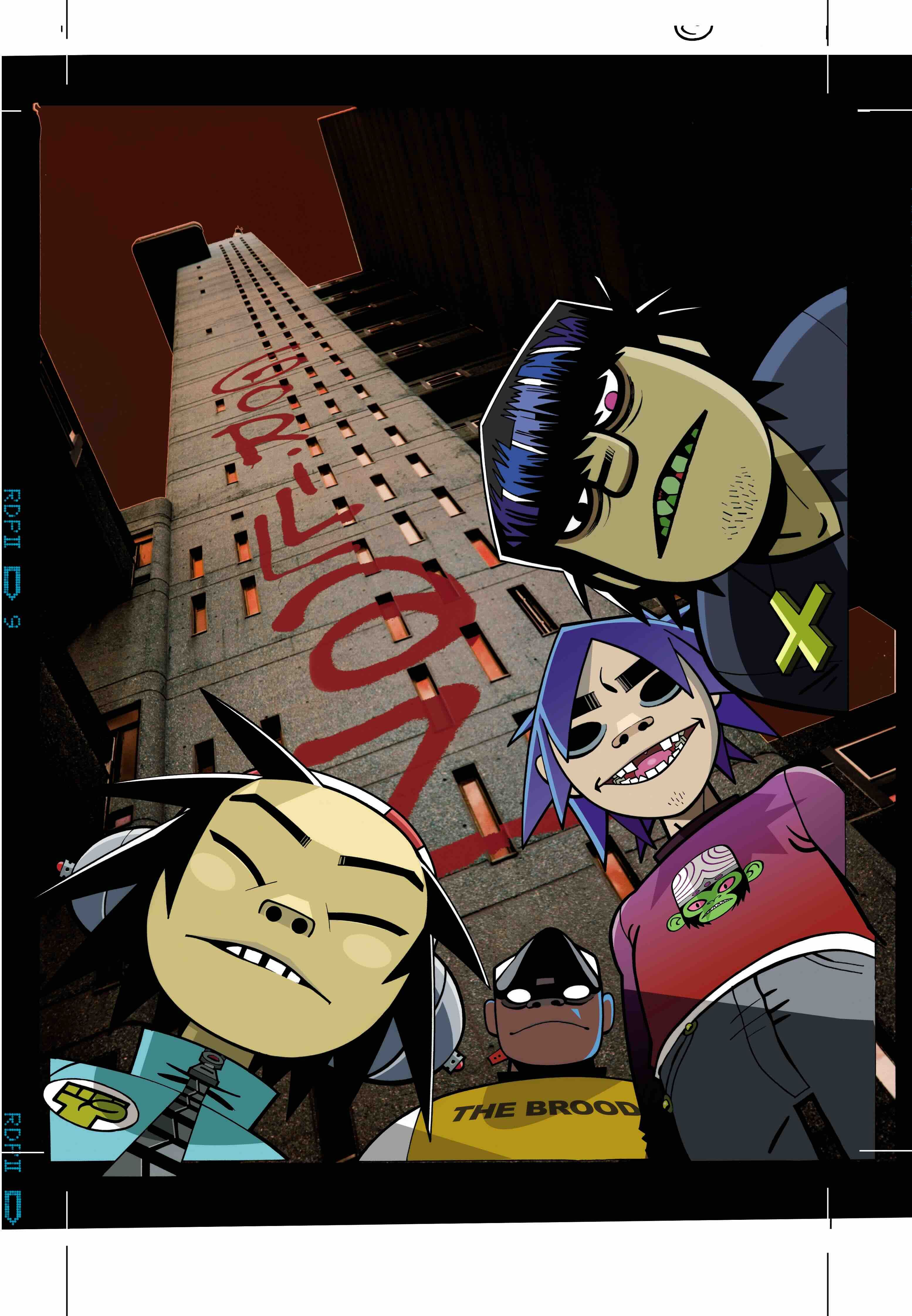
Gorillaz hold the Guinness World Record for the "Most Successful Virtual Band"
“We did get a feeling at the beginning of the 2000s that the days of the demon would be our entire lifetime.”
DA: Once you remove the aspect of ego—or once you try to destroy the ego—your priorities just change. In India, we had the opportunity to do yoga all over the place. One morning before sunrise in Varanasi, a guy gave a lesson on top of the hotel we were staying in. He told us to spend the hour attempting to empty our minds. When you meditate, the idea is that you’re cleansing your mind—cleaning things out and brushing them aside so that you arrive at complete emptiness. You can connect that idea to the idea of ridding yourself of ego—that sense of nothingness. Nothing is great.
JH: The void! It’s not an easy place to get to, but it’s definitely something to practice.
DA: There’s a lot of space in the void.
CG: Isn’t that everyone’s greatest fear though, facing the void?
JH: [Laughs.]
DA: Well, it’s the complete antithesis of social media. I’ve always boasted this, but it is true: I don’t have a telephone, and I haven’t had one for about ten years.
JH: Damon’s free from that world. I have to contact him through carrier pigeon.
DA: Otherwise known as email.
JH: That would be a great social media site actually: “The Void.” There’s nothing there, just the perfect sound at the perfect pitch, like a hum. “Come join us and spend some time in the void, but please don’t post anything because we don’t want to hear it!”
DA: Yeah, you can only join if you have nothing to say!
CG: The multimedia world you constructed through this impetus to kill the ego has also made your project translate so naturally into the demands of the new marketplace, which mandates that every musician attempt to world-build across various mediums and platforms. Nowadays, artists are being told they need to make a video game.
JH: I wonder how that goes down in the folk world.
CG: You certainly can’t shoot anyone.
JH: I think it would have to be agriculturally based. Here’s my video game—me milking cows.
DA: The emphasis on selling yourself is really too much nowadays. I don’t think I could cope with that if I were starting now. We’re lucky. We’re established enough at this point that we have a fanbase and we’re allowed to explore and do what we want to do. But to be a new artist today—and that’s basically what you have to do to be recognized? To sell yourself and be present all the time? All of this has been easy for us because we started off in a fake world. We were resolutely fake.
JH: And it wasn’t an easy sell back then. We’re talking about the end of the 90s—male guitar-band-led culture bullshit—and we come along with a fucking cartoon band? Everyone was like, “What’s this shit?”
DA: We played our entire first tour entirely behind screens. No one saw us, anywhere around the world. When we got to Japan, everyone wanted their money back.
JH: They needed to see celebrity faces on stage. We just had a screen for the visuals, and the band was behind the screen—some nights just in their underpants, because they didn’t need to dress up. There were definitely a few places where people were like, “What the fuck are we even paying for?”
CG: It’s so funny because now we think of the Asian market as being one of the earliest adopters of avatars and animated stars. I mean, K-pop is basically an expertly engineered simulation, and it’s the most popular genre in the world.
JH: KPop Demon Hunters is huge!
DA: I actually did a concert for robots in Tokyo a few years ago, in the Science and Technology Museum. I had just written my Everyday Robots album and they invited me to perform there. That was extraordinary—playing to an audience of androids.
JH: Did they enjoy the show?
DA: Oh yeah! One was winking at me! I swear.
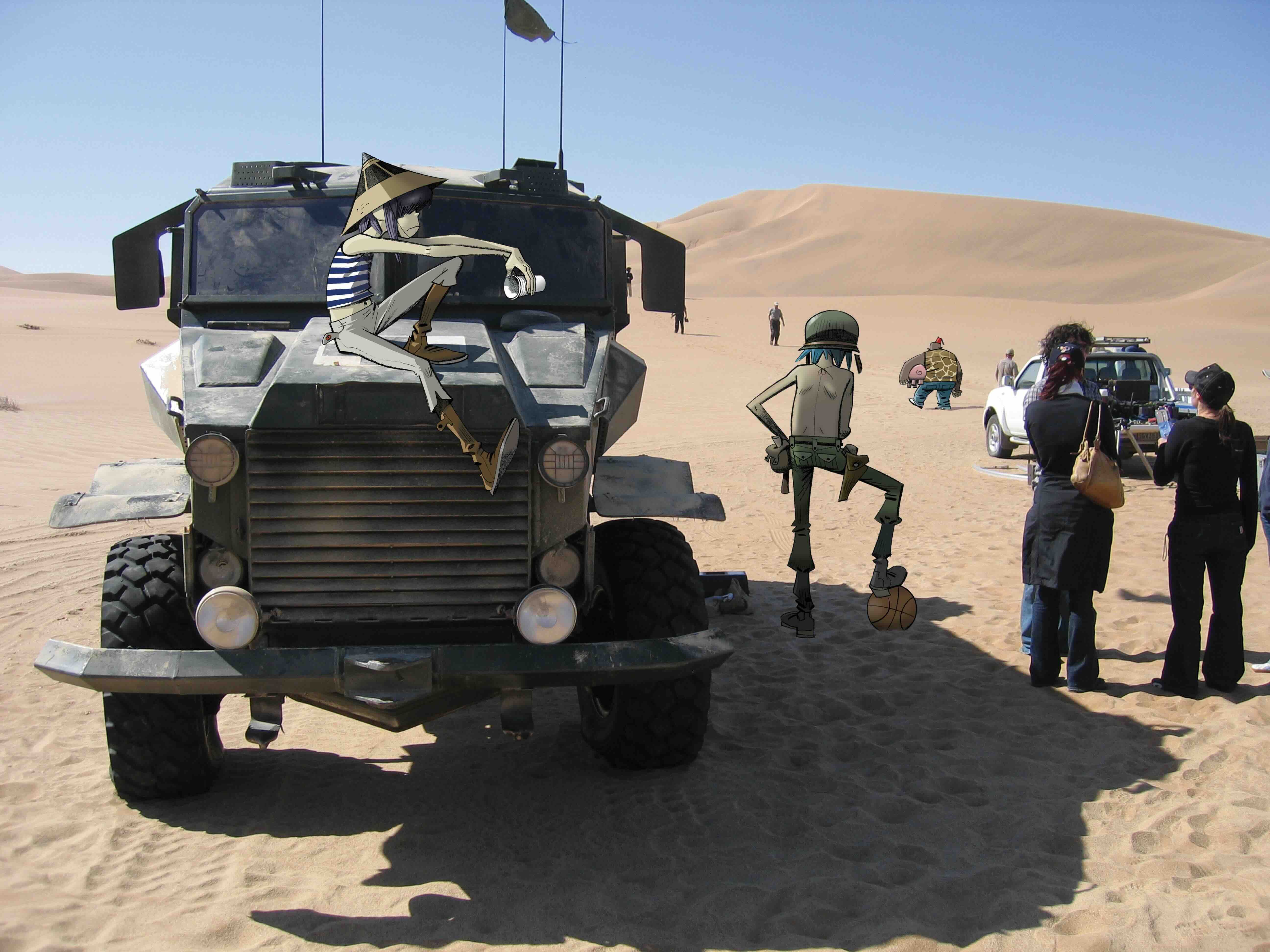
The band was named after the birth year of Damon Albarn and Jamie Hewlett, which is the Year of the Monkey in the Chinese zodiac
“All of this has been easy for us because we started off in a fake world. We were resolutely fake.”
CG: So back in the 90s, when everyone was thinking your cartoon band was shit, did you remain resolute in your belief that this was the future of music? Did you ever get discouraged?
JH: We took it to this guy Tony Wadsworth, a good friend of Damon’s.
DA: This was back in the day when EMI was EMI and they had a tea lady who pushed around a trolley, making people tea. We showed him one picture and one tune, and there on the spot—
JH: He said, “I love it. Go for it,” and signed it immediately. We were very lucky in that respect. That wasn’t actually the problem—it was more the press around the first album. Nobody wanted to talk to the characters. They all wanted to talk to Damon.
CG: This month you’re releasing an eight-minute short film that updates everyone on the status of the characters, who we last heard were running away to India with fake passports.
JH: There’s always a long debate about which songs will make it into the video, and we wanted to use the [animation] techniques they used back in the 60s when they made movies like The Jungle Book and One Hundred and One Dalmatians, which are hand-drawn with hand-painted backgrounds on glass and rostrum cameras. All of that old technology—well, is it technology? It’s handmade.
DA: It was cutting-edge technology back then. That’s the thing about “technology,” it all eventually becomes folk.
JH: The video features three songs from the album: “The Mountain,” “The Moon Cave,” and “The Sad God.” It attempts to tell the whole story of The Mountain through the eyes of the characters—or our version of the mountain. We tried to keep the narrative very open-ended, so that anyone can attach their own version of the mountain to it.
CG: Are you all familiar with this self-help book called The Mountain Is You? It’s about self-sabotage. Unfortunately, it became kind of a mantra running in the back of my head as I was listening to the album. I kept thinking: “The mountain is me, the mountain is me.”
DA: Well, life is a mountain, isn’t it? It’s not a flat road. No life is flat.
JH: The Mountain is yours.
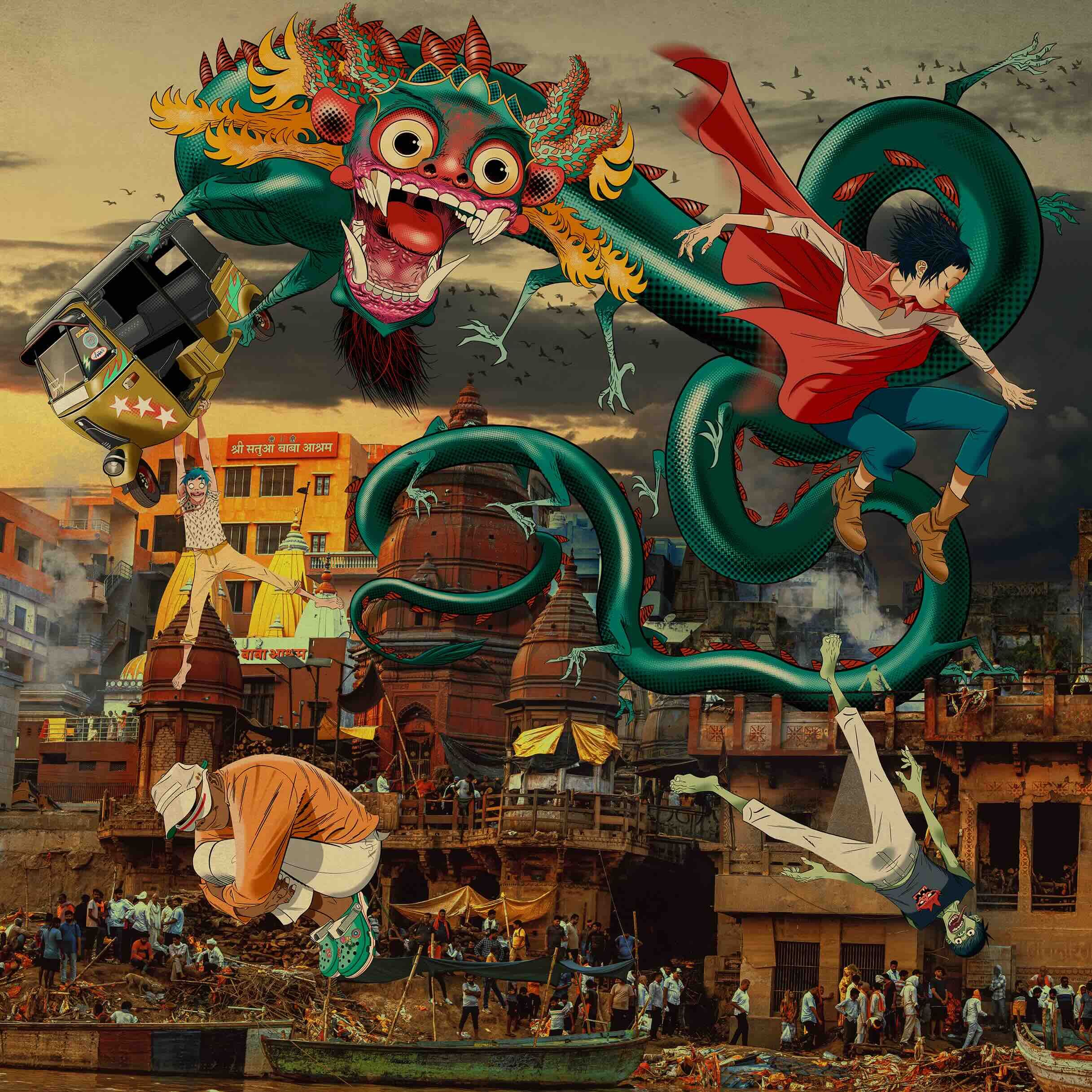
Artwork for The Mountain, 2025
The Mountain is out on February 27 on KONG, Gorillaz’ new label.
Credits
- Text: Cassidy George
- Imagery: Courtesy of Gorillaz