From CGI to IRL and Back Again: Sucuk und Bratwurst Looks Back on the 2018 Bread&&Butter Festival
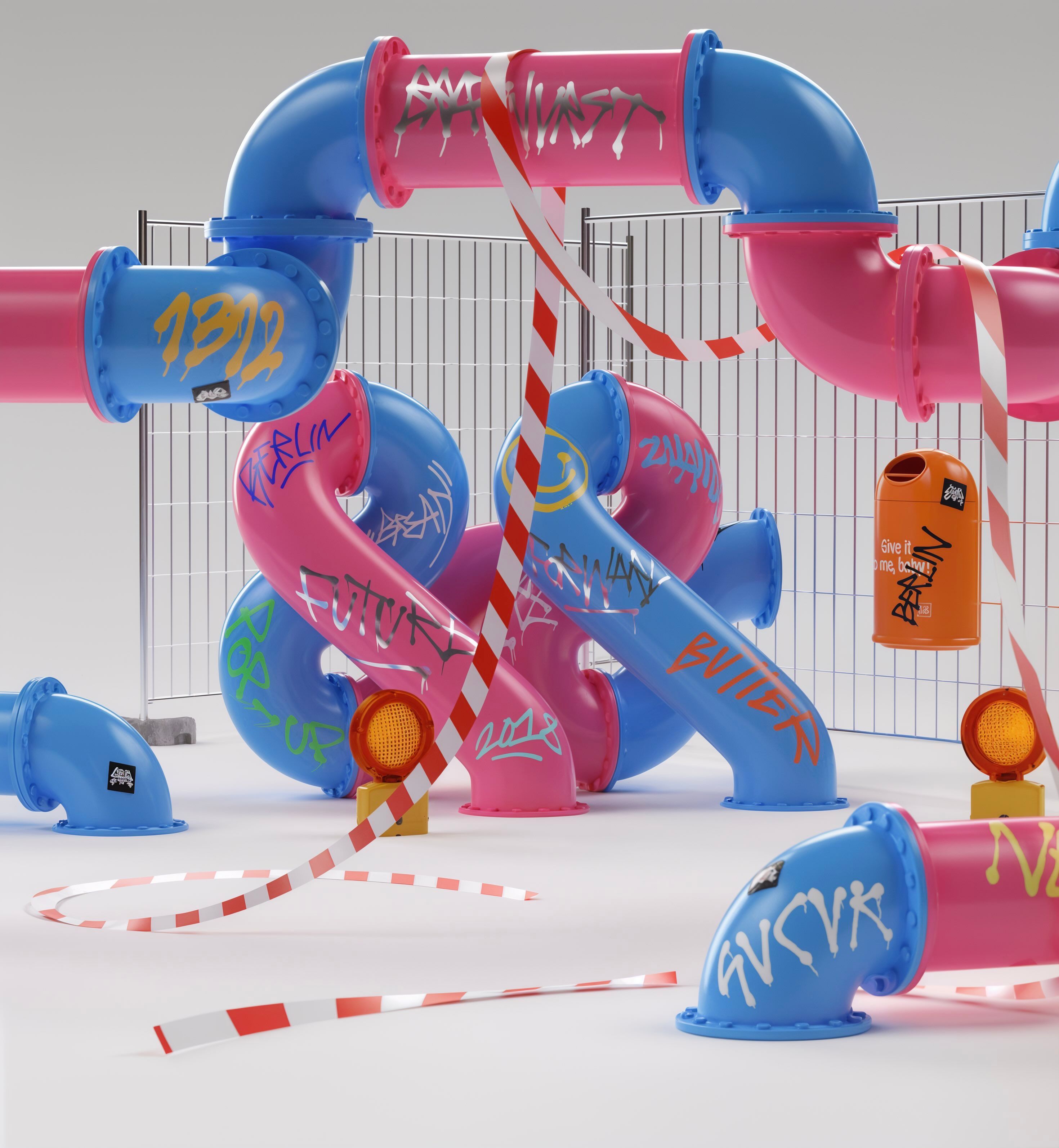
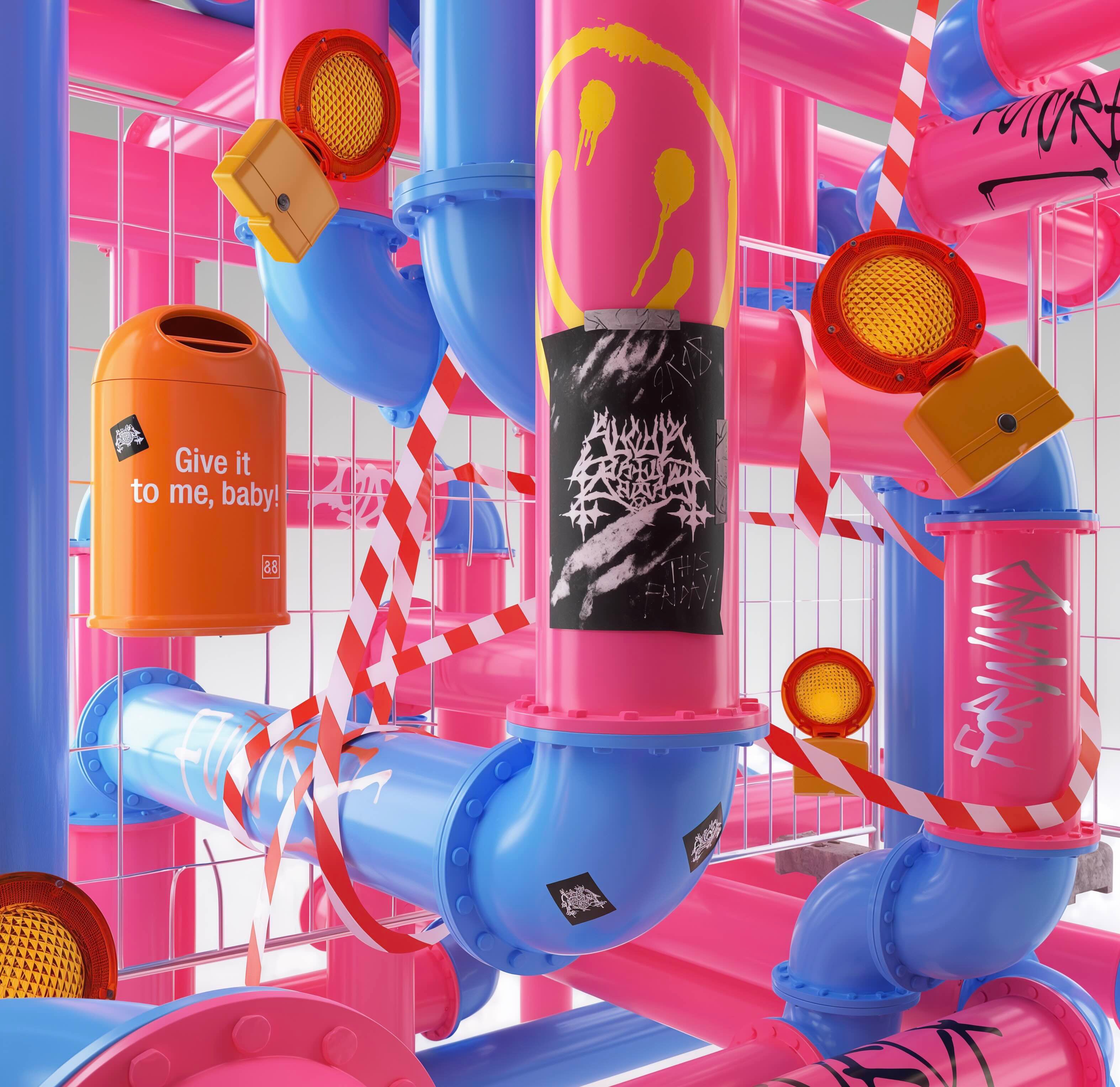
Looking at the double ampersand, you had a subcurrent sense of familiarity before you understood why: the logo for the 2018 Bread&&Butter by Zalando—a festival of fashion, music, and culture—was a contorted version of the iconic waterpipes that run along the graffiti-sprayed Berlin wall. The humorous and bizarre nature of the 3-D imagery belonged, of course, to the creative studio Sucuk und Bratwurst.
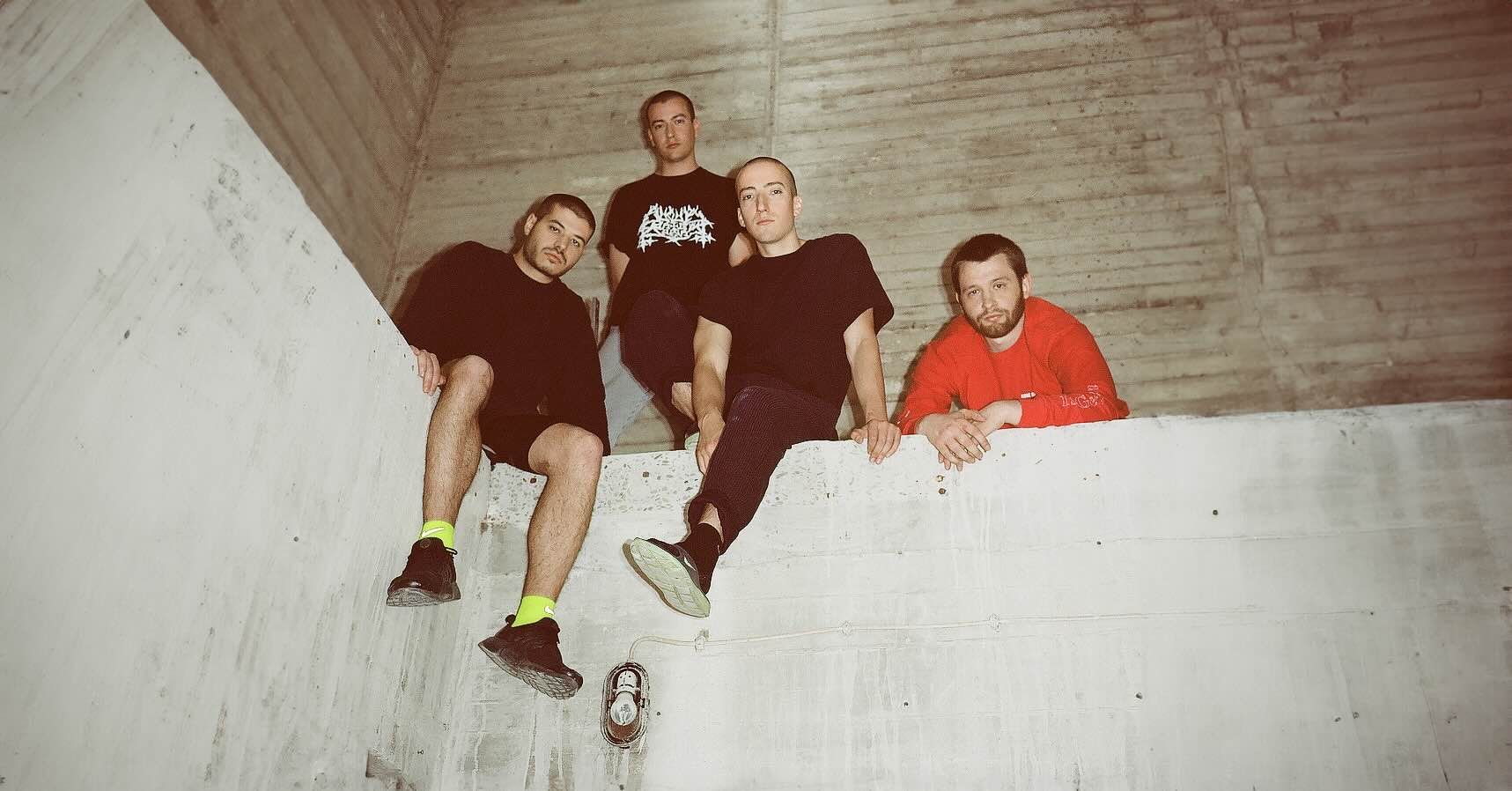
Founded by the childhood friends Alessandro Belliero, David Gönner, Denis Olgac, and Lukas Olgac, Sucuk und Bratwurst made a name for themselves in the mid-2010s as CGI savants, with a surreal aesthetic that left a thumbprint on every work. The studio has a knack of instantiating dream-like distortions, mobilizing an army of Will Smiths for Moncler or transposing a retro pair of Air Maxes into a cybernetic realm. For legacy streetwear brands and underground music labels alike, working with Sucuk und Bratwurst helped their attempts to modernize by embedding their products into a digital landscape in flux.
Though CGI remains a significant component of Sucuk und Bratwurst’s work, the studio has increasingly focused on the interplay between the digital and physical world, not just with furniture designs such as their zenomorph chair, but also with the Sucuk und Bratwurst coffee shop scheduled to open on the Torstraße next year. For the founders, these endeavors anticipate the desire of customers and brands to find offline sites of community in the coming year.
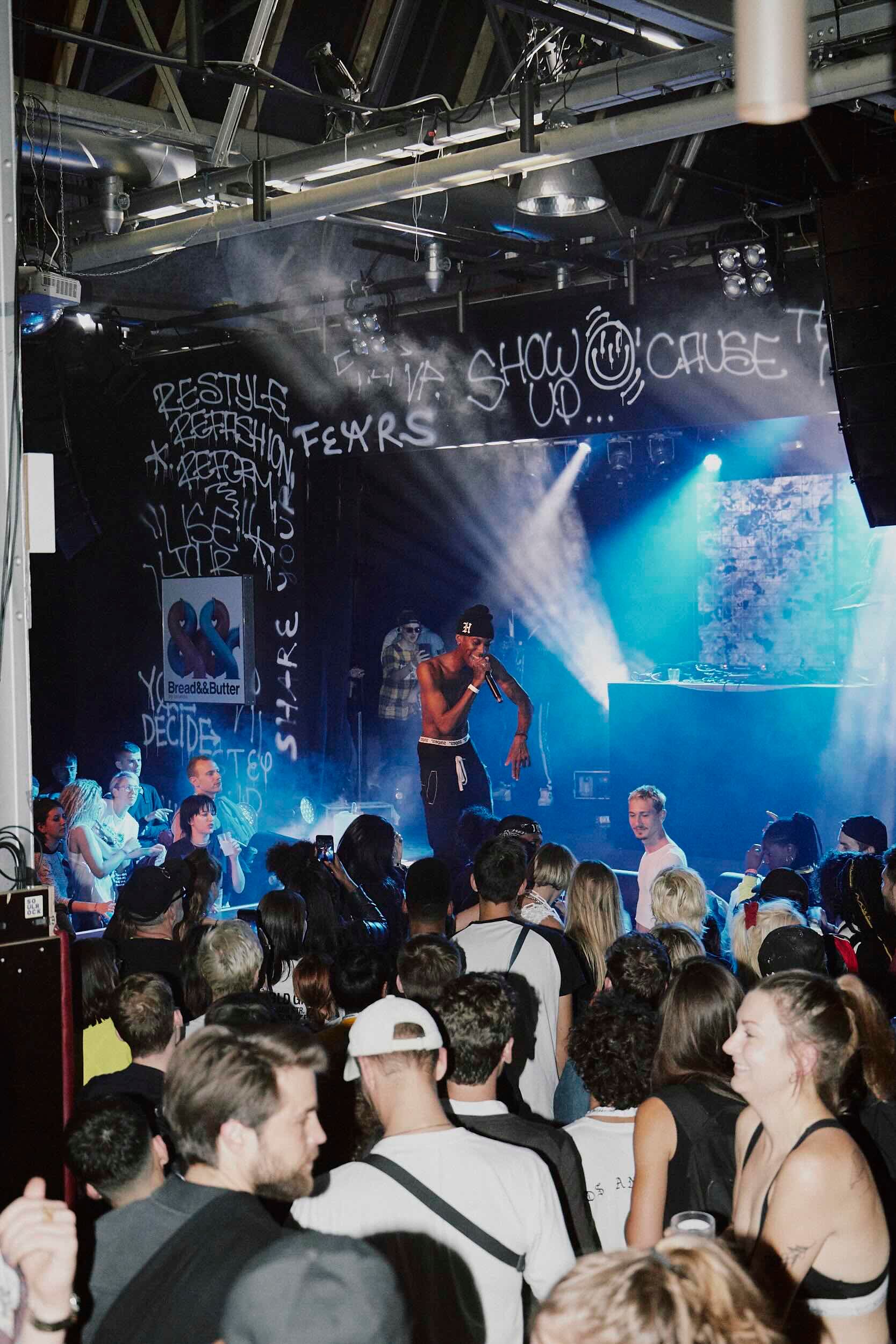
One of the first events for Sucuk und Bratwurst that bridged this gap between an online customer base and an in-person community was the Bread&&Butter festival by Zalando. Initially a trade fair for streetwear labels in the 2000s, the Zalando acquisition of the event in 2016 led to a renovation of the concept: instead of focusing on business-to-business commerce, the new Bread&&Butter would be open as a watershed cultural event for the general public. Running between 2016 and 2018, Bread&&Butter by Zalando featured exclusive drops from fashion brands, a top-tier slate of music programming, pop-up fashion performances, and panel discussions.
The line-up for the festival's 2018 edition was case and point: it showcased brand exhibitors like adidas Originals, MAC Cosmetics, Nike, and Vans, as well as musical highlights such as Gunna and Princess Nokia. Since Sucuk und Bratwurst was known for its work at the nexus of fashion and music, it was a natural fit for them to design the brand identity of the 2018 festival. In addition, the event was an opportunity to see the studio's digital ideas come to life in reality.
032c spoke with half the members of Sucuk und Bratwurst, David Gönner and Denis Olgac, about the evolution of their design practice and their highlights from the 2018 Bread&&Butter festival, including skipping press photos for the massage booth, dodging fights with Berlin graffiti artists, and getting to see their 3-D designs handcrafted IRL.
032c: What interested you about the project of designing the brand identity for Bread&&Butter? From the outside, it came across as a strong fit: Sucuk und Bratwurst already had a reputation for design at the intersection of fashion and music in Berlin, and Bread&&Butter was a hub of fashion drops and musical performances.
Denis Olgac: The request actually came to us in a surprising way. The Creative Producer of the festival wrote to us on Instagram with the key facts of the commission, but the account wasn’t verified and didn’t have a large following.
David Gönner: It was his private account.
DO: Back then we were still at the beginning of our career. It felt a little like a scam.
DG: We didn’t even answer at first.
DO: But we finally had a meeting at the Zalando Headquarters by the East Side Gallery. There was a lot of creative freedom, we just had to observe two parameters: the identity should represent Berlin, and it should represent the streets of Berlin. We quickly landed on the idea of those waterpipes that are very typical for the city. We come originally from Mainz and for the most part moved here in 2018. If you’re not from Berlin, these waterpipes are very noticeable. That and the graffiti.
032c: The last Bread&&Butter was eight years ago at this point, and Sucuk und Bratwurst have been based in Berlin since then. Do you perceive an evolution in the commissions you get from clients? How has the design field changed in the last eight years and how has Sucuk und Bratwurst changed with it?
DO: I was very young when we started, just nineteen. There was an excitement curve that was crazy at the beginning and became eventually more moderate. That’s probably normal not just in the industry but in life. We started using CGI for editorials and fashion advertisements very early—areas where 3D wasn’t used so much. Special effects were more of a Hollywood thing. Due to technological advances like AI, you then noticed a trend in the industry to make more handcrafted stuff, such as ceramics, and to show the behind-the-scenes process of how you prepare a 3-D print. We also ended up in the field of product development—chairs, furniture, objects—and that’s been a major change. When we started out, we were mostly doing animation and 3-D imagery. Now, it’s a mix of different media that we typically transpose into real life.
For the last year, we’ve also had a coffee pop-up in the office, which we’ll open as a permanent space in the Torstrasse. In retrospect you could say that there’s been less demand for animation…
DG: You can just ask ChatGPT.
DO: … but that there will probably be a moment where people crave social interactions and spaces where you can actually meet, away from your smart phone.
032c: The Internet’s kind of become this place of passivity where instead of having a person-to-person interaction, even in a virtual form, you’re just staring at a feed of AI-generated imagery. It makes sense in the context to focus on these community-oriented spaces.
DO: With our move to Berlin, our community has become a lot larger in the last few years. It means we can do a lot more in real life and actually connect people with our events.
032c: Your friendships date back to your school days in Mainz. What streetwear or music brands did you experience growing up together that really stuck with you?
DO: I’d say the Nike swoosh.
DG: For sure.
DO: The swoosh was the brand that we were fans of from the start.
DG: Electronic music like Daft Punk and Justice also really brought us together.
032c: A moment ago, you spoke about this excitement curve when starting the company. Did you have a commission where you felt as though you had really made it?
DO: The project we did with Adidas Originals.
032c: The futuristic editorial?
DG: Yeah, it was cyberpunk inspired. That was really the start for us.
There was this fascination with CGI at the time that you could really implement exactly what you had in your head. You weren’t reliant on photography or video. You could twist or shape everything like in a dream.
032c: What was the appeal at the beginning with CGI? When I think about your first projects, the ones that got the most excitement are these CGI works with a clear aesthetic identity. You can recognize right away that it’s Sucuk und Bratwurst.
DG: It happened over Facebook. There were a lot of aesthetic groups and a few internet artists that were toying with CGI and sharing their styles. Then there was this collective, Fade to Mind from LA, where Kingdom and Kelela released their music, that had 3-D animated music videos. They were a bit shoddy, but cool enough to trigger something: let’s try that out and see how it goes.
Anyone can use ChatGPT now, but there was this fascination with CGI at the time that you could really implement exactly what you had in your head. You weren’t reliant on photography or video. You could twist or shape everything like in a dream.
032c: To come back to that idea of putting things into practice, how was it to see your vision realized with Bread&&Butter? Do you have any particular memories of the festival?
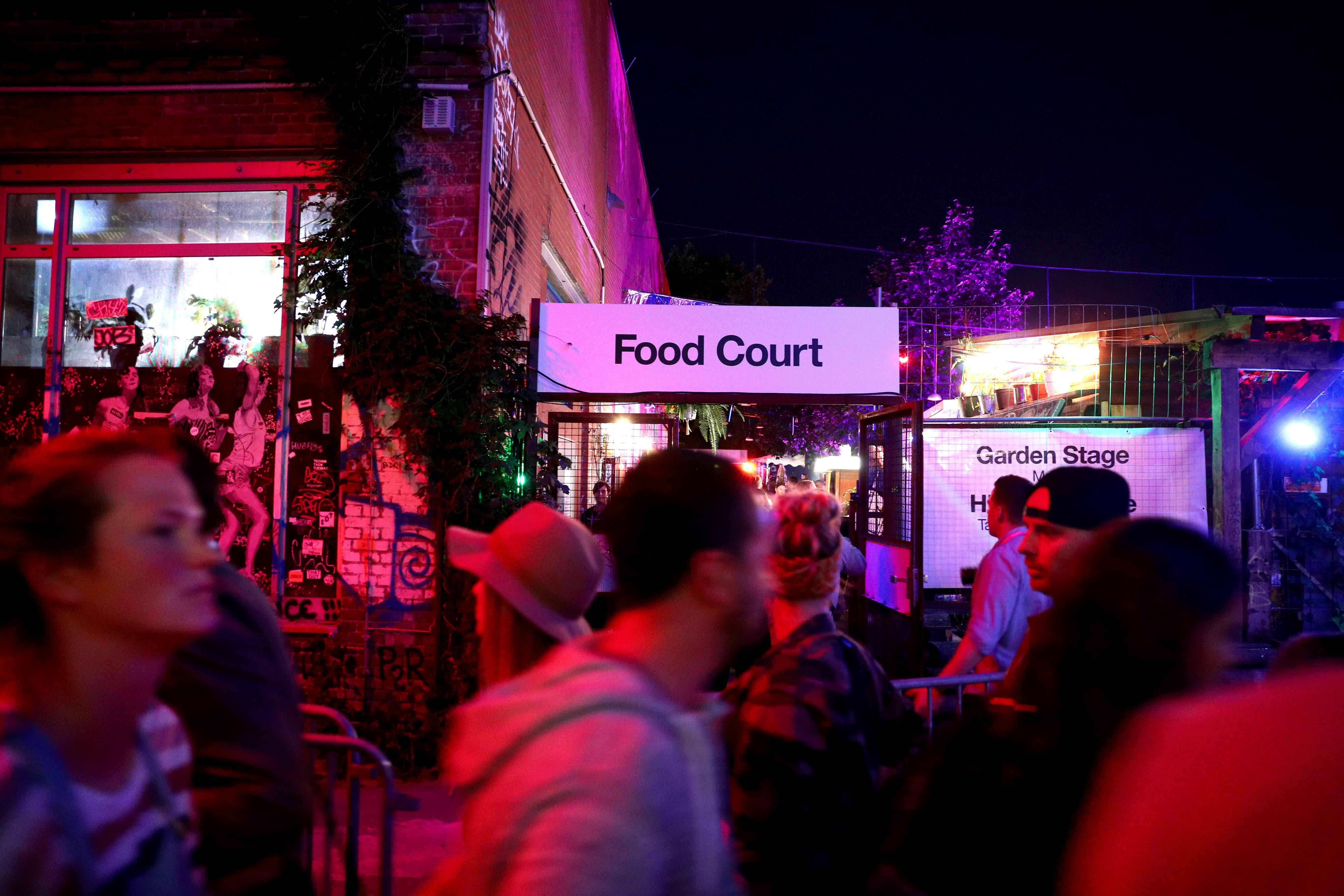
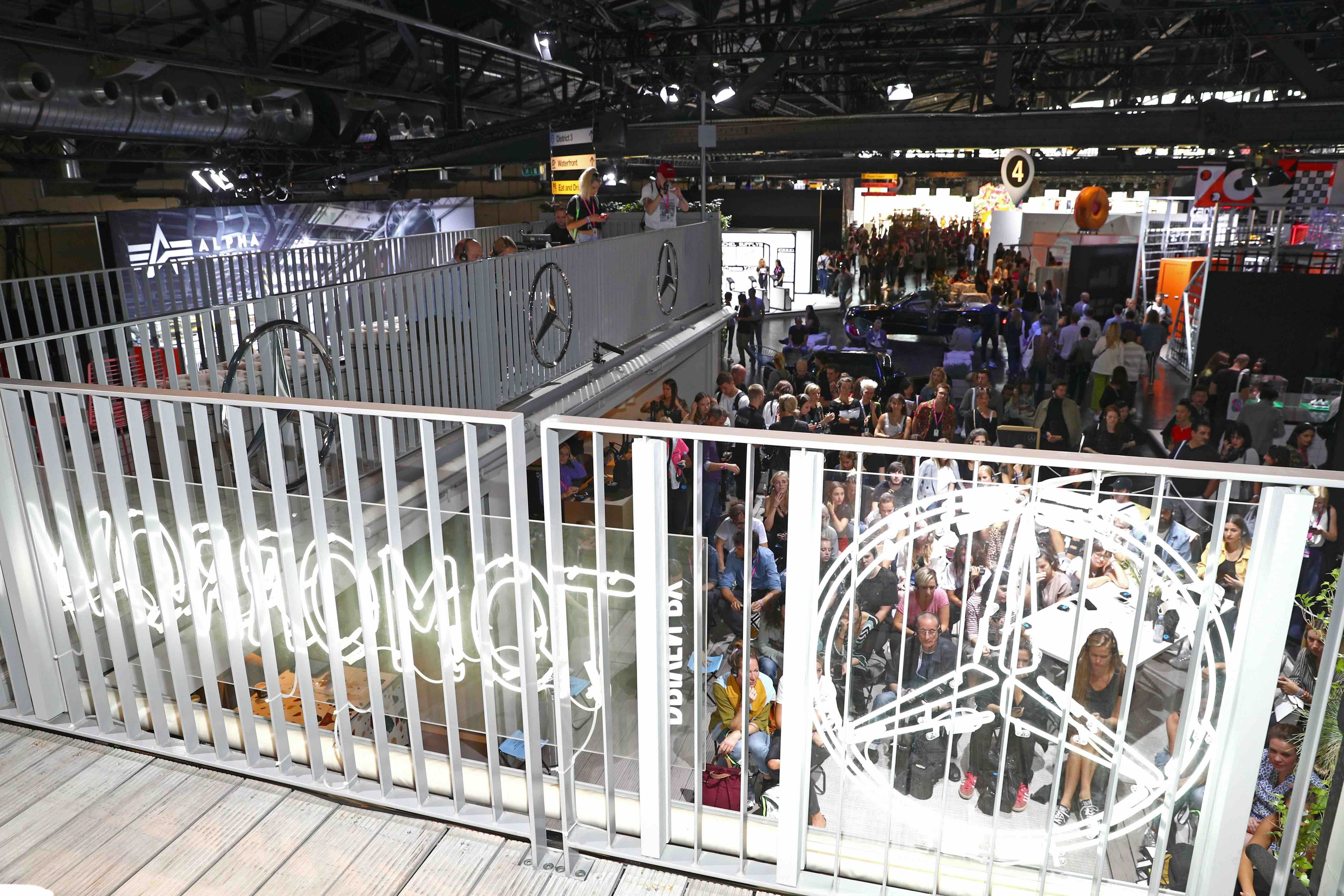
DG: The opening was really funny. It was set up in this warehouse with brand booths but you could get a massage on the upper floor. Denis, you and Ale had gone to the upper level and the rest of us were asking, where are they? It was absolutely packed and we had to do press photos, but you and Ale were just getting massages [Laughs].
DO: It was definitely a lot of fun. There were loads of waterpipes from our Bread&&Butter design that we produced as a standing sculpture. We also had a live event where we spray-painted it.
032c: So Bread&&Butter was actually an important event for you guys in terms of building this connection between CGI and the physical world.
DG: It was so cool to see what you did on your PC come to life. Zalando really pushed everything forward. We also made merch: the hoodies had different colored sleeves.
DO: The sleeves were like the waterpipes. Everything went according to theme. One other funny thing. When we were supposed to spray paint the waterpipes, there were these graffiti crews from Berlin that gave us lots of hate online for commercializing graffiti and said that they would beat us up if we showed up at the festival [laughs].
032c: Not the reaction I was expecting.
DO: When we were younger, we also did a lot of graffiti, and I knew someone that actually knew these guys and could clear up the situation.
032c: Basically you had to show you were legit and not coming to the subject as outsiders.
DO: That's another weird detail from the event.
DG: Bernard did the whole music programming, and I have to say, the music program was really cool. It was cool for Berlin, it was cool for Zalando, and the whole crowd that they invited was really crazy.
032c: I’m still curious about your entry into design and product development—the bridge between CGI and the so-called real world of things. [Denis gets up and presents the last prototype of a macaroon grinder].
DO: It’s been something that’s been completely connected with the community. We went online with just a 3-D rendering of this grinder and it completely took off. We had hundreds of comments, “Oh my God, I need that product.” We thought, oh, maybe we can use that [laughs].
DG: Generally, our objects are physical extensions of things that we’ve already done in 3-D. They’re creative works: a lot of them are very humorous, with plays on words…
032c: Dream-like ideas that have come to life.
DG: We did that from the beginning with CGI. To do it in real life was the next step.
For another time capsule of 2010s culture, check out former 032c Fashion Director Marc Goehring's "Next or Not" interview at the 2018 Bread&&Butter festival.
This is a dedicated feature in partnership with Zalando.