Everyone Pays But Felix
|Benjamin Schiffer
032c contributor Adriano Sack’s second novel is funnier than it needs to be, and colder than it looks.

In his second novel In die Sonne fliegen, Adriano Sack keeps the disguises thin on purpose. On the surface of things, the novel follows Felix Kellergeist’s rise from nobody to supermodel at a fictional fashion house called Santini, alongside the four friends whose fates the book tracks with the ceremony of a Netflix cast list. Anyone who knows the Berlin fashion scene, however, will spend this book placing one real face behind one of the characters’, then another.
In die Sonne fliegen comes as a small, dense object: pink boards under a green jacket, the kind of green that calms you down before anything happens. I needed that calm on the twelve-hour flight to Los Angeles, where I spent several hours superposing real faces on top of the fictional ones. Somewhere over Greenland I catch myself grinning. My American seatmate glances over, pink eye mask pushed up, visibly trying to work out what this German is reading that’s this funny. She doesn't need any of this to follow the plot. Overnight fame, then the fall, is a story everyone already knows, and Sack dresses it in the industry’s most familiar props: cocaine, body dysmorphia, inflated egos. What she’d miss is the private pleasure I'm having, the second book running underneath the first, visible only if you happen to know who's who.
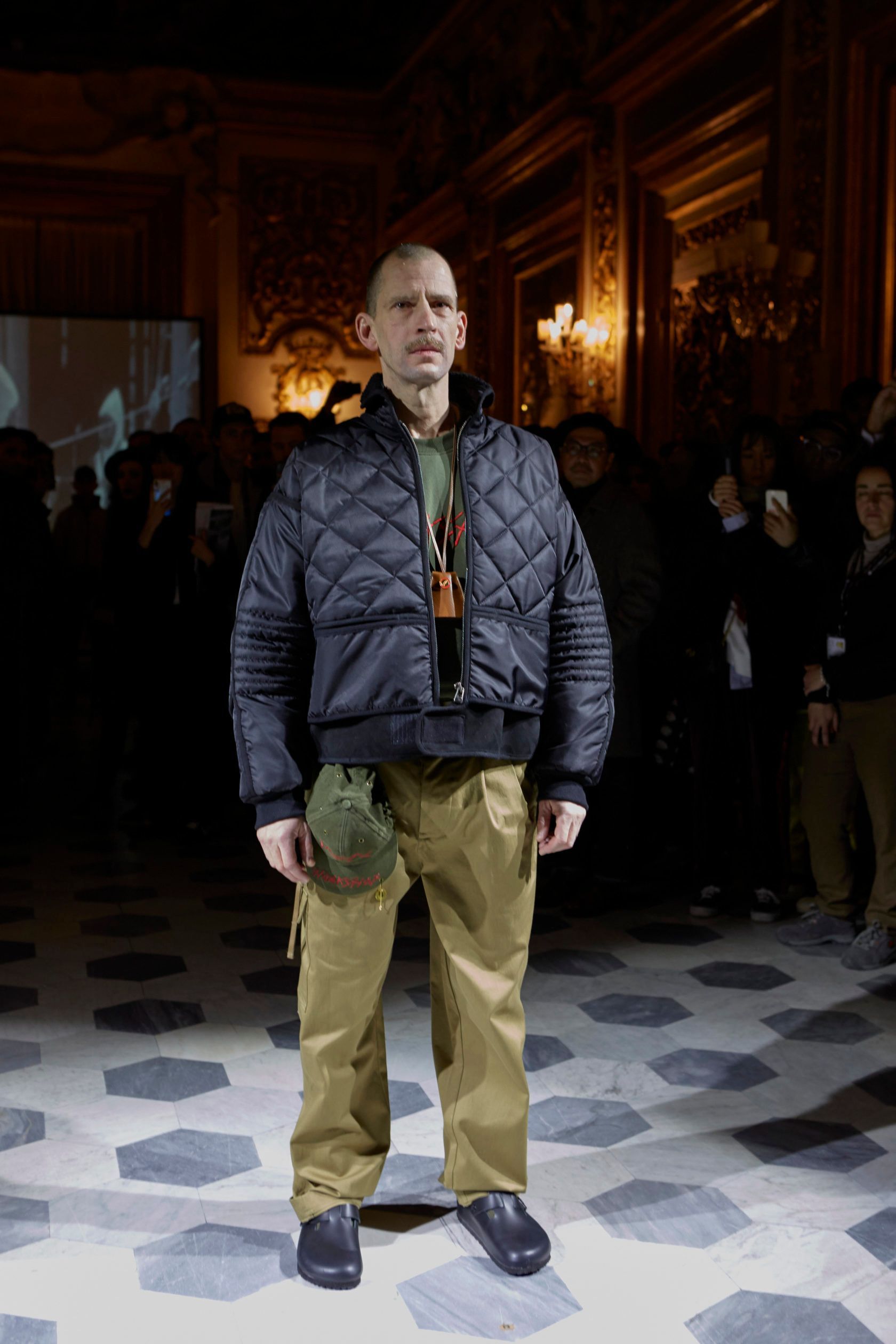
Adriano Sack walking in the 2018 032c presentation at Pitti Uomo
Sack clearly built this game on purpose: he thanks half the industry by name in his acknowledgments, an invitation to guess the identities the characters are based on. Some guesses land instantly. Dante Tommasi's sudden rise, sending men down the runway in blouses, plays like a scene you've heard before under a different name. The stylist on set has another stylist's fingerprints on him. Others don't come as easily. I'd genuinely like to ask Sack, next time I see him, who he had in mind for the model who preaches body positivity in her tutorials and films herself during sex to check for a double chin. I have someone specific in mind, but I could be wrong. Eric Erz, the self-styled "King of Cashmere Couture," sells ten-thousand-euro hoodies and reminds you a little of Brunello Cucinelli’s branding worn with Philipp Plein’s manners. His casting briefing for an Easter campaign instructs Felix, in all caps, to “ADDRESS ME AS DADDY.”
Sack writes best in close-up, and best of all when the close-up makes his own hero look bad. Merc is Felix's closest friend among the five main characters, with more followers and a higher day rate than Felix, and still gets paid less for the same job. His agency calls it supply and demand. Merc deals daily with racism Felix never has to think about. When Merc breaks his ankle onstage at a Valentino show, Felix skips the hospital to stay at a business dinner, because the deal on the table, which will make him creative director of a new brand, needs finishing first. Later, when Merc climbs a construction crane in what looks like a suicide attempt, Felix talks him down, only for him to fly to Paris as soon as he gets word that Merc is safe, without checking on his shaken friend. I wanted Felix to be more severely punished than the book allows. Only Merc pays the price of the friendship. He's the one who cuts it off.
Sack seems to know exactly what he's constructed. In his acknowledgments, he calls Felix, Latin for lucky, a cousin of Felix Krull, Tom Ripley, and Dorian Gray, charming men who've always let someone else pay for their survival. Lucky is right there in the name. Sack just spells out who's paying for it.
Credits
- Text: Benjamin Schiffer