Edward Skeletrix: The Mind as Masterpiece
|CASSIDY GEORGE
At an absinthe bar in London, artist Edward Skeletrix tells Cassidy George about “getting cancelled,” non-duality, and his new photo album, Body of Work.

At an absinthe bar inside the Viktor Wynd Museum of Curiosities in London, Edward King Bass IV ordered the only two things on the menu that were not absinthe: a shot of vodka and a grilled cheese. I watched in fascination as he downed the lukewarm, bottom-shelf liquor without flinching, before proceeding to eat his greasy, overflowing sandwich while wearing a single red glove. We sat on velvet seats in a parlor bar surrounded by glass cabinets filled with a mixture of worthless tchotchkes and historical artifacts, which displayed, for example, a plastic Peppa Pig toy covered in spiderwebs next to the skull of an extinct animal. It felt like the most appropriate place to speak to Bass about his work, which also grapples with our relationship to the off-putting, unsettling, horrifying, and grotesque.
Bass is known in the music world as Edward Skeletrix, although he began producing beats under the name “Cight” as a teenager, which resulted in collaborations with rappers such as XXXTentacion (who appears posthumously on his latest release). Later, Bass launched a brand called Syckli before inventing the alias Edward Skeletrix in 2023, which he introduced through an elaborate, breadcrumb-style campaign across various media platforms, in posts linked with the hashtag #Edwardskeletrix. Bass centered most of his attention on TikTok, where he released short clips of video art. At the time, the 15-second video clip was effectively reconstructing our entire social order, in becoming the primary means of communication for culture, politics, business, relationships, and personal expression.

Despite being widely categorized as a rapper, Bass is a worldbuilder whose practice spans countless media. Beyond painting and photography – which he primarily creates using self-timer – Bass also stages both digital and analog performances. In recent years, the real-world performances have escalated physically: Bass once threw a $20,000 jacket into a crowd, which resulted in physical fights among the audience. On another occasion, he placed himself inside a transparent box with a hole cut into it. Fans “attempted to light him on fire,” in the artist’s words, by throwing lit pieces of paper into the enclosure where he sat. Beyond his Twitter presence, Bass’s latest digital performance was a staged “cancellation,” in which he asked various people to post disparaging testimonies about him online.
Given that Bass has turned trolling into an artistic medium, I approached the interview with tremendous suspicion, and mentally prepared myself to be an instrument in a staged interaction. To my surprise, he struck me as someone who is deeply earnest and sincere, and answered all of my questions without an apparent twinge of irony. Although I believed his then-upcoming London performance, “Commerce of Desire” on May 2, to be the primary occasion for our discussion, he once again surprised me when he revealed that he would be releasing an album before that called Body of Work. The image-driven project, which pairs each song with an artwork or photograph, includes collaborations with artists such as Mowalola, Pol Taburet, Slime Dollaz, and North West—reportedly at her own request.
If Playboi Carti and the artists he inspired effectively deconstructed the traditional narratives, structures, and songwriting techniques of modern rap—reducing the form to raw emotion, texture, and instinct—Bass’s work posits an interesting proposal for what comes afterward. Taking a sound-art and spoken-word-oriented approach, he reintroduces a conceptual and cerebral dimension into that familiar expressionist framework through an innovative usage of sampling and distortion. Many of his tracks unfold more like pastiche-oriented skits than conventional songs. And though the most discussed aspect of the artist’s work is its harrowing quality, Body of Work also contains strokes of softness and beauty, particularly on tracks such as “정말많이정들었어요! I'm So Attached” and the six songs bearing slight variations of the same title: “Art is Sucking the Life Out of Me.”
Prior to our meeting, I mostly thought of Bass as an artist grappling with how contemporary forms of media impact human behavior and relationships. I now realized that Bass’s primary focus and medium is his own mind.

Cassidy George: You’ve done some interesting video interviews lately—what’s going on, are you just feeling like talking, or is this your new art form?
Edward Skeletrix: The “Well Well Well…” one I wasn’t going to do until my roommate said he was going to kill me in my sleep. I don’t know if you saw some of that, but I needed to publicly break ties. “Office of Miracle” was a documentary I was working on with Harley [Chamandy], but it turned out to be more his project.
CG: I saw your YouTube comment where you said “everything I say is taken out of context.” But the “Well Well Well…” one was creative directed by you. I wondered if this was a commentary on the construction of narrative. Everyone thinks everything you do is some kind of performance or critique. They can’t figure out when you’re being genuine... ever.
ES: I know, I know, I know. I kind of like that, but it’s also kind of like the boy who cried wolf. No matter what I say now, people will wonder if I’m for real—which is kind of interesting. But I was being 100% serious when I wrote that comment. And Harley, the director, is my manager now—he’s a cool guy.
CG: So much of your work is about people’s reactions, and not explaining things. Obviously an interview is someone asking you to explain yourself, so I can understand why that would not be appealing within your practice
ES: That’s my thing. I love reactions, whether positive or negative. I don’t read stories or follow storylines where everything is fabricated. I love real, raw shit.
Sports are cool to me, things that are competitive, because you never know who’s going to win or what’s going to happen. I’m not interested in things that are fake. That’s hypocritical because I do a lot of stuff that’s performance-based. I don’t mean fake in that sense—I just love the unpredictable nature of things.
CG: Your Twitter, for example, is its own art project. Would you say it’s more about people’s reactions than what you are actually saying?
ES: Some of it is just trolling, but sometimes I’m saying something that means a lot to me. I just cancelled myself, right?
CG: You asked many people to post things that were disparaging to your reputation online, right?
ES: There are a lot of different pieces to that. People believe everything they hear! To “cancel” myself, I had people say shit that is completely untrue. The goal is to let it be there and not react. Not protecting my image is a form of meditation.

CG: You mentioned in one of those docs that you love Eckhart Tolle. A lot of this links to his teachings, right?
ES: I’m not some enlightened person, but this is a very interesting time in my life. Some days I think I want to take over the world, and other days I want peace. People always say, “Edward contradicts himself so much.” Being human is a contradiction. I have thoughts that none of this fucking matters—that art is fully irrelevant to my life, it’s just playfulness. The other side says that art is everything. And it just goes back and forth and back and forth. People see that in real time.
CG: And right now, do you feel that art is everything or that art doesn’t matter?
ES: It switches 50 times a day.
CG: Did some kind of experience in your life make you this way?
ES: Two years before Covid, but most intensely during Covid, I was going through a psychosis. I don’t really know what to call it, but it was hell for me. I was suffering so much. For what? I’m not poor, there’s nothing physically wrong with me, I don’t have any illnesses. Everything was good in my life. But I was suffering mentally, in my thoughts. I had this recurring image of my dad getting shot in the face, and it kept looping in my brain, and it scared the shit out of me. Things would look weird sometimes, even just when I looked at people’s faces—it just looked off. From the time I woke up to the time I went to sleep, I was in this strange reality. They were prescribing me pills and I was going to therapy, and none of it was working. I knew I had to figure it out myself. I went on YouTube and typed in “How to Stop Being Depressed.” Eckhart’s videos came up and I thought they were bullshit. But as I kept suffering, I kept clicking on the videos and watching the talks, every day, all day. It fully works. It works! That’s why I’m so heavy on that.
CG: I’ve also found certain lectures on YouTube far more helpful than any more traditional methods of healing. Once you realize that changing your thoughts changes your reality, you’re free. Otherwise you feel completely powerless and are a victim of your own emotions.
ES: You’re a slave.
CG: Everyone knows you worked in a psych ward and then left to focus on your brand. But this psychosis happened after you left, not during the period when you worked there, right?
ES: It actually started with an irrational fear of becoming mentally ill, based on all the people I was seeing every day. I started obsessing over not wanting to end up like that. You attract what you think about, and that’s what I was thinking about.
CG: So you manifested your greatest fear?
ES: My dad also used to talk about schizophrenia when I was younger.
CG: Did he have it?
ES: No. He’s actually a family practice physician in Albany, Georgia, which is farmland. There’s nothing out there.

CG: I’m very curious about what it was like to grow up in Albany, Georgia.
ES: I went to school with just, like, straight hood kids. It was cool. I wasn’t ostracized—that’s not the word, I think I’m somewhat autistic—but I didn’t understand how to interact with them. I didn’t get it. I wouldn’t even say it’s because I’m autistic, I just feel like that culture is—
CG: Very specific. I think in the South it’s often about conforming to certain ideas, and these ideas are different in white and Black communities, right? I would assume that if you’re not straight, tough, playing sports…
ES: You get what I’m saying! Yes, they’d say, “You’re talking white.” [laughs]
CG: I can imagine being interested in art didn’t help either.
ES: That was not fine! I was playing sports so it wasn’t bad for me. I was just quiet, I didn’t really say too much. I was playing basketball and stuff, but it just wasn’t my thing. I didn’t like school, so it was annoying to be there. I would go home and get on the game, and that’s where I was talking to people. I didn’t really build social skills until I went to college because I was talking to people online, which is very different from speaking to people in real life. They don’t have social skills either, so they’re saying the craziest shit and I’m thinking that’s normal.
CG: Your work seems very collaborative now, and you often do performances. Do you have a studio in New York?
ES: My process is different every time. I don’t live anywhere. I live in a storage unit in New York. I’m not even supposed to be doing that. I rent out an office space and a storage space and I put my bed in the storage space.
CG: You’re about to release another album, right?
ES: It’s actually a surprise drop. It’s coming out on May 1, one day before the London exhibition. It’s a photo album. You know how when people drop an album they choose one piece of cover art? For each song, I’m doing a different picture. It’s more like a photography book with music attached to it. The music is good too, though. This is my favorite album.
CG: You’ve said in the past that you don’t care about making music. It’s just fun. That’s why I mostly think of you as an artist, and music is just part of the world-building.
ES: It’s cool because it involves way more risk-taking. I can’t just look at what other people have done. There’s no blueprint. I fully don’t know what’s going to happen next. We’re literally paving our own path. I’m not saying I’m some pioneer—
CG: I agree that what you're doing is a bit unprecedented. For example, making an album where the images come first—this is such a taboo, especially in the music world, where everyone says: “It should be about the music first.” But why is that better? Why is there this hierarchy?
ES: It’s because music people are precious about their music. That’s what I’m saying: I want to really emphasize that music is an accent, along with everything else. It’s not music first and then all the rest. It’s music, photography, fashion, art, and performance. It’s a world. Music is a piece of the world. People will probably say, “Edward, you’re corny as fuck.” Okay, that’s fine.
It’s okay for them to think that. I’m not disparaging their opinion. I appreciate their opinion. But they don’t like it. They just say, “Just put out a fucking album, bro. Just drop music, bro.” That’s why I said in that interview, “I don’t really give a fuck about music like that.” I had to say it that way because music is so high on people’s hierarchy. I had to bring it down for them to really see the art.
You see, right now, if you were to ask me what state I’m in, I’m fully in my ego. As I explain this, making art seems so important. It does have such a pull on me.
Art really is my main cause of suffering because it becomes my identity. Art is me. It is inseparable from me, and when I feel like the art is not up to par, then I feel like I’m not up to par.
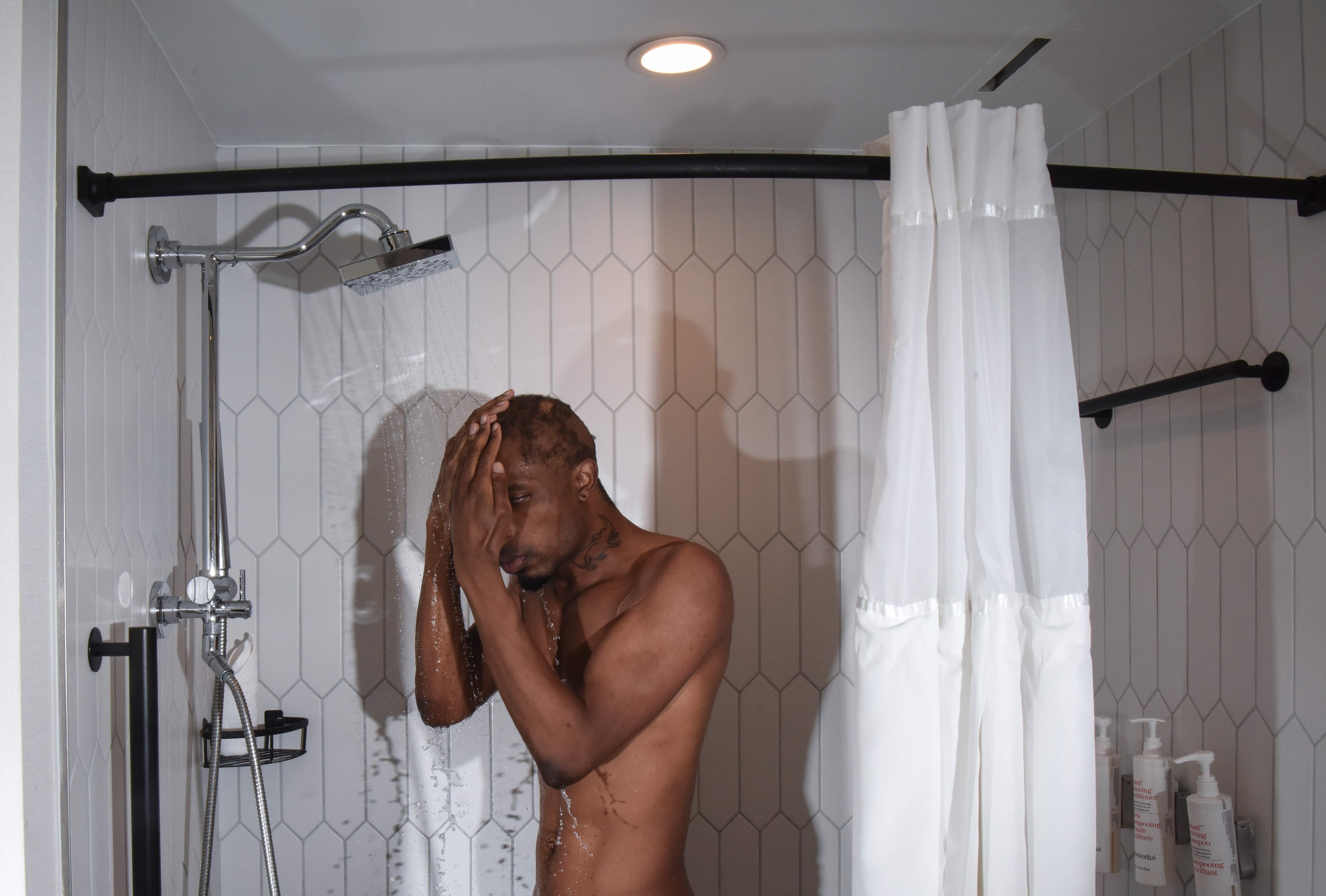
CG: I need to ask you about “Text Me.” You sharing your phone number and always encouraging people to text you is really fascinating to me. Artists typically want to build the highest fences they can to protect themselves from fans, which is understandable for safety reasons.
ES: Nobody communicates with the people who are invested in their art in this way. I can see everybody’s texts, every message and every image they send. It pops up. It’s not buried in Instagram message requests. I see everything. I just find that really fascinating. And I can talk to multiple people at once. So many people have texted. Obviously I can’t respond to every single person.
CG: How do you choose who to respond to?
ES: Just if it’s something interesting. That’s really all it is. There’s another aspect to it—when they text, they’re in my contacts. I can contact all of them at once if I want. Instagram is not a good way of keeping people in the loop. With this I can text every single one of them directly to their phone. If Instagram bans me, I can still talk to people.
CG: I don’t even want to think about how wild some of the messages you receive must be. You could make an exhibition or a book just from the texts.
ES: They’re insane. People send crazy shit.
CG: Does it ever fuck you up or disturb you? Like damn, I didn’t want to see that?
ES: Not really. I’m an internet kid. I’ve grown up seeing the most heinous stuff. It doesn’t really bother me, but it is kind of like, okay, damn. This one guy called me a slur—a lot of people do that.
CG: People texting you violent hate speech… how do you make sense of that?
ES: It’s okay because they have an idea of me. They don’t see me as a human. Maybe not all of my fans, but a lot of fans—of any artist—see them as an idea and not a person with a life. How could that hurt me? That’s not even me. This idea of Edward Skeletrix—it’s not me.
Edward King Bass IV, my real name, is not me either. That’s a combination of my learned experiences. My parents told me: you’re Black, you’re a man, you’re this, you’re that. My identity was formed as a consequence of that. People are attacking a learned identity, not what I actually am.
CG: So you feel in some ways detached from who they think they are contacting.
ES: People never know how a thought translates into speech. How can you take something like life seriously? Somebody could be born a billionaire—the richest, most handsome guy, gets all the girls, all the friends, just born into it. Another person is born into poverty in a third-world country, with a chronic illness. All of it is very random and chaotic. Life is almost a joke.
If somebody wants to call me a slur, it’s okay. I don’t believe in control.
CG: Can you tell me about the tattoo on your neck?
ES: This is some artwork that I did. When you look at it, it looks kind of like an animal, but it’s actually nothing. In my opinion it’s a bit unsettling, even though there’s nothing explicitly unsettling about it. I like things that give a certain feeling without really being that thing. In my work, a lot of people might describe it as dark—
CG: Or uncanny.
ES: I’m trying to promote positive messages—that are not explicitly positive. That juxtaposition of “damn.” It’s kind of like being misunderstood. I like when people see something and have a strong opinion, but then they dive deeper and discover another layer.
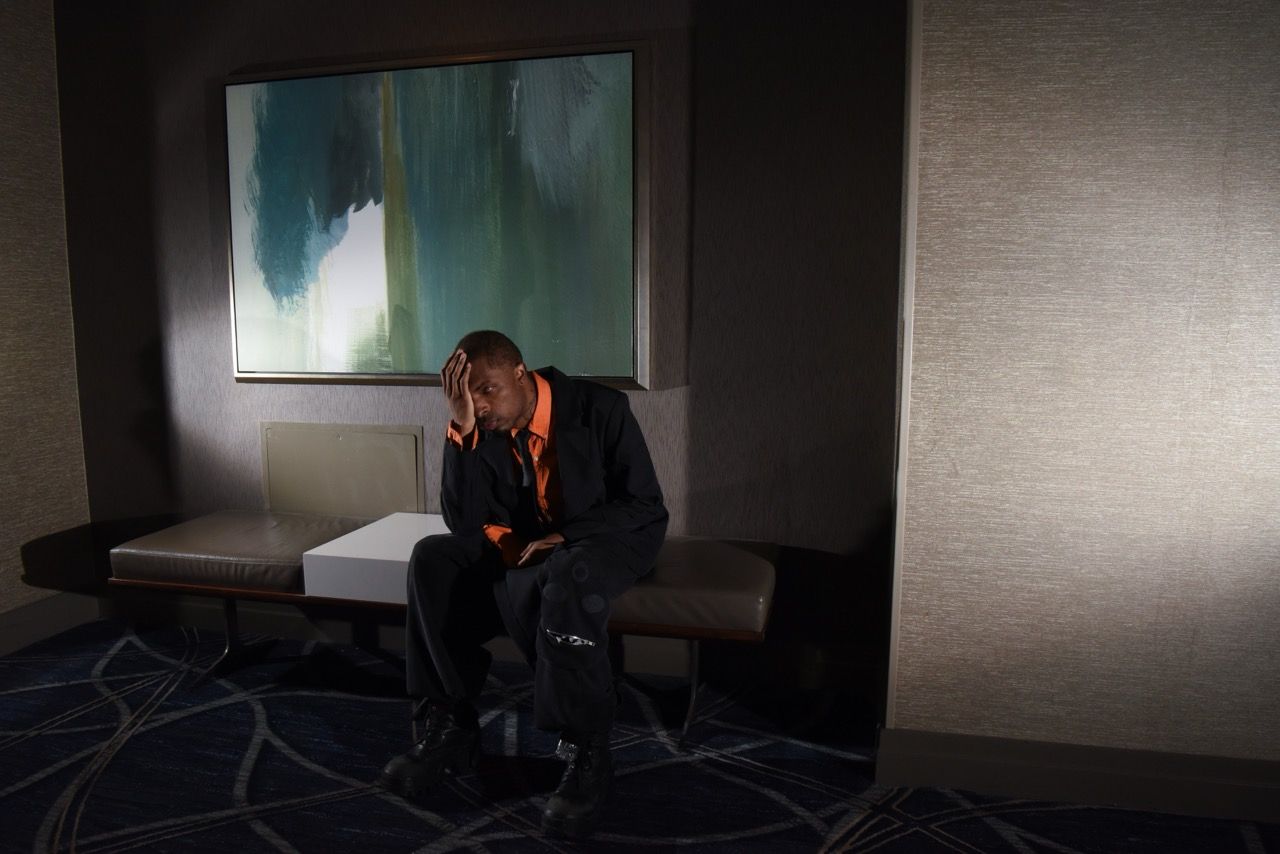
CG: So when things are not what they appear to be, based on your immediate reaction? You’ve said in another interview that you want people to feel peace. When I watch your videos or look at your work, I find them unsettling. I don’t feel at peace at all.
ES: That’s exactly why I do that. The reality of life is that dark things happen. People get killed and whatever else. But what is good and what is bad? To have peace, you have to accept anything that happens. I don’t think anything is inherently dark, or good, or positive, or happy.
We apply these labels based on our upbringing, our personality, whatever. I’m trying to break that down. There’s no real reason something should feel dark—there’s pain and suffering, but a lot of that can turn into learning and positivity.
CG: So you want people to challenge themselves and figure out why it makes them feel uncomfortable? Like why should this AI video you’ve made make them any more uncomfortable than some CGI in Dune?
ES: People go to the movies and watch the most fucked-up things and walk out saying, “amazing movie.” They go watch Joker (2019) when he shoots himself in the head on stage. I actually saw that on a date. I already had a fear of guns and that scene threw me completely. I was shocked. I thought I was going to become schizophrenic. But we go watch movies like that, or The Substance (2024), and say “that was sick!” The softest person you know will walk out raving about it.
CG: It has always fascinated and frightened me, what people normalize and what they find disturbing.
ES: When I was going through that dark period of depersonalization, that was something I had to sit with. All of these flashes of images were giving me anxiety—but why am I reacting so viscerally? Why am I even scared?
CG: Did you ever figure it out?
ES: There’s no answer. It’s just conditioning. People telling me it’s fucked up, this is bad, this is weird, this is crazy—that’s how our personalities are formed. Once I figured that out, I was like, okay, this isn’t that scary to me. I need to just stop reacting to these thoughts so negatively. They’re not fixed to me.
CG: You seriously don’t look at your work and think “that’s creepy?” You think it’s neutral?
ES: Yeah. I know other people think it’s crazy or dark, but I don’t see it that way. But what about you? How would you describe yourself?

Credits
- Text: CASSIDY GEORGE
- Photography: EDWARD SKELETRIX