Constance Debré Rewrites the Criminal Justice Novel
|FIONN ADAMIAN
Having moved to a bachelor pad the size of “a monk’s cell,” the narrator of Constance Debré’s Love Me Tender likens her coming out as a lesbian to Saint Augustine’s conversion to Christianity: each act excavates a selfhood from which to view the world. Despite its pivot in subject matter, Offenses, Debré’s recently translated work about a murder trial in a deprived Parisian banlieue, exudes the same theological resonance as the tales of Sapphic stoicism that won her literary fame.
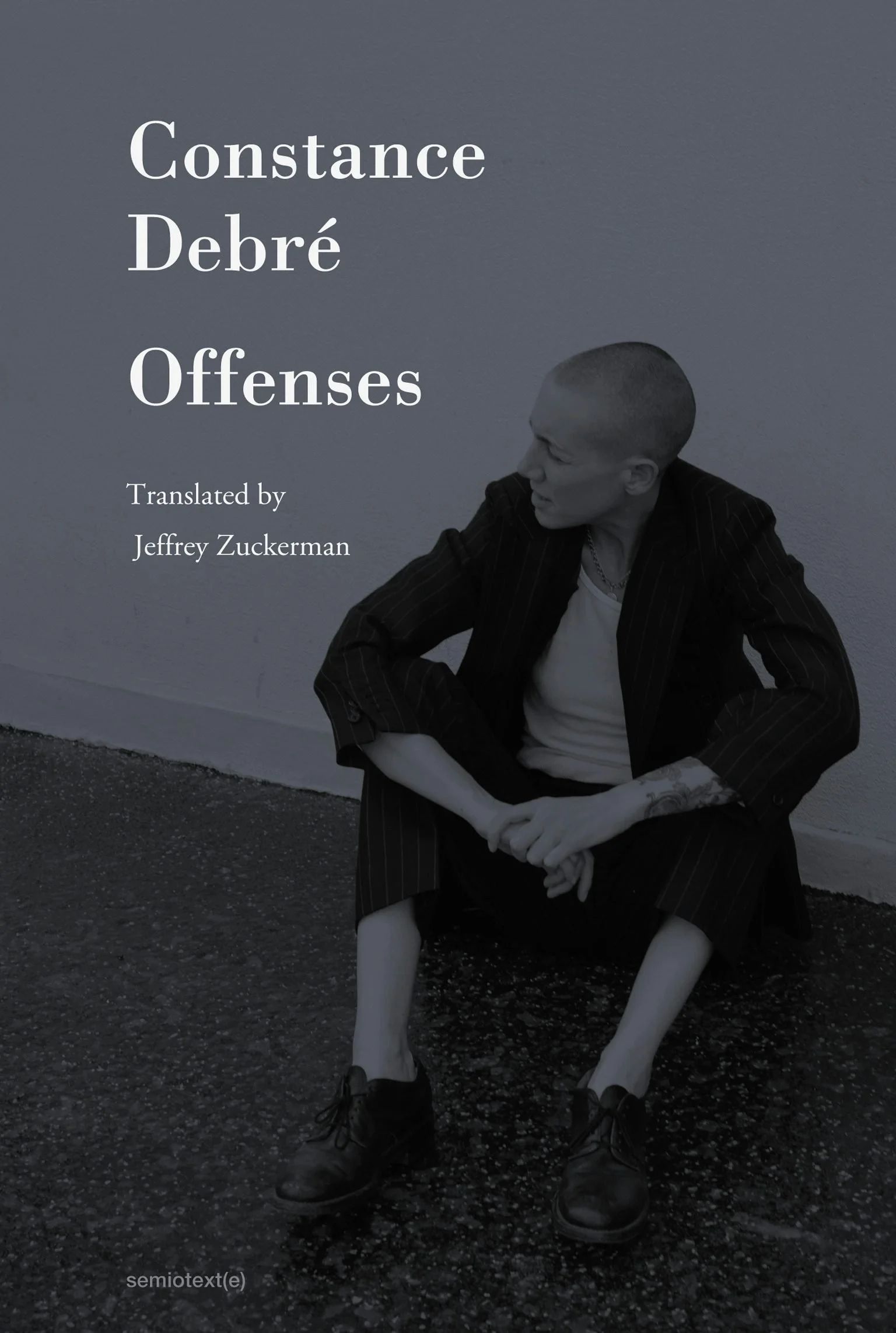
While Debré’s previous works such as Play boy, Love Me Tender, and Name draw on her abandonment of heterosexual family life, the plot of Offenses might have taken its cue from the author’s previous career as a defense attorney. Indebted to a drug dealer, the nameless nineteen-year-old protagonist stabs his neighbor in the neck during an attempt to steal her credit card. In impressive service to the rhythm of the original, Jeffrey Zuckerman’s translation aptly renders the gory staccato of the opening’s crime scene prose (“Her eyes are half-shut her mouth is open her tongue is purple [...] Her right ear has a hearing aid in”), as well as the spectral propinquity of perpetrator and victim. Neglected by family and neighbors alike, the old lady relied on the protagonist’s help with her grocery shopping.
As the novel proceeds, the protagonist focuses more on tuning out the righteous voices that churn around the murder’s void than on the trial itself. In terms of literary antecedents, the sullen cipher recalls the underdetermined figures that haunt the pages of Camus, Sartre, Duras: vacant, delirious psychologies that rattle along straightjacketed into fate’s padded cell. Unlike the postwar existentialists, however, this strain of Debréan dread feeds off the suspicion that the present economic conditions have fixed the contingent events of life into a chain of bleak necessities.
“We live in a vertical world,” the narrator tells us. “A world made up of worlds. Not adjoining but concentric, superimposed.” Any minor incident might have averted catastrophe: the brother might have not pinched the weed, the dad might have gotten a loan for the dealer, the neighbor might have relinquished the purse. But the tribulations of the protagonist—the chronic kidney issues, the dysfunctional family, the prospectless job search in a class structure akin to “Dante’s circles of Hell”—are all of a piece with the general mood of preordained disaster. “The trap isn’t hidden, it’s gaping,” the narrator says. “Traps are made for jumping right into. There are times when all that’s left is to jump into the trap.” Debré has an authentic talent for revising an aphorism or commonplace till it means the opposite of what it initially meant; and the fact that the resulting message is more rigorously grim than the original—that we jump into our own traps rather than fall into those set by strangers—is paradoxically a source of great readerly pleasure.
The protagonist’s older brother represents the maximum degree of mobility available to the inhabitants of this medieval hierarchy: at least he’s got a flat in a nearby banlieue and a night shift restocking the Leclerc. A history from the suburbs as well as a history from below, the narrator fleetingly recalls the sixties not in terms of epochal protest but of the construction of social housing units—of “cookie-cutter apartments” as interchangeable as the baseball caps, tracksuits, and Air Maxes worn by the protagonist and his friends. The judges and the police scarcely believe that the murder weapon is an innocuous kitchen knife, “the one that everyone has.” If the bottom circle of Debré’s inferno is a prison, the one just above is furnished by an IKEA.
Ultimately, Offenses turns its focus to the privileged wisdom of the condemned—of those who are both guilty and “guilty in our stead.” Debré has an iconographical fascination with the moment of judgment that runs contrary to the functionary nature of today’s criminal justice system, the profane fact that someone can be sentenced to prison for more than twenty years in the span of three days. Just as Joan of Arc repeated the claim of divine visitation till brought to the stake, so the protagonist reiterates that the good of those above depends on the punishment of those below, who suffer for the sins of humanity writ large.
Probably few would endorse the rigidity of this determinism, but it makes sense, aesthetically speaking, in the murky atmosphere of choicelessness that prevails in this book. The protagonist stakes a claim not for his innocence, but for his punishment meriting a higher form of distinction than the one bestowed by the criminal justice system. “He thinks that the judges ought to judge him from ground level […] in a tracksuit like his own. He thinks that it’s he who ought to be on high above them on the bench, in a red robe with fur trim.”
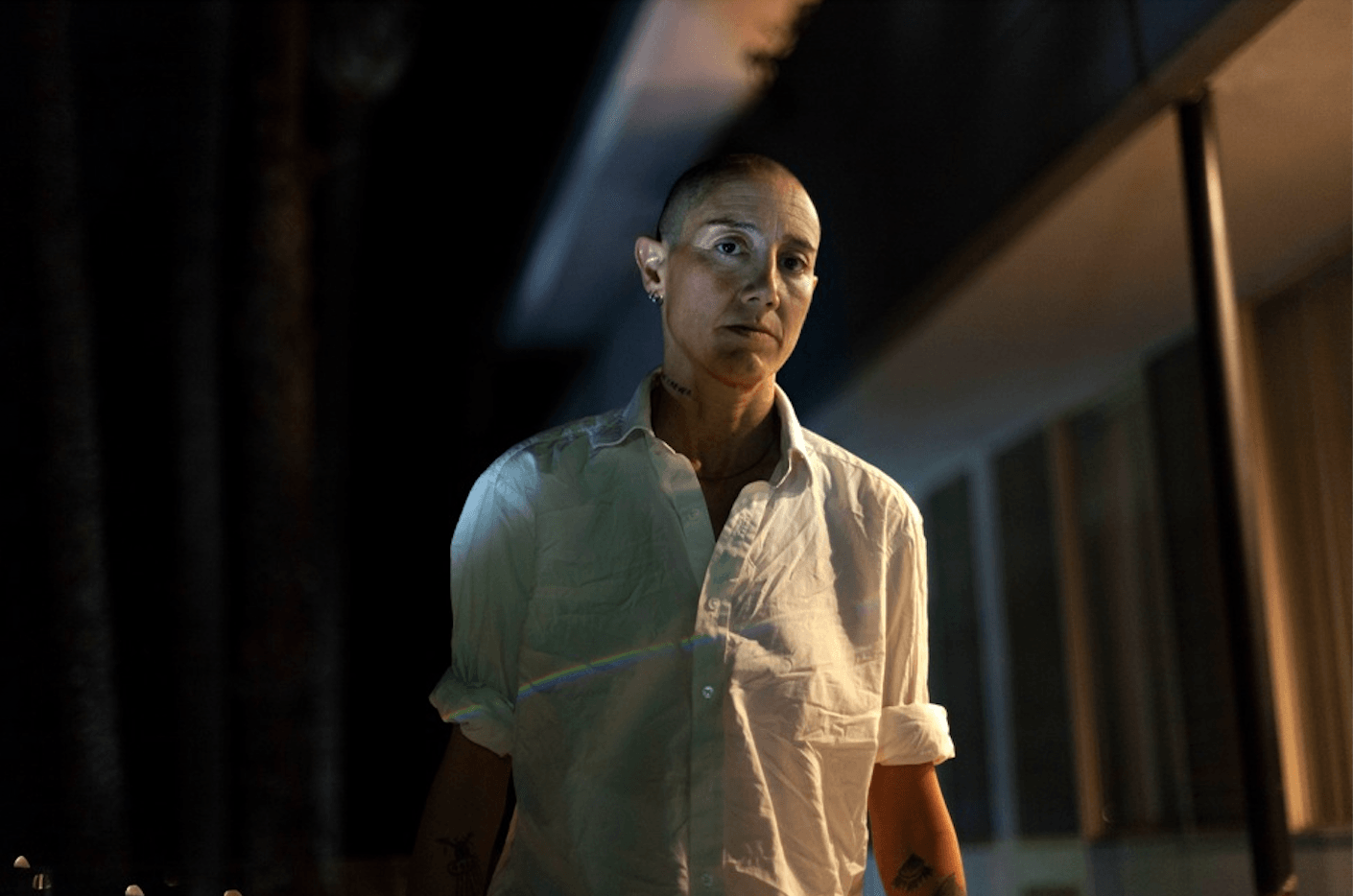
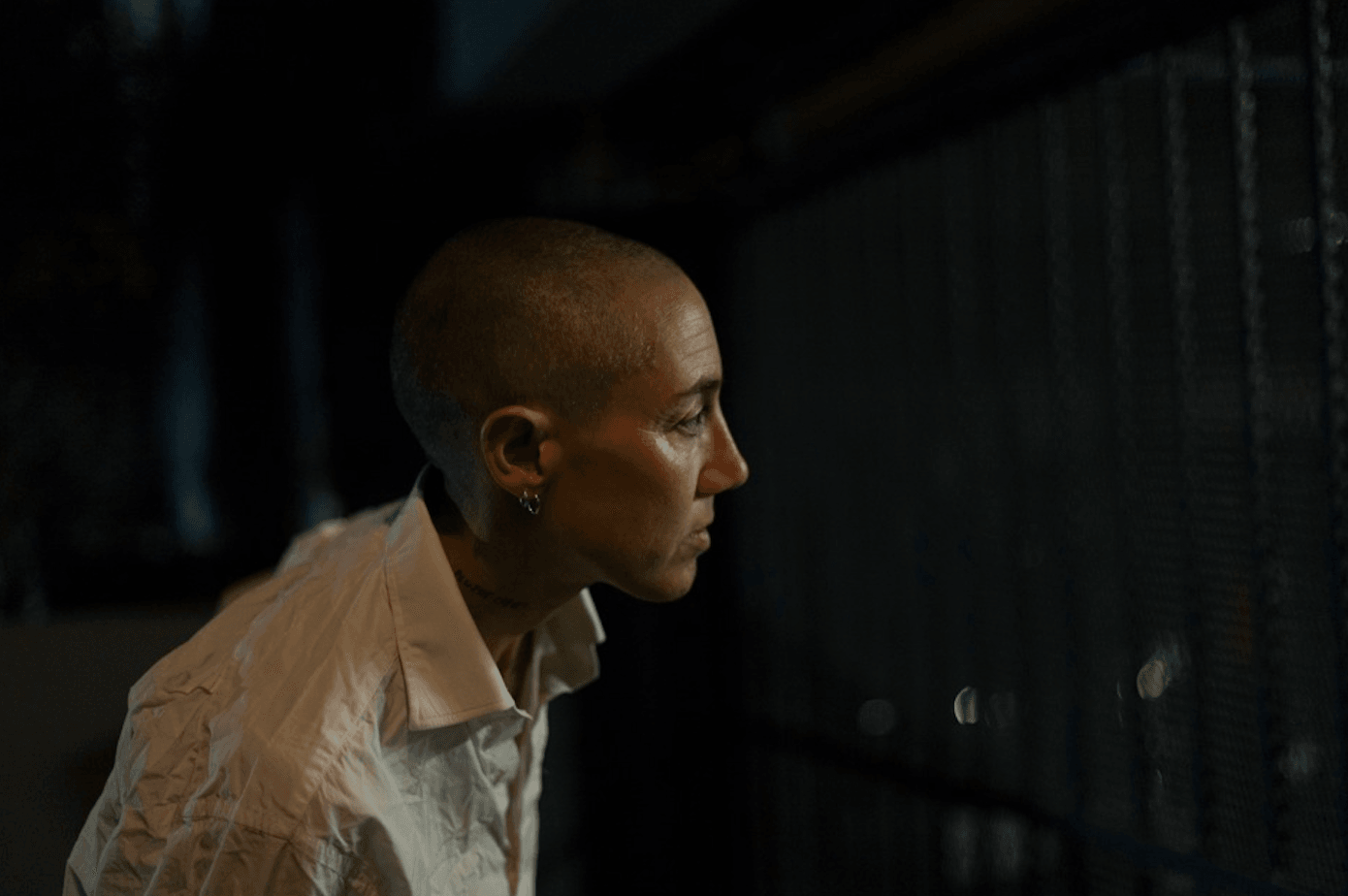
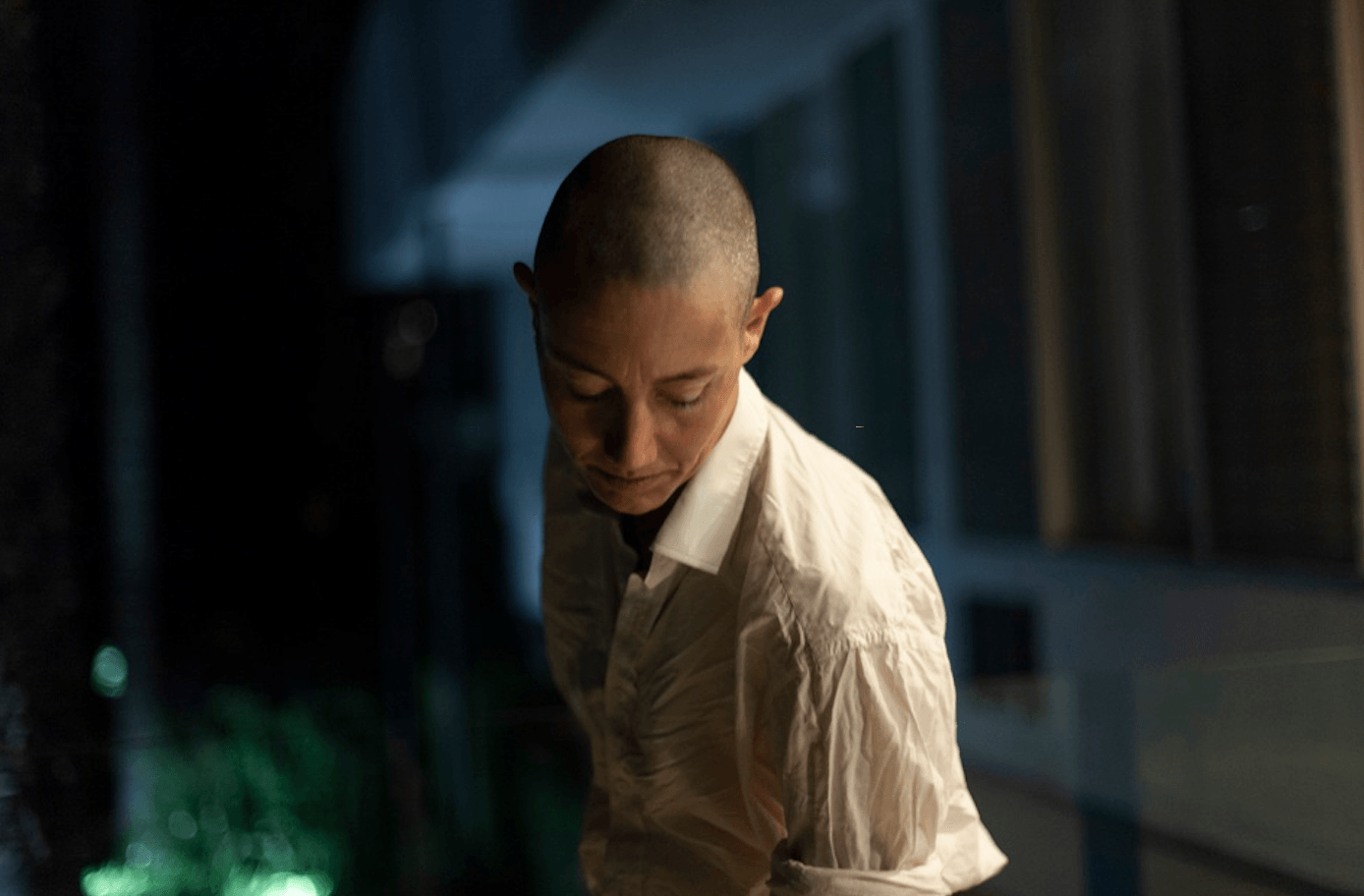
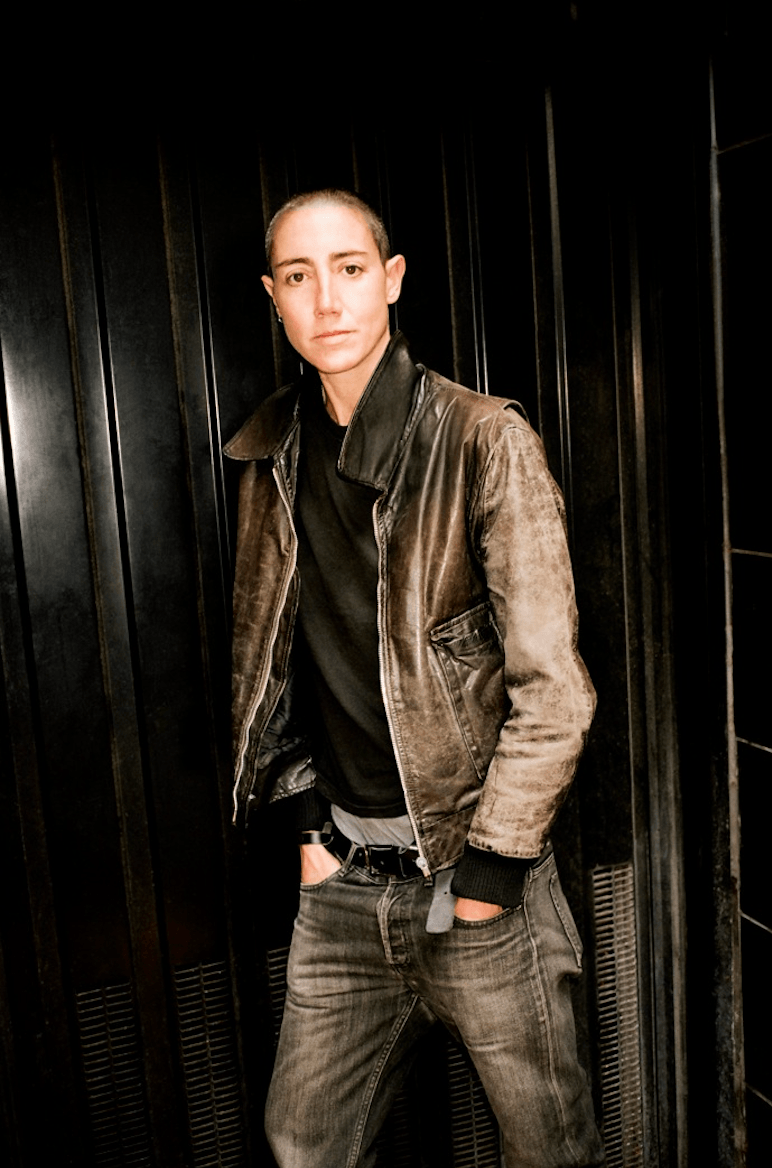
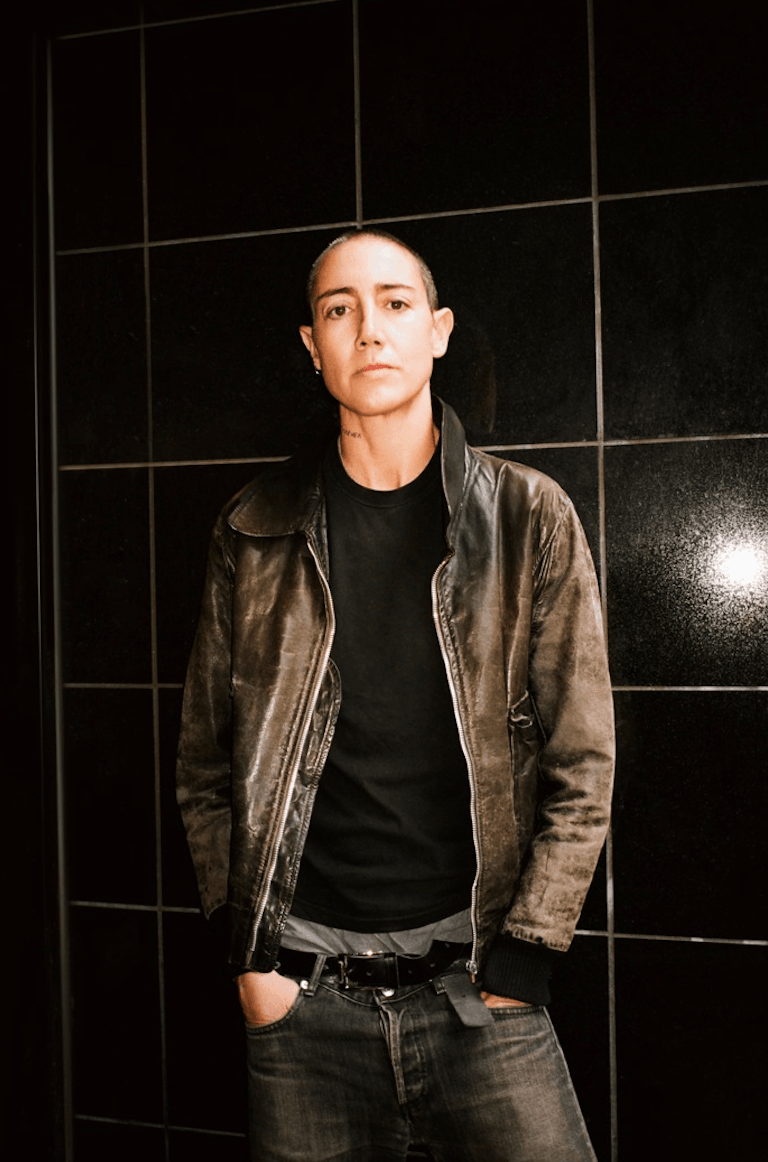
Debré was in Los Angeles when I reached her on Zoom. From this city of secular iconography, she talked to me about her artistic process, the role of the trial in culture and the criminal justice system, and her antipathy toward the concept of auto-fiction.
This interview has been edited for length and clarity.
Fionn Adamian: How are you finding LA?
Constance Debré: I like LA precisely because it's so spread. You are very much on your own during the day or as long as you want to be. There are people around but you don't feel them when you want to be in your thoughts. In LA, I landed in this Semiotext(e) world, so I met very nice people. I'm not talking about the movie industry obviously, but I'm sure that people who move to LA are people who wanted to be apart from the center. Yes, LA is obviously a big city, it's not nowhere, but still you can feel that it's the margin of something.
FA: It's a city without a center.
CD: It's far from New York, far from London, Paris, many other places. It's something you can feel. Of course, being in some kind of margin of the world makes you see the world [differently]. There's always this relationship between the periphery and the centers. I like it very much. LA changed my life, for so many reasons.
FA: It seems cliché to begin an author interview with a question about process, but something that struck me re-reading Play boy and Love Me Tender is that much of it revolves around this self-fashioning aspect of routine, for example the habit of swimming six days a week...
CD: Seven days a week, of course.
FA: ...and I was wondering what does your writing schedule look like? Do you keep to a strict schedule? Is it something that's open-ended?
CD: No, I'm just doing it as much as I can, that's all. I don't have many other things to do. I'm an obsessive. I can't deal with too many things, too many people in my life. I just pick a few activities and do them. It matters to me, this work. It's the thing that interests me the most. So, when I'm not buying food at the groceries, when I’m not swimming, when I'm not doing interviews, talks, and readings, when I’m not travelling for the books, I'm trying to write a book. That's all. As I live by myself, as I don't have a normal job, I don't have anything else to do. Writing to me is not being at my desk, or at the table, and typing at the computer. It's trying to find or think about the material I'm interested in and the form I want to put this material in. At some point, I grab it. It's playing with the idea of a book and looking for it. It could be at night, it could be in the morning. It's always there.
FA: I was wondering about the shift in subject matter that this novel, Offenses, takes in contrast to the preceding work, particularly your trilogy from Play boy to Love Me Tender to Name...
CD: First, I don't know why people keep saying it's a trilogy. It's not a trilogy. I would say that the shift is that I'm not using the first person in the same way, even though the first person in Play boy is not exactly the same one as in Love Me Tender, which is not the same as in Name. I understand the way I used the first person in the first three books is very strong. That was part of the game, I would say, to play with this first person, to play with the strength and ambiguity of it.
FA: Critics, particularly American critics when it comes to a French author's work, tend to use the term auto-fiction to categorize its genre and view this strong “I” as a surrogate of the author. How do you feel about the descriptive value of auto-fiction as a genre in general, and its application to your own work?
CD: I think it's ridiculous. It's just the first person. Auto-fiction, the whole thing about it, is ridiculous. Really, it is not at all interesting. It's a recent term. We have been having books in the first person for centuries. The first person could be many, many things, it does something on the readers immediately, when this first person is like a double of the writer. But it’s not! It’s not my memoirs. Some people thought it was close to, je sais pas quoi... me telling my story. Sometimes the first person can be so strong that you don't see the other subjects in the book. For instance, in Name, I already wanted to talk about many things and for some reason the first person became a limit. I always wanted to use some material I had from my lawyer's experience. I didn't want to use it with an “I.” That would have been what? “Me as a writer I met this person and I was in this case…” No! The first person in the other books was a way to put the readers immediately in some kind of situation, to create some kind of closeness, and the kind of discomfort when you're so close. With the story or the material that I wanted to use in Offenses, I had to put the readers in the same way immediately in this setting. That's the beginning of the book: that depressing apartment in a depressing suburb with the dead body of an old poor woman.
FA: The beginning reminded me of Ágota Kristóf's Le cahier, in this injunction for a fateful description of the facts no matter how violent.
CD: I think I read her after. I didn't know her for some reason and then I read her and I was like, this is so strong, it's amazing. To me, it's very natural for many reasons. Because of my temperament, because of my background as a lawyer. You just have to describe the facts and you're not shocked.
FA: How do you see the difference of language's role for a defense attorney and for a writer, as someone who has been active in both professions? It seems like the novel is quite angry at the way that the defendant and the witnesses are shunted into assigned roles of guilt and innocence.
CD: There's some kind of sadness to see there but it's not a surprise. This is the judicial system. The judicial system cannot do anything else. Sentence the perpetrators. That’s its job. And literature has another perspective, another goal. That's why I could do something else with a case in a book than in court. I'm not blaming the system. The system is the system.
FA: Were you thinking about or reading other literary works concerning the criminal justice plot at the time?
CD: At least for me, you read other stuff and then you do what you want, or what you can do yourself. I probably reread In Cold Blood [and] The Stranger. I was also writing about Jeanne d'Arc, both in films [like] Bresson’s and in books. A French writer that not many people read any more, not even in France, Charles Péguy, who was a writer at the beginning of the twentieth century, strange guy, very socialist but Catholic in some ways too, and he wrote beautiful things about Jeanne d'Arc. Kafka, Ellis, Dennis Cooper were also very much on my mind.
More than talking about the judicial system, I was interested in talking about these two extreme positions. The killer, the murderer, the one who transgresses the rule “thou shalt not kill”; and the other, the one who is on trial, the one is going to be judged, by the other man. Our whole civilization is based on that. Jesus is the one at some point who is judged and sentenced by the others. We understood that this position is at the core of humanity. There was some pity, something extremely strong, extremely meaningful in this moment when someone is going to be sentenced by the whole community. But at the same time, that's what we're doing now all the time, we're judging in court and everywhere, without making the connection with those two things.
FA: On the one hand, Offenses deals with the profane aspect of judgment, the bureaucratic nature of this act that has such a strong symbolic resonance. On the other hand, the realism of the book deals with the commercialization of objects in a fascinating way. The most interesting example of this is that the murder weapon in the book is described as the knife that everyone has, something you could get at IKEA. Likewise, there’s so much attention to the specific clothing brands, to the athleisure that protagonist and his friends wear. How did you see the importance of these choices of items to the sense of reality that these characters have?
CD: I like to be precise. I like the facts, I like details. We live in a world of objects, a material world. Those objects, the names, are usually brands. Of course it has to be in literature! I'm not the first one to do that. We have Perec, Les choses. More recently in a different way, it was of course Bret Easton Ellis, who in an exaggerated way did it in American Psycho. In a different world, with different purposes, yes. Also, I wanted to show that he's not killing this lady with something we’ve never seen or with gun that we don’t have in Europe, but with a small Ikea knife. I don’t know if Ikea is in the book but actually it's an Ikea knife. And he's wearing Air Maxes because that's the truth. I wanted to create a kind of closeness between the readers and the protagonist.
FA: And the closeness between the readers and the protagonist is doubled by the closeness between the protagonist and the victim of the novel.
CD: I wanted to make the readers feel that the words perpetrator or murderer, prisoners or victims, come after the fact, they don't say much, they say something about an event about the persons who they are applied to. People want to believe that a murderer is a murderer and nothing else. It's true that the characters in the book were extremely close and the whole trial system is meant to separate those people as much as they can, but especially in this story actually it's the opposite. The murderer was and has been for years the only person that has been nice to this woman. He didn't kill her because he hated her. It's something even worse. He probably was cornered at some point, and it fell on her. He didn't have this thing that most people have that stop us from doing these kinds of things even when we are cornered. In a book I could explore those things differently than I could in court.
Also in court, no one cares. The judges, the juries, they do their jobs and sentence a guy and maybe there are one or two journalists in the room and they're going to write a piece in a stupid paper, and nobody wants to understand what's at stake in how much this story is telling us about the society we're living in and about us.
FA: At the same time that the English translation of Offenses has come out, you’ve published a work in French, Protocoles, which has a similar focus on the criminal justice system in its treatment of capital punishment. Did you have the impression that Offenses led into the writing of this most recent novel and to what extent are these works connected for you?
CD: I don't know how these things work. Of course, it’s a movement so they’re not totally separate... Stuff is this first thing I need for another book, it's not a subject but it's a material. I want to use material which is outside somewhere in the world. I am using the first person in Protocoles too but it's not the same thing at all. I don't know what I'm going to do yet, but there's a strong material I want to use. I'm very interested in the world. Our relationship with the world. I probably wouldn't read things like Play boy or Love Me Tender any more. And it's not at all what I'm reading. But of course, I have no idea. People say it's still your style and there's a strong connection between the books. Probably, I don't know.
Credits
- Text: FIONN ADAMIAN