CAN CARS BE ART?
|ROB MADOLE
This article was originally published in print, as part of BERLIN REVIEW in 032c's Winter 2025/26 48th Issue.
Is the car a womb? Or is it a phallus? It's certainly primordial. We make our snug, whooshing home in cars, and in them we penetrate the world. People like to fuck in cars - or on cars. If movies such as Julia Ducournau's Titane (2021) are to believed, people even like to fuck cars, no preposition needed. In his 1909 Manifesto of Futurism, Filippo Marinetti proclaimed cars to be "more beautiful than the Victory of Samo-thrace." In 1913, Giacomo Bella, a Futurist painter infatuated with cars, created one of history's first abstract paintings, Velocita astratta ("Abstract Speed"): an image of a car zipping past. Modernist art, one might argue, could never have become fully fledged without autophilia. Even in automobiles' absence or annihilation - the empty gas stations of Ed Ruscha or Edward Hopper, the crushed scrap metal wrecks of John Chamberlain, the dismembered and reincarnated car bodies of Matthew Barney's River of Fundament - cars figure as a central node of art's libidinal economy, the engine powering modernity's benzene regime. It can't be a coincidence that two of the other great inanimate protagonists of contemporary life, plastics and pharmaceuticals, are petroleum byproducts.
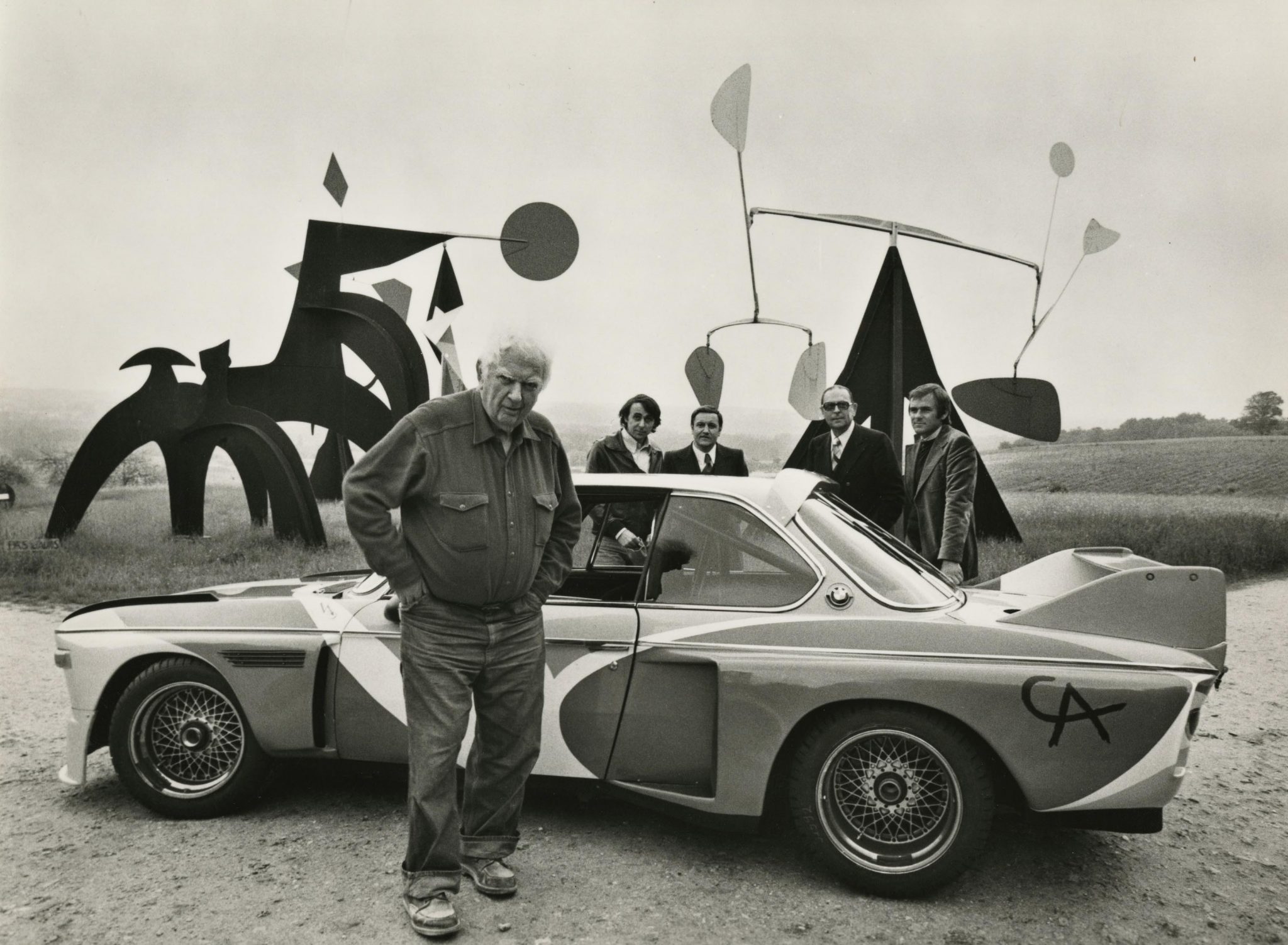
Cars, of course, make a perfect subject for art. But can cars be art? The possibility fuels the premise of "BMW Art Cars," a collection of the manufacturer's automobiles painted by famous artists, now the subject of a reissued and expanded coffee-table book of the same name. The idea of the Art Car was hatched in 1975, when Paris art auctioneer Hervé Poulain approached BMW Motorsport with a harebrained scheme: what if a car painted by esteemed sculptor Alexander Calder were to take part in Le Mans, France's legendary 24-hour endurance car race, and go for gold?
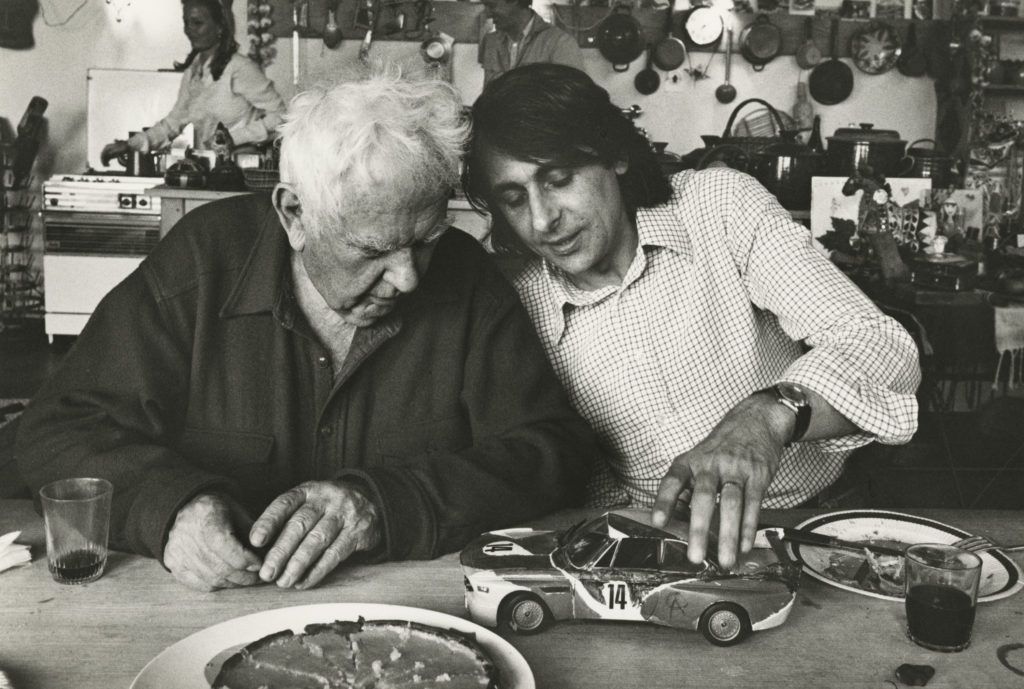
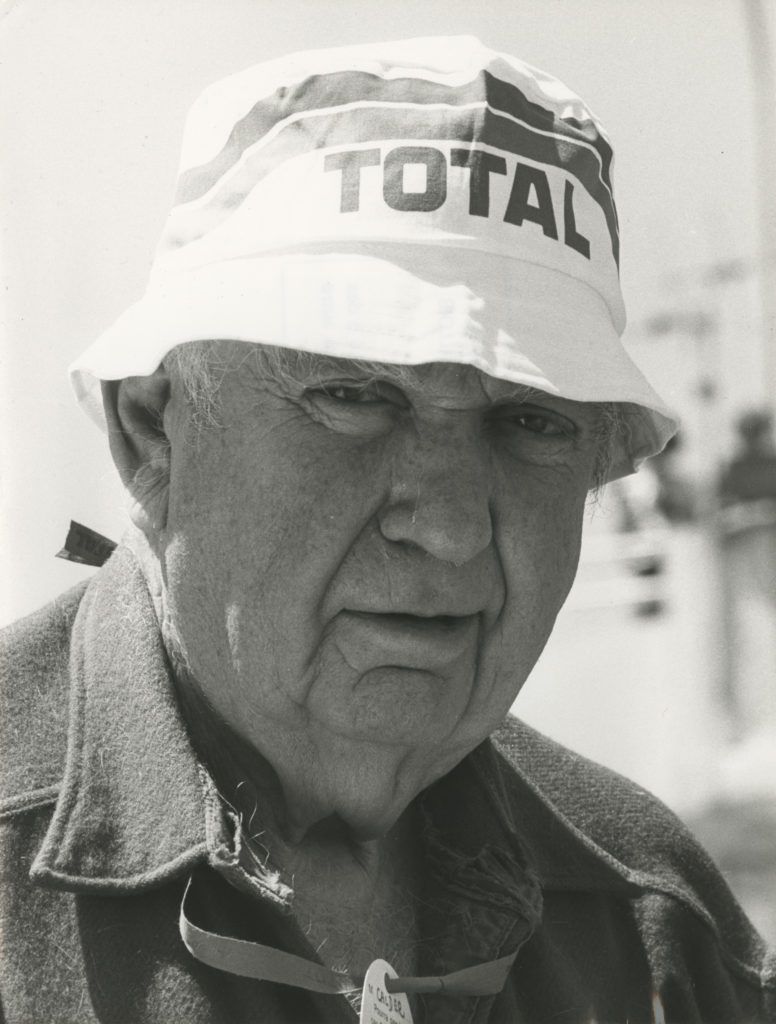
Poulain had a secret agenda. His true passion was racecar driving, but he was only an amateur, and no racecar manufacturer would sponsor him to drive Le Mans on his own. Luckily, BMW saw value in his Calder connections and agreed to manufacture the unusual car. At the 1975 Le Mans, Poulain drove a BMW 3.0 CSL featuring Calder's design, a playful color scheme of bold primary hues zigzagging from the protruding rear spoiler to the curved racecar hood, creating a precariously balanced effect similar to Calder's famous hanging mobiles. Although the car reached fifth place before being forced out of the race by a damaged axle, it was a crowd favorite, and the BMW Art Car was born.
Art Cars driven by Poulain would compete in three subsequent Le Mans competitions. In 1976, Frank Stella contributed a graph-paper grid design, bisected by swooping black curves, which cut a dashing figure in the race. In 1977, Roy Lichtenstein contributed a comic-book-style Pop Art design featuring undulating dots intended to "in-crease the car's speed five miles per hour and disorient the contestants." Despite being facetious, Lichtenstein's plan appeared to work - the car finished first in its class, ninth overall. This was the heroic era of the BMW Art Cars, with midcentury lions delivering snazzy, polished designs that displayed the chromium panache of high modernism's final gasps. Andy Warhol's splotchy Art Car from 1979 rounded out the series, although Poulain nearly died when it spun out mid-race.
In the 1980s, Art Cars entered a dark age. No longer competing in Le Mans, the autos were commissioned willy-nilly, often on mass-produced models intended to tour dealerships and local art museums. A string of decorative cars ensued, such as Ernst Fuchs' chintzy BMW 635CSi from 1982, with hand-painted flames licking its side. Some of the artists cut towering figures - Robert Rauschenberg, David Hockney, Esther Mahlangu - but their efforts feel gimmicky, with stylistic trademarks superimposed upon paltry advertising surfaces. The Art Cars book, produced at BMW's behest, devotes a short academic essay to each of the en-tries, attempting to treat them as art-historical landmarks, but the story they tell is more about the emerging sophistication of corporate marketing departments and about artists' increasing eagerness, under neoliberalism, to shill for commercial interests.
Were the Art Cars ever anything beyond a publicity stunt? BMW touts the close collaboration between artist and engineer as a stamp of their artistry, their sublime synthesis of form and function, but in most cases, this series has amounted to little more than the artist taking a supervised spin on a race-track. In 1999, at least, the cars did begin competing again. The BMW employees interviewed for Art Cars seem to feel that the program reached its apotheosis under Jeff Koons, whose 2010 edition made a triumphant return to Le Mans, although it pulled out after three laps due to a technical defect. His BMW M3 GT2 racecar - with an explosive band of stripes zooming along it before combusting into sparkling flares at the back, produced after a lengthy research program to identify the ideally aerodynamic color base - is pure Koons, a slick synthesis of technical sophistication, media impact, and luxury ware. Perhaps it is a work of art, but it's one for a debased age, in which expression and critique have become impossible to distinguish from persuasion and self-advertising. Koons took inspiration for his Art Car when his friend Bono wrote an op-ed for The New York Times calling for President Obama, in the wake of the 2009 General Motors bailout, to hasten "the return of the automobile as a sexual object." The Art Car book's most iconic image of the Koons car, perched on an inaccessible cliff above a Norwegian fjord, is indeed sexy yet simultaneously stupid, in the vein of a Marlboro ad.
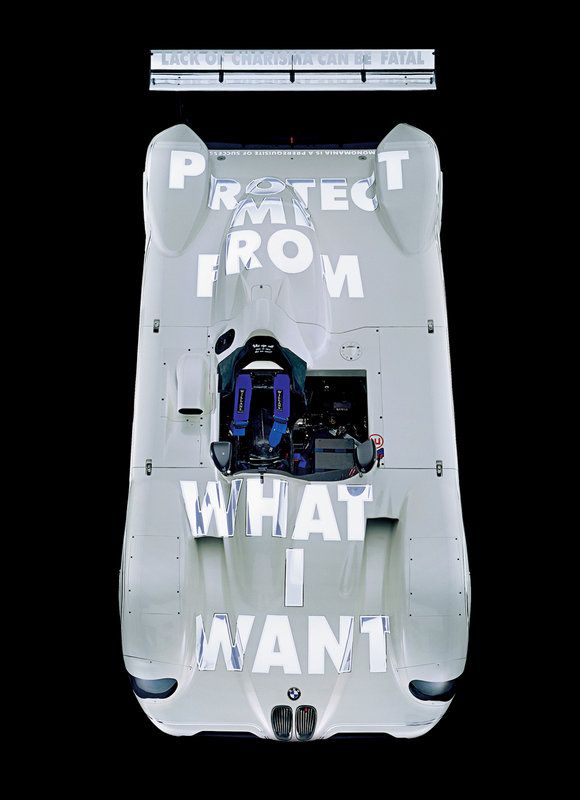
Later years have included entries by Olafur Eliasson in 2007 (a hydrogen concept car covered in a lattice of ice) and Julie Mehretu in 2024(a reproduction of one of her paintings stretched across a BMW V8), but my favorite is by Jenny Holzer, the po-mo conceptualist famous for her gnomic catchphrases and provocative text art.
Across her 1999 Art Car, a low-slung BMW V12 that competed in a Le Mans qualifier, a glow-in-the-dark text proclaims a subversive message one can imagine emanating from the petroleum-guzzling racecar itself, or from the car-buying public who can't seem to kick our obsession with these luxurious death machines:
"Protect me from what I want."
BMW Art Cars is published by Hatje Cantz (2025)
Credits
- Text: ROB MADOLE