Bret Easton Ellis’s The Shards Comes Alive through Hayes Warner
|Franka Rosa Maria Klaproth
The first time is always a little scary. A TV debut is nerve-wracking enough for any aspiring actor, but making that debut in a new Ryan Murphy series is a different story entirely. It’s fitting that Hayes Warner’s acting debut, in the latest Murphy series The Shards, comes with its own sense of vertigo as it toes the line between glamor and horror.
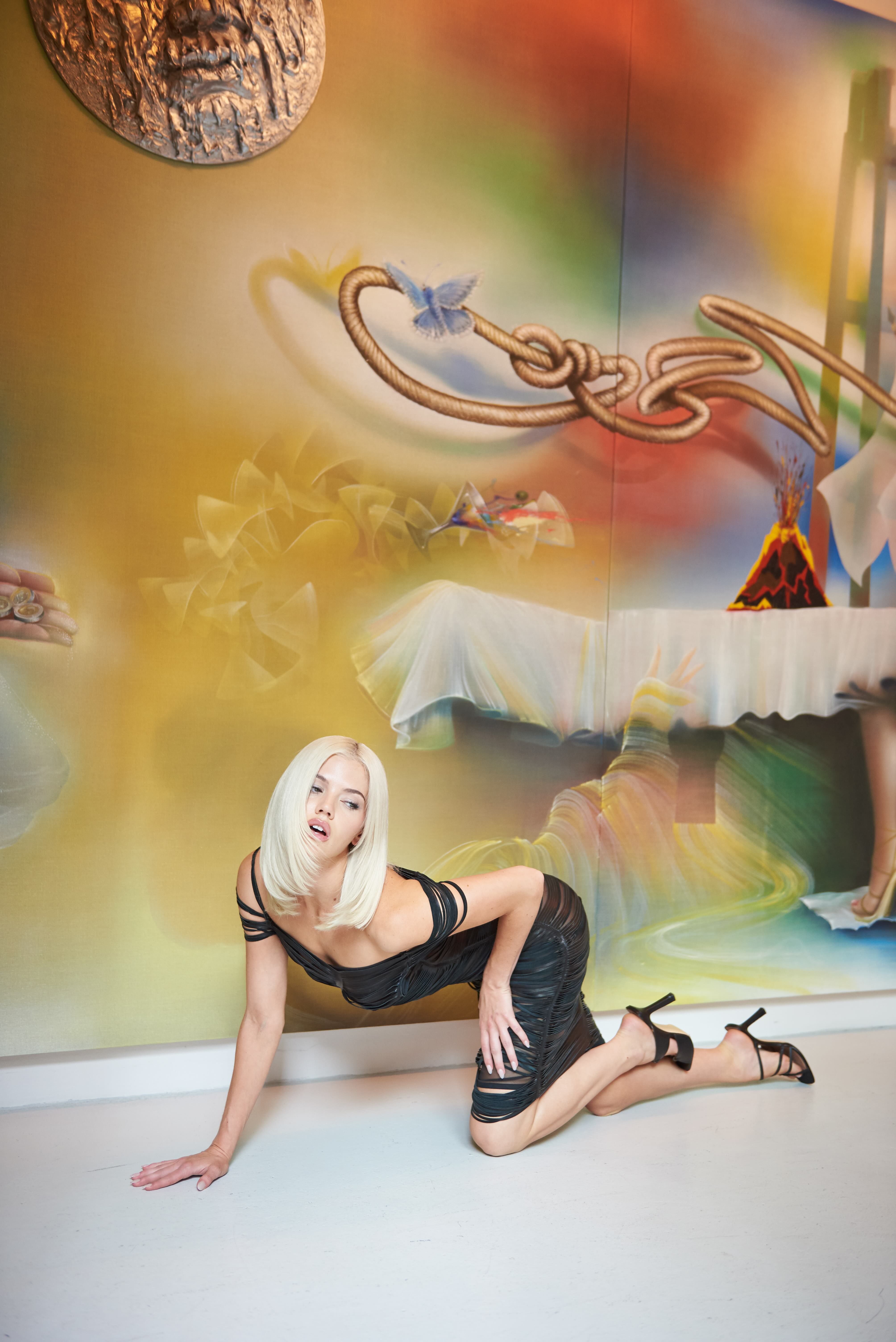
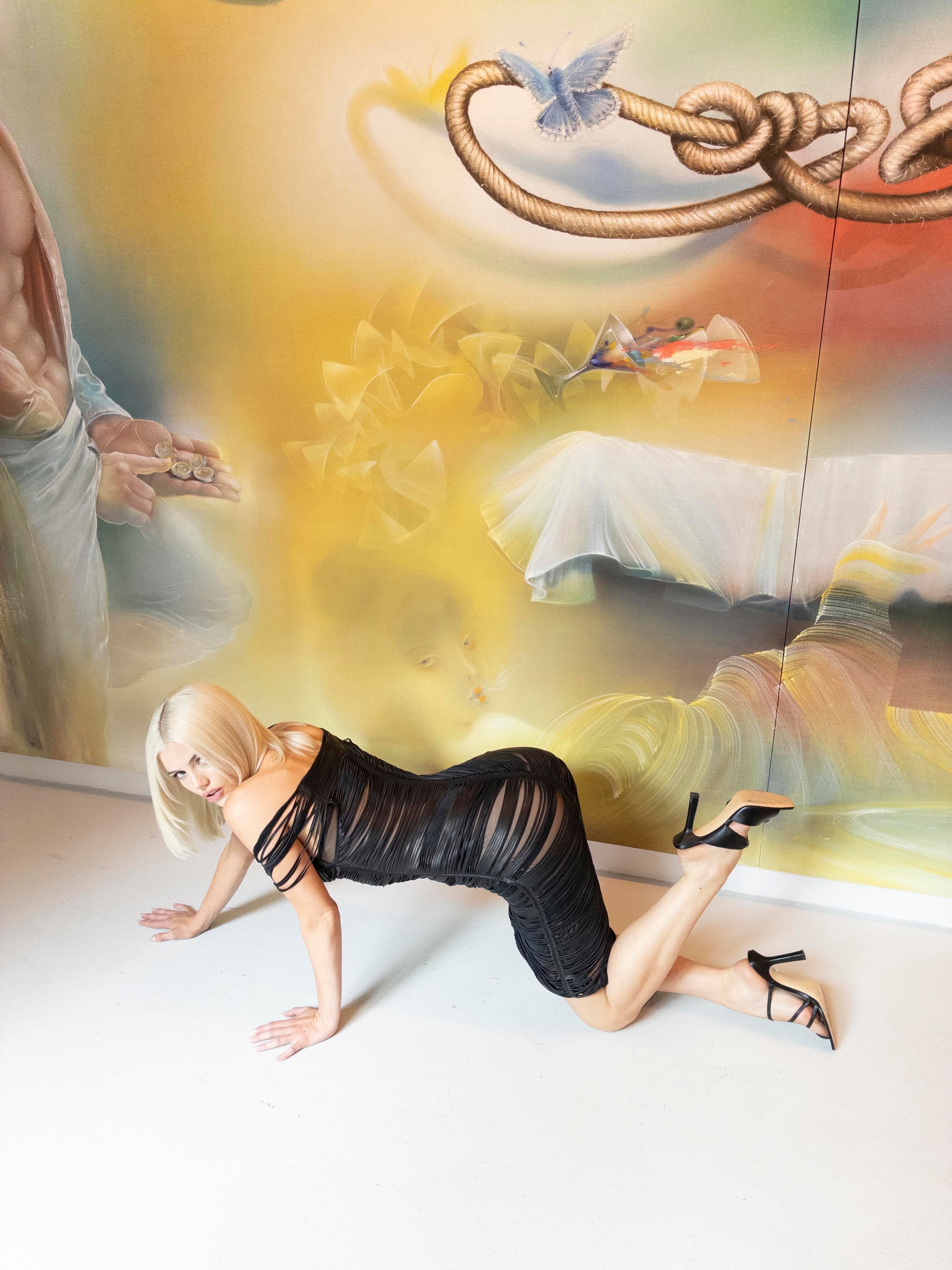
Dress UNVAIN, shoes SCAROSSO
For The Shards, Murphy adapted the Bret Easton Ellis novel into a California gold-drenched drama about a group of polished, privileged high schoolers, one of whom is a serial killer. Hayes plays Debbie Schaffer, a doll-like rich girl in love with the secretly gay protagonist Bret. While Debbie busies herself building a porcelain-perfect empire and dreaming of becoming a dancer, her boyfriend is preoccupied with fantasies of Robert, whom he believes to be the town’s serial killer.
Warner definitely shares her character’s ambition. Most probably know the NYC native through her music: the term “up-and-coming” barely still applies to her ascent through the pop charts. Named one of People’s Emerging Artists to Watch, Warner released a buoyant dance-pop anthem “Predator” shortly on the heels of her breakthrough cover of No Doubt’s “Just a Girl.” Her latest track “Oh!” was produced by Zhone—a songwriter famous for his collaborations with Charli XCX, Kesha, and Troye Sivan.
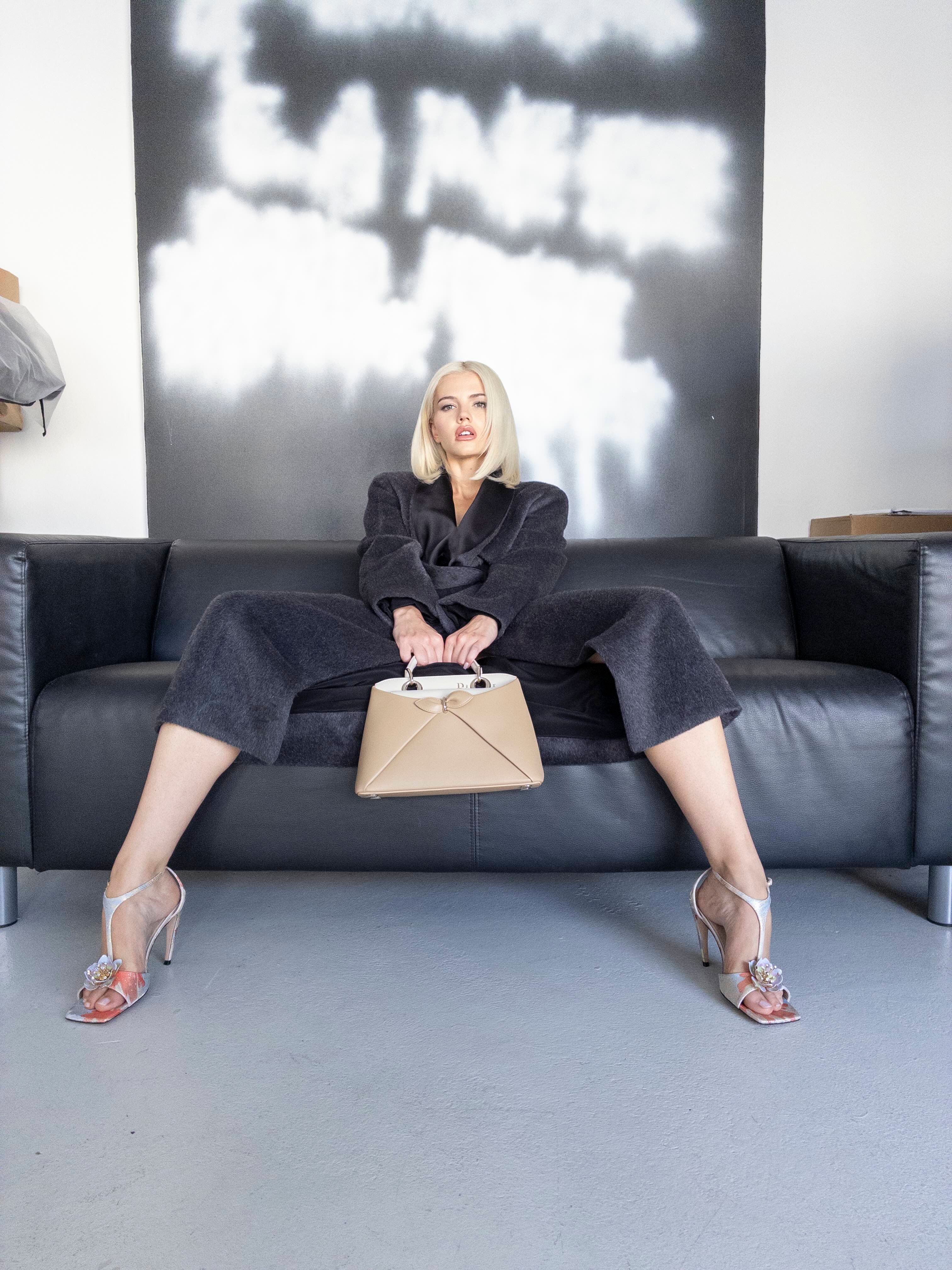
Full look DIOR
Casting The Shards, Murphy must have trusted that Warner could handle the media attention. During the publicity tour, he formed something like a high school clique out of five young actors — Igby Rigney, Kaia Gerber, Homer Gere, Graham Campbell, and Hayes Warner — who told the press how close they’d become by carrying each other through the spotlight.
We met Warner at the Dittrich & Schlechtriem gallery, an ideal setting thanks to Bernhard Martin’s “Holobionten”, on view at the time. The choice of backdrop felt almost too fitting. Bernhard Martin's 25-meter-long painting is a sprawling, overstuffed universe of its own — bodyparts, a tabletop volcano spitting fire beneath a swinging lasso, keyholes, sponges, syringes, a raft adrift under the moon, women’s legs, and torn wallpaper opening onto other landscapes entirely. The painting suited a shoot tied to Ryan Murphy, whose own work thrives on that same crowded collision of glamour and menace, order pressed up against chaos.
When I spoke to Warner again for the interview, it was three days after the LA premiere, and she was back home in her own apartment.
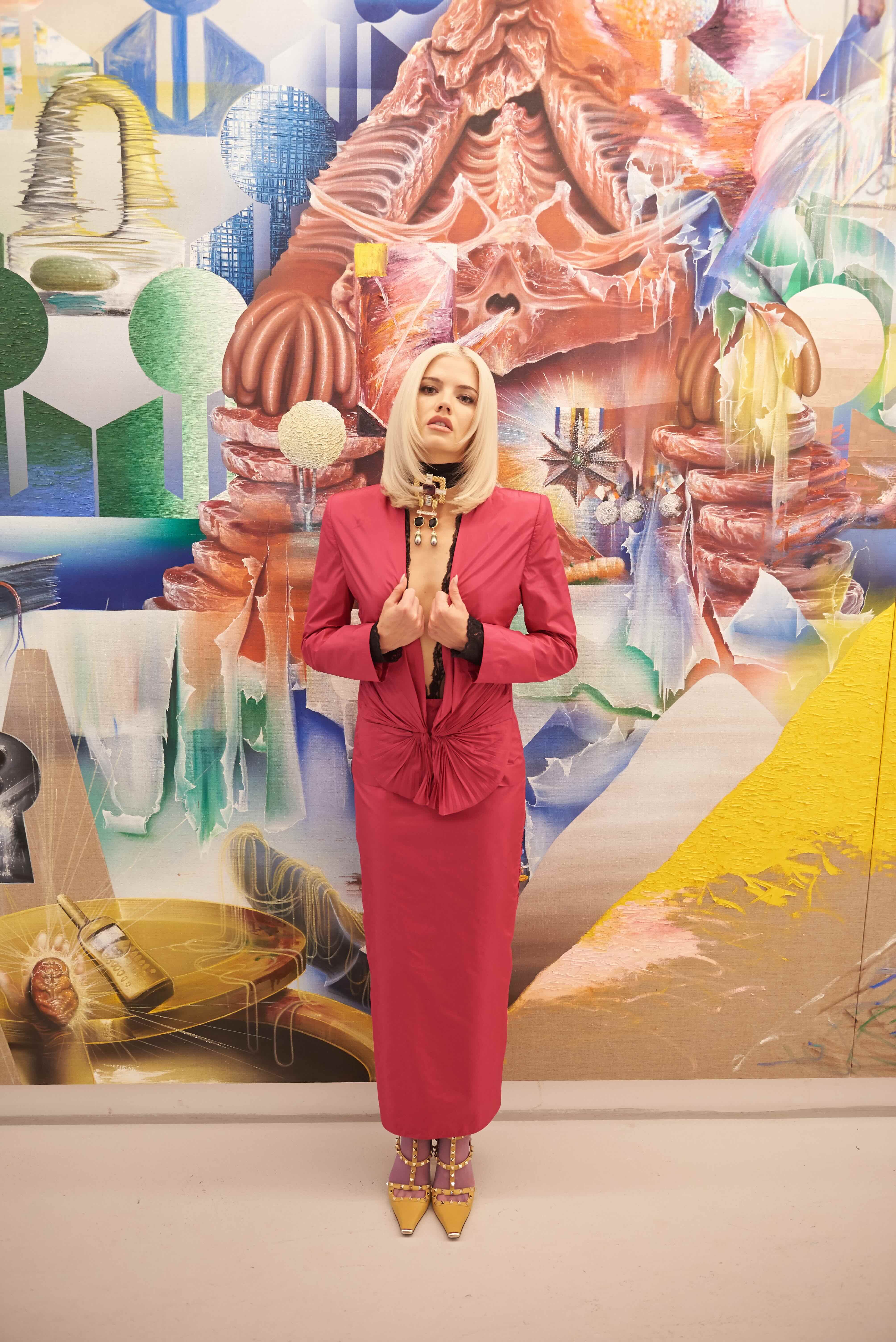
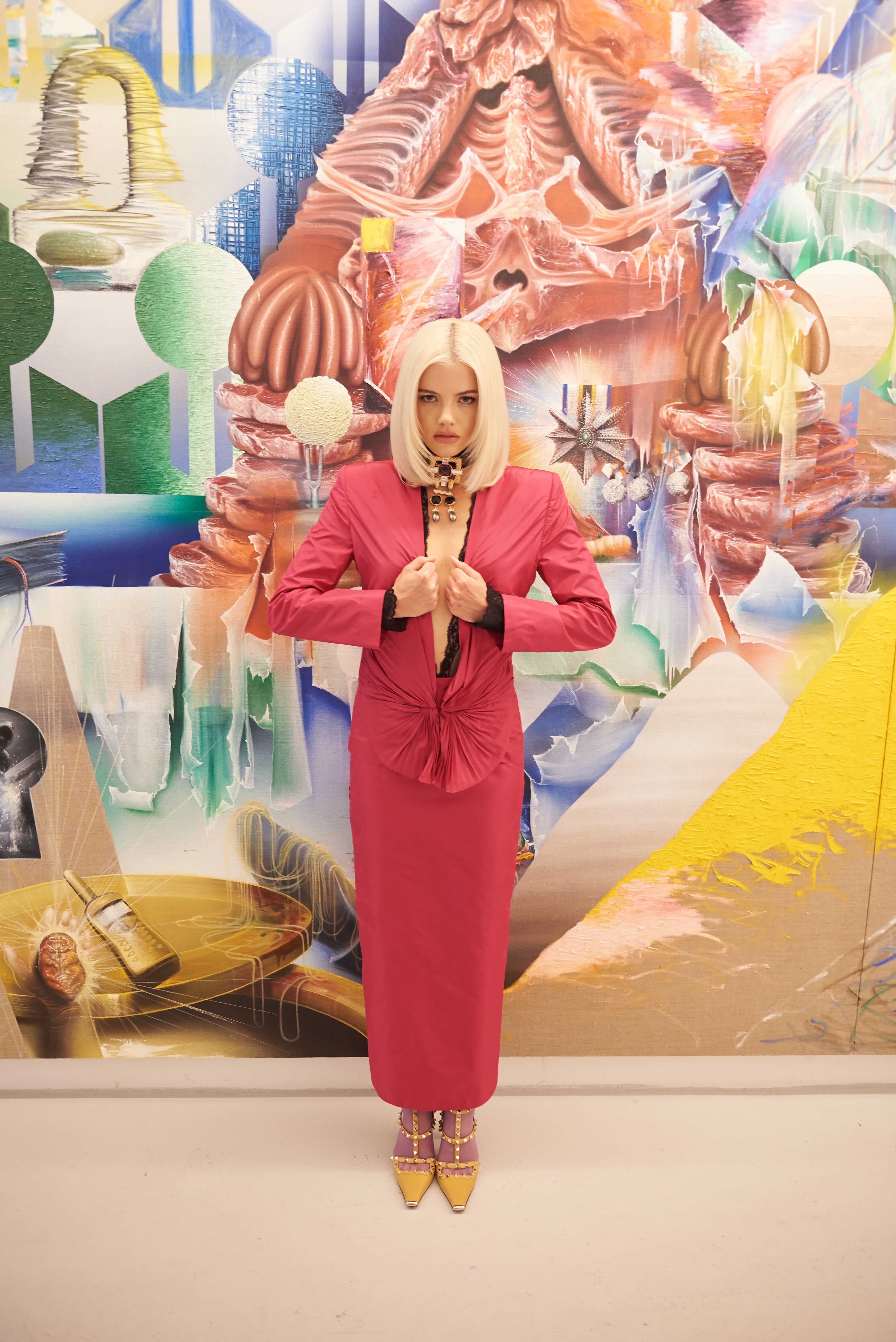
Full look VALENTINO
Franka Rosa Maria Klaproth: Hayes! This must be the first time you’ve been home in weeks. How are you feeling?
Hayes Warner: Still jetlagged. It feels nice to be back, but I also always like to keep going.
FK: In retrospect, how was the press tour for you?
HW: My thoughts are still circling the premiere in LA, it all still feels remarkably close. But my brain is slowly starting to process it. My phone’s algorithm keeps surfacing the interviews I’ve given and I’m starting to realize just how many there actually were. When I watch the videos, sometimes I can’t even remember answering those questions. But it was also so wonderful that the five of us were on tour together. Being with everyone again was, for me, the best part of it. We all had dinner with Ryan [Murphy] last night, too, and sat together talking through the past few weeks.
FK: What did Ryan say about the press tour?
HW: Oh, he’s such a good hang. The moment we got home, he’d already sent five bullet points of advice — how to metabolize reviews, what the numbers actually signify, how to keep our footing. He’s a veteran, he’s done this many times before; for the rest of us, it’s a first, and having someone with his experience in our corner has meant a great deal.
FK: Since this is your acting debut, it looks from the outside like a jump from zero to a hundred. Did that scare you? How did you navigate it, from casting onward?
HW: There were, in effect, two phases. First came wanting the role so aggressively: feeling it was right for me, being such a fan, doing everything I could to get it. Then, once I got it, there were thirty minutes of huge celebration, followed by pure panic. This was my first project, what if I wasn’t good enough? I also wanted to prove to Ryan that he made the right choice, especially since he’d taken so long to cast me. So I had this whole existential dread about whether I was right for it. In the weeks before shooting, I simply tried to prepare as thoroughly as I could, and to concentrate on what was actually within my control.
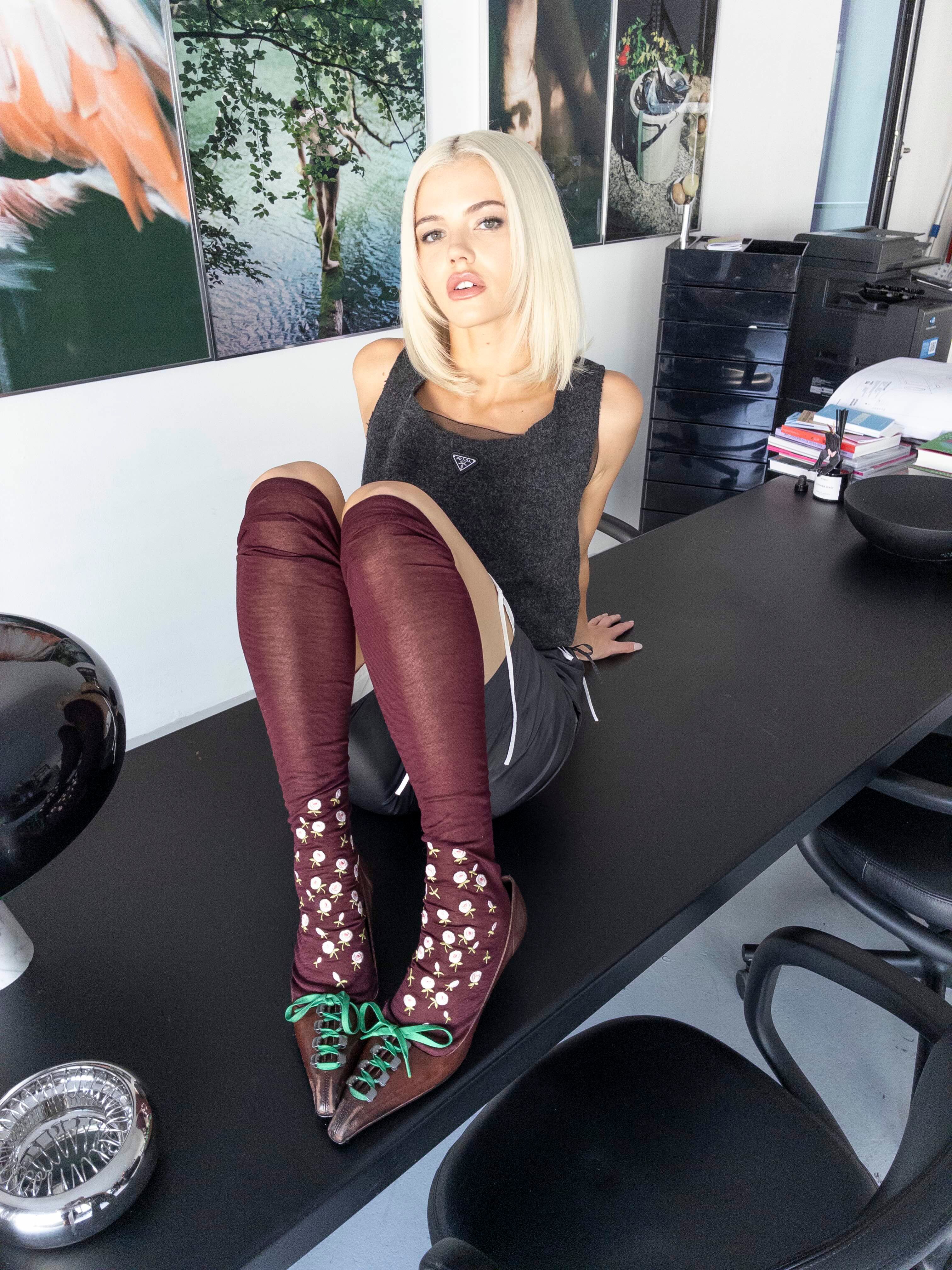
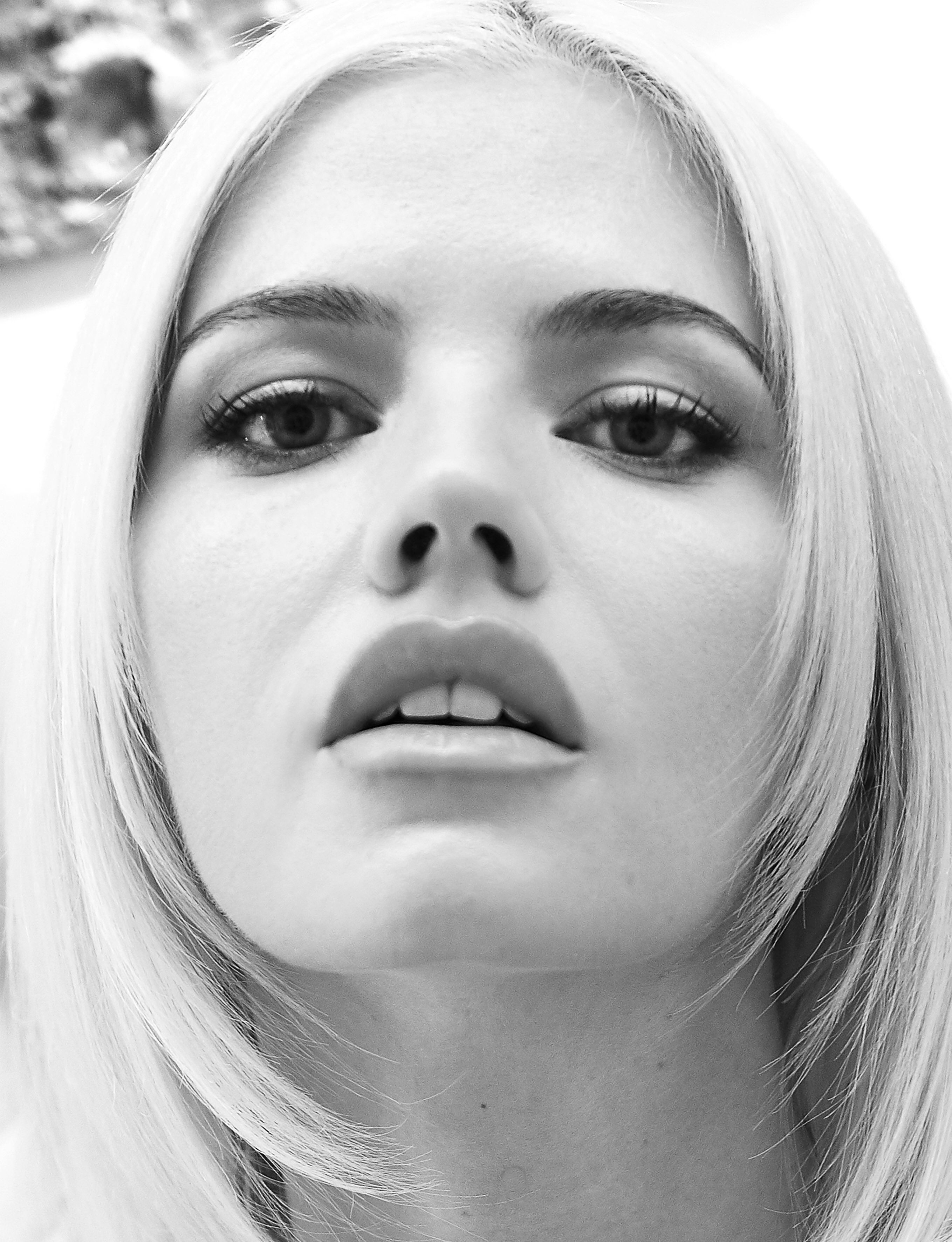
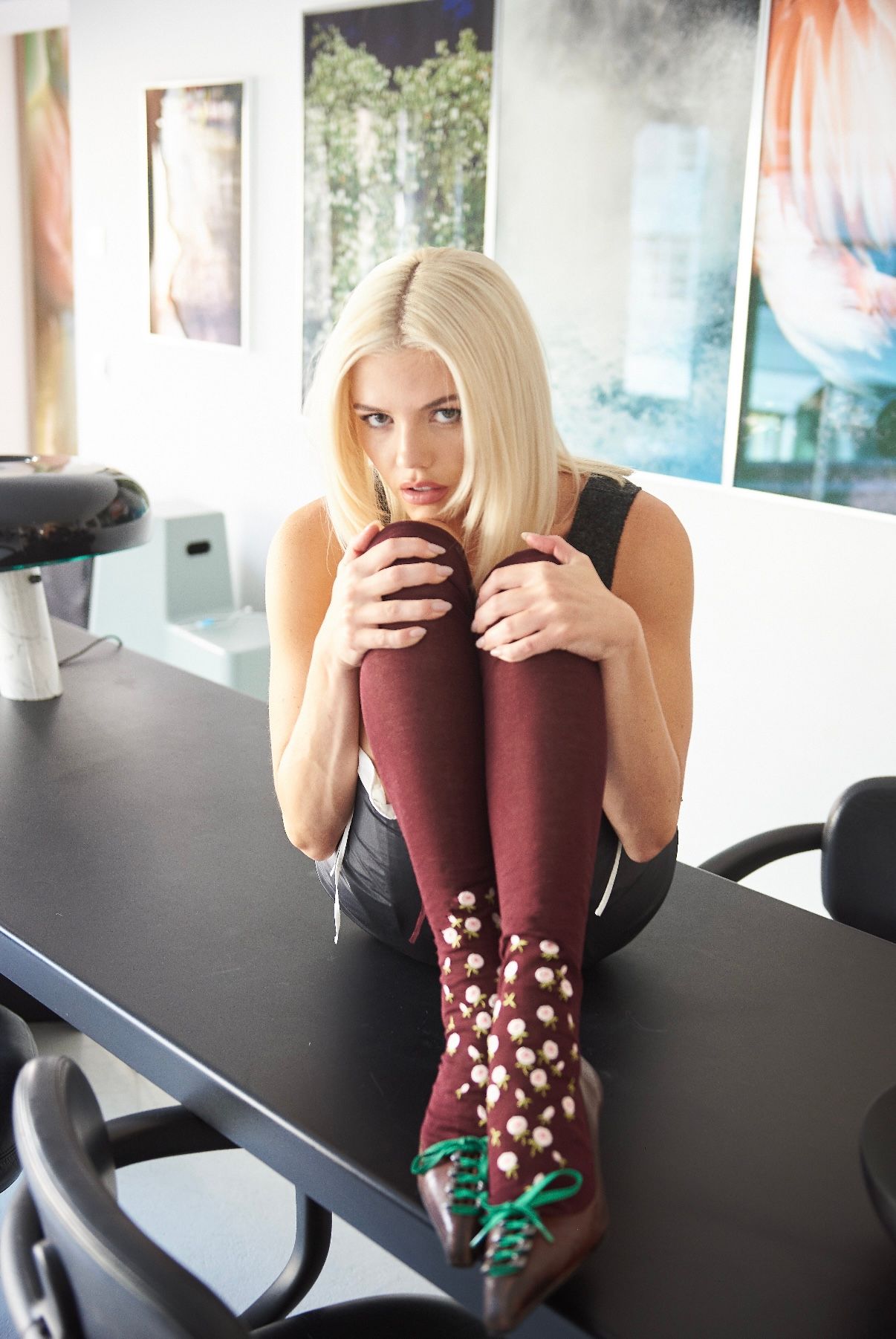
Full look PRADA
FK: That sounds like a reasonably healthy instinct.
HW: I’ve never been good at allowing myself to celebrate. I’m always considering what comes next and how to improve. So there was relief first, because I genuinely felt like I’d want to die if I didn’t get the role — which I know isn’t healthy. The panic carried through into the second week of shooting, when Ryan sent an email that amounted to: thank you for your letter, I believe you’re right for this. That was when I finally felt permitted to bring myself into the character, as though what I was doing had been accepted.
FK: I think a lot of people contend with exactly that — fighting off imposter syndrome, especially when you’re thrown into something huge without the chance to grow into it slowly. It’s a blessing and a curse.
HW: Totally. But at the same time, working in music the past few years has felt like a slow ascent by comparison. I think that’s true of acting, music, entertainment generally, and probably fashion as well: progress comes in huge steps forward and then huge steps back. Seeing the billboards after all the work was already behind me was the first time I actually allowed myself to register that I’m moving in the right direction.
FK: Had you always intended to pursue both music and acting?
HW: I’m a devoted fan of pop culture, and the figures who inspire me most have never confined themselves to a single discipline. They move across fashion, film, everything. Someone like Lady Gaga, appearing, next to her music career, in Oscar-nominated films and doing American Horror Story, has always been an inspiration. Plus, my role as Debbie Schaffer felt true to my music and who I am. It didn’t feel forced; it coincided with what I’m building.
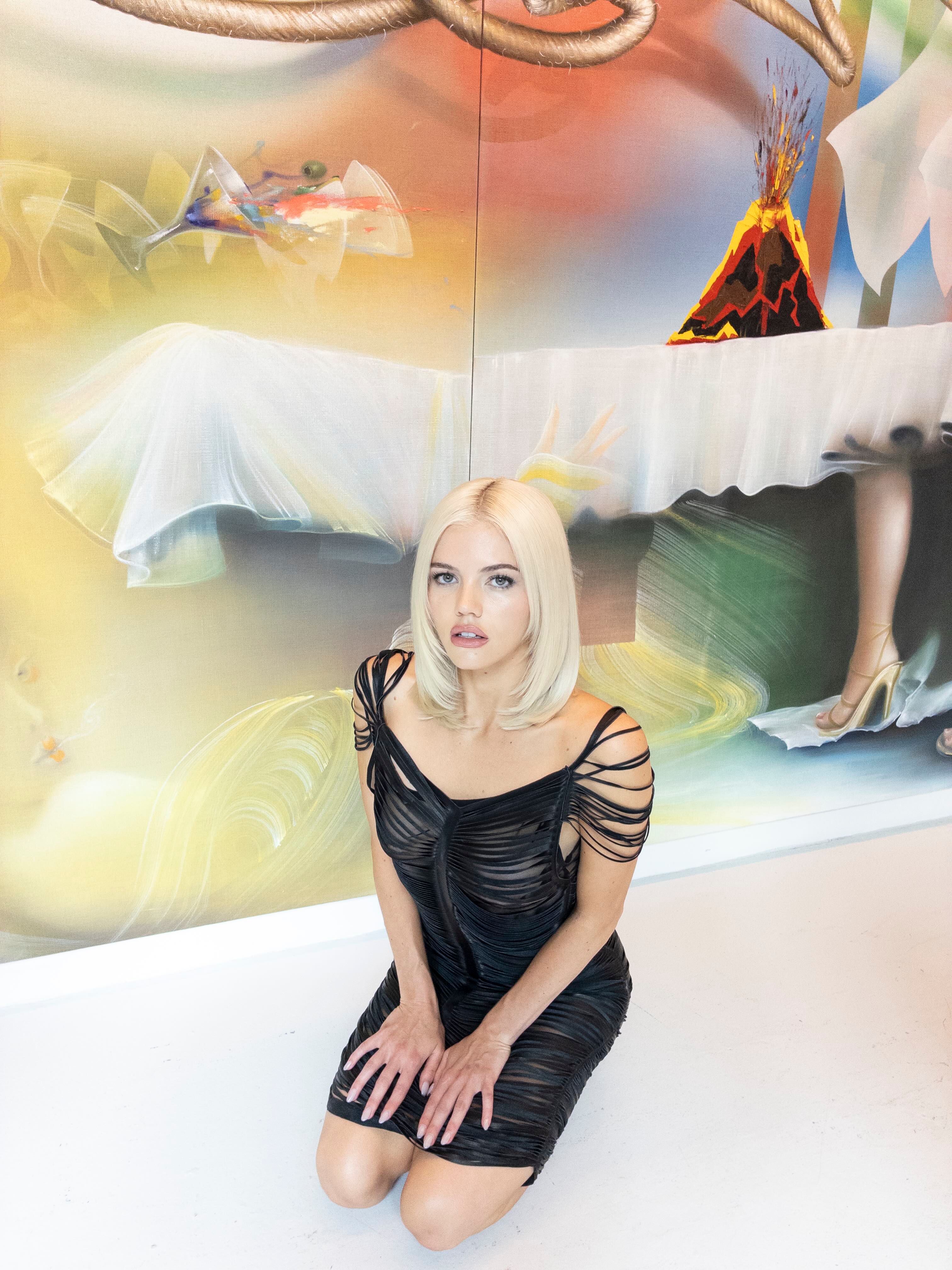
Dress UNVAIN, shoes SCAROSSO
FK: So you’d watched Ryan Murphy’s work before working with him?
HW: Of course, I’ve watched everything. My mom wept when I got the role, because we grew up watching Ryan Murphy together.
FK: Was there anything that felt genuinely distinct about acting, as opposed to music? Something you hadn’t anticipated, coming from a performance background?
HW: There were considerable similarities, and music prepared me for much of this. But one real difference was stamina, and the culture of a film set more broadly. I wasn’t entirely prepared for how much one must guard one’s physical and mental health — sustaining full commitment to a scene for eighteen hours at a stretch, sometimes through the night, day after day. On tour, I enter a kind of performance mode: the show concludes, I sleep, and I recover. But we filmed the series for eight months, and I had to learn, in a way I hadn’t before, to genuinely value my physical health. That lesson has extended well beyond the work itself.
As for what felt familiar: the capacity to remain present, to work on one’s feet. On stage, I can prepare exhaustively, yet every night differs: the audience’s energy might falter, and I must adjust in the moment. That translated directly to set, where I had to stay present, even when another actor’s energy dipped, or a director’s note reframed a scene entirely. A considerable portion of the show was, in fact, improvised, much of Debbie’s dialogue among it.
FK: Really? I’ll keep that in mind when I watch it.
HW: On the first day of shooting, we did the scene where Robert first comes to the table and meets the friends. Ryan just said, “I’d like you to improvise this” and my heart dropped. They can still fire you up to two weeks in if they decide you’re not right for the part. So it felt like another audition.
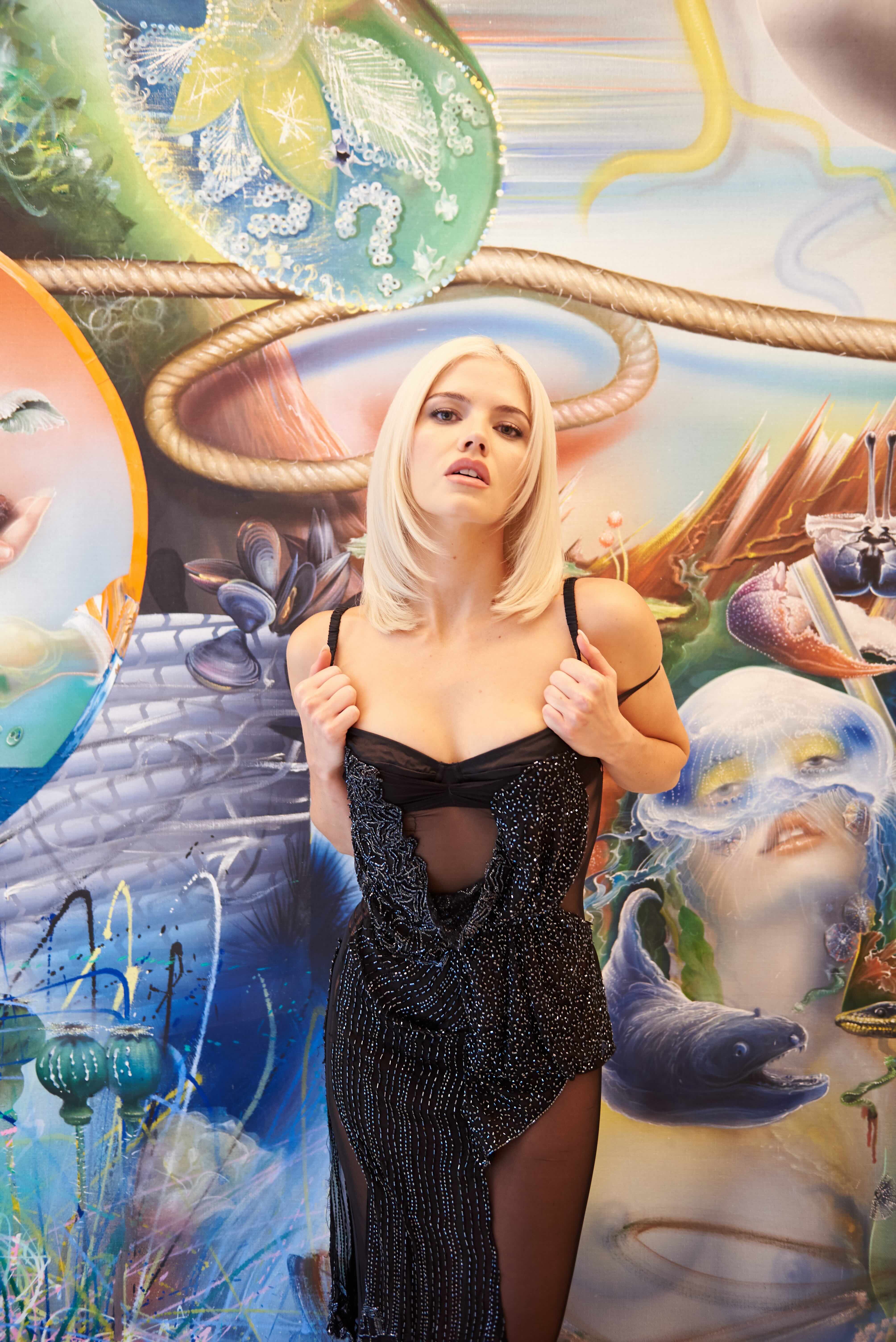
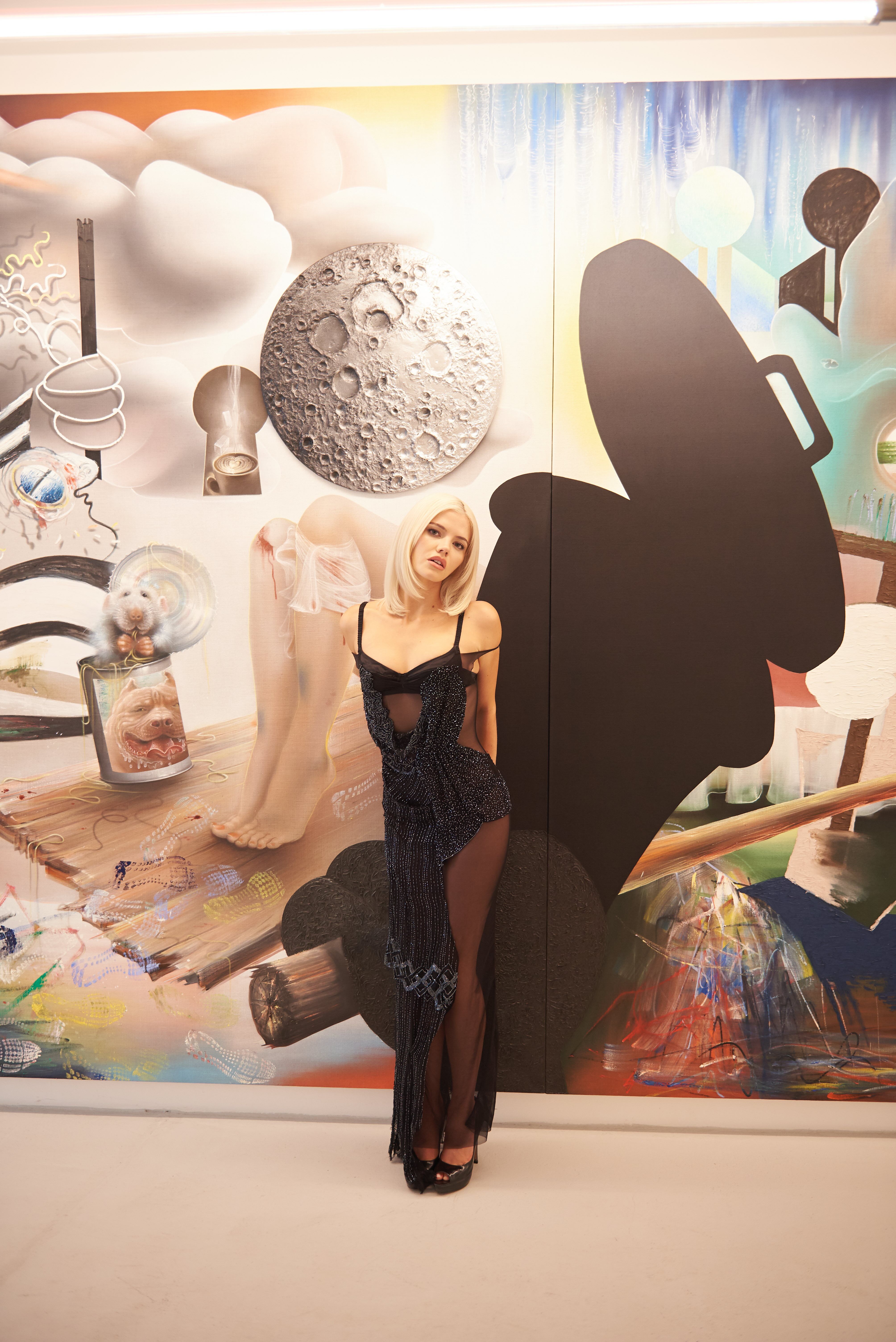
Dress LAURA GERTE, shoes STYLIST’S OWN
FK: I see a lot of parallels between young actors being thrown into the industry and your character Debbie, who’s pursuing a dance career with real urgency.
HW: Between Debbie and me, so many parallels exist. When I read the book, I immediately related to the character. That’s why I was so intent on getting the role.
FK: Debbie is in a relationship where she’s being deceived without knowing it. That must have been complicated to play.
That was a question I discussed at length with Ryan: Why does she remain with Brett, and what does she actually know? Since we only see it through Brett’s perspective, you can read it either way. Some scenes I played as if she knows he’s gay; others as if she doesn’t, and I let the editor decide how to cut it together. Reading the book, I felt she knows more than she lets on, and uses that strategically. I think, personally, she knows more than she shows.
FK: That makes sense. Maybe Brett just doesn’t notice because he’s so consumed by his own image.
HW: Exactly, that’s how I see it too. But I’m curious what people think when they watch it.
FK: The series is quite attuned to desire, and to its suppression, and though it is set in the eighties, it remains strikingly current. Did the series leave you with any particular insight into desire, perhaps from a moral standpoint?
HW: Even though it’s a period piece, I think people relate to it regardless — there’s no serial killer in most teenagers’ lives, but the core issues don’t go away. Being in high school is confusing because you’re trying to meet some arbitrary standard of “cool” while also fighting to be who you actually are. Desire, in that sense, can just mean wanting to be accepted. With Debbie specifically, I think her desire for Brett reflects her relationship with her parents. Their dynamic is her role model, and it’s who she’s becoming.
FK: Many women, at some point, ask themselves why they stay with someone who isn’t right for them. Female rivalry is something that comes up in the series too — between Debbie and Susan, who was played by Kaia Gerber. How did that influence the dynamic between you two in real life?
HW: Kaia and I are so close. We were aware from the start that two young women doing a project together often get pitted against each other. We’d joke about it: should I wear white so you can throw tomato sauce on me on the red carpet? Early on, we agreed that we needed each other’s support. It was a demanding project, long days and dark material. Even filming rivalry scenes against each other, we’d be by the camera cuddling between takes, giving each other notes. There’s zero competition between us.
I have all sisters and went to an all-girls school, so I knew I needed that kind of support. She helped me find a doctor, her parents brought me somewhere for Thanksgiving when I’d just moved to LA. We built something durable, particularly through the more difficult stretches. She has become, genuinely, my closest friend.
FK: There’s something quite powerful in two women choosing to support one another rather than accept the comparison imposed on them.
HW: It isn’t always simple, but she has been doing this for a long time, and she’s a genuine model for how to withstand pressure. Having someone to turn to in moments of discomfort has mattered enormously, and she has been exactly that for all of us.
FK: How did you learn to manage the press tour itself? Every outfit is scrutinized, the attention accumulates toward release, and then the public forms opinions about the series itself. That seems considerable to withstand.
HW: I can’t imagine having it alone. The five of us are so close it felt like five friends on a work trip. If I caught someone reading comments on their phone, I’ll tell them to put it away—but mostly we make humor out of it in our group chat. The only time it felt genuinely scary was seeing the billboards. Beautiful, celebratory, of course, was it also the realization that people are actually going to watch this. With the crew and our relationship with Ryan, it felt like an indie project internally, even though it never was. It felt like a family, engaged in something we genuinely cared about. Now it’s this strange moment of handing it over to the public, and honestly, it hasn’t fully hit me yet.
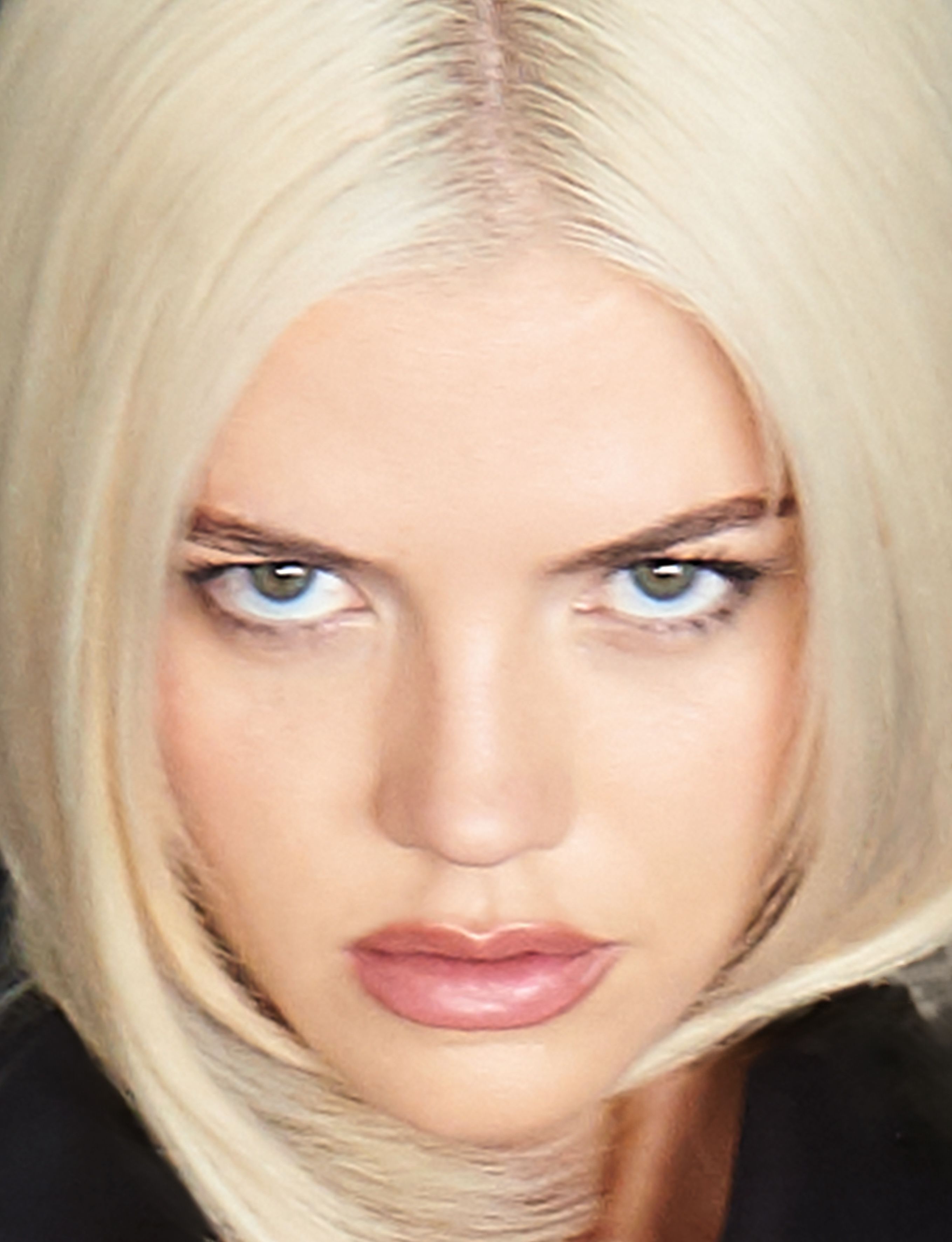
FK: You had a strong visual identity as a music artist already, with your own music videos. Did your visual style shift through the press tour, is there any new direction to your aesthetic?
HW: That’s a genuinely interesting question, because in music one is constantly told “be authentic, be you”, but what if your authenticity changes? Stylistically, this has been the most life-changing year of my life: wearing vintage eighties clothes, becoming this character, cutting eight inches off my hair. Even my musical sensibility has shifted and been re-inspired by it. I’m working with a creative director right now on who I am for this next project. When I look at artists I admire, they all go through different eras, and I think I’ve been genuinely shaped stylistically, energetically, musically by the eighties. My new music reflects that influence directly. I occasionally wonder where I’ve gone, but it is, simply, a different chapter.
FK: Change is entirely natural. People just want to put you in a box once they like an image of you. But personal style is really about change.
HW: Definitely, and getting to do shoots like this one with you has been part of that. Trying on incredible clothing inspires me too.
FK: What do you want for yourself going forward?
HW: Personally, I hope to actually start celebrating my successes. I put a lot of pressure on myself and I’m always focused on what’s next. This has been the first time I’ve had even a glimpse of celebration. If I looked at myself a year ago, I’d be amazed at where I am now.
FK: I think that’s something you actually have to practice. It won’t just come to you, no matter how big the milestone.
HW: I’m working on that, because my instinct is always “next, next, next.” I’m trying to redefine success for myself, not by what other people think, but by whether I’m proud of the work. I think I’m starting to get there. Long-term, my goal is to keep leading with passion the way I fought for the Debbie role — to keep pursuing things even when they feel too big, because this opportunity has opened so many doors, and I’m grateful to Ryan for that. Just as important: I want to keep doing both music and acting. Hit them both hard.
FK: So it’s not a choice between the two.
HW: No. They have to go together.
FK: Which film genre would you want to explore next? Is horror something that grew to you?
HW: Debbie was actually my favorite character to play, because I got to live in three genres at once. She’s the comedic relief at times — glamorous, aloof, having fun in the middle of this dark world. Then there are the scenes with her family, which are complicated and psychologically layered. And then there’s the horror of it all — living in the world of a serial killer, watching people get attacked, dealing with real fear, and some genuinely horrific things happening to my character. I got to do all three on this show, and I’m open to anything.
FK: How do you approach playing something traumatic that never happened to you in real life? Especially with the responsibility of portraying it out of respect for real victims?
HW: A great deal of research. I had an incredible acting coach who helped me through it, and a very supportive crew that let me get into that headspace and stay there — even across a hundred takes on some really difficult, tiring days. Getting there, and giving it everything, mattered because portraying those things accurately and authentically is so important.
Credits
- Text: Franka Rosa Maria Klaproth
- Photography: Jan Malinowski
- Talent: Hayes Warner
- Fashion: Franka Rosa Maria Klaproth
- Hair: Adiam Habtezion
- Makeup: Sabina Pinsone
- Fashion Assistant: Franka Dehmel
- Special Thanks: Dittrich & Schlechtriem