Between Heaven and Hell, Glaive is Alive and Well
|Gigi Nadeau
Growing up in Hendersonville, North Carolina, in the eye of the Bible Belt where there are more churches than gas stations, Ash Blue Gutierrez, more commonly known to the world as Glaive, questioned his faith.
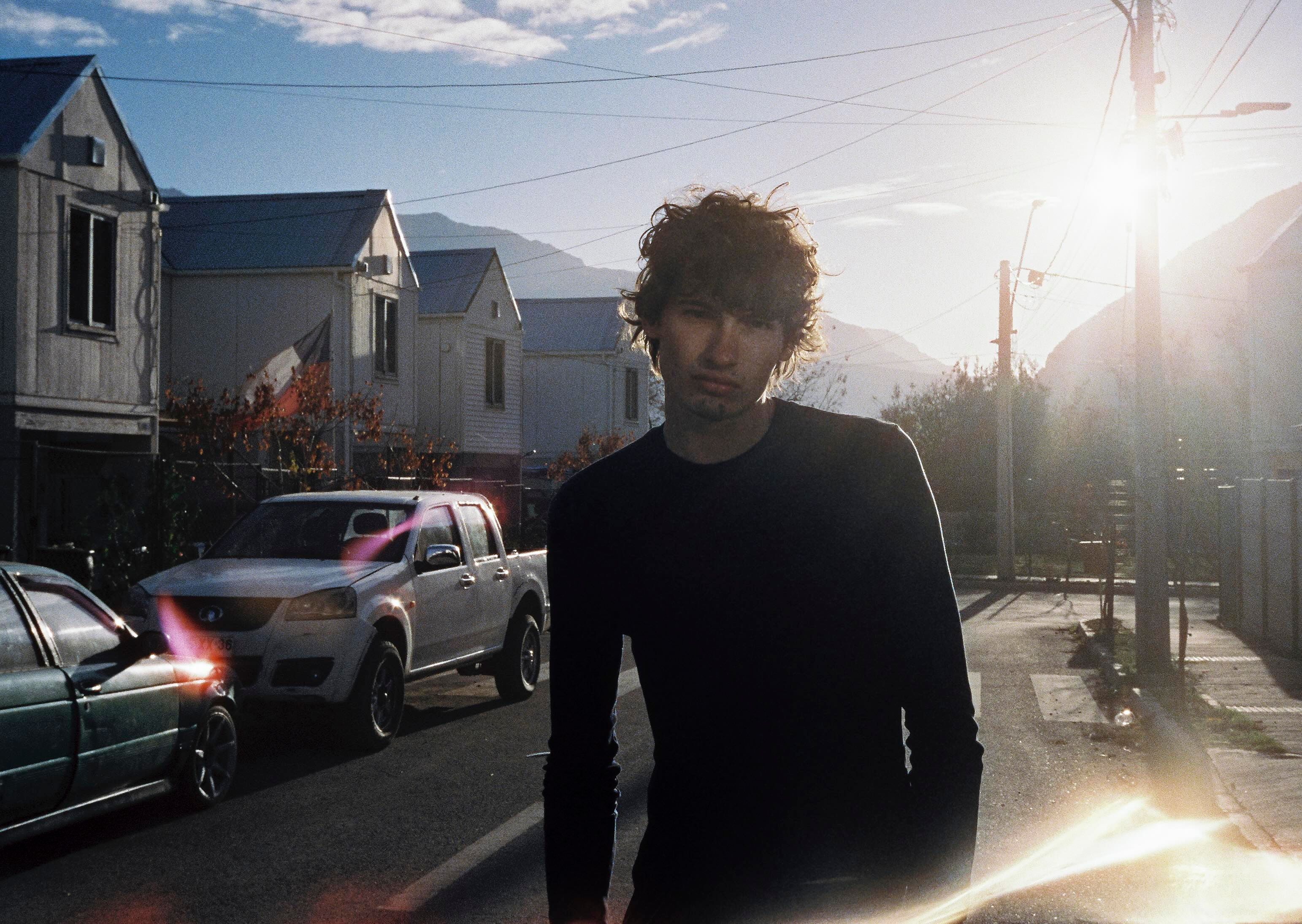
South of the border, west of the sun, where the grass grows tall, and the children grow Protestant, Gutierrez queried the mundane. At fourteen, shying away from small-town semantics, Gutierrez found solace in music, spending his days experimenting with loud electronic sounds, prolific writing, and pre-pubescent wails. He was a peculiar mind surrounded by patron saints and retirees, but absorbed by high-BPM nightcore remixes. On his 2023 debut album i care so much that i dont care at all, he belted suicide notes as song lyrics into the microphone and thanked himself for not taking his own life. His newest solo album, Y’all, a twisted love letter to Hendersonville, confirmed his ability to transform teenage anguish into a moshpit for kids equally scared and confused by the world to find themselves in.
Now twenty-one years young but wise beyond his years, one of the pioneering figures of the original hyperpop sound has transcended, and his music has transcended with him. No longer a somber young e-boy making music in his childhood bedroom but a thoughtful young adult, Gutierrez has started crafting more hopeful songs that seep into the psyche as a genre-less blur. Some of the tracks on his new album, God Save the Three, a collaborative project with Kurtains, bear a greater affinity for the gentle melodies of folk-pop and the playful twang of country than anything he has made before; the others are fun, upbeat dance songs. Yet what continues to captivate audiences is the same: Gutierrez shapeshifts to whatever he is feeling at the time, depicting it in a way that is so vulnerable, yet so relatable, one can’t help but see oneself in his words.
With an ice pack lying between my legs amid the Berlin heatwave, I hopped on a call with Gutierrez, who started the interview by questioning me—a practice I was not used to, though ultimately not mad about. His southern hospitality was a strong suitor to my Canadian charm, and in the blink of an eye, the two-hour chat turned into an evening affair as we talked about unreleased music, returning home, growing up religious, and skincare. I joined the call as a fan of Glaive and questioner of faith, but left the conversation a fan of Gutierrez; a preacher, both enthralled and in awe of his cathartic, complex, and curious mind. Together, we questioned heaven and hell and everything in between.
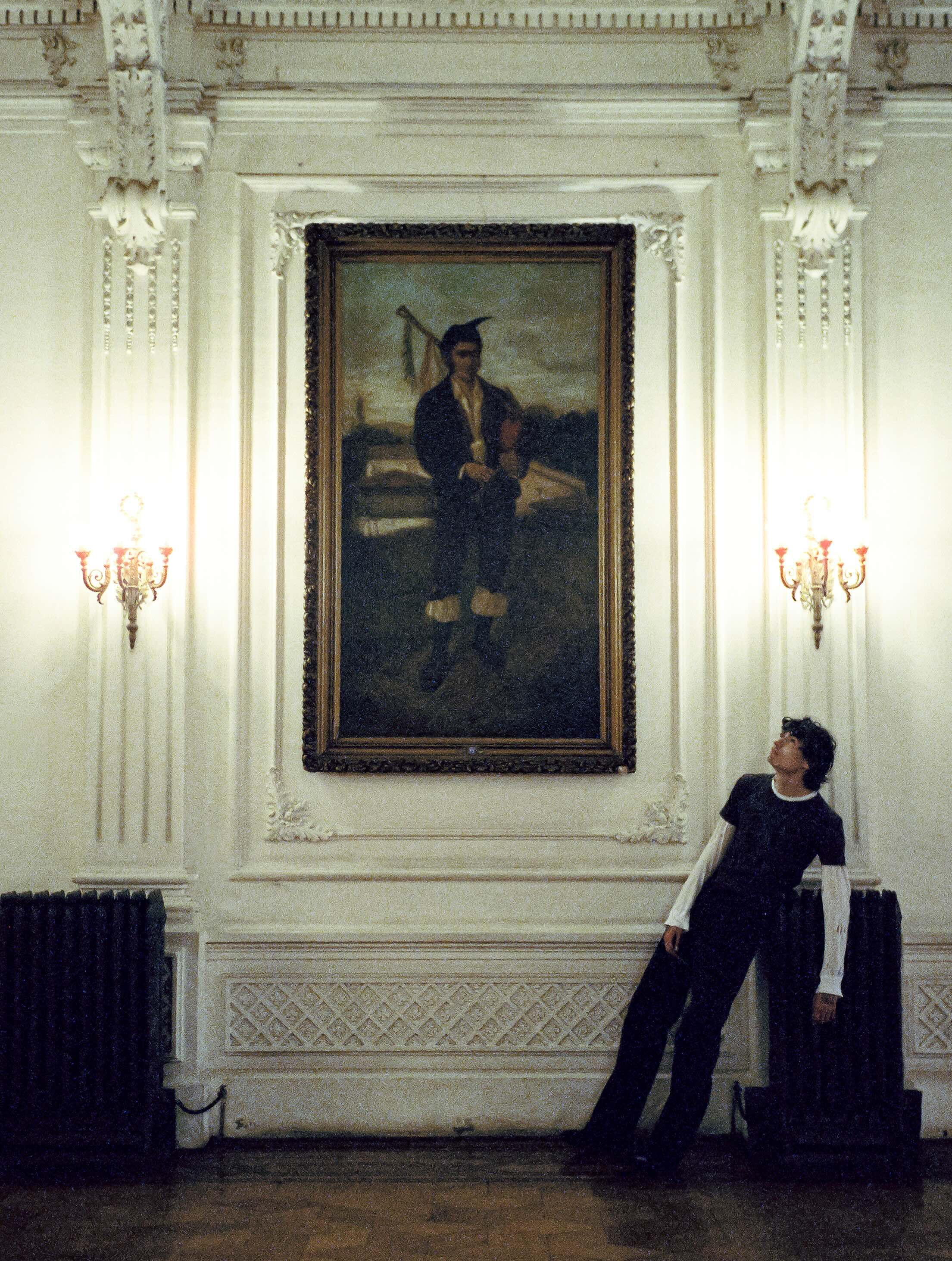
Gigi Nadeau: Do you really think all dogs go to Heaven?
Ash Blue Gutierrez: I’d sure hope so. I grew up with dogs. My family has always had dogs. If they don’t go to heaven, then there’s only one other place that they can go, and I don’t want to imagine dogs down there. Only the big man upstairs knows.
GN: You just released a collaborative album, God Save The Three, with Kurtains. What was that process like?
AG: We recorded half of it in my house in Asheville and the other half in the UK. We had a lot of fun while doing it.
GN: How did you find a balance between creative minds?
AG: For context, I’ve known him since we were fourteen. In the last two to three years, we have become best friends. I talk to him every day. That’s literally my brother, and I love him to death. We make music together out of boredom. He came to visit me in Asheville on July 1st of last year. We spent a day together; I showed him around, and we drove past my high school. He had never been to Asheville before, so he was there to hang out. We’re obviously really good friends, but when there is nothing to do, our friendship is founded upon music. We made the first song, “Westin Super Mare,” the night that he got there. This was the first time I’d ever written a song with anyone else. He was playing the guitar, and we sat there and wrote songs together. We felt like we were the Beatles.
GN: And then it just grew from there?
AG: Three days later, he got to experience his first American Fourth of July. North Carolina’s Fourth is lit as fuck. We went out, and there were like fucking five hundred people on the street. There was some guy lighting off fireworks from a parking garage. We came back home that night and made “Crisis,” which ended up being the outro song to our album. I sent the two songs around to a few people, and everyone said they sounded really awesome and that we should make more music together. And then we did.
GN: Making music with your best friend sounds like a pretty good gig.
AG: It’s a good excuse, and it’s the same with going on tour with him. He’s somebody that I don’t even see as a friend anymore. He knows my parents really well. I know his parents really well. We’ve spent a lot of time together. To be able to do the thing we love most with each other, it almost seems unfair, if that makes sense… There was never a time when we were on tour together, or when we were making music together, that it felt like work.
GN: To go from recording and producing in your childhood bedroom to having a team and tours and crowds of fans must be an insane feeling.
AG: When you make music, you can get jaded kind of quickly, but being with him and all my other friends and being able to make music with people that I have such a close friendship with has fully changed my life. It genuinely feels like the luckiest thing ever. I don’t have a job; I am just unemployed and get to do something fun every day. If I think about it too much, I start getting emotional.
I don’t necessarily feel like, with being from where I’m from, this is what was in the cards for me. I think I was meant to go and get a normal job and work; I think that’s what was destined in my soul. And for it to not be that and for my life to be this, which is such a beautiful and surreal life, it’s hard to even put into words my gratitude.
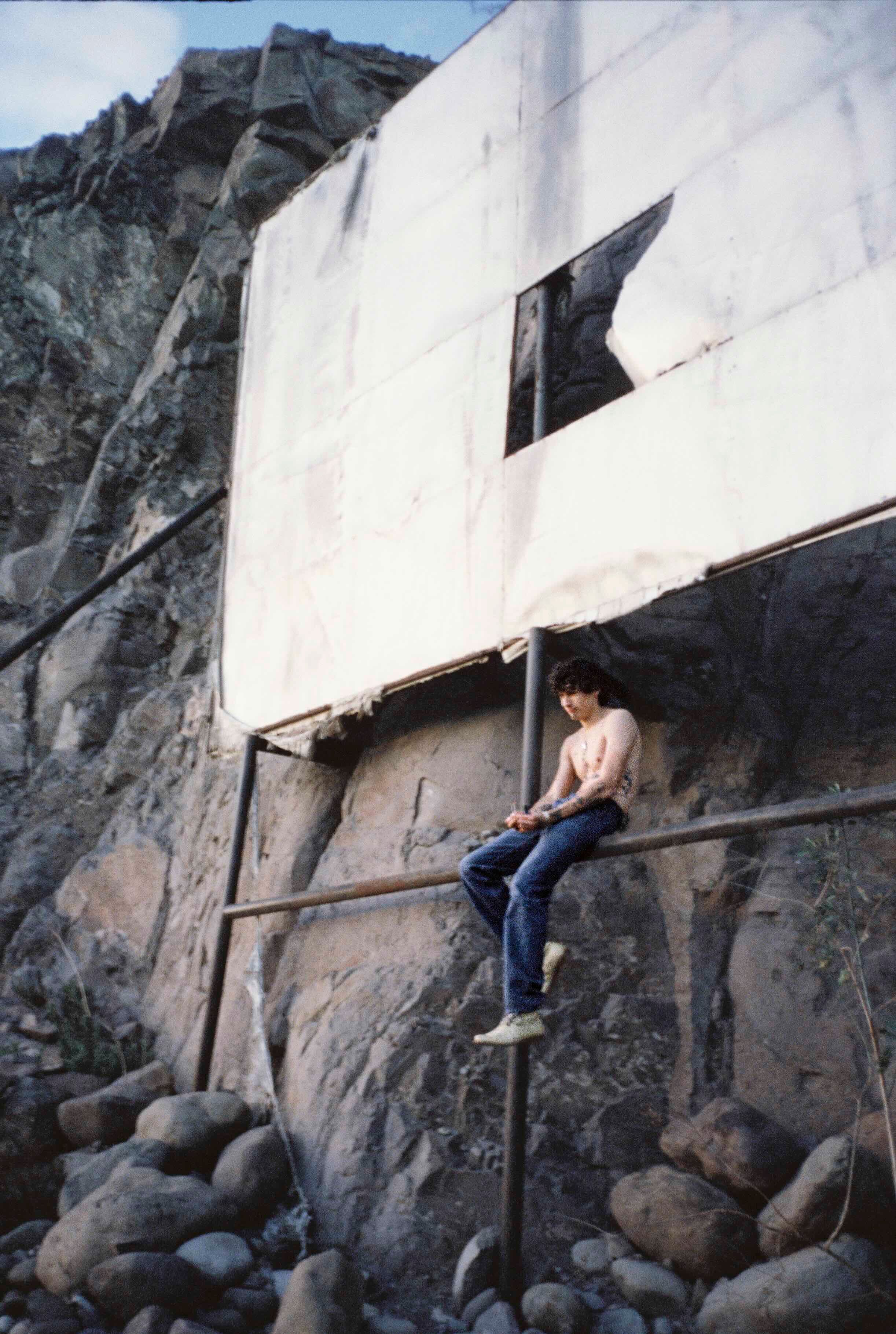
GN: But if you love it, and you’re good at it, and it is so well received by the world, and you’re finding success in it, then do you not think that maybe this is really what your soul is destined to be doing?
AG: Maybe. I don’t know. It feels like somebody’s playing a big trick on me sometimes. Like, how is this all happening? I feel like I’m in the right place, but God moved me a little. Like, if I were on a chessboard, he just moved me over one place and put me down on a path that was different from what I should have been doing. It doesn’t feel like it was supposed to happen, but I’m so happy that it has happened, if that makes sense.
GN: Is it ever hard?
AG: This is the easiest job in the world. It’s literally the dream. It’s a job where you get to do what you want to do all the time, and you get to choose who you do it with, and everything is in your control. If you don’t like your life and you’re the one that’s creating it, then that’s completely on you.
GN: As a long-time listener of your music, it’s so cool to see how you’ve transcended from this once sad e-boy to something so much more.
AG: My first album, i care so much that i don’t care at all, was depressing as hell. I was living in LA, and I was super depressed. It sucked. The music is cool; the music’s lit as fuck. But it sucked to live, for sure. All my music is very true, and it’s always been very true. I think that my biggest strength is that I’ve always been super honest. I don’t relate to any of the songs on that album anymore; I don’t even relate to any of the songs on Y’all anymore because life changes and you feel different.
GN: You seem happy and healthy now. Where is your mindset at?
AG: To be able to go back to my music when I was 15 and look at how I felt at the time, I know I felt that way 100%. It’s good to be able to see this trajectory and change. It’s fucking awesome. I’m super fucking happy and healthy, and I have been going to the gym now and going outside.
GN: It’s beautiful to see. It really translates to the new music.
AG: I think the best part is that so many people who listen to my music were feeling the same way that I was. I was super sad, and it attracted a bunch of sad people, and now that I’ve become super hopeful and have an optimistic worldview. Hopefully it can rub off on people.
GN: Your music has always been very vulnerable. How did your family respond to some of your older stuff?
AG: My mom was super worried, for a few years. It was super worrying what I was talking about, but it was how I felt. But yeah, she’s gotten super mad at me before. My dad was always sure I would be fine, and he was right. I made this song called “Living Proof,” and my mom was super mad about it. But I think that I’m a very honest person with everybody in my life.
There have been some songs where people have said that maybe I shouldn’t say this or that, and it literally makes my brain explode. I can’t do it. I can’t not say what I’m thinking. It was difficult when I was sad because I was very honest, brutally honest; honest to a fault, maybe even. I know it was super hard on some of my family, and I feel bad for that, but I also don’t feel bad because I never would have changed anything. It’s good that I was super honest, because if I started out making hopeful music I’d probably sound preachy… a little bit. Seeing this trajectory now going from down to up gives me a little credence to be hopeful and happy.
GN: Do you ever feel pigeonholed to the young, hyperpop world that you started in?
AG: [Laughs] No, never at all. It doesn’t mean anything to me. The general public still really cares about using genre as a way to define somebody. Some people need that classification; something to tell them that they’re going to like it. To me, that just doesn’t exist. It doesn’t matter. I’m not sitting here thinking I’m going to make something super specific. Y’all was very all over the place. Kurtain’s and my album was all over the place. My next album is probably more all over the place, sonically. There’s not going to be a classification for it, and I don’t think there should be.
If you want to describe my music as hyperpop, you can call it that. I think that’s an apt description of some of my songs, for sure, but at the same time, some songs could probably be more accurately described as folk. You could spend your whole life worrying about what genre of music you’re making, but it just doesn’t interest me in the slightest.
GN: You dabbled in country, of sorts, for this album, and I loved it. What was that like? Where did that come from?
AG: After we made those two songs in Asheville in July, we went to this place called the Cotswolds, accidentally. We had been there for like a day and a half at this point and hadn’t made anything. So we were sitting there, and Kurtains kept just playing this [mimics guitar strum sound to the beat of “Old Freight Train Interlude”] very country, outlaw, old western movie sound. I jokingly started throwing in some lyrics. Then we just went back and forth joking around. That song is a joke, for sure, but the lyrics are actually pretty good if you’d ask me. There is no one else, for better or for worse, who is twenty-one years old, making an album that has really loud electronic songs and then a country interlude right in the middle of it.
GN: This new album uses a lot of Christian motifs and symbolism. Are you religious?
AG: I’m kind of confused about religion at the moment. I grew up Christian. I’ve been struggling with it since I was like eighteen. That’s why it comes up in music for me a lot. I used to go to church when I lived in LA. I felt like I needed to. I’ve only ever really gone to non-denominational churches, but I think about religion a lot. I think about Christianity the most. It’s what I see the most. There’s not a super diverse religious palette in North Carolina.
GN: Out in God’s country.
AG: I live in the Bible Belt where there are more churches than there are gas stations, so religion is very prominent where I’m from. There are times when I feel super Christian and feel God to be super present and believe Jesus was born to save us all, and then there are times where I really am not believing, and that’s kind of where I am at right now. I’m confused, I guess, about faith.
GN: It makes a lot of sense that you would go to church regularly in LA.
AG: Yeah, in North Carolina you’re either right next to a church or at most five minutes away from a church. When you drive into Hendersonville, there’s this big neon JESUS SAVES sign, and so I think that religion is super seeped into my psyche. In LA I felt very devoid of that feeling.
I wrote a line in a new song that goes something like, “there’s 3,000 Sundays left, and even if my soul is damned to hell, I’ll spend them with you,” and it’s just about how going to church takes away the little time we have with the people we love. Then I wonder, would I rather spend my life going to church to try and save my own soul, or would I take eternal damnation just to spend an extra few hours a week with my parents? Yeah, I probably would.

GN: You just blew my mind. Would your God, if he gets you for eternal rest, not want you to spend the little time we have with your loved ones while you have them?
AG: Exactly. It’s a heady thought. Would my God want me to spend my time worshipping him, or would he want me to spend time with the people that he’s put on this earth for me to love? But you could also argue that if you and your family all go to heaven, then you would all still be together, but like what if one of my lit-ass cousins goes to hell, like I don’t know what my cousin is doing.
GN: I think you would also want your God to be selfless, in a way.
AG: Yeah. I know for a fact that I’m alive right now. I don’t know for a fact that heaven exists because I’m not as faithful as I could be, so I’m just going to take what I have now and live it. I want to be with the people that I love, and I think that God, whoever that is, if he’s out there listening right now, I hope that he understands that I did it because I wanted to be there with them. And maybe that is selfish, but I want us all to be together on his earth.
Can I tell you a story to tie back to the religious conversation?
GN: Please.
AG: For maybe four years, I was doing shows, and there were moments where they were really difficult because I felt this certain pressure on myself. It felt like every show was my birthday, if that makes sense. I felt like it was about me, and that was super fulfilling. I don’t know if you’ve ever been alone on your birthday, but it kind of creates this interesting, introspective feeling, and it kind of hurts. This day is supposed to be celebrating me, but why am I alone? If something went wrong [on stage], I would take it so personally.
GN: It’s such an important day that there is always this looming pressure for everything to go right.
AG: Exactly. There was one day I was in Australia about to perform. I’m standing there, in this green room, above the crowd looking down through this one-way glass. I’m looking at my mom with her two sisters. My mom is laughing so hard. They’re not even looking towards the stage at all. My two cousins are talking and laughing. My manager, Chris, is drinking a beer. My tour manager is running across the stage trying to get everything ready because this is like five minutes to show time. And there are all these kids in the crowd talking amongst each other. And everybody’s so happy.
In that moment, it fully connected with me that this is so little about me. Like if it’s anybody’s birthday, it’s absolutely not mine. It finally clicked. This was something I’d felt for so long, and suddenly this principle I had was flipped on its head in one moment.
So then to bring it back to the religious thing we were talking about, if I come to a concrete conclusion about religion, or can stand on my own two legs about an opinion or philosophical thought, I love to bring it up to people because somebody will come in and completely deconstruct these thoughts that I am having. I think that is the best part of being alive; being able to share your opinion and be heard, and then have somebody share their opinions back.
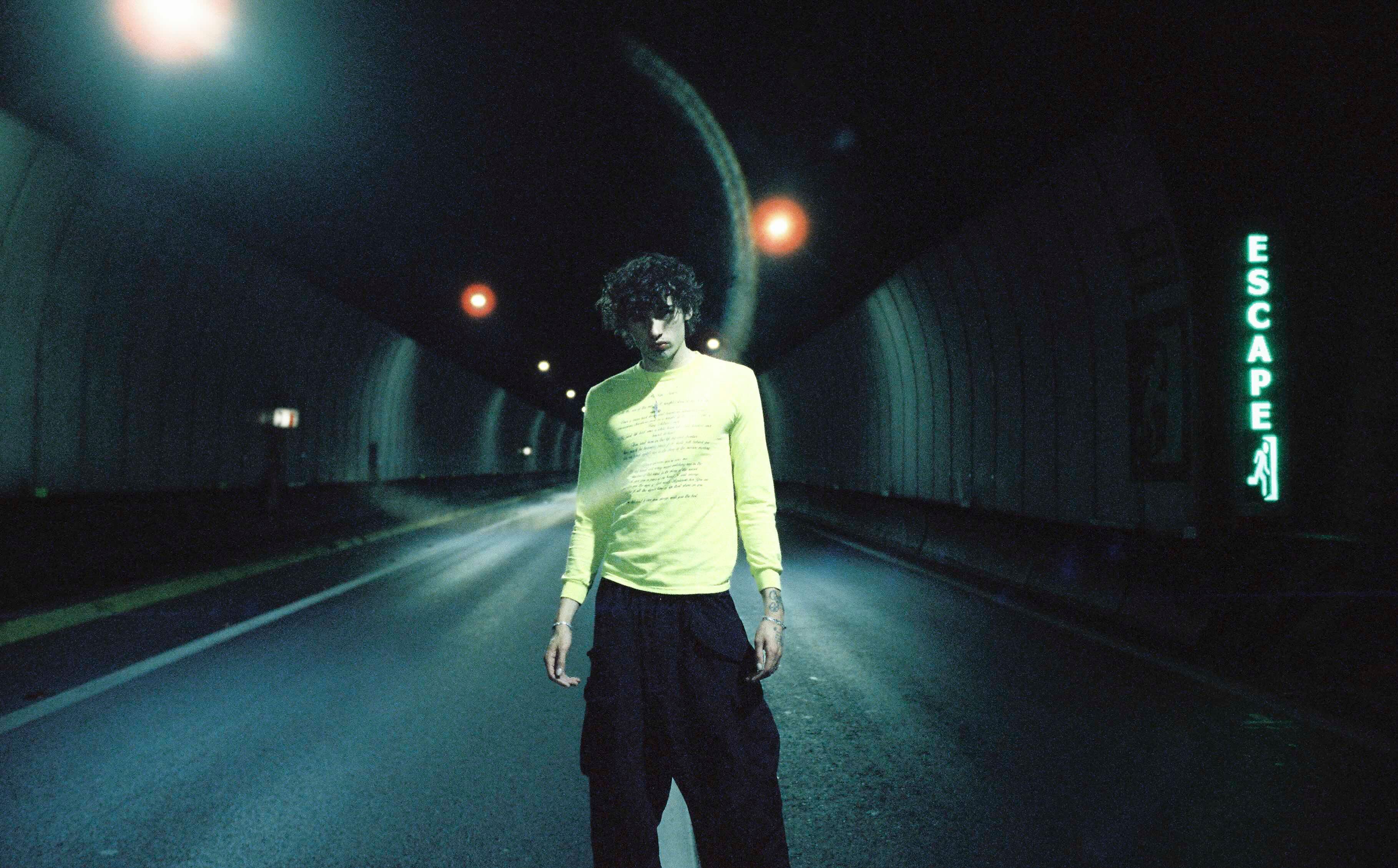
GN: Do you think your performances have benefitted from this new mindset?
AG: I think so. It’s super hard to tell. It really made me feel free. The entire show, I am always smiling. To take that pressure off really allows you to live in the moment. I know that the mind can regress into different thoughts, but right now I feel very positive and optimistic, and it feels fucking awesome. I’m praying that it feels like this for as long as possible, and when shit gets difficult, I’ll worry about the shit being difficult. But for now everything’s chill and I’m really stoked.
GN: How do you stay grounded with all the travel you do?
AG: I don’t know. Almost all the people I hang out with are pretty normal. It is kind of crazy, all the travelling. I try to go home in between places. Going home also really centers me. I talk to my parents a lot. I talk to the people that I love a lot. I also know that everything I work on is my idea and is exactly what I want to do, so that helps. I also started doing skincare for the first time in my life.
GN: What’s the skincare routine?
AG: I got a serum; I don’t know what it means… and then I got a moisturizer. And that’s it.
GN: That’s the whole routine?
AG: That’s it. And I’m fine now.
GN: Is Peter Answers real, be honest?
AG: No comment.
GN: I heard that you’re a big fan of Murakami. Do you find his (or other authors’) words show up in your music?
AG: I read a lot. I quote Milan Kundera a lot because I’m a really big fan of his books. I sit there and read a lot and write stuff down. I won’t always remember necessarily where it’s from or why I wrote it down, but then I’ll feel forced to think about it.
I’m reading this book called The House of the Spirits by Isabel Allende; she’s awesome. There’s this place in the book called the Tres Marias, and I have this long note where I was trying to equate my life to this place. I don’t know how that’ll end up in, but maybe it will.
GN: Reading, I can imagine, is a great source of inspiration for you. It’s cool that you can have these bits of ideas and it can eventually manifest into a song.
AG: Books are the easiest thing to get inspired by. On August 4th, I wrote down, “we come into this world weeping and wailing, and we leave it weeping and wailing,” from this website on Daheshism, which I am reading about in this book called Holy Men of the Electromagnetic Age by Raphael McCormack. I think that reading books is to writing what watching movies is to directing.
GN: You have a very reciprocal relationship with your fans.
AG: It all comes back to being very grateful. I don’t know how I got this lucky to have these kids that fuck with what I’m doing, but I’m so happy that they do and that I can have people listen to my music.
GN: It feels so genuine compared to most artists.
AG: A lot of them are really funny. There’s this one kid that DMs me on Instagram, and he’s fucking hilarious. I respond to his DMs every once in a while. He’s from North Carolina, and he keeps me updated on what’s happening there.
GN: I was reading a Reddit thread about you. Someone asked what the most Glaive-sounding non-Glaive song to exist. The Redditor said “good 4 u” by Olivia Rodrigo lol.
AG: Hmmm [sings “good 4 u”]. Maybe… It’s kind of hard to classify what even is a Glaive song. The quintessential Glaive songs are like electronic dance songs. So probably not that. But, yeah, I’m rocking with Olivia Rodrigo. She used to follow me on Instagram.
GN: You got the unfollow?
AG: She unfollowed everybody. But it’s cool. We’re cool. Maybe it’s a Kurtains song. In my mind, I sound like 42 Doug, or like…ESTG, or, like, some rapper from the South, but I know I don’t. I sound like some white kid from North Carolina.
GN: What would your heaven look like?
AG: North Carolina is kind of like Heaven. I don’t know. I’ve never been to Heaven, but if I did die, which God forbid I don’t anytime soon, but if I did, and the boys were there in North Carolina… Oh my God, that’s literally all I’d ask for.
Credits
- Text: Gigi Nadeau
- Photography: Lukas Cardoni